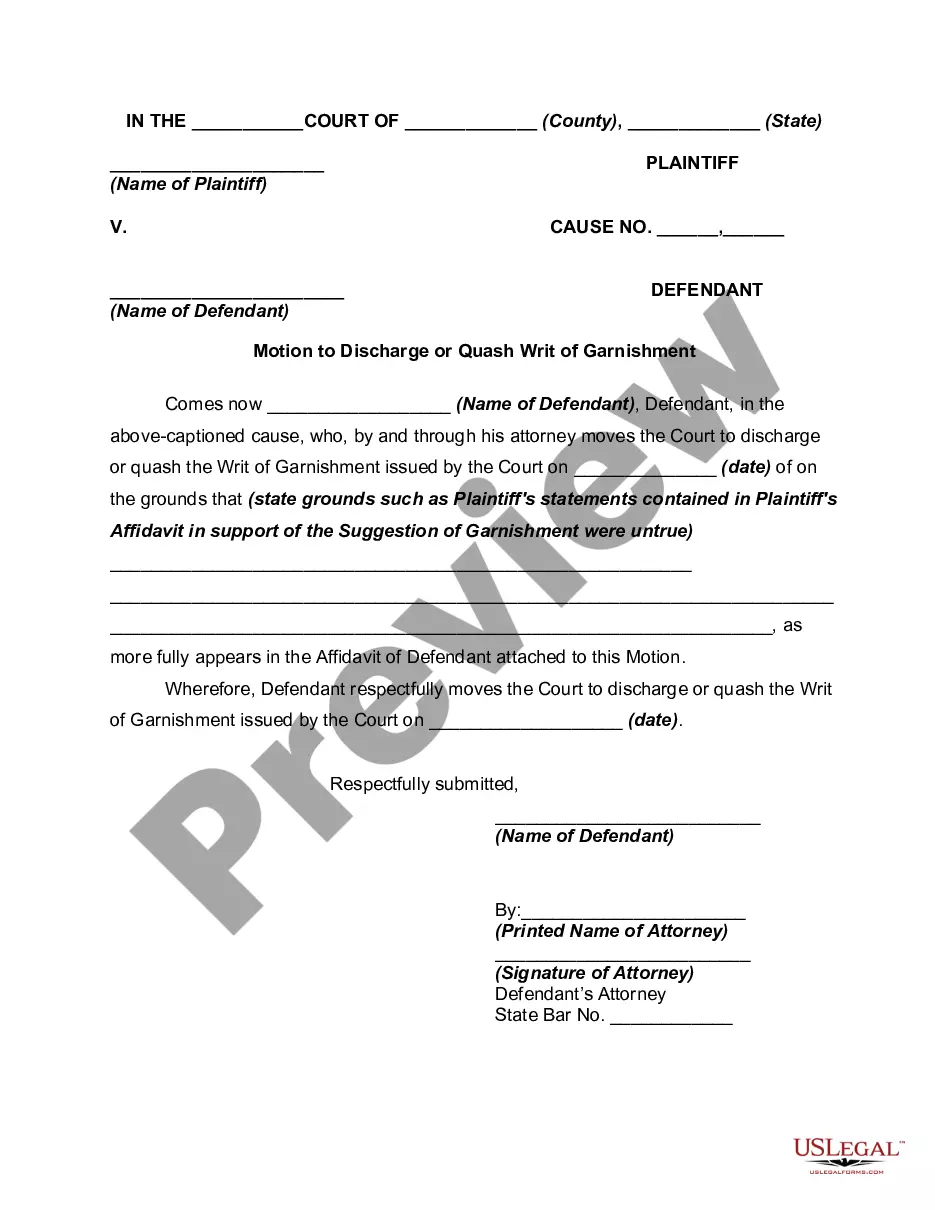
Motion to Discharge or Quash Writ of Garnishment
What is this form?
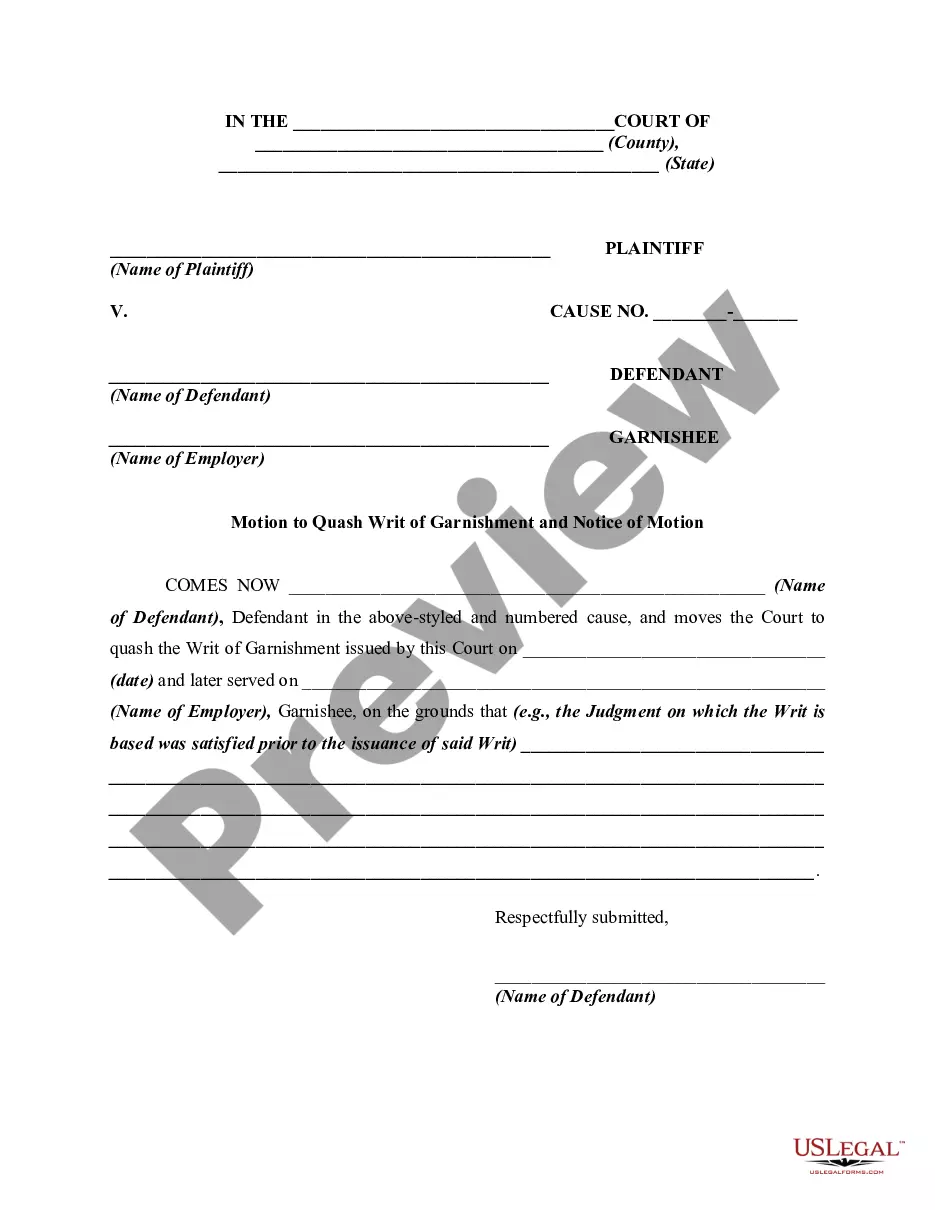
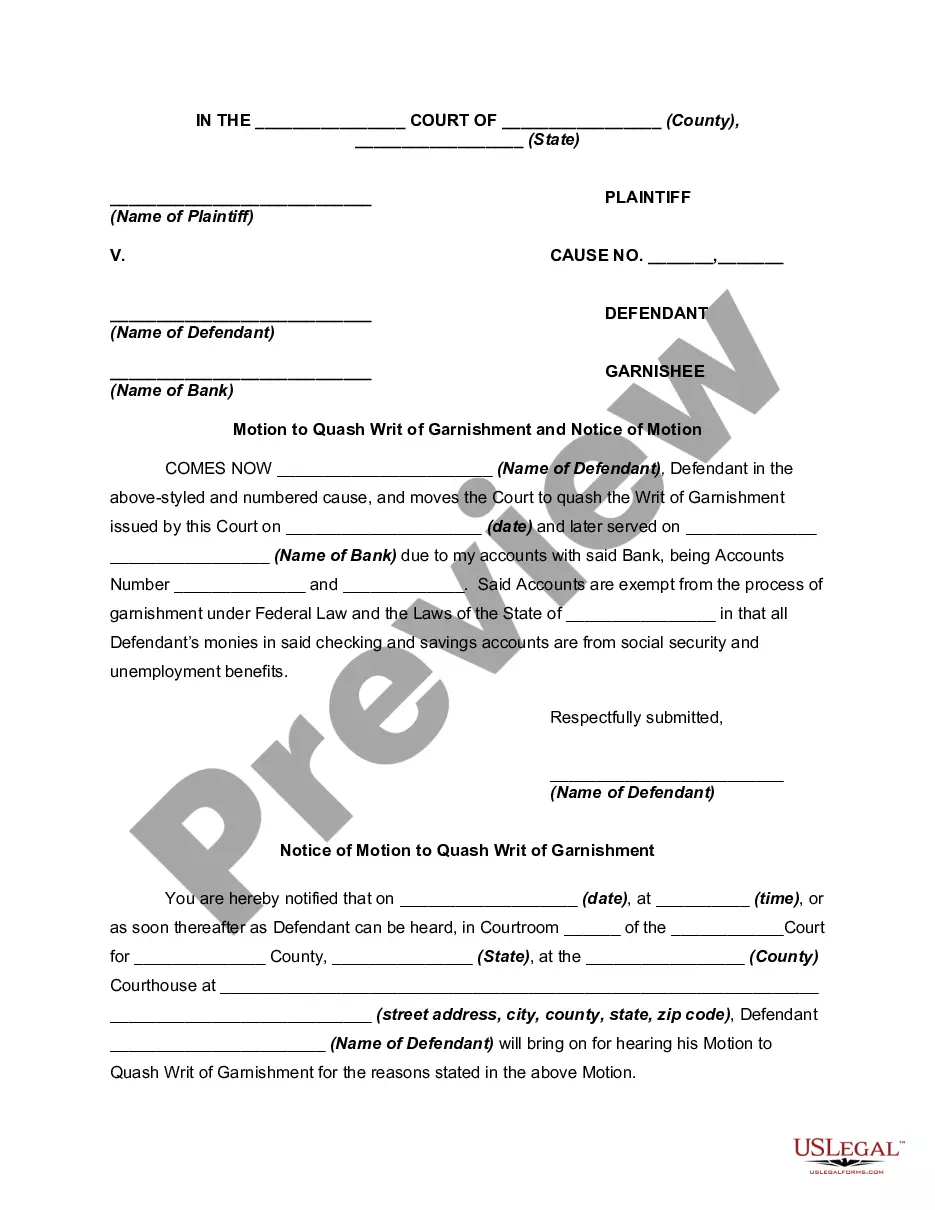
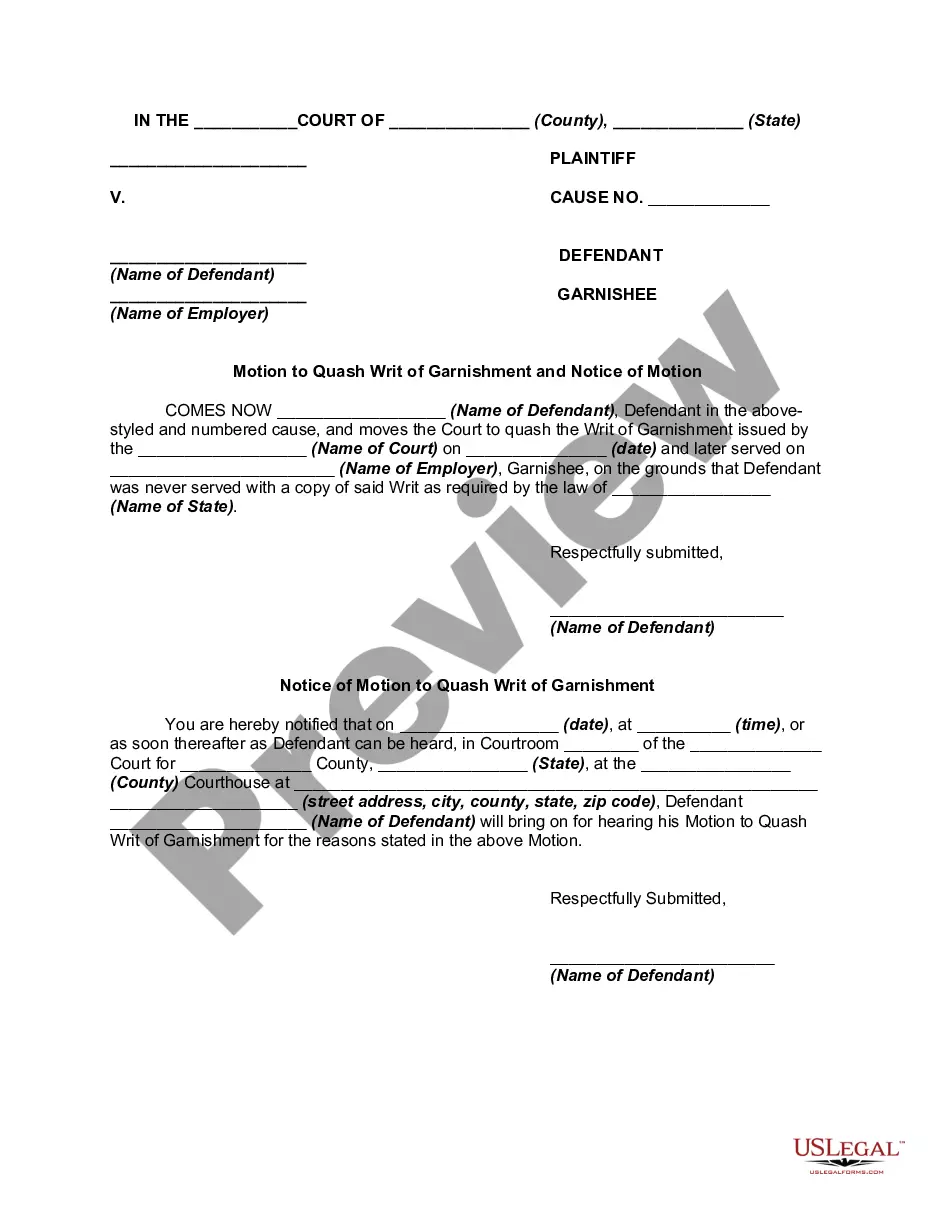
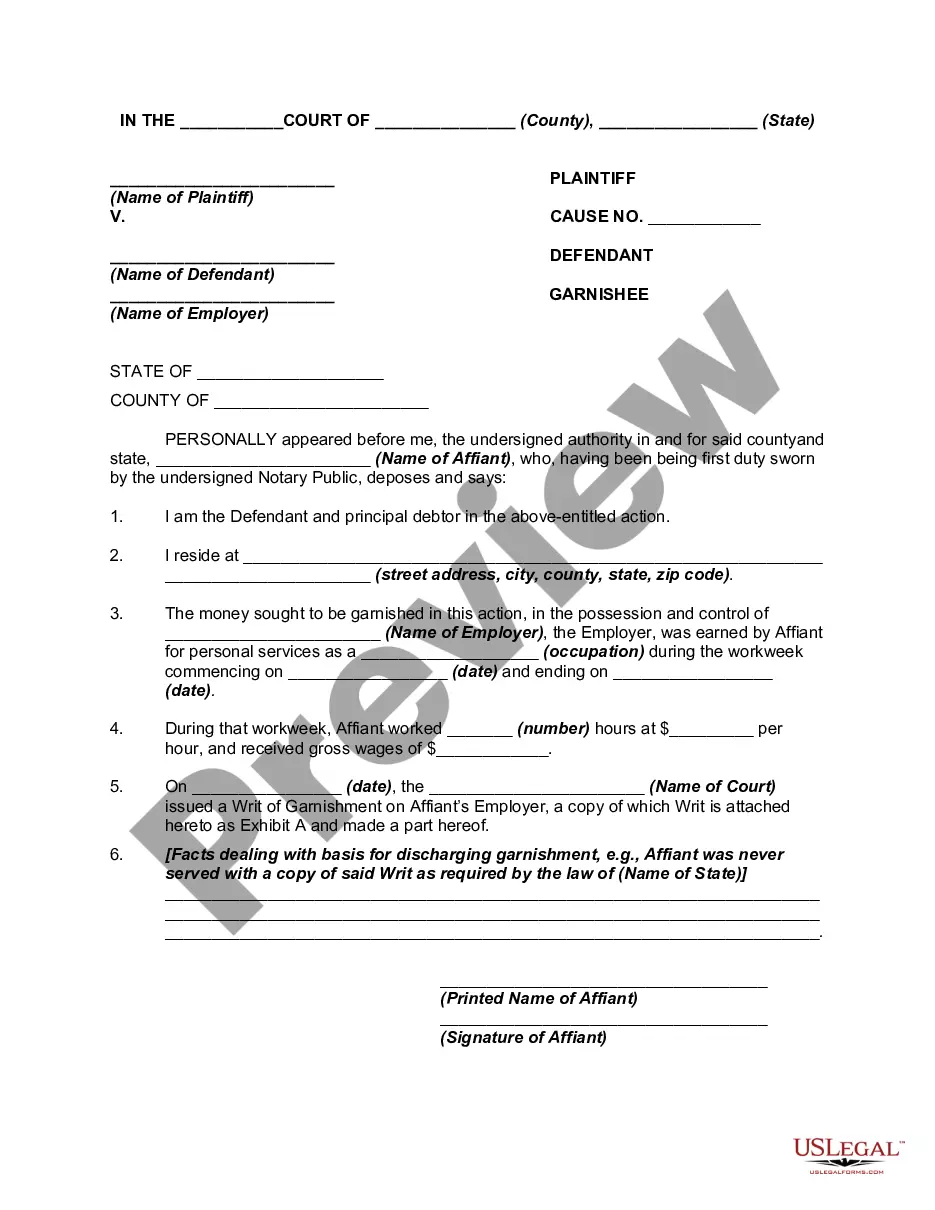
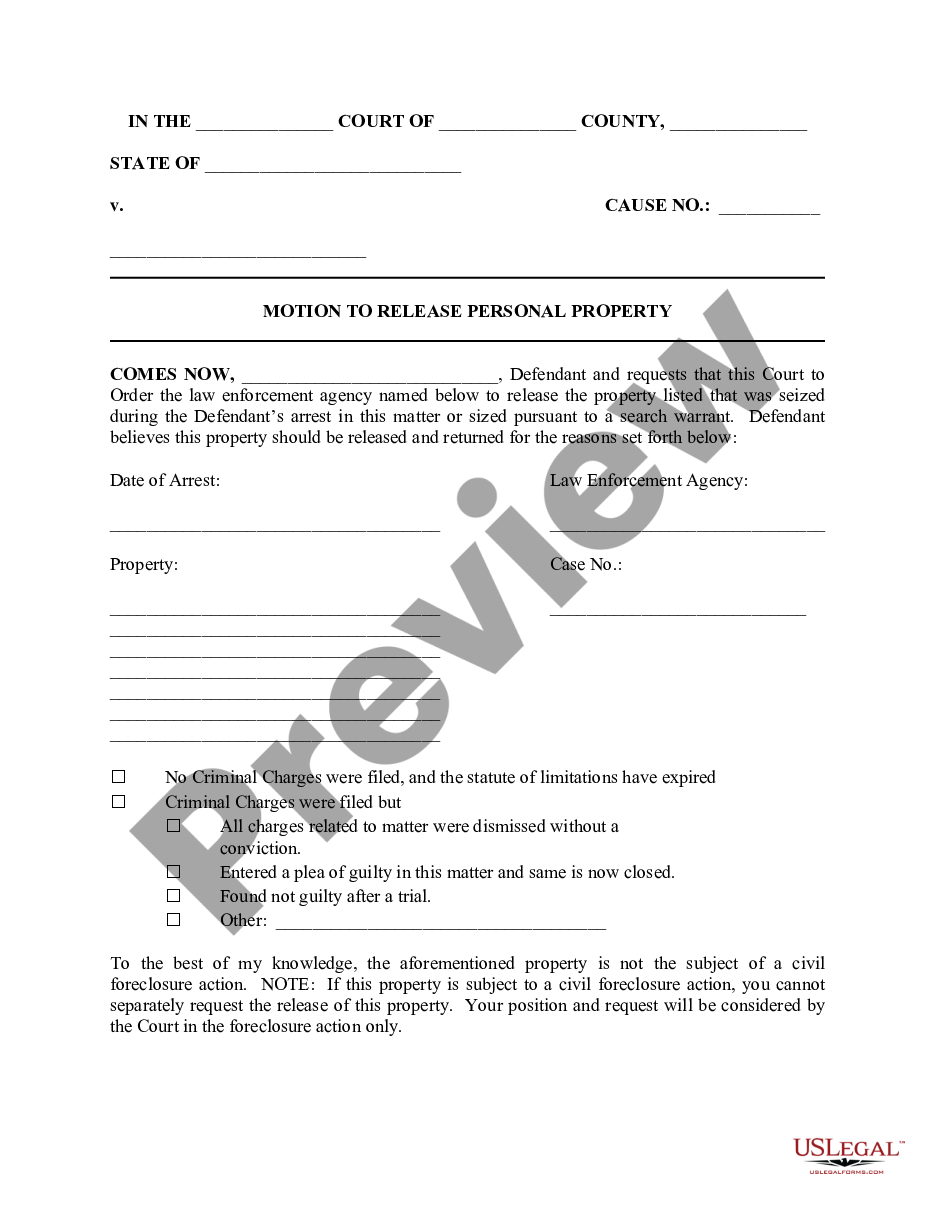
The Motion to Discharge or Quash Writ of Garnishment is a legal document that allows a defendant to challenge the validity of a garnishment order issued by the court. This form provides the grounds on which the defendant believes the garnishment should be voided or set aside. It differs from similar forms in that it specifically focuses on disputing the garnishment itself rather than addressing the underlying debt or judgment.
Key parts of this document
- Caption: Includes the names of the parties involved and case number.
- Defendant's motion statement: Indicates the request to discharge or quash the writ of garnishment.
- Grounds for the motion: Details the reasons for the request, such as inaccuracies in the plaintiff's supporting affidavit.
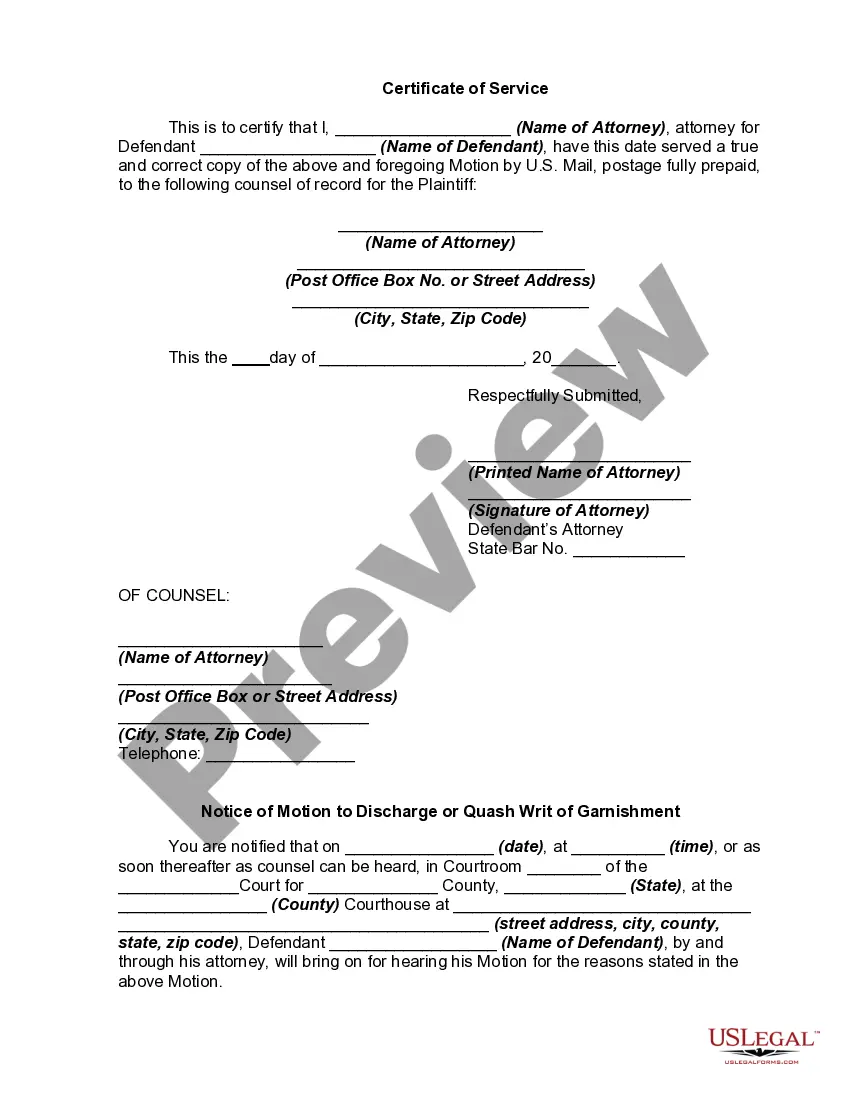
- Certificate of service: Confirms that a copy of the motion has been sent to the plaintiff's attorney.
- Notice of motion: Specifies the hearing date and time to present the motion before the court.
When to use this form
This form should be used when a defendant wishes to contest a writ of garnishment that has been issued against them. It is appropriate in situations where the defendant believes the garnishment is unjust, whether due to factual inaccuracies, improper procedure, or other legal grounds. Filing this motion at the earliest opportunity is advisable to comply with any state-specific deadlines.
Intended users of this form
- Defendants in a legal case facing garnishment actions against their wages or bank accounts.
- Attorneys representing defendants seeking to challenge a garnishment order.
- Individuals who wish to protect their financial assets from wrongful garnishment.
Instructions for completing this form
- Identify the parties: Fill in the names of the plaintiff and defendant at the top of the form.
- State the grounds: Clearly specify the reasons for requesting to discharge or quash the writ of garnishment.
- Enter relevant dates: Include the date the writ was issued and the date of the hearing.
- Provide attorney information: List the name, signature, and bar number of the attorney representing the defendant.
- Complete the certificate of service: Indicate that a copy of the motion has been sent to the opposing counsel.
Notarization requirements for this form
In most cases, this form does not require notarization. However, some jurisdictions or signing circumstances might. US Legal Forms offers online notarization powered by Notarize, accessible 24/7 for a quick, remote process.
Get your form ready online
Our built-in tools help you complete, sign, share, and store your documents in one place.
Make edits, fill in missing information, and update formatting in US Legal Forms—just like you would in MS Word.
Download a copy, print it, send it by email, or mail it via USPS—whatever works best for your next step.
Sign and collect signatures with our SignNow integration. Send to multiple recipients, set reminders, and more. Go Premium to unlock E-Sign.
If this form requires notarization, complete it online through a secure video call—no need to meet a notary in person or wait for an appointment.
We protect your documents and personal data by following strict security and privacy standards.

Make edits, fill in missing information, and update formatting in US Legal Forms—just like you would in MS Word.

Download a copy, print it, send it by email, or mail it via USPS—whatever works best for your next step.

Sign and collect signatures with our SignNow integration. Send to multiple recipients, set reminders, and more. Go Premium to unlock E-Sign.

If this form requires notarization, complete it online through a secure video call—no need to meet a notary in person or wait for an appointment.

We protect your documents and personal data by following strict security and privacy standards.
Avoid these common issues
- Failing to file the motion within the required timeframe.
- Not clearly stating the grounds for quashing the writ.
- Omitting necessary signatures or attorney information.
- Incomplete or inaccurate certificate of service.
Advantages of online completion
- Easy access to standardized legal documents without needing to create them from scratch.
- Convenient download and completion on your own schedule.
- Assurance that the forms are drafted with input from licensed attorneys to ensure legal validity.
Legal use & context
- This motion serves as a formal request to contest the legitimacy of the garnishment process.
- Successful completion of this form may lead to the termination of garnishment of wages or assets.
- Understanding local court procedures is essential for effective use of this form.
Key takeaways
- The Motion to Discharge or Quash Writ of Garnishment helps protect defendants from unjust financial burdens.
- Timely filing and precise details are critical for a successful challenge.
- Consult with a legal professional if unsure about specific grounds or procedures.
Looking for another form?








Form popularity
FAQ
Once a garnishment is approved in court, the creditor will notify you before contacting your bank to begin the actual garnishment. However, the bank itself has no legal obligation to inform you when money is withdrawn due to an account garnishment.
The Order dissolves the existing writ of garnishment. It means that whatever was being garnished, wages or bank accounts, are no longer subject to the writ of garnishment.
What Happens When a Garnishment Summons Is Served?In the case of a nonearnings garnishment, the garnishee must provide a written disclosure to the creditor within 20 days after service of the garnishment summons that identifies all indebtedness, money, or property that the garnishee owes to the debtor.
If a judgment creditor is garnishing your wages, federal law provides that it can take no more than: 25% of your disposable income, or. the amount that your income exceeds 30 times the federal minimum wage, whichever is less.
A writ of garnishment is an order granted to a third party (garnishee), to hold or attach the property of a defendant or judgment creditor.A motion to quash the writ of garnishment asks the judge to nullify its order, to a garnishee, of seizure or attachment of property of a defendant or judgment creditor.
If you are served with a garnishment summons, do not ignore these documents because they do not directly involve a debt that you owe. Instead, you should immediately freeze any payments to the debtor, retain the necessary property, and provide the required written disclosure.
In most states, employers answer a writ of garnishment by filling out the paperwork attached to the judgment and returning it to the creditor or the creditor's attorney.
What you can do about wage garnishment.You have to be legally notified of the garnishment. You can file a dispute if the notice has inaccurate information or you believe you don't owe the debt. Some forms of income, such as Social Security and veterans benefits, are exempt from garnishment as income.
Garnishment is a proceeding by a creditor (a person or entity to whom money is owed) to collect a debt by taking the property or assets of a debtor (a person who owes money). Wage garnishment is a court procedure where a court orders a debtor's employer to hold the debtor's earnings in order to pay a creditor.