Agreement to Exchange Property - Barter Agreement with Assumption of
What this document covers
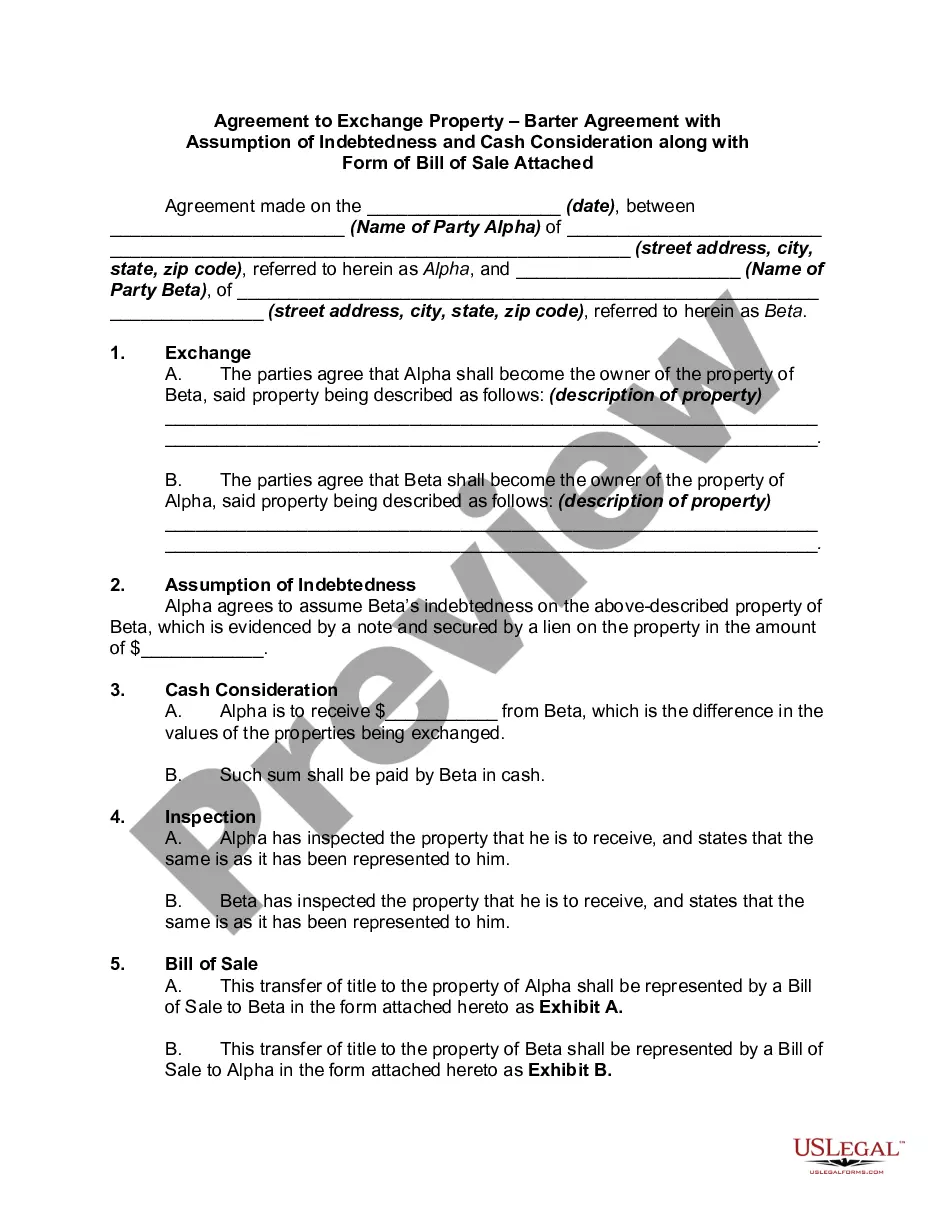
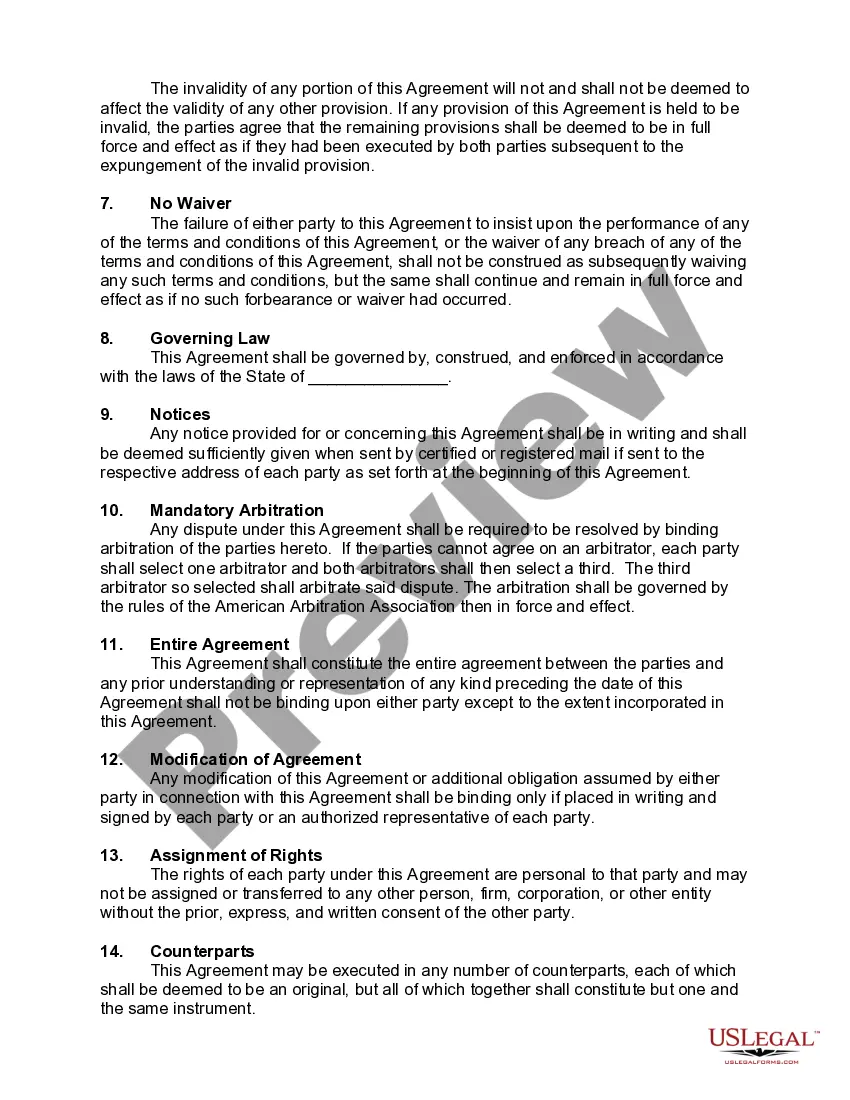
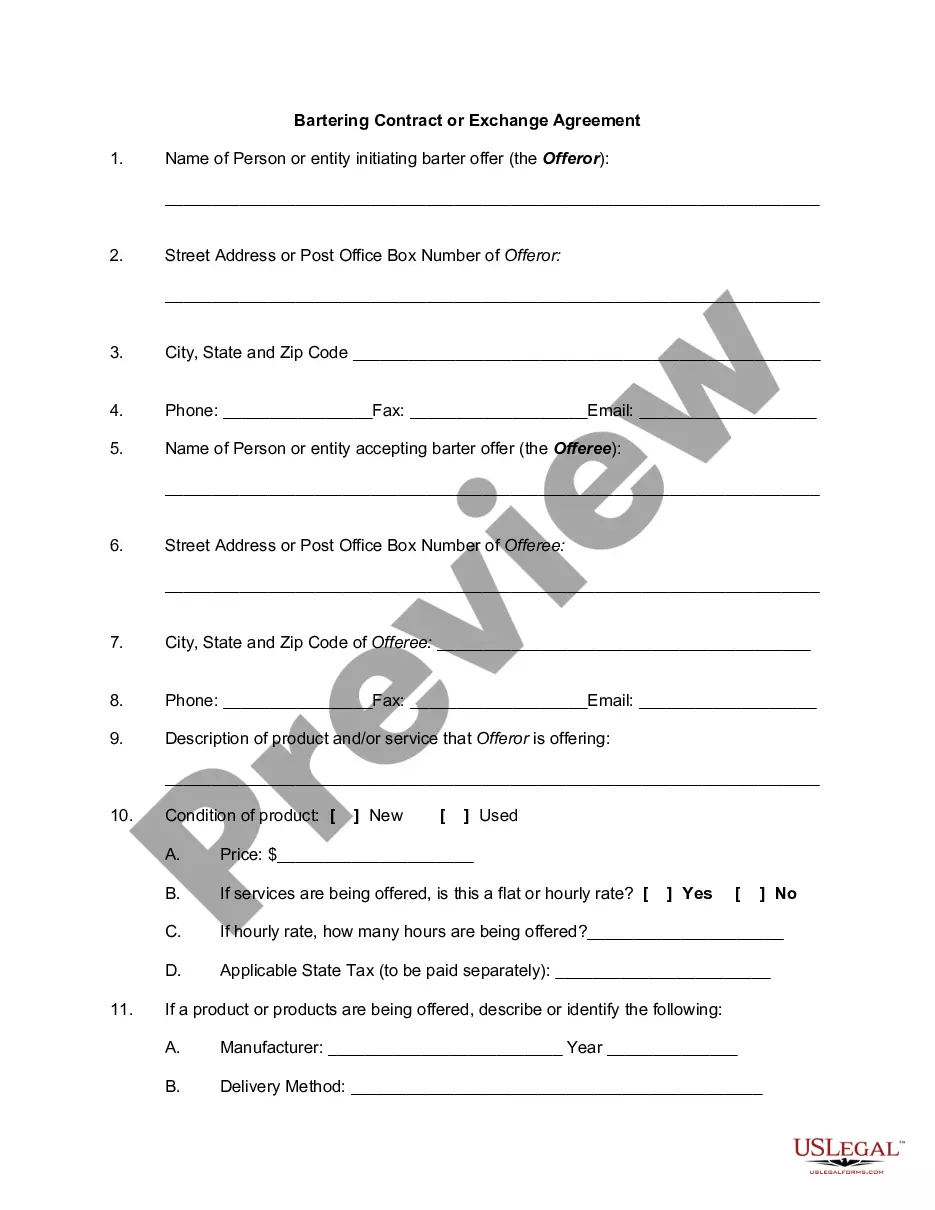
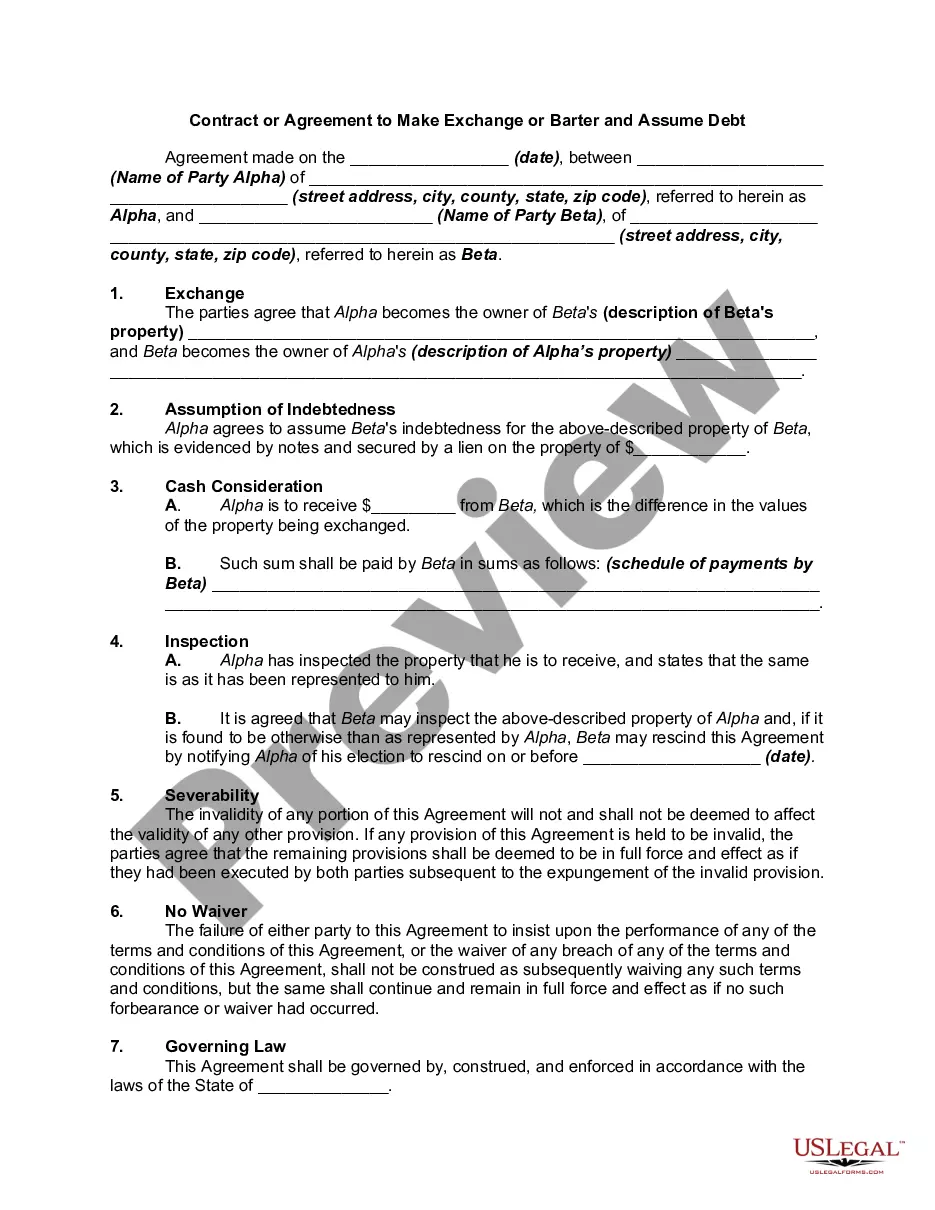
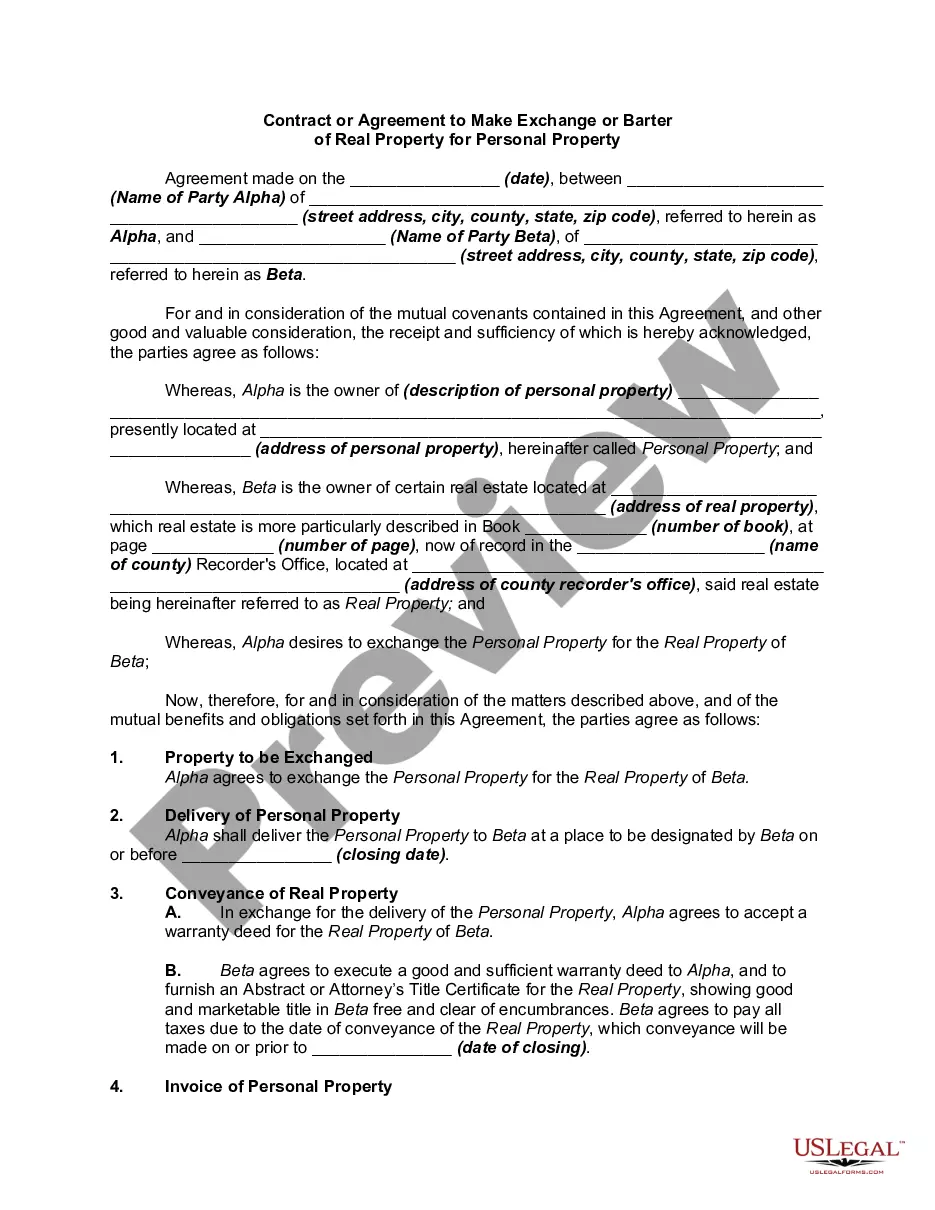
The Agreement to Exchange Property is a legal document designed for parties wishing to barter goods or properties. This agreement details the terms of the exchange, including property descriptions, any cash considerations, and the assumption of debts associated with the items exchanged. Unlike a standard sale agreement, this form accommodates a barter transaction, where items of value are traded directly without requiring monetary payment in full.
Form components explained
- Identification of the parties involved in the exchange.
- Descriptions of the properties being exchanged.
- Details on any debts to be assumed by one party.
- Any cash consideration that may be involved to balance the trade.
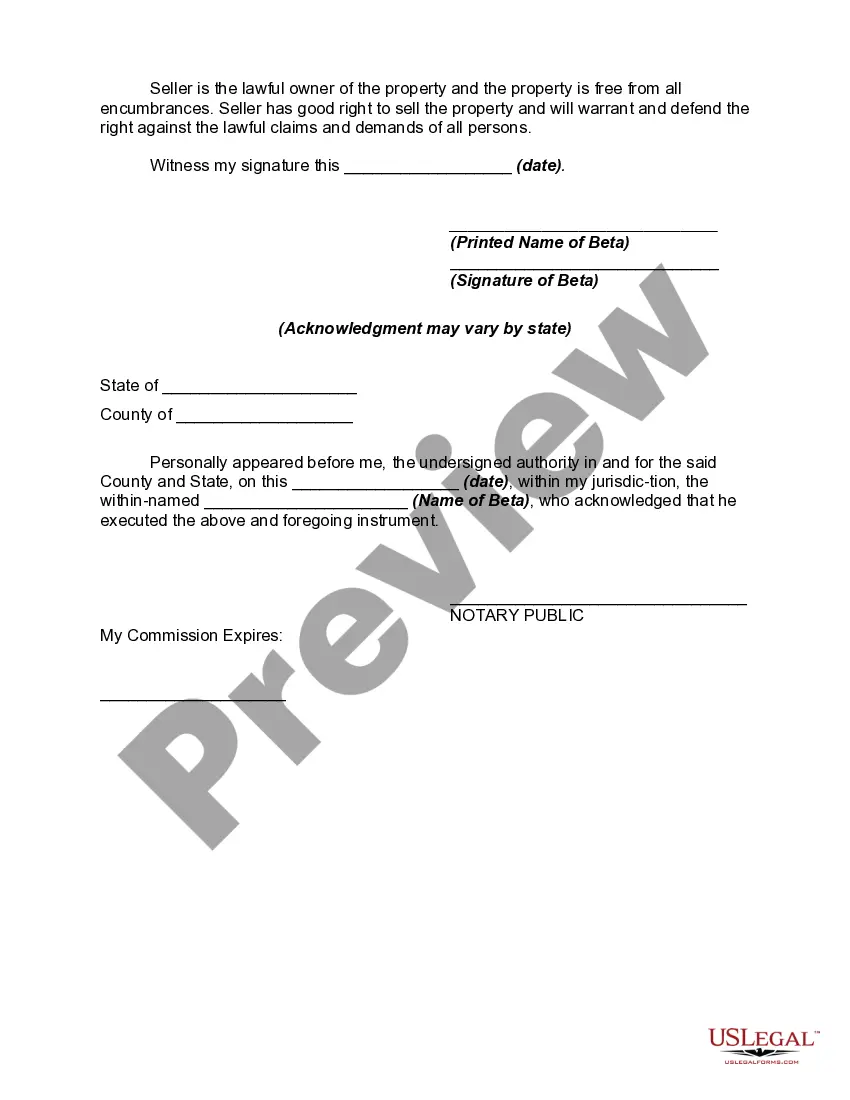
- Inspection agreements stating that both parties agree on the condition of the properties.
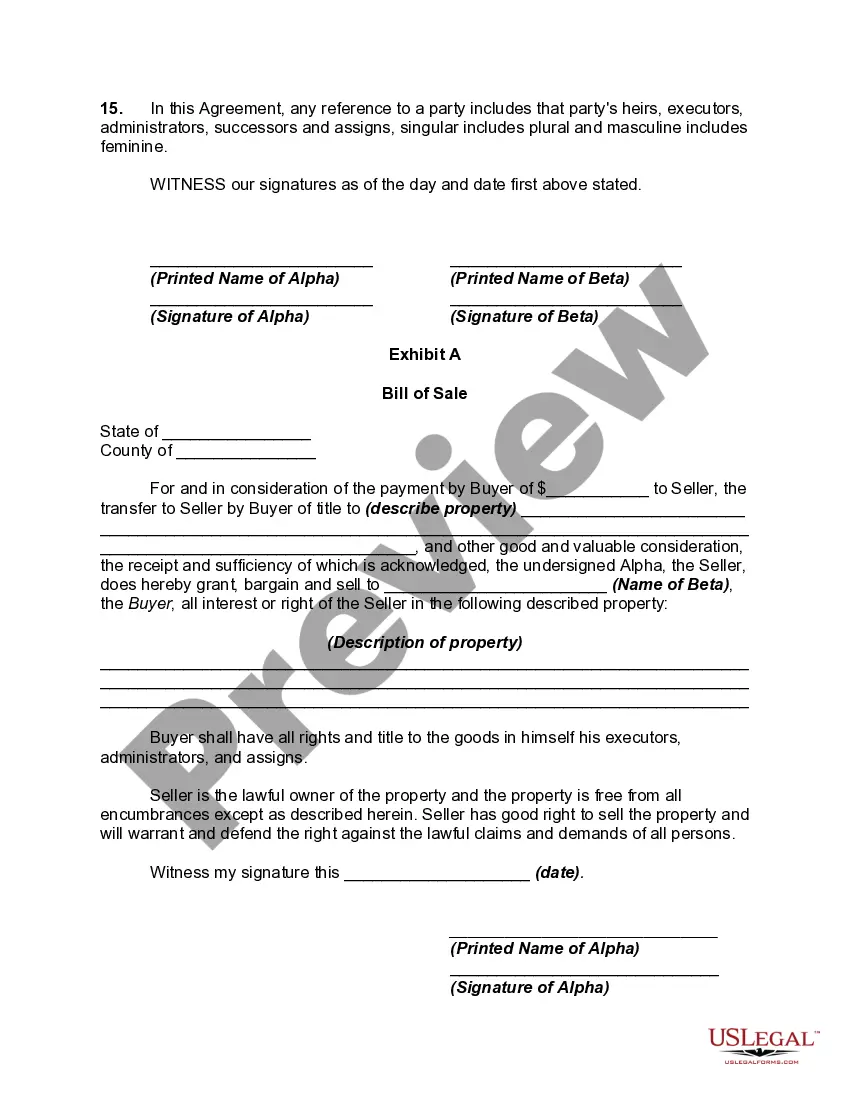
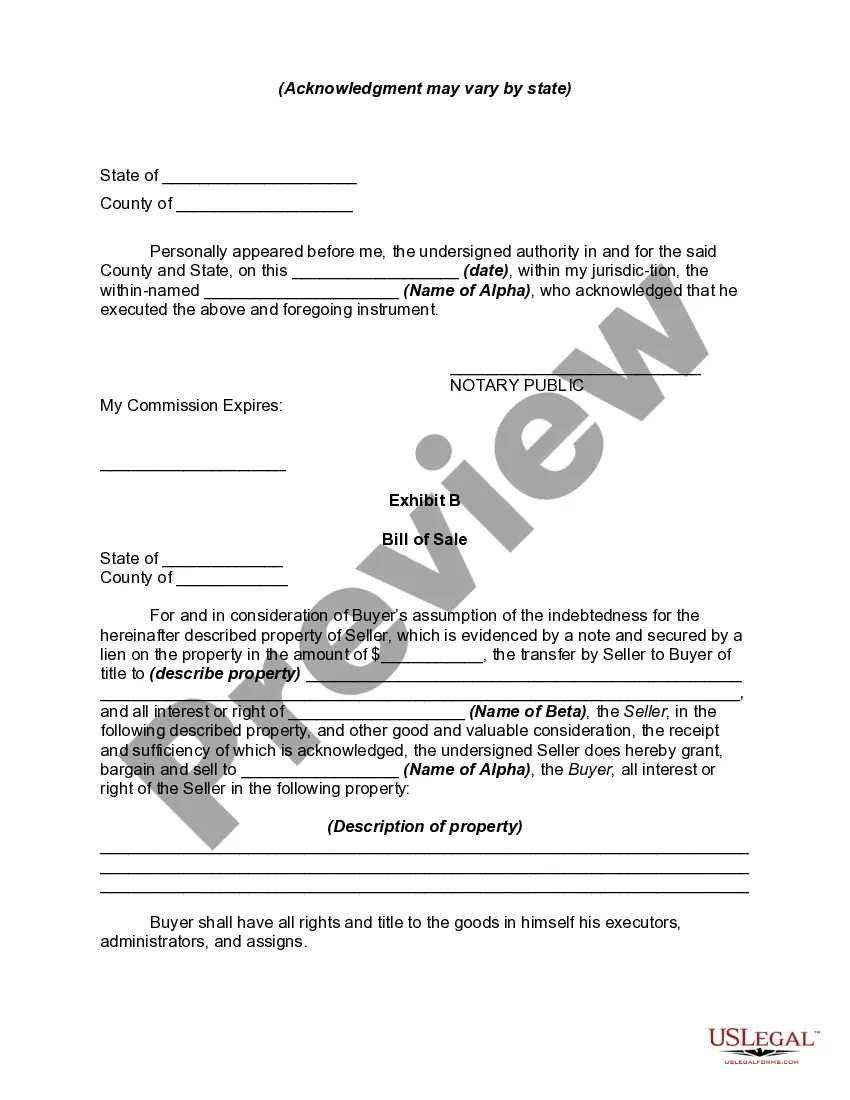
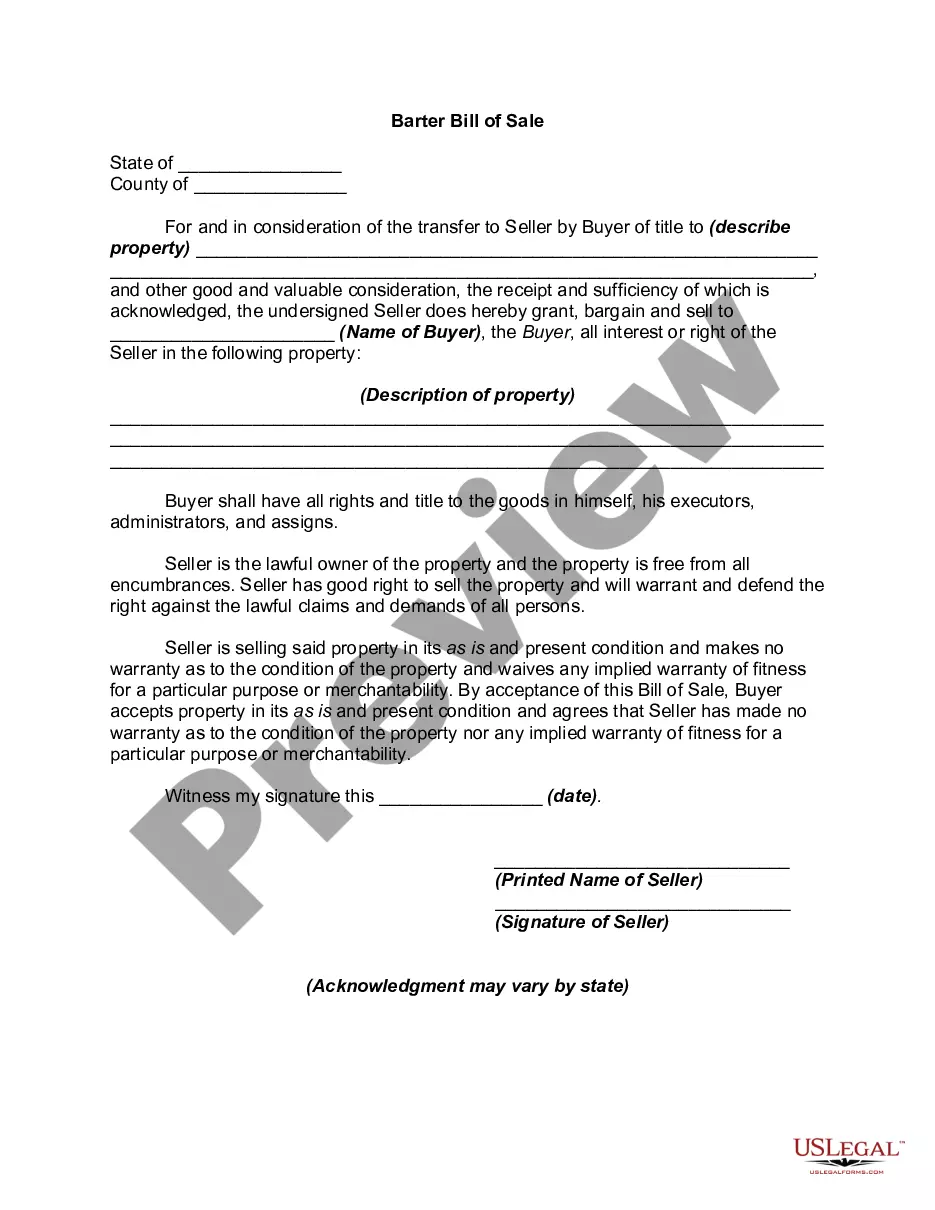
- Bill of Sale provisions for the transfer of property titles.
When this form is needed
This form should be used when two parties agree to exchange goods or properties instead of conducting a traditional purchase. It is useful in scenarios where both parties have items of equal value to swap, often seen in transactions involving real estate, vehicles, or other tangible assets.
Who needs this form
- Individuals or businesses engaged in barter transactions.
- Parties looking to exchange property while resolving any existing debts associated with the items.
- Individuals seeking a formalized agreement that outlines the terms and conditions of the exchange.
Instructions for completing this form
- Identify the parties by entering their full names and addresses at the start of the agreement.
- Clearly describe the property being exchanged for both parties.
- Specify any existing debts that will be assumed as part of the trade.
- Indicate any cash payments required to balance the value of the exchange.
- Ensure both parties inspect the properties and affirm they are as represented.
- Obtain signatures to finalize the agreement and accompany with the necessary Bill of Sale.
Does this form need to be notarized?
To make this form legally binding, it must be notarized. Our online notarization service, powered by Notarize, lets you verify and sign documents remotely through an encrypted video session.
Get your form ready online
Our built-in tools help you complete, sign, share, and store your documents in one place.
Make edits, fill in missing information, and update formatting in US Legal Forms—just like you would in MS Word.
Download a copy, print it, send it by email, or mail it via USPS—whatever works best for your next step.
Sign and collect signatures with our SignNow integration. Send to multiple recipients, set reminders, and more. Go Premium to unlock E-Sign.
If this form requires notarization, complete it online through a secure video call—no need to meet a notary in person or wait for an appointment.
We protect your documents and personal data by following strict security and privacy standards.

Make edits, fill in missing information, and update formatting in US Legal Forms—just like you would in MS Word.

Download a copy, print it, send it by email, or mail it via USPS—whatever works best for your next step.

Sign and collect signatures with our SignNow integration. Send to multiple recipients, set reminders, and more. Go Premium to unlock E-Sign.

If this form requires notarization, complete it online through a secure video call—no need to meet a notary in person or wait for an appointment.

We protect your documents and personal data by following strict security and privacy standards.
Common mistakes to avoid
- Failing to provide accurate descriptions of the exchanged properties.
- Not specifying all debts associated with the properties clearly.
- Omitting signatures or dates, which can invalidate the agreement.
- Neglecting to keep copies of the signed agreement for personal records.
Benefits of completing this form online
- Convenient access to legal templates designed by licensed attorneys.
- Editable format allowing users to customize details effortlessly.
- Immediate download for quick use, avoiding delays often associated with visiting legal offices.
Looking for another form?






Form popularity
FAQ
Drafting a contract. Provide details of the parties. Describe services or results. Set out payment details. Assign intellectual property rights. Explain how to treat confidential information. Identify who is liable indemnity. Provide insurance obligations.
Get it in writing. Keep it simple. Deal with the right person. Identify each party correctly. Spell out all of the details. Specify payment obligations. Agree on circumstances that terminate the contract. Agree on a way to resolve disputes.
A barter agreement is the trade of goods or services without the use of money. This type of arrangement is common between two (2) parties that are repeatedly transacting business with each other.
All parties must be in agreement (after an offer has been made by one party and accepted by the other). Something of value must be exchanged -- such as cash, services, or goods (or a promise to exchange such an item) -- for something else of value.
Written and verbal agreements Under common law, writing an agreement down is not necessary to make it legally binding. An informal agreement, such as one made verbally, will be binding, if it has the three components. Parliament has made statutory exceptions to this rule.
Barter is an act of trading goods or services between two or more parties without the use of money or a monetary medium, such as a credit card. In essence, bartering involves the provision of one good or service by one party in return for another good or service from another party.
Calculate the monetary value of the goods or services involved. Begin negotiations with the other contract party to draft the specific terms of the barter agreement. Draft a contract that includes the agreed upon details of the barter.
Drafting a contract. Provide details of the parties. Describe services or results. Set out payment details. Assign intellectual property rights. Explain how to treat confidential information. Identify who is liable indemnity. Provide insurance obligations.