Contract for Breeding Services of Stallion
Overview of this form
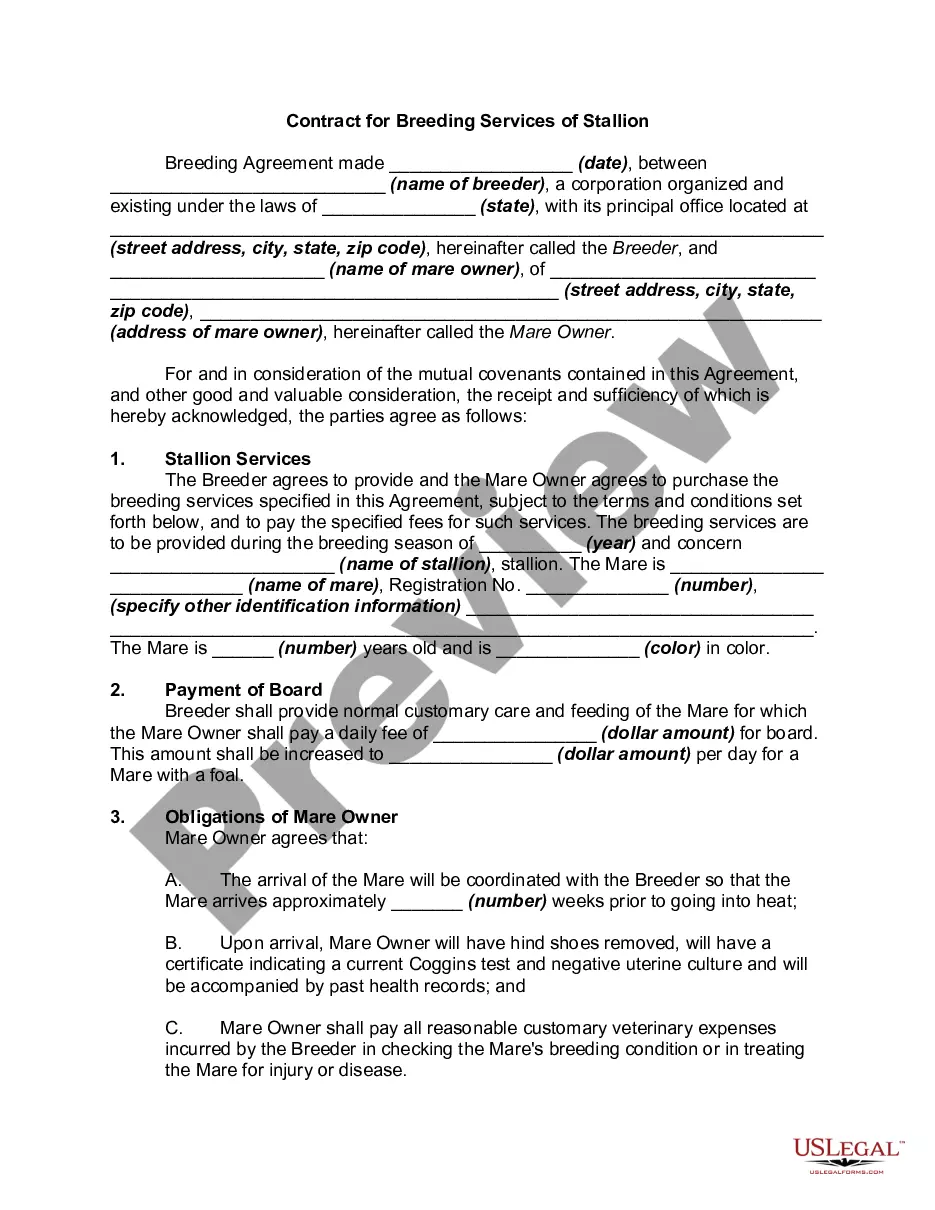
The Contract for Breeding Services of Stallion is a legal document that outlines the agreement between a breeder and a mare owner for breeding services. This form ensures that both parties understand their rights and responsibilities regarding the breeding process, including details about payment, care of the mare, and conditions for rebreeding if necessary. Unlike other contracts in the equine industry, this specific contract covers the unique terms related to stallion breeding services, making it essential for those involved in horse breeding.
What’s included in this form
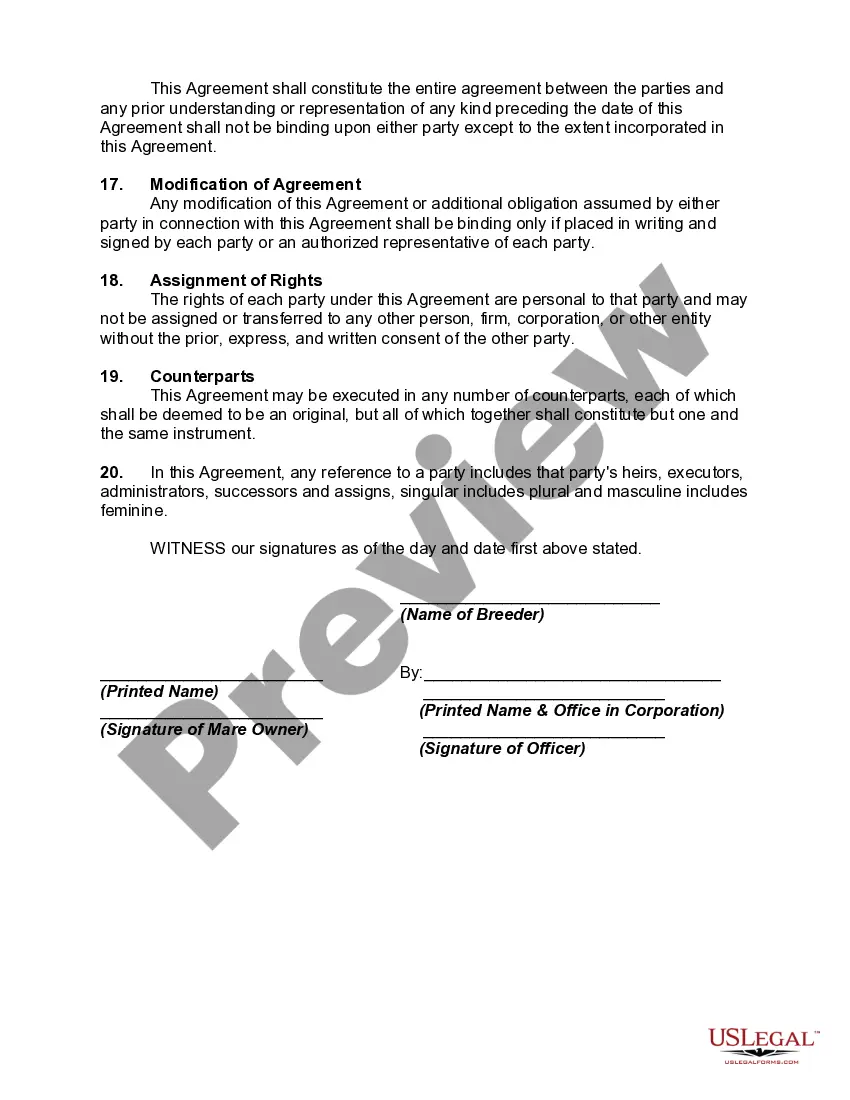
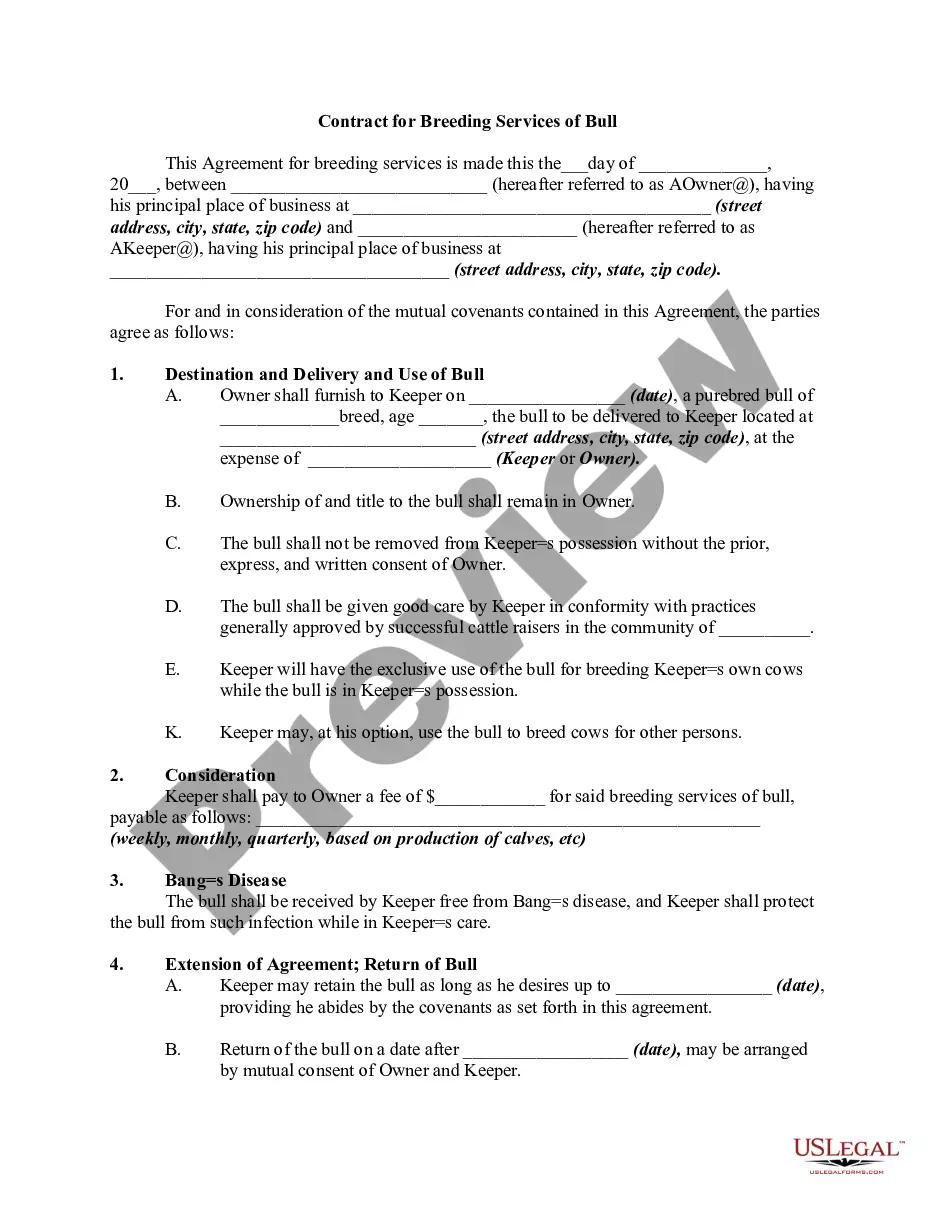
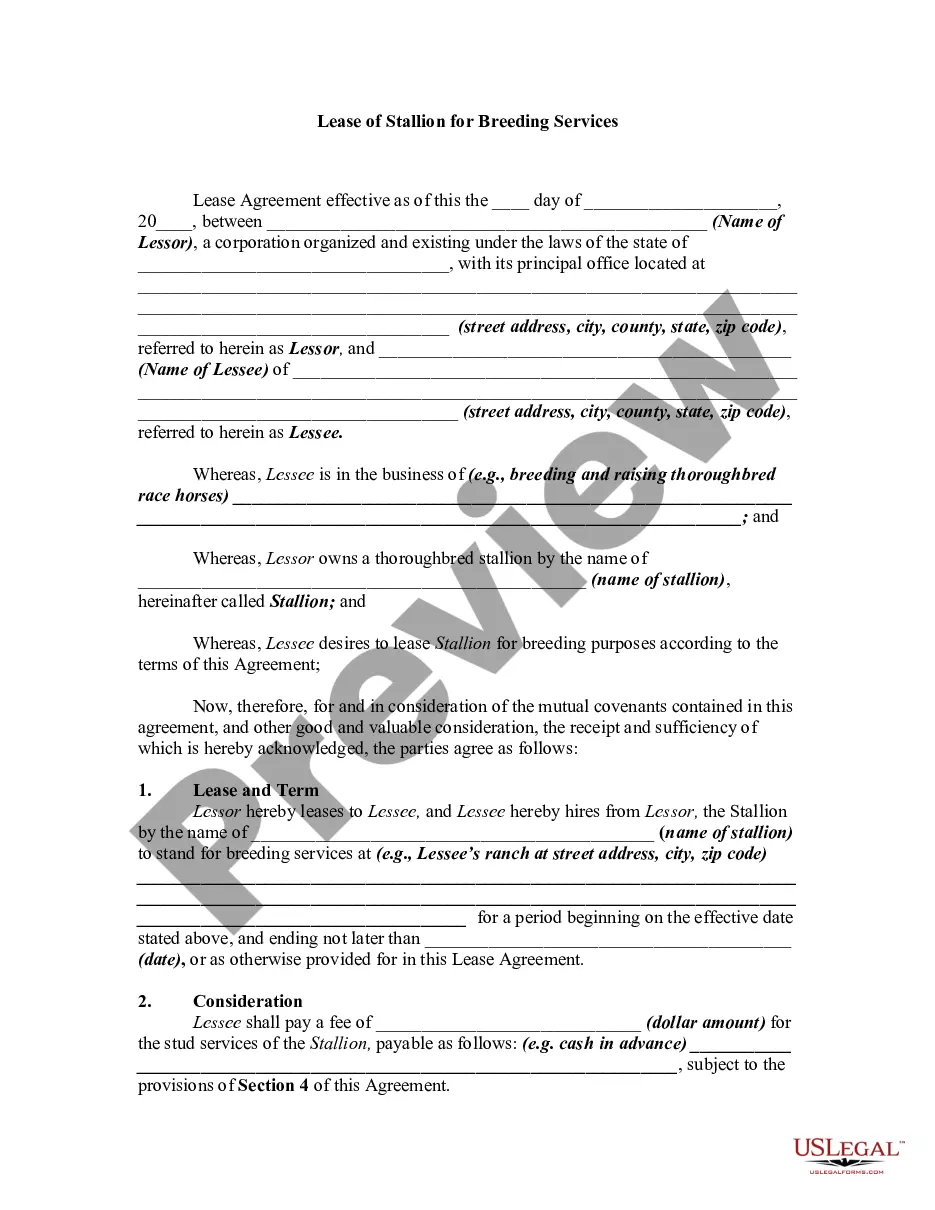
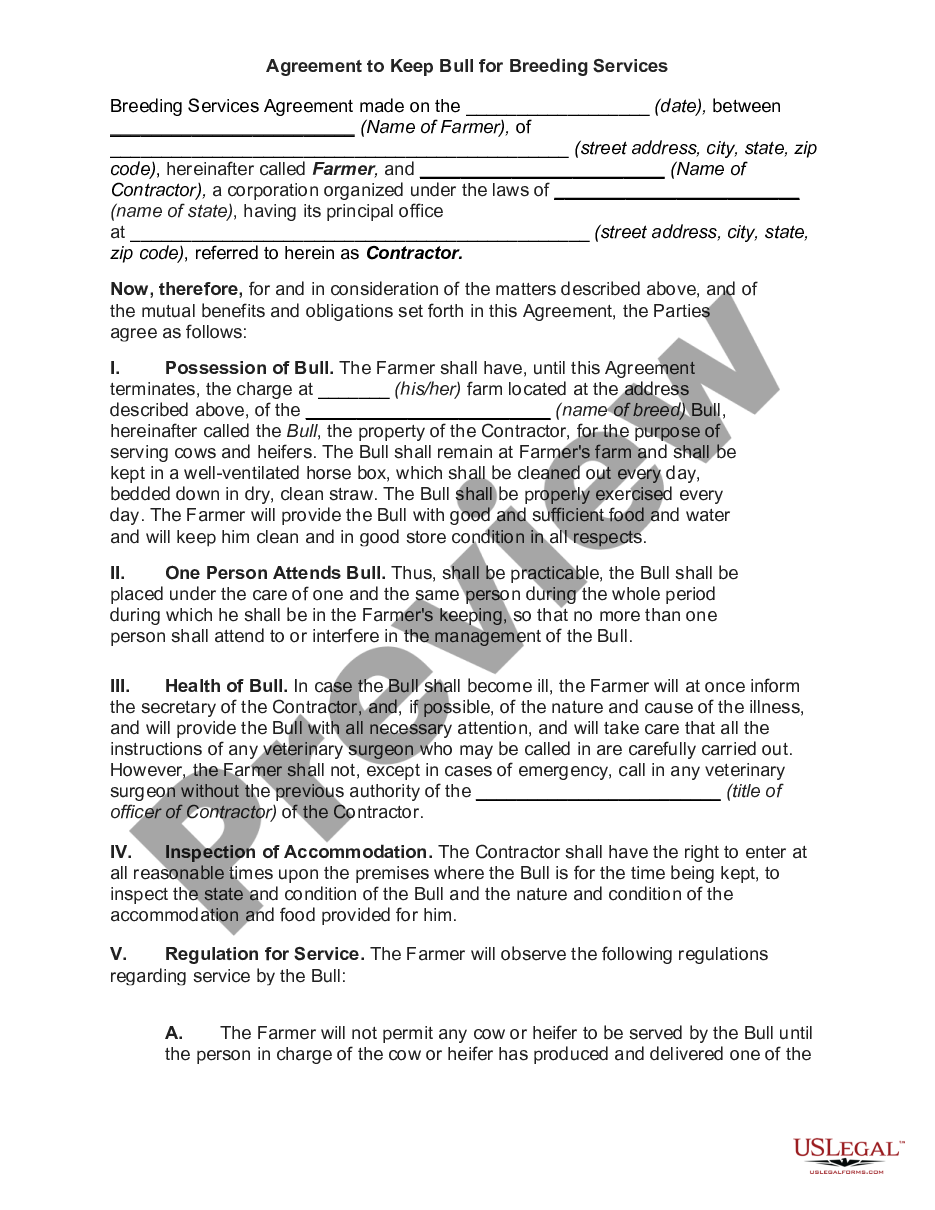
- Identification of the parties involved (Breeder and Mare Owner).
- Details regarding the stallion and mare being bred.
- Terms for payment and the daily board fee for the mare.
- Obligations of the mare owner including veterinary requirements.
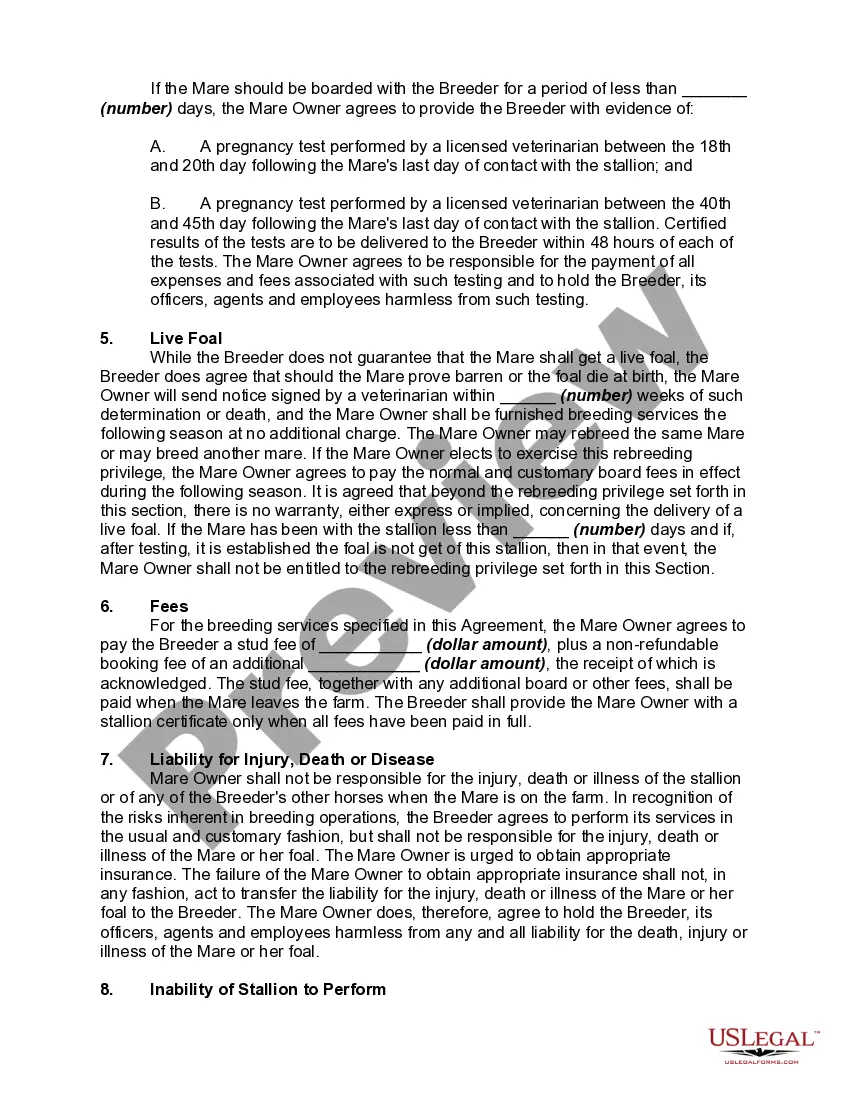
- Conditions for warranty of a live foal and related services.
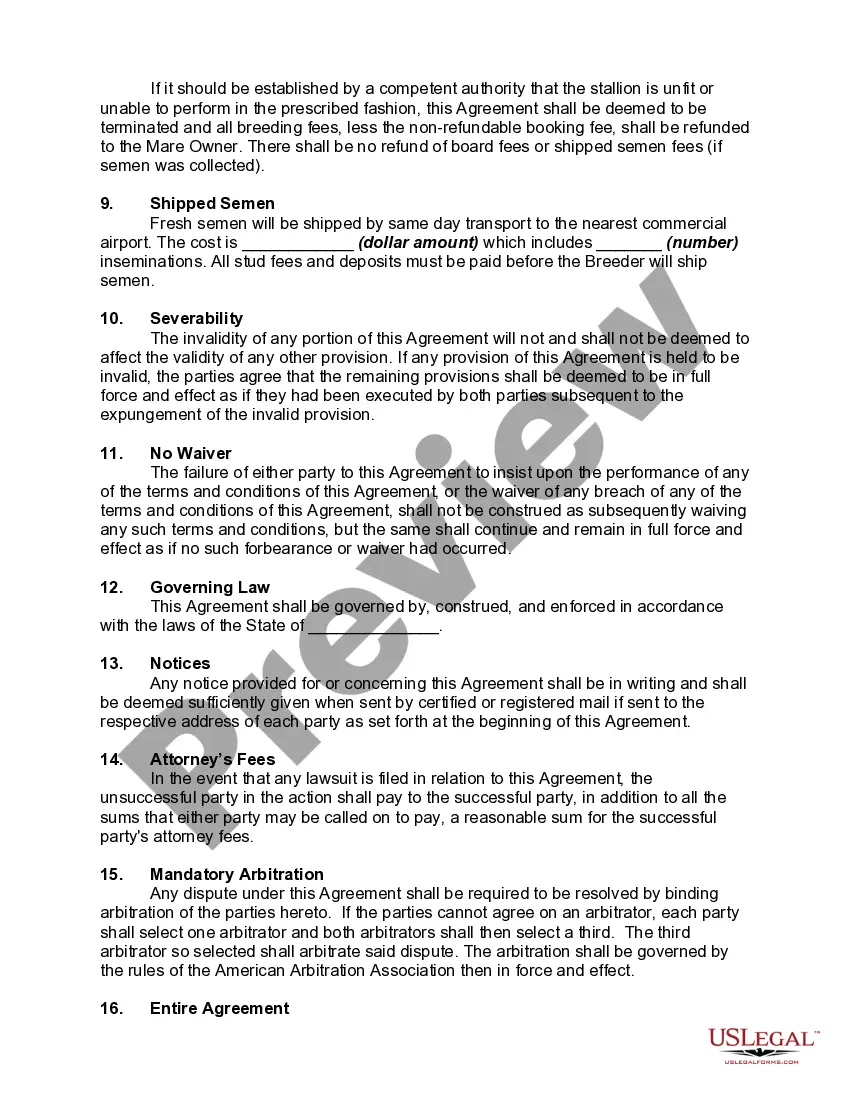
- Clauses on liability and inability of the stallion to perform.
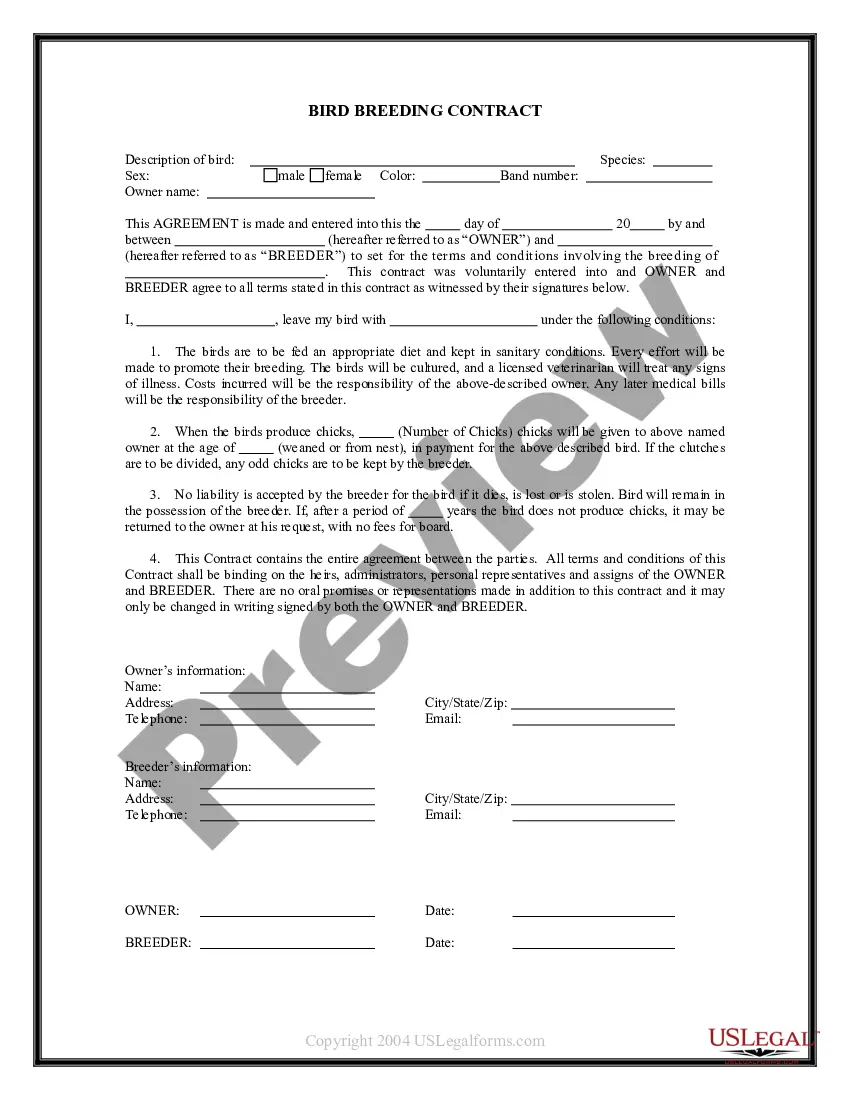
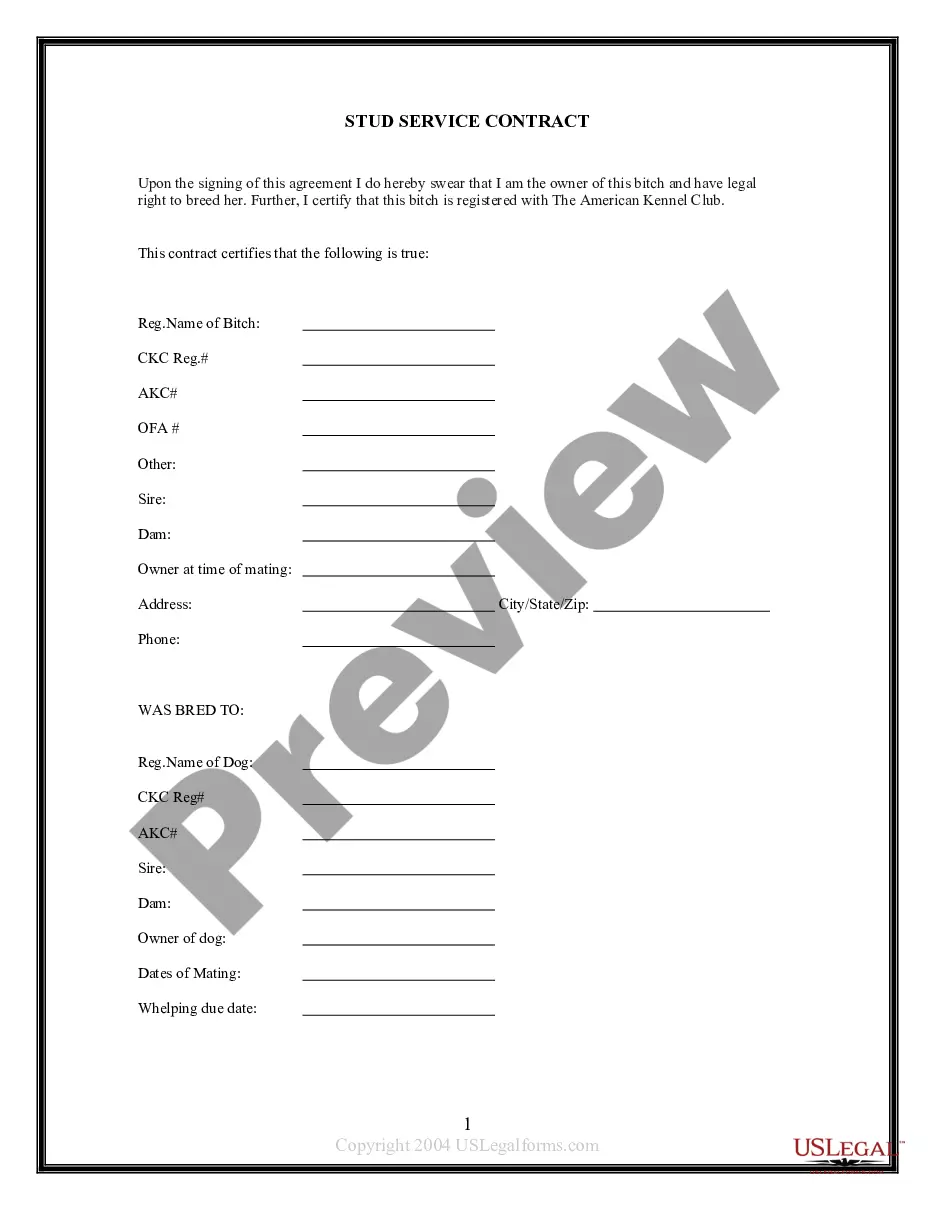
Situations where this form applies
This contract should be used when a mare owner intends to breed their mare with a stallion owned by a breeder. It is essential for establishing clear terms and responsibilities, particularly during the breeding season, and when specific conditions such as health checks and payment schedules are necessary. Utilize this form to ensure a smooth transaction and legal coverage for both parties in the breeding process.
Who should use this form
The following parties should consider using this form:
- Breeders who own stallions and offer breeding services.
- Mare owners looking to breed their mares with a stallion.
- Individuals or corporations involved in equine breeding operations.
Instructions for completing this form
- Identify the date of the agreement and the full names of the Breeder and Mare Owner.
- Provide details regarding the stallion and mare, including registration numbers and physical descriptions.
- Specify the scheduling for the arrival of the mare, health requirements, and testing obligations.
- Fill in payment details, including stud fees and daily board charges.
- Sign and date the agreement to make it legally binding.
Notarization guidance
In most cases, this form does not require notarization. However, some jurisdictions or signing circumstances might. US Legal Forms offers online notarization powered by Notarize, accessible 24/7 for a quick, remote process.
Get your form ready online
Our built-in tools help you complete, sign, share, and store your documents in one place.
Make edits, fill in missing information, and update formatting in US Legal Forms—just like you would in MS Word.
Download a copy, print it, send it by email, or mail it via USPS—whatever works best for your next step.
Sign and collect signatures with our SignNow integration. Send to multiple recipients, set reminders, and more. Go Premium to unlock E-Sign.
If this form requires notarization, complete it online through a secure video call—no need to meet a notary in person or wait for an appointment.
We protect your documents and personal data by following strict security and privacy standards.

Make edits, fill in missing information, and update formatting in US Legal Forms—just like you would in MS Word.

Download a copy, print it, send it by email, or mail it via USPS—whatever works best for your next step.

Sign and collect signatures with our SignNow integration. Send to multiple recipients, set reminders, and more. Go Premium to unlock E-Sign.

If this form requires notarization, complete it online through a secure video call—no need to meet a notary in person or wait for an appointment.

We protect your documents and personal data by following strict security and privacy standards.
Avoid these common issues
- Failing to provide accurate identification information for the mare and stallion.
- Overlooking the need for veterinary health records prior to breeding.
- Not clarifying payment terms and obligations which can lead to disputes.
- Neglecting to specify the conditions surrounding rebreeding privileges.
Why use this form online
- Convenient access to a legally sound template that saves time.
- Editable format allows for customization to meet specific needs.
- Reliable assurance that the document is drafted in compliance with legal standards.
Legal use & context
This contract is designed to be enforceable in a court of law, ensuring that both parties are held accountable to the terms outlined. It provides a clear legal framework for breeding agreements, protecting the rights and responsibilities of both the breeder and mare owner.
What to keep in mind
- A formal contract helps prevent disputes during the breeding process.
- Specific details must be filled out accurately for the agreement to be valid.
- Consultation with legal experts can clarify obligations and liabilities.
Looking for another form?


Form popularity
FAQ
Rigs can get mares pregnant. Rigs can be unpredictable and dangerous to handle. Investigation with blood tests is necessary to check if the horse has any functional testicular tissue. Abnormal testicles can be difficult to remove.
This effect of season on reproduction results in foals being born in the spring and early summer when environmental conditions should be best for foal survival. Therefore, the natural breeding season of the horse is from May until August and this is when highest pregnancy rates are likely to occur.
Breeding "half siblings" is no big deal, although it should be done intelligently like Ghostwind has done. Amateurs shouldn't do it, as they don't know lines that well. In your case, it would depend upon how the horses were matched up and how good the primary line is.
The salary a breeder earns is directly affected by which area of the equine industry they produce horses for. Top show prospects can sell for tens of thousands of dollars, while prospective racehorses can sell for millions of dollars if they have the right pedigree and conformation.
Stallions should usually not mate more than three times a day, McGladdery says, to help prevent fatigue and reduced semen quality. So for many breeders, especially in the Thoroughbred market, that means the mare gets bred just once per cycle.
Typically, a share in a stallion syndicate entitles the share owner certain breeding rights to the stallion; principally, the right to breed to the stallion without paying stud fees.
Methods of mating. Pasture mating, hand mating and artificial insemination are the three methods used, with variations of each. Breed registry regulations vary regarding the use of artificial insemination.
The limit of the number of mares the stallion could breed on a day would then be the number of ejaculates with at least 500 million motile sperm present in them. When a stallion is used for pasture breeding, we know that a stallion will mate much more than 2 or 3 times per day.