Notice of Statutory Breeder's Lien
What is this form?
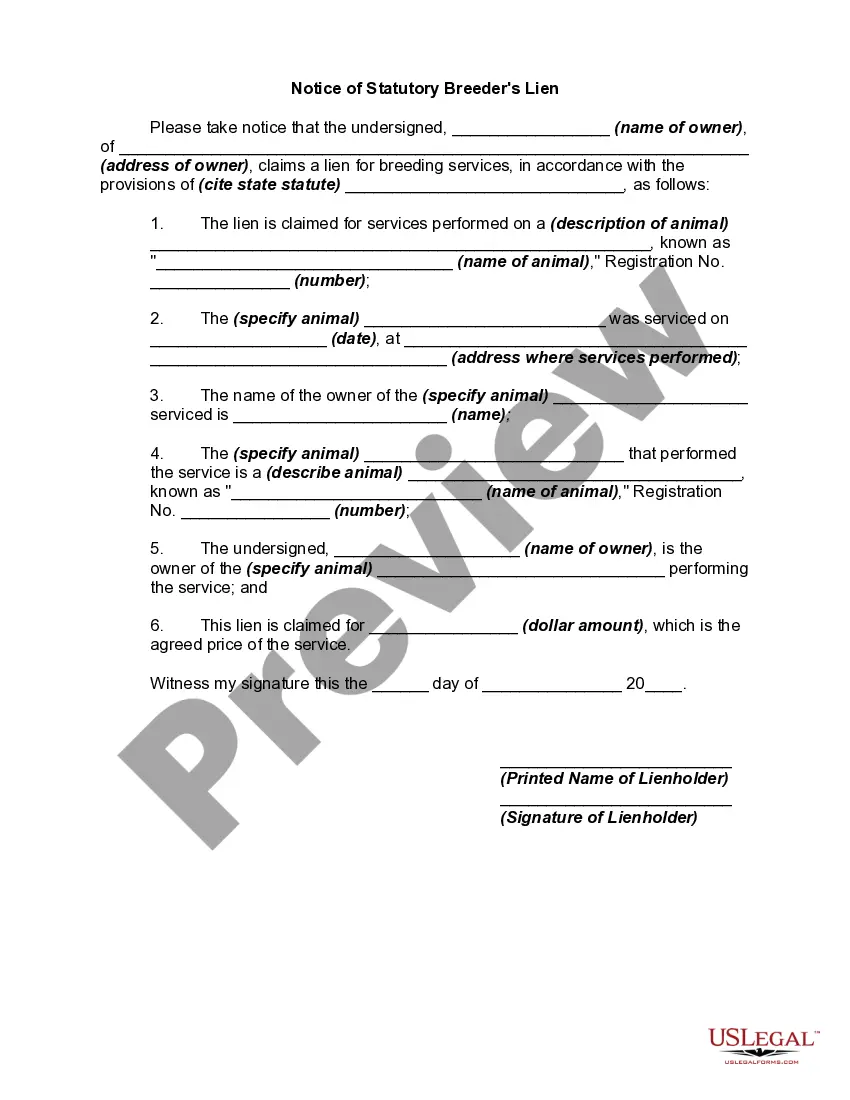
The Notice of Statutory Breeder's Lien is a legal document used by stallion owners to assert a lien for unpaid breeding services provided to a mare. This form allows breeders to formalize their claim to a foal and its mother in accordance with applicable state statutes, differing from other types of liens, which may be based on contracts or constitutional provisions. It establishes the right to receive payment for breeding services rendered.
Main sections of this form
- Name and address of the lienholder (stallion owner).
- Citation of the relevant state statute supporting the lien.
- Description of the animal being serviced, including its name and registration number.
- Date and location where the breeding service was performed.
- Name of the owner of the mare serviced.
- Details about the stallion providing the service, including its name and registration number.
- Amount claimed for the breeding services.
- Signature fields for the lienholder.
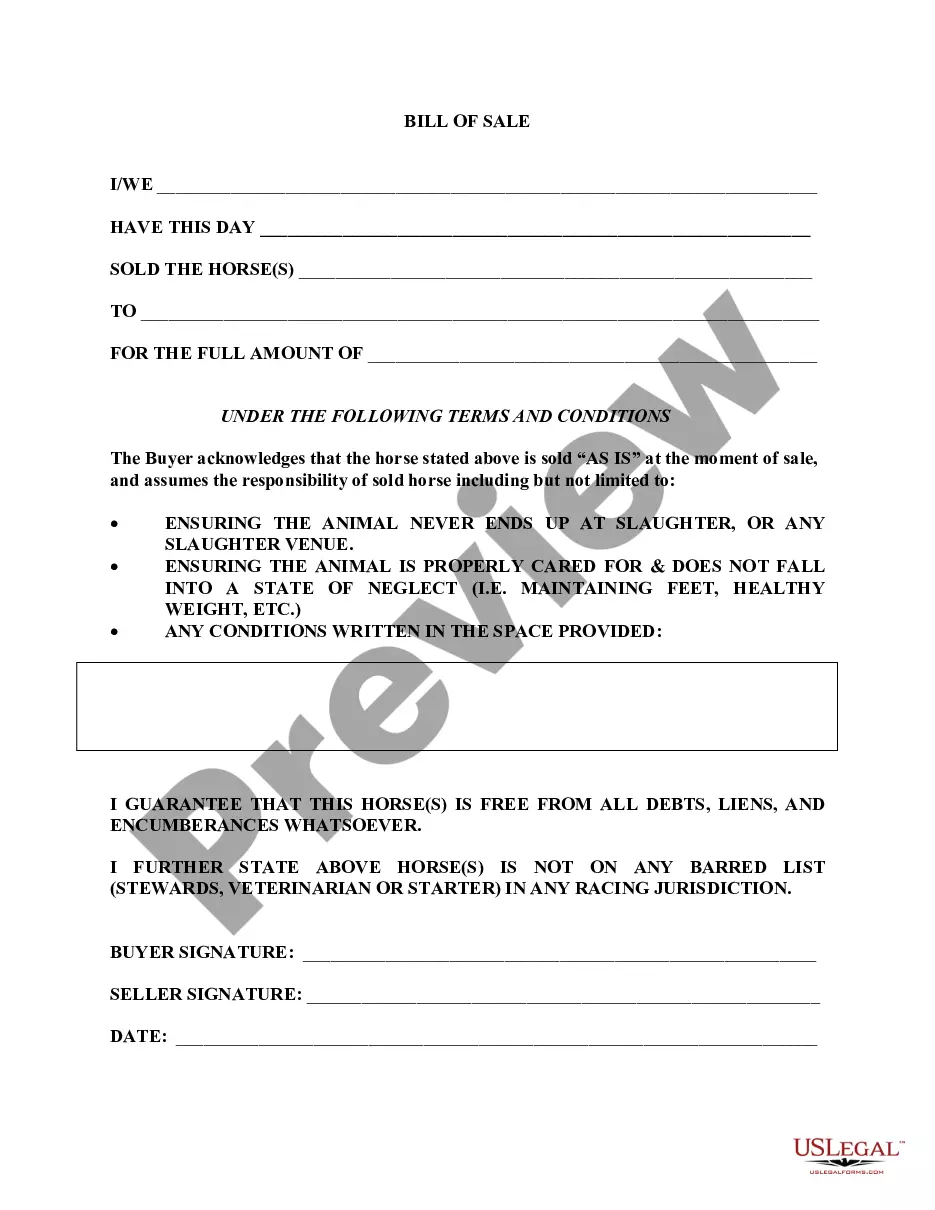
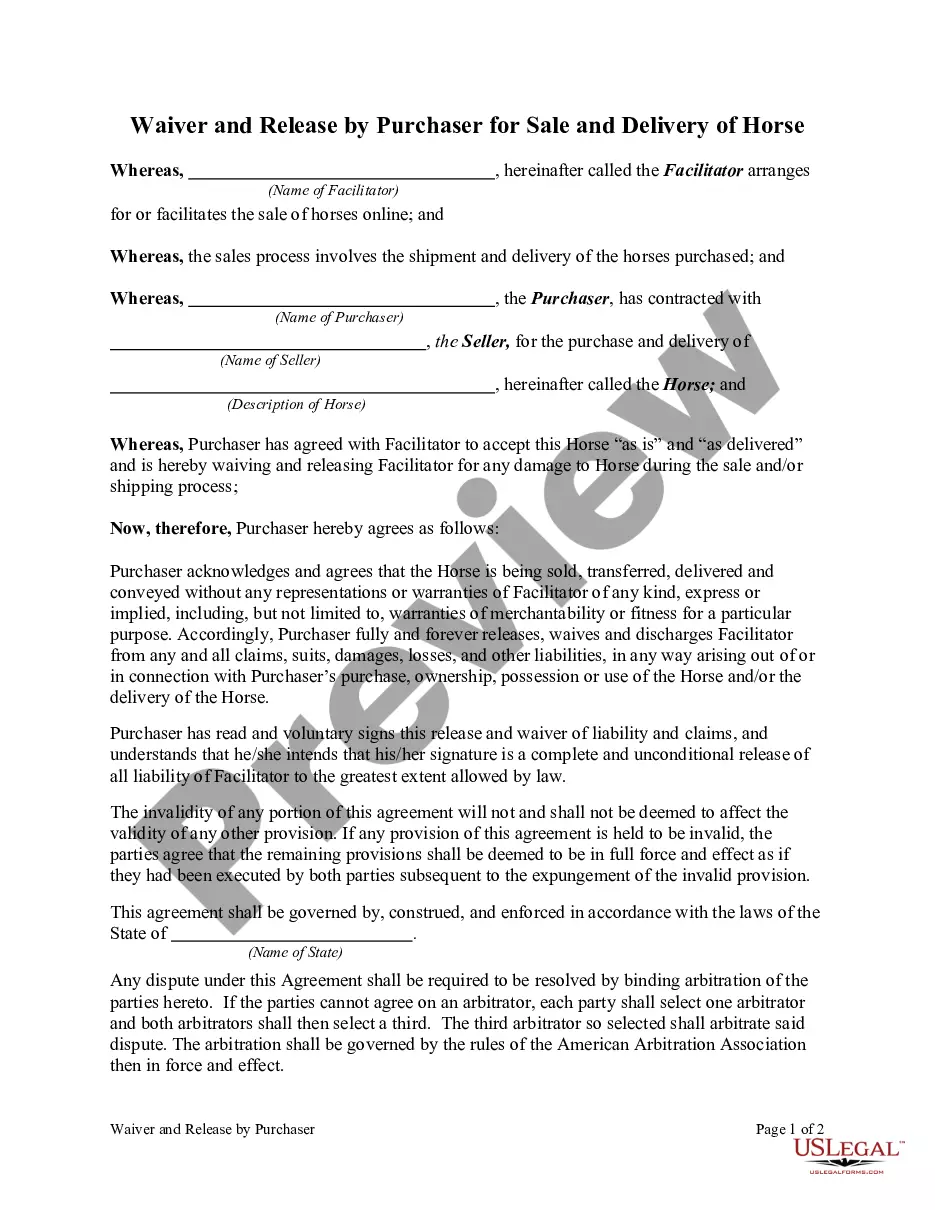
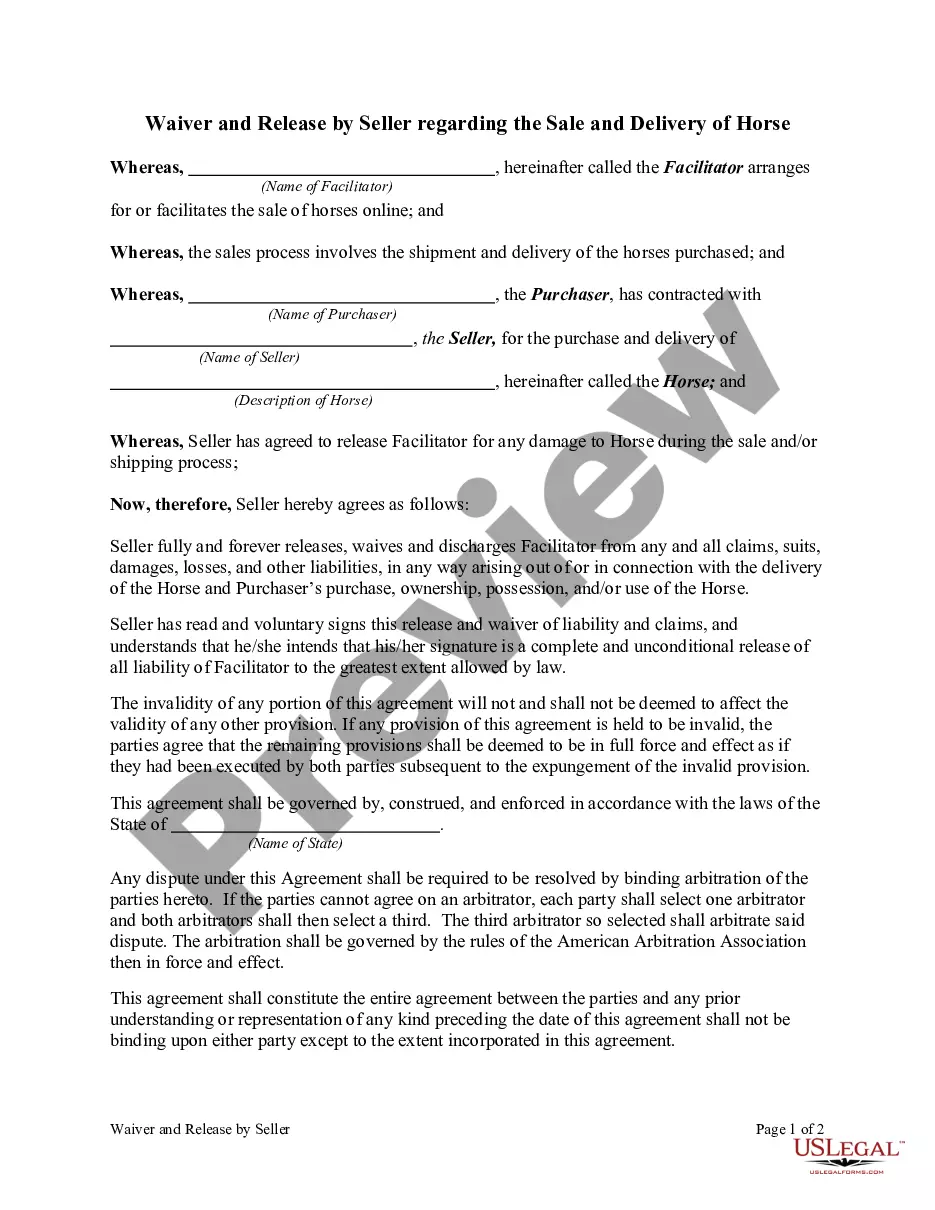
Common use cases
This form should be used when a stallion owner has not received payment for breeding services and needs to file a lien against the mare and foal. Situations may include disputes over payment, failure of the mare's owner to honor their service agreement, or any legal proceedings related to the enforcement of the lien. It is essential to act within the specified time frame to perfect the lien.
Who this form is for
- Stallion owners who provide breeding services.
- Veterinarians or service providers offering related services to horse breeders.
- Horse owners needing to understand their rights regarding breeding agreements.
Steps to complete this form
- Identify yourself as the lienholder and provide your contact information.
- Cite the state statute that governs the lien you are asserting.
- Describe the mare and foal, including names and registration numbers.
- Specify the date and location where the breeding service was performed.
- Enter the name of the mare's owner and the amount being claimed for services.
- Sign and date the form to validate your claim.
Notarization guidance
Notarization is generally not required for this form. However, certain states or situations might demand it. You can complete notarization online through US Legal Forms, powered by Notarize, using a verified video call available anytime.
Get your form ready online
Our built-in tools help you complete, sign, share, and store your documents in one place.
Make edits, fill in missing information, and update formatting in US Legal Forms—just like you would in MS Word.
Download a copy, print it, send it by email, or mail it via USPS—whatever works best for your next step.
Sign and collect signatures with our SignNow integration. Send to multiple recipients, set reminders, and more. Go Premium to unlock E-Sign.
If this form requires notarization, complete it online through a secure video call—no need to meet a notary in person or wait for an appointment.
We protect your documents and personal data by following strict security and privacy standards.

Make edits, fill in missing information, and update formatting in US Legal Forms—just like you would in MS Word.

Download a copy, print it, send it by email, or mail it via USPS—whatever works best for your next step.

Sign and collect signatures with our SignNow integration. Send to multiple recipients, set reminders, and more. Go Premium to unlock E-Sign.

If this form requires notarization, complete it online through a secure video call—no need to meet a notary in person or wait for an appointment.

We protect your documents and personal data by following strict security and privacy standards.
Common mistakes
- Failing to file the form within the statutory deadline.
- Omitting necessary details about the animals involved.
- Not citing the correct state statute, which could invalidate the lien.
- Neglecting to sign the form before submitting.
Why complete this form online
- Convenient access to legal documents, allowing for immediate completion and submission.
- Templates are drafted by licensed attorneys to ensure legal compliance.
- Editability allows users to customize the form as needed.
- Avoids potential errors associated with self-drafted documents.
Looking for another form?


Form popularity
FAQ
Most states require you to retain physical possession of the horse to perfect your lien. If the horse is gone, so is your lien. This requires you to put the owner on notice of the lien and to ALSO prohibit (in writing) the owner from removing the horse while the lien is declared.
A judicial lien is created when a court grants a creditor an interest in the debtor's property, after a court judgment.The lien is the first step by the judgment creditor in a process that will culminate in a sale of the attached property, to satisfy the judgment debt.
A lien is a legal right to claim a security interest in a property provided by the owner of the property to the creditor.The grantor (the owner of the property) is called the lienee while the party that receives the lien is referred to as the lienor or lien holder.
Voluntary and Involuntary Liens. Creditors, such as a mortgage or car lender, can ask borrowers to put up the purchased property as collateral as part of the condition of the loan. Creditors With Involuntary Liens. Judgment Liens. Other Types of Involuntary Liens.
A lien is nothing more than a property interest that secures a debt. A statutory lien is a lien that is created by law or statute, usually in favor of a taxing authority, like the state or the IRS.
A statutory lien is created by statute. A real estate tax lien, for example, is an involuntary, statutory lien. It is created by statute without any action by the property owner.
A Lien Demand Letter or Notice of Intent to Lien is a formal demand for payment.A lien demand letter puts a debtor on notice of your intent to lien the job site property by a specific date deadline. Increase your odds of getting paid with a lien demand letter.
A mortgage creates a lien on your property that gives the lender the right to foreclose and sell the home to satisfy the debt. A deed of trust (sometimes called a trust deed) is also a document that gives the lender the right to sell the property to satisfy the debt should you fail to pay back the loan.
The Indian Contract Act, 1872 classifies the Right of Lien into two types: Particular Lien and General Lien. Section 170 of the aforesaid Act gives the exact definition of Particular Lien which states that the Bailee is free to hold control of a precise property with position to the charge which is due.