Bylaws of a Cooperative Association of Consumers
Understanding this form
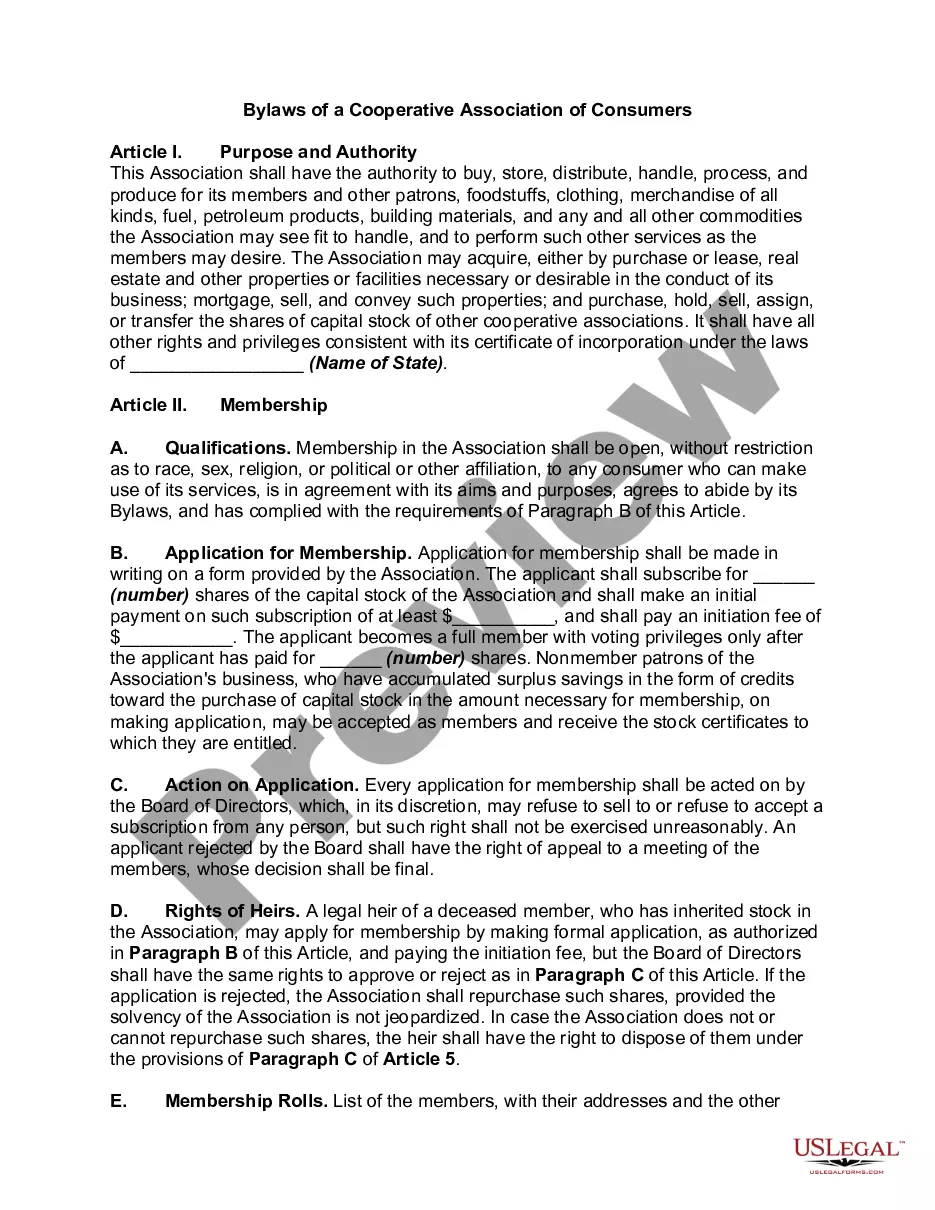
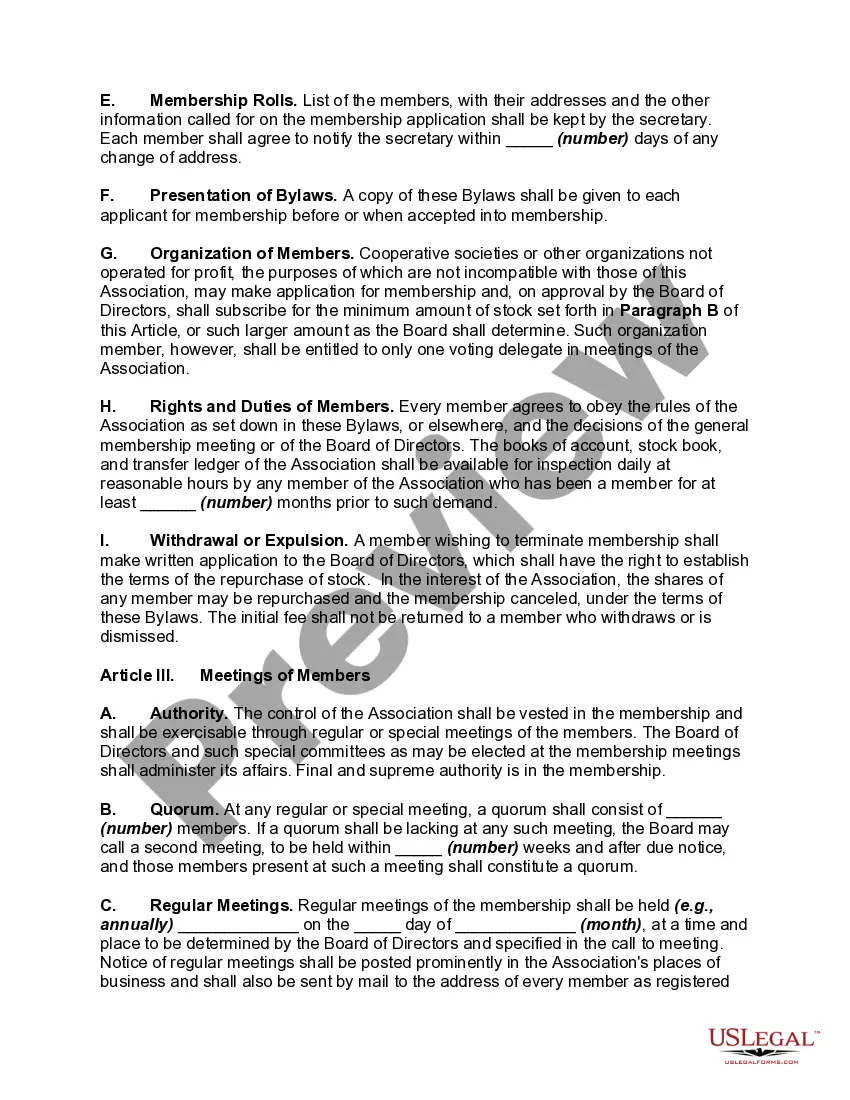
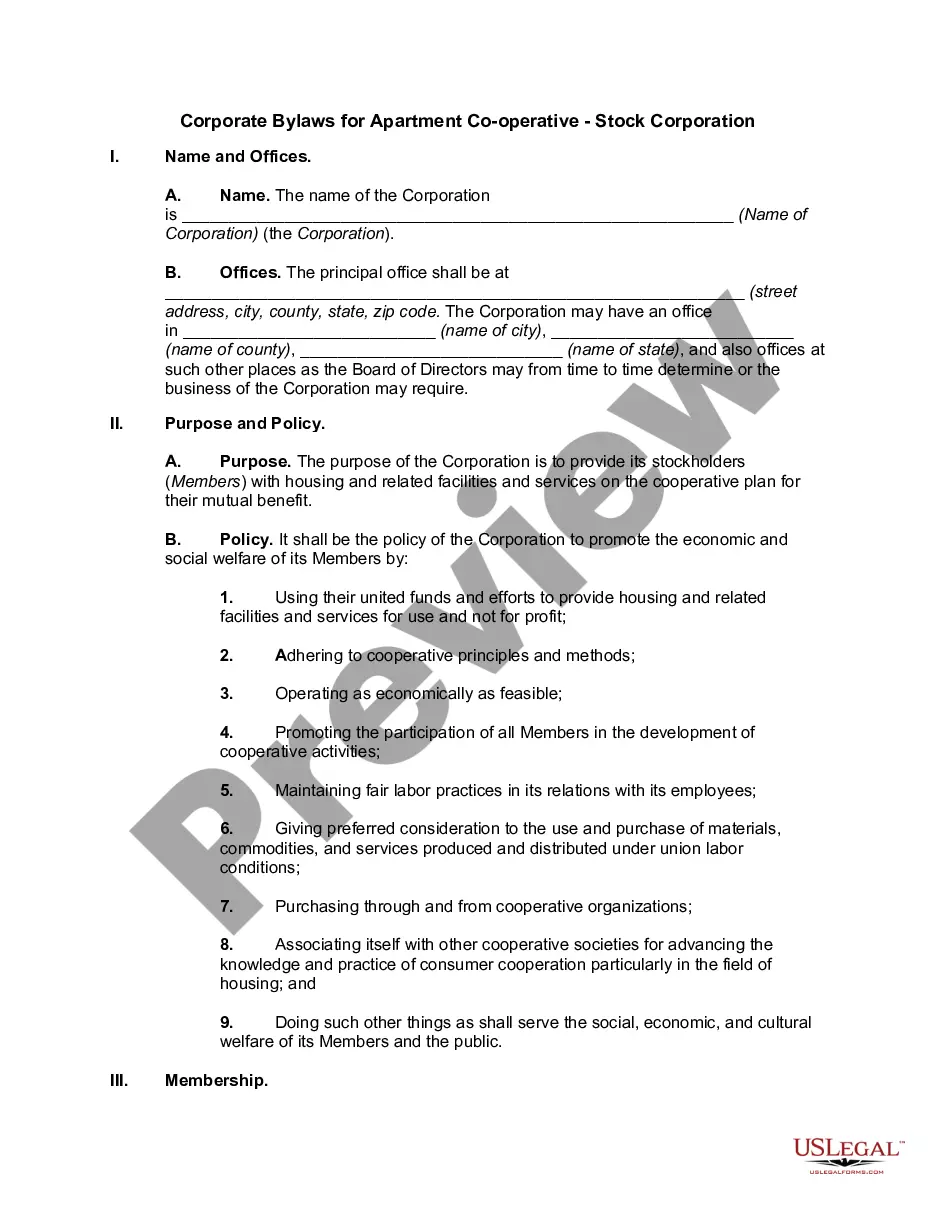
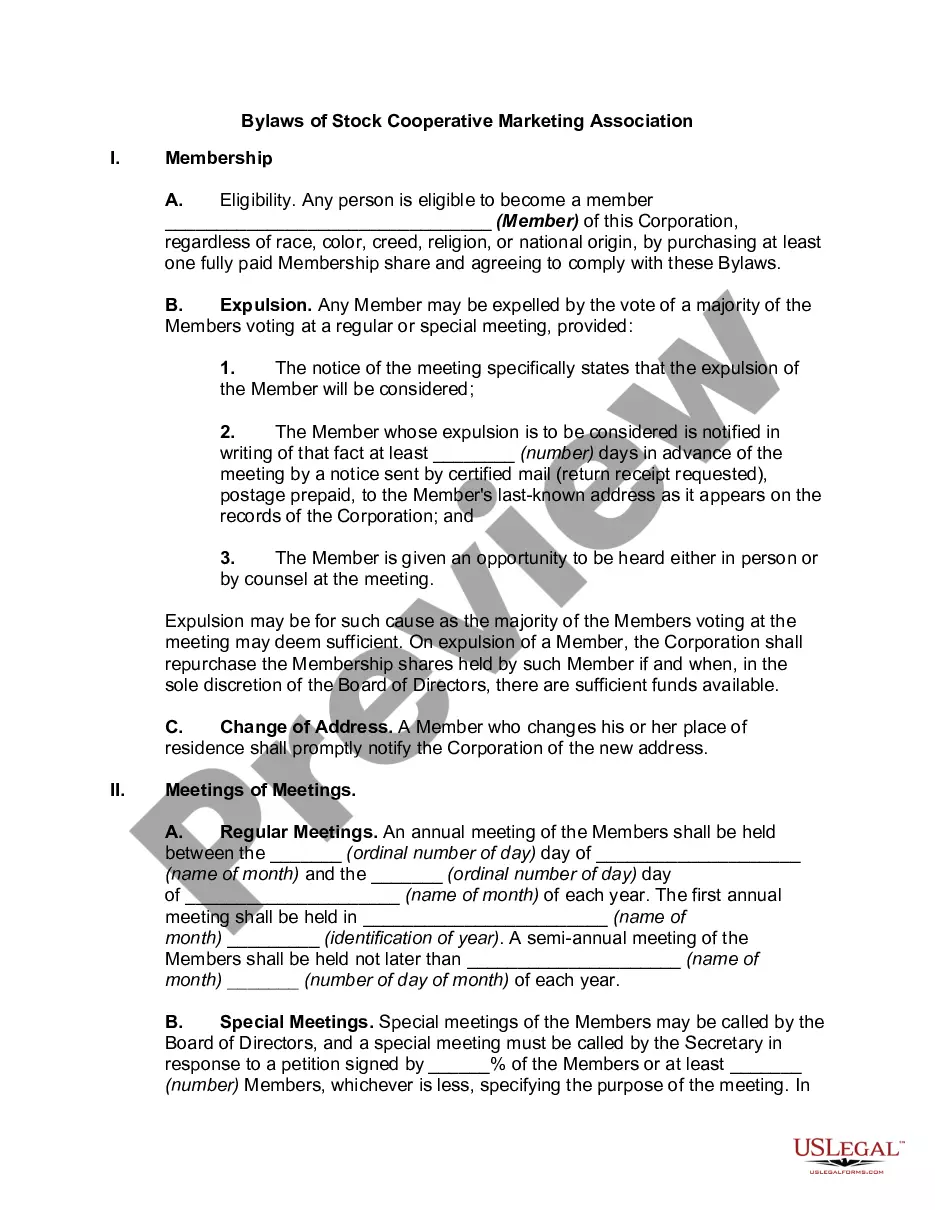
The Bylaws of a Cooperative Association of Consumers is a legal document that establishes the internal rules governing a consumers' cooperative. This form sets forth guidelines on membership, meetings, the roles of officers and directors, as well as the rights and responsibilities of members. Unlike other corporate bylaws, this specific form is tailored for cooperatives, focusing on the mutual benefit of its members rather than profit generation.
Key components of this form
- Article I outlines the purpose and authority of the cooperative, including the types of goods and services provided.
- Article II details membership qualifications, application processes, and rights of members.
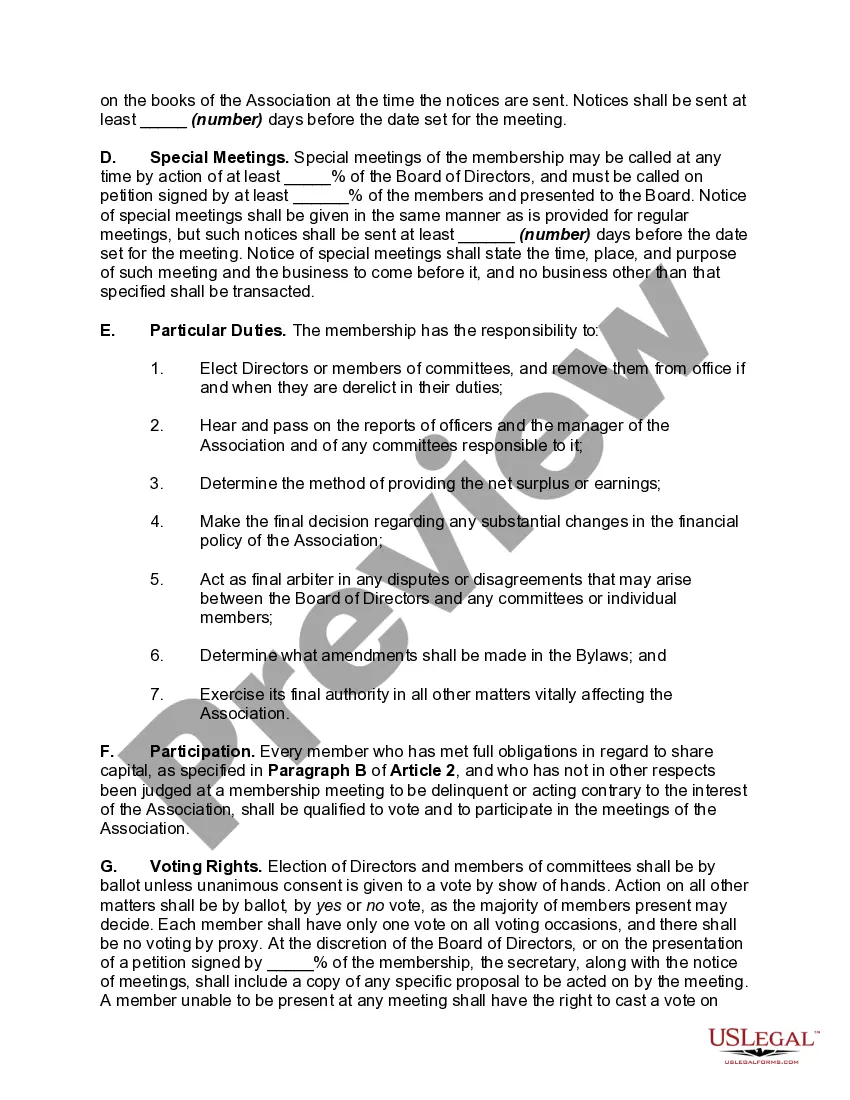
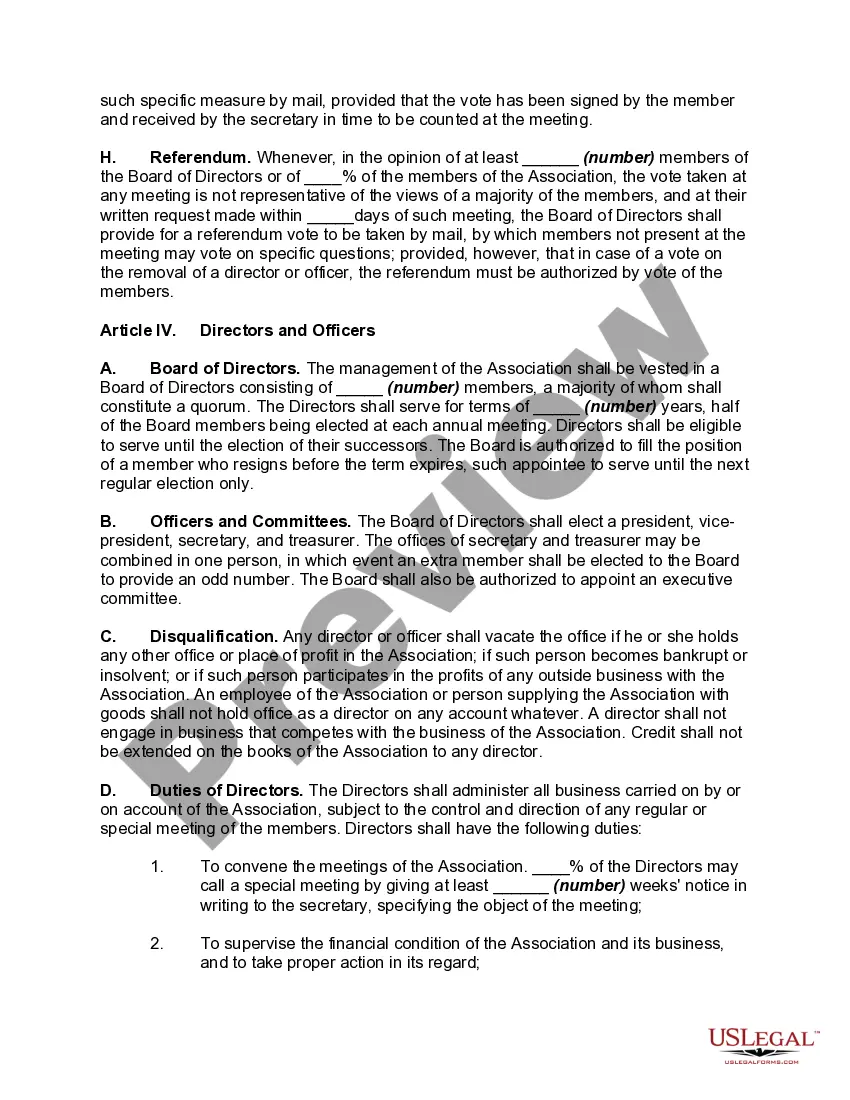
- Article III describes the procedures for member meetings, including quorum requirements and voting rights.
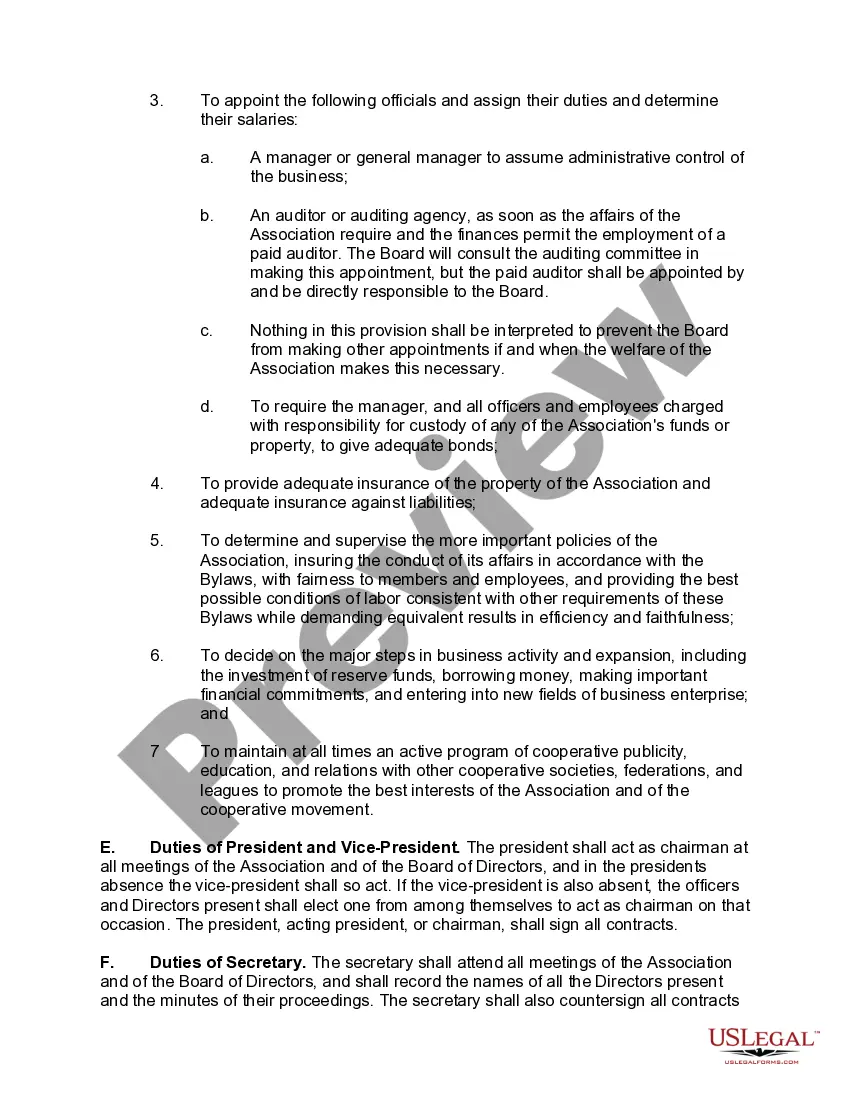
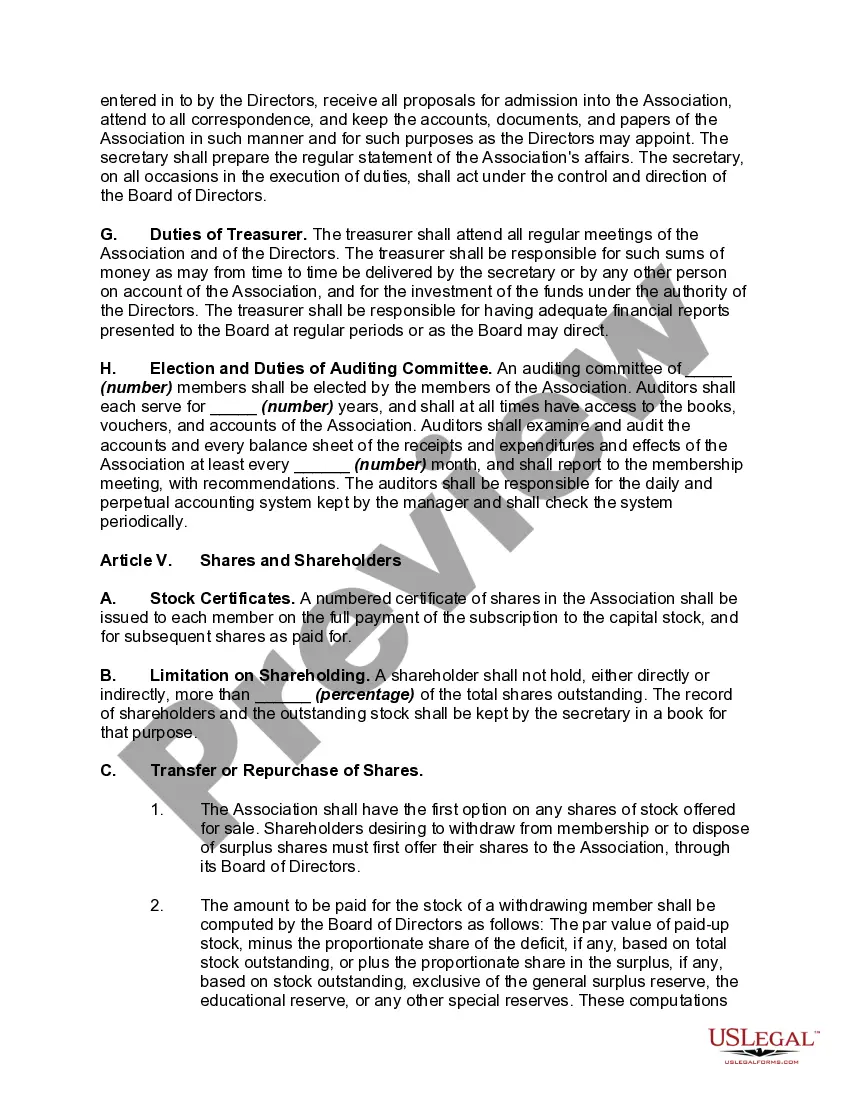
- Article IV defines the structure, powers, and duties of the Board of Directors and officers.
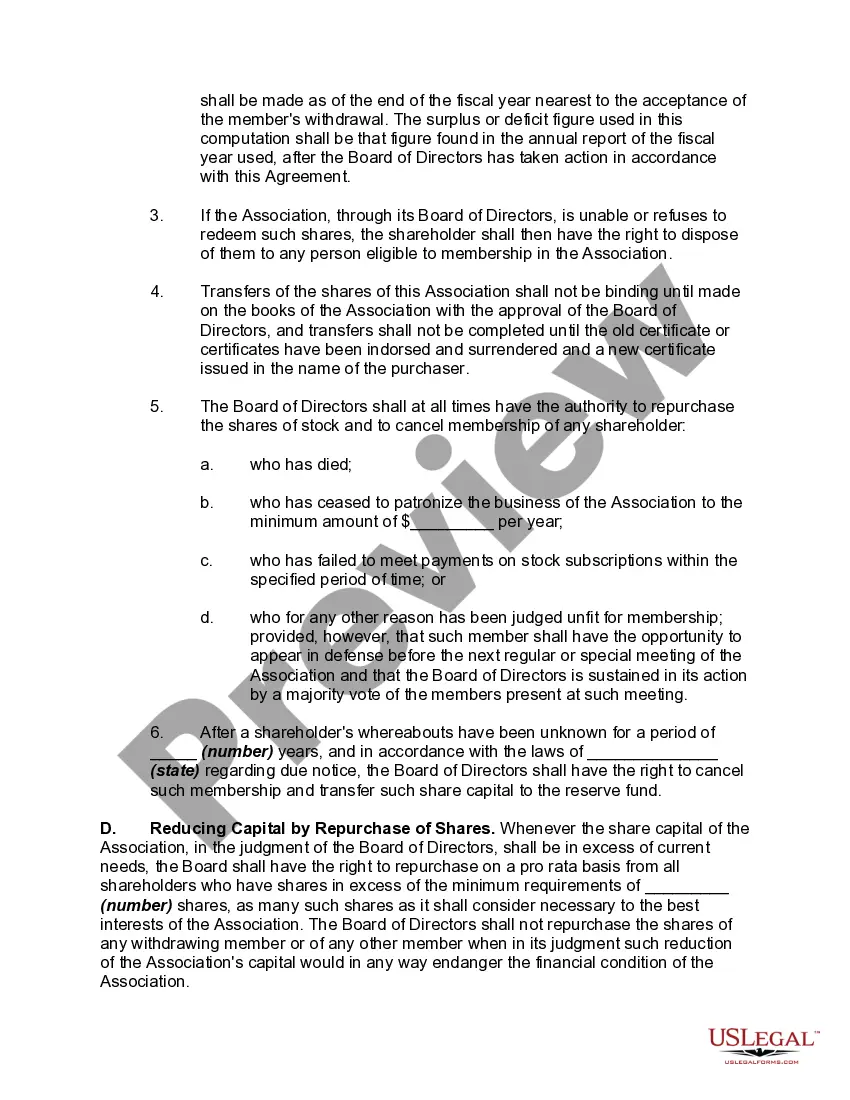
- Article V explains the handling of stock shares and shareholder rights.
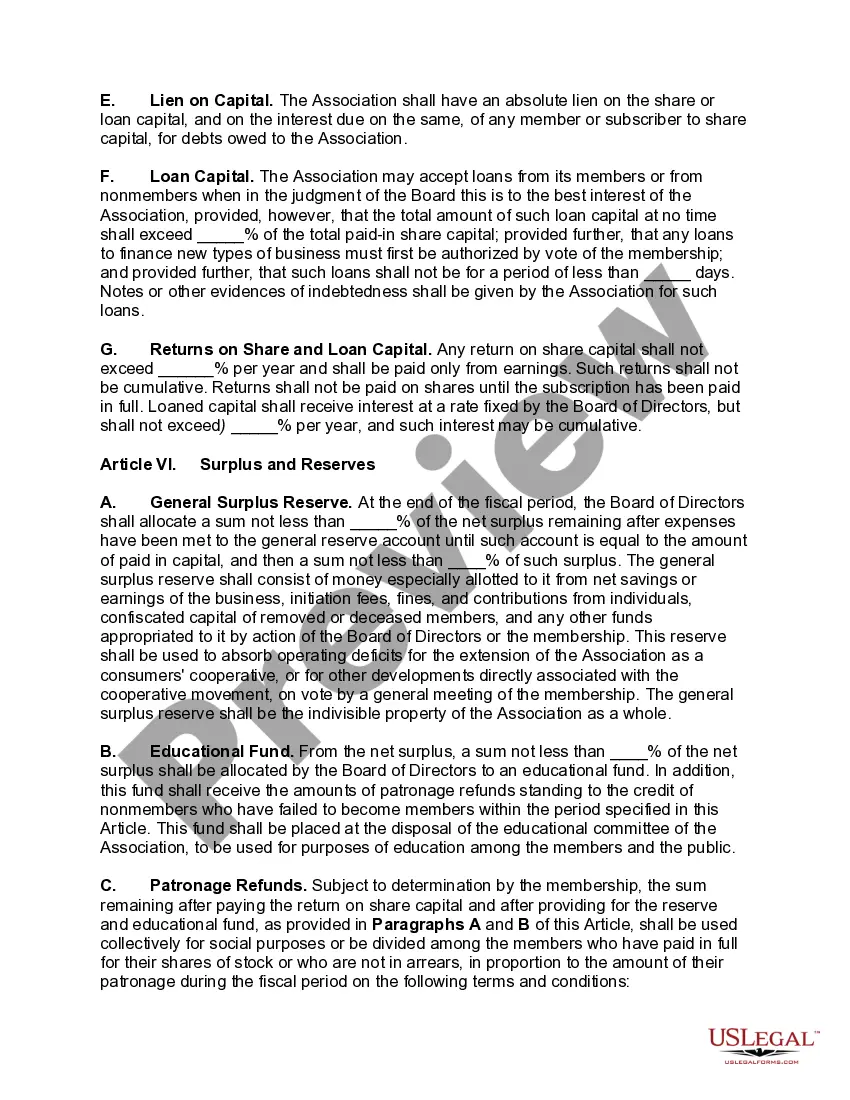
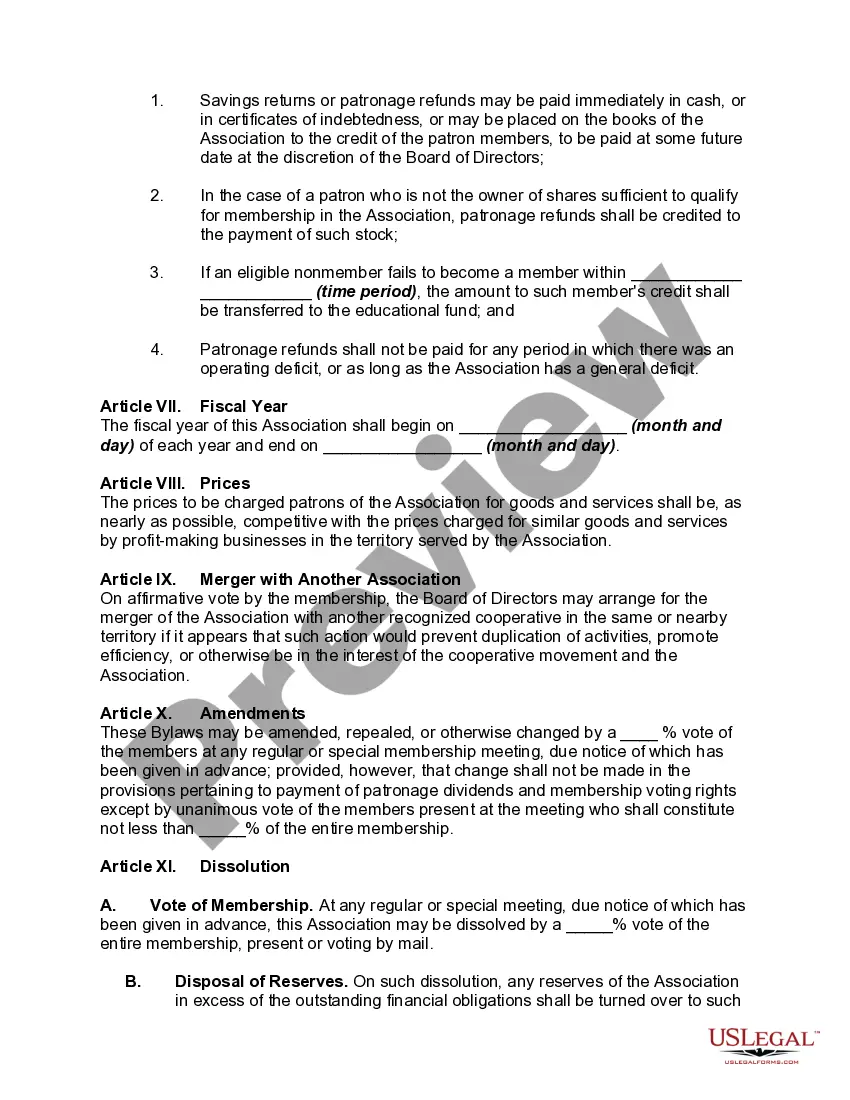
- Article VI discusses surplus distribution and reserves within the cooperative.


When this form is needed
This form should be used when forming a consumers' cooperative association. It is essential for outlining the governance structure, membership rules, and operational guidelines necessary for the effective functioning of the cooperative. This document is particularly important when the cooperative seeks to ensure mutual benefits for its members and maintain compliant operations.
Who should use this form
This form is intended for:
- Individuals or groups looking to establish a consumers' cooperative.
- Current members of a cooperative aiming to document or amend their bylaws.
- Board members and officers responsible for governance and compliance within a cooperative association.
How to complete this form
- Identify and define the purpose of the cooperative in Article I.
- Specify membership qualifications and the application process in Article II.
- Detail the structure and responsibilities of the Board of Directors in Article IV.
- Outline the procedures for regular and special meetings in Article III.
- Fill in any state-specific requirements as necessary for compliance.
Does this form need to be notarized?
In most cases, this form does not require notarization. However, some jurisdictions or signing circumstances might. US Legal Forms offers online notarization powered by Notarize, accessible 24/7 for a quick, remote process.
Get your form ready online
Our built-in tools help you complete, sign, share, and store your documents in one place.
Make edits, fill in missing information, and update formatting in US Legal Forms—just like you would in MS Word.
Download a copy, print it, send it by email, or mail it via USPS—whatever works best for your next step.
Sign and collect signatures with our SignNow integration. Send to multiple recipients, set reminders, and more. Go Premium to unlock E-Sign.
If this form requires notarization, complete it online through a secure video call—no need to meet a notary in person or wait for an appointment.
We protect your documents and personal data by following strict security and privacy standards.

Make edits, fill in missing information, and update formatting in US Legal Forms—just like you would in MS Word.

Download a copy, print it, send it by email, or mail it via USPS—whatever works best for your next step.

Sign and collect signatures with our SignNow integration. Send to multiple recipients, set reminders, and more. Go Premium to unlock E-Sign.

If this form requires notarization, complete it online through a secure video call—no need to meet a notary in person or wait for an appointment.

We protect your documents and personal data by following strict security and privacy standards.
Common mistakes
- Failing to adequately define membership qualifications and rights.
- Overlooking the quorum requirements for meetings, leading to invalid decision-making.
- Not specifying the duties and powers of directors clearly, which can lead to governance issues.
Why use this form online
- Convenient access to a comprehensive template tailored for cooperative associations.
- Easy editing capabilities to customize the form per specific needs.
- Secure and reliable, ensuring that all legal requirements are met.
Summary of main points
- The bylaws define the operational framework of a consumer cooperative.
- This form is essential for establishing clear roles, responsibilities, and governance procedures.
- Failure to comply with state-specific regulations could invalidate the bylaws.
- Using an online platform allows for efficient customization and secure management of your bylaws.
Looking for another form?







Form popularity
FAQ
Bylaws. In the early years of the industry, developer lawyers used by laws or by-laws. Now it is a single word without spaces or hyphens: bylaws. The word is not capitalized if used generically.
The bylaws of a corporation specify the numerous methods that affect the company's operations. A corporation's bylaws can contain provisions relating to the ways it conducts its affairs, the duties of its directors and the responsibilities of its officers and employees.
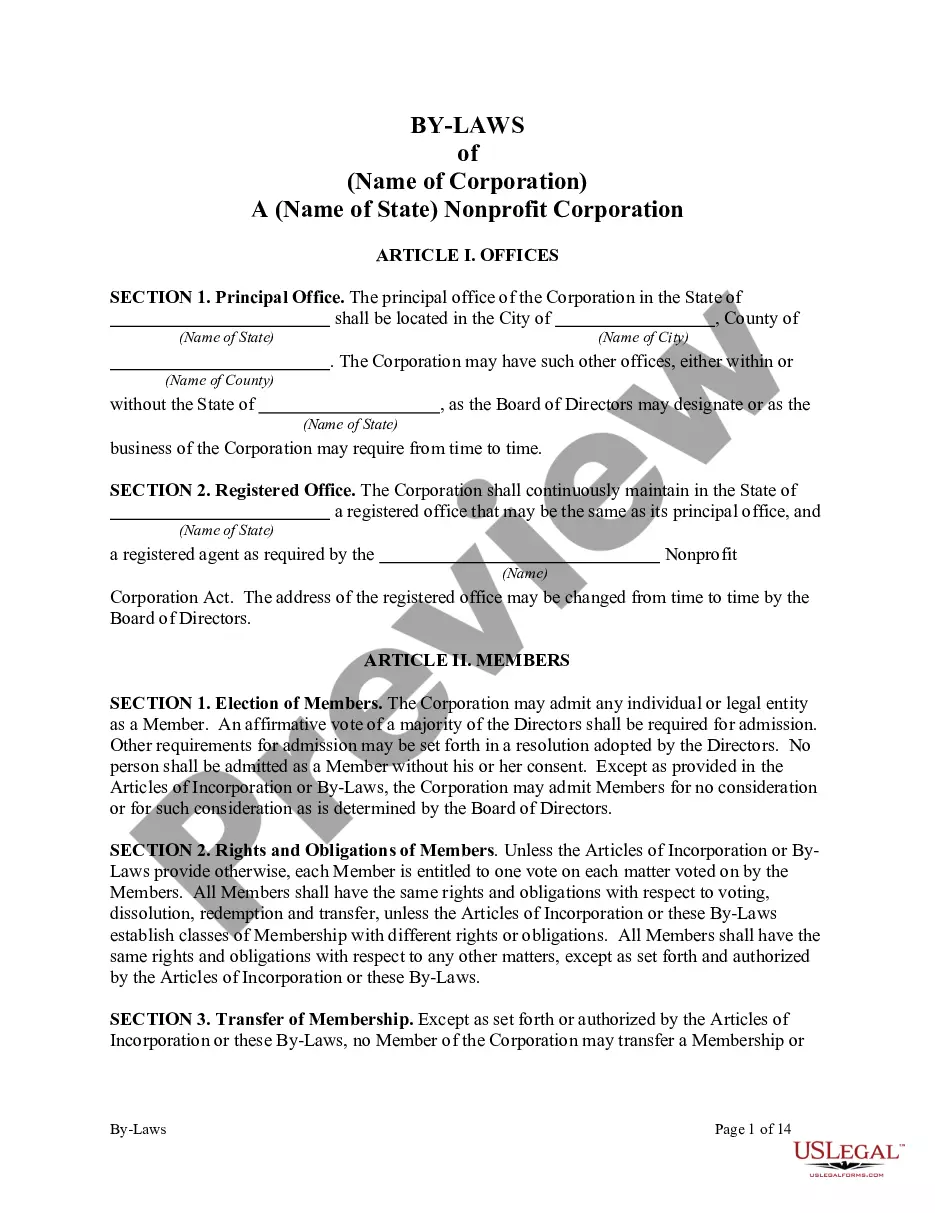
Article I. Name and purpose of the organization. Article II. Membership. Article III. Officers and decision-making. Article IV. General, special, and annual meetings. Article V. Board of Directors.
Bylaws generally define things like the group's official name, purpose, requirements for membership, officers' titles and responsibilities, how offices are to be assigned, how meetings should be conducted, and how often meetings will be held.
Cooperative Law, as defined by the ICA Cooperative Law Committee (CLC), includes all legal rules that shape a cooperative enterprise and regulate its operations, such as law on cooperatives, international law, national constitutions, administrative Acts, court decisions and jurisprudence, cooperative bylaws and
In general, cooperatives can develop their bylaws as they wish, if the legislation applying to them allows it. Often bylaws are written according to guidelines provided to cooperatives. Optional sections in the bylaws are often included to meet the requirements of the cooperative's individual purpose.
When founding your cooperative, the bylaws are an important part of the process. The bylaws can be amended at the annual general meeting and define the organization and its running.
Unique Duties and Responsibilities. General Duties and Responsibilities. Duty of Attention/Diligence. Duty of Loyalty. Duty of Care. Business Judgment Rule. Indemnification. Insurance.
Bye-laws include the objects of the society and completely define and restrict the society's activities, but the rights and liabilities of members are determined by the Act and not by the bye-laws as such. The bye-laws are the basic structure of the society and are binding on the members.