Novation Agreement on Assignment of Sales Contract
What this document covers
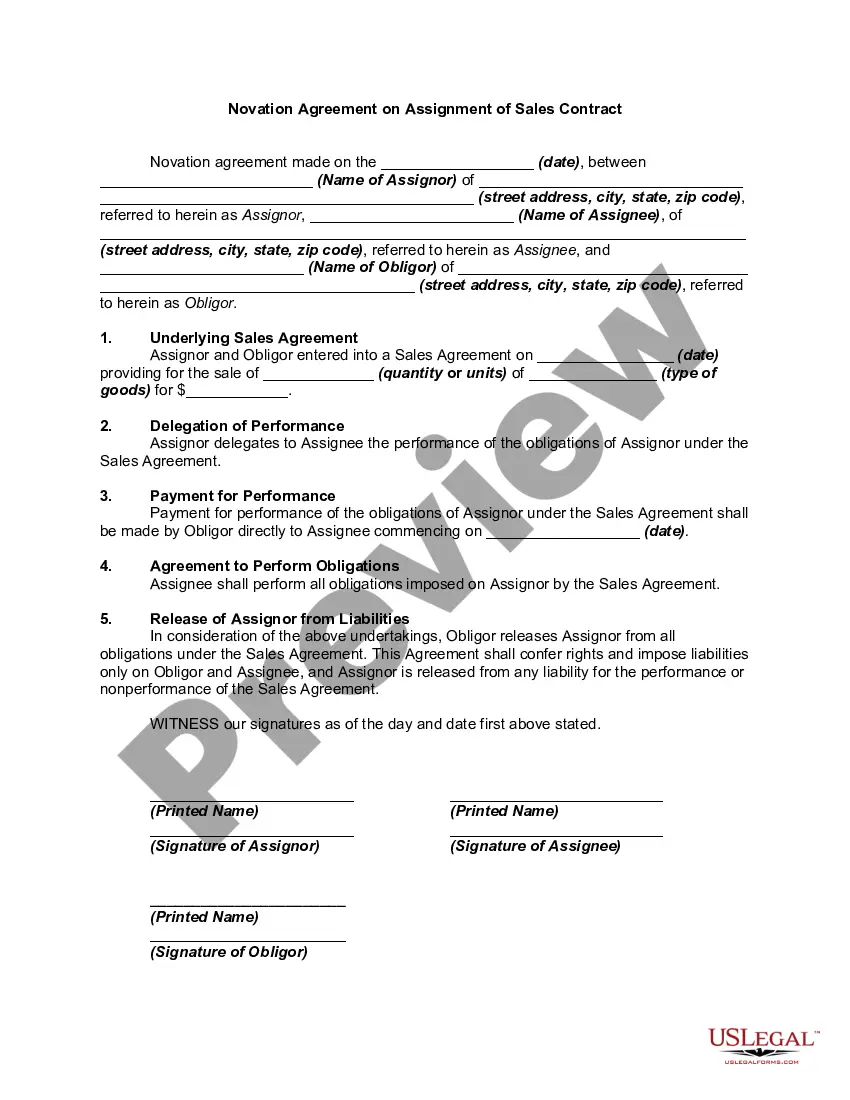
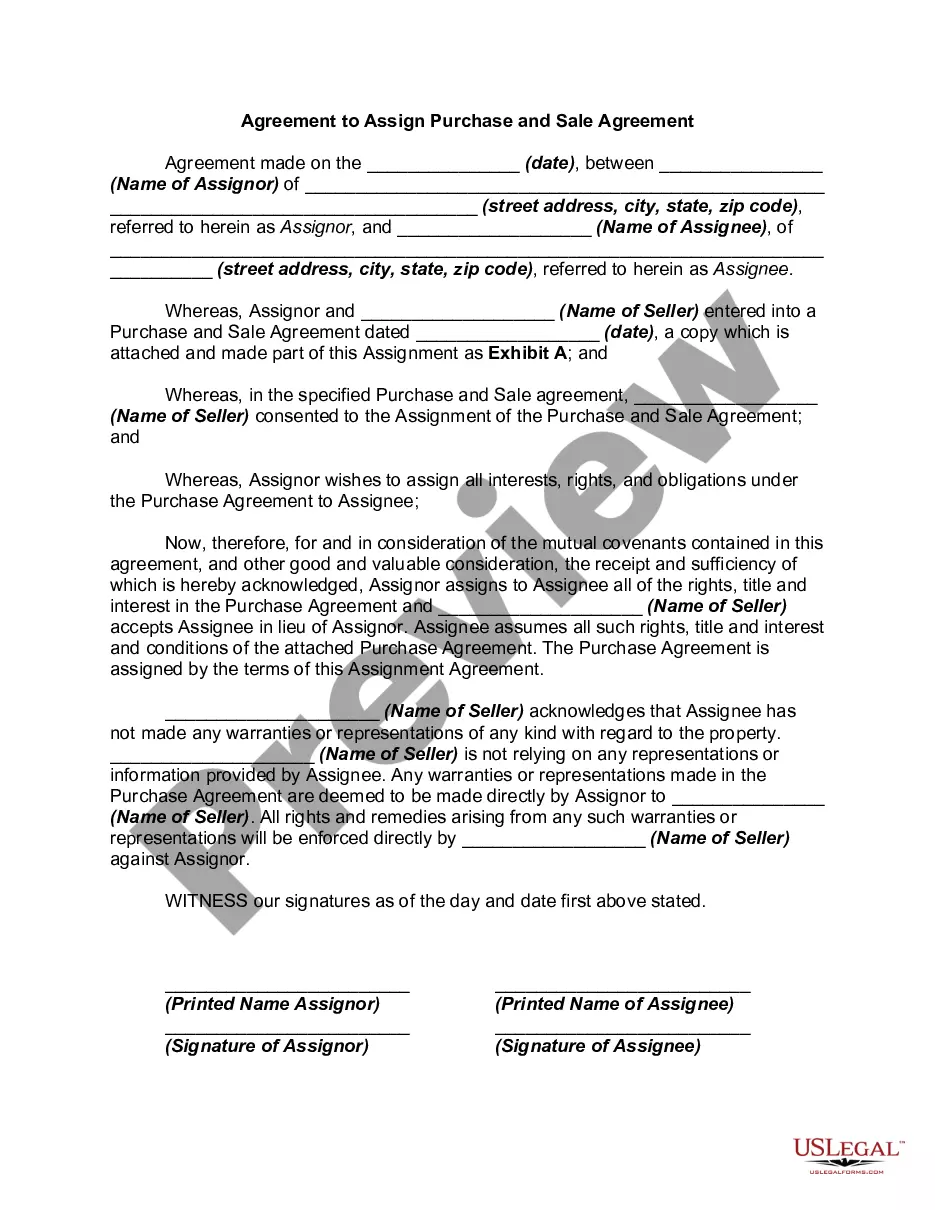
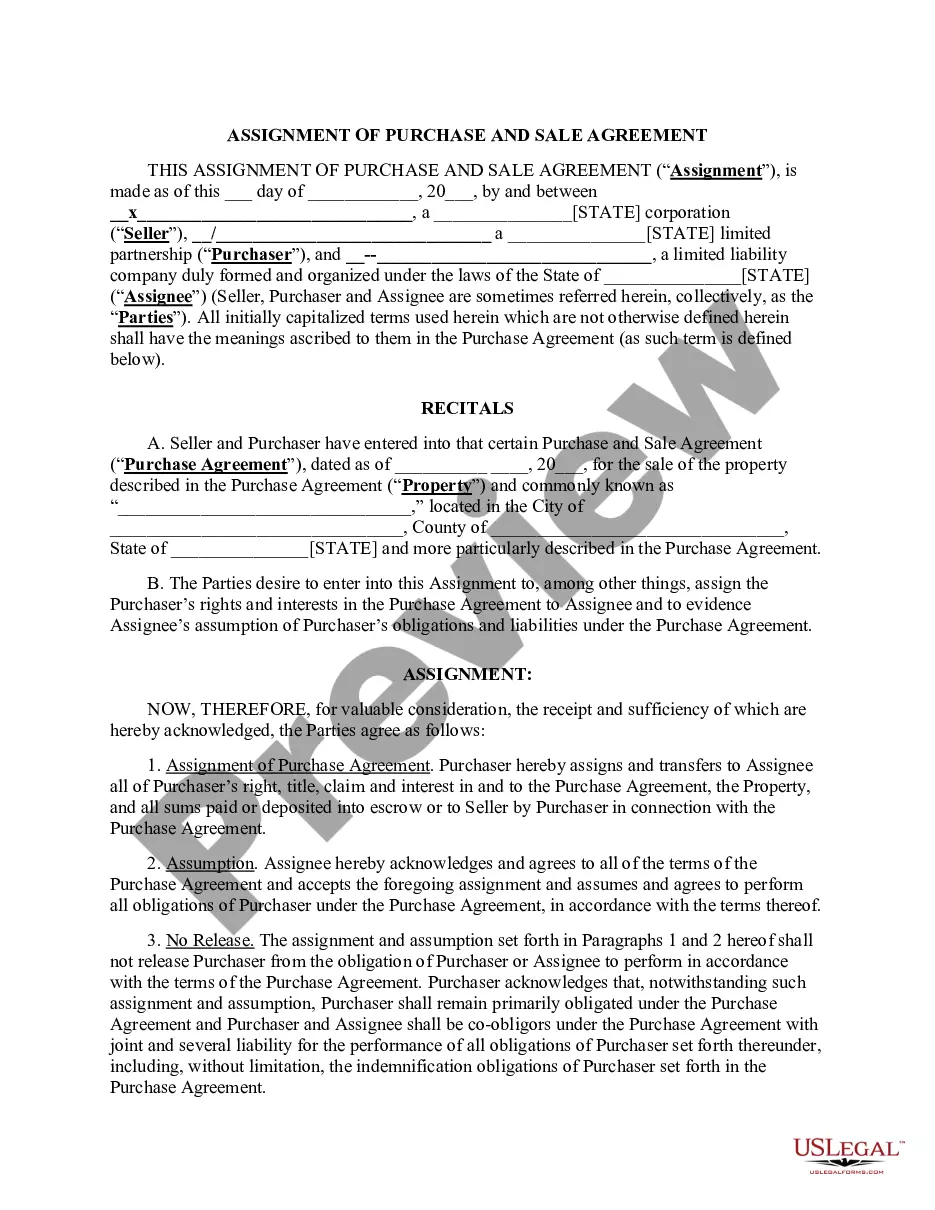
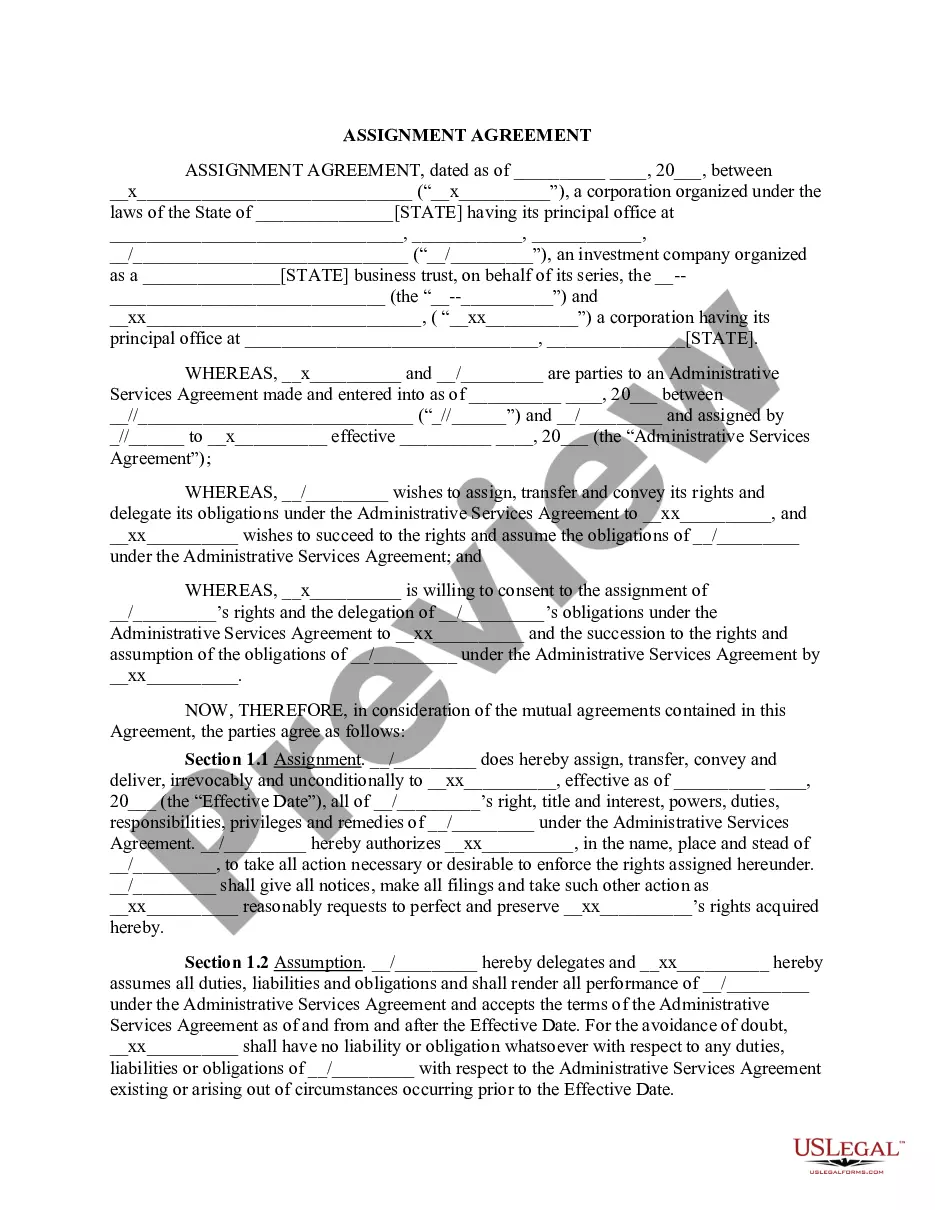
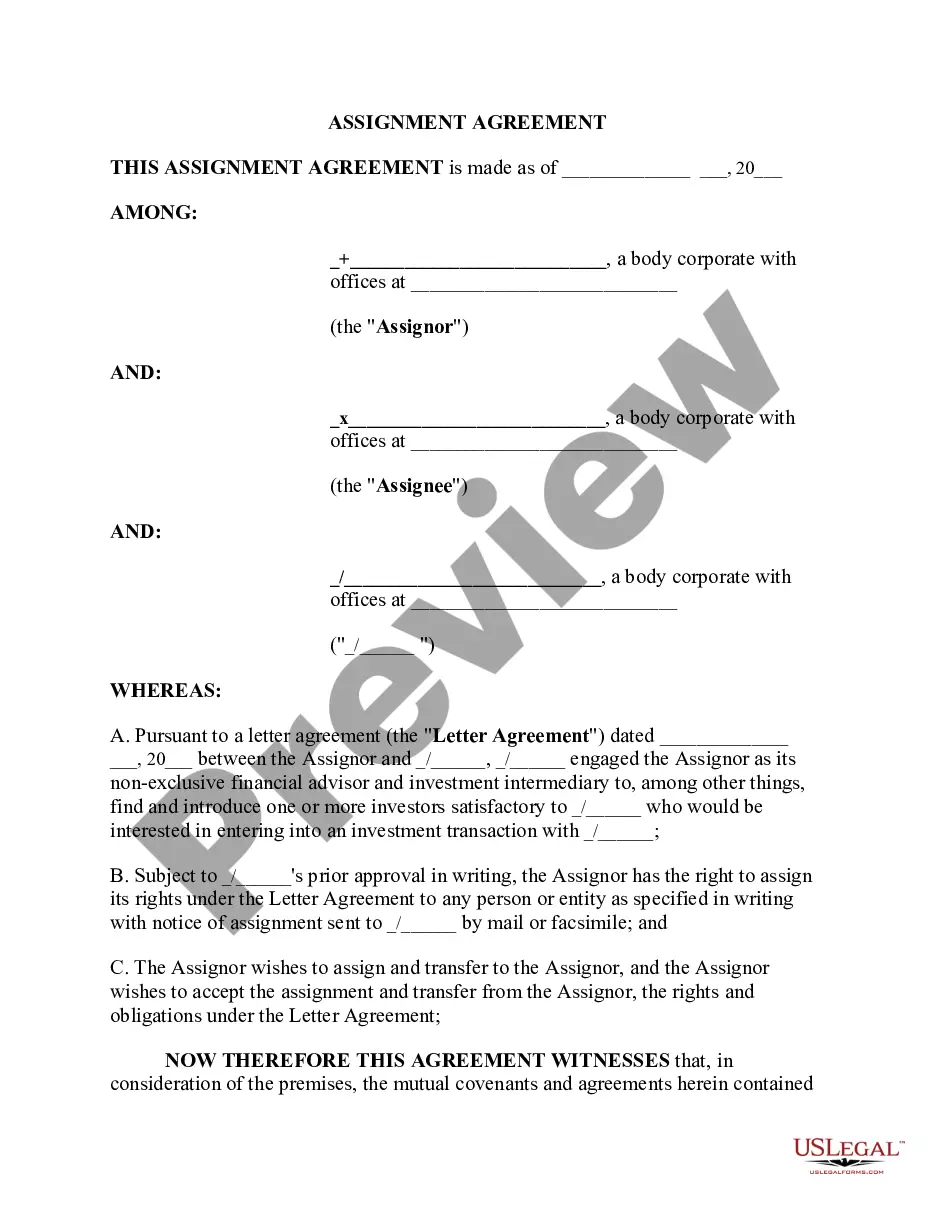
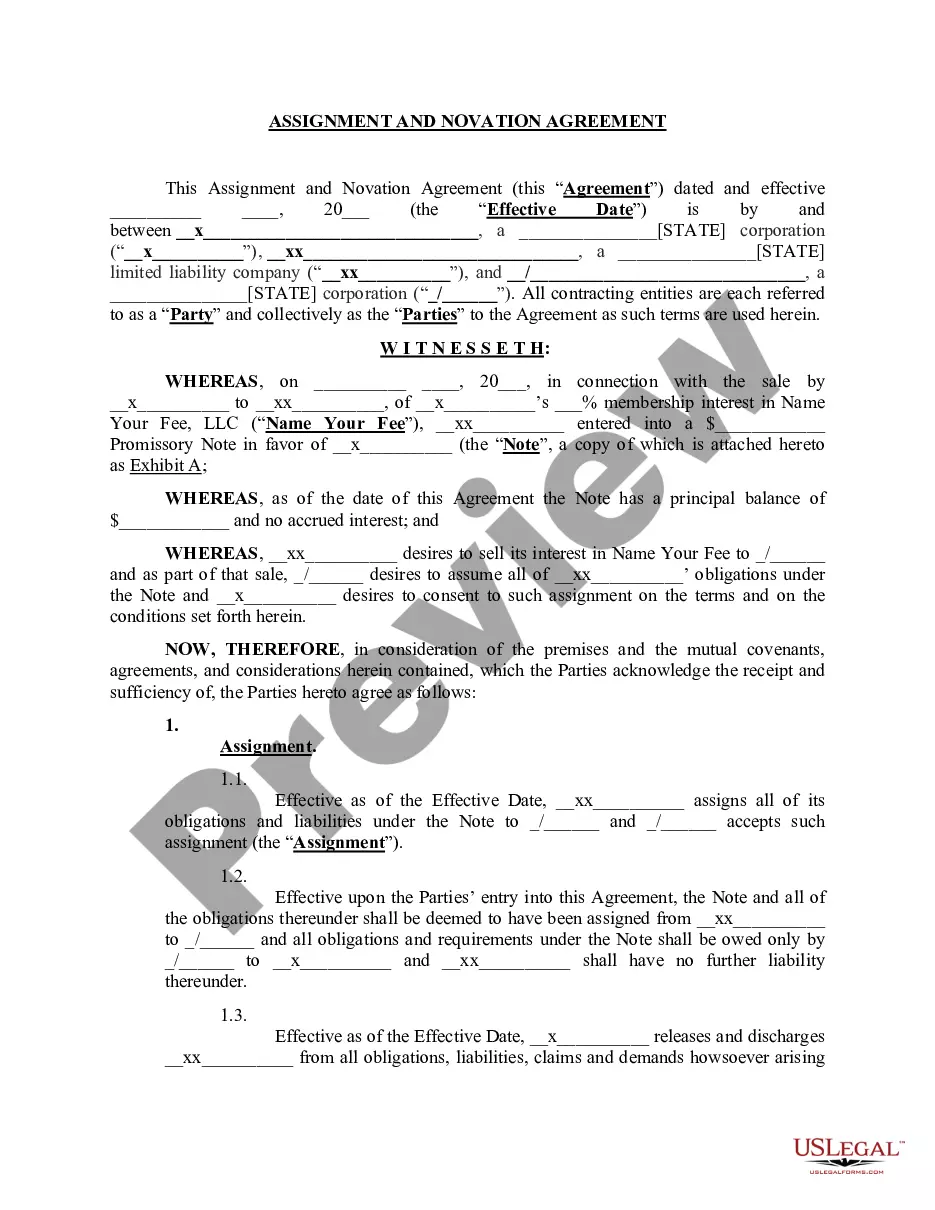
A novation agreement on assignment of sales contract is a legal document that facilitates the substitution of one party in a sales contract with a new party, ensuring that all original contract terms remain intact. This form is essential when parties agree to transfer their rights and obligations under an existing sales contract to another entity. Unlike a simple assignment, a novation completely replaces the original agreement, releasing the original party from liability while binding the new party to the contract terms.
Form components explained
- Date of the agreement.
- Details of the Assignor, Assignee, and Obligor.
- Reference to the underlying sales agreement.
- Delegation of performance to the Assignee.
- Payment terms for obligations under the sales agreement.
- Release of the Assignor from liabilities.
- Signatures of all parties involved.
Situations where this form applies
This form is needed when a party in a sales contract wishes to transfer their rights and responsibilities to another party, and all parties involved must agree to this substitution. Common scenarios include mergers, acquisitions, or the sale of a business where the original seller or service provider is replaced by a new entity.
Intended users of this form
- Business owners looking to transfer contractual obligations and rights.
- Individuals involved in a sales contract who wish to substitute one party for another.
- Parties in a contract who require formalized consent for the transfer of obligations.
How to prepare this document
- Enter the date of the agreement.
- Fill in the names and addresses of the Assignor, Assignee, and Obligor.
- Describe the underlying sales agreement, including its date and the goods involved.
- Specify the payment terms for the Assignee as per the sales agreement.
- Ensure all parties sign and date the agreement.
Notarization requirements for this form
In most cases, this form does not require notarization. However, some jurisdictions or signing circumstances might. US Legal Forms offers online notarization powered by Notarize, accessible 24/7 for a quick, remote process.
Get your form ready online
Our built-in tools help you complete, sign, share, and store your documents in one place.
Make edits, fill in missing information, and update formatting in US Legal Forms—just like you would in MS Word.
Download a copy, print it, send it by email, or mail it via USPS—whatever works best for your next step.
Sign and collect signatures with our SignNow integration. Send to multiple recipients, set reminders, and more. Go Premium to unlock E-Sign.
If this form requires notarization, complete it online through a secure video call—no need to meet a notary in person or wait for an appointment.
We protect your documents and personal data by following strict security and privacy standards.

Make edits, fill in missing information, and update formatting in US Legal Forms—just like you would in MS Word.

Download a copy, print it, send it by email, or mail it via USPS—whatever works best for your next step.

Sign and collect signatures with our SignNow integration. Send to multiple recipients, set reminders, and more. Go Premium to unlock E-Sign.

If this form requires notarization, complete it online through a secure video call—no need to meet a notary in person or wait for an appointment.

We protect your documents and personal data by following strict security and privacy standards.
Common mistakes
- Failing to obtain consent from all parties involved in the original contract.
- Not specifying payment terms clearly.
- Incomplete signatures or missing dates.
- Omitting details about the original sales agreement.
Why use this form online
- Easy access to legally accurate templates drafted by licensed attorneys.
- Convenience of filling out and downloading the form at your pace.
- Editability allows for customization to fit specific needs.
- Secure and reliable execution ensuring compliance with legal standards.
Looking for another form?
Form popularity
FAQ
The difference between assignment and transfer is that assign means it's legal to transfer property or a legal right from one person to another, while transfer means it's legal to arrange for something to be controlled by or officially belong to another person.
Novation most often arises in big corporate takeovers or on the sale of a business. On takeover, deeds of novation are used to transfer contracts from the seller to the buyer and allow the buyer to carry on the seller's business.
A three-way contract which extinguishes a contract and replaces it with another contract in which a third party takes up the rights and obligations which duplicate those of one of the original parties to the agreement.
An assignment agreement transfers one party's rights and obligations under a contract to another party.Novation is a mechanism where one party transfers all its obligations and rights under a contract to a third party, with the consent of the original counterparty.
A novation is an agreement made between two contracting parties to allow for the substitution of a new party for an existing one.
Key Takeaways. An assignment and novation differ in several important ways. Assignment gives some rights to a third party, whereas a novation transfers both rights and obligations to a third party. Novations are most often used in corporate takeovers or the sale of a business.
A novation is a contract that substitutes one party to a preexisting contract for a party who was not in the original contract.For example: B enters into a contract with C for B to paint C's house for $500. B then enters into a separate contract with C and D for D to paint C's house and to discharge its duties to C.
Novation refers to the process of substituting an existing contract with a replacement contract, where the contracting parties reach a consensus. One of the contracting parties in the original contract is replaced by an entirely new party that assumes the rights and obligations of the original party.