Release by Parent on Behalf of Child for Injuries Sustained in Accident
About this form
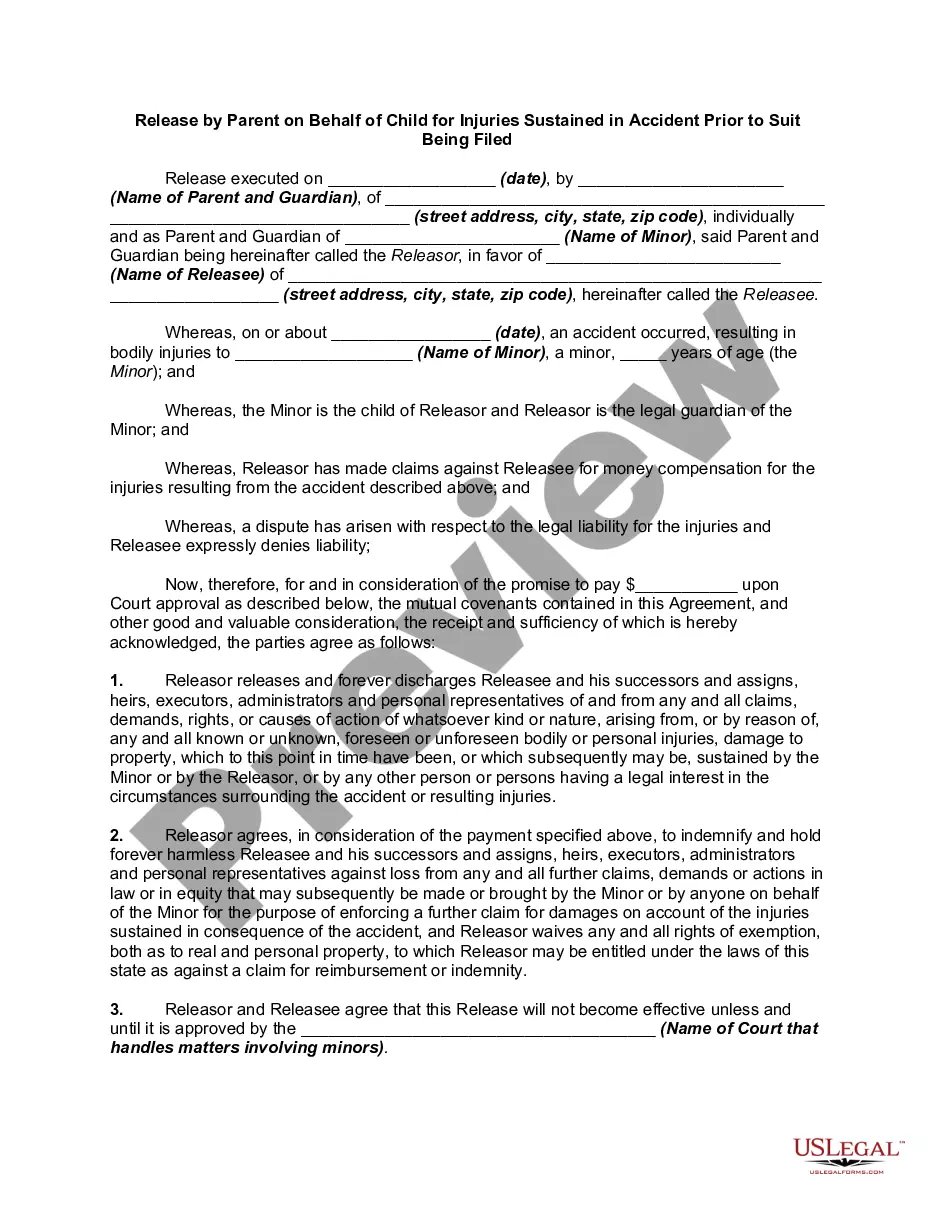
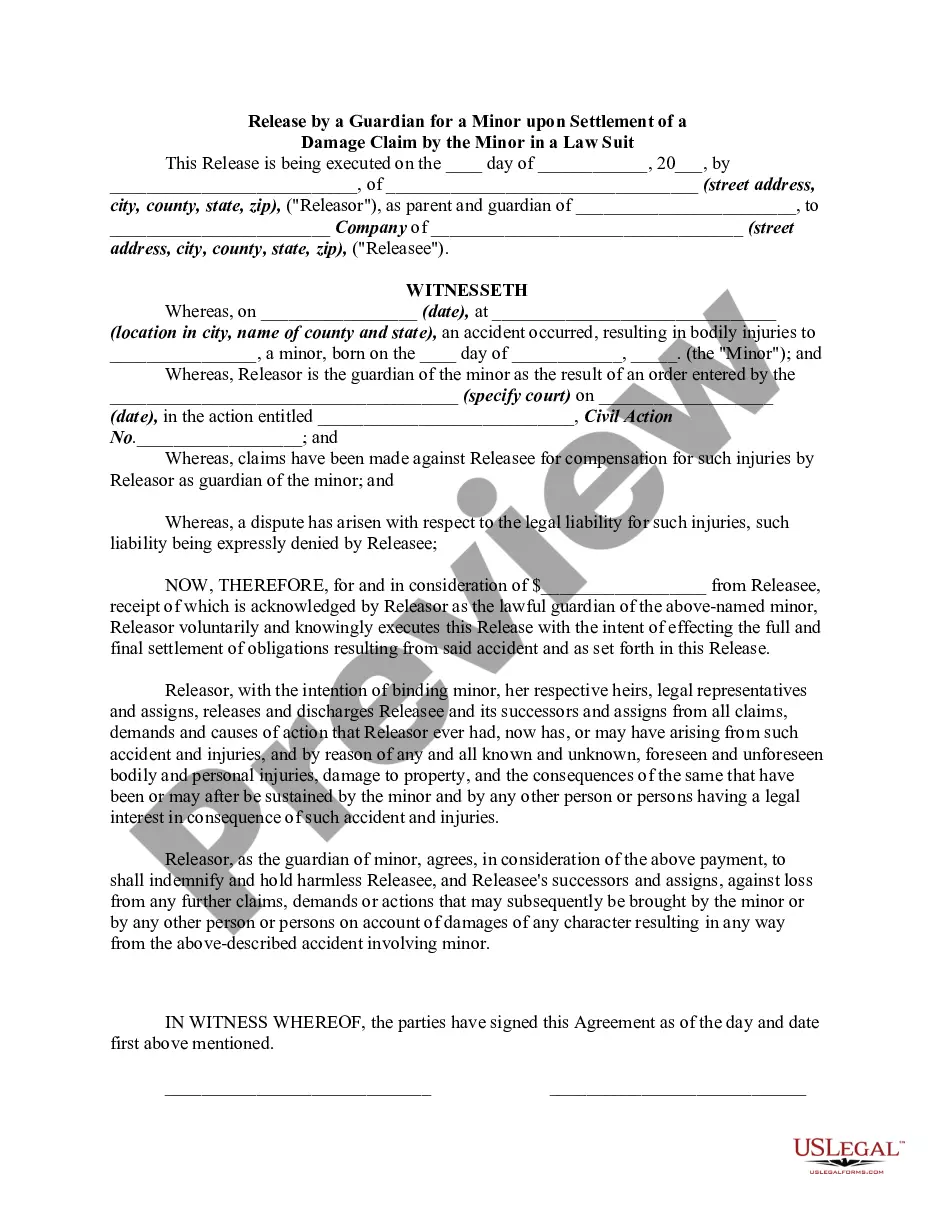
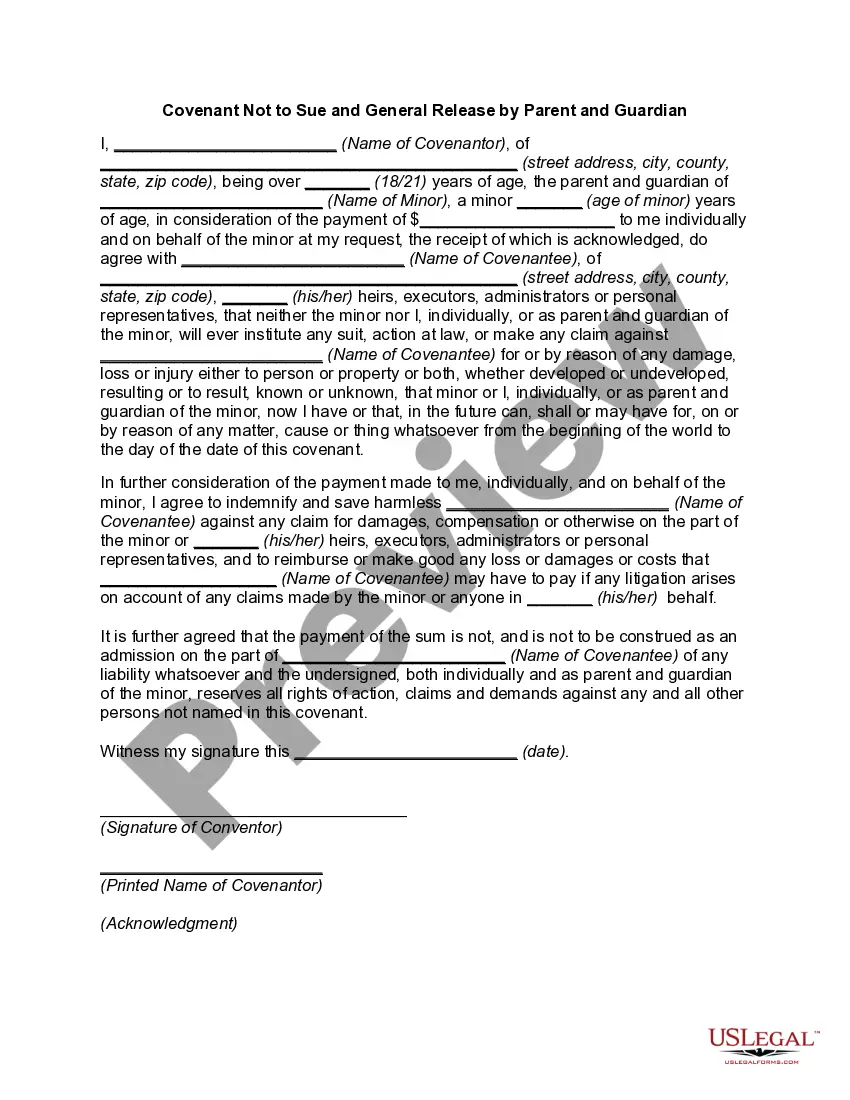
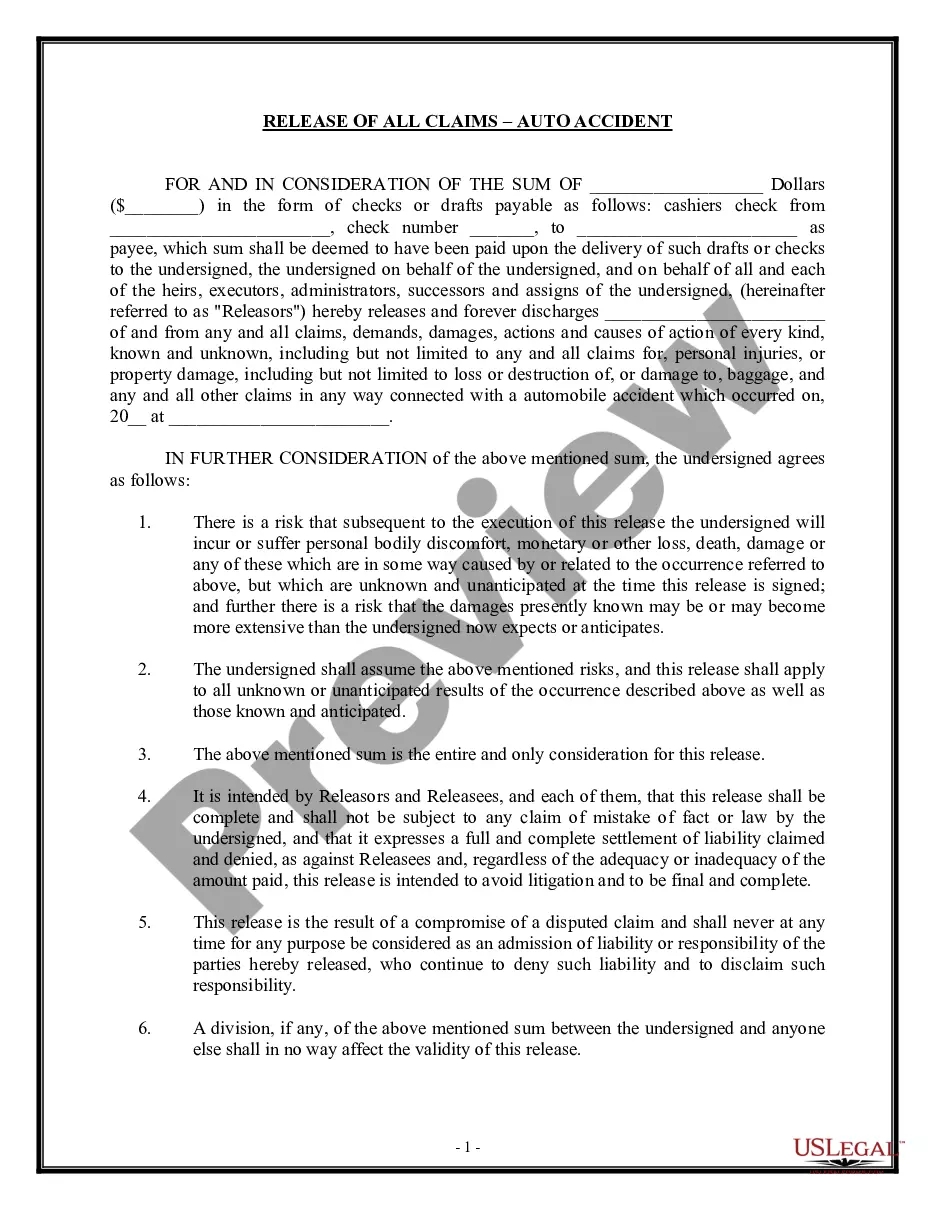
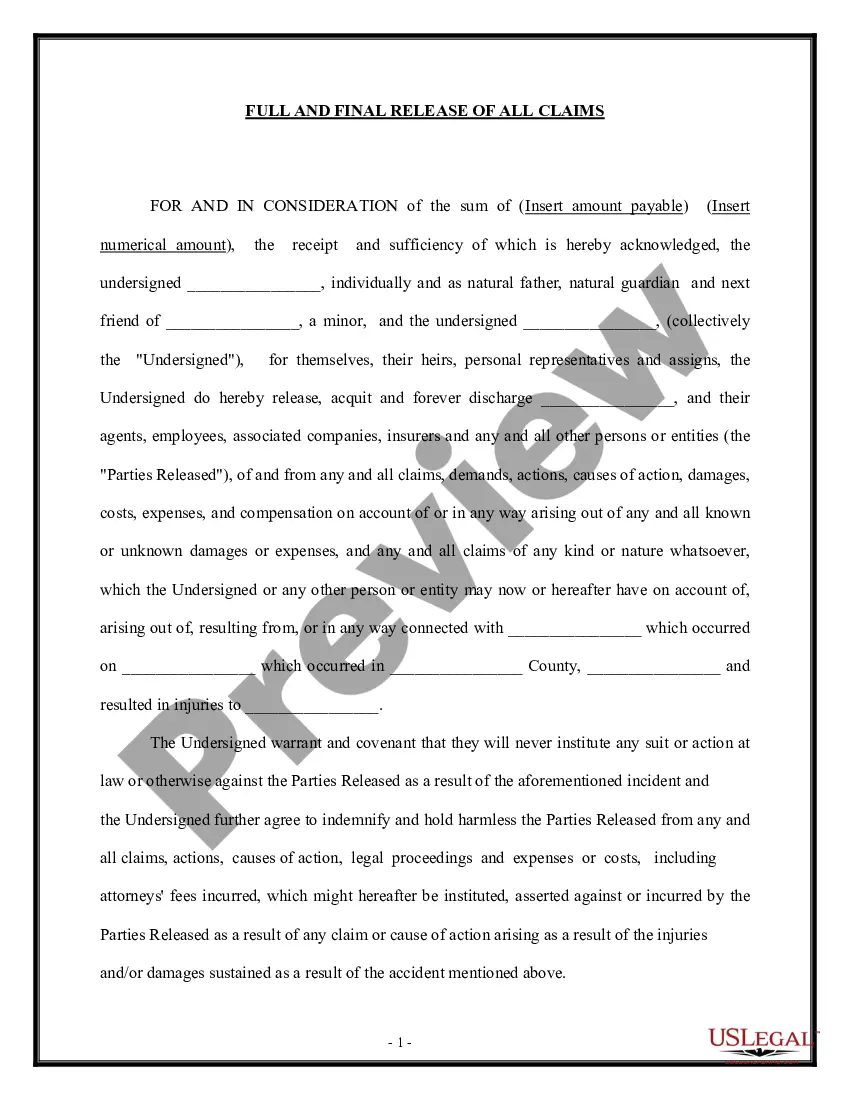
The Release by Parent on Behalf of Child for Injuries Sustained in Accident is a legal document that allows a parent or guardian to formally release a liable party from future claims related to injuries that their minor child has experienced due to an accident. This form is essential for settling disputes regarding compensation for the minor's injuries, ensuring that the responsible party is protected from further legal action. It differs from other injury release forms as it specifically addresses the unique circumstances surrounding minors and their legal rights.
Form components explained
- Date of execution
- Name and address of the parent or guardian (Releasor)
- Name and age of the minor
- Date of the accident and description of injuries
- Name and address of the party being released (Releasee)
- Terms of the settlement and indemnification clause
- Approval requirements from the court
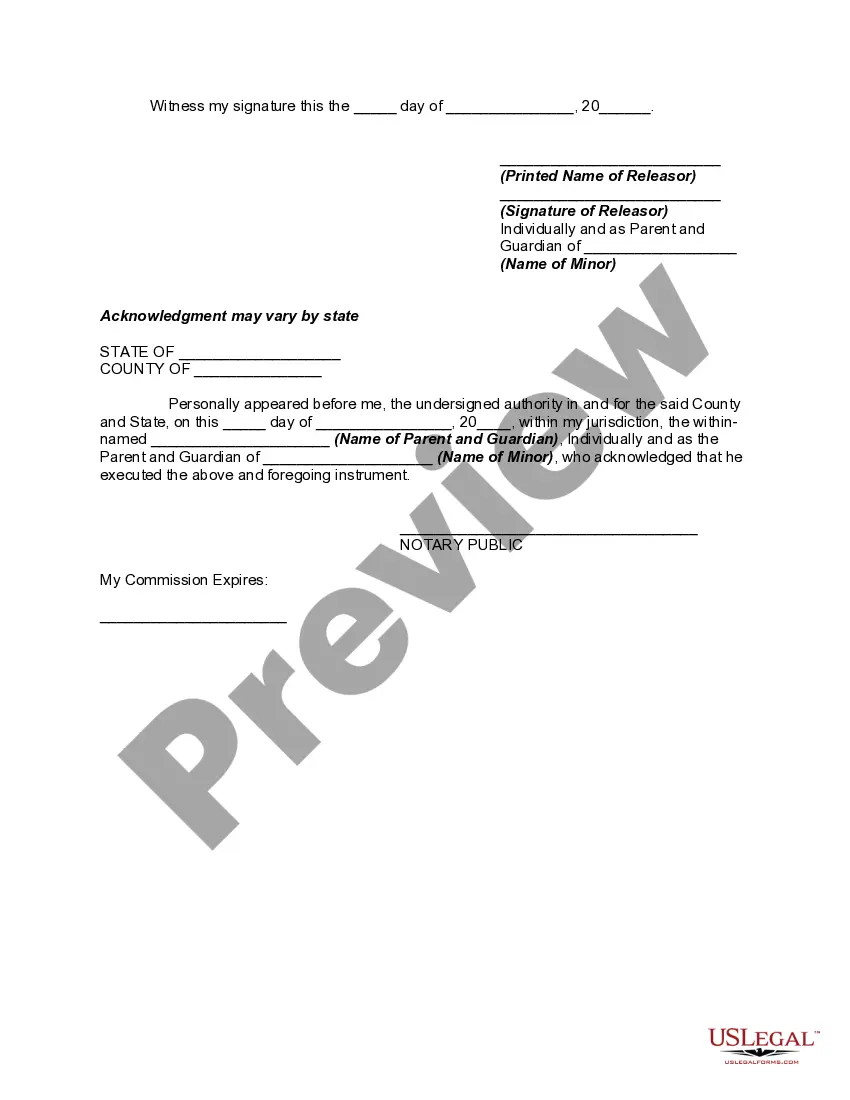
- Signature and acknowledgment sections for notary
When to use this document
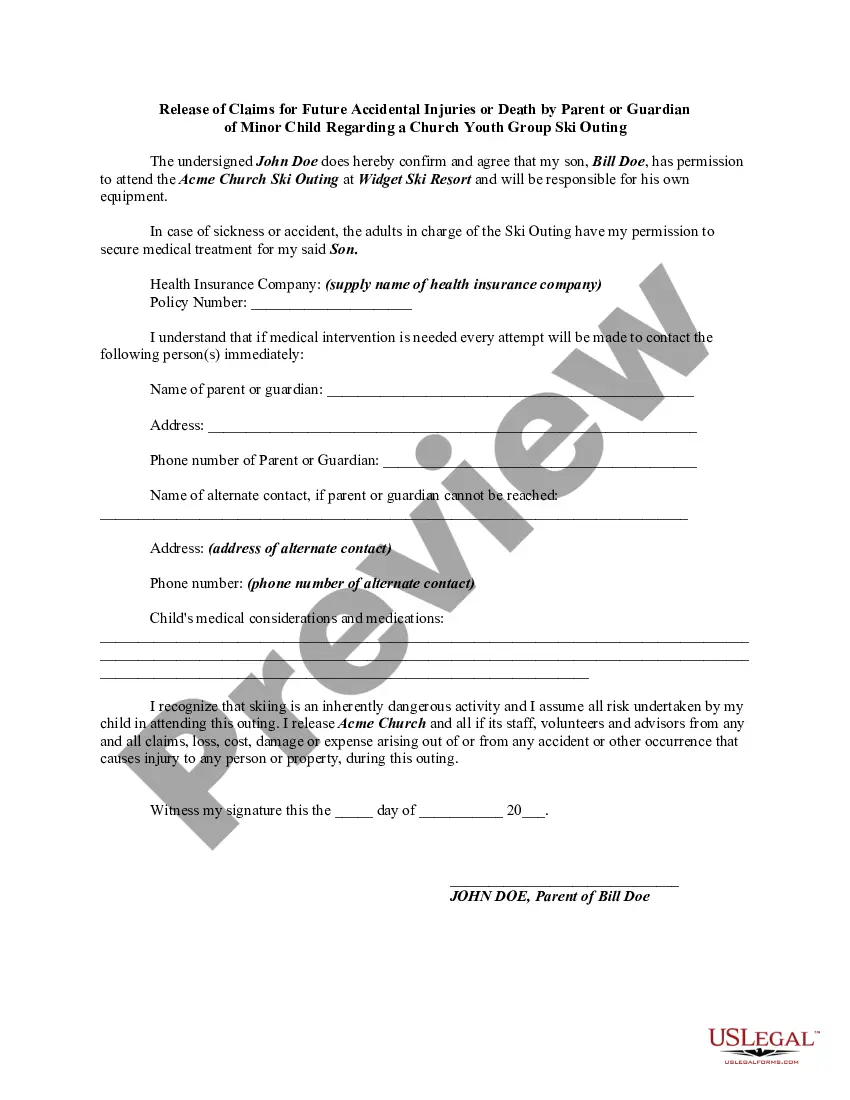
This form should be used when a minor has been injured in an accident, and the parent or guardian seeks to settle the injury claim with the party believed to be at fault. It's applicable in scenarios where there is a negotiation for damages, either before or after filing a lawsuit, and where court approval for the settlement is necessary to protect the child's best interests.
Who this form is for
- Parents or guardians of minors who have sustained injuries in an accident
- Individuals seeking to settle injury claims on behalf of minor children
- Any legal representatives or attorneys involved in personal injury cases for minors
How to prepare this document
- Enter the date the release is being executed.
- Fill in the name and address of the parent or guardian acting as Releasor.
- Provide the name and age of the minor child being represented.
- Detail the date of the accident and describe the injuries sustained by the minor.
- Input the name and address of the Releasee who is being released from liability.
- Sign the form in the presence of a notary public if required, ensuring all acknowledgments are completed.
Notarization requirements for this form
Yes, this form must be notarized to be legally valid. The notarization process helps verify the identity of the signatories and ensures that the agreement is executed with the proper legal formalities. US Legal Forms offers integrated online notarization services, allowing you to complete the process securely via a video call without the need for travel.
Get your form ready online
Our built-in tools help you complete, sign, share, and store your documents in one place.
Make edits, fill in missing information, and update formatting in US Legal Forms—just like you would in MS Word.
Download a copy, print it, send it by email, or mail it via USPS—whatever works best for your next step.
Sign and collect signatures with our SignNow integration. Send to multiple recipients, set reminders, and more. Go Premium to unlock E-Sign.
If this form requires notarization, complete it online through a secure video call—no need to meet a notary in person or wait for an appointment.
We protect your documents and personal data by following strict security and privacy standards.

Make edits, fill in missing information, and update formatting in US Legal Forms—just like you would in MS Word.

Download a copy, print it, send it by email, or mail it via USPS—whatever works best for your next step.

Sign and collect signatures with our SignNow integration. Send to multiple recipients, set reminders, and more. Go Premium to unlock E-Sign.

If this form requires notarization, complete it online through a secure video call—no need to meet a notary in person or wait for an appointment.

We protect your documents and personal data by following strict security and privacy standards.
Typical mistakes to avoid
- Failing to include all necessary signatures, especially from a notary public.
- Not providing complete and accurate details about the minor's injuries and the accident.
- Omitting to seek court approval when required by local laws.
- Incorrectly identifying the parties involved, such as names and addresses.
Why use this form online
- Convenience of immediate access to the form from anywhere with internet access.
- Easy customization to fit specific state requirements and personal needs.
- Efficiency in obtaining necessary signatures and notarization without needing to travel.
Quick recap
- This form allows parents to settle claims on behalf of their minor children after accidents.
- It requires court approval to safeguard the interests of the minor.
- Proper completion and notarization are essential for legal validity.
- Consulting local laws is crucial to meet specific state requirements.
Looking for another form?
Form popularity
FAQ
In a traditional personal injury settlement arrangement, when the child turns 18, they can go down to the bank with their ID and withdraw all of the money. In some cases this amount can be worth hundreds of thousands of dollars.
Find out why it happened. Teach your child the importance of apologizing. Focus on teaching your child healthy ways to deal with her anger. Monitor your child's television viewing habits. Try using a behavior chart if aggressive behavior occurs often.
Can a minor child sign a liability waiver in California? Yes, as long as a parent or legal guardian also signs. In California, a parent can also sign a liability waiver on his or her child's behalf. This makes California different from many other states.
When a child injures someone, the injured party can also sue the parents of the child in court to recover damages.Finally, since minors cannot represent themselves in court, a child cannot be sued directly. Therefore, the parents are usually held vicariously liable for the child's actions.
The Waiver must be clearly worded and unambiguous in its intent to relieve any and all legal liability, even liability for negligence. The Waiver should be prominent and not hidden in the fine print of a long contract. The Waiver must be signed by the person who it is being used against.
5. Can a minor child sign a liability waiver in California? Yes, as long as a parent or legal guardian also signs. In California, a parent can also sign a liability waiver on his or her child's behalf.
Waiver of Parental permission is permitted under 45 CFR 46.408(c) when it is not a reasonable requirement to protect subjects. This waiver is usually but not always limited to minimal risk research, such as surveys, interviews or focus groups.
In many cases, the waiver is not enforceable.If you've been injured due to negligent actions, you can sue even if you signed a waiver. Winning a lawsuit concerning negligence is not uncommon. Many celebrities have sued for negligence even though they signed documents stating they understood the risks.