Marital Deduction Trust with Lifetime Income and Power of Appointment in Beneficiary Spouse and Residuary Trust
About this form
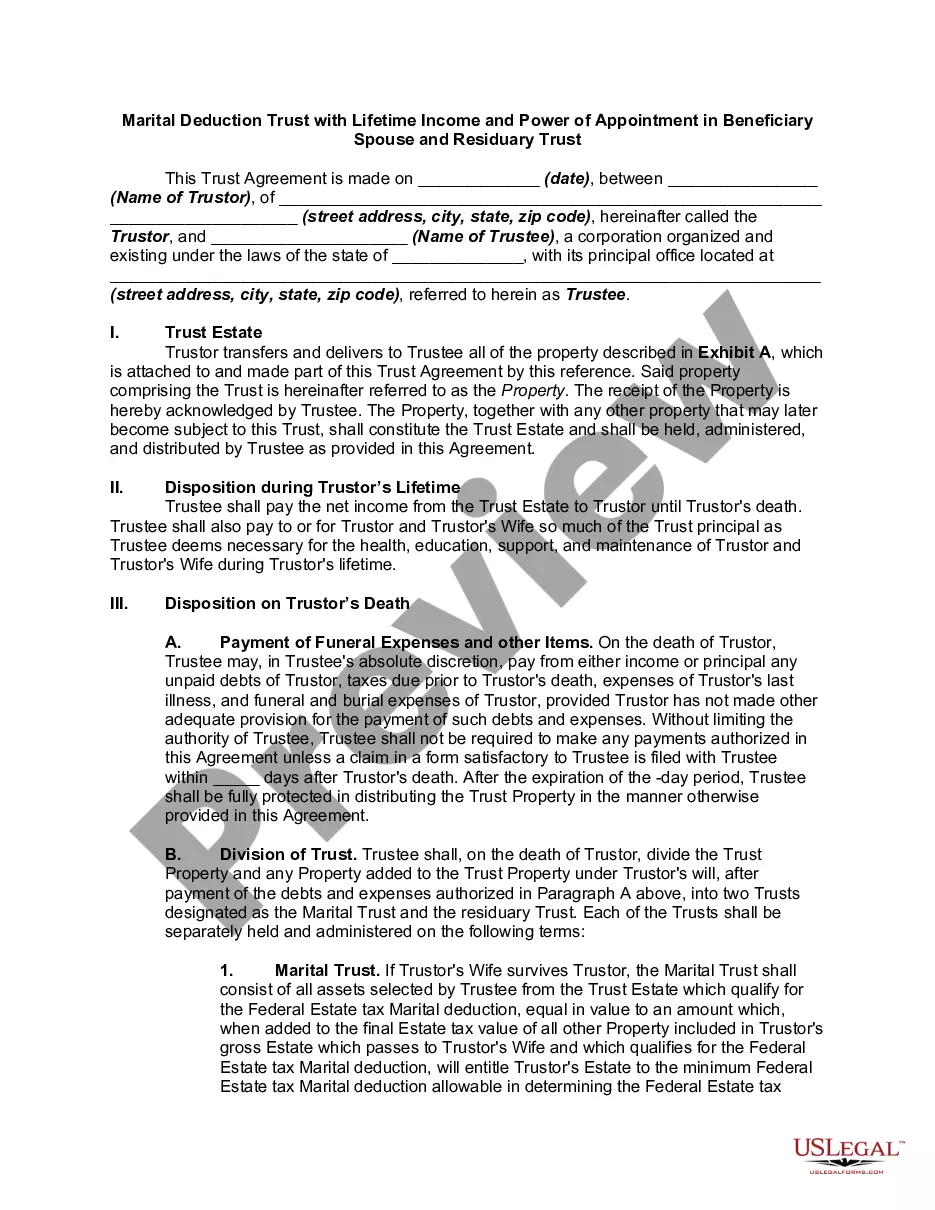
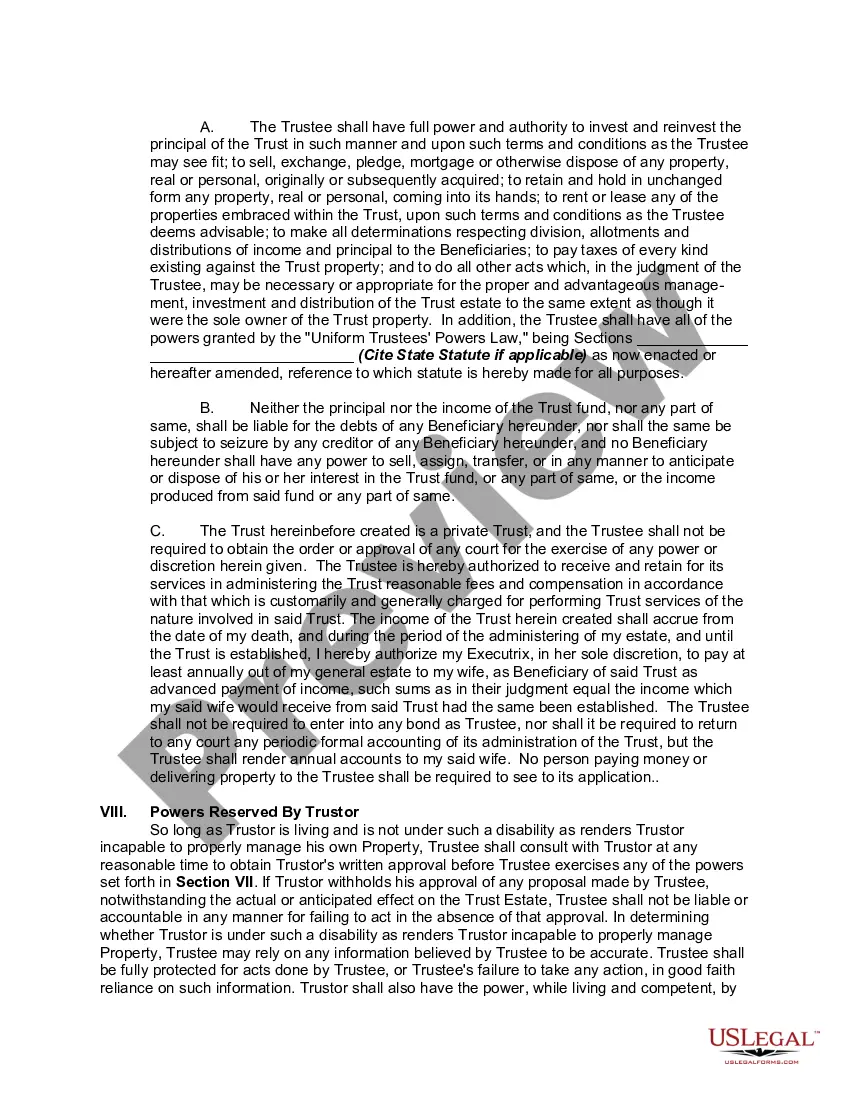
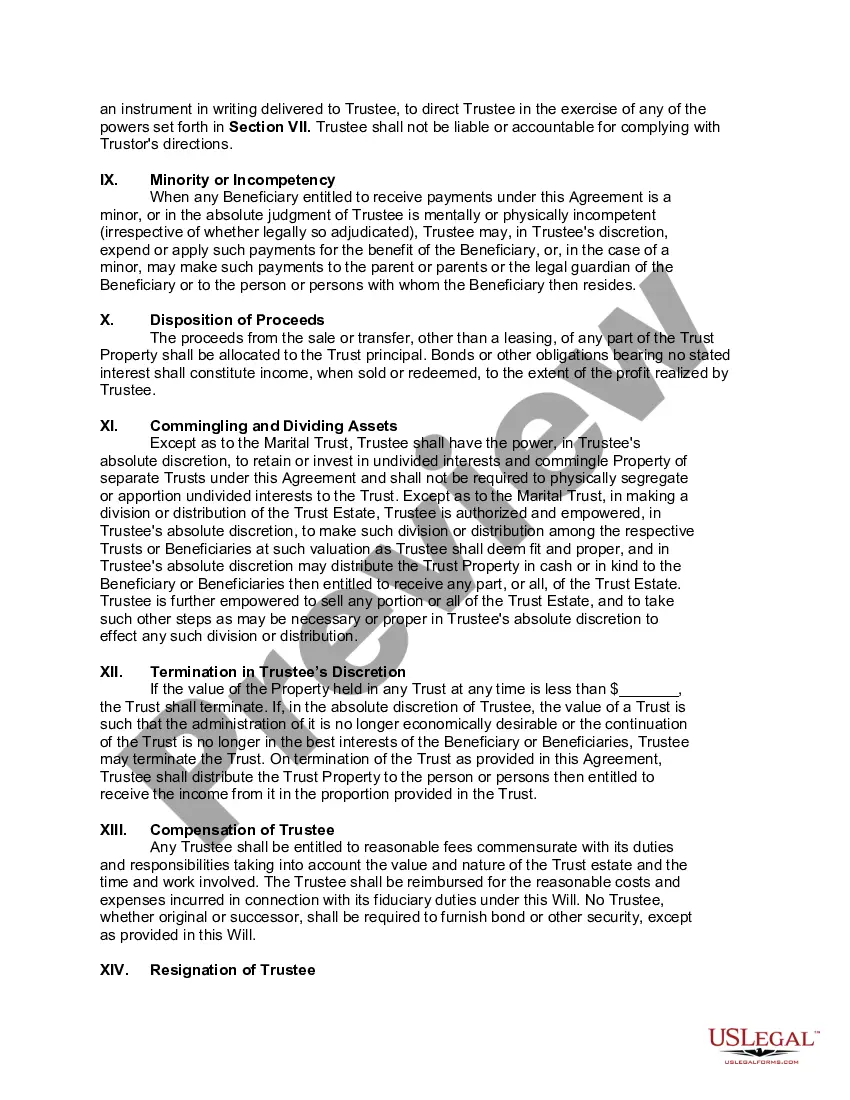
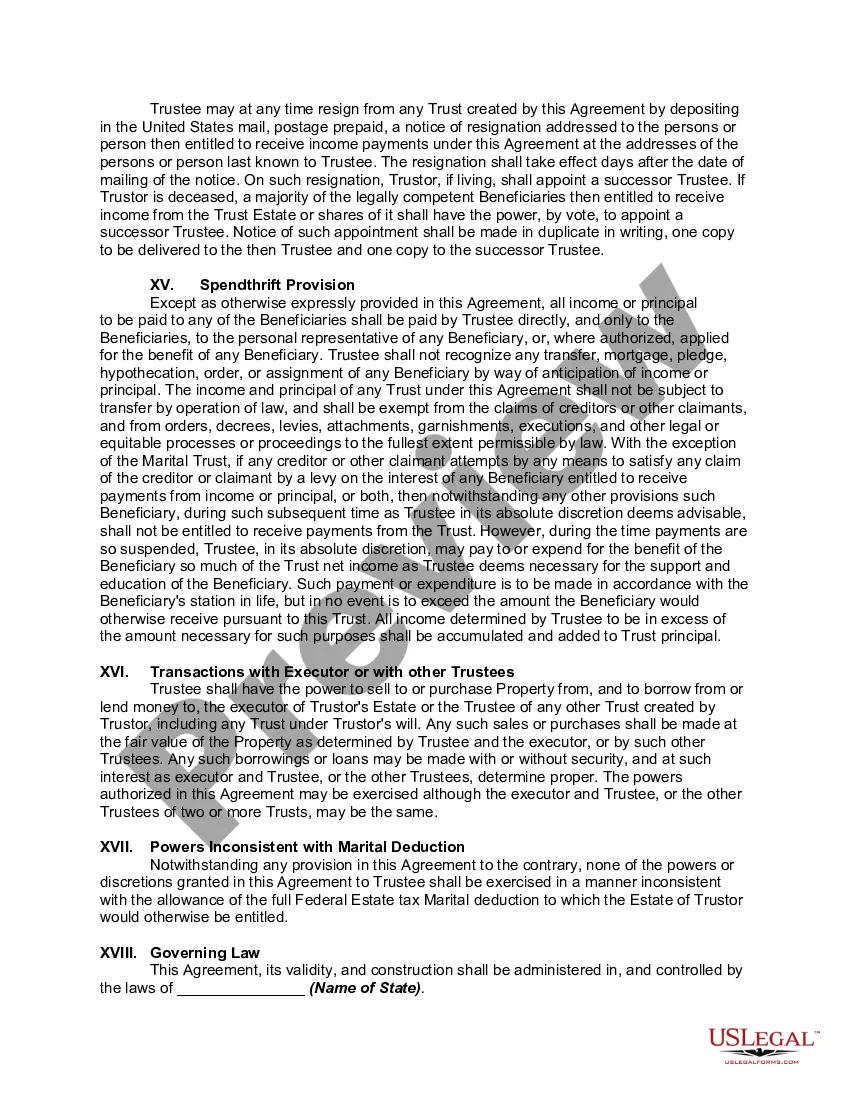
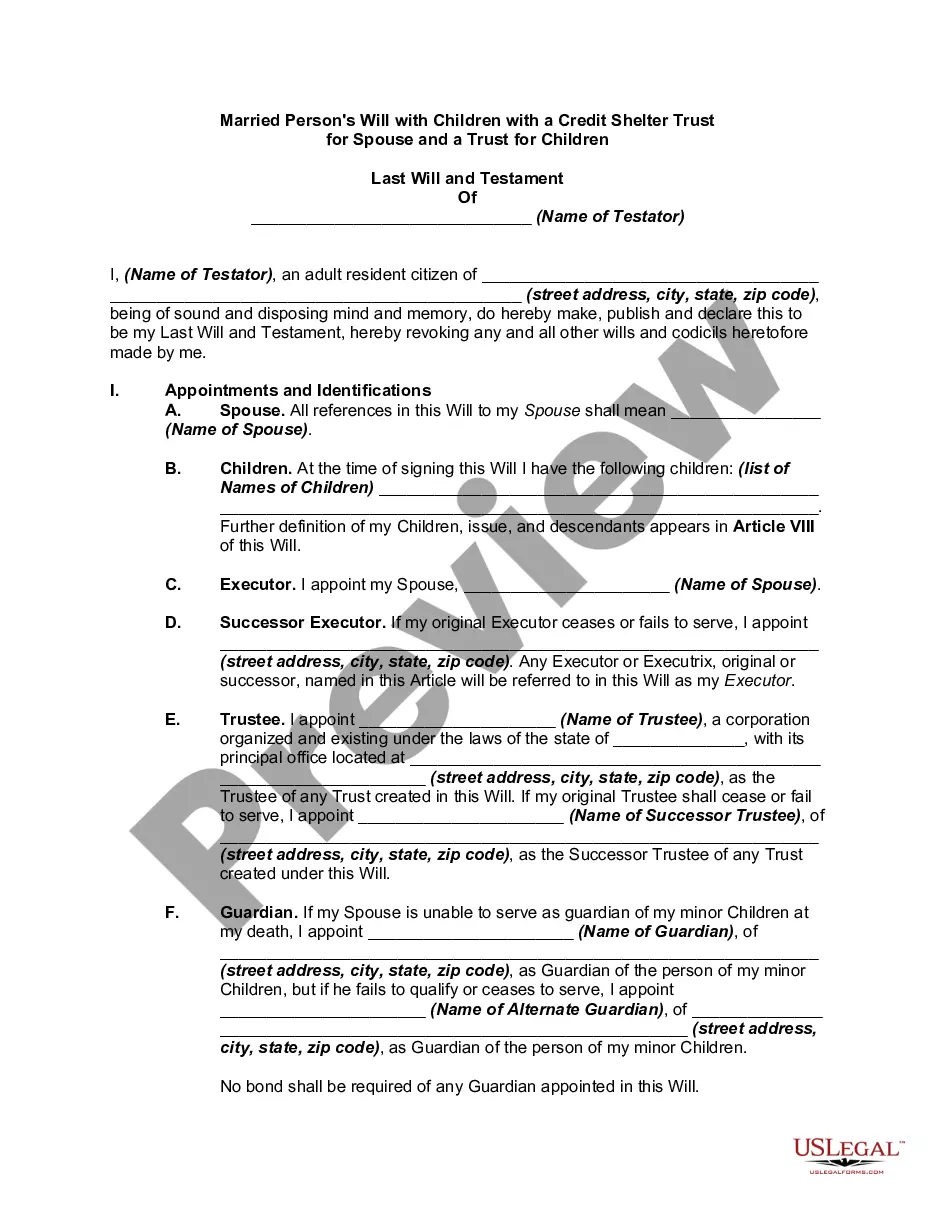
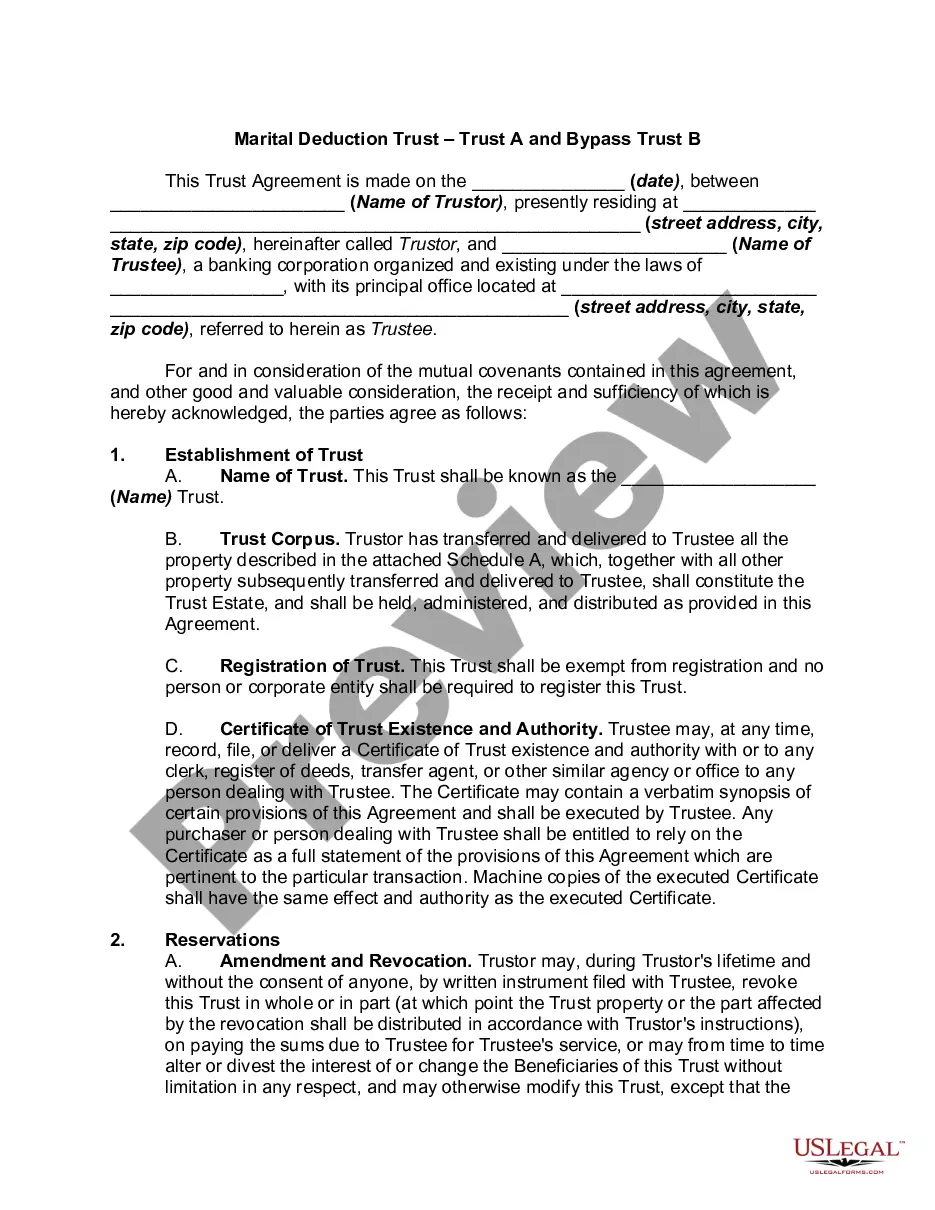
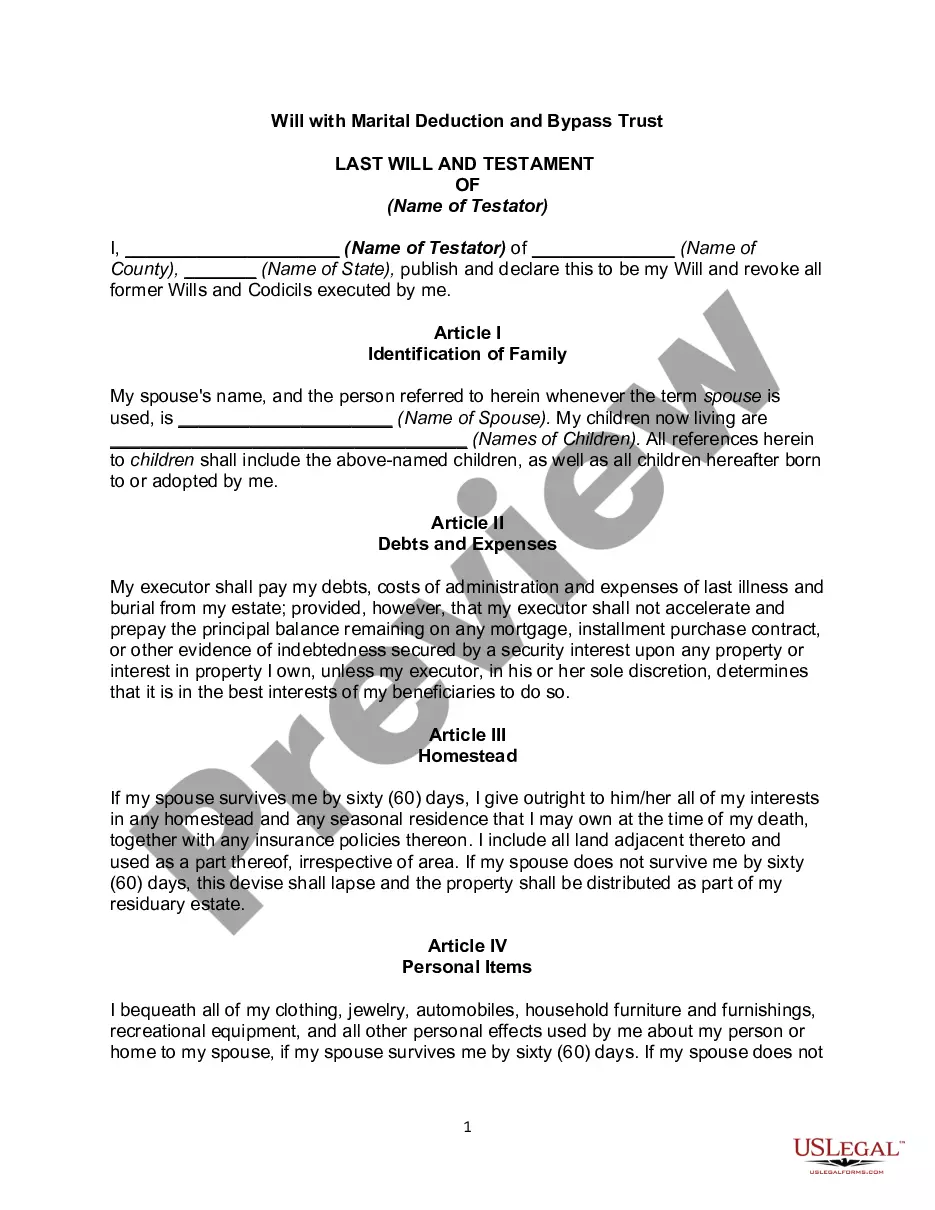
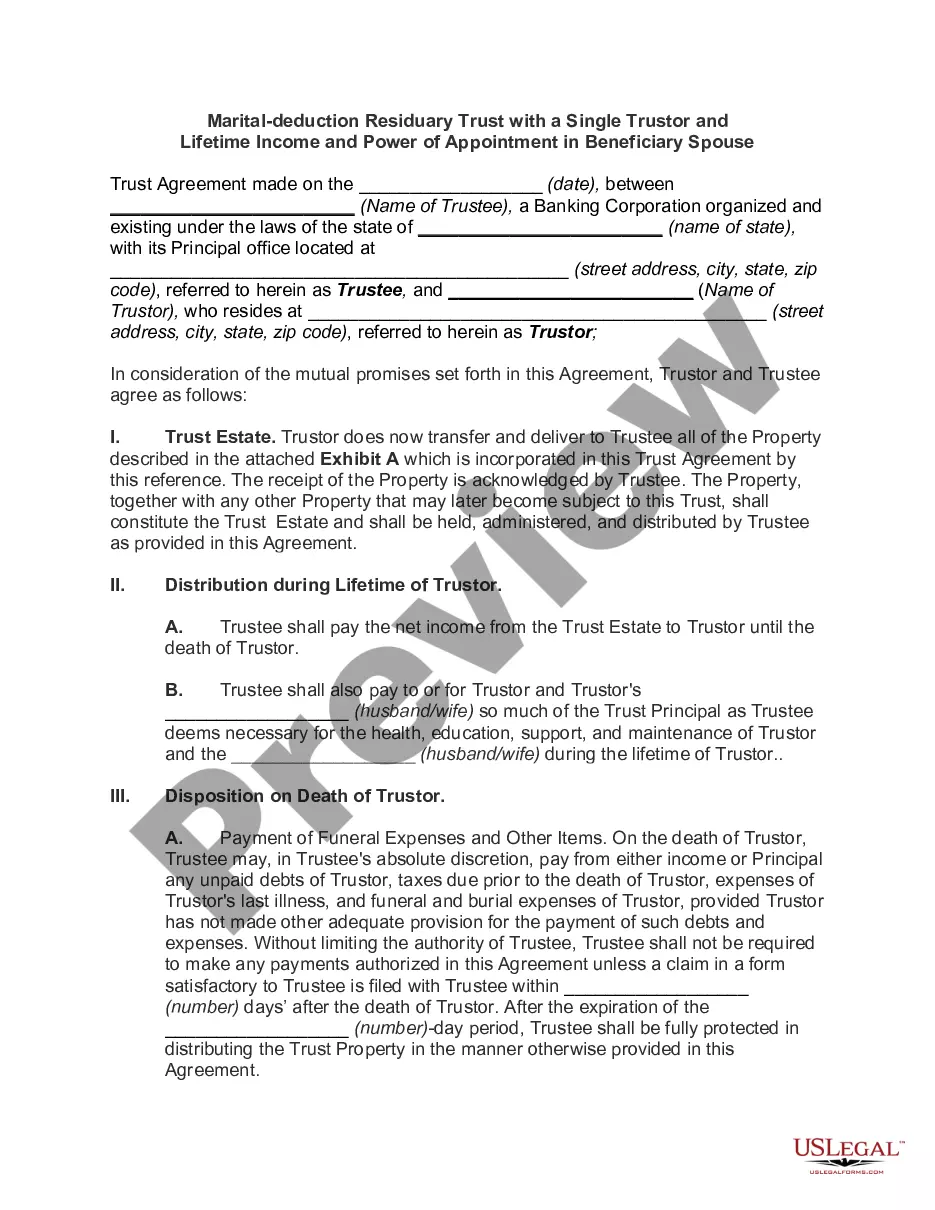
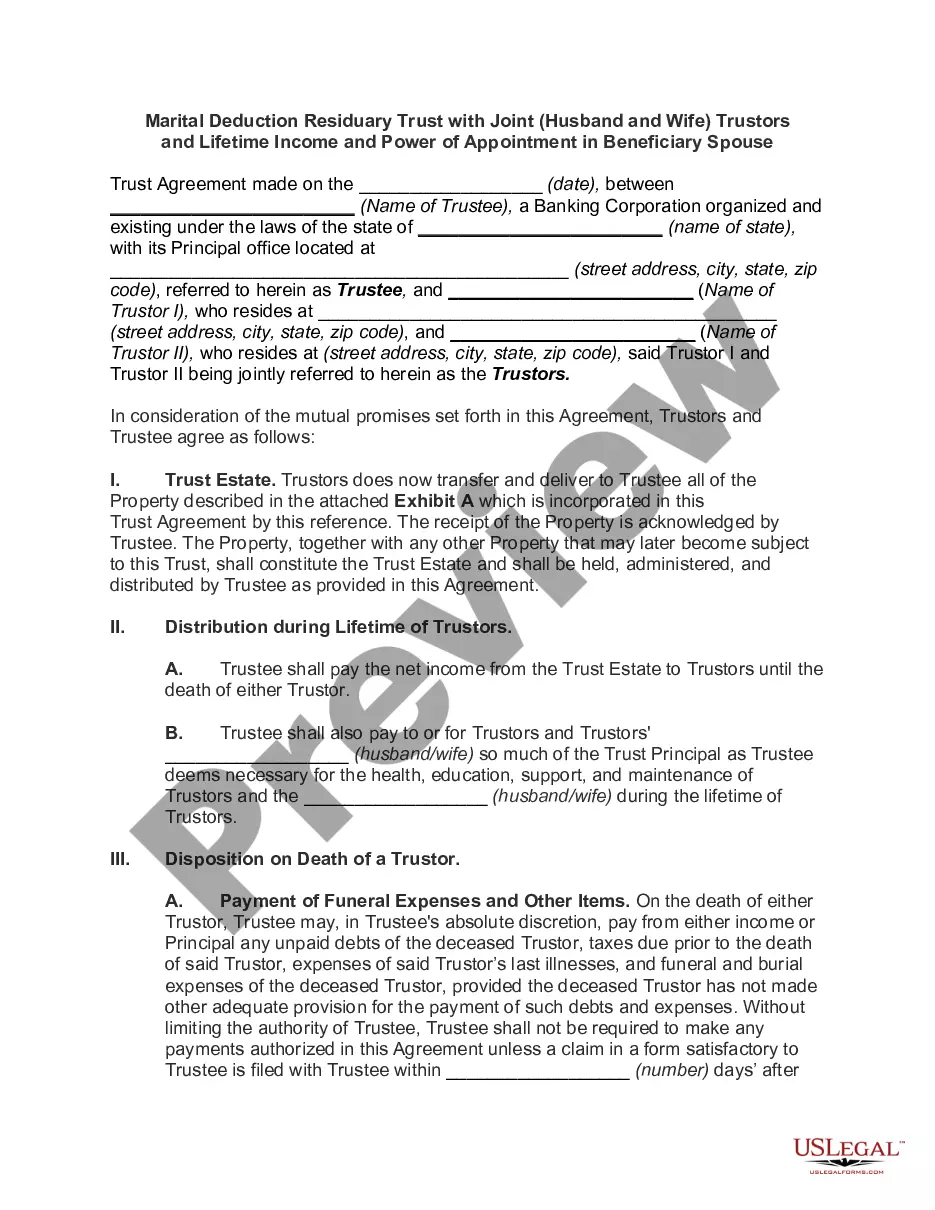
The Marital Deduction Trust with Lifetime Income and Power of Appointment is a legal document designed to help married couples manage their estate planning. This trust allows a surviving spouse to receive income from the trust during their lifetime while also providing them the power to appoint beneficiaries upon their death. It differs from other estate planning tools by specifically accommodating the federal estate tax marital deduction, which can significantly reduce estate taxes due upon the death of the first spouse.
Key parts of this document
- Trust Agreement outlining the roles of the Trustor and Trustee
- Details on the Trust Estate and the property involved
- Terms for income distribution to the Trustor and their spouse during the Trustor's lifetime
- Provisions for settling debts and expenses upon the Trustor's death
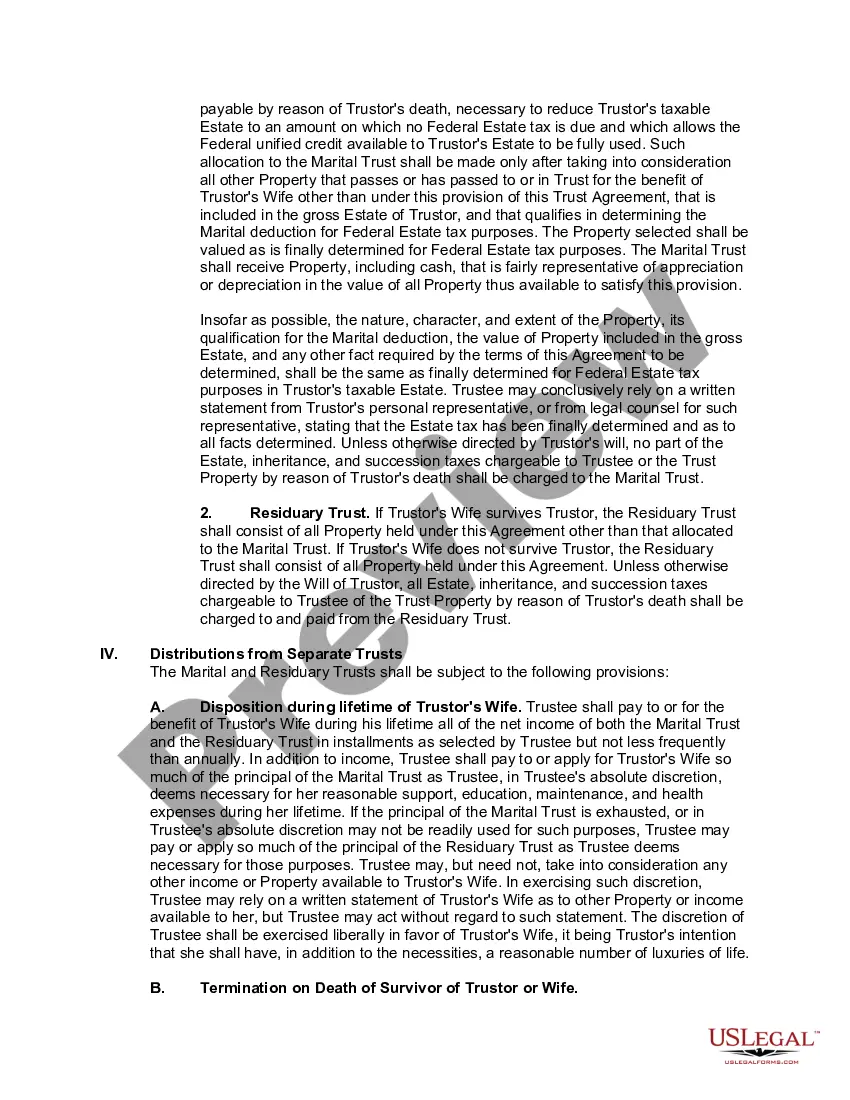
- Division of assets into a Marital Trust and a Residuary Trust following the Trustor's death
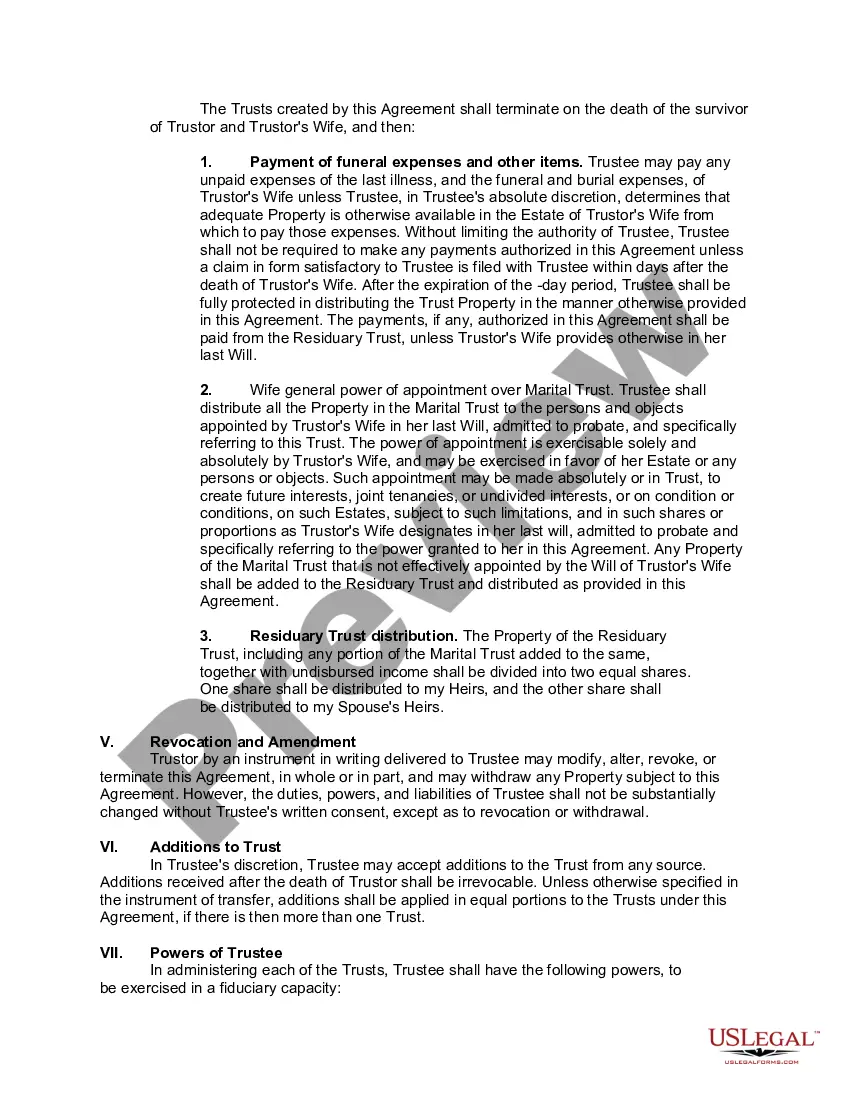
- Conditions for the surviving spouse's power of appointment over the Marital Trust
When to use this form
This trust is suitable for individuals who are legally married and wish to create an estate plan that minimizes tax liabilities and ensures financial support for the surviving spouse. It is particularly valuable for those with substantial assets that could otherwise incur significant federal estate taxes upon death. By using this trust, couples can ensure their assets are managed according to their wishes while taking advantage of tax benefits afforded by the marital deduction.
Who can use this document
- Married individuals looking to create a trust for estate planning purposes
- Couples with significant assets who want to minimize federal estate taxes
- Individuals who wish to ensure ongoing support for their spouse after their death
- Those seeking to provide specific distribution conditions for their estate
How to complete this form
- Identify the parties involved, including the Trustor and Trustee.
- Specify the date the Trust Agreement is made.
- Detail the Trust Estate by listing all relevant properties in Exhibit A.
- Outline the distribution terms during the Trustor's lifetime and upon their death.
- Include provisions for the surviving spouse's power of appointment.
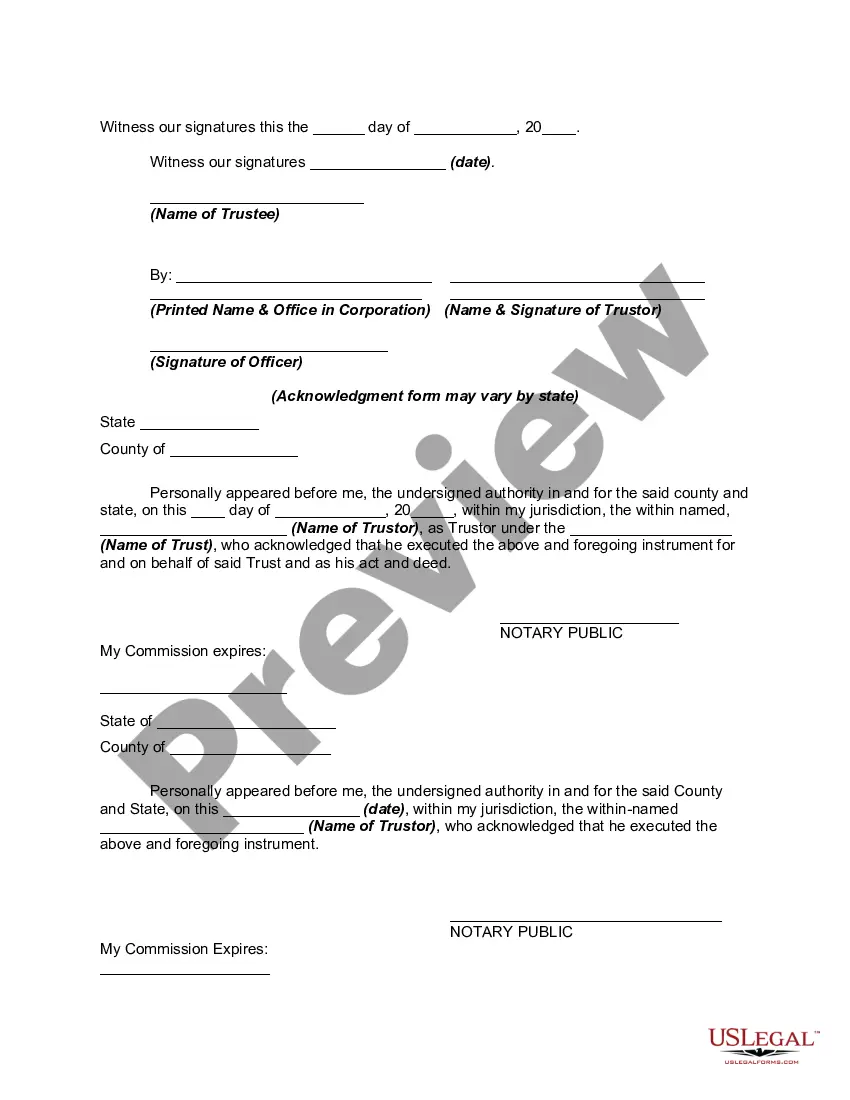
- Gather necessary signatures and ensure proper notarization as required by state laws.
Is notarization required?
Yes, this form must be notarized to be legally valid. Online notarization services are available through US Legal Forms, offering 24/7 access via secure video calls, ensuring ease of use without the need to travel.
Get your form ready online
Our built-in tools help you complete, sign, share, and store your documents in one place.
Make edits, fill in missing information, and update formatting in US Legal Forms—just like you would in MS Word.
Download a copy, print it, send it by email, or mail it via USPS—whatever works best for your next step.
Sign and collect signatures with our SignNow integration. Send to multiple recipients, set reminders, and more. Go Premium to unlock E-Sign.
If this form requires notarization, complete it online through a secure video call—no need to meet a notary in person or wait for an appointment.
We protect your documents and personal data by following strict security and privacy standards.

Make edits, fill in missing information, and update formatting in US Legal Forms—just like you would in MS Word.

Download a copy, print it, send it by email, or mail it via USPS—whatever works best for your next step.

Sign and collect signatures with our SignNow integration. Send to multiple recipients, set reminders, and more. Go Premium to unlock E-Sign.

If this form requires notarization, complete it online through a secure video call—no need to meet a notary in person or wait for an appointment.

We protect your documents and personal data by following strict security and privacy standards.
Mistakes to watch out for
- Failing to provide accurate details about the Trust Estate.
- Not specifying the distribution conditions clearly, which can lead to disputes.
- Neglecting to update the trust after major life events such as divorce or the birth of children.
- Not adhering to state-specific requirements, which may invalidate the document.
Advantages of online completion
- Convenient access to legal forms 24/7 from any location.
- Editability allows for customization based on personal circumstances.
- Reliable templates drafted by licensed attorneys ensure compliance with legal standards.
- Time-saving options to download and print the completed trust whenever needed.
Looking for another form?

Form popularity
FAQ
In the case of a marital trust, the IRS subjects the remaining trust assets to federal estate taxes when the surviving spouse passes. However, a couple can take advantage of the federal gift and estate tax exemption.
A marital deduction trust is a trust in which transfers of property between married partners are free of federal transfer tax.
A marital trust is a legal entity established to pass assets to a surviving spouse or children/grandchildren. When a spouse dies, their assets are moved into the trust. A general power of appointment, an estate trust, and a QTIP trust are three types of marital trusts.
Separate trusts provide more flexibility in the event of a death in the marriage. Since the trust property is already divided, separate trusts preserve the surviving spouse's ability to amend or revoke assets held within their own trust, while ensuring that the deceased spouse's trust cannot be amended after death.
An estate trust is a type of marital deduction trust requiring that when the surviving spouse dies, all remaining trust principal must go into his/her estate. This means the surviving spouse gets to choose the final beneficiaries, by will or within a living trust.
In the case of a marital trust, the IRS subjects the remaining trust assets to federal estate taxes when the surviving spouse passes. However, a couple can take advantage of the federal gift and estate tax exemption. This is the amount that you can pass on to heirs before you'd ever owe an actual estate tax.
A marital trust starts as a revocable living trust. A surviving spouse can be its trustee.
The effect of the marital deduction trust is that it shields both spouse's assets and estates from federal estate taxes because when the first spouse dies, the assets indicated by the settlor (the spouse who created the trust) pass to the marital trust free and clear of any and all federal estate taxes.
The trust qualifies for the marital deduction. In a QTIP trust, the surviving spouse must receive all income generated by the trust property for life, paid at least annually.After the surviving spouse's death, the property passes to the remainder beneficiaries of the trust, who usually are the children of the couple.