Compromise of Creditor's Claim against Estate by Payment of Cash and Conveying of Real Property
Overview of this form
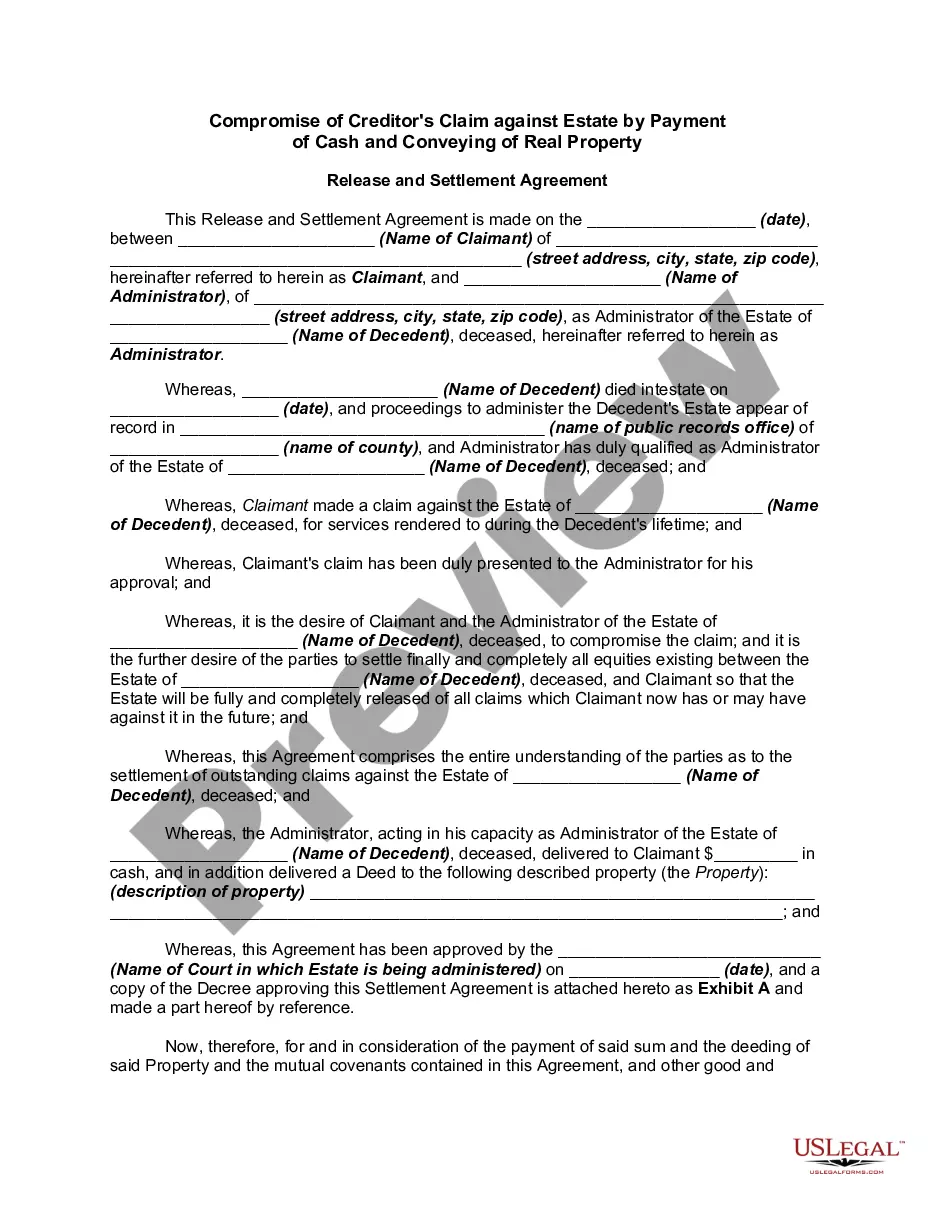
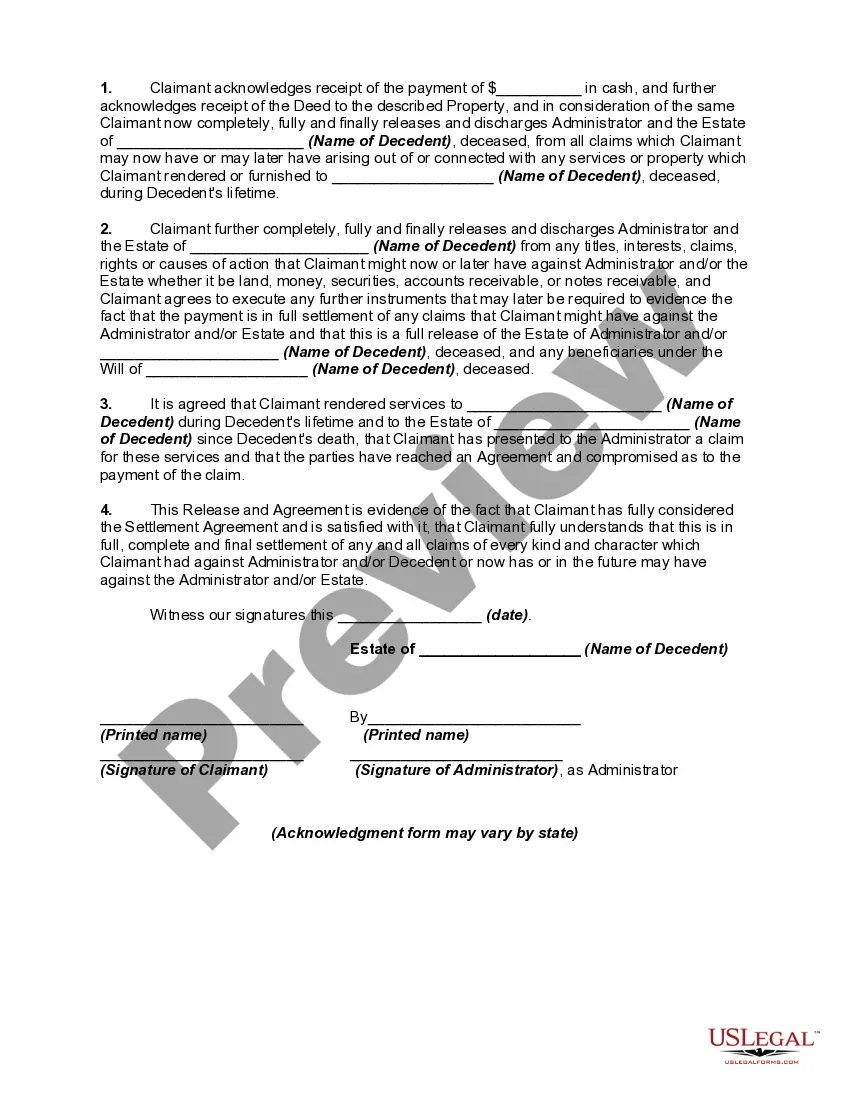
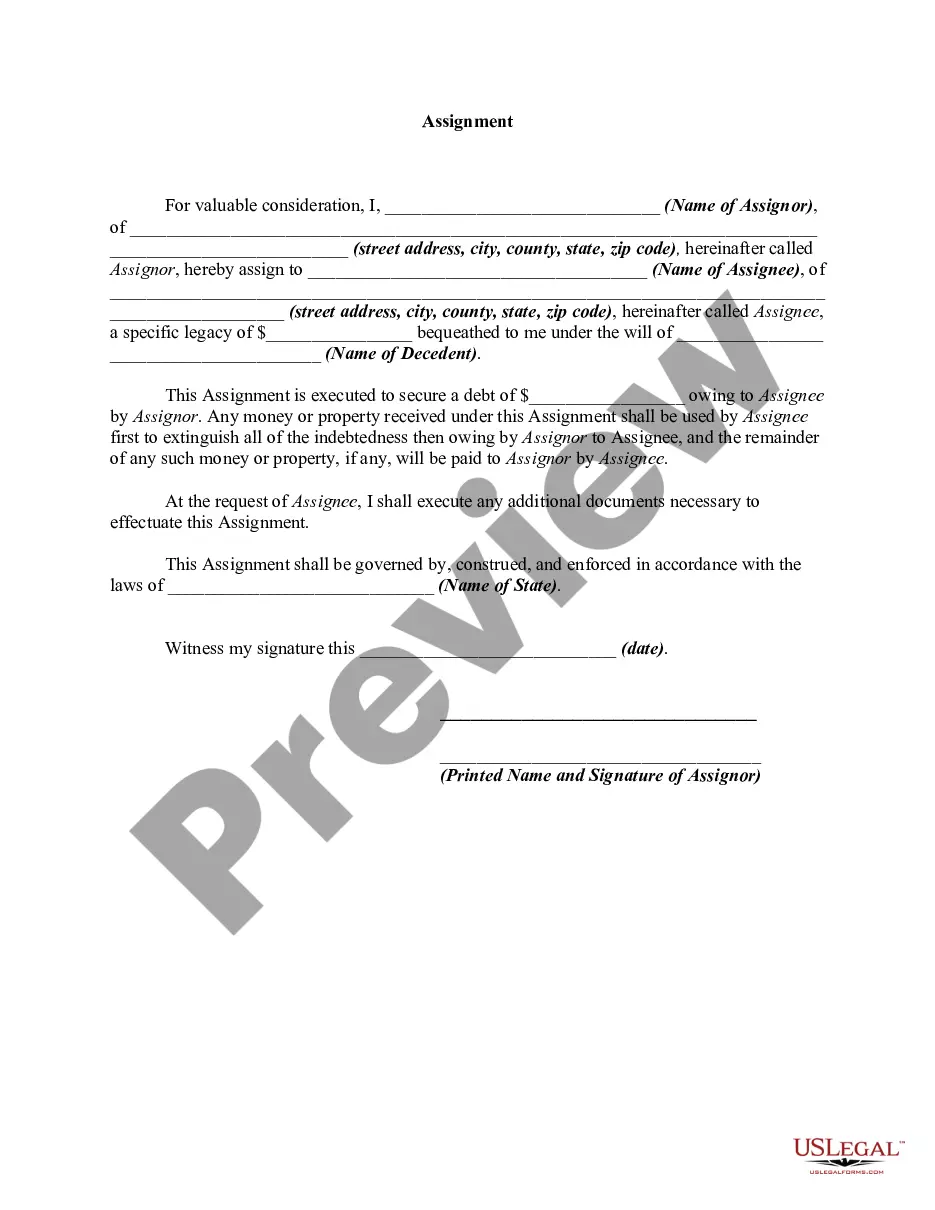
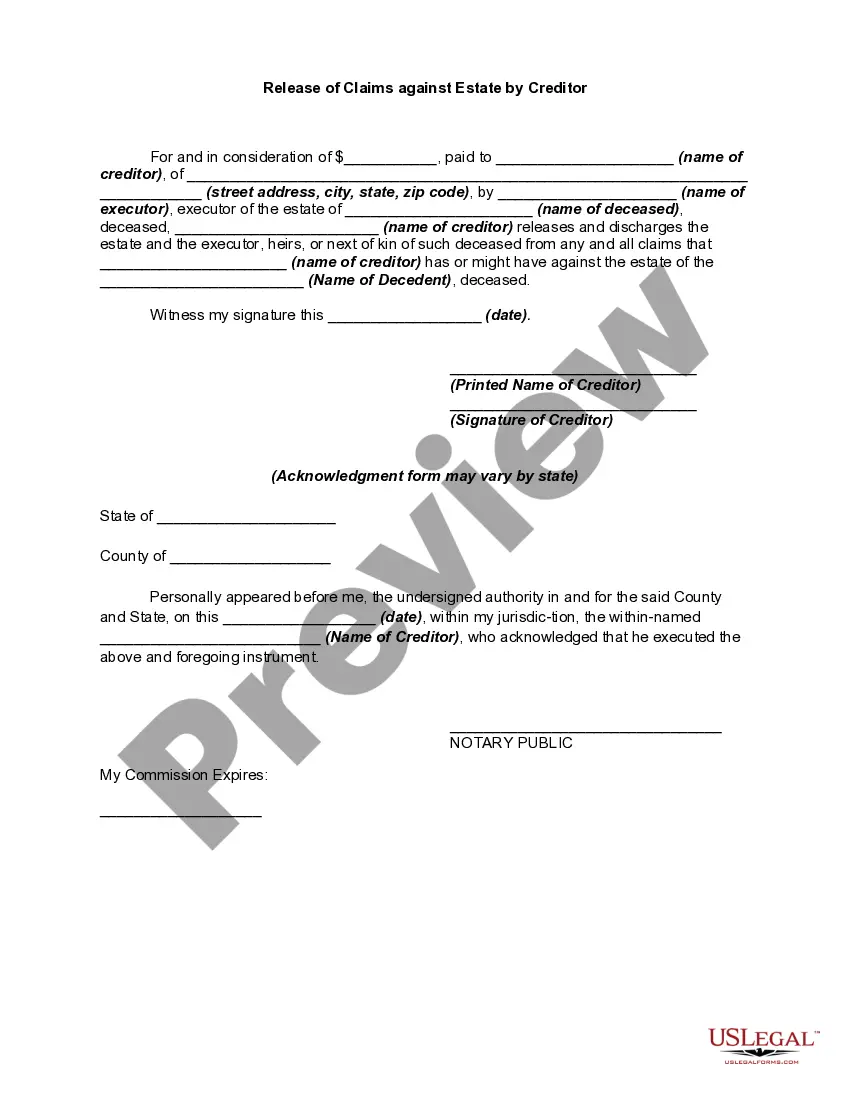
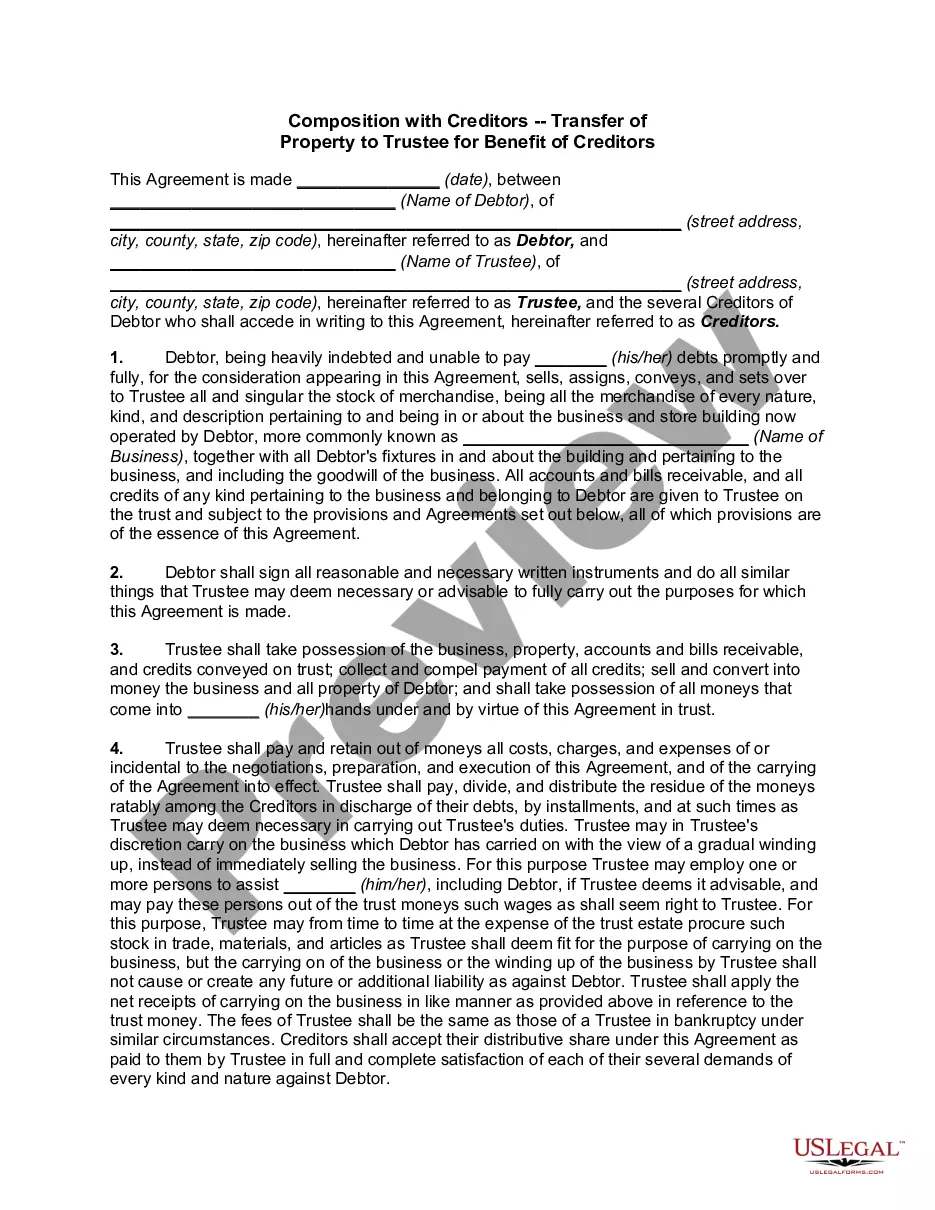
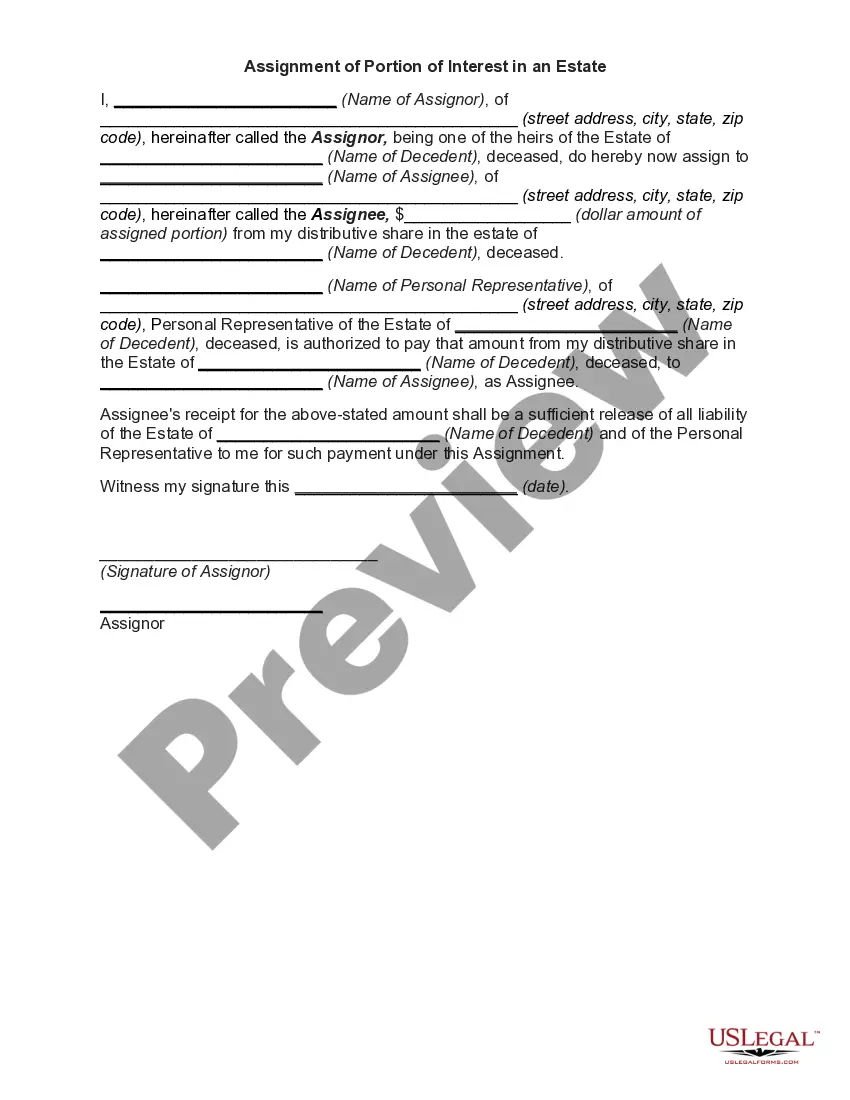
The Compromise of Creditor's Claim against Estate by Payment of Cash and Conveying of Real Property is a legal document used when a creditor agrees to settle their claims against a decedent's estate. This form facilitates the resolution of disputes over claims made by creditors, allowing the estate's administrator to settle outstanding debts with cash payments and property transfers. It is crucial for maintaining order during the probate process and ensuring all parties come to a clear agreement on claims against the estate.
Key components of this form
- Identification of the parties involved: Claimant and Administrator.
- Details of the decedent and the claim being compromised.
- Agreement on cash payments and specific property to be conveyed.
- Release of future claims against the estate by the claimant.
- Approval by the relevant court along with exhibit documentation.
Common use cases
This form should be used when a creditor has a valid claim against a decedent's estate and is willing to accept a compromise through cash payment and property transfer. It is particularly used in situations where the full debt cannot be paid, allowing both the estate and the creditor to settle amicably to avoid further disputes or legal actions.
Who can use this document
- Creditors who wish to settle their claims against a decedent's estate.
- Administrators of estates managing creditor claims.
- Estate representatives assisting in the probate process.
Steps to complete this form
- Identify the date and parties involved, including the claimant and the administrator.
- Include details about the decedent and the claim being settled.
- State the amount of cash being paid and describe the property being conveyed.
- Ensure the agreement includes a release of future claims by the claimant.
- Obtain the necessary court approval and attach it to the agreement.
Is notarization required?
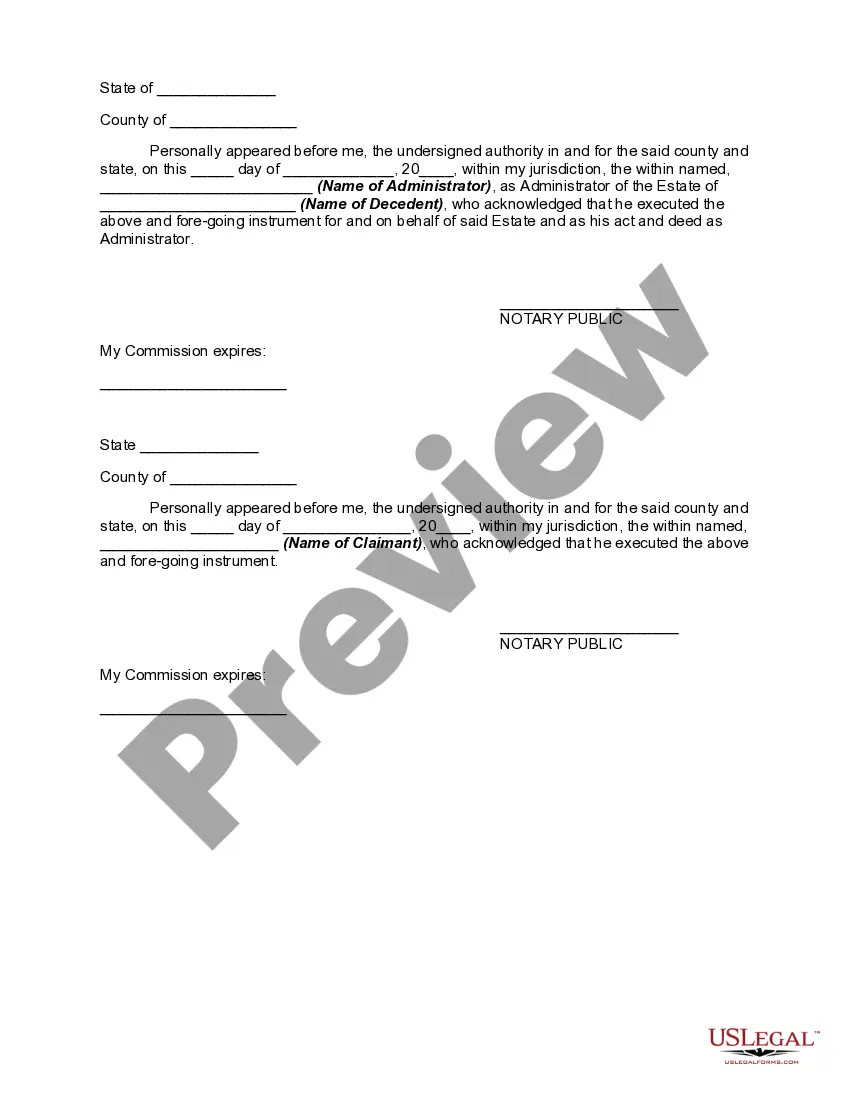
To make this form legally binding, it must be notarized. Our online notarization service, powered by Notarize, lets you verify and sign documents remotely through an encrypted video session.
Get your form ready online
Our built-in tools help you complete, sign, share, and store your documents in one place.
Make edits, fill in missing information, and update formatting in US Legal Forms—just like you would in MS Word.
Download a copy, print it, send it by email, or mail it via USPS—whatever works best for your next step.
Sign and collect signatures with our SignNow integration. Send to multiple recipients, set reminders, and more. Go Premium to unlock E-Sign.
If this form requires notarization, complete it online through a secure video call—no need to meet a notary in person or wait for an appointment.
We protect your documents and personal data by following strict security and privacy standards.

Make edits, fill in missing information, and update formatting in US Legal Forms—just like you would in MS Word.

Download a copy, print it, send it by email, or mail it via USPS—whatever works best for your next step.

Sign and collect signatures with our SignNow integration. Send to multiple recipients, set reminders, and more. Go Premium to unlock E-Sign.

If this form requires notarization, complete it online through a secure video call—no need to meet a notary in person or wait for an appointment.

We protect your documents and personal data by following strict security and privacy standards.
Mistakes to watch out for
- Failing to properly identify all parties involved can lead to enforceability issues.
- Not securing court approval before completing the settlement.
- Omitting the details of the payment and property transfer, leading to confusion.
Benefits of completing this form online
- Convenience of immediate access and download at any time.
- Editability allows for easy customization to fit your specific situation.
- Reliable templates crafted by licensed attorneys ensure legal compliance.
Looking for another form?
Form popularity
FAQ
A claim for reasonable financial provision must be made within six months after probate or letters of administration have been issued, although the court can extend this period in certain circumstances (eg if the applicant has not made an earlier claim because of negotiations with the executors or administrators).
Find the Correct Probate Court. The probate court handles issues involving a deceased person's estate, along with potential disputes regarding outstanding debts, issues with heirs, etc. Confirm the Debt. Complete the Claim Form. File the Claim Form.
Godoy. After someone dies, anyone who thinks they are owed money or property by the deceased can file a claim against the estate. Estate claims range from many different types of debts, such as mortgages, credit card debt, loans, unpaid wages, or breach of contract.
Is there a time limit for a claim against a deceased estate? Yes, there is. You have only 6 months from the date of the grant of probate to make a claim. In some very limited circumstances, an extension of this time frame may be granted.