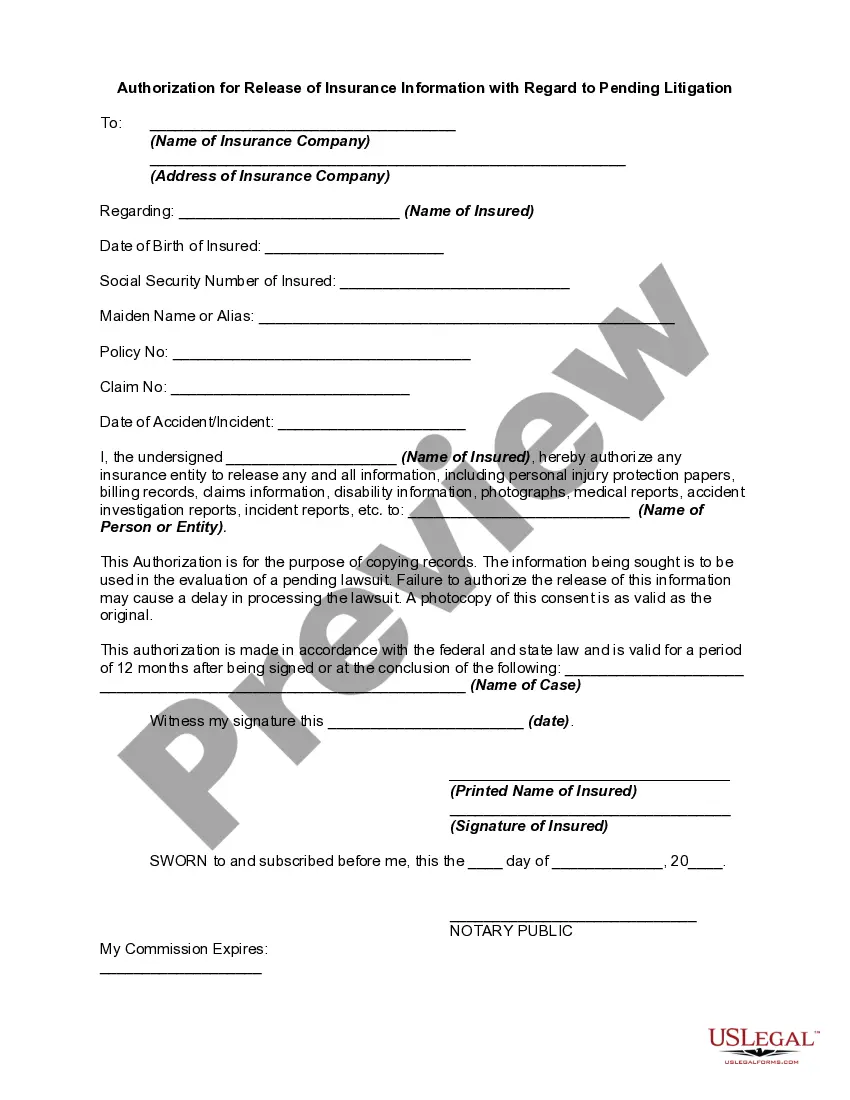
Authorization for Release of Insurance Information with Regard to Pending Litigation
What is this form?
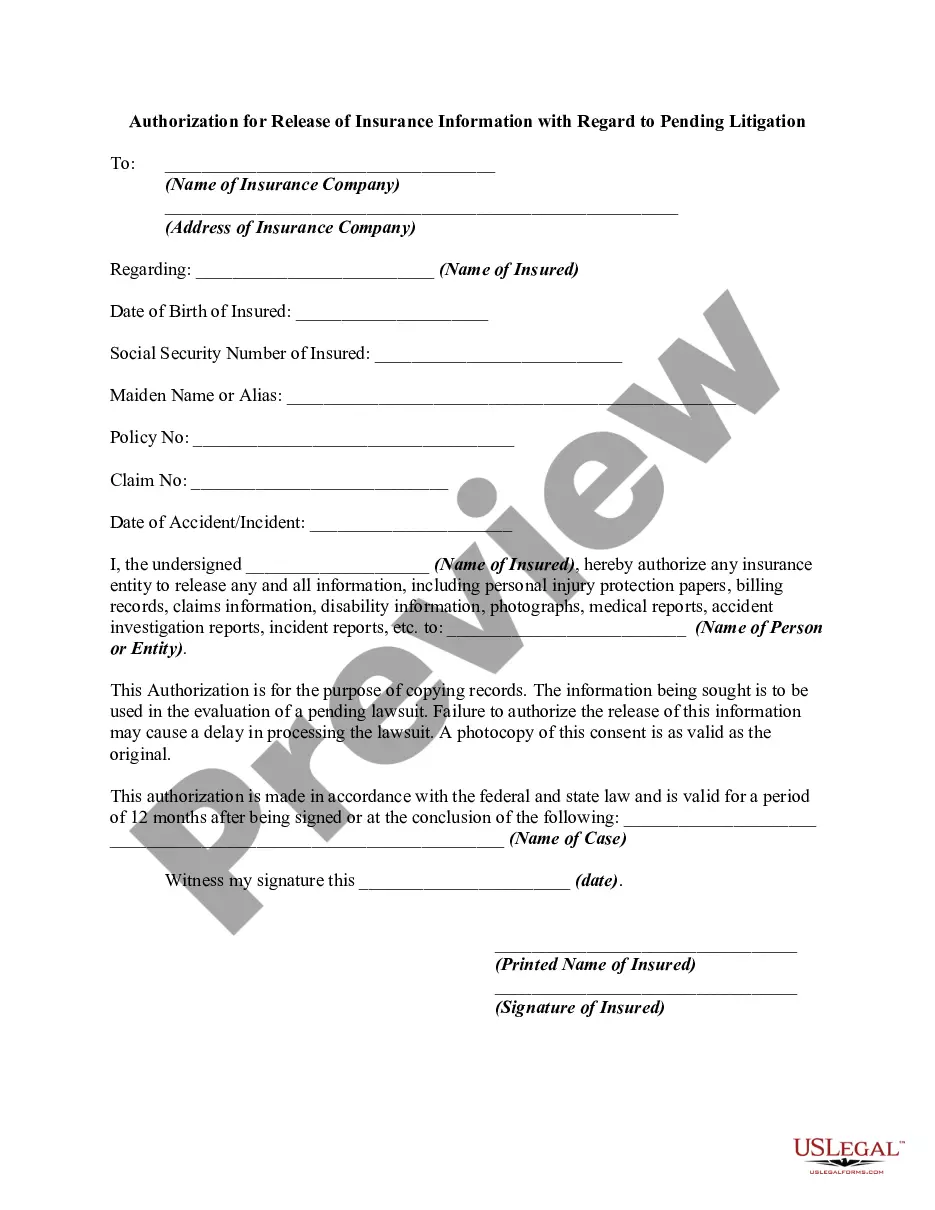
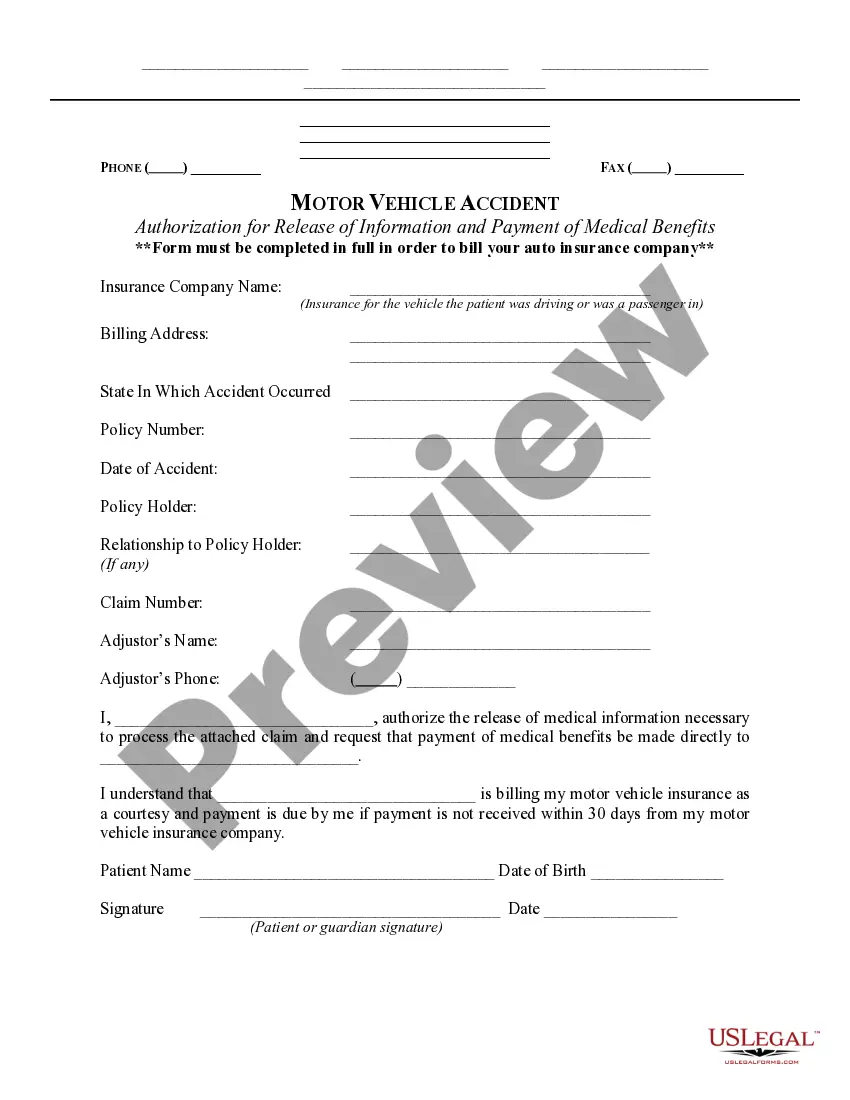
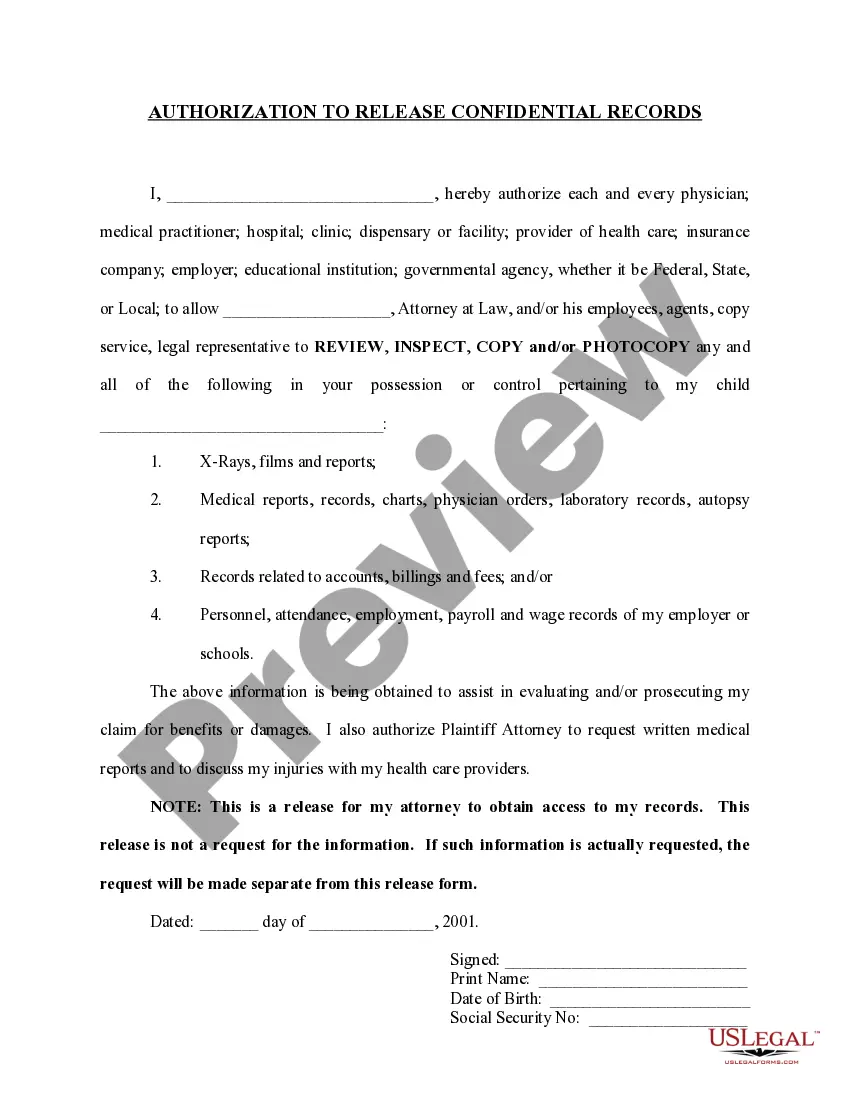
This Authorization for Release of Insurance Information with Regard to Pending Litigation is a legal document that allows an insurance company to share relevant insurance details linked to an ongoing legal case. This form is crucial as it specifies what information can be released, ensuring compliance with privacy laws while facilitating necessary communications between parties involved in litigation.
Key components of this form
- Name and address of the insurance company
- Name, date of birth, and Social Security number of the insured
- Specific policy and claim numbers
- Details of the accident or incident
- Signature of the insured and a witness
- Notary public section for verification
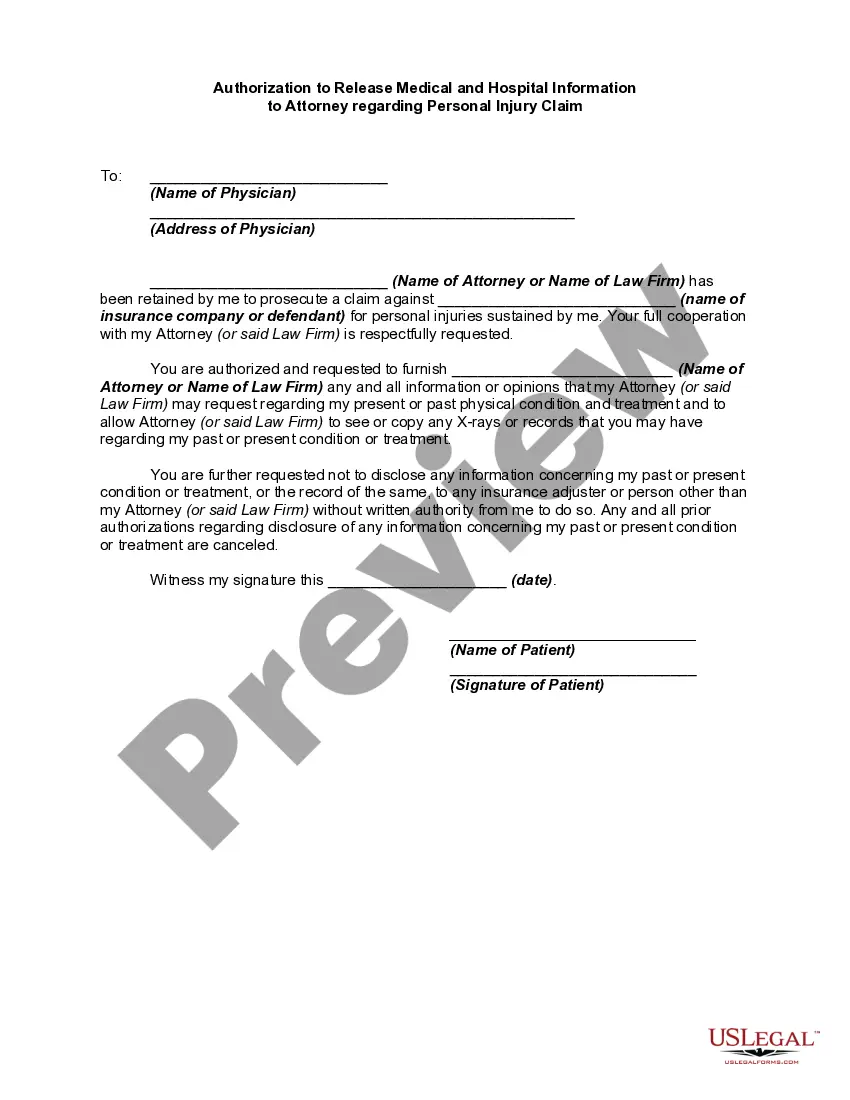
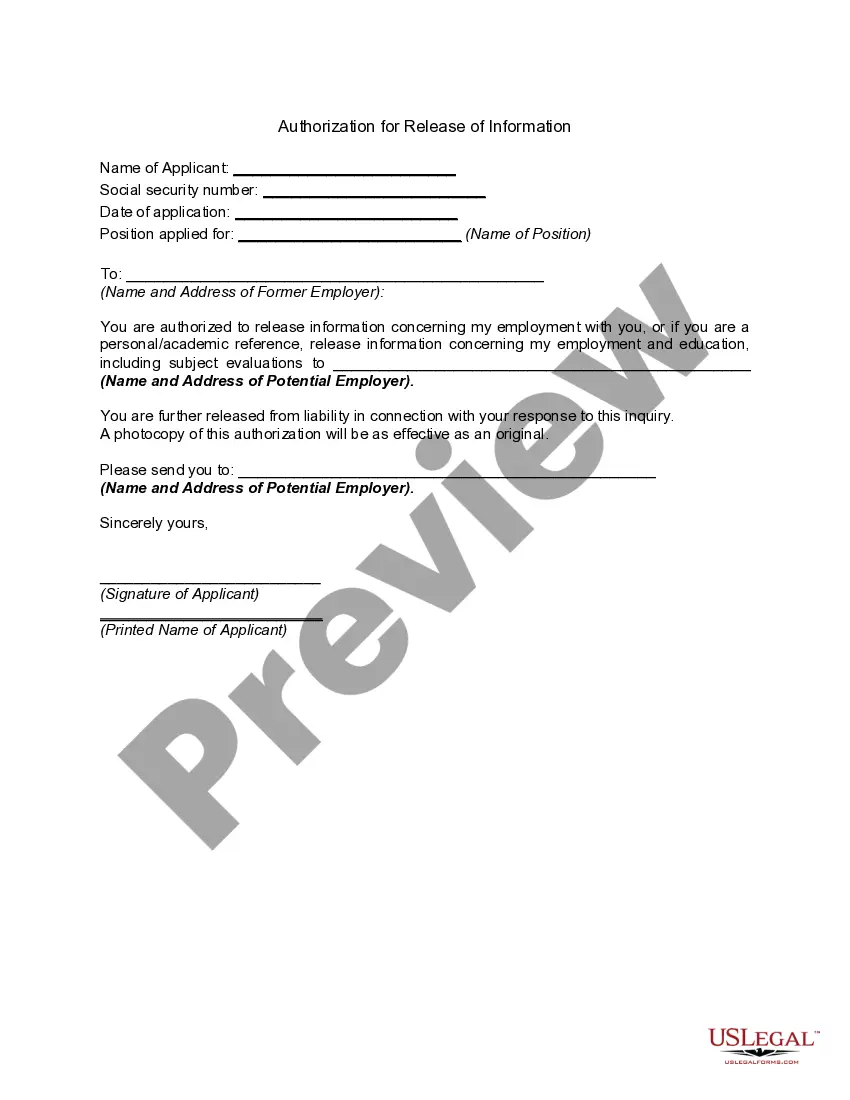
Situations where this form applies
This form is necessary when an insured individual is involved in pending litigation and requires their insurance company to provide information related to their case. It is particularly important for obtaining medical records, billing information, and other crucial documents that will aid in assessing or resolving a lawsuit.
Who needs this form
- Individuals currently facing litigation related to an insurance claim
- Attorneys representing clients in personal injury or other legal cases
- Insured parties who need their insurance information for legal proceedings
- Insurance representatives required to verify consent before disclosing information
How to prepare this document
- Fill in the name and address of the insurance company.
- Provide the personal details of the insured, including name, date of birth, and Social Security number.
- Enter the relevant policy and claim numbers along with details of the accident.
- Specify the person or entity authorized to receive the information.
- Both the insured and a witness must sign the document.
- If required, complete the notary section to validate the form.
Notarization requirements for this form
This form does not typically require notarization unless specified by local law. Check your jurisdiction's specific requirements to ensure compliance.
Get your form ready online
Our built-in tools help you complete, sign, share, and store your documents in one place.
Make edits, fill in missing information, and update formatting in US Legal Forms—just like you would in MS Word.
Download a copy, print it, send it by email, or mail it via USPS—whatever works best for your next step.
Sign and collect signatures with our SignNow integration. Send to multiple recipients, set reminders, and more. Go Premium to unlock E-Sign.
If this form requires notarization, complete it online through a secure video call—no need to meet a notary in person or wait for an appointment.
We protect your documents and personal data by following strict security and privacy standards.

Make edits, fill in missing information, and update formatting in US Legal Forms—just like you would in MS Word.

Download a copy, print it, send it by email, or mail it via USPS—whatever works best for your next step.

Sign and collect signatures with our SignNow integration. Send to multiple recipients, set reminders, and more. Go Premium to unlock E-Sign.

If this form requires notarization, complete it online through a secure video call—no need to meet a notary in person or wait for an appointment.

We protect your documents and personal data by following strict security and privacy standards.
Common mistakes
- Not including all necessary personal information of the insured.
- Leaving out the name of the authorized person or entity.
- Failing to sign the form or missing witness signatures.
- Not adhering to state-specific requirements for notarization.
Benefits of completing this form online
- Convenient, fast access to legal forms without the need to visit an attorney's office.
- Editability allows for customization of the document to meet specific legal needs.
- Reliability of professionally drafted forms designed by licensed attorneys.
Legal use & context
- This form serves as a binding authorization for insurance companies to release specific information that can assist in legal proceedings.
- It is designed to comply with applicable federal and state laws governing the release of personal information.
- Proper completion and notarization ensure the form's enforceability in court settings.
Summary of main points
- The Authorization for Release of Insurance Information is essential for accessing critical information during pending litigation.
- Correct and complete completion of the form is vital for validity and acceptance.
- Notarization is generally required to enhance the form's legality.
Looking for another form?
Form popularity
FAQ
Release of information (ROI) in healthcare is critical to the quality of the continuity of care provided to the patient. It also plays an important role in billing, reporting, research, and other functions. Many laws and regulations govern how, when, what, and to whom protected health information (PHI) is released.
The core elements of a valid authorization include: A meaningful description of the information to be disclosed. The name of the individual or the name of the person authorized to make the requested disclosure. The name or other identification of the recipient of the information.
To abide by HIPAA regulations, the hospital should ask the attorney's client to sign a HIPAA-compliant release form approved by the hospital's legal counsel.While that letter may comply with state mandates protecting the unauthorized release of medical information, HIPAA is another matter.
An authorization is a detailed document that gives covered entities permission to use protected health information for specified purposes, which are generally other than treatment, payment, or health care operations, or to disclose protected health information to a third party specified by the individual.
No, you should not sign the HIPAA authorization for the release of your medical records. Often, the insurance company will act as though they cannot begin to decide how much money to offer you until they have all of your medical records.
Your authorization allows the Health Plan (your health insurance carrier or HMO) to release your protected health information to a person or organization that you choose.Revoking this authorization will not affect any action taken prior to receipt of your written request.
As noted above, for permitted disclosures of health information, HIPAA does not require that a patient give written permission. Instead, clinicians are allowed to use a patient's verbal consent.