Agreement for Sale of Equipment; Additional Proposed Terms Are Expressly Rejected; Disclaimer of Warranties
Understanding this form
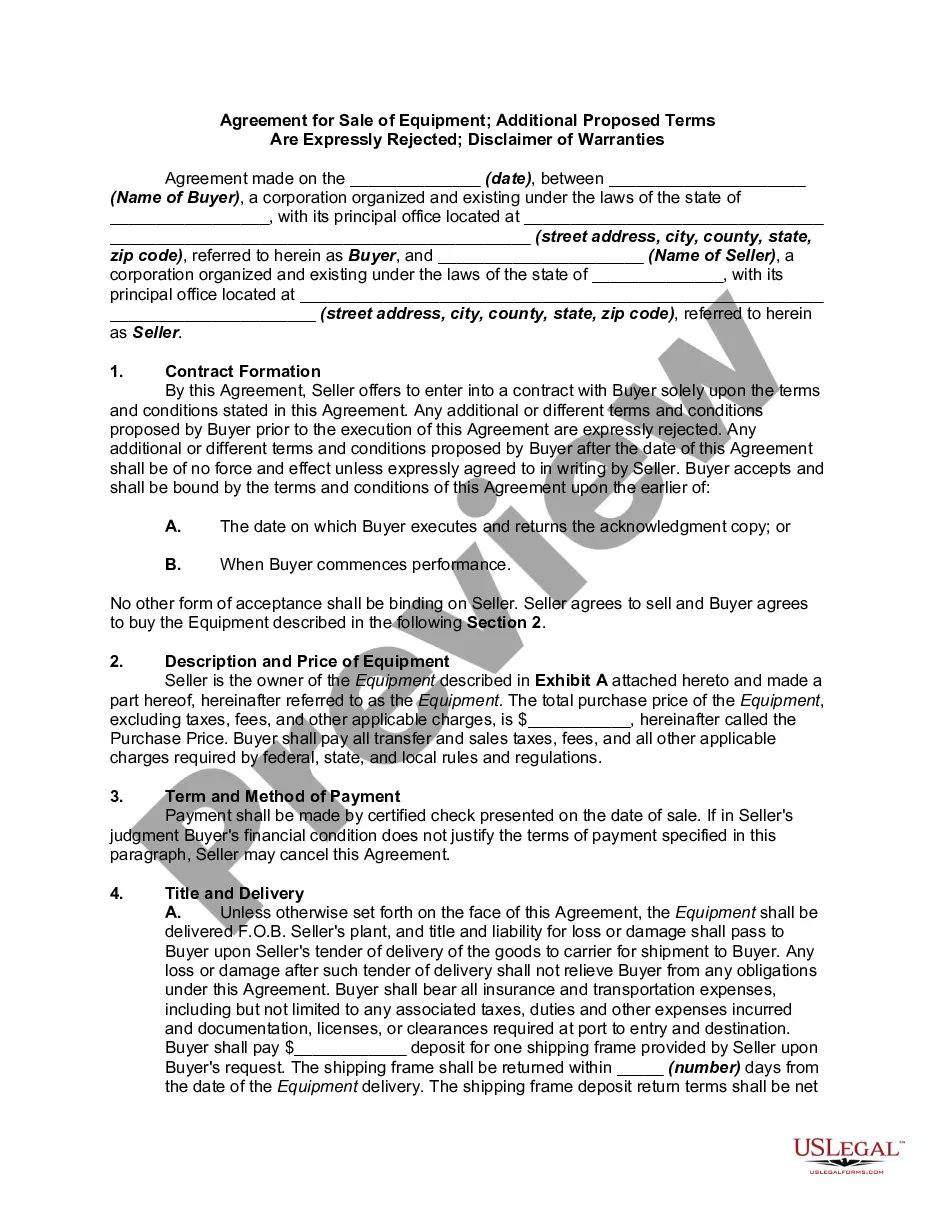
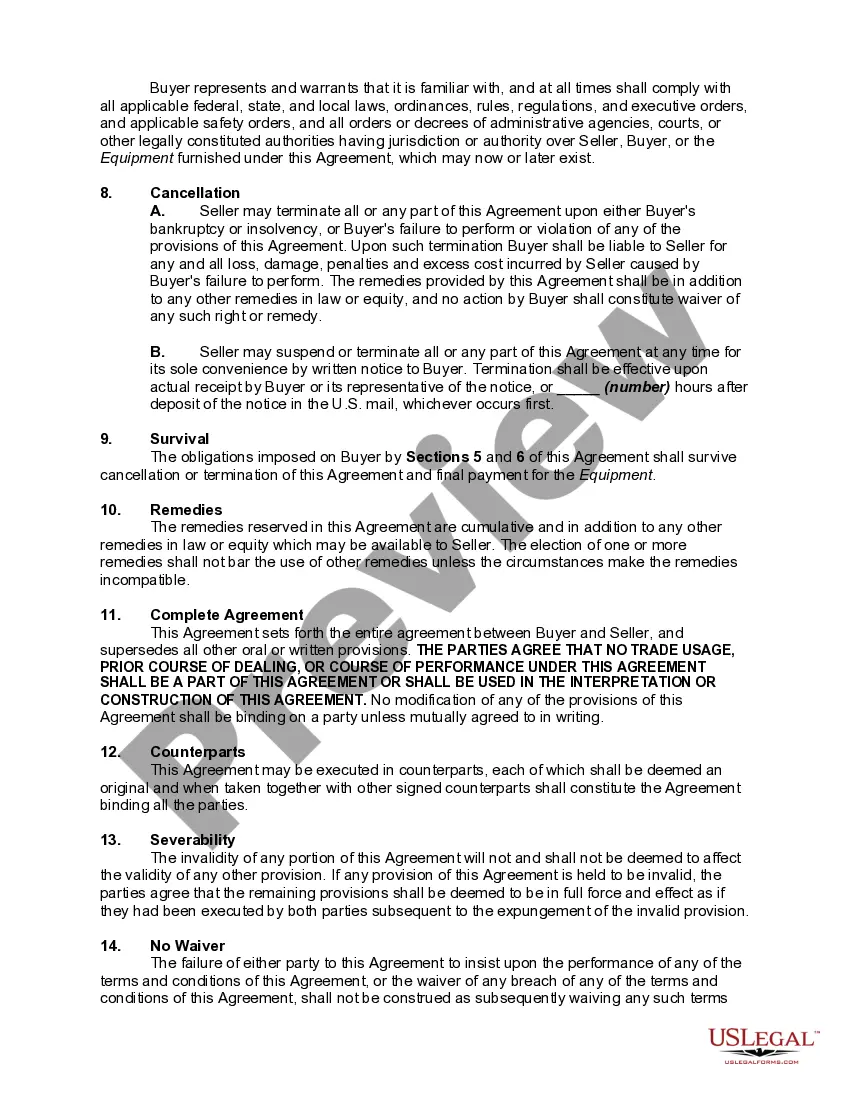
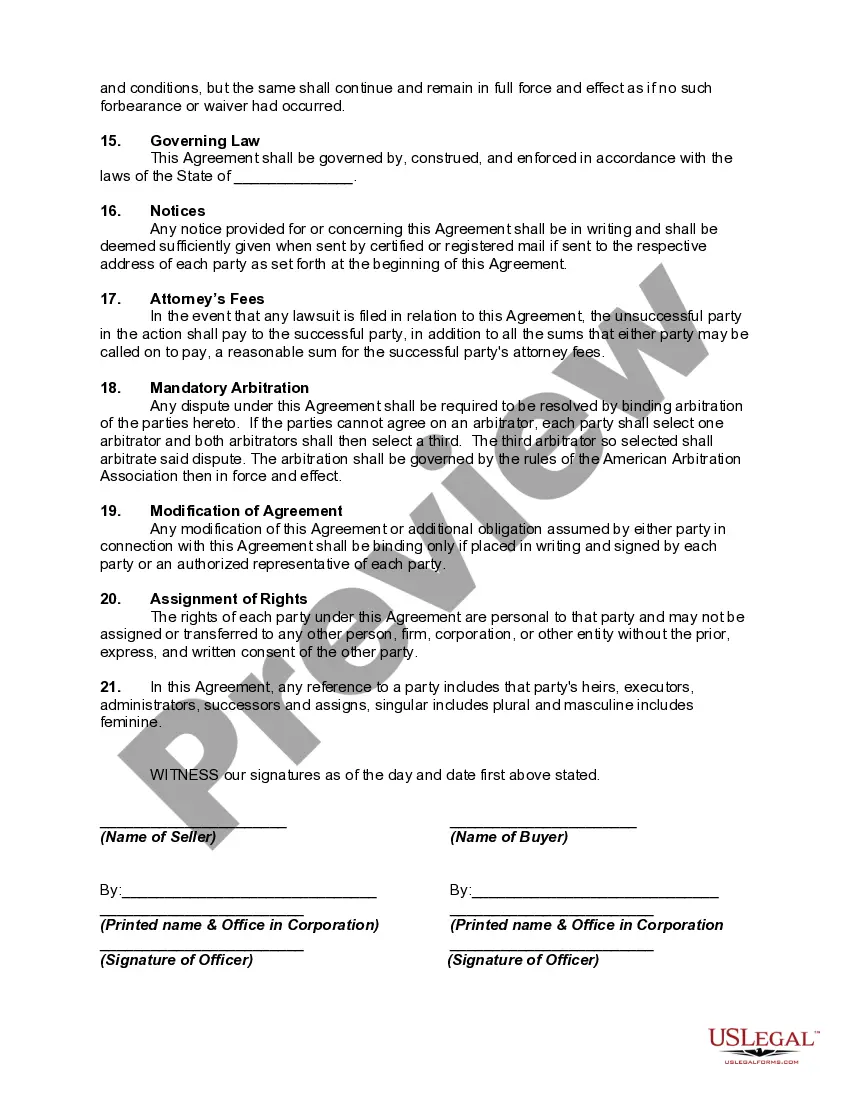
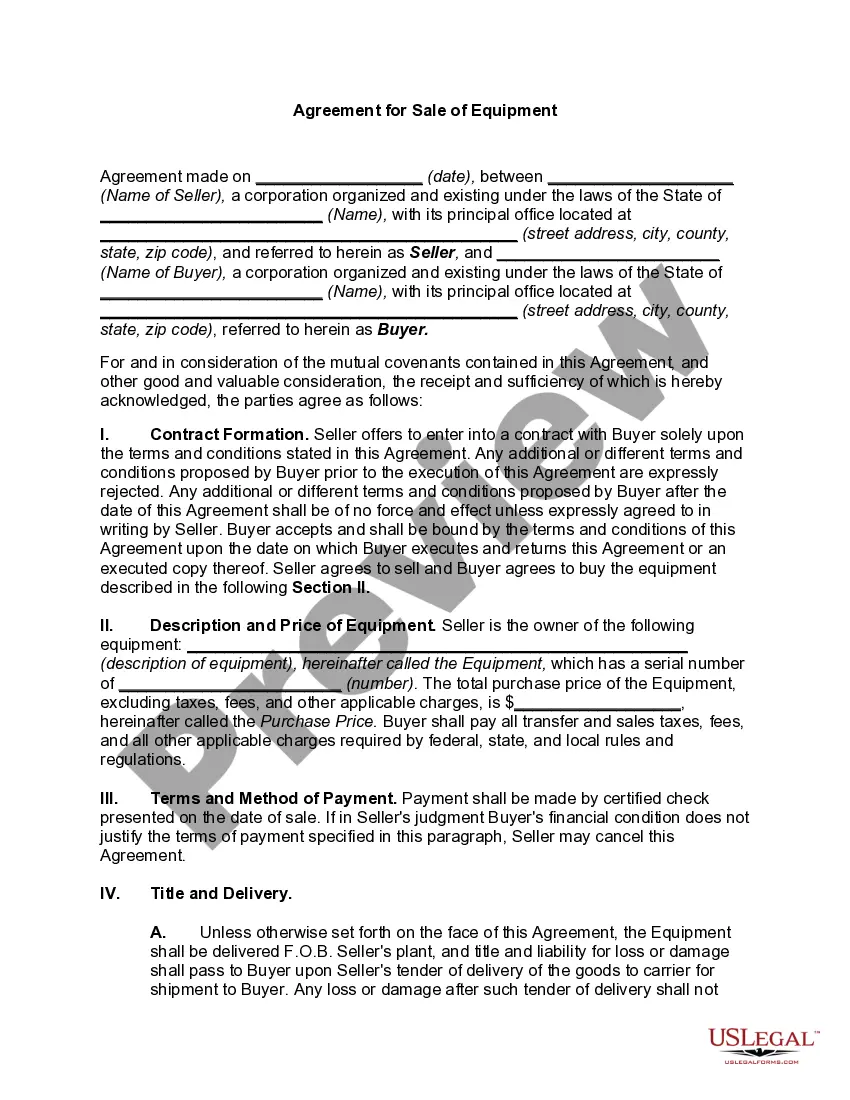
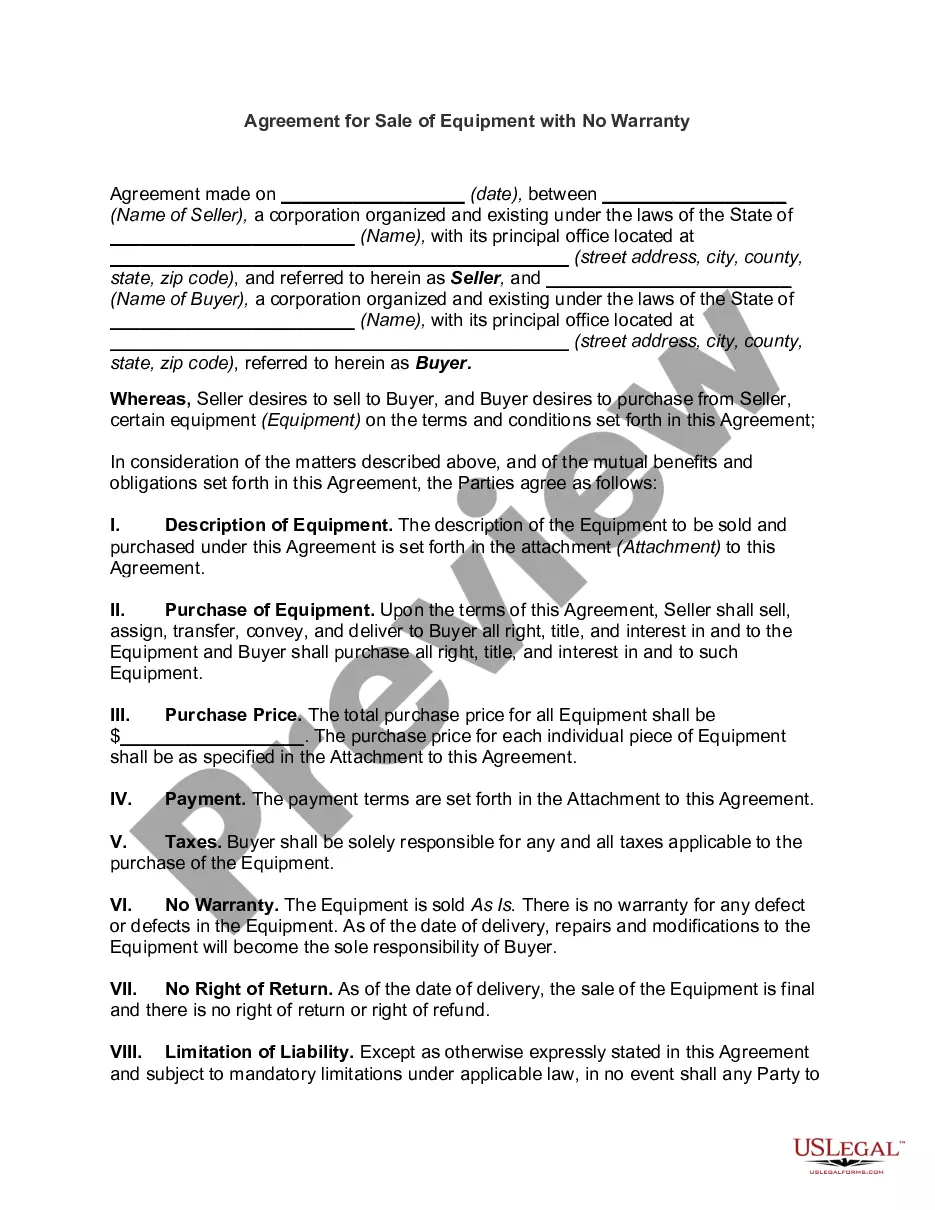
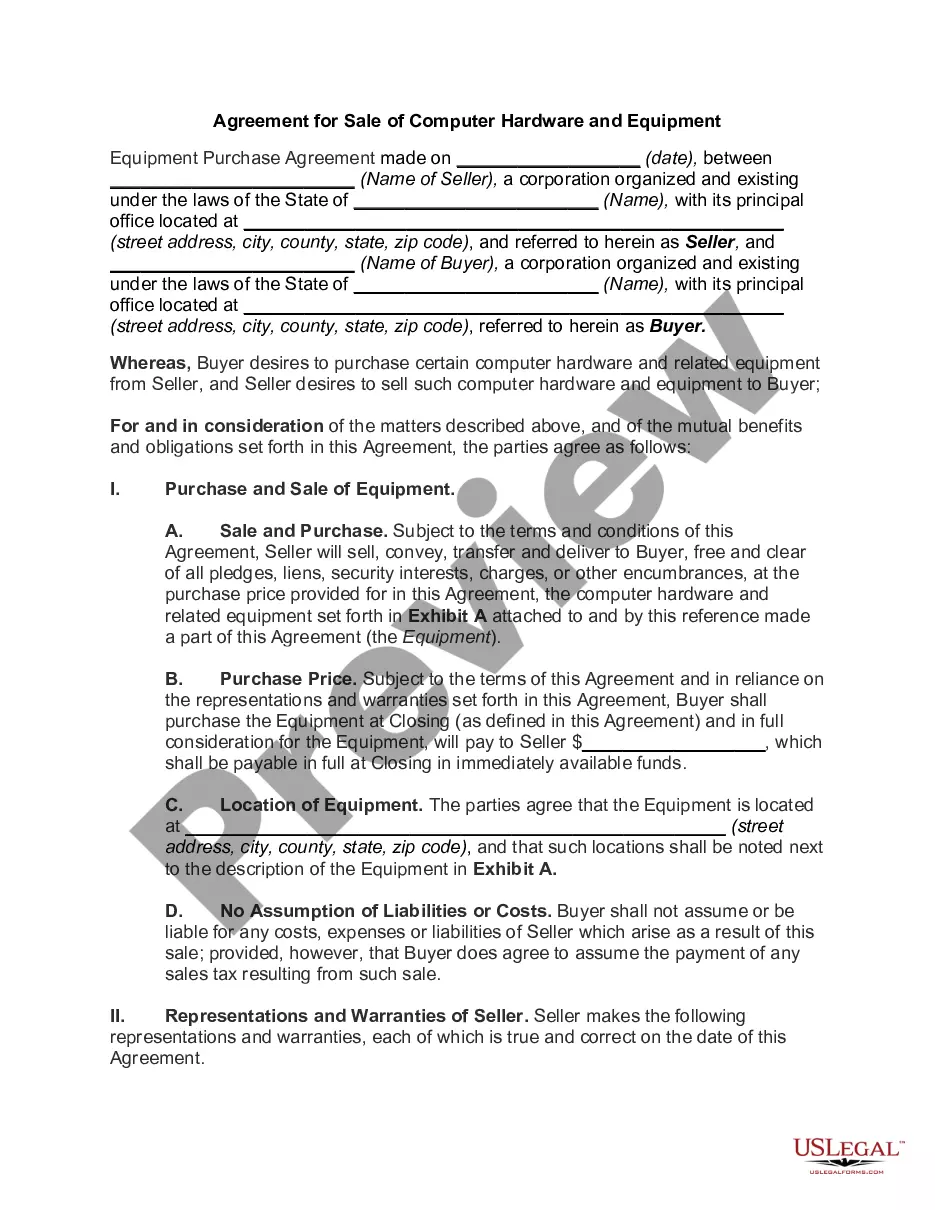
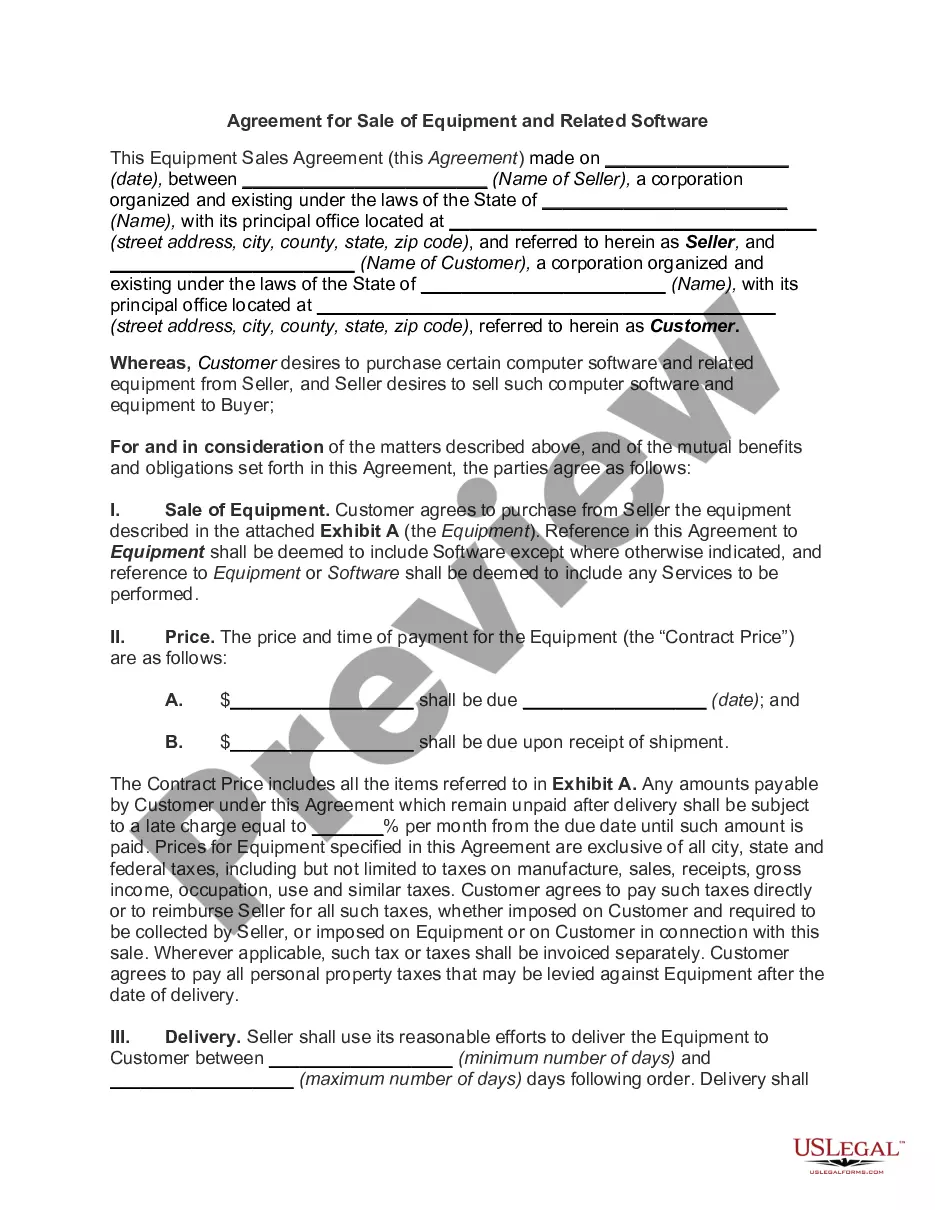
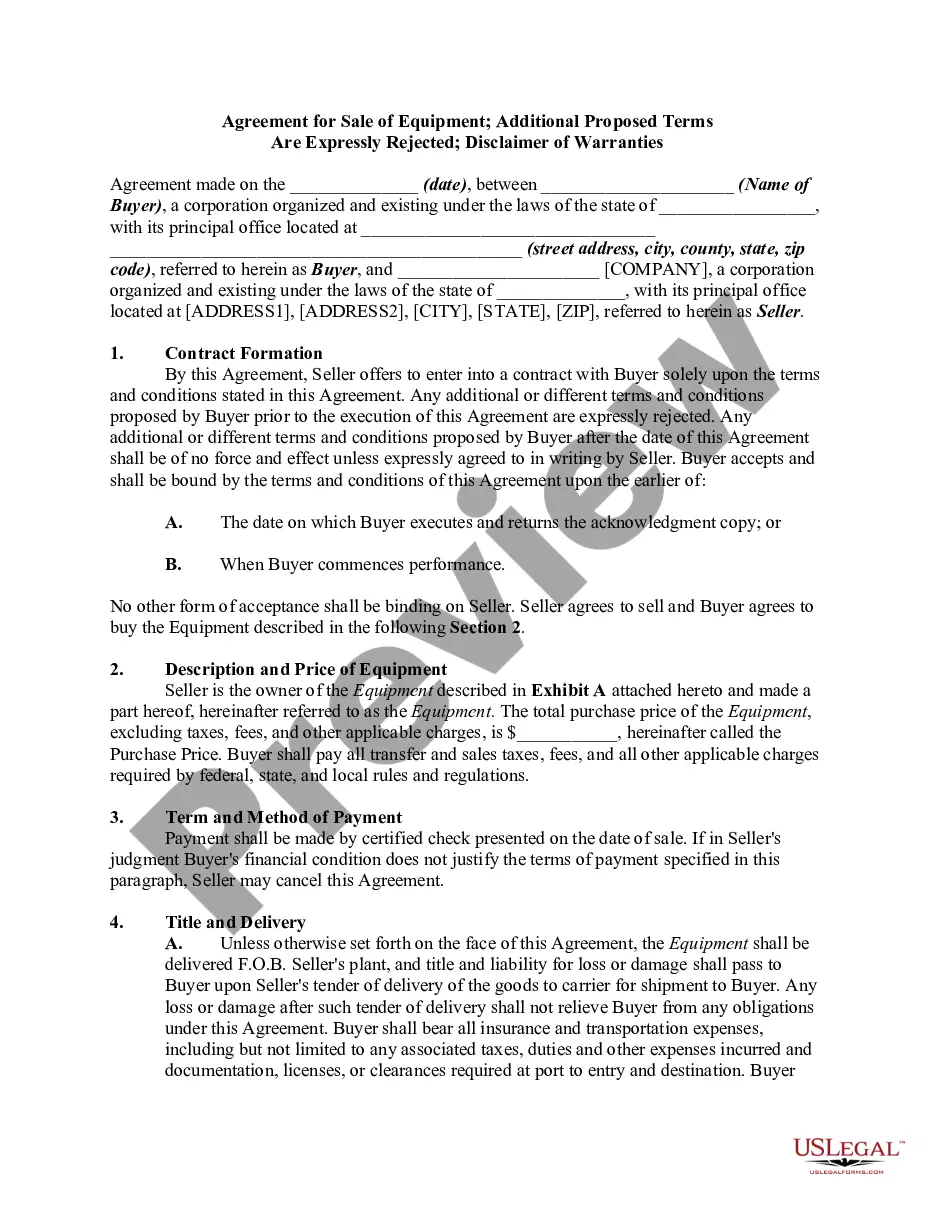
The Agreement for Sale of Equipment is a legal document that establishes the terms of sale between a buyer and a seller for specific equipment. This form clearly states that any additional proposed terms from the buyer are expressly rejected, differentiating it from other sales agreements that may allow amendments during negotiations. It includes a disclaimer of warranties and sets forth the responsibilities of both parties in the transaction, thereby solidifying the terms and protecting both buyer and seller from future disputes.
Key parts of this document
- Identification of parties: Details of the buyer and seller, including their corporate structure and location.
- Contract formation: Clarification that the agreement is binding on the terms stated and no additional conditions will be considered.
- Payment terms: Specifications on how the purchase price and any additional fees, such as taxes, will be handled.
- Delivery and title transfer: Terms regarding the method of delivery and the transfer of ownership.
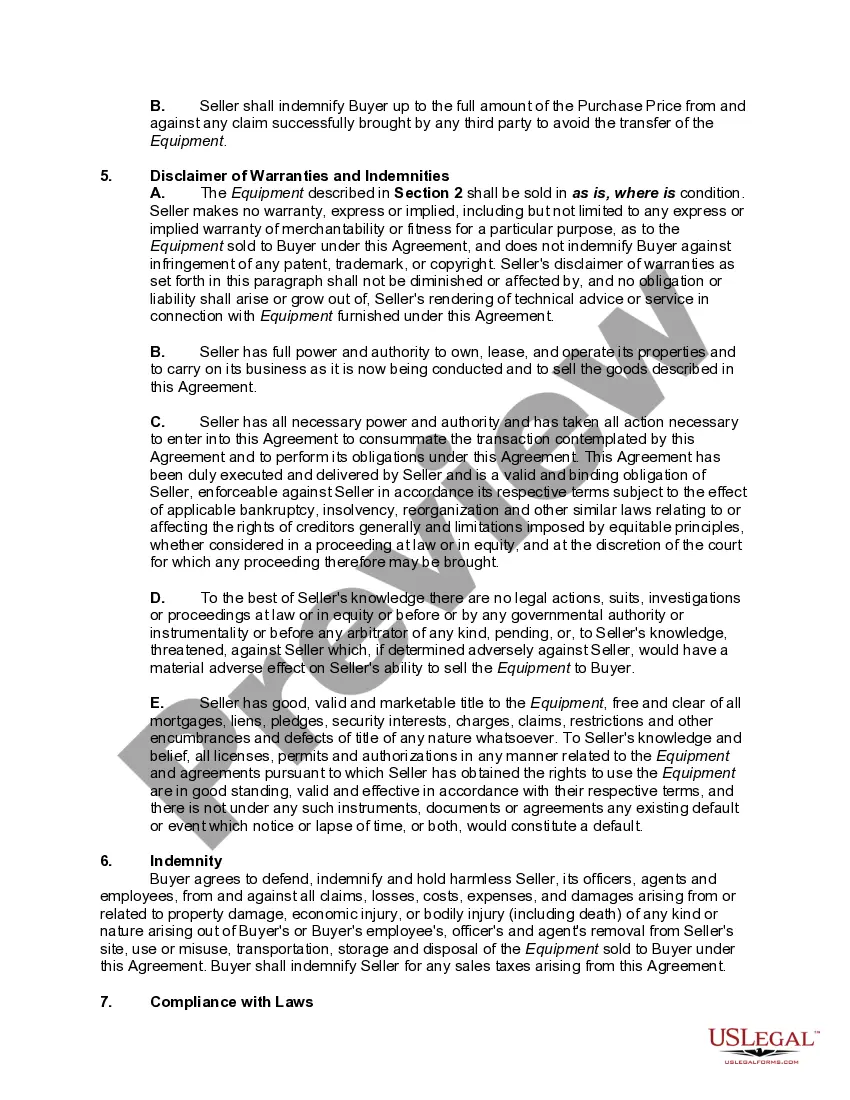
- Disclaimer of warranties: Clearly states the condition of the equipment sold is "as is" without any warranties from the seller.
- Indemnity clauses: Provisions outlining responsibilities and liabilities concerning claims or damages related to the equipment.
When to use this form
This form should be used when a business or individual intends to purchase equipment and wants to formalize the sale in a legally binding agreement. It is particularly useful in situations where the seller does not want to negotiate additional terms and wishes to limit their liability by disclaiming warranties. For example, it is beneficial for transactions involving specialized equipment where the buyer accepts the equipment in its current condition.
Who should use this form
- Businesses seeking to purchase equipment from another corporation.
- Sellers looking to ensure their sale terms are clearly defined and accepted without alterations.
- Individuals or corporate entities requiring a straightforward agreement without the complexities of negotiations.
- Parties needing to formalize an equipment sale while mitigating risks associated with warranty claims.
Completing this form step by step
- Identify the parties: Fill in the names and addresses of both the buyer and seller at the beginning of the agreement.
- Enter the sale date: Provide the date on which the agreement is made.
- Specify the equipment: Detail the equipment being sold by attaching an exhibit if necessary.
- State the purchase price: Clearly state the total price and any applicable taxes or fees.
- Fill in payment terms: Indicate how payment will be made, including any deposits if applicable.
- Sign and date the agreement: Ensure that the authorized representatives from both parties sign and date the document to finalize the contract.
Notarization guidance
This form does not typically require notarization unless specified by local law. Both parties should ensure that they sign the document to confirm their agreement to the terms. In some jurisdictions, notarization may add an additional layer of verification.
Get your form ready online
Our built-in tools help you complete, sign, share, and store your documents in one place.
Make edits, fill in missing information, and update formatting in US Legal Forms—just like you would in MS Word.
Download a copy, print it, send it by email, or mail it via USPS—whatever works best for your next step.
Sign and collect signatures with our SignNow integration. Send to multiple recipients, set reminders, and more. Go Premium to unlock E-Sign.
If this form requires notarization, complete it online through a secure video call—no need to meet a notary in person or wait for an appointment.
We protect your documents and personal data by following strict security and privacy standards.

Make edits, fill in missing information, and update formatting in US Legal Forms—just like you would in MS Word.

Download a copy, print it, send it by email, or mail it via USPS—whatever works best for your next step.

Sign and collect signatures with our SignNow integration. Send to multiple recipients, set reminders, and more. Go Premium to unlock E-Sign.

If this form requires notarization, complete it online through a secure video call—no need to meet a notary in person or wait for an appointment.

We protect your documents and personal data by following strict security and privacy standards.
Avoid these common issues
- Failing to include all parties involved in the transaction.
- Not specifying the full purchase price, including taxes and fees.
- Overlooking the need for signatures from both parties.
- Not detailing the equipment description accurately, leading to disputes regarding what is included in the sale.
- Neglecting to clarify the method of delivery and title transfer, which can cause confusion later.
Why complete this form online
- Convenience: Download and complete the form at your own pace, without the need for in-person meetings.
- Editability: Customize the form easily by entering specific details relevant to your transaction.
- Accessibility: Access this form from anywhere, allowing for quick modifications before finalizing the sale.
- Reliability: Ensure that you are using a template drafted by licensed attorneys, increasing the legitimacy of your agreement.
- This agreement establishes a clear and enforceable contract, which is valuable in dispute resolution should issues arise.
- Compliance with all clauses is mandatory; thus, each party must understand their obligations prior to execution.
Key takeaways
- The Agreement for Sale of Equipment protects both buyers and sellers by outlining clear terms of the sale.
- Additional proposed terms are not accepted, ensuring the agreed-upon conditions remain unchanged.
- This form caters to various commercial equipment sales across multiple jurisdictions.
Looking for another form?









Form popularity
FAQ
Under the implied category are three major subtypes: the implied warranty of merchantability (only given by merchants), the implied warranty of fitness for a particular purpose, and the implied warranty of title.
An implied warranty is a lot like an assumption. For example, when you buy a new car from a car dealer, the implied warranty is that the car works. When you order a hamburger at a restaurant, it comes with the implied warranty that it is edible.
A disclaim warranty is one in which the warranty document is letting the buyer know that the seller is not to be held to any promises regarding the product.
Types of Warranty. 1) Implied Warranty. a) Warranty of Merchantability. b) Warranty of Fitness For A Particular Purpose. c) Warranty of Title. 2) Extended Warranty. Guaranteed Ability To Repair. More Comprehensive Coverage. Peace of Mind. Savings. Increased Resale Value.
Disclaimers are typically accomplished through conspicuous language regarding merchantability or "as is" language. Because (unlike implied warranties) express warranties are voluntarily communicated by the seller, express warranties cannot be disclaimed.
There are two types of implied warranty : The implied warranty of merchantability. The implied warranty of fitness for a particular purpose.
To disclaim the warranty of merchantability in the relevant agreement, the written contract must contain a conspicuous disclaimer that either: (1) expressly identifies merchantability or (2) includes an expression stating that the goods are sold as is or with all faults.
Implied warranties are created by state law, and all states have them. Almost every purchase you make is covered by an implied warranty. The most common type of implied warrantya "warranty of merchantability," means that the seller promises that the product will do what it is supposed to do.
An express warranty can be disclaimed quite easily by statements in brochures, models, and samples stating that no warranty is created by those terms. Also, salesmen must be careful not to make any verbal promises without such a condition.