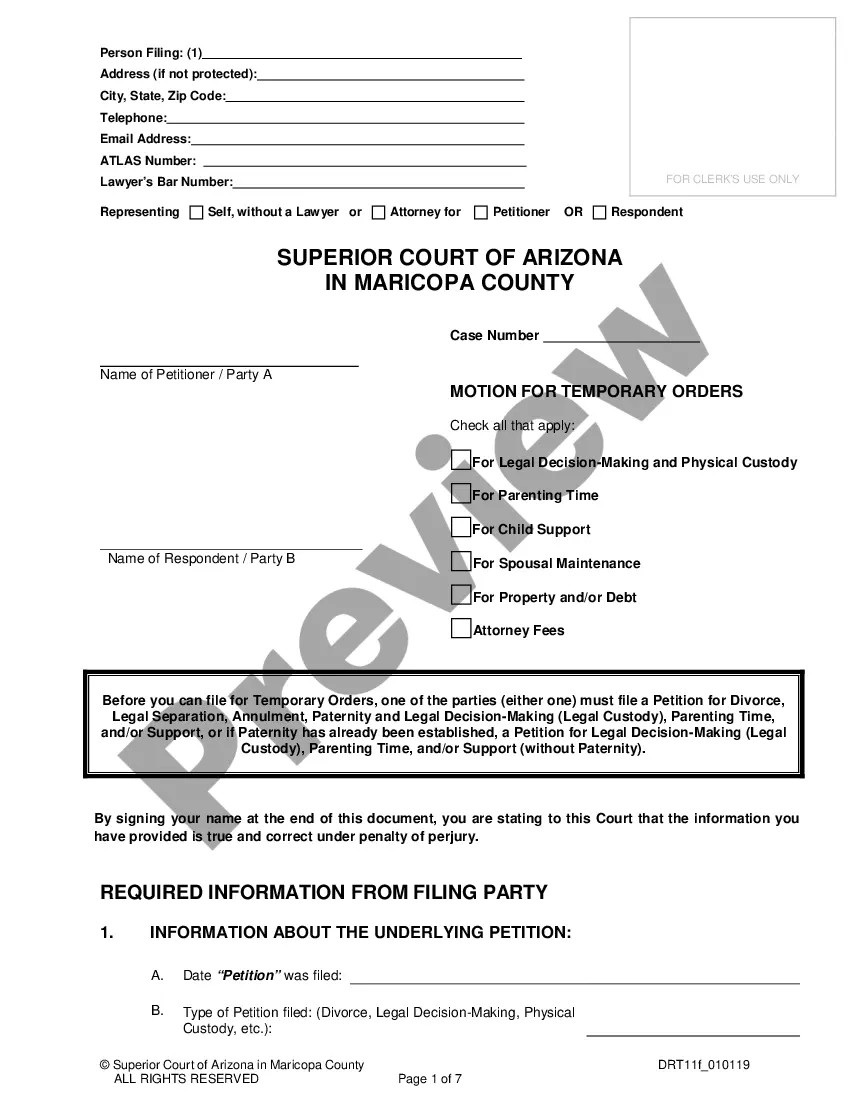
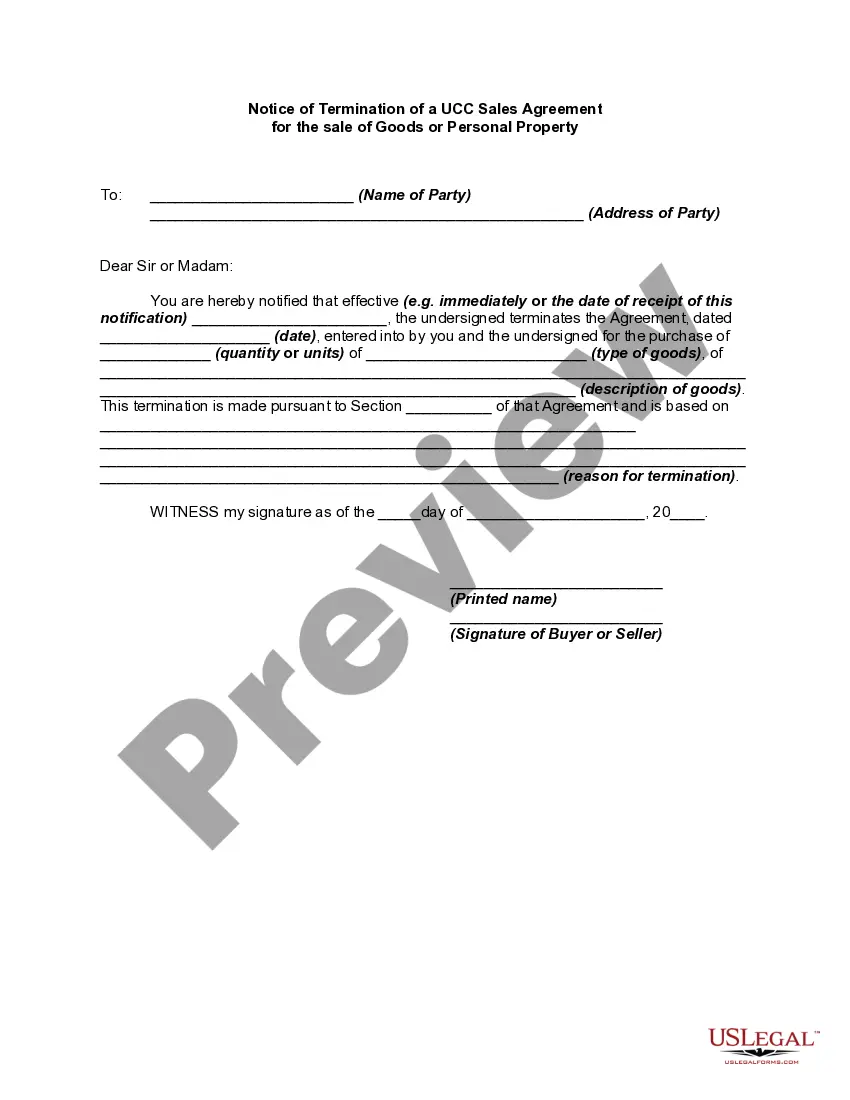
Notice of Termination or Cancellation of a UCC Sales Agreement for the sale of Goods or Personal Property
Understanding this form
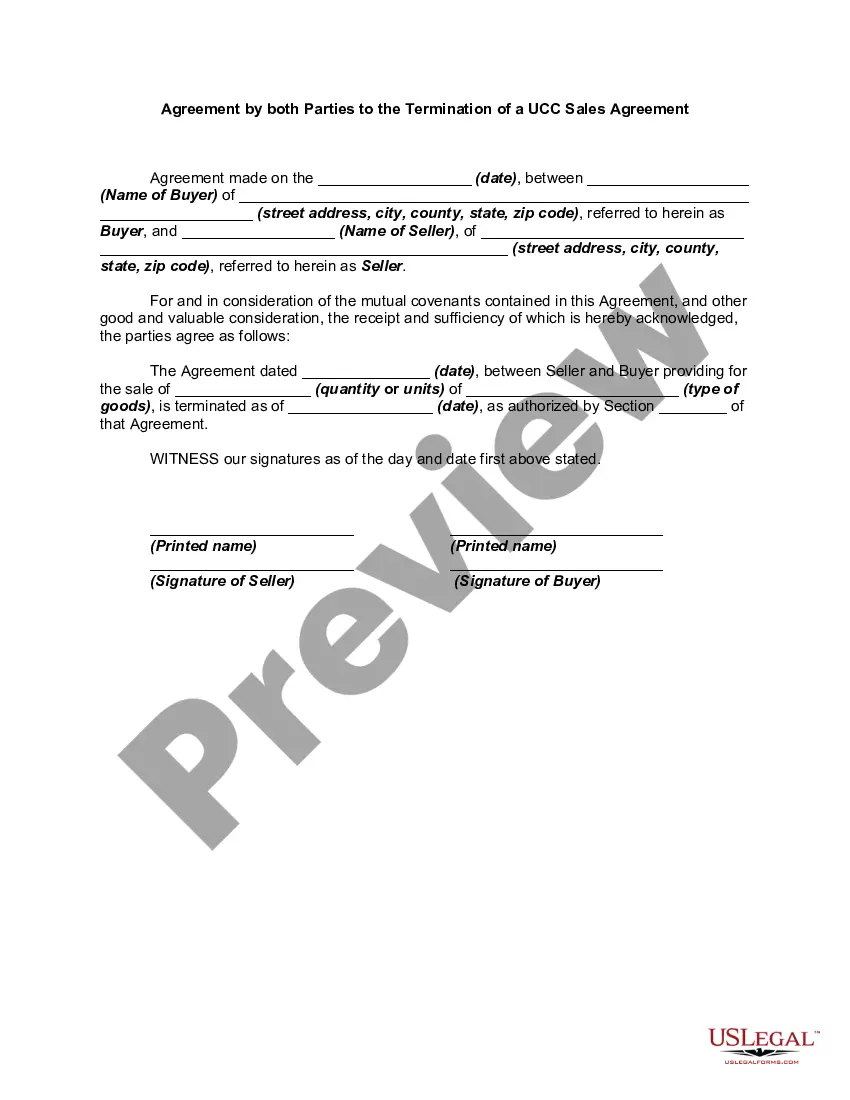
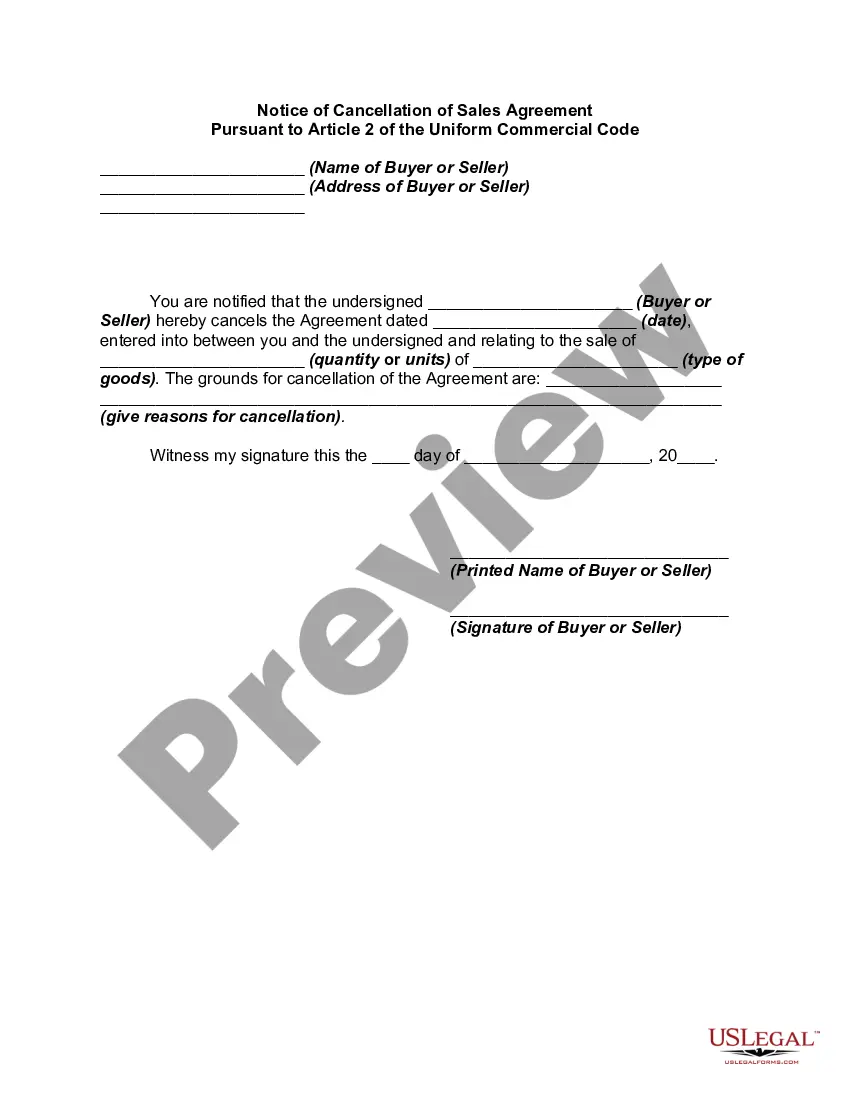
The Notice of Termination or Cancellation of a UCC Sales Agreement for the Sale of Goods or Personal Property is a legal document used to officially terminate a sales agreement under the Uniform Commercial Code (UCC). This form notifies the other party of the termination, ensuring that all obligations related to the agreement are discharged. It is essential for parties seeking to end a contractual relationship in a clear and legally recognized manner.
Key components of this form
- Name and address of the party being notified
- Date of termination and the effective date of the notice
- Description of the goods involved in the agreement
- Section of the agreement under which termination is made
- Reason for termination
- Signature of the buyer or seller
Common use cases
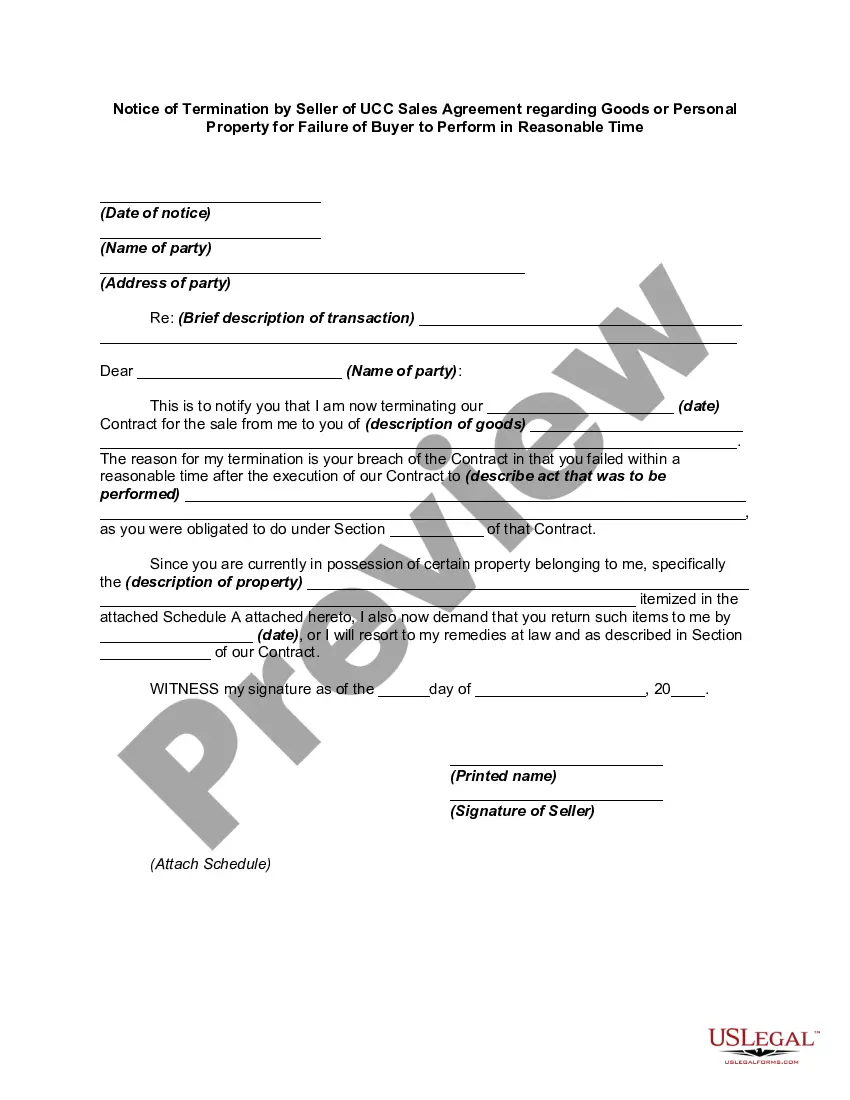
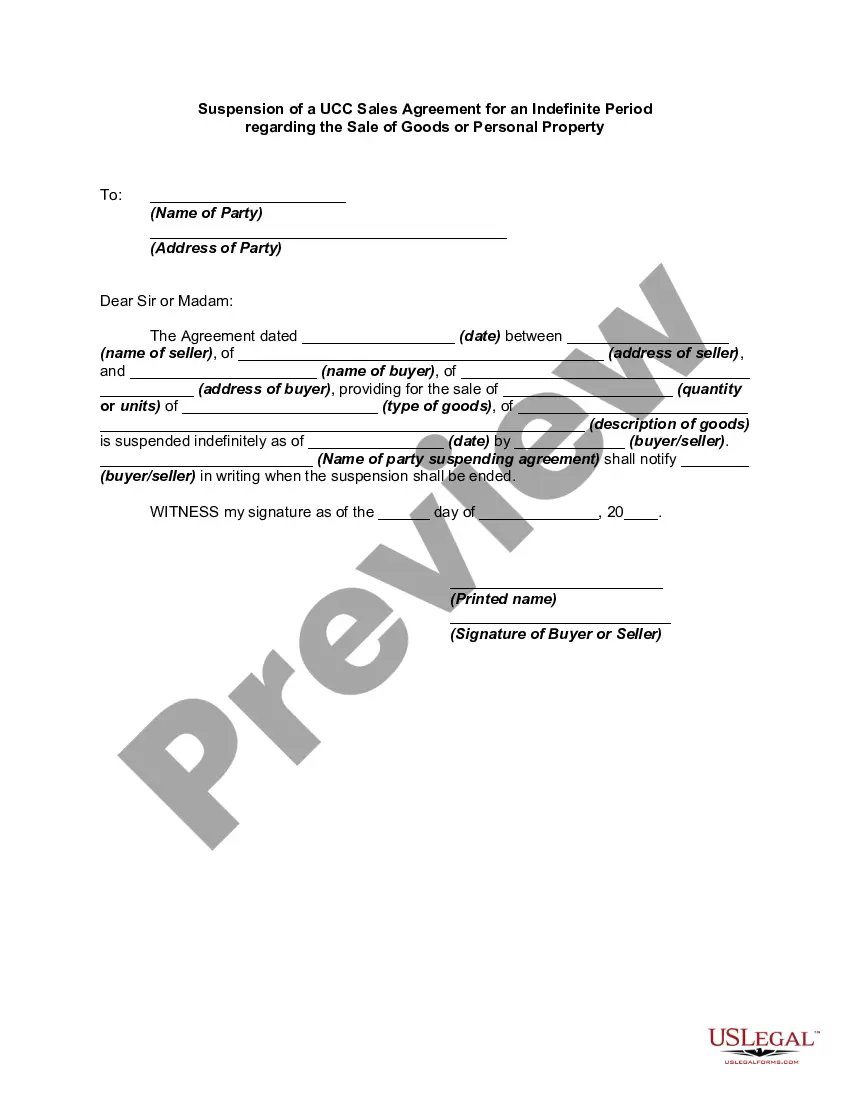
This form should be used when one party wishes to terminate a UCC sales agreement because of a breach, non-performance, or any other specified condition set forth in the agreement. It is particularly important to use this form when a clear record of the termination and its reasons is needed, especially in potential legal disputes.
Intended users of this form
- Buyers or sellers seeking to terminate a sales agreement
- Individuals with limited legal experience who need a straightforward termination process
- Businesses involved in sales agreements that need to formally end contracts
- Parties who have experienced a breach of contract or other valid reasons for termination
How to prepare this document
- Identify the party being notified, including their name and address.
- Specify the effective date of the termination.
- Fill in the date of the original agreement.
- Provide a detailed description of the goods involved in the agreement.
- Indicate the section of the agreement that allows for termination.
- Clearly state the reason for termination.
- Add your signature and printed name at the bottom of the form.
Does this document require notarization?
This form does not typically require notarization unless specified by local law.
Get your form ready online
Our built-in tools help you complete, sign, share, and store your documents in one place.
Make edits, fill in missing information, and update formatting in US Legal Forms—just like you would in MS Word.
Download a copy, print it, send it by email, or mail it via USPS—whatever works best for your next step.
Sign and collect signatures with our SignNow integration. Send to multiple recipients, set reminders, and more. Go Premium to unlock E-Sign.
If this form requires notarization, complete it online through a secure video call—no need to meet a notary in person or wait for an appointment.
We protect your documents and personal data by following strict security and privacy standards.

Make edits, fill in missing information, and update formatting in US Legal Forms—just like you would in MS Word.

Download a copy, print it, send it by email, or mail it via USPS—whatever works best for your next step.

Sign and collect signatures with our SignNow integration. Send to multiple recipients, set reminders, and more. Go Premium to unlock E-Sign.

If this form requires notarization, complete it online through a secure video call—no need to meet a notary in person or wait for an appointment.

We protect your documents and personal data by following strict security and privacy standards.
Common mistakes to avoid
- Failing to specify the reason for termination if required by the agreement.
- Not providing accurate dates for the agreement and termination.
- Omitting the necessary signatures.
- Not keeping a copy of the completed form for personal records.
Why use this form online
- Convenience of instant downloading and immediate access.
- Editable templates that allow for customization based on specific needs.
- Assurance of using legally accurate forms drafted by licensed attorneys.
- Easy navigation and user-friendly format for non-legal professionals.
Legal use & context
- Provides a formal and enforceable method for terminating UCC agreements.
- Helps protect the rights of both parties in the event of a legal dispute.
- Ensures that all obligations cease upon notification of termination, while prior breaches can still be addressed.
Quick recap
- The form is essential for legally terminating a UCC sales agreement.
- Clear communication of the reason for termination helps prevent disputes.
- Proper completion and signing of the form ensure its validity.
Looking for another form?








Form popularity
FAQ
The parties are almost always allowed to contract out of the UCC. If the merchants do discuss and agree to terms different from the UCC, then the parties' own terms will apply. The UCC takes a very pragmatic and common sense approach to commercial transactions.
When a breach of contract occurs or is alleged, one or both of the parties may wish to have the contract enforced on its terms, or may try to recover for any financial harm caused by the alleged breach. If a dispute over a contract arises and informal attempts at resolution fail, the most common next step is a lawsuit.
Article 2 is a vast segment of the UCC that specifically addresses contracts for the sale of goods. A good is any movable property identified at the time of the contract. 'Goods' are also sometimes known as 'chattels. '
The UCC states that remedies for a breach of contract are to be administered to the end that the aggrieved party may be put in as good a position as if the other party had fully performed. The aggrieved party is not entitled to a financial windfall. cancel the contract.
The UCC permits the seller to also take other steps with respect to the goods directly affected or if the whole contract was breached, with respect to the whole undelivered balance of the contract. These remedies include withholding or stopping the delivery of the goods, reselling the goods and canceling the contract.
Article 2 of the Uniform Commercial Code ("UCC") governs the sale of goods.For goods to be merchantable, they must be at least such as: (a) pass without objection in the trade under the contract description; and. (b) in the case of fungible goods, are of fair average quality within the description; and.
Cancel the contract. Recover the price paid for undelivered goods. Cover, or buy replacement goods. Recover damages for the difference in price. Recover damages based on current market price. Obtain specific performance for unique goods.
Compensatory damages: This is the most common breach of contract remedy. When compensatory damages are awarded, a court orders the person that breached the contract to pay the other person enough money to get what they were promised in the contract elsewhere.
UCC Corner: Introduction to Article 2Article 2 of the UCC (MCL 440.2101 et. seq.) governs the sale of goods. Article 2 is meant to provide default rules and gap-fillers that apply where two parties have not comprehensively addressed common issues in a written contract.