Independent Contractor Agreement with Sales Representative with Nondisclosure Agreement
Overview of this form
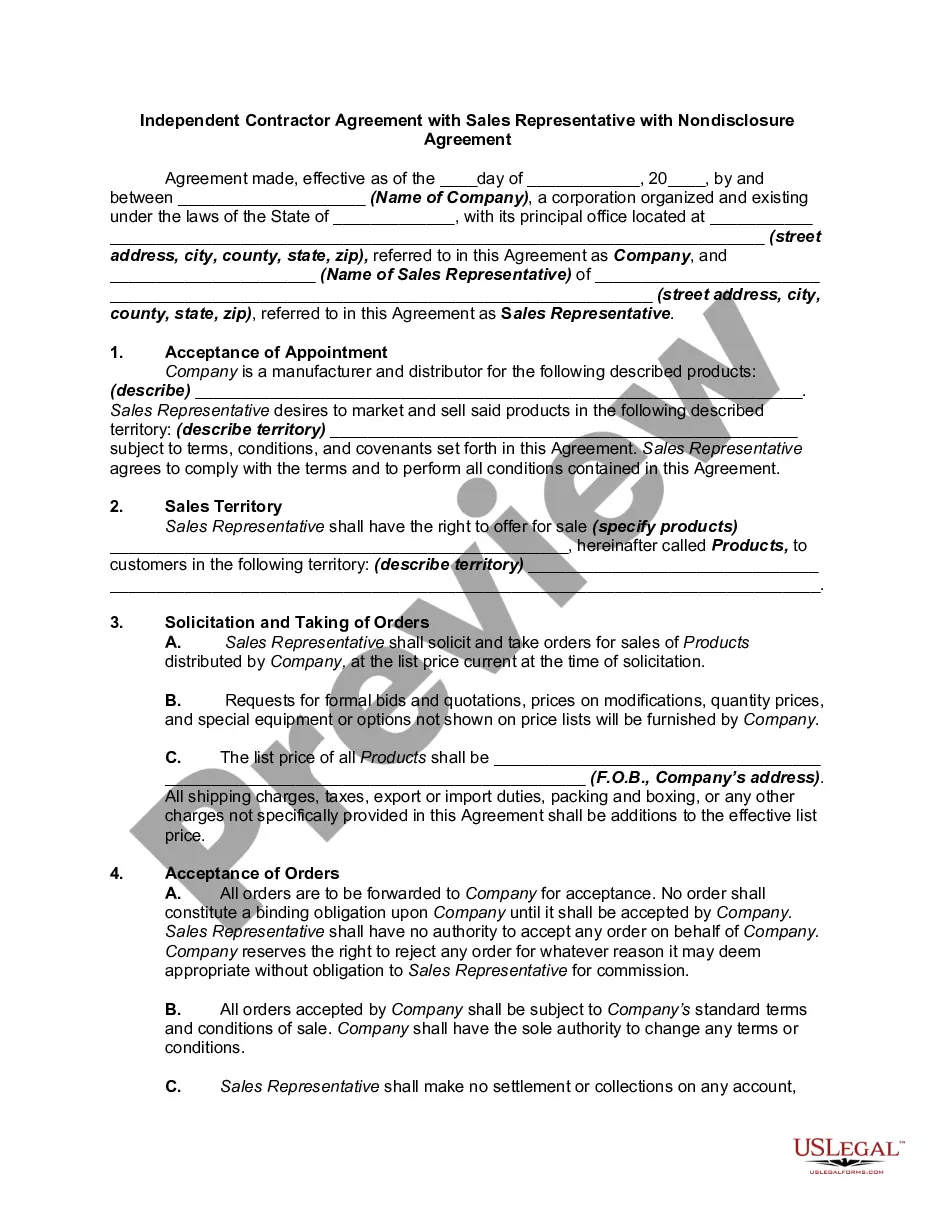
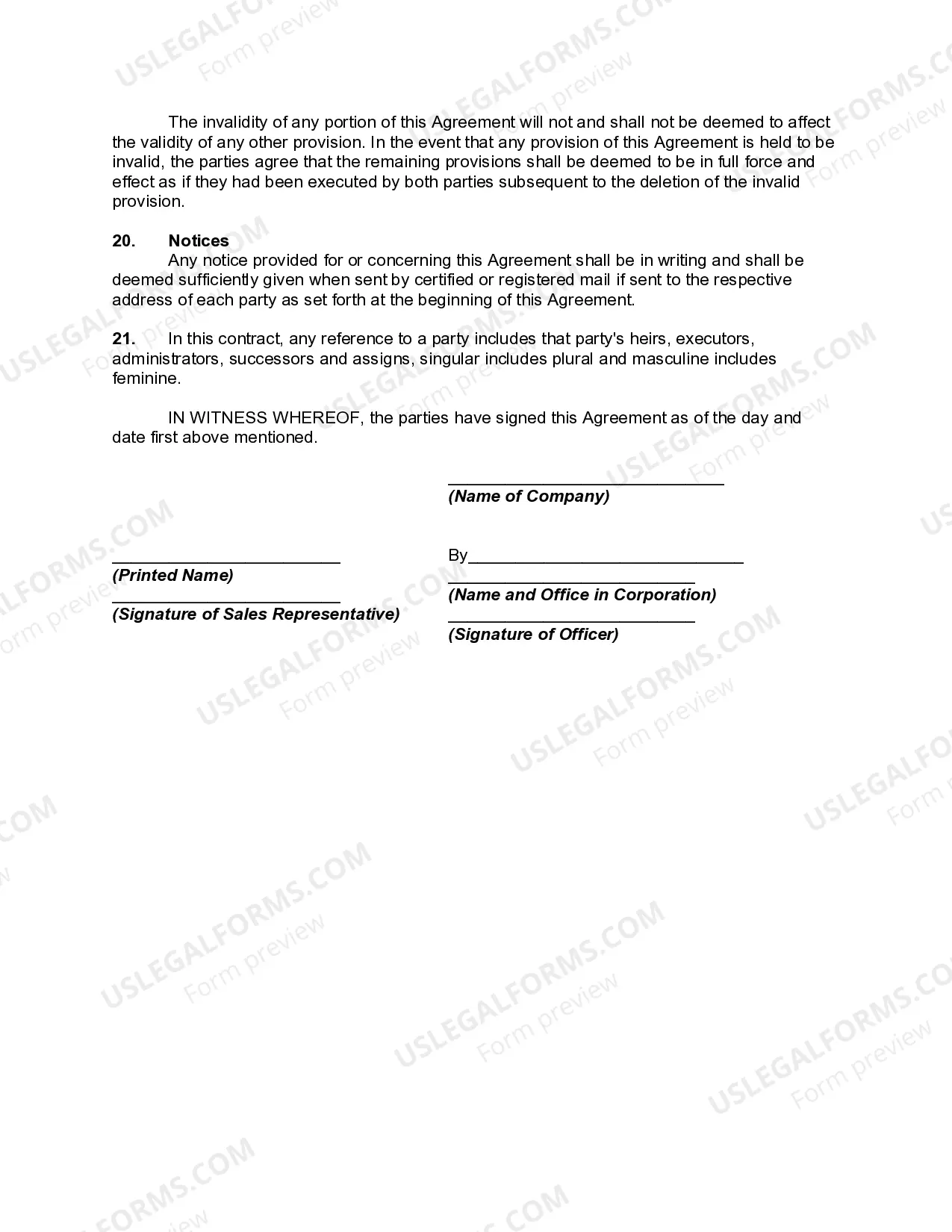
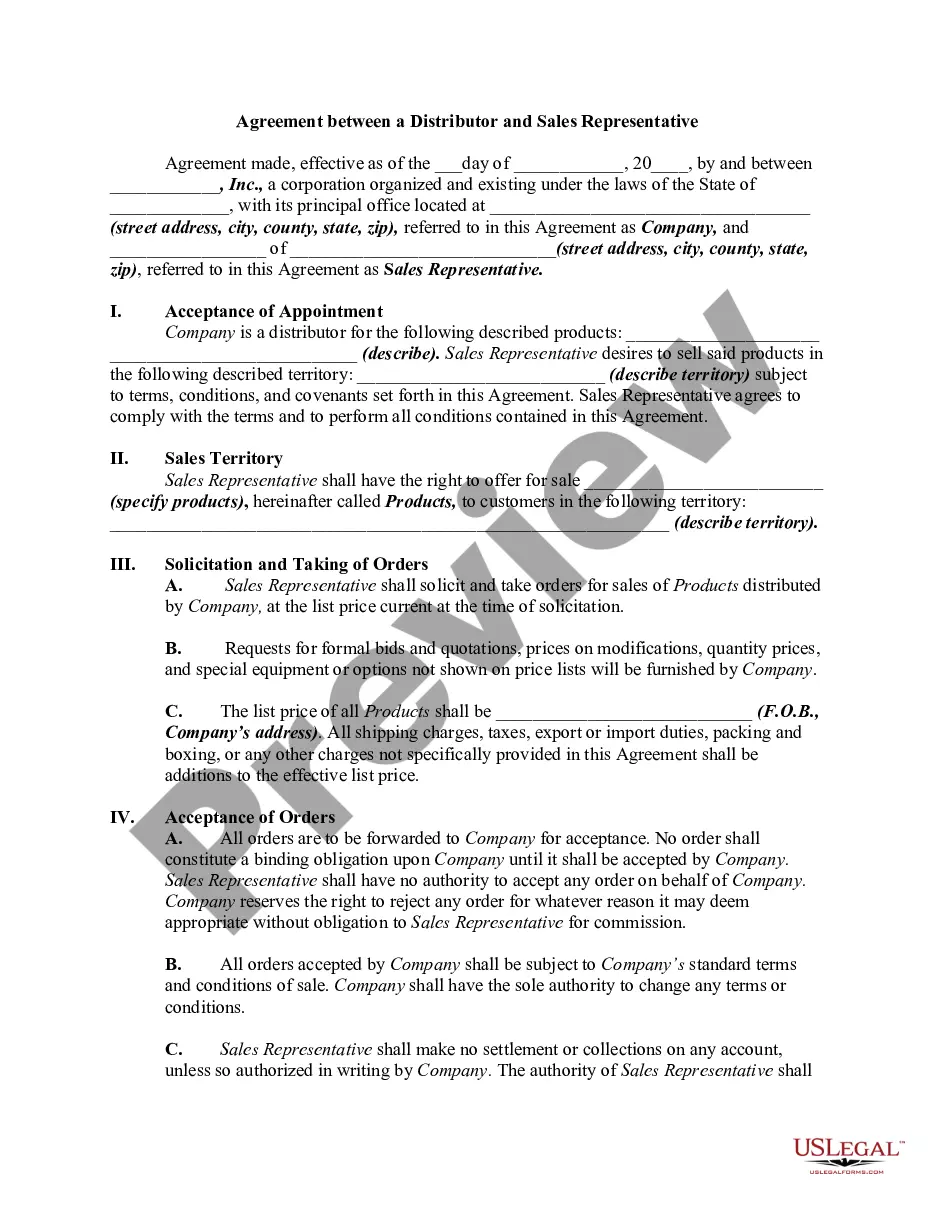
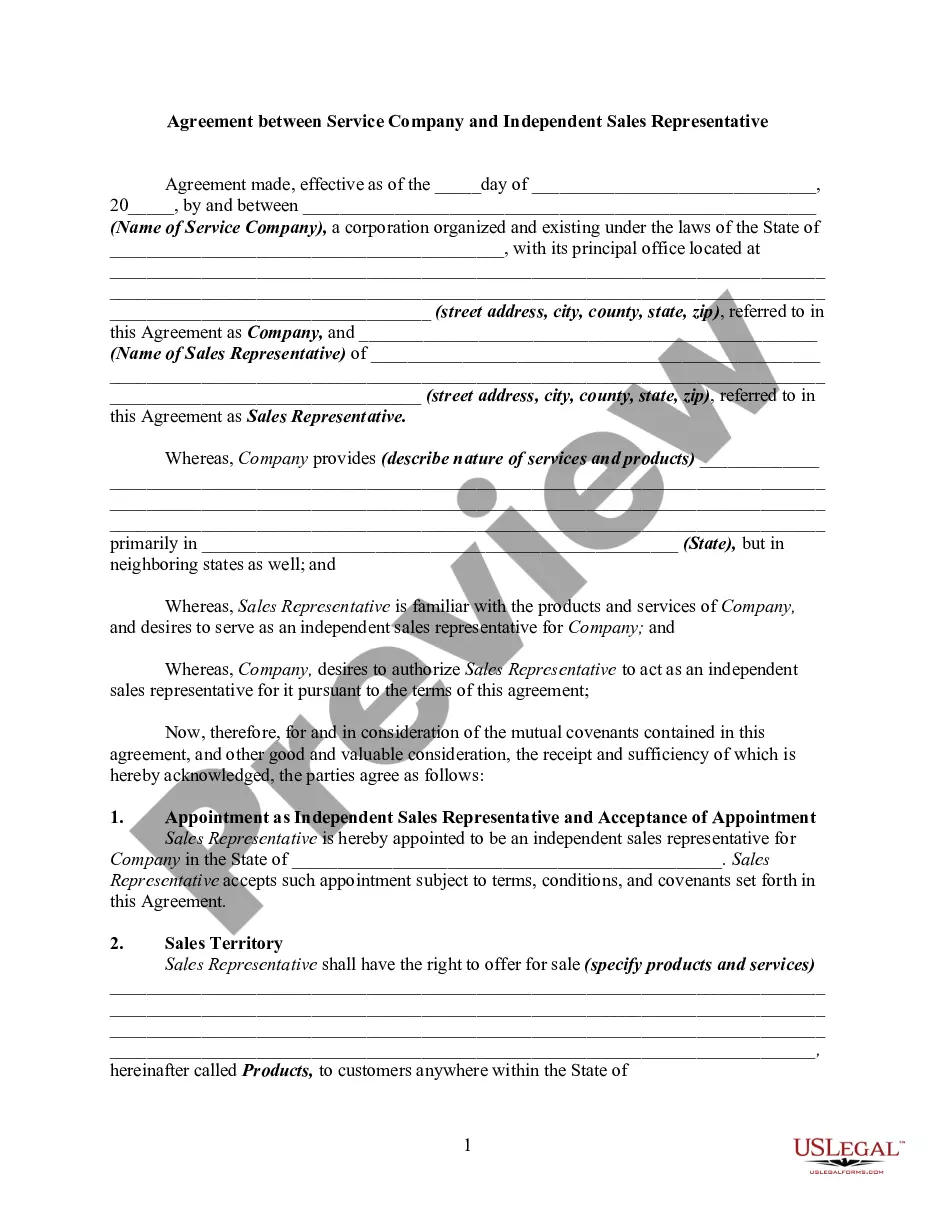
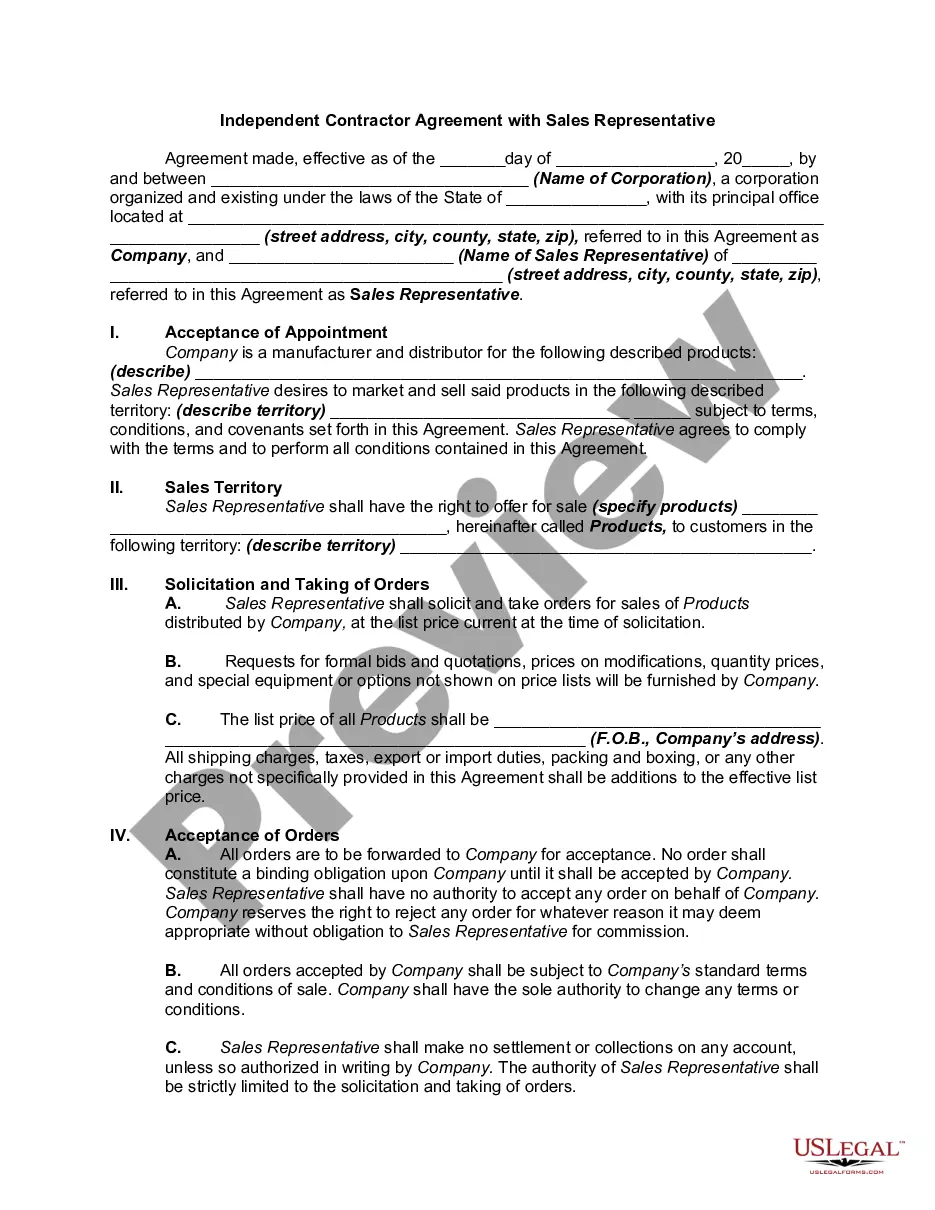
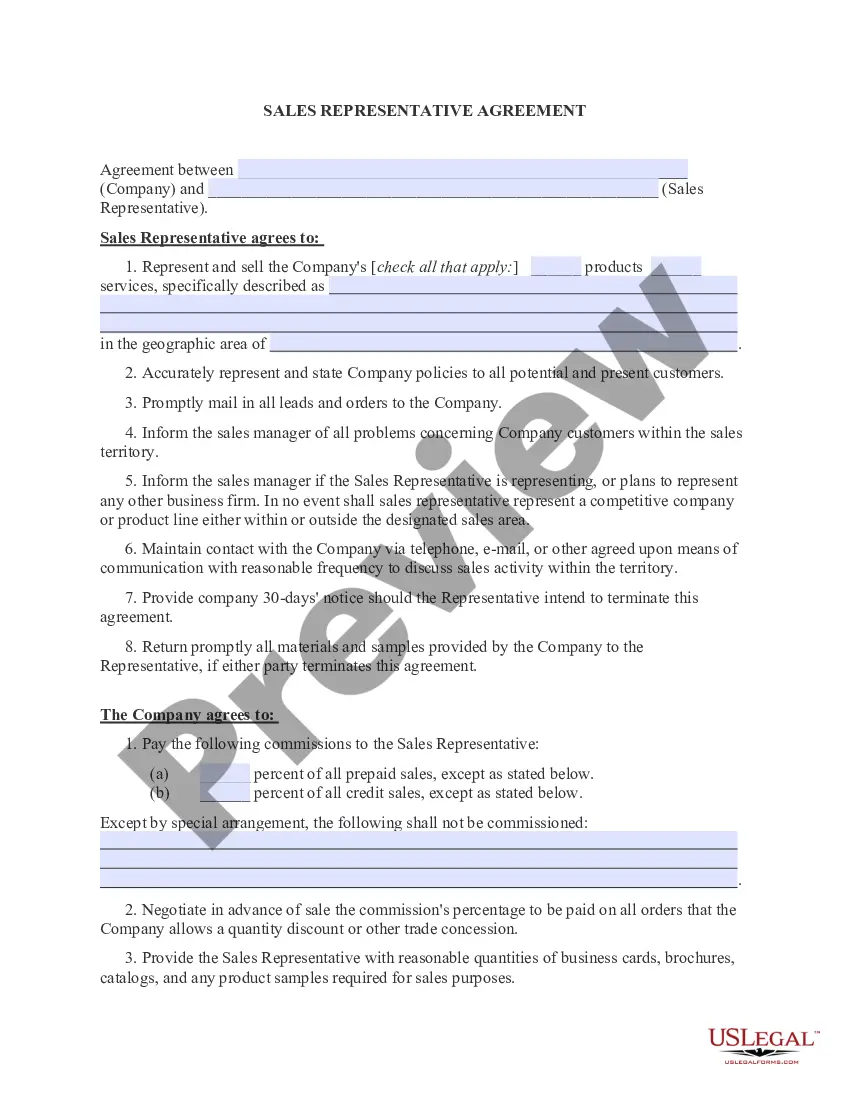
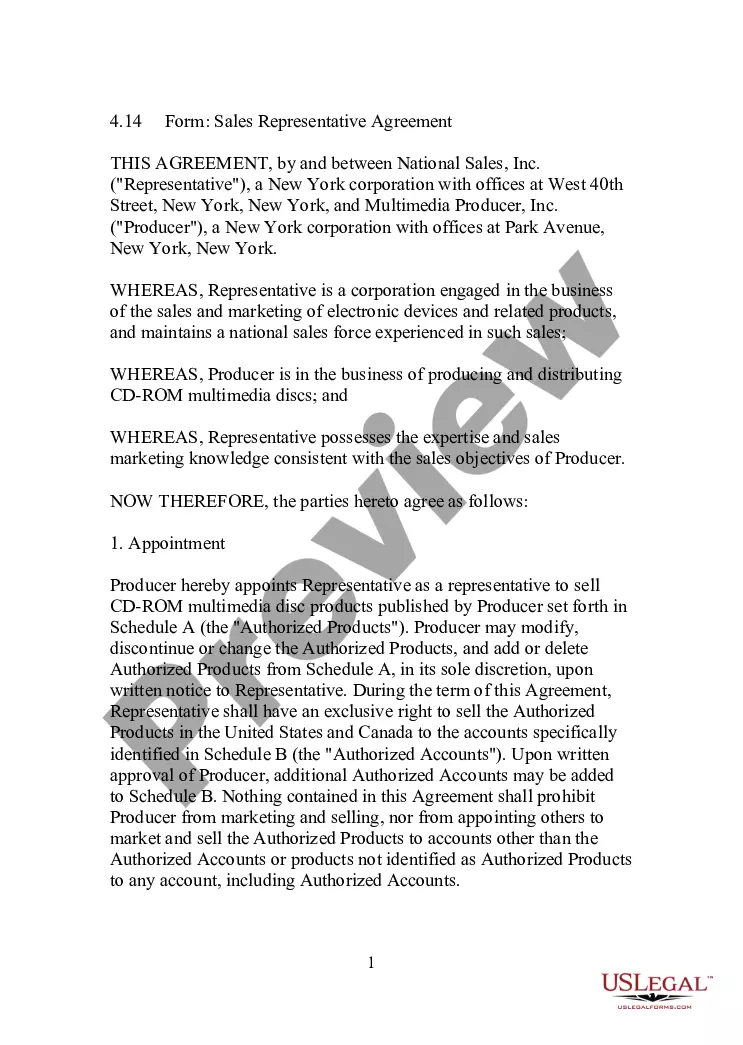
The Independent Contractor Agreement with Sales Representative and Nondisclosure Agreement is a legal document that outlines the terms of a relationship between a company and an independent sales representative. It specifies the responsibilities, rights, and obligations of both parties, including the sales territory, compensation, and confidentiality requirements. This agreement also includes a nondisclosure clause to protect sensitive company information, making it distinct from a standard independent contractor agreement.
Main sections of this form
- Acceptance of Appointment: Details the agreement between the company and the sales representative.
- Sales Territory: Specifies geographical limits within which the sales representative can operate.
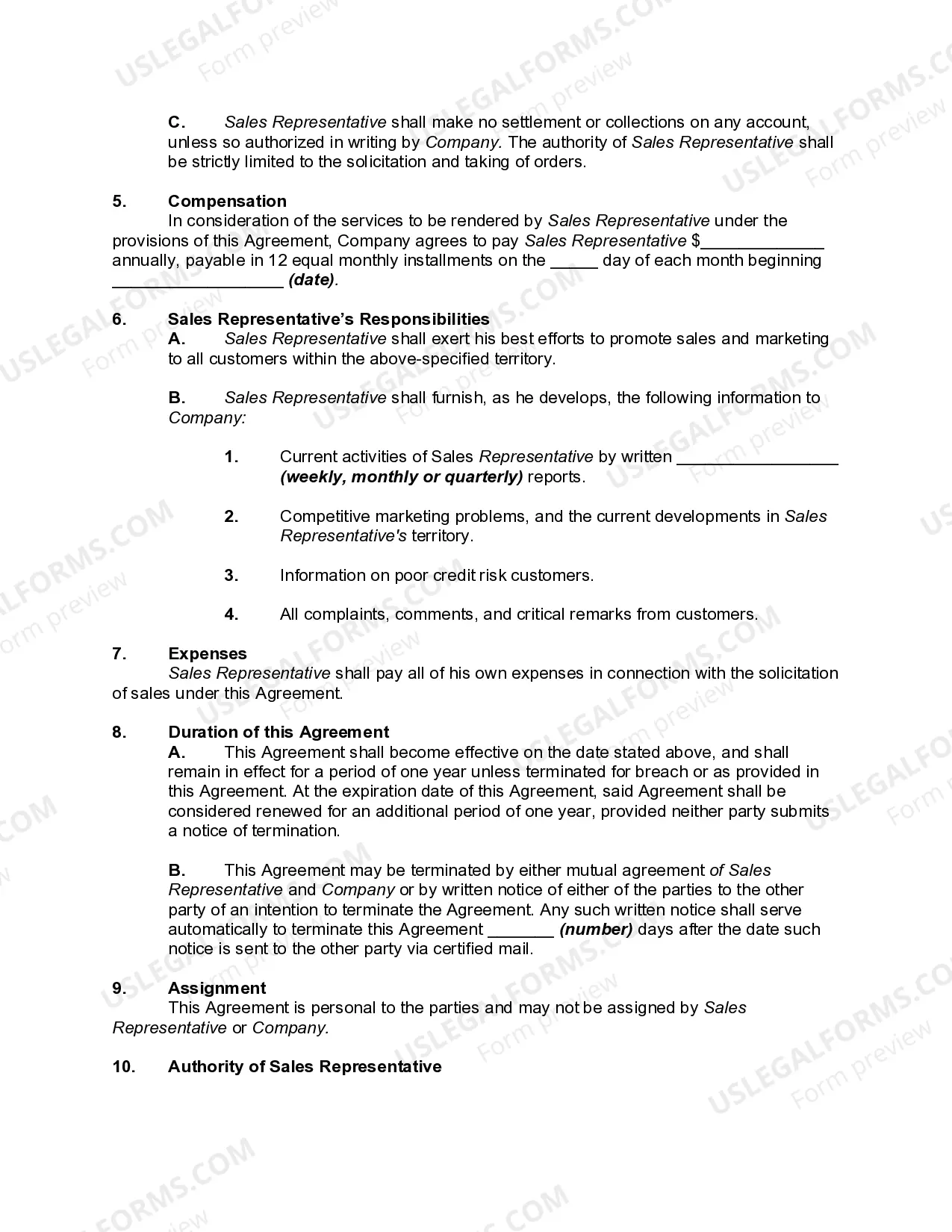
- Compensation: Outlines the payment structure and schedule for the sales representative.
- Responsibilities: Details the obligations of the sales representative in promoting and selling products.
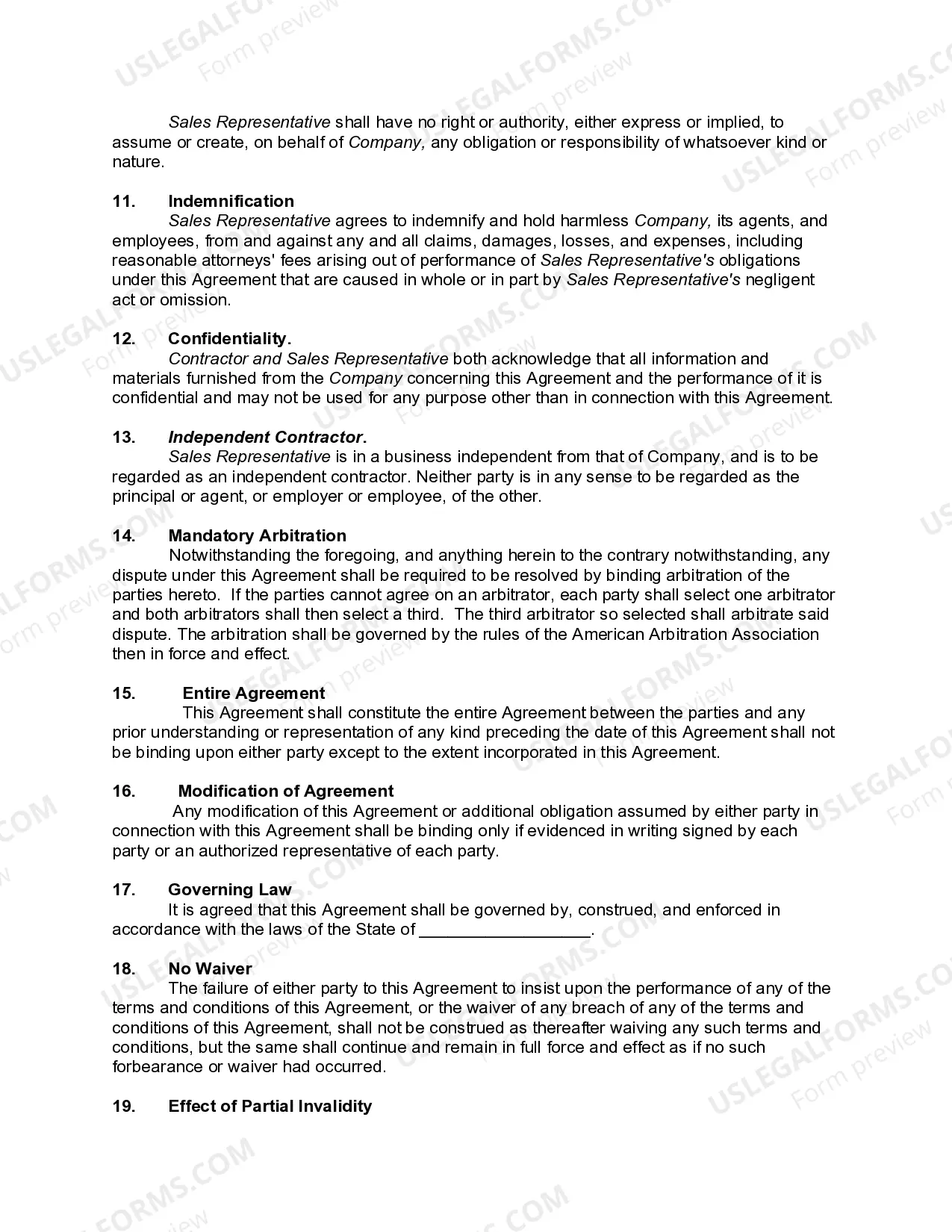
- Indemnification: Protects the company from claims arising from the sales representative's actions.
- Confidentiality: Ensures that sensitive information remains protected and is only used for purposes related to the agreement.
Common use cases
This form should be used when a company intends to hire an independent contractor to act as a sales representative. It is particularly helpful in scenarios where the company wants to outline specific marketing strategies, sales territories, and financial arrangements, while also protecting its proprietary information through a nondisclosure agreement. Companies in industries like manufacturing, technology, or retail may find this form especially applicable.
Intended users of this form
- Businesses seeking to hire independent contractors for sales roles.
- Companies that need to specify sales territories and compensation structures.
- Sales representatives looking to formalize their relationship with a company.
- Firms needing to safeguard confidential information in business transactions.
Completing this form step by step
- Identify the parties involved by entering the names and addresses of the company and the sales representative.
- Specify the products to be sold and the sales territory defined in the agreement.
- Detail the compensation structure, including payment amounts and schedule.
- Complete sections regarding responsibilities and confidentiality obligations.
- Sign and date the agreement to finalize the contract.
Notarization guidance
This form does not typically require notarization unless specified by local law. However, having it notarized can enhance its legitimacy and may be a requirement in some jurisdictions.
Get your form ready online
Our built-in tools help you complete, sign, share, and store your documents in one place.
Make edits, fill in missing information, and update formatting in US Legal Forms—just like you would in MS Word.
Download a copy, print it, send it by email, or mail it via USPS—whatever works best for your next step.
Sign and collect signatures with our SignNow integration. Send to multiple recipients, set reminders, and more. Go Premium to unlock E-Sign.
If this form requires notarization, complete it online through a secure video call—no need to meet a notary in person or wait for an appointment.
We protect your documents and personal data by following strict security and privacy standards.

Make edits, fill in missing information, and update formatting in US Legal Forms—just like you would in MS Word.

Download a copy, print it, send it by email, or mail it via USPS—whatever works best for your next step.

Sign and collect signatures with our SignNow integration. Send to multiple recipients, set reminders, and more. Go Premium to unlock E-Sign.

If this form requires notarization, complete it online through a secure video call—no need to meet a notary in person or wait for an appointment.

We protect your documents and personal data by following strict security and privacy standards.
Mistakes to watch out for
- Not clearly defining the sales territory, leading to potential disputes.
- Failing to specify payment terms, which can cause confusion regarding compensation.
- Leaving out confidentiality clauses or not making them specific enough.
- Forgetting to sign or date the agreement, rendering it unenforceable.
Benefits of using this form online
- Convenience of downloading and filling out the agreement at your own pace.
- Editability allows for tailored agreements that meet specific business needs.
- Reliability from using professionally drafted templates by licensed attorneys.
Looking for another form?


Form popularity
FAQ
Name of contractor and contact information. Name of homeowner and contact information. Describe property in legal terms. List attachments to the contract. The cost. Failure of homeowner to obtain financing. Description of the work and the completion date. Right to stop the project.
Terms. This is the first section of any agreement or contract and states the names and locations of the parties involved. Responsibilities & Deliverables. Payment-Related Details. Confidentiality Clause. Contract Termination. Choice of Law.
The IRS requires contractors to fill out a Form W-9, request for Taxpayer Identification Number and Certification, which you should keep on file for at least four years after the hiring. This form is used to request the correct name and Taxpayer Identification Number, or TIN, of the worker or their entity.
Salespeople can be independent contractors or they can be employees. Figuring out which is best for any company can be difficult. Many businesses prefer to have salespeople considered as independent contractors because no FICA taxes and benefits are required of the company for these workers.
For most types of projects you hire an independent contractor (IC) to do, the law does not require you to put anything in writing. You can meet with the IC, agree on the terms of your arrangement, and have an oral contract or agreement that is legally binding. Just because you can doesn't mean you should, however.
Get it in writing. Keep it simple. Deal with the right person. Identify each party correctly. Spell out all of the details. Specify payment obligations. Agree on circumstances that terminate the contract. Agree on a way to resolve disputes.