Irrevocable Trust Agreement for Benefit of Trustor's Children and Grandchildren with Spendthrift Trust Provisions
What is this form?
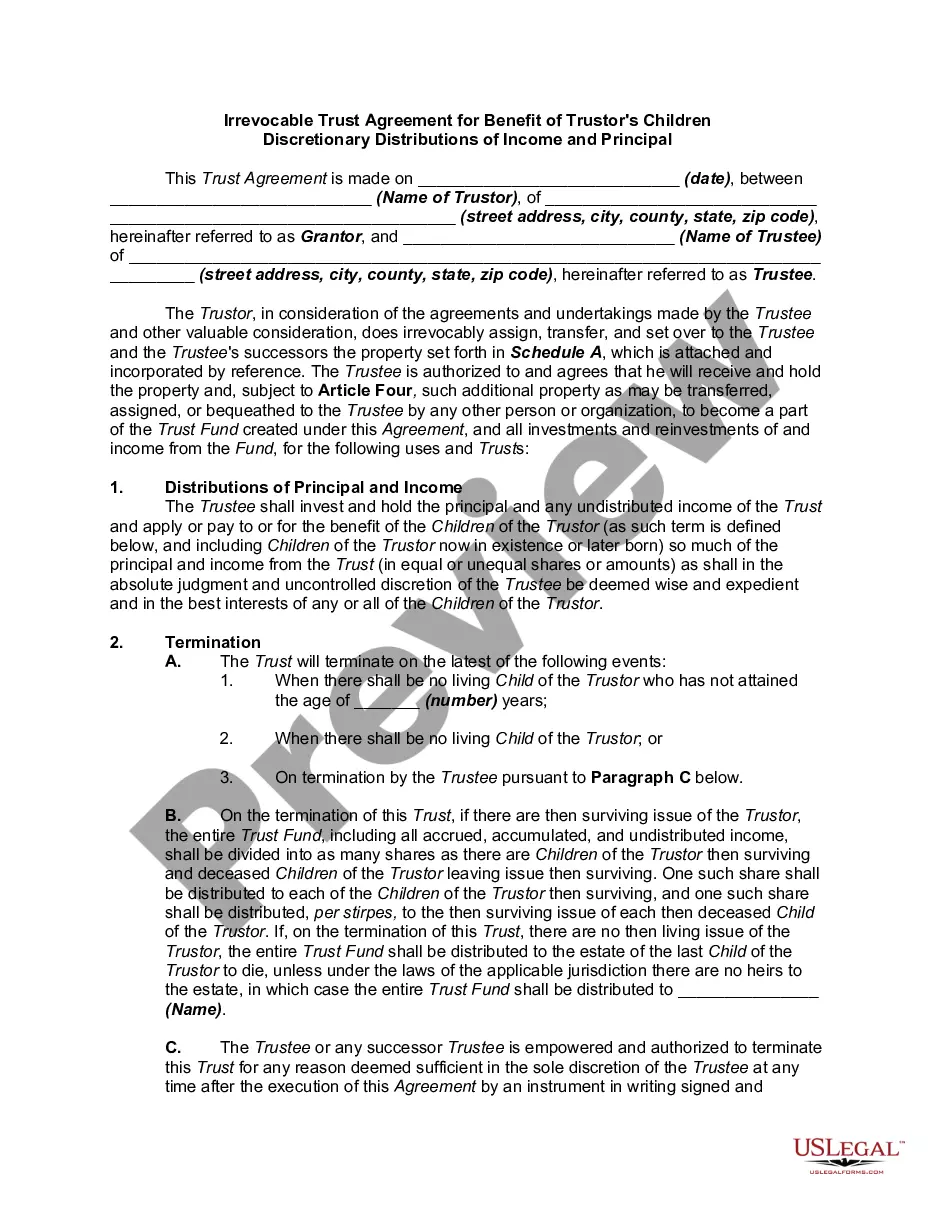
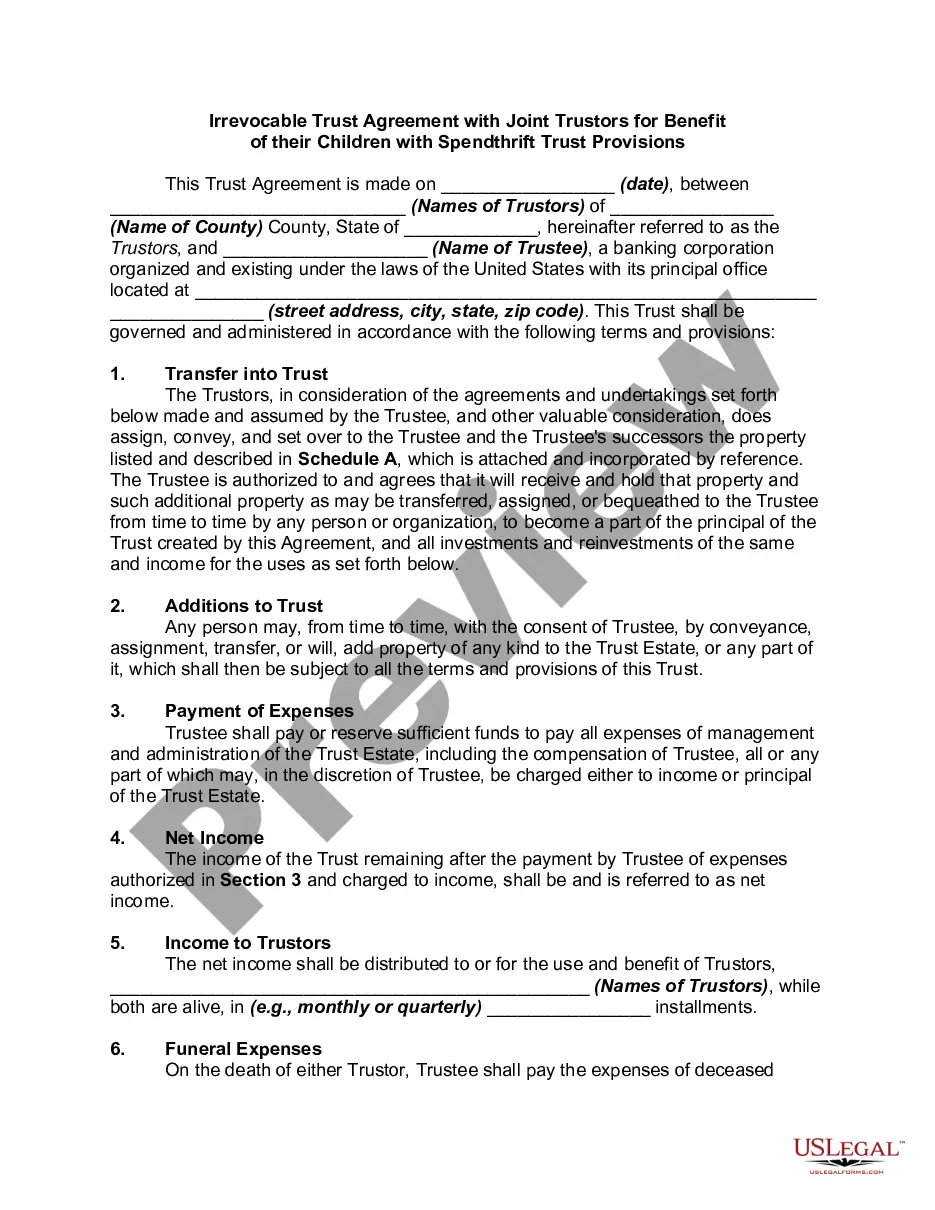
The Irrevocable Trust Agreement for the Benefit of Trustor's Children and Grandchildren with Spendthrift Trust Provisions is a legal document that establishes an irrevocable trust, allowing the trustor to assign assets for the benefit of their children and grandchildren. This type of trust offers protection against creditors and ensures that the beneficiaries cannot mismanage their inherited assets. Unlike revocable trusts, once created, the trust cannot be altered, making it a more permanent choice for estate planning.
What’s included in this form
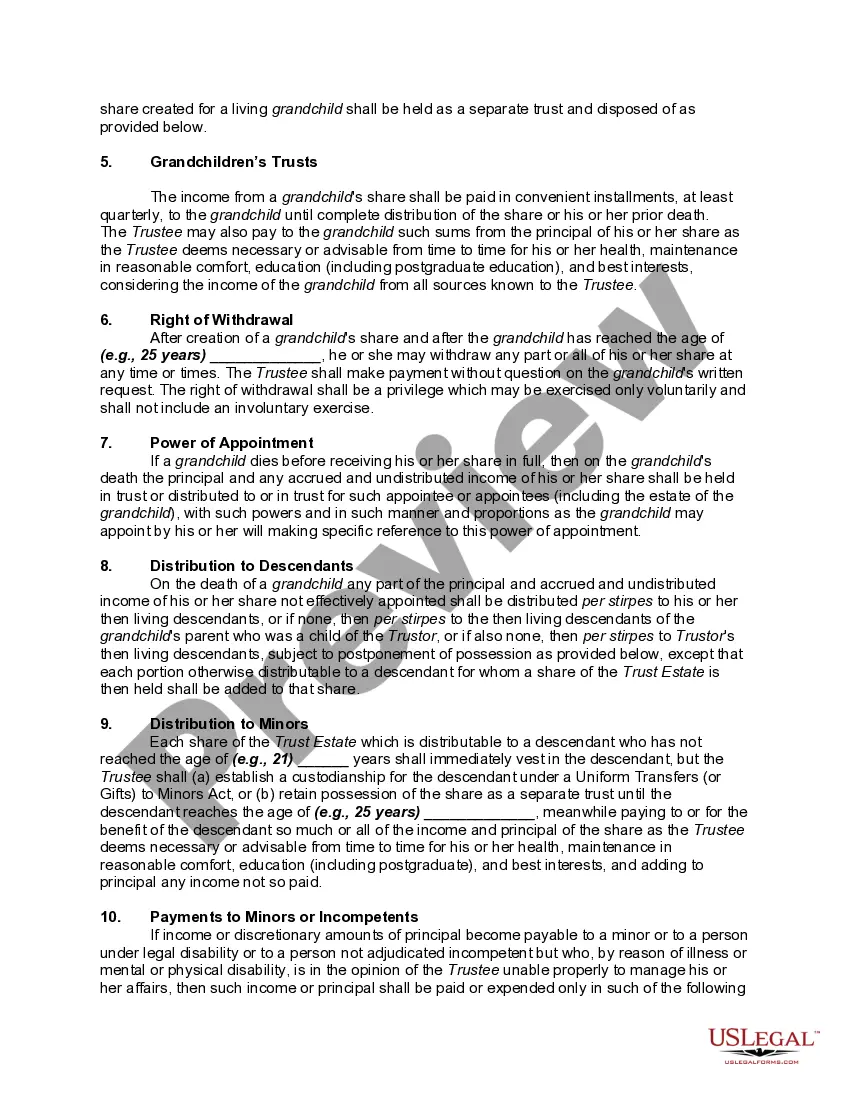
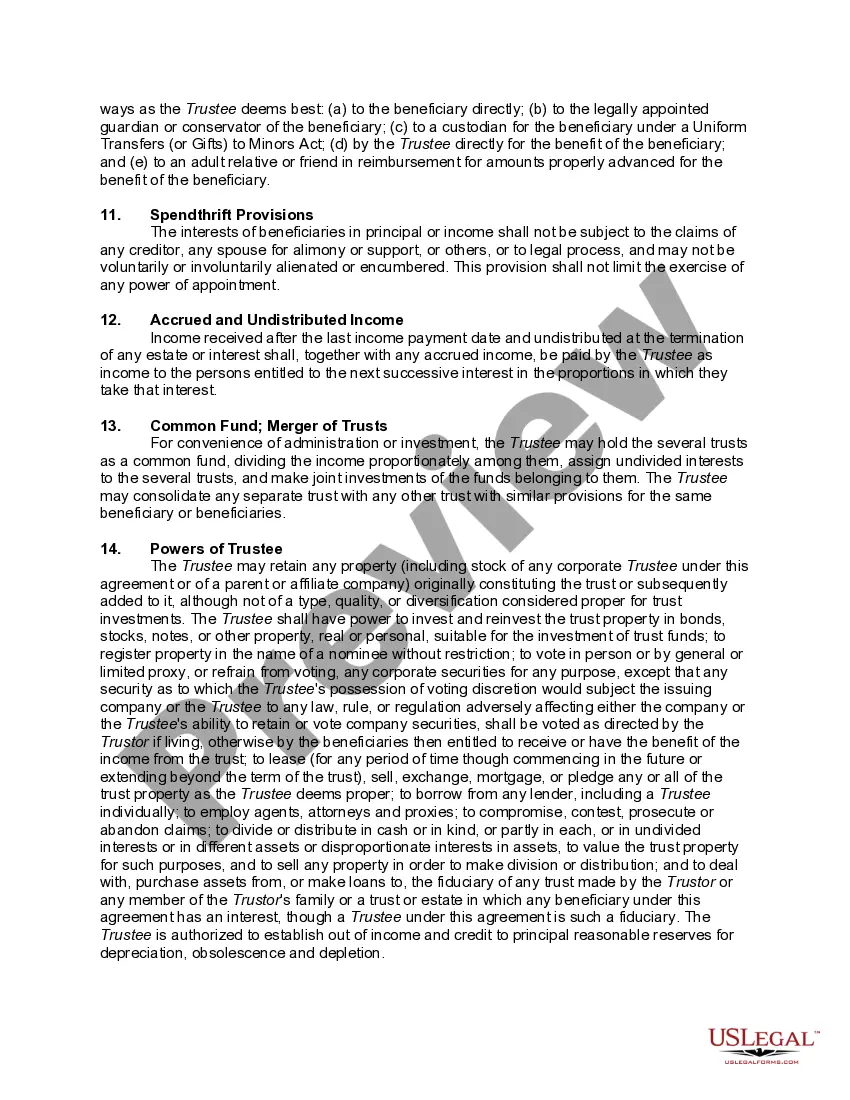
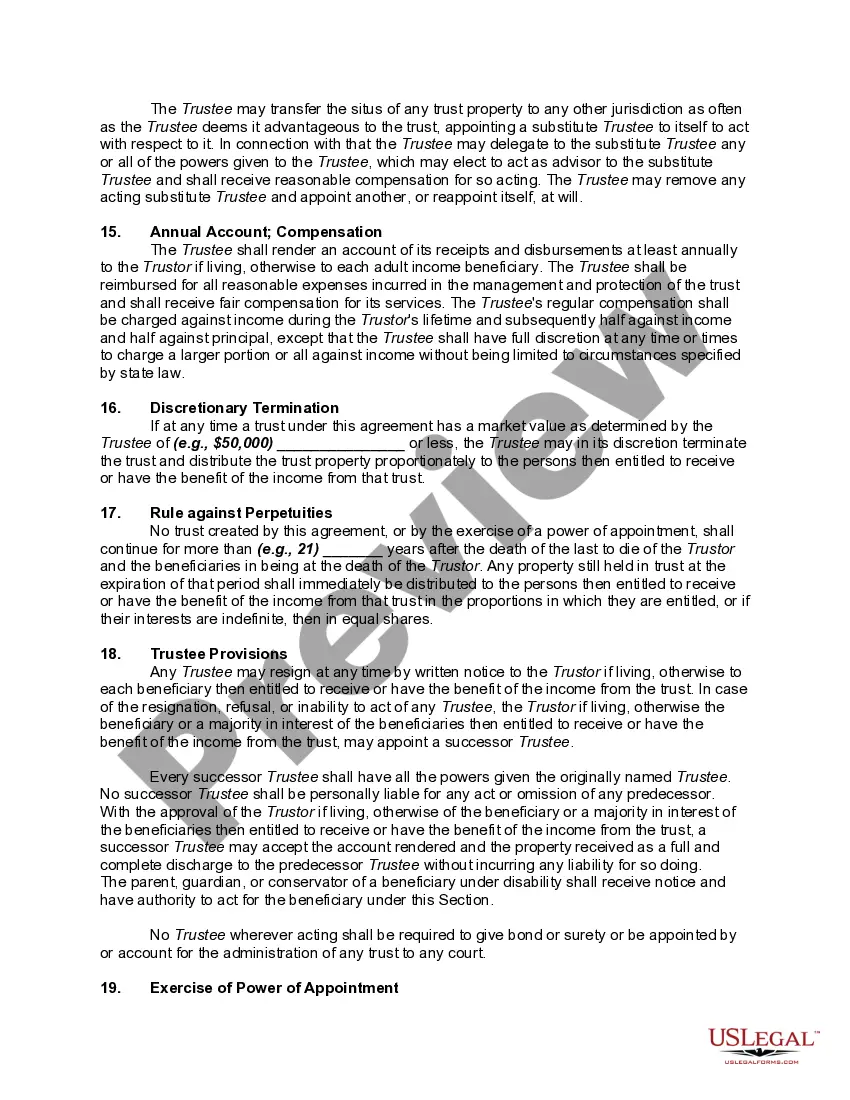
- Initial distribution to grandchildren.
- Division of trust assets into separate trusts for each child.
- Income distributions to children during their lifetime.
- Provisions for grandchildren's shares and distributions.
- Spendthrift provisions to protect beneficiariesâ interests from creditors.
- Options for the appointment of a successor trustee.





When to use this document
This form is suitable when a trustor wishes to create an irrevocable trust specifically for their children and grandchildren. It is used when the trustor desires to ensure that assets are managed by a trustee for the benefit of future generations, while also protecting those assets from creditors and potential mismanagement by beneficiaries who may be too young or financially inexperienced.
Who can use this document
- Parents or grandparents intending to set aside assets for their children and grandchildren.
- Individuals seeking to protect their heirs' interests from creditors.
- Trustors who want to ensure proper management of funds until beneficiaries reach maturity.
- People who wish to establish a formal estate plan that cannot be easily altered or revoked.
How to prepare this document
- Identify and enter the date of the agreement.
- Fill in the names and addresses of both the trustor and the trustee.
- List the assets to be included in the trust in Schedule A.
- Specify the initial distribution amounts for grandchildren.
- Complete any additional provisions as needed, such as spending trusts or withdrawal rights.
Notarization requirements for this form
This form does not typically require notarization unless specified by local law.
Get your form ready online
Our built-in tools help you complete, sign, share, and store your documents in one place.
Make edits, fill in missing information, and update formatting in US Legal Forms—just like you would in MS Word.
Download a copy, print it, send it by email, or mail it via USPS—whatever works best for your next step.
Sign and collect signatures with our SignNow integration. Send to multiple recipients, set reminders, and more. Go Premium to unlock E-Sign.
If this form requires notarization, complete it online through a secure video call—no need to meet a notary in person or wait for an appointment.
We protect your documents and personal data by following strict security and privacy standards.

Make edits, fill in missing information, and update formatting in US Legal Forms—just like you would in MS Word.

Download a copy, print it, send it by email, or mail it via USPS—whatever works best for your next step.

Sign and collect signatures with our SignNow integration. Send to multiple recipients, set reminders, and more. Go Premium to unlock E-Sign.

If this form requires notarization, complete it online through a secure video call—no need to meet a notary in person or wait for an appointment.

We protect your documents and personal data by following strict security and privacy standards.
Typical mistakes to avoid
- Failing to specify all assets intended for the trust.
- Not clearly indicating the share distributions to children and grandchildren.
- Overlooking the spendthrift provisions which may lead to susceptibility to creditors.
- Neglecting to review state-specific laws which may affect the trustâs validity.
Benefits of using this form online
- Convenience of completing and downloading the form instantly from your home.
- Editability allows for customization the form based on individual needs.
- Access to documents created by licensed attorneys ensures legal compliance and reliability.
Legal use & context
- Irrevocable trusts are binding and typically cannot be altered once established, unlike revocable trusts.
- Spendthrift provisions protect trust assets against claims from creditors.
- This form is enforceable in court as long as it complies with state-specific trust laws.
Summary of main points
- The irrevocable trust is a permanent estate planning tool for protecting family assets.
- Spendthrift provisions help protect beneficiaries from creditors.
- Properly completing the trust agreement is essential to ensure legal validity and enforceability.
- Consulting a legal professional can help avoid common pitfalls and ensure compliance with state laws.
Looking for another form?




Form popularity
FAQ
Capital Gains Tax on an interest in possession trust Trustees are liable to Capital Gains Tax on any chargeable gains above an amount set each year called the 'annual exempt amount'. Beneficiaries are not taxed on any trust gains and do not get credit for tax paid by the trustees.
A spendthrift trust can be revocable or irrevocable in nature. A revocable trust is one that can be changed or modified by the grantor. On the other hand, an irrevocable spendthrift trust cannot be changed.
A spendthrift provision is valid only if the provision restrains both voluntary and involuntary transfer of a beneficiary's interest. When a Trust provides that the interest of a beneficiary is held subject to a spendthrift trust, or words of similar import, that is sufficient to invoke the rights.
Besides estate earnings, a spendthrift trust itself cannot be taxed like a corporate entity because it does not fit the legal definition of a corporate association. This frees it from legislative controls while allowing it to manage properties and assets, including businesses.
A spendthrift trust is a trust in which the beneficiary doesn't have direct access to the funds. Rather, one or more trustees are given broad discretionary powers to provide beneficiaries with funds for expenses to keep up their lifestyle.
Any income that trust inheritance assets earn is reported on the grantor's personal return and he pays taxes on it.If you inherit from a simple trust, you must report and pay taxes on the money. By definition, anything you receive from a simple trust is income earned by it during that tax year.
When trust beneficiaries receive distributions from the trust's principal balance, they do not have to pay taxes on the distribution.If the income or deduction is part of a change in the principal or part of the estate's distributable income, income tax is paid by the trust and not passed on to the beneficiary.
If the testator wants to provide for a person who she knows is wasteful, her best option is to create a spendthrift trust or to place a spendthrift provision in any other type of private trust. The beneficiary of a spendthrift trust cannot voluntarily alienate his or her interest in the trust.