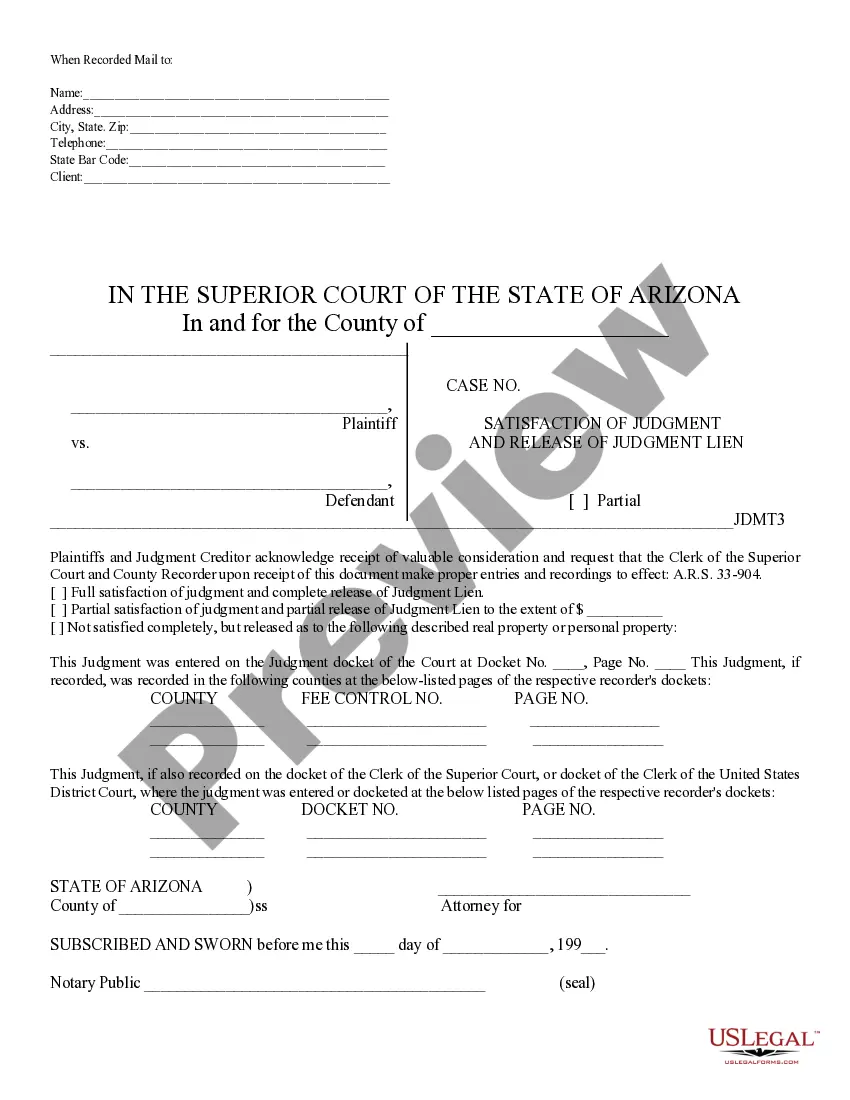
Petition for Writ of Mandamus or Mandate to Compel Court to Expunge Record of Arrest, Trial, and Conviction - Expungement
About this form
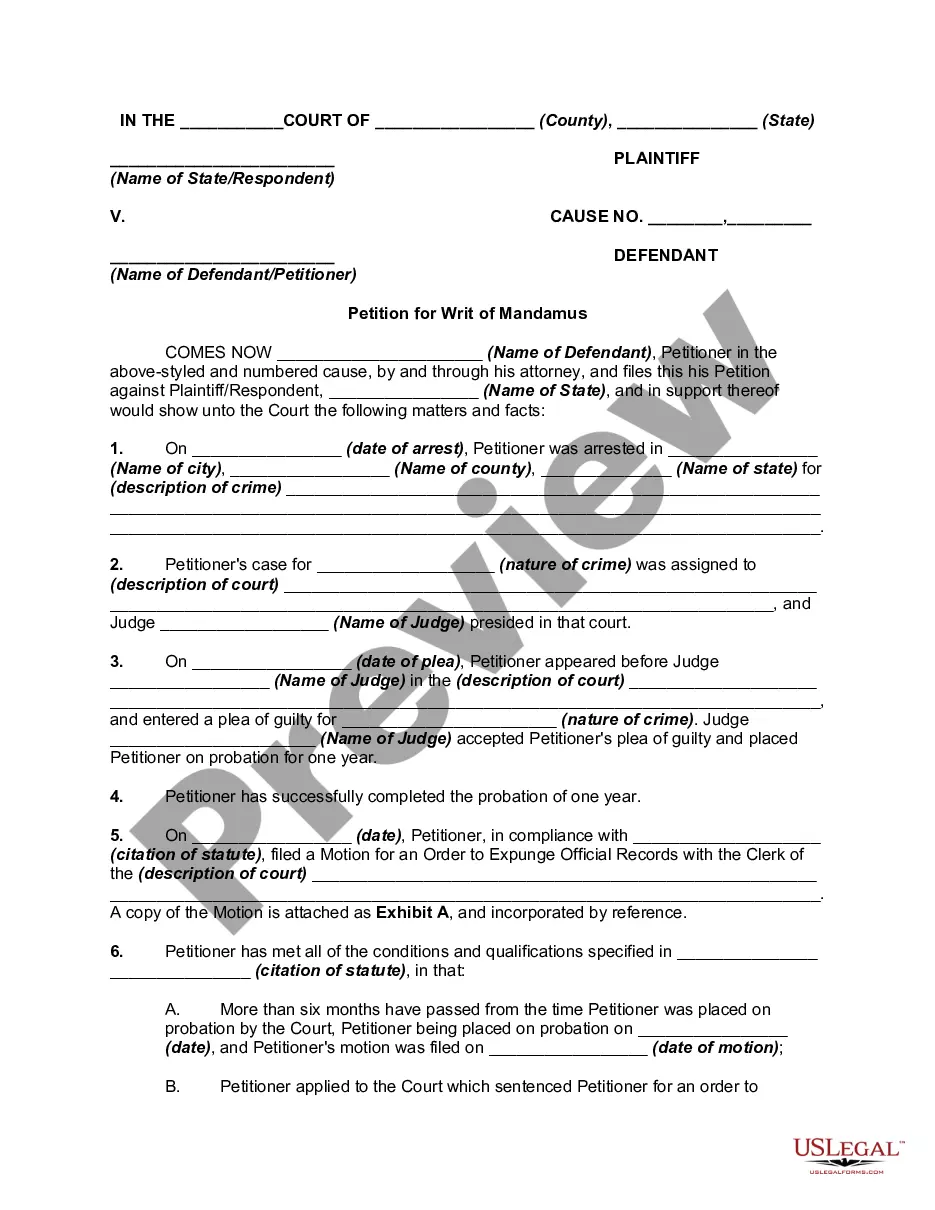
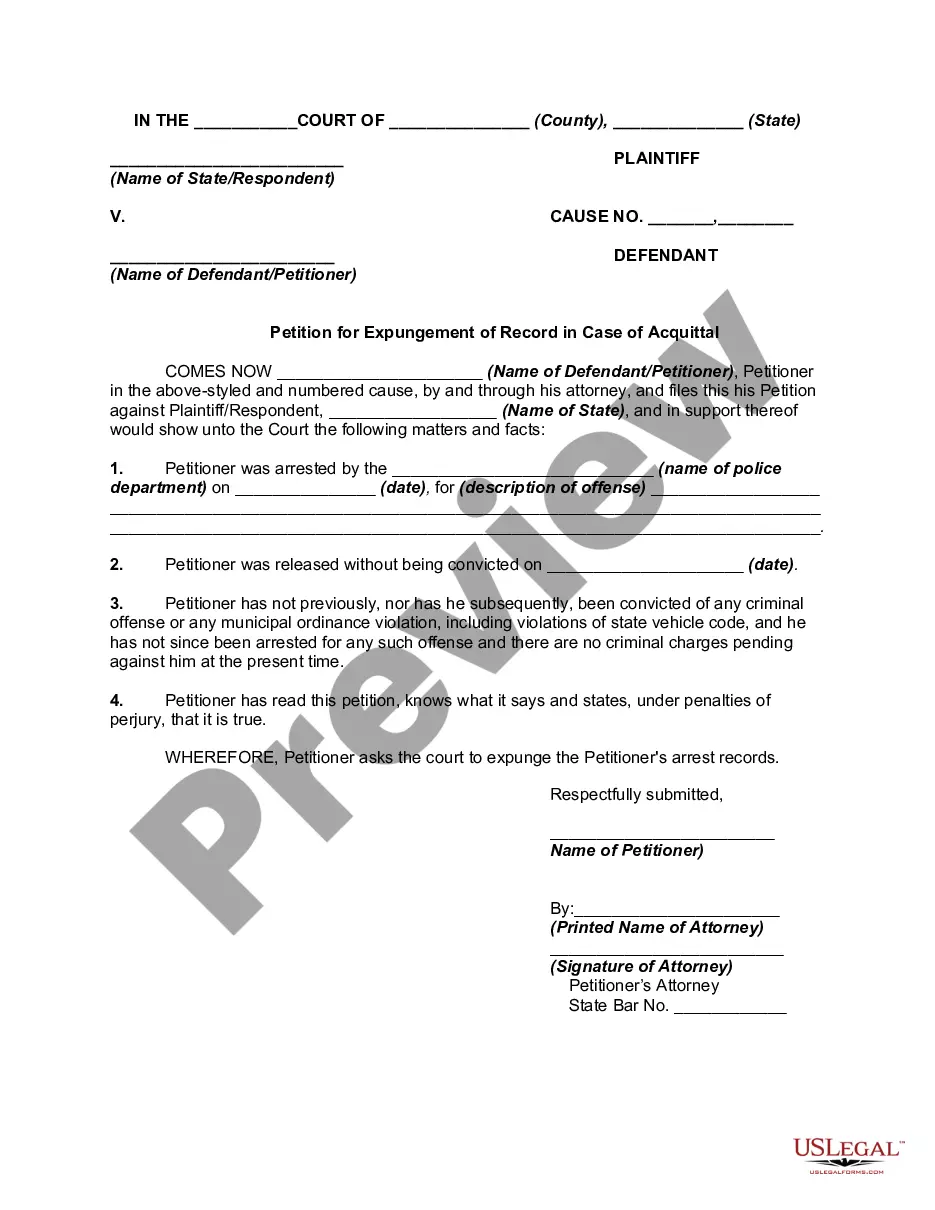
The Petition for Writ of Mandamus or Mandate to Compel Court to Expunge Record of Arrest, Trial, and Conviction is a legal document that allows an individual to request a court order compelling a governmental body to act on a legal obligation. Specifically, this form is used to seek the expungement of arrest and conviction records when an official has neglected to perform this duty following a successful completion of probation.
Key components of this form
- Parties involved: Identification of the plaintiff and defendant.
- Details of the initial arrest: Date, location, and description of the crime.
- Information about the court proceedings: Description of the court, judge, and plea entered.
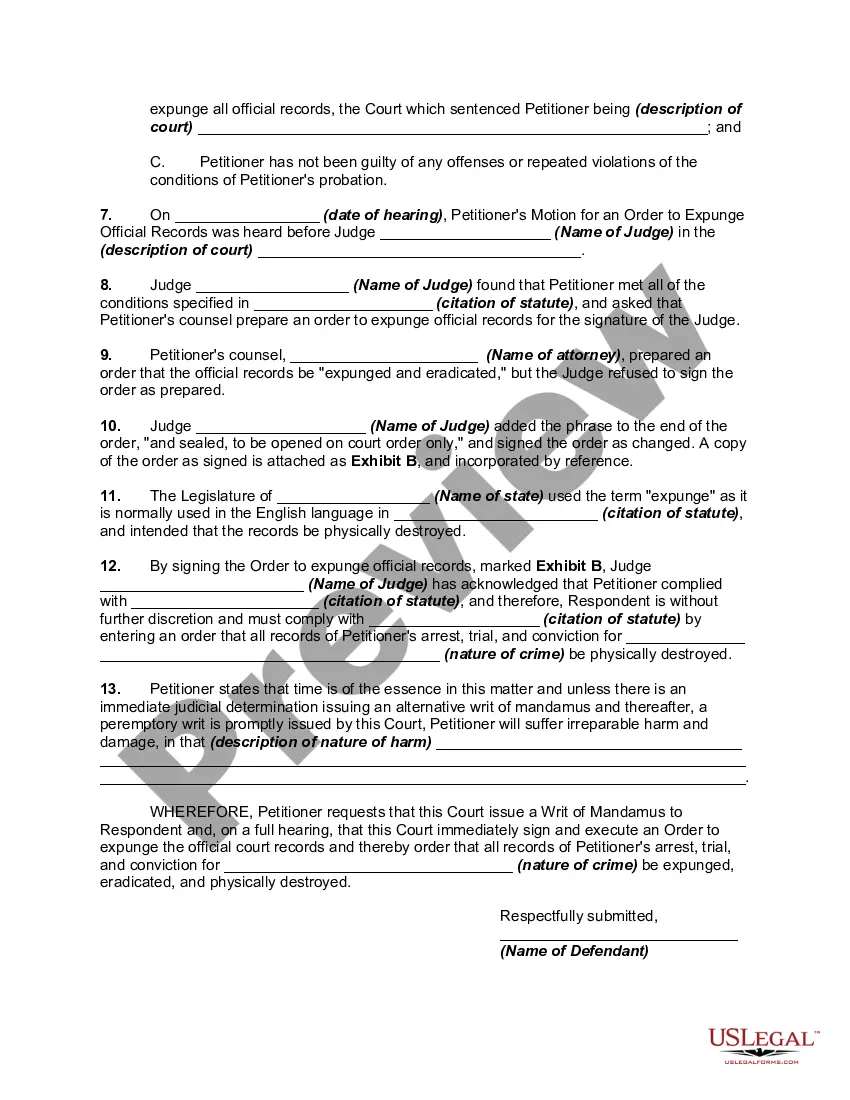
- Compliance details: Evidence of successful completion of probation and conditions for expungement.
- Request for relief: Formal request for the court to sign an order for expungement.
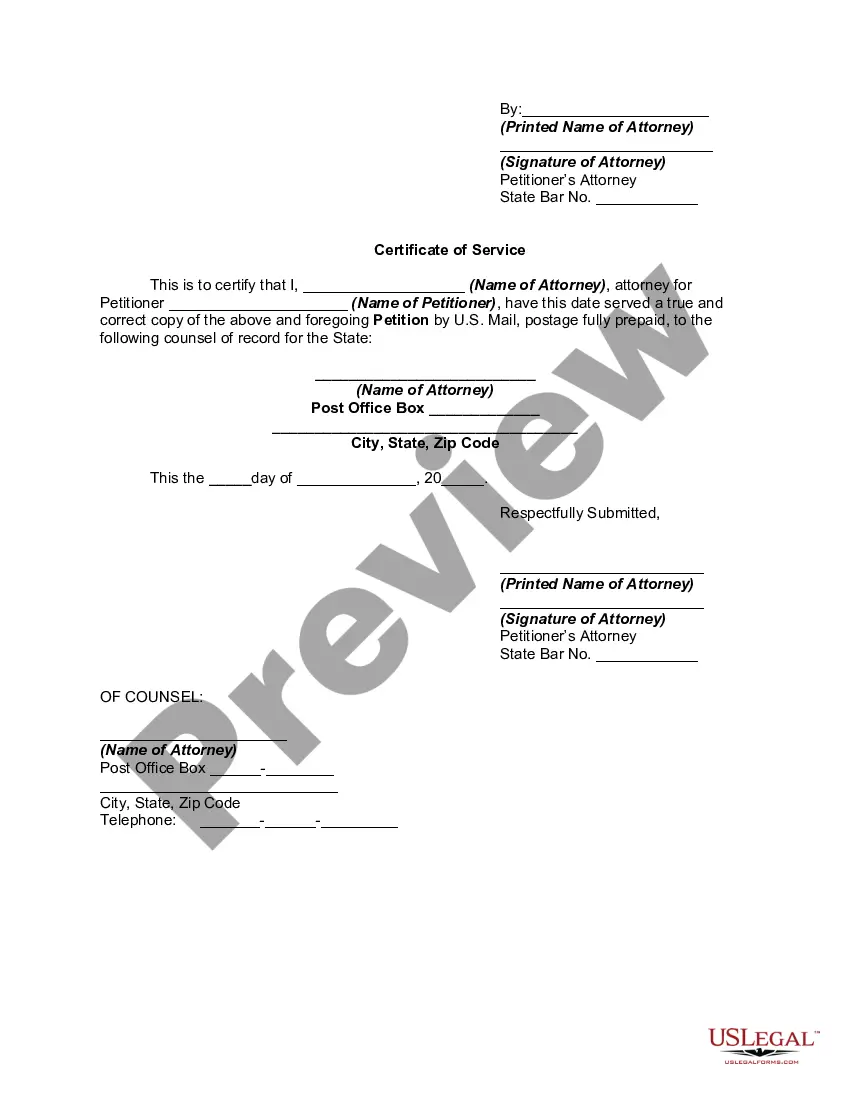
- Certificate of service: Confirmation of notification to the opposing counsel.
Common use cases
This form should be used when an individual who has been arrested and convicted of a crime has completed their probation and seeks to have their records expunged. It is applicable when a judge has acknowledged the individual's compliance with expungement statutes but has not signed the necessary order for destruction of records. If you believe your criminal record is preventing you from obtaining employment or other opportunities, this form may be necessary.
Who can use this document
- Individuals who have previously been arrested and convicted but have completed their probationary period.
- People who have fulfilled all conditions necessary for expungement as outlined by state law.
- Those who have faced difficulties due to their criminal record and are seeking to have it cleared.
Completing this form step by step
- Provide the names of the plaintiff and the defendant as well as the cause number.
- Fill in the details of the arrest, including the date, location, and nature of the crime.
- Document the court proceedings, including the judge's name and the plea entered.
- Include information related to the motion for expungement, such as compliance with the relevant statute and the date of the hearing.
- Clearly state your request for the court to compel the expungement of records.
- Ensure you sign and date the form, and prepare a certificate of service to notify opposing counsel.
Does this document require notarization?
This form does not typically require notarization to be legally valid. However, some jurisdictions or document types may still require it. US Legal Forms provides secure online notarization powered by Notarize, available 24/7 for added convenience.
Get your form ready online
Our built-in tools help you complete, sign, share, and store your documents in one place.
Make edits, fill in missing information, and update formatting in US Legal Forms—just like you would in MS Word.
Download a copy, print it, send it by email, or mail it via USPS—whatever works best for your next step.
Sign and collect signatures with our SignNow integration. Send to multiple recipients, set reminders, and more. Go Premium to unlock E-Sign.
If this form requires notarization, complete it online through a secure video call—no need to meet a notary in person or wait for an appointment.
We protect your documents and personal data by following strict security and privacy standards.

Make edits, fill in missing information, and update formatting in US Legal Forms—just like you would in MS Word.

Download a copy, print it, send it by email, or mail it via USPS—whatever works best for your next step.

Sign and collect signatures with our SignNow integration. Send to multiple recipients, set reminders, and more. Go Premium to unlock E-Sign.

If this form requires notarization, complete it online through a secure video call—no need to meet a notary in person or wait for an appointment.

We protect your documents and personal data by following strict security and privacy standards.
Typical mistakes to avoid
- Failing to include all necessary details about the arrest and conviction.
- Not providing evidence of successful completion of probation.
- Omitting the signature of the attorney or the petitioner.
- Not properly notifying opposing counsel as required by law.
Benefits of completing this form online
- Convenience of downloading and filling out the form at your own pace.
- Editability allows the customization of details specific to your case.
- Secure storage of your legal documents for easy access when needed.
Looking for another form?






Form popularity
FAQ
A writ is defined as a formal written order issued by a higher court which requests a lower court or a government entity to take action. Warrants, orders, directions, and subpoenas are all considered writs. When it comes to criminal cases, a defendant may file one or more writs in one trial.
There are five types of Writs which are Habeas Corpus, Mandamus, Certiorari, Quo Warranto and Prohibition and all these writs are an effective method of enforcing the rights of the people and to compel the authorities to fulfil the duties which are bound to perform under the law.
He issued a writ against the newspaper. Creditors could obtain a writ for the arrest of their debtors. A writ was filed in the High Court. Disappointment was writ large on the face of the loser. A writ was served on the firm in respect of their unpaid bill. This policy is liberalism writ large.
A writ is an order issued by a legal authority with administrative or juridicial powers, typically a court.