Agreement with Environmental Consultant to do Site Assessment
What this document covers
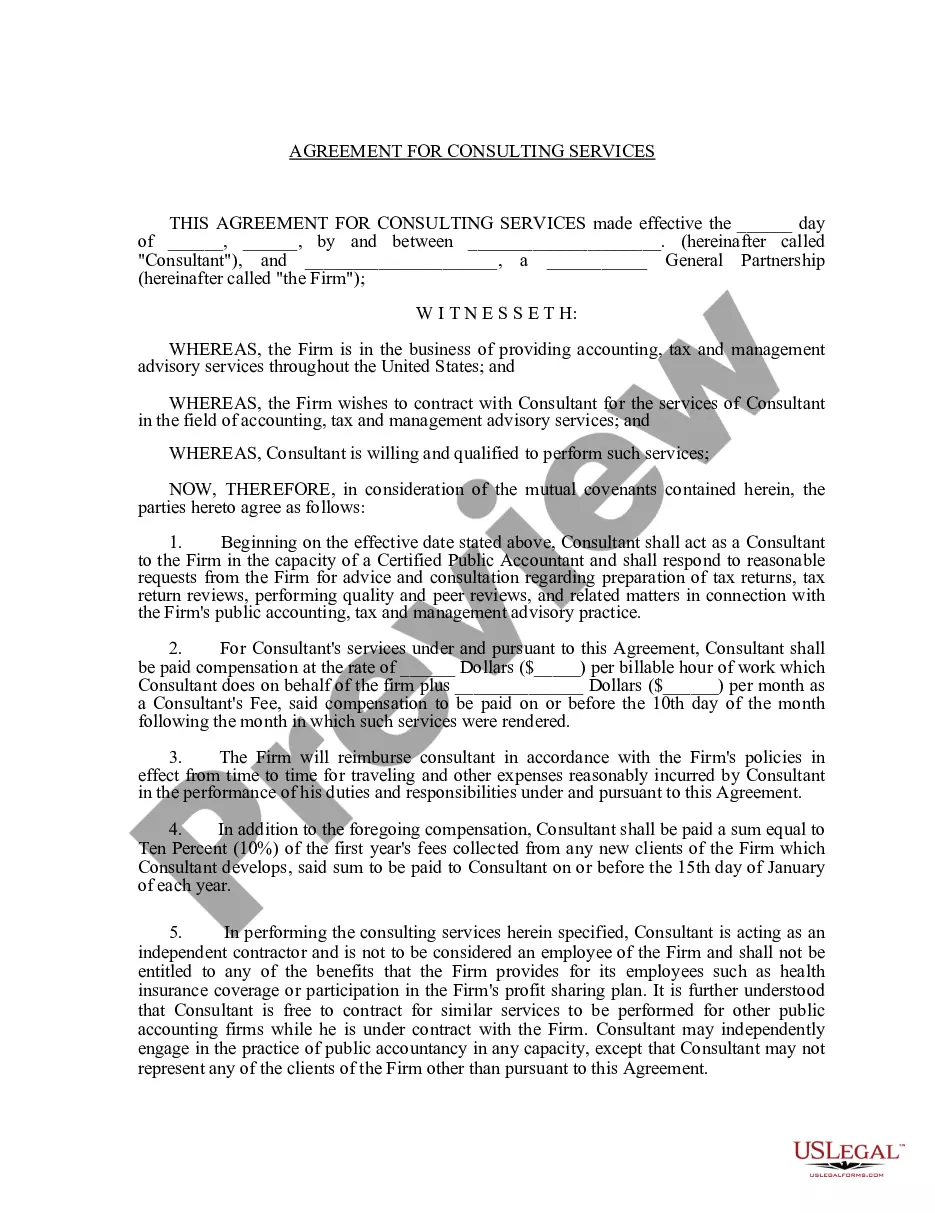
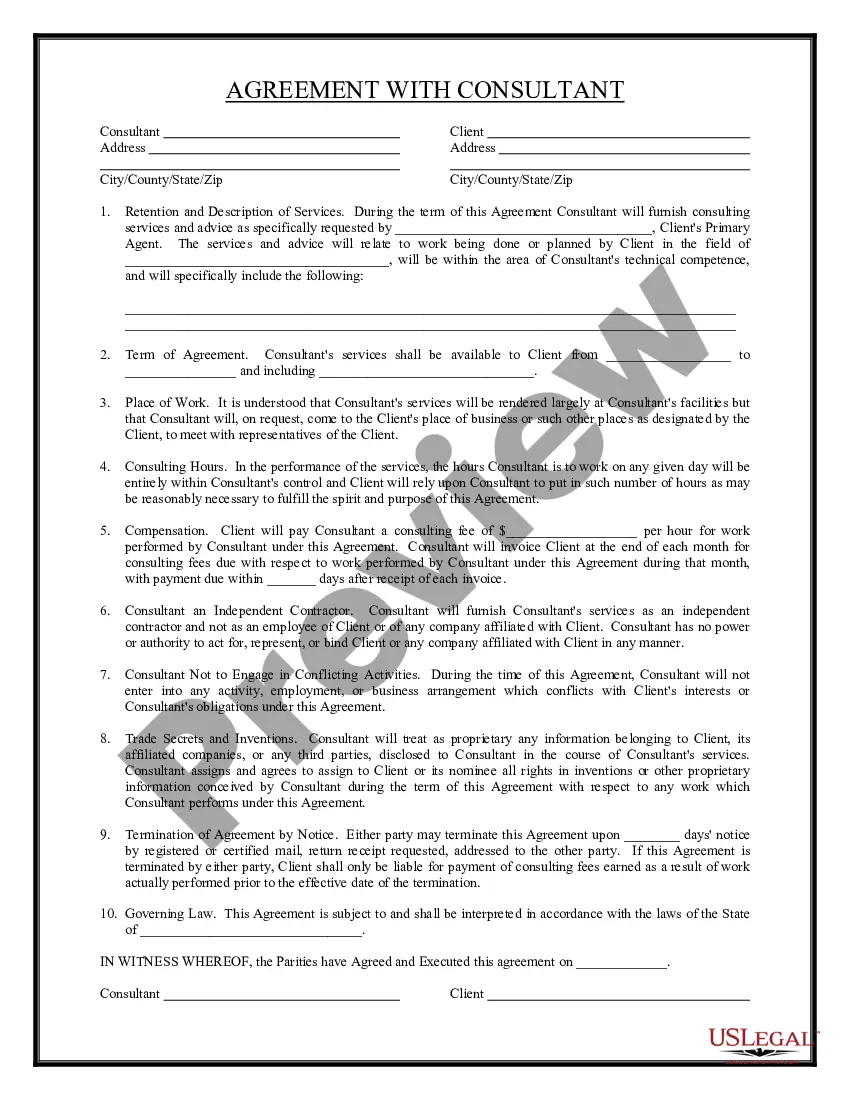
This Agreement with Environmental Consultant to do Site Assessment is a legal document that establishes the terms under which an environmental consultant will conduct a thorough site assessment of a property. Its primary purpose is to evaluate potential environmental hazards and ensure compliance with applicable regulations. This form is structured to address the specific conditions of your property while allowing flexibility to cater to local legal requirements, differentiating it from similar agreements that may not cover environmental factors in detail.
Main sections of this form
- Date of agreement and identification of the parties involved (Owner and Consultant).
- Purpose and scope of the consulting services, including environmental assessments.
- Details regarding the review of documentation and government records.
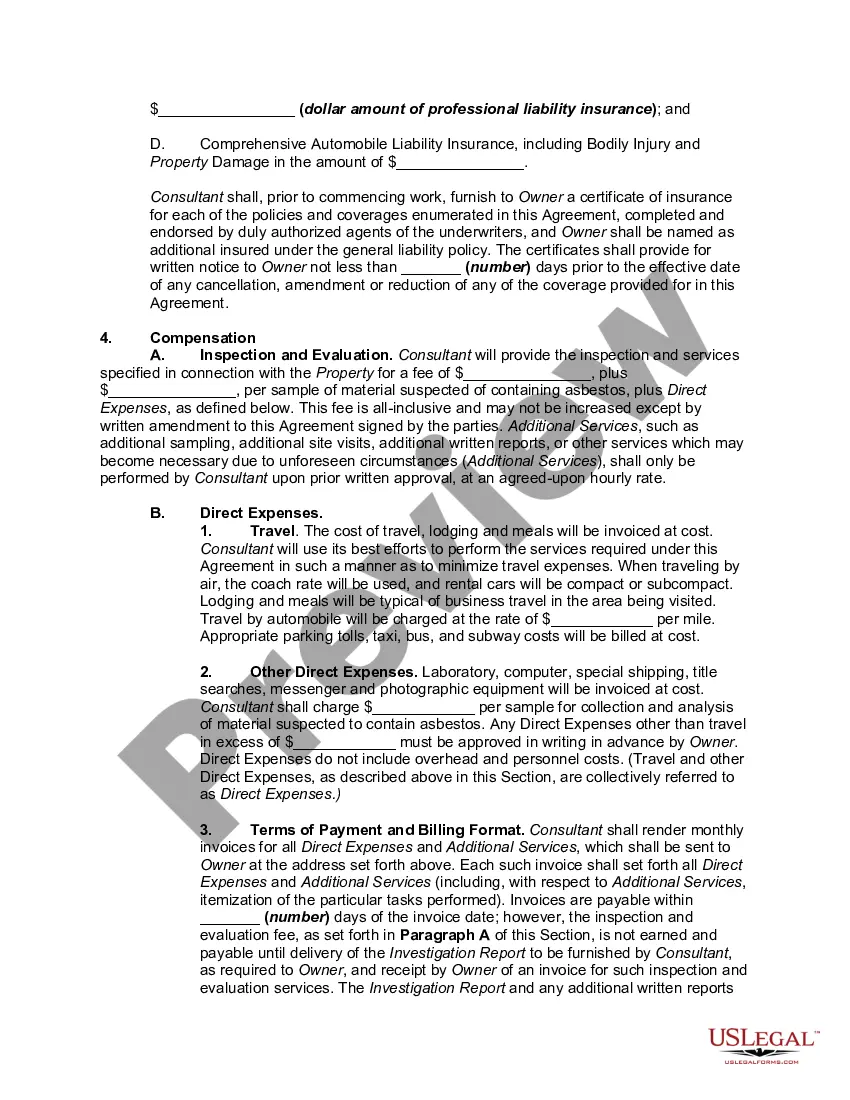
- Insurance requirements for the consultant during the execution of services.
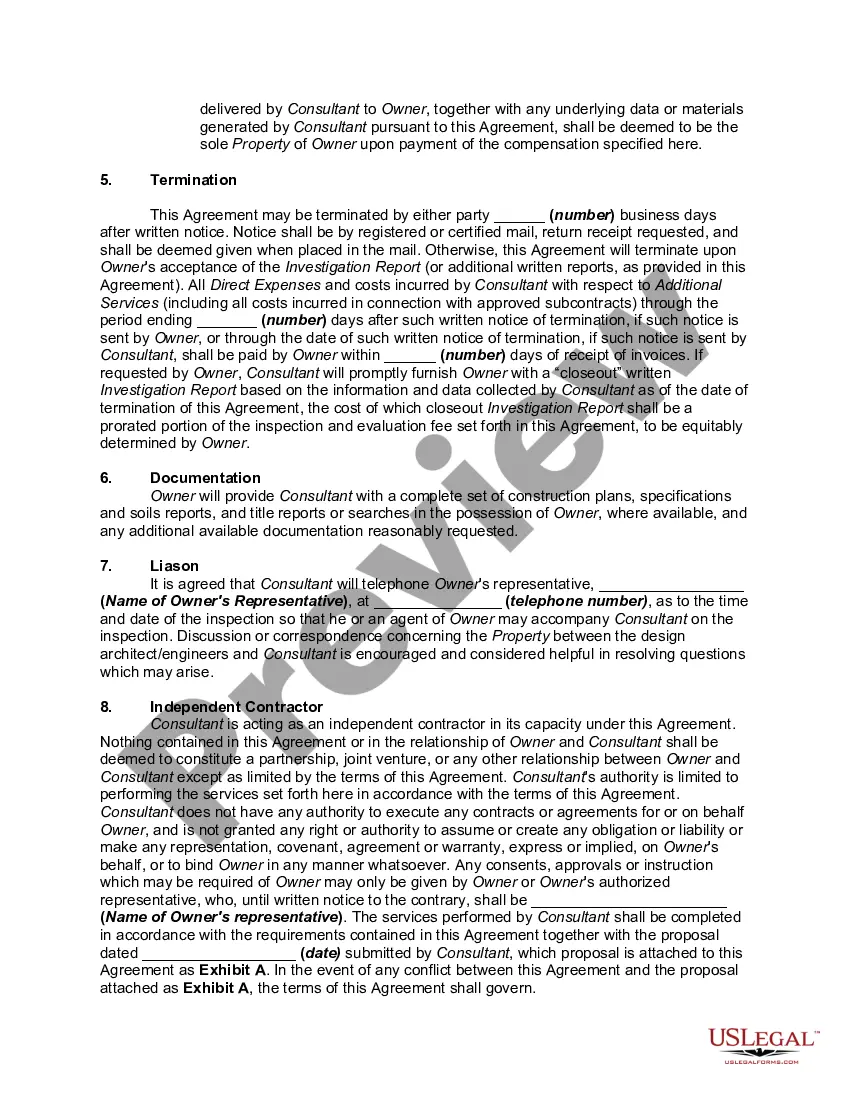
- Compensation structure for services rendered and direct expenses incurred.
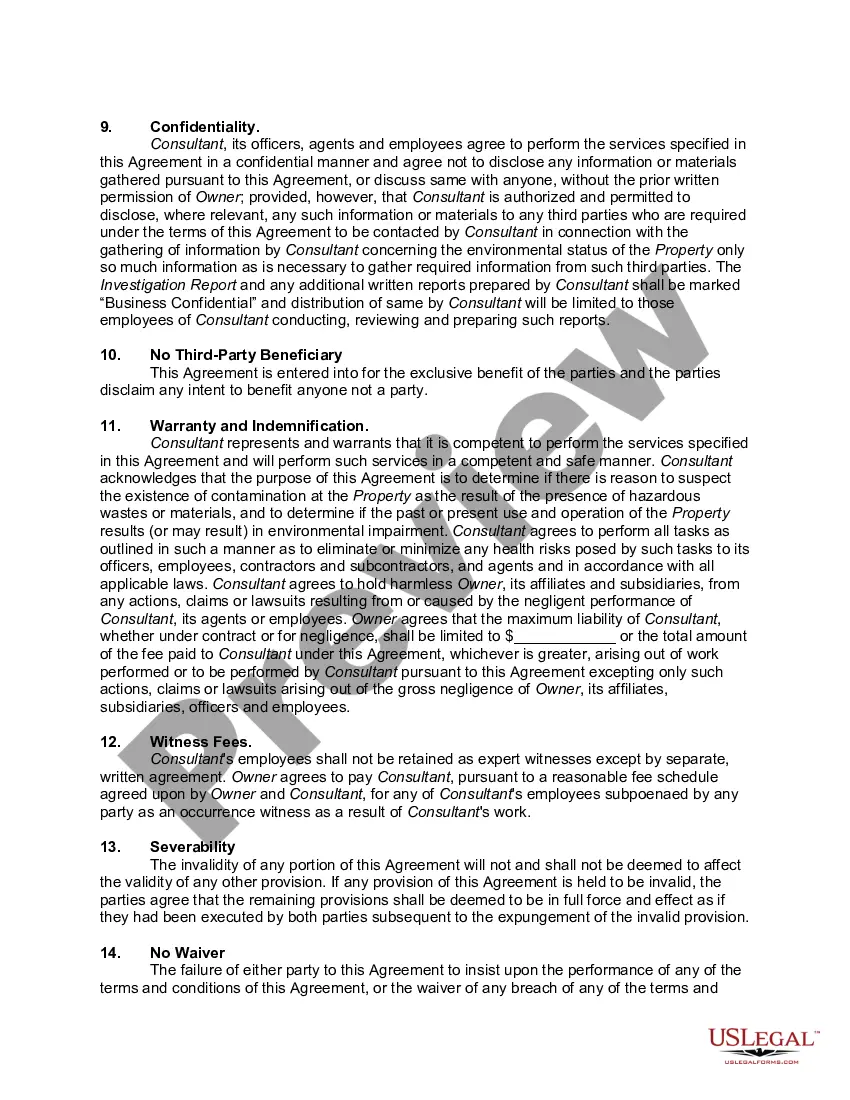
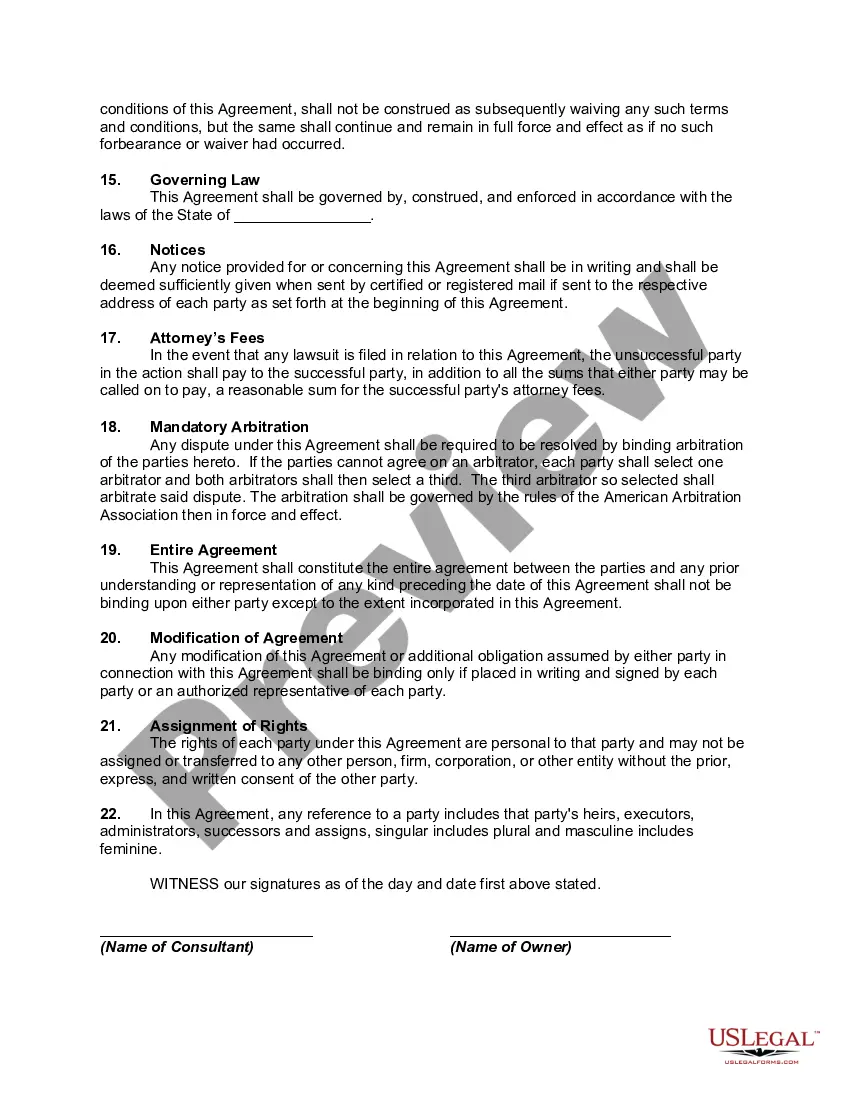
- Confidentiality and liability clauses to protect both parties' interests.
Situations where this form applies
This form should be used when a property owner needs to assess environmental risks associated with their property, particularly when planning for development, sale, or renovation. It is especially relevant in cases where there may be concerns about past industrial uses, hazardous material exposure, or regulatory compliance issues. Engaging a consultant to assess these factors can help mitigate potential liabilities.
Who needs this form
- Property owners looking to assess environmental conditions.
- Real estate developers planning new projects.
- Businesses engaged in industries with potential environmental impacts.
- Attorneys representing clients in real estate or environmental law matters.
Completing this form step by step
- Identify the date of agreement and enter the names of the Owner and Consultant.
- Specify the property's details, including its legal description and location.
- Outline the purpose and scope of consulting services to be performed.
- Fill in compensation details, including fees for services and any additional expenses.
- Sign and date the agreement to formalize the partnership between the parties.
Notarization guidance
This form does not typically require notarization unless specified by local law. However, checking with local regulations is essential to confirm any specific requirements that may apply to your jurisdiction.
Get your form ready online
Our built-in tools help you complete, sign, share, and store your documents in one place.
Make edits, fill in missing information, and update formatting in US Legal Forms—just like you would in MS Word.
Download a copy, print it, send it by email, or mail it via USPS—whatever works best for your next step.
Sign and collect signatures with our SignNow integration. Send to multiple recipients, set reminders, and more. Go Premium to unlock E-Sign.
If this form requires notarization, complete it online through a secure video call—no need to meet a notary in person or wait for an appointment.
We protect your documents and personal data by following strict security and privacy standards.

Make edits, fill in missing information, and update formatting in US Legal Forms—just like you would in MS Word.

Download a copy, print it, send it by email, or mail it via USPS—whatever works best for your next step.

Sign and collect signatures with our SignNow integration. Send to multiple recipients, set reminders, and more. Go Premium to unlock E-Sign.

If this form requires notarization, complete it online through a secure video call—no need to meet a notary in person or wait for an appointment.

We protect your documents and personal data by following strict security and privacy standards.
Typical mistakes to avoid
- Failing to accurately describe the property location and details.
- Omitting important insurance requirements for the consultant.
- Not specifying the scope of services clearly, leading to misunderstandings.
- Neglecting to outline compensation for additional services or unexpected expenses.
- Forgetting to review local laws before finalizing the agreement.
Why complete this form online
- Convenient access to professionally drafted legal forms anytime.
- Edit and customize the form to meet specific needs and regional regulations.
- Downloadable versions for easy storage and sharing.
- No need for in-person meetings; complete everything from your home or office.
Legal use & context
- This agreement serves as a formal document establishing the relationship between the Owner and Consultant.
- It is enforceable in a court of law provided that it is properly completed and signed.
- Clear definitions of roles and responsibilities can mitigate disputes over service delivery.
Main things to remember
- The Agreement with Environmental Consultant is essential for property owners needing environmental assessments.
- It ensures clarity on the scope of services and protects both parties legally and financially.
- Carefully filling out the form and adhering to local regulations can prevent legal complications in the future.
- It is important to verify details, especially regarding the description of the property and compensation terms.
Looking for another form?







Form popularity
FAQ
A Phase I primarily assesses the likelihood that a site is contaminated through visual observations, historical use reviews and regulatory records, while a Phase II assesses whether contamination is in fact present.
Phase 1. An environmental assessment starts with Phase 1, a visual, historical inspection. An environmental consultant looks for visual evidence of actual or potential contamination, such as underground storage tanks.
A typical Phase I ESA, undertaken using ASTM 1527-13 the latest guidance available usually runs around $2,000 to $3,000. That said, at complex facilities, I have had to charge as much as $45,000 or more for Phase Is; sometimes even more for environmental site assessment projects done outside the United States.
Typically, a Phase II ESA can cost anywhere from $5,000 to well over $100,000. Phase II ESA initial sampling activities (to determine if there is a problem) usually cost around $5,000. The success of the experience is tied to communication of needs and matching effort to the needs.
Identifies potential or existing environmental contamination liabilities. A Phase I Environmental Site Assessment, commonly referred to as an ESA, or Phase I ESA, is completed to research the current and historical uses of a property as part of a commercial real estate transaction.
Organic contaminants may exist in the subsurface in four distinct phases: mobile free product, absorbed phase, dissolved phase and vapor phase. The free product is known as non-aqueous phase liquid (NAPL) and can be denser than water, DNAPL, or lighter than water, LNAPL.
A Phase I ESA typically includes the following: A site visit to observe current and past conditions and uses of the property and adjacent properties;Interviews with current and past property owners, operators, and occupants, or others familiar with the property.
Performing a Phase 1 ESA is common practice in order to know whether a property is likely to contain any environmental issues, or recognized environmental conditions. Recognized environmental conditions include the presence, or likely presence, of hazardous materials or petroleum products due to a release or a