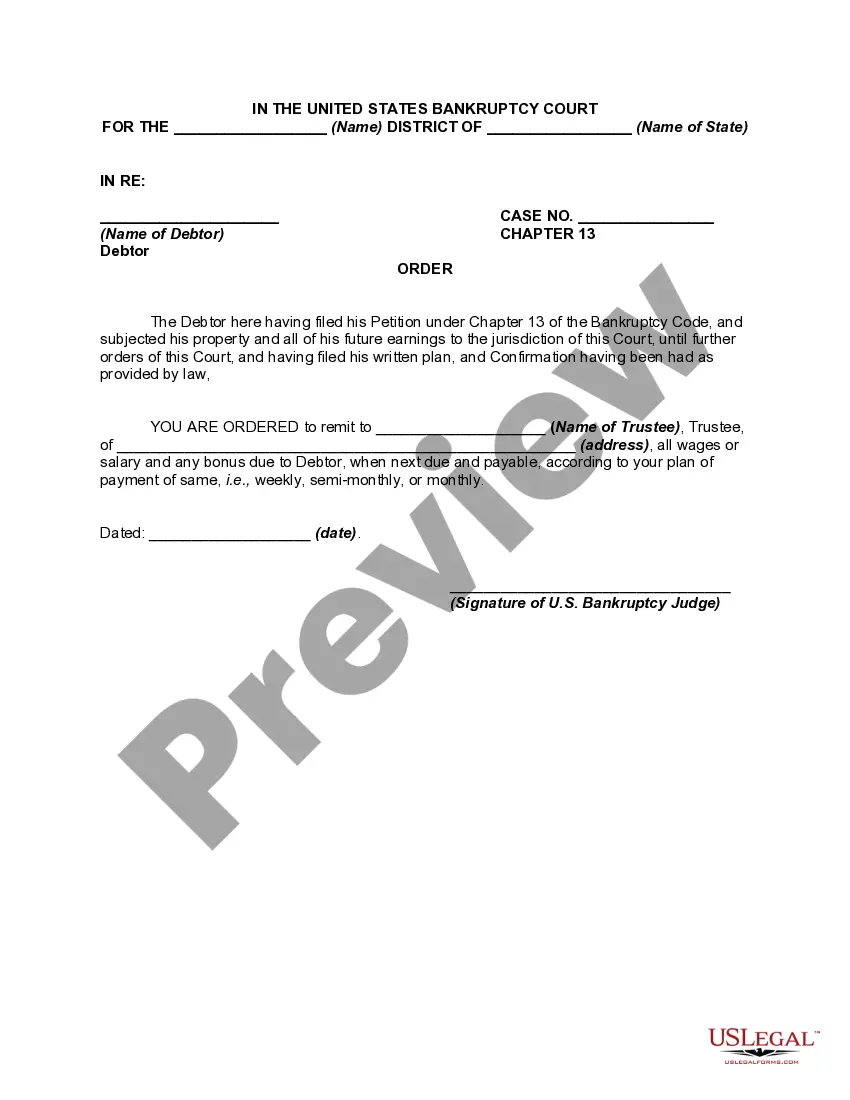
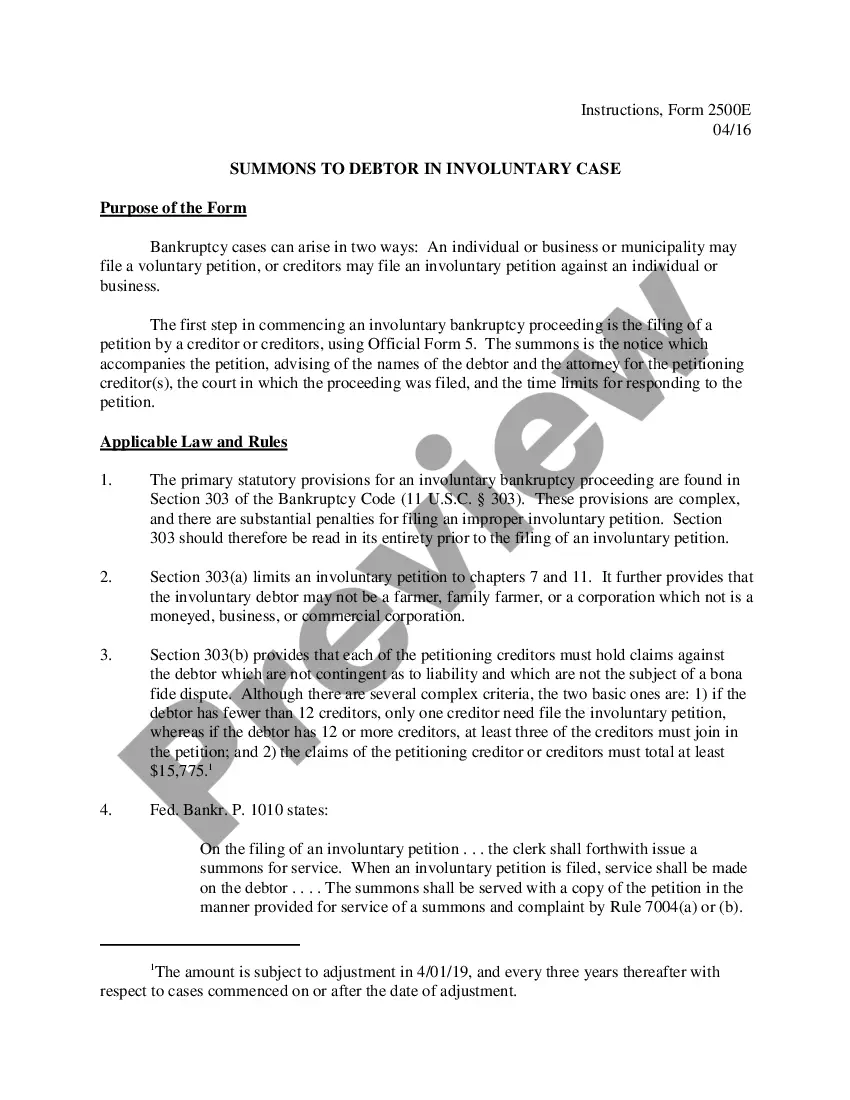
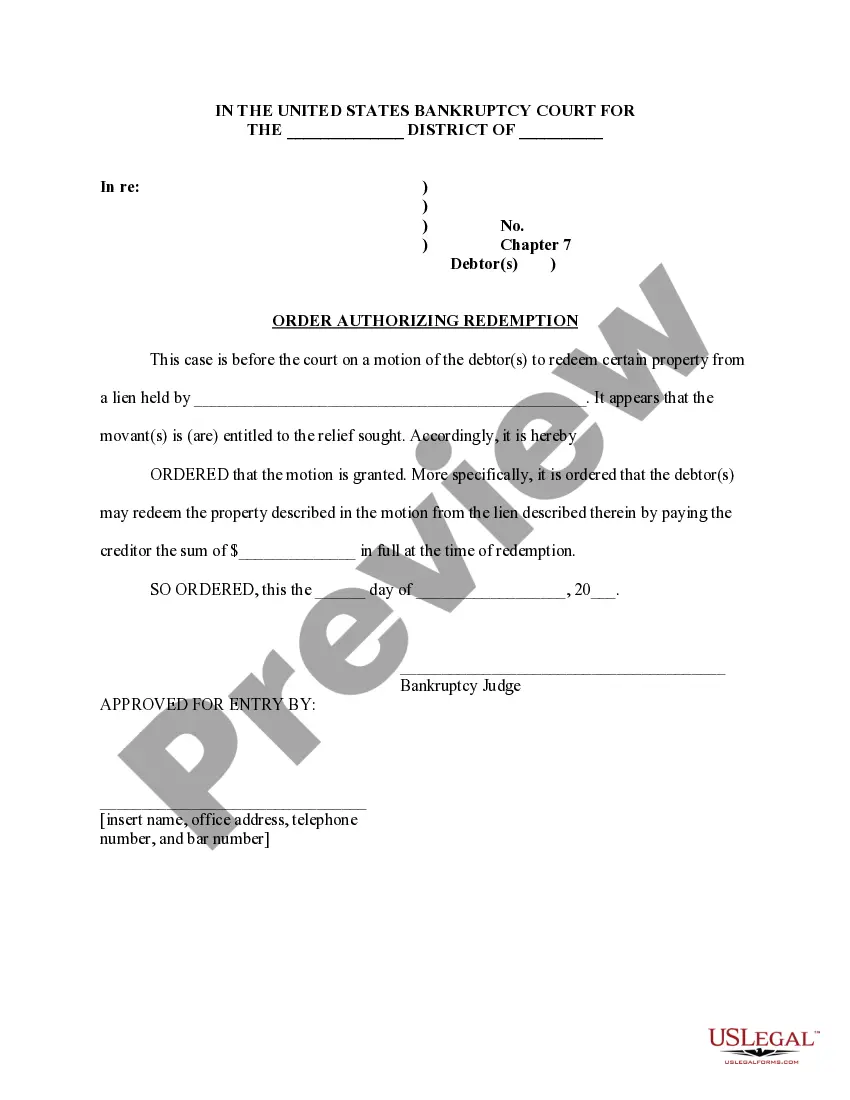
Order Requiring Debtor's Employer to Remit Deductions from a Debtor's Paycheck to Trustee
Understanding this form
The Order Requiring Debtor's Employer to Remit Deductions from a Debtor's Paycheck to Trustee is a legal document that empowers the court to require the debtor's employer to send a portion of the debtor's wages directly to a bankruptcy trustee. This form is essential in the context of a Chapter 13 bankruptcy, where the debtor creates a repayment plan for their debts. Unlike other forms related to bankruptcy, this order specifically addresses wage deductions to facilitate the execution of the confirmed repayment plan.
Key parts of this document
- Title and jurisdiction details, including the district and state.
- Debtor's personal information and case number.
- Trustee's name and address to whom the payments are to be remitted.
- Specification of the wages or salary due to the debtor and the frequency of payments.
- Signature of the U.S. Bankruptcy Judge to validate the order.
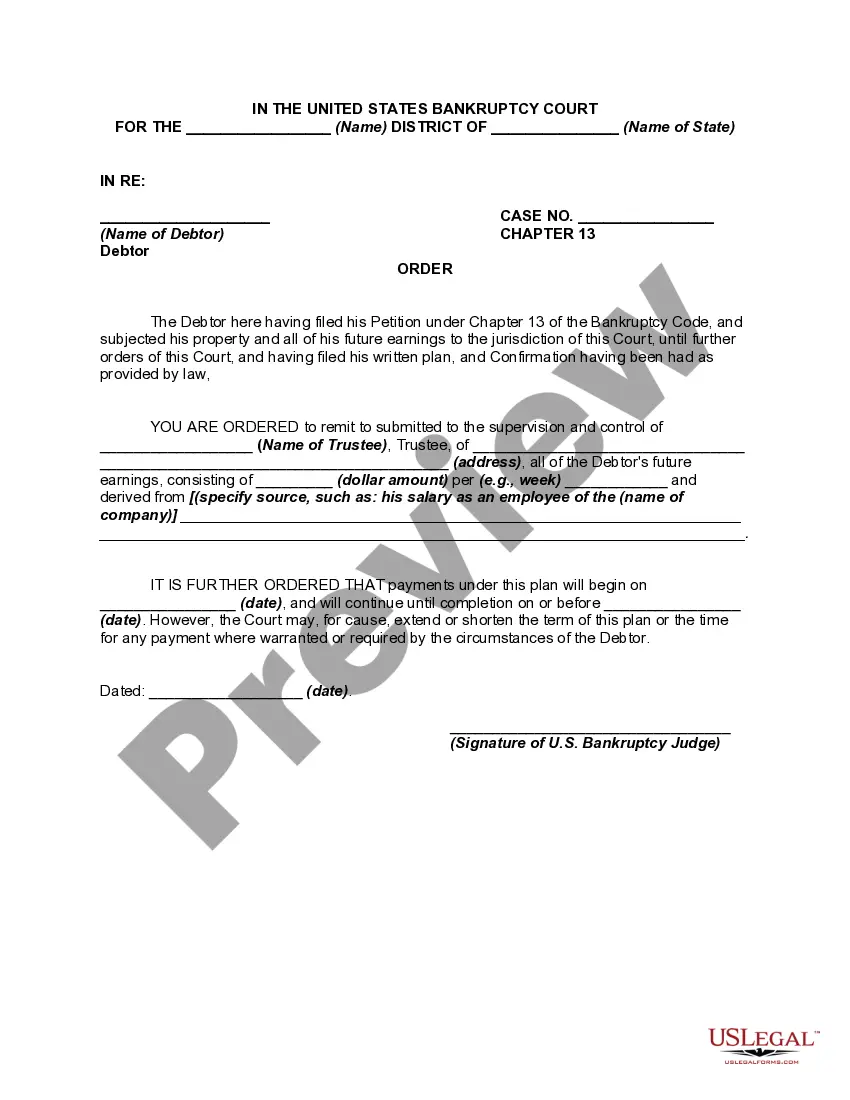
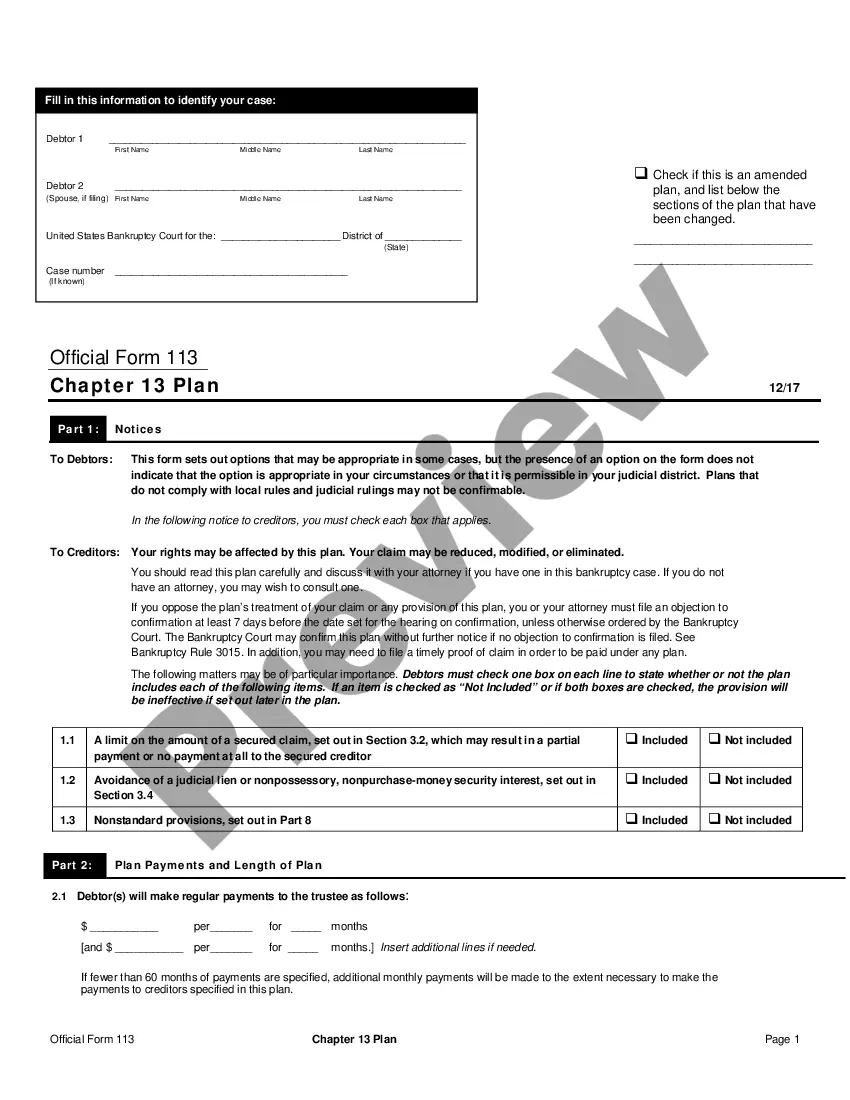
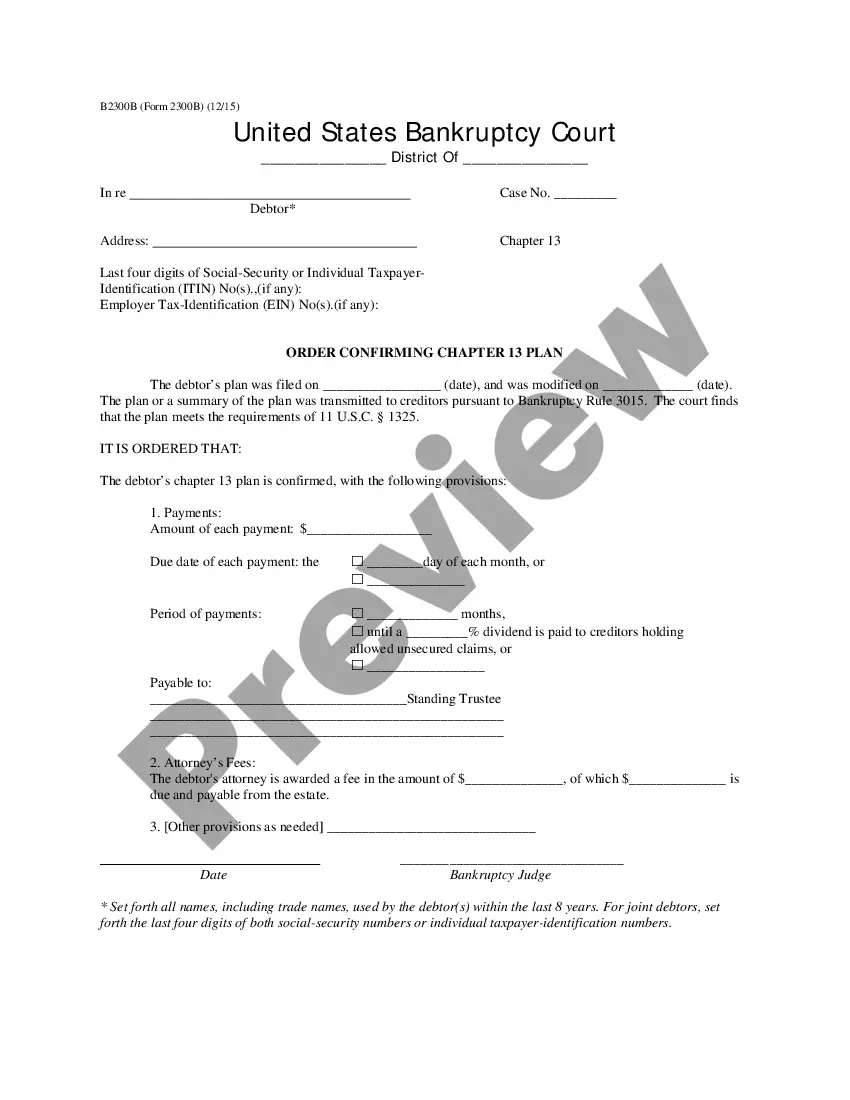
Situations where this form applies
This form should be used when a debtor has filed for Chapter 13 bankruptcy and has a confirmed repayment plan. It is necessary when the debtor's income includes regular wages, and the court needs to ensure that payments are made directly to the trustee from the debtor's paycheck. This order helps regulate the payment process within the framework of the Chapter 13 plan.
Who this form is for
- Individuals who have filed for Chapter 13 bankruptcy.
- Debtors receiving regular wages who need to adhere to a court-approved repayment plan.
- Employers of debtors who are instructed by the court to remit part of wages to a bankruptcy trustee.
How to complete this form
- Identify the appropriate U.S. District and State for your bankruptcy case.
- Fill in the debtor's name, case number, and Chapter designation.
- Specify the name and address of the trustee receiving payment.
- Indicate the wages or salary due and the payment frequency according to the confirmed plan.
- Ensure the form is signed by the U.S. Bankruptcy Judge.
Notarization requirements for this form
In most cases, this form does not require notarization. However, some jurisdictions or signing circumstances might. US Legal Forms offers online notarization powered by Notarize, accessible 24/7 for a quick, remote process.
Get your form ready online
Our built-in tools help you complete, sign, share, and store your documents in one place.
Make edits, fill in missing information, and update formatting in US Legal Forms—just like you would in MS Word.
Download a copy, print it, send it by email, or mail it via USPS—whatever works best for your next step.
Sign and collect signatures with our SignNow integration. Send to multiple recipients, set reminders, and more. Go Premium to unlock E-Sign.
If this form requires notarization, complete it online through a secure video call—no need to meet a notary in person or wait for an appointment.
We protect your documents and personal data by following strict security and privacy standards.

Make edits, fill in missing information, and update formatting in US Legal Forms—just like you would in MS Word.

Download a copy, print it, send it by email, or mail it via USPS—whatever works best for your next step.

Sign and collect signatures with our SignNow integration. Send to multiple recipients, set reminders, and more. Go Premium to unlock E-Sign.

If this form requires notarization, complete it online through a secure video call—no need to meet a notary in person or wait for an appointment.

We protect your documents and personal data by following strict security and privacy standards.
Common mistakes to avoid
- Failing to include accurate debtor or trustee information.
- Not specifying the correct frequency of payments.
- Neglecting to obtain the necessary signature from the U.S. Bankruptcy Judge.
- Submitting the form without ensuring it aligns with the confirmed Chapter 13 plan.
Advantages of online completion
- Convenience of accessing and filling out the form from anywhere.
- Editable format allows for easy corrections and updates before finalization.
- Reliability of obtaining a legal form drafted by licensed attorneys.
Looking for another form?




Form popularity
FAQ
Pay More Than the Minimum. Spend Less Than You Plan to Spend. Pay Off Your Most Expensive Debts First. Buy a Quality Used Car Rather than a New One. Consider Becoming a One Car Household. Save on Groceries to Help Pay Off Debt Faster.
Basically, there is no major difference between loan and debt, all loans are part of a large debt.The money borrowed through issuance of bonds and debentures to public is considered as debts.In the simple words, money borrowed from a lender is a loan and the money raised through bonds, debentures etc. is the debt.
The act of paying back money that you have borrowed: make/meet debt payments Many people are struggling to meet their debt payments.
The main types of personal debt are secured debt, unsecured debt, revolving debt, and mortgages. Secured debt requires some form of collateral, while unsecured debt is solely based on an individual's creditworthiness.
Paying off debt won't erase your payment history. If your debt is paid off but you missed payments, those payments could appear on your credit report for up to seven years. With VantageScore, meanwhile, the impact that negative items have on your credit score goes down as time passes.
Track Your Spending. Set up a Budget. Create a Plan to Pay Off Debt: Try a Debt Snowball Method. Pay More Than the Minimum Payment. Consider Balance Transfers & Debt Consolidation. Renegotiate Credit Card Debt. Create a Family Budget. Create the Best Budget to Pay Off and Stay Out of Debt.
If you are in debt, you owe money: We seem to be perpetually in debt. If you go into debt, you borrow money.
Debt is something, usually money, borrowed by one party from another.A debt arrangement gives the borrowing party permission to borrow money under the condition that it is to be paid back at a later date, usually with interest.
Debt is something, usually money, borrowed by one party from another.A debt arrangement gives the borrowing party permission to borrow money under the condition that it is to be paid back at a later date, usually with interest.