Sample Letter for Notification of Rent Increase from Landlord to Tenant
What is this form?
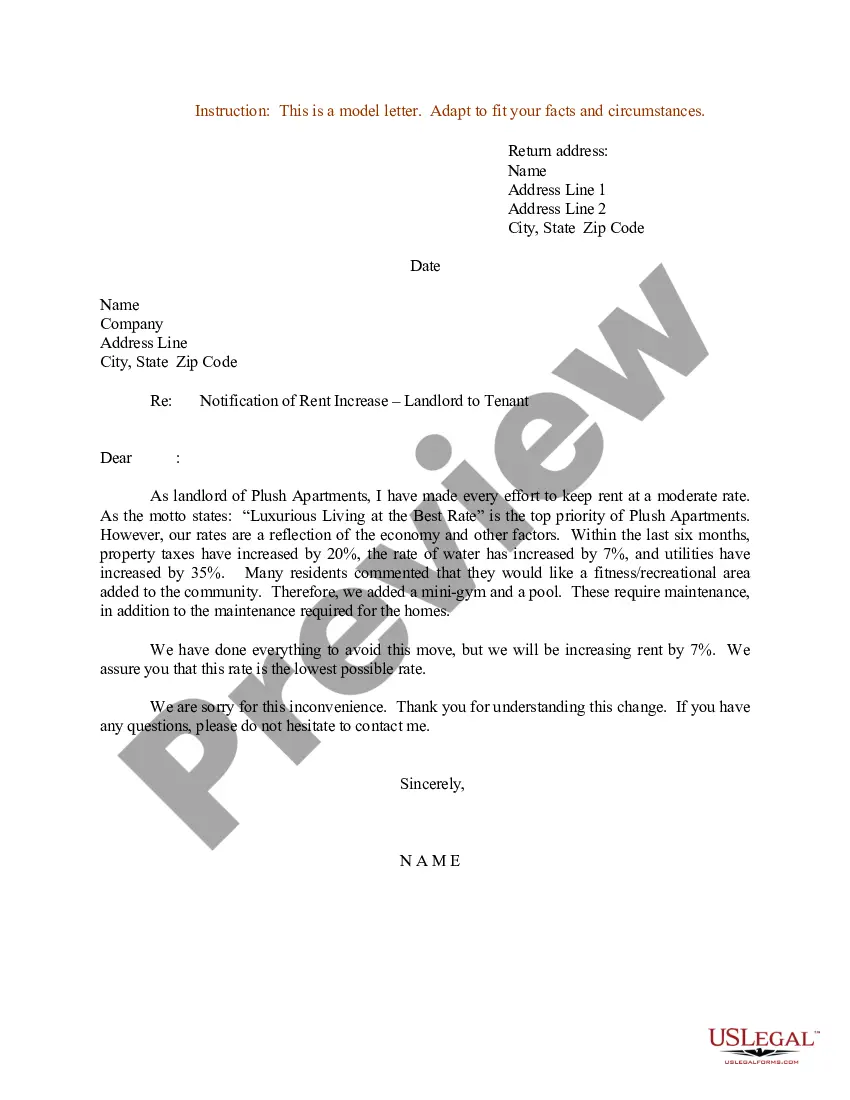
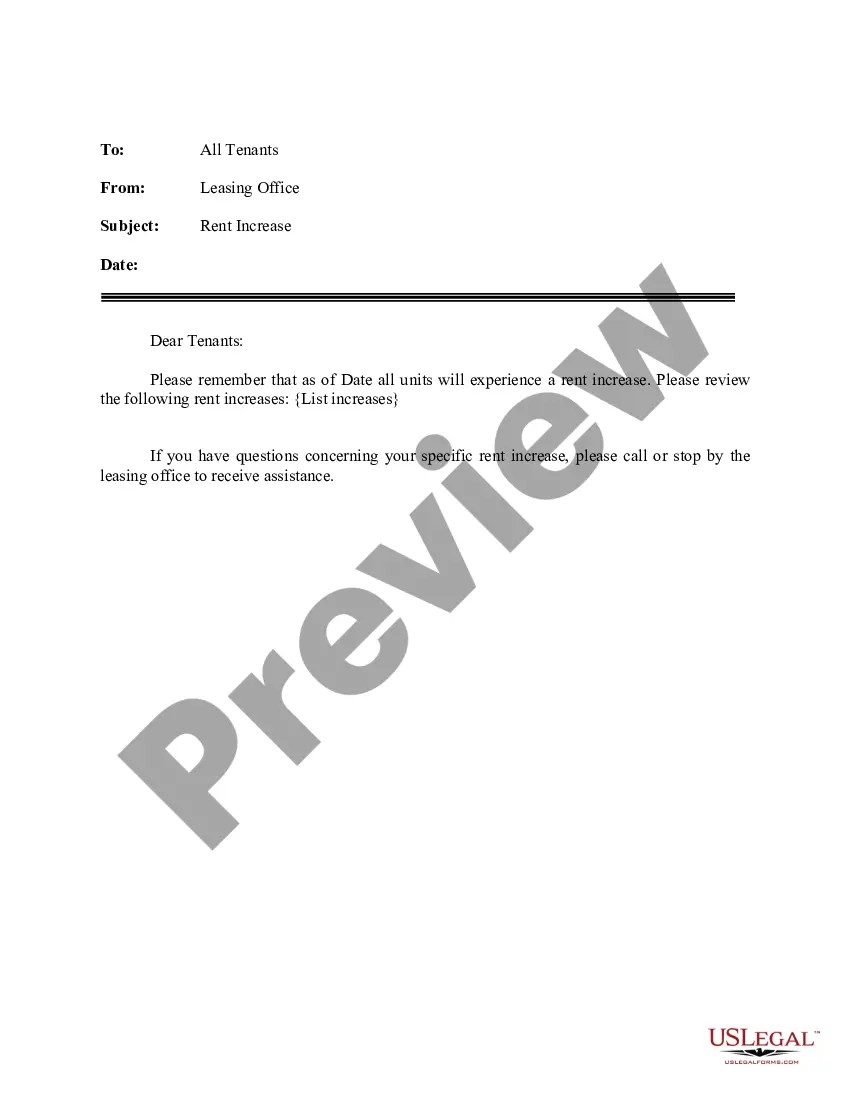
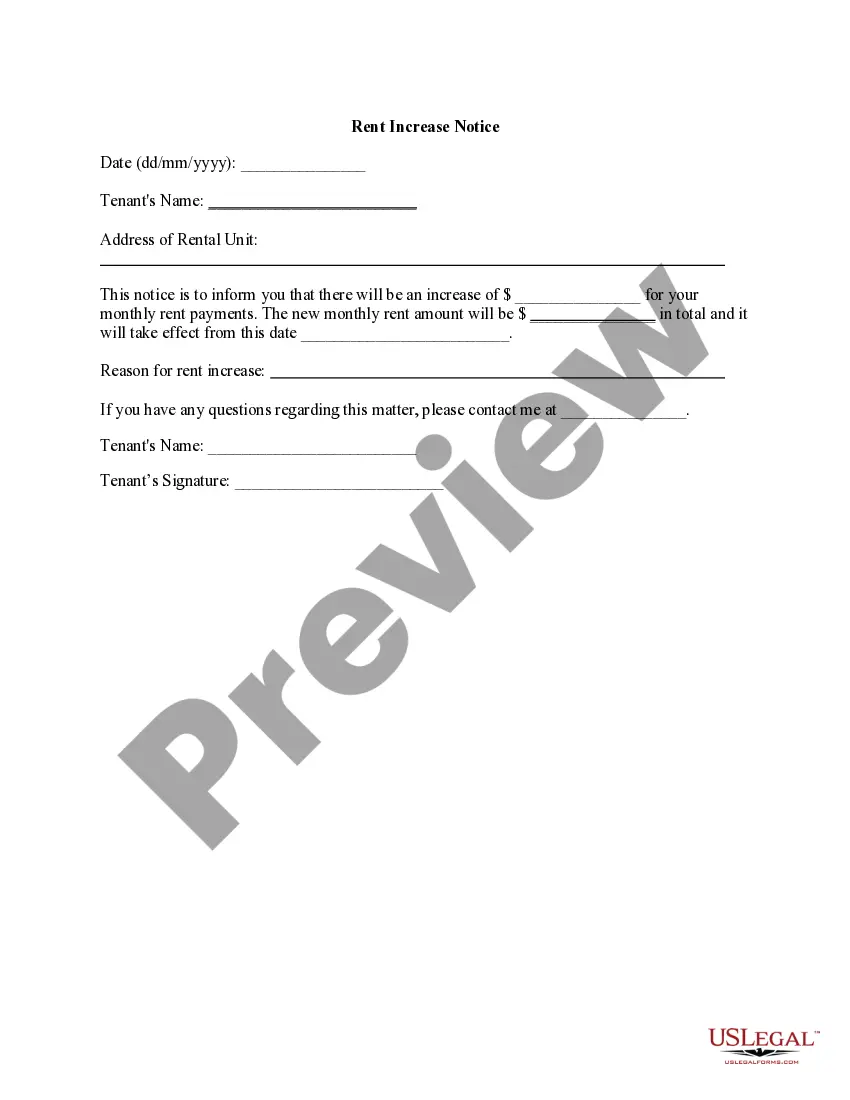
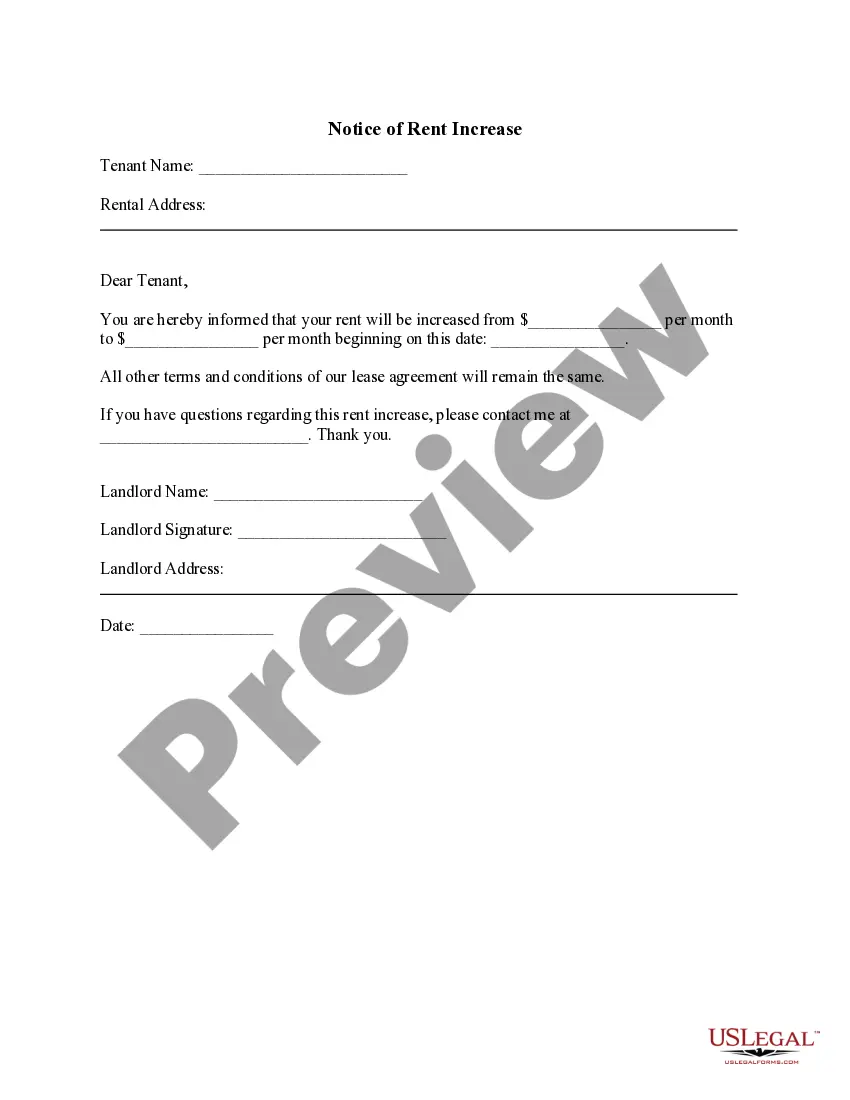
This Sample Letter for Notification of Rent Increase from Landlord to Tenant is a template designed for landlords to formally notify tenants of an upcoming rent increase. This letter serves as a legal document that outlines the increase in rental obligations, ensuring that tenants are informed in a professional manner. Unlike other forms, it provides specific guidance on how to communicate changes in rent to tenants, ensuring transparency and compliance with rental agreements.
Main sections of this form
- Return address of the landlord, including name and contact details.
- Date of the notification letter.
- Name of the tenant along with their address.
- Subject line indicating the purpose: Notification of Rent Increase.
- Brief apology for the inconvenience, acknowledging the impact on the tenant.
- Contact information for any questions related to the rent increase.
- Signature of the landlord to authenticate the letter.
Situations where this form applies
This form should be used when a landlord intends to increase the rent for a tenant. It serves to formally inform the tenant of the change, provide justification if necessary, and comply with local rental laws. Utilizing this letter is crucial when a landlord is looking to maintain a professional relationship with the tenant while ensuring that all legal requirements are met.
Who can use this document
This form is intended for:
- Landlords who need to notify tenants of a rent increase.
- Property managers acting on behalf of landlords.
- Residential landlords seeking to follow best practices in tenant communication.
How to prepare this document
- Identify the parties involved: Complete the return address section with your name and contact details.
- Include the date of the letter for record-keeping purposes.
- Enter the tenant's name and address accurately to avoid delivery issues.
- Specify the nature of the notification clearly in the subject line.
- Draft a brief message explaining the reason for the rent increase and express understanding of its impact.
- Sign the letter at the bottom to provide authenticity to the notification.
Does this document require notarization?
Notarization is not commonly needed for this form. However, certain documents or local rules may make it necessary. Our notarization service, powered by Notarize, allows you to finalize it securely online anytime, day or night.
Get your form ready online
Our built-in tools help you complete, sign, share, and store your documents in one place.
Make edits, fill in missing information, and update formatting in US Legal Forms—just like you would in MS Word.
Download a copy, print it, send it by email, or mail it via USPS—whatever works best for your next step.
Sign and collect signatures with our SignNow integration. Send to multiple recipients, set reminders, and more. Go Premium to unlock E-Sign.
If this form requires notarization, complete it online through a secure video call—no need to meet a notary in person or wait for an appointment.
We protect your documents and personal data by following strict security and privacy standards.

Make edits, fill in missing information, and update formatting in US Legal Forms—just like you would in MS Word.

Download a copy, print it, send it by email, or mail it via USPS—whatever works best for your next step.

Sign and collect signatures with our SignNow integration. Send to multiple recipients, set reminders, and more. Go Premium to unlock E-Sign.

If this form requires notarization, complete it online through a secure video call—no need to meet a notary in person or wait for an appointment.

We protect your documents and personal data by following strict security and privacy standards.
Avoid these common issues
- Failing to provide the correct notice period required by law.
- Not including the date on the letter, which can lead to confusion about the effective date.
- Delivering the letter informally rather than sending it via a traceable method.
- Omitting key contact information for follow-up questions.
Benefits of using this form online
- Easy download and access to a professionally drafted template.
- Editable format allows customization to fit individual landlord-tenant situations.
- Instant availability ensures prompt communication with tenants.
- Reliable format that meets legal standards for rent increase notifications.
Legal use & context
- This form serves as a legal notification to tenants regarding changes in rental payments.
- Proper use can help prevent disputes regarding the rent increase.
- Ensure all terms are clear to maintain a good landlord-tenant relationship.
Summary of main points
- This letter serves as a crucial communication tool for notifying tenants of a rent increase.
- Properly completing and sending this form can help maintain professional relationships.
- Always check local regulations to comply with specific notice requirements.
Looking for another form?








Form popularity
FAQ
Your landlord can only use a section 13 notice to increase your rent every 52 weeks. The amount of notice they have to give you will be the same as the notice for fixed term tenancies.
In most states, a landlord must give tenants notice at least 30 days before they'll enforce a rent increase. However, in other states like California, the notice can increase to 60 days' notice if the increase is more than 10% of the current rent rate.
Since the guideline for 2021 is 0%, the total increase can be no more than 3%. The other way rent can still go up is if the landlord and the tenant agree that the tenant will pay more rent in return for a new service or facility. A common example is a parking space or storage locker that was not included in the rent.
Your landlord can legally raise your rent. CoStar Group reports that the average rent increase is 3.18% each year. There are reasons (some out of his/her control) why a landlord might increase the rent for his or her apartments, including: Inflation.
The average rent increase per year is, give or take, somewhere between 3% and 5%. For a monthly rent payment of $1,500, for example, we're talking between $45 and $75 more per month. Let's say your current rent is $1,500 a month.
The most the LTB can allow is an increase that's 3% above the guideline. Since the guideline for 2021 is 0%, the total increase can be no more than 3%. The other way rent can still go up is if the landlord and the tenant agree that the tenant will pay more rent in return for a new service or facility.
Landlord may increase rent once every 12 months, limited to 3% of the current rent, or the regional Consumer Price Index (CPI), whichever is higher. Rent increases are expressly subject to the provisions of AB 1482 California Tenant Protections Act (Cal. Civ. Code ? 1946.2 and 1947.12).
Annual Increases Permitted Under California's Rent Control Laws: Commencing on January 1, 2020, unless otherwise permitted by California law, a Landlord cannot increase the gross rental rate for a rental unit over a continuous 12-month period more than the change in the regional cost of living index where the property
In most states, a landlord must give tenants notice at least 30 days before they'll enforce a rent increase. However, in other states like California, the notice can increase to 60 days' notice if the increase is more than 10% of the current rent rate.