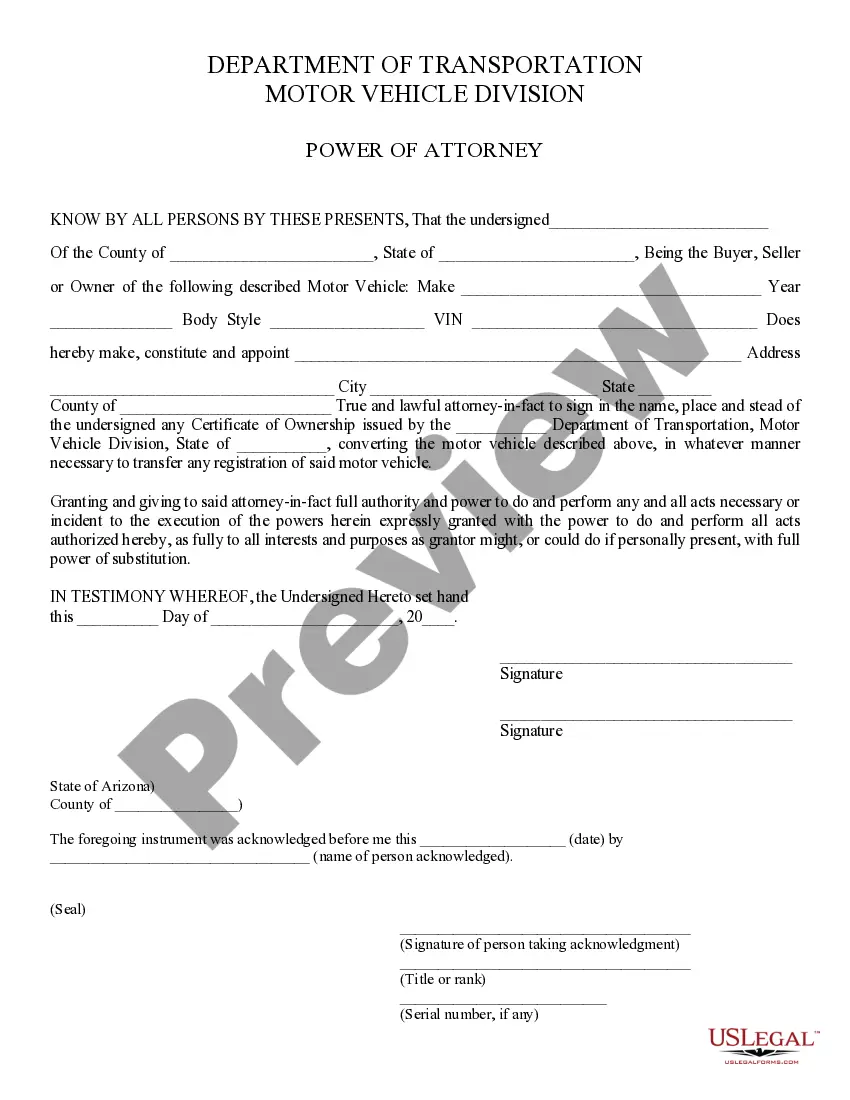
Pet Sitting Agreement with Pet Sitter - Self-Employed
What is this form?
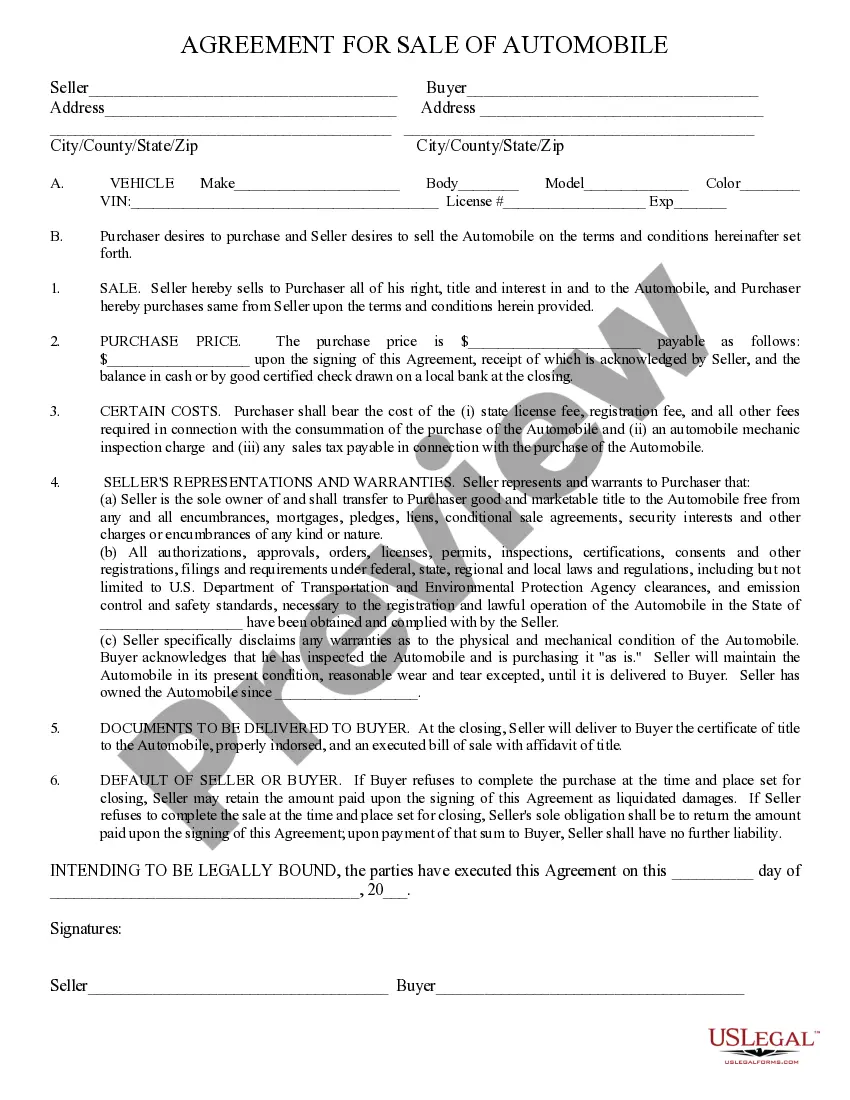
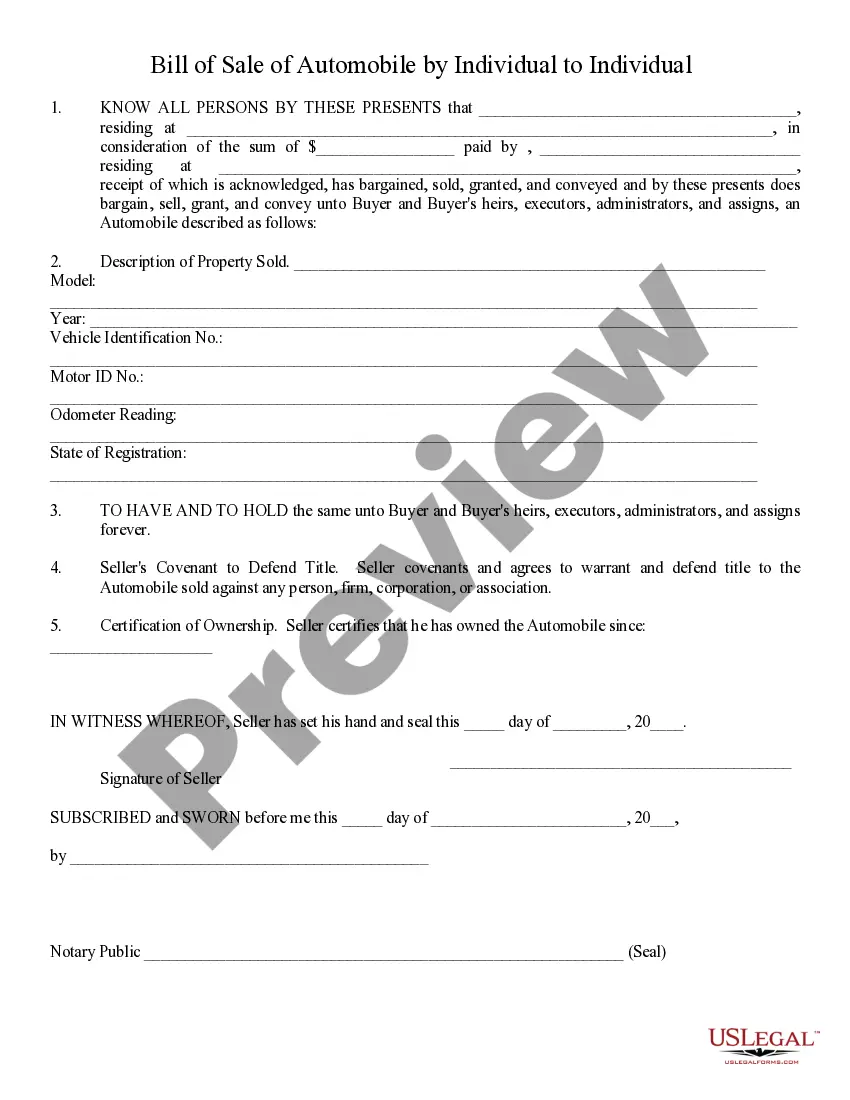
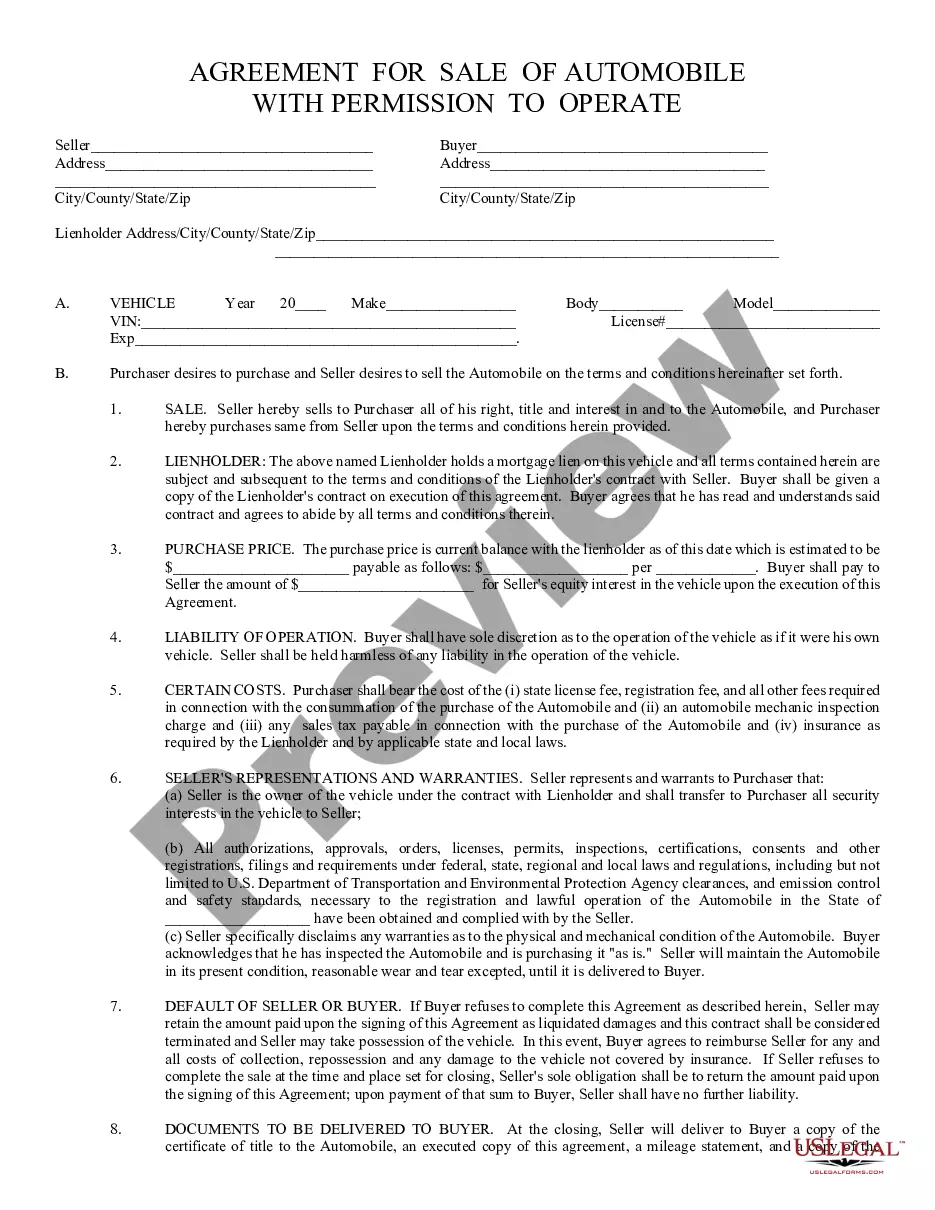
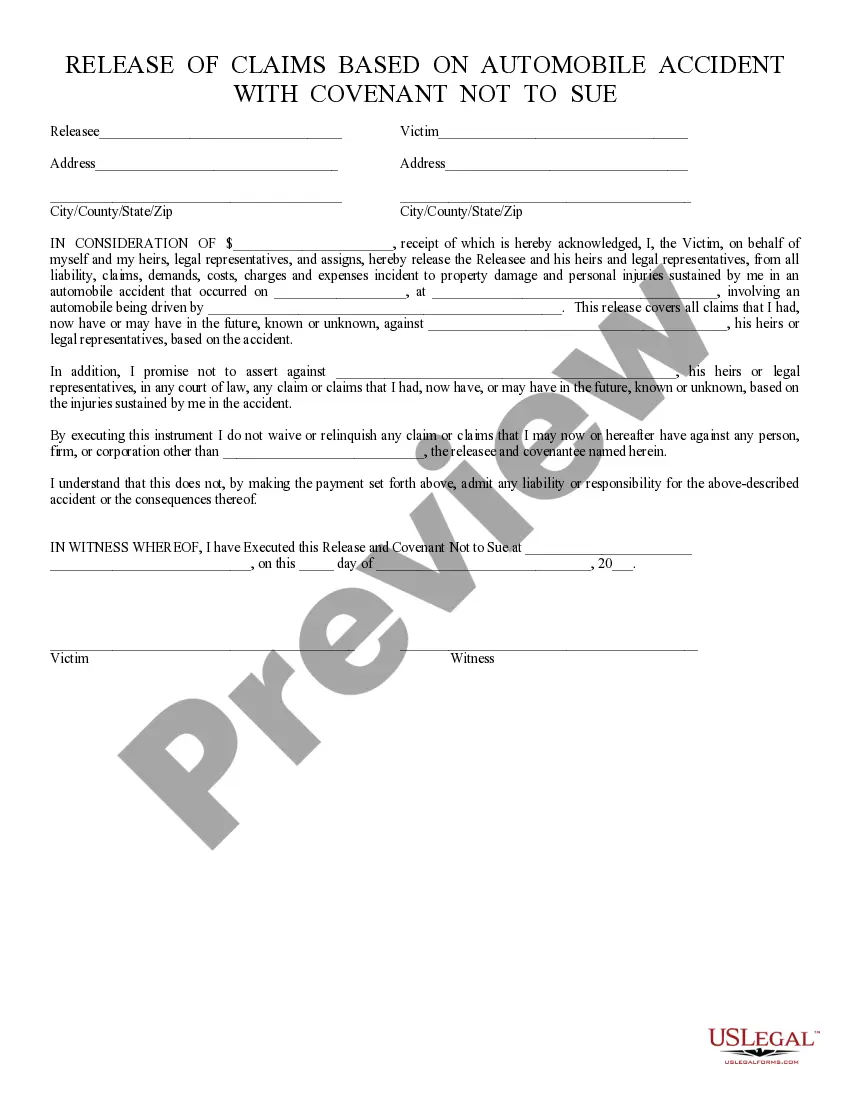
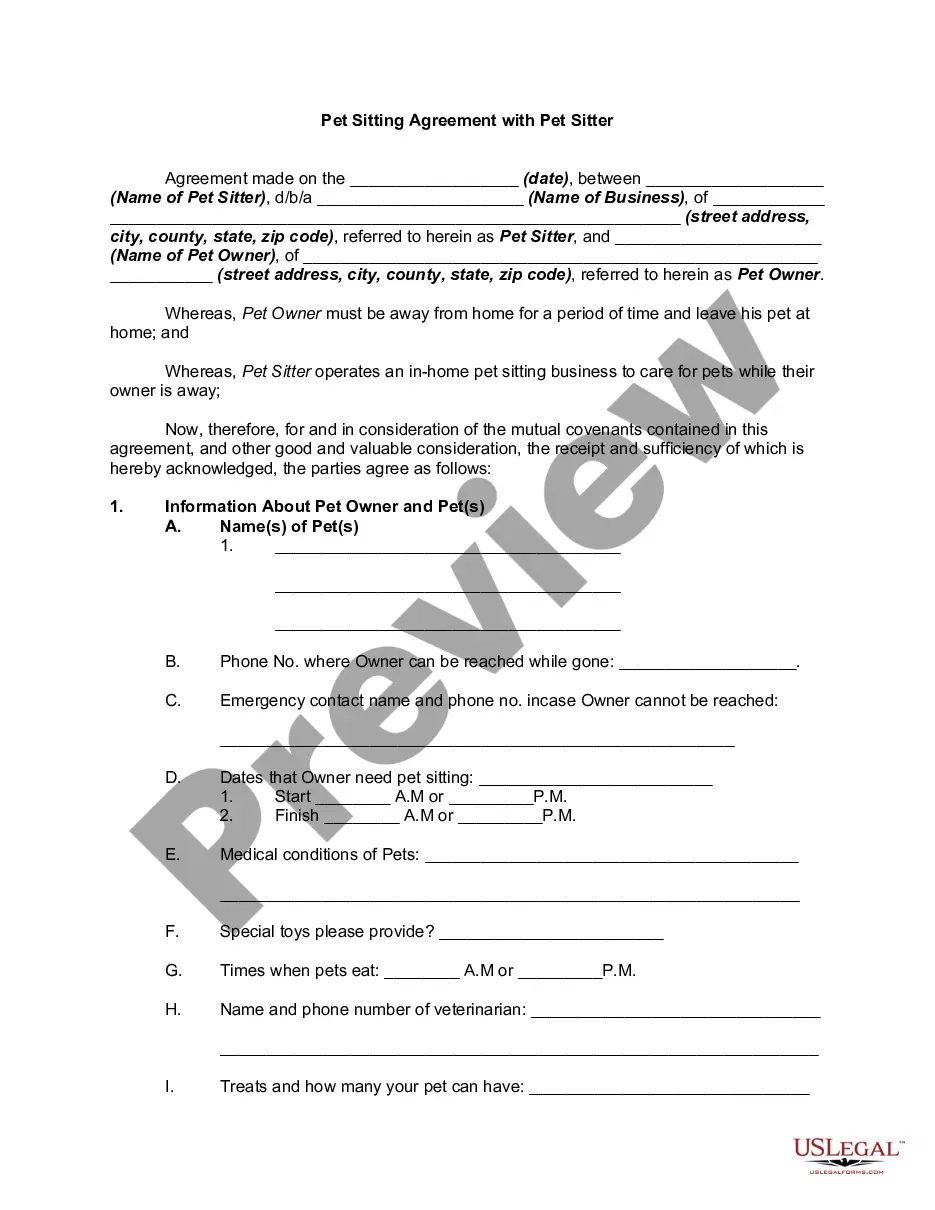
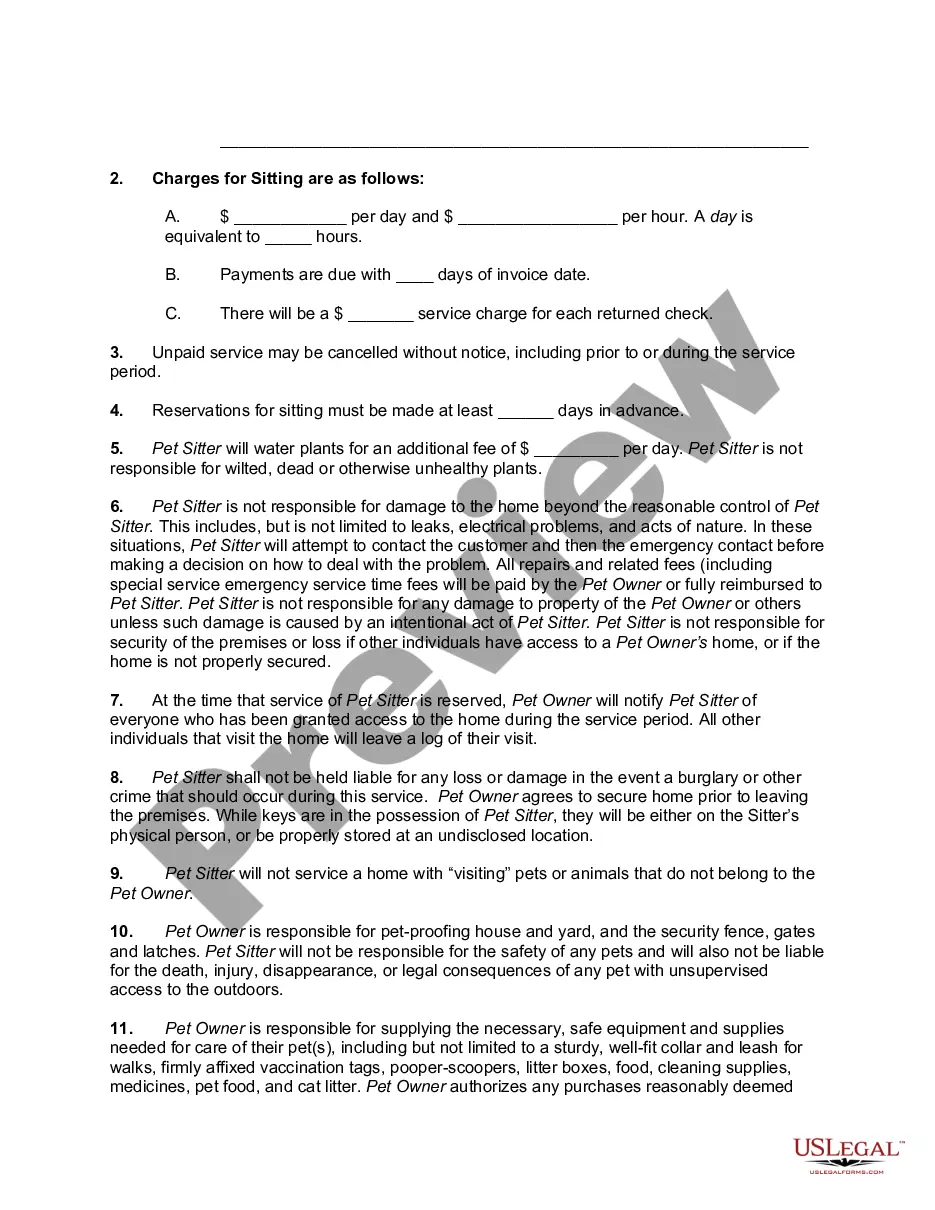
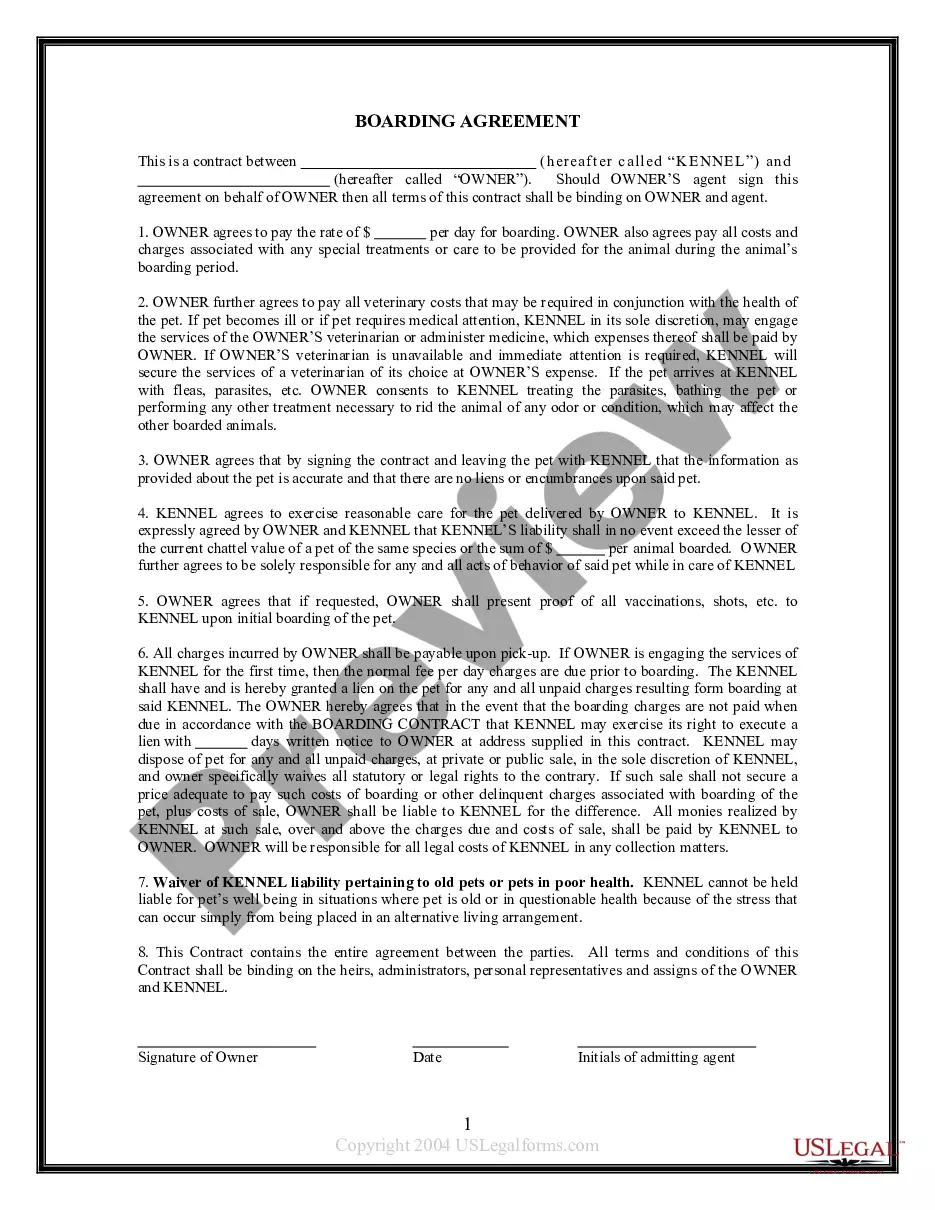
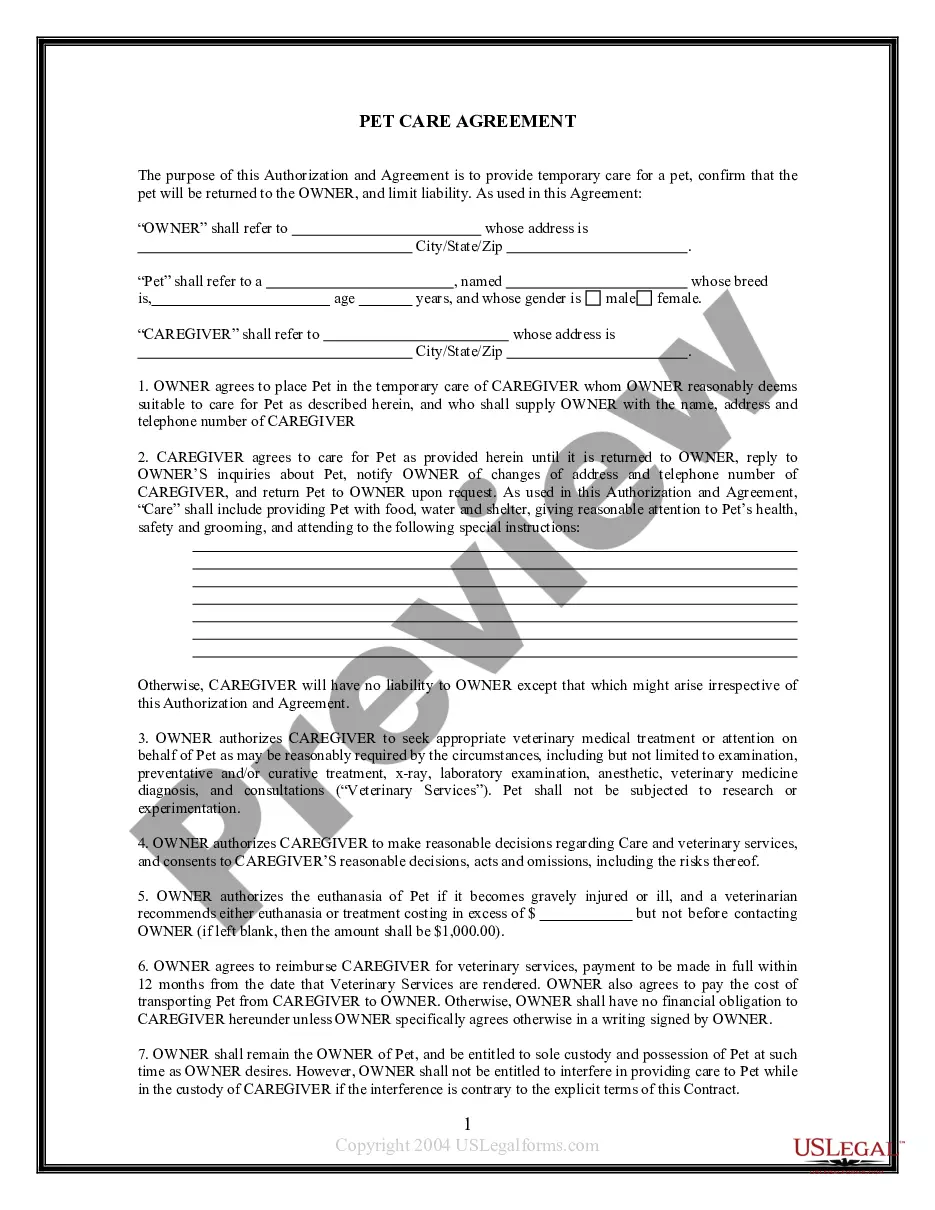
The Pet Sitting Agreement with Pet Sitter - Self-Employed is a legal document that outlines the terms and conditions between a pet owner and a self-employed pet sitter. This agreement is specifically designed to ensure both parties understand their rights and responsibilities while the pet sitter cares for the pet in the owner's absence. Unlike simpler verbal agreements, this formal contract helps to clarify duties, fees, and liability issues, providing legal protections for both parties.
What’s included in this form
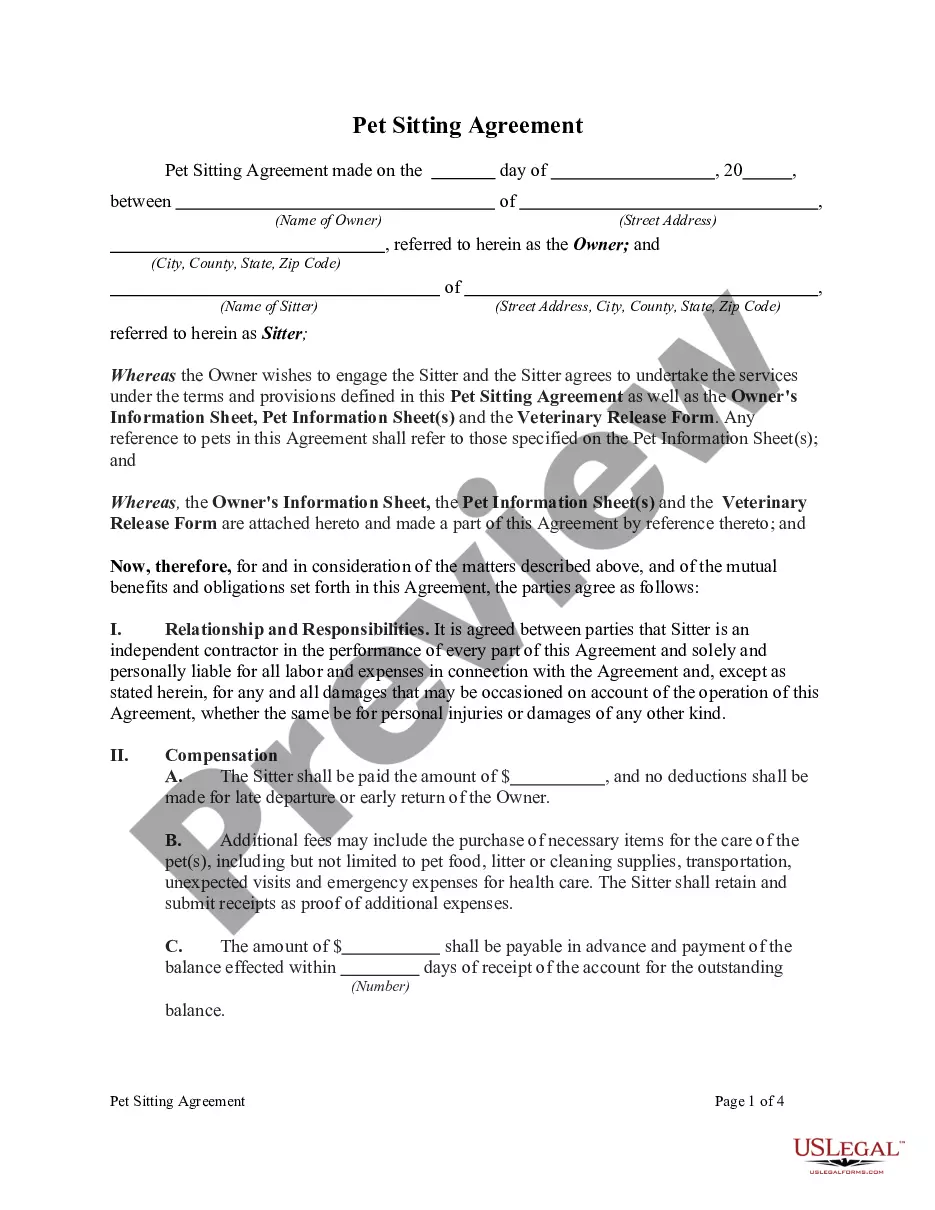
- Identification of the pet sitter and pet owner with contact details.
- Information about the pet(s), including medical conditions and dietary needs.
- Details on charges for pet sitting services and payment terms.
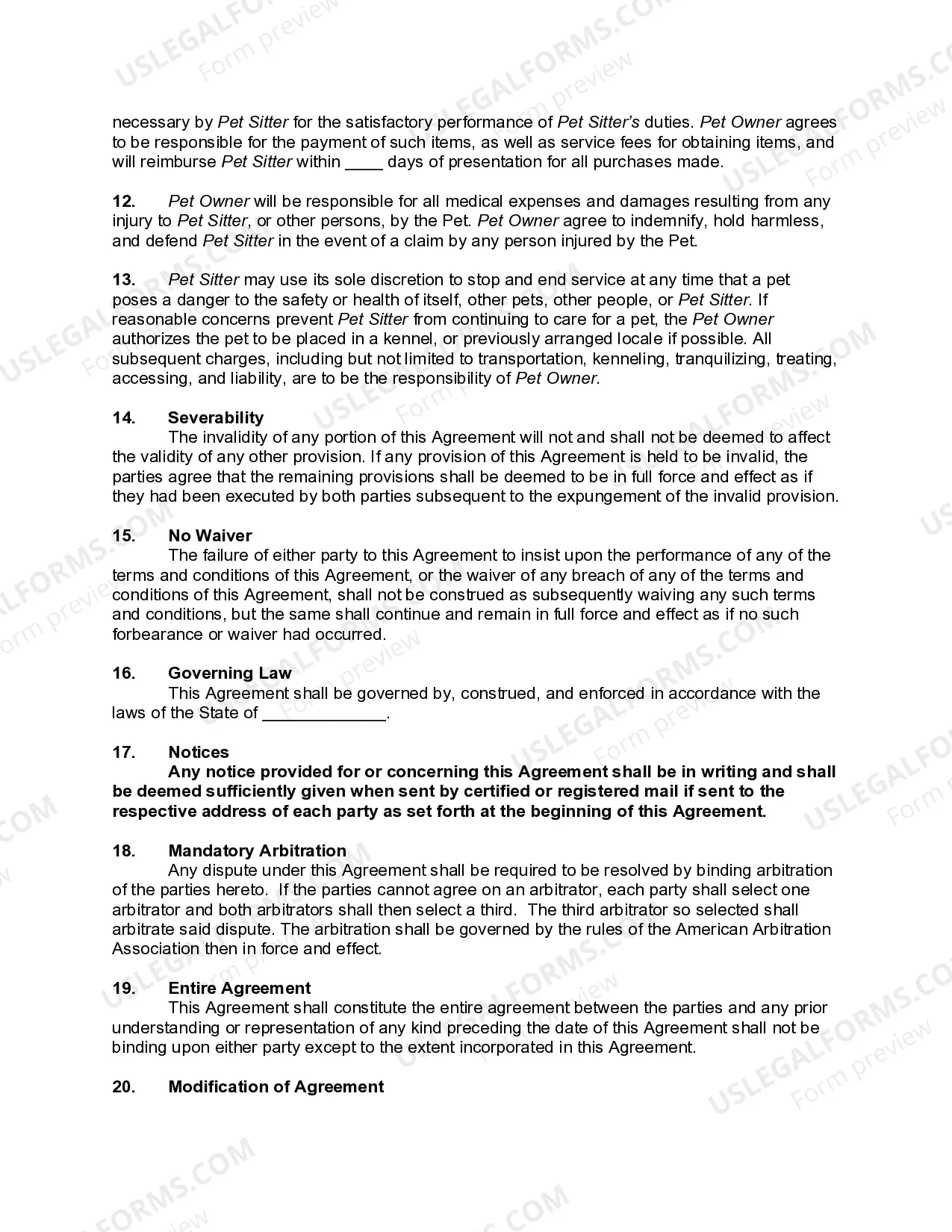
- Liabilities and responsibilities regarding the pet's safety and property issues.
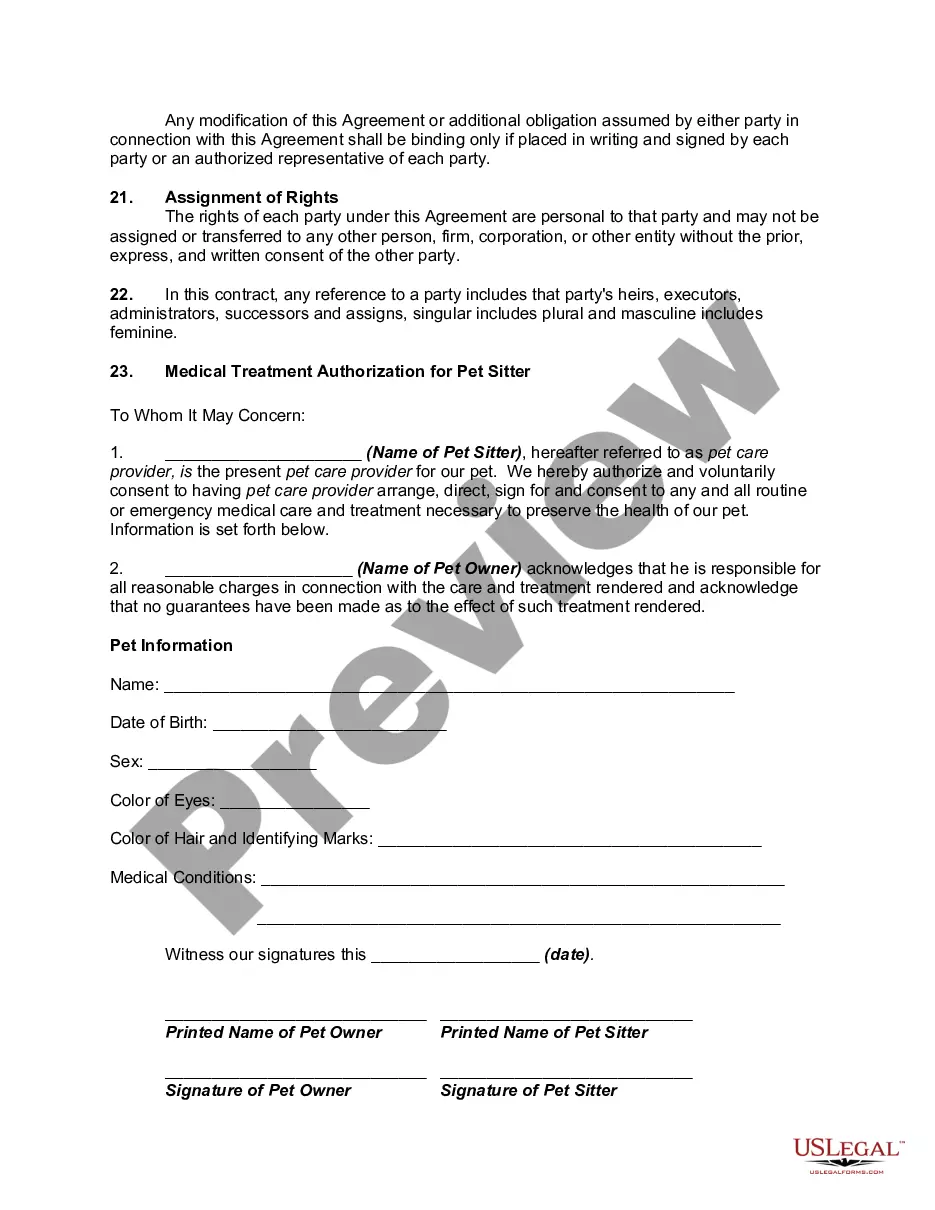
- Emergency medical treatment authorization for the pet.
- Provisions for modifications, governing law, and dispute resolution.

When to use this form
This form is essential when a pet owner seeks professional pet sitting services while away from home, whether for vacation, work, or other obligations. It provides a clear agreement on services to be rendered, ensures that the sitter knows how to care for the pet, and establishes payment terms. It is particularly useful if the pet owner has specific requirements or concerns about their pet's care or the sitter's responsibilities.
Who should use this form
- Pet owners who need to arrange for someone to care for their pets while they are away.
- Self-employed pet sitters who want a professional agreement to protect their business interests.
- Individuals who require a detailed understanding of the expectations and liabilities involved in pet sitting arrangements.
How to complete this form
- Identify the parties by filling in the names, addresses, and contact information of both the pet sitter and the pet owner.
- Provide details about the pet(s), including names, medical conditions, and dietary requirements.
- Specify the dates and times the pet sitting services are required.
- Detail the payment structure, including charges per day/hour and payment deadlines.
- Both parties should sign the agreement to validate the terms established.
Notarization guidance
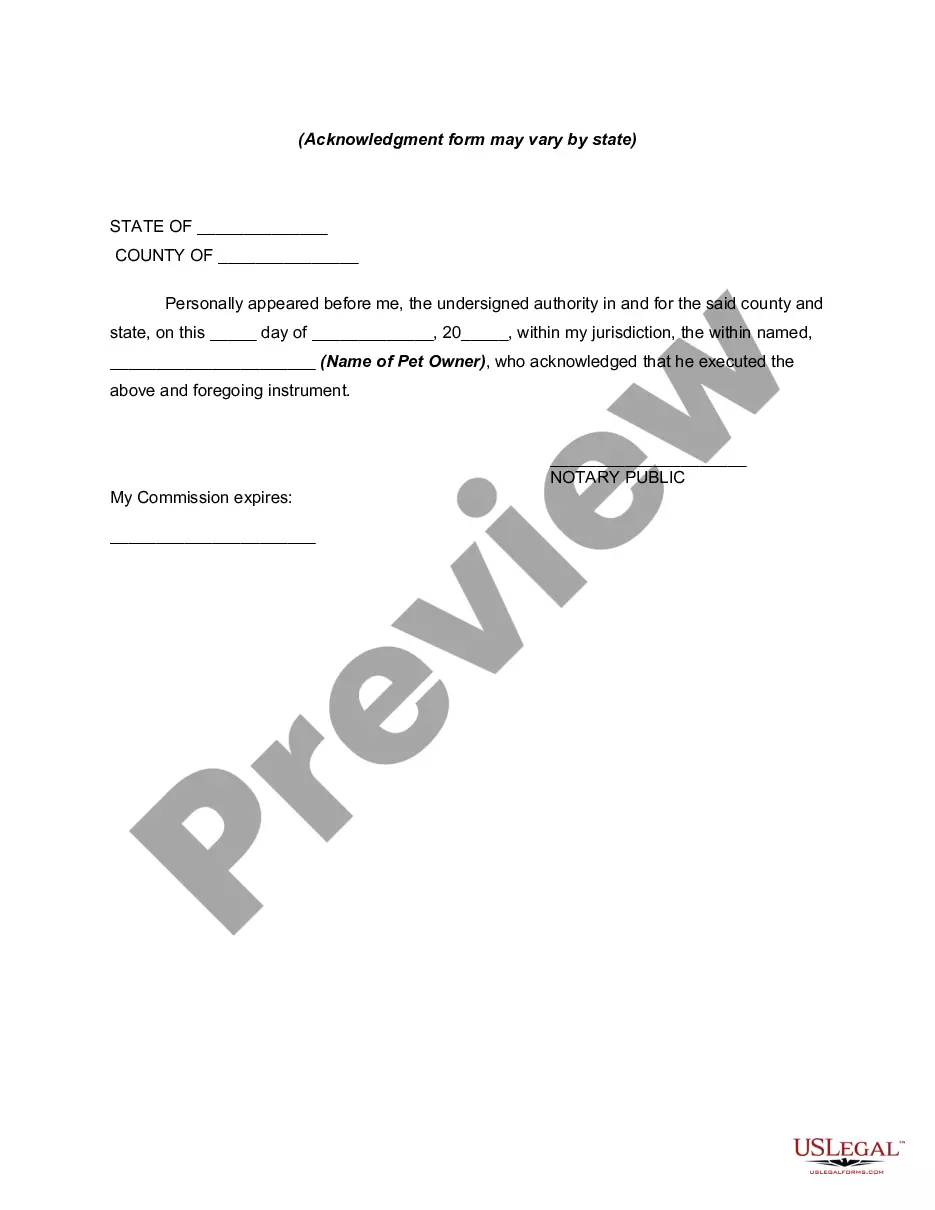
This form does not typically require notarization unless specified by local law. It is advisable to check any state-specific requirements or consult with a legal professional to ensure compliance.
Get your form ready online
Our built-in tools help you complete, sign, share, and store your documents in one place.
Make edits, fill in missing information, and update formatting in US Legal Forms—just like you would in MS Word.
Download a copy, print it, send it by email, or mail it via USPS—whatever works best for your next step.
Sign and collect signatures with our SignNow integration. Send to multiple recipients, set reminders, and more. Go Premium to unlock E-Sign.
If this form requires notarization, complete it online through a secure video call—no need to meet a notary in person or wait for an appointment.
We protect your documents and personal data by following strict security and privacy standards.

Make edits, fill in missing information, and update formatting in US Legal Forms—just like you would in MS Word.

Download a copy, print it, send it by email, or mail it via USPS—whatever works best for your next step.

Sign and collect signatures with our SignNow integration. Send to multiple recipients, set reminders, and more. Go Premium to unlock E-Sign.

If this form requires notarization, complete it online through a secure video call—no need to meet a notary in person or wait for an appointment.

We protect your documents and personal data by following strict security and privacy standards.
Avoid these common issues
- Failing to provide complete contact information for both parties.
- Not specifying the dates and times when services are required.
- Omitting details about the pet's specific needs or potential medical issues.
- Neglecting to discuss and agree upon payment terms upfront.
- Not keeping a signed copy of the agreement for reference.
Benefits of using this form online
- Convenient access allows for quick customization and downloading at your convenience.
- Form templates are drafted by licensed attorneys to ensure legal accuracy.
- Easy to fill out and edit as necessary to suit individual needs.
- Immediate availability for prompt use, reducing delays in securing services.
Legal use & context
- The agreement provides a legally binding framework for the pet sitting arrangement.
- It helps clarify liability issues, protecting both the pet owner and the pet sitter.
- This contract can be enforced in court if disputes arise regarding the terms and conditions.
What to keep in mind
- A formal Pet Sitting Agreement spells out responsibilities, fees, and liabilities.
- This document should be customized to fit specific situations and local regulations.
- Clear communication and agreement in writing can prevent misunderstandings between parties.
Looking for another form?
Form popularity
FAQ
Take advantage of (free) local media attention! Post your business card on hospital bulletin boards. Get social! Always give out business cards to those you do business with. You must give to receive.
STEP 1: Plan your business. STEP 2: Form a legal entity. STEP 3: Register for taxes. STEP 4: Open a business bank account & credit card. STEP 5: Set up business accounting. STEP 6: Obtain necessary permits and licenses. STEP 7: Get business insurance.
Care the most. Have the best web site. Send on the fly pics and texts. Stay in touch with your clients. Ask for feedback. Leave treats or other small gifts. Keep it simple. Buy my pet sitting ebook.
A pet care safety plan that lists emergency contacts, such as your veterinarian and local police, as well as a history of health concerns for your pet (see The Pet Sitter Safety Checklist for even more tips and hints). A list of your pet's medications. Your pet's immunization history.
Pet sitters charge $25 to $30 a day on average, depending on the services involved. The average cost of a 30-minute visit is $25, while overnight pet-sitting costs $75 to $85.
No Deductions While you may consider your pet to be one of your children, the IRS disagrees. You cannot claim your pet as a deduction for tax purposes, and, except for special rules for service animals for the disabled, you cannot deduct pet expenses on your income tax returns.
STEP 1: Plan your business. STEP 2: Form a legal entity. STEP 3: Register for taxes. STEP 4: Open a business bank account & credit card. STEP 5: Set up business accounting. STEP 6: Obtain necessary permits and licenses. STEP 7: Get business insurance.
No Deductions While you may consider your pet to be one of your children, the IRS disagrees. You cannot claim your pet as a deduction for tax purposes, and, except for special rules for service animals for the disabled, you cannot deduct pet expenses on your income tax returns.
Household employees include housekeepers, nannies, gardeners, pet sitters, senior care aides, drivers, tutors, etc... anybody who fits the description of an employee versus an independent contractor.