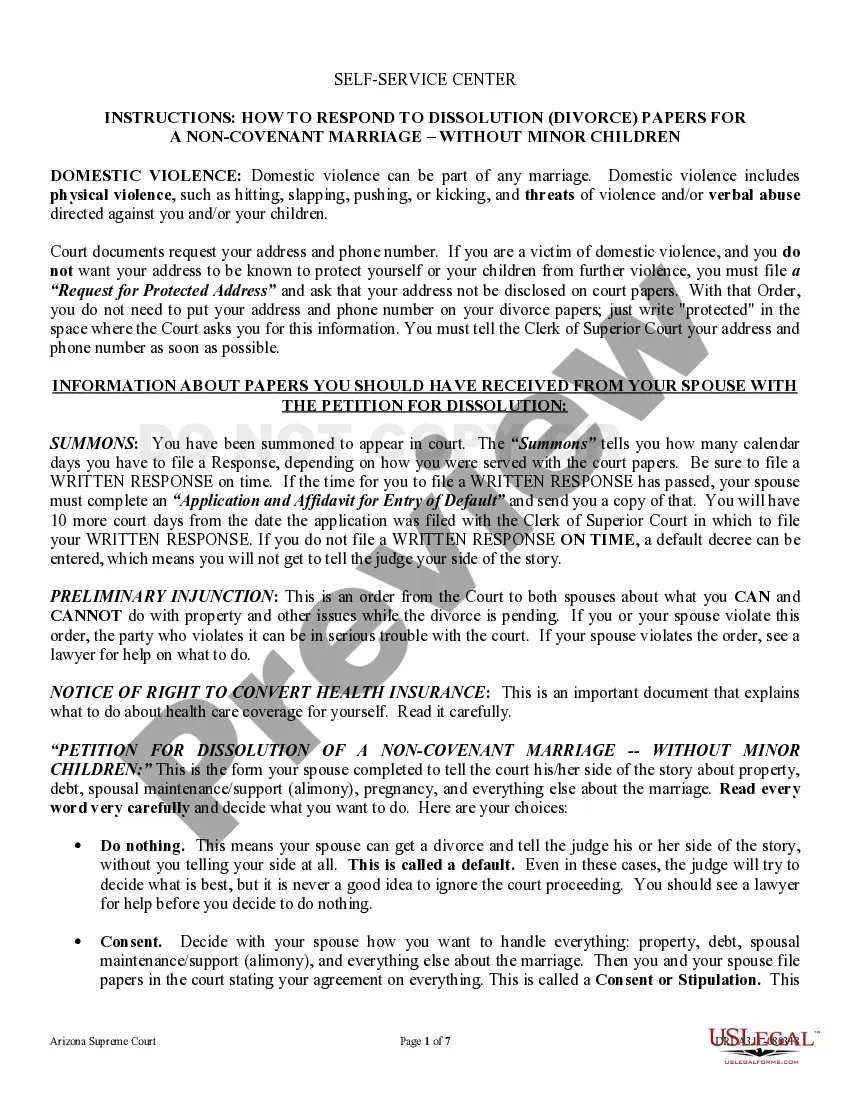
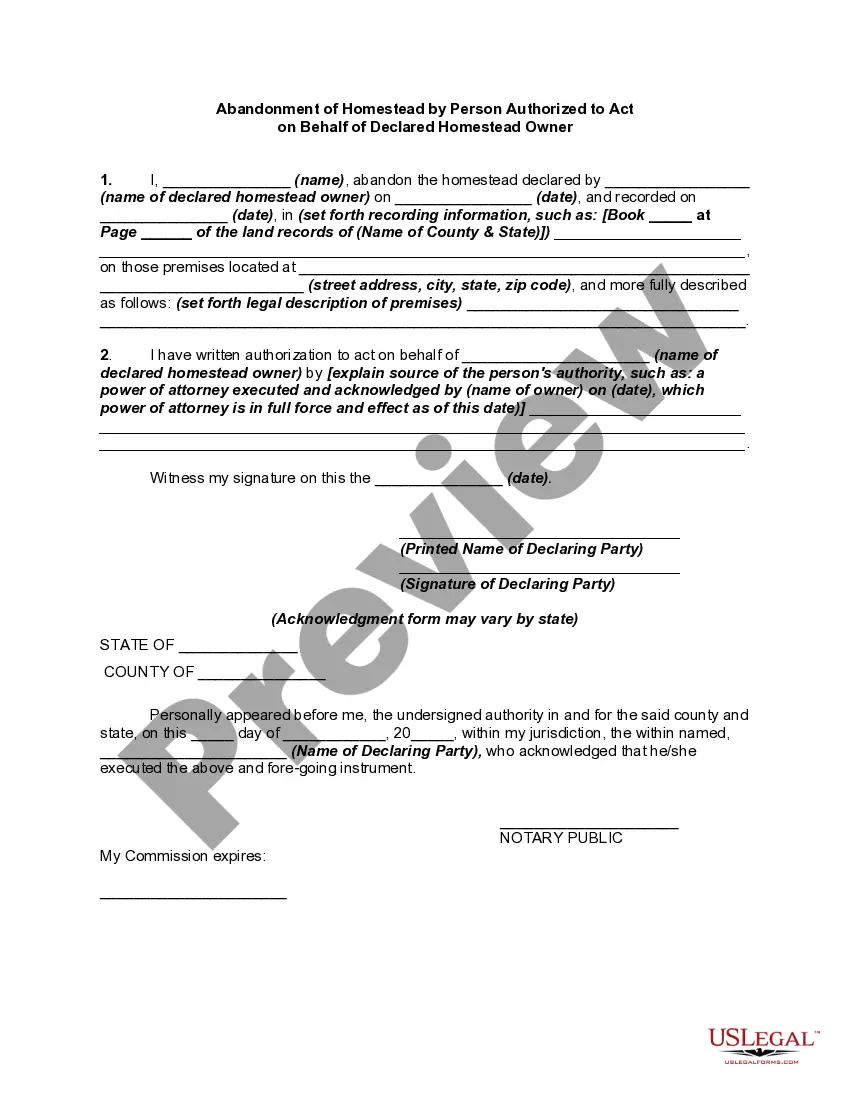
Abandonment of Homestead by Person Authorized to Act on Behalf of Declared Homestead Owner
Overview of this form
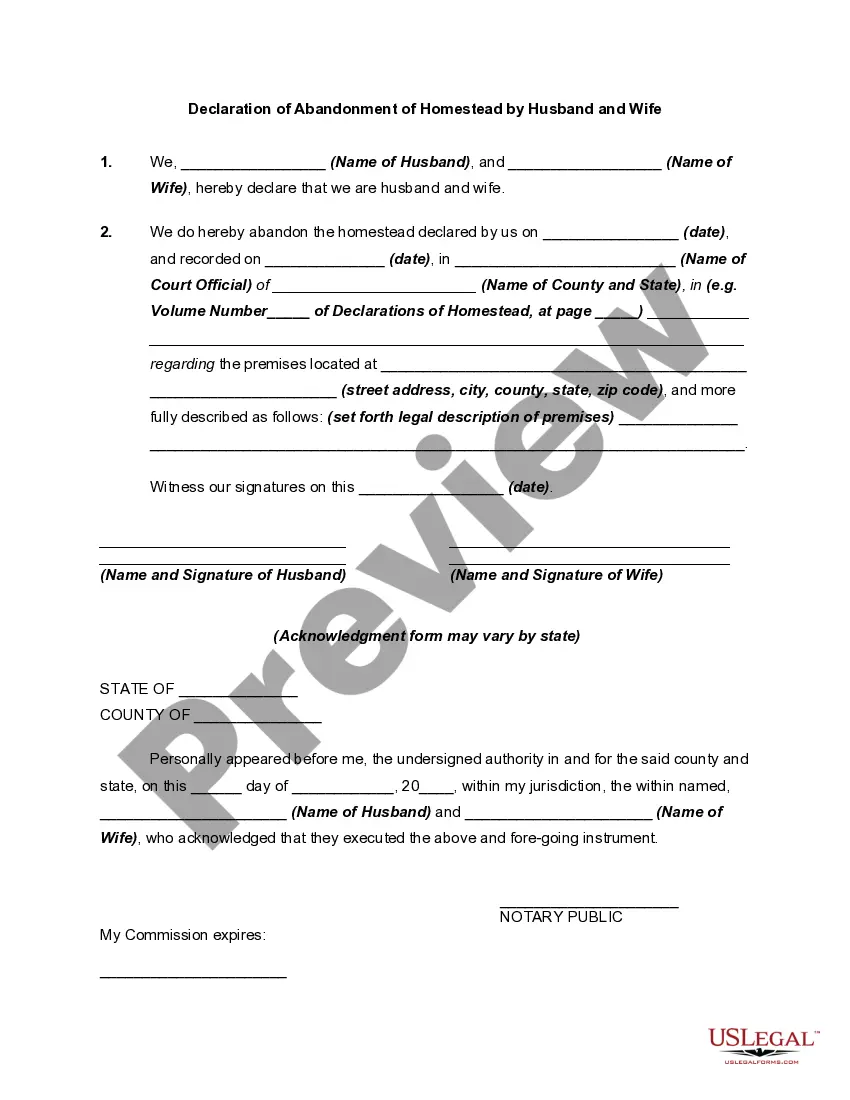
The Abandonment of Homestead by Person Authorized to Act on Behalf of Declared Homestead Owner form is a legal document used to officially relinquish a homestead declaration. This form is essential when someone who has been granted the authority, typically through a power of attorney, must abandon the homestead on behalf of the declared owner. This differs from standard homestead declarations by focusing specifically on the abandonment process rather than the establishment of a homestead itself.
What’s included in this form
- Name of the person abandoning the homestead.
- Name of the declared homestead owner.
- Date the homestead was declared and recorded.
- Recording information, including the book and page number.
- Legal description of the property being abandoned.
- Details of the authorization to act on behalf of the declared owner.
- Signature and printed name of the declaring party, along with acknowledgment requirements.
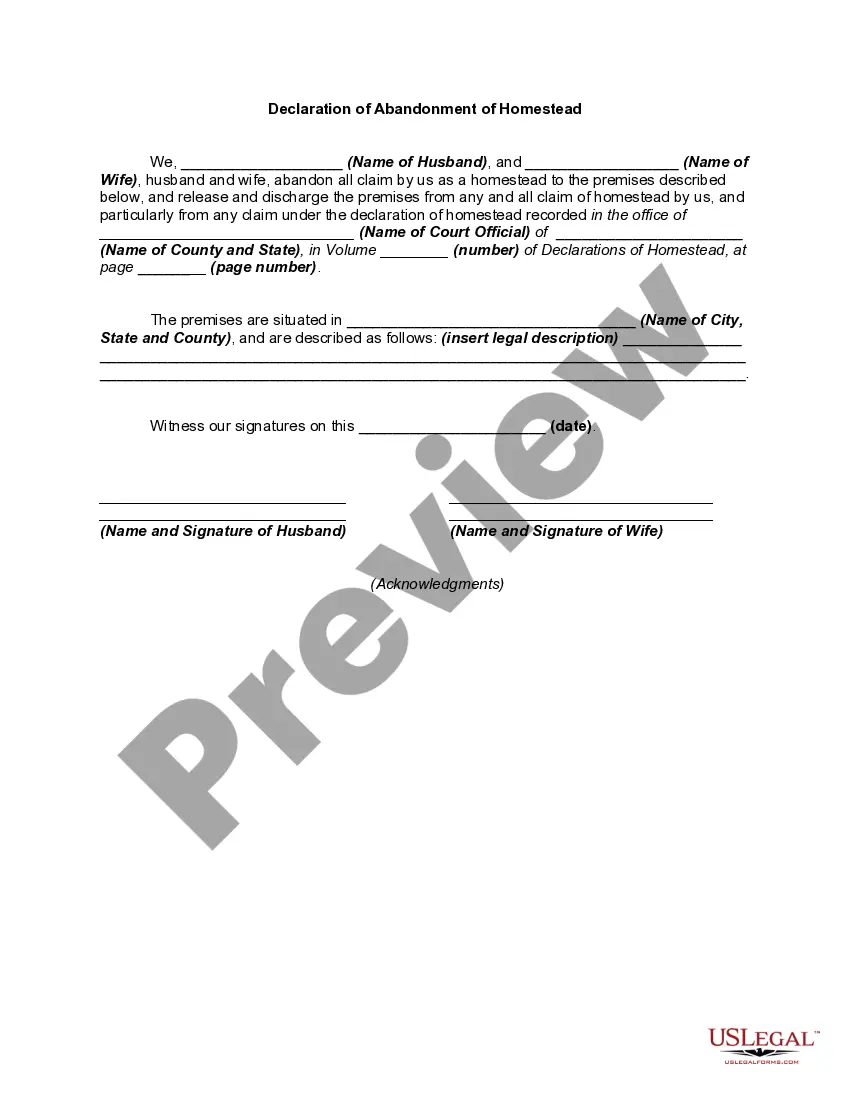
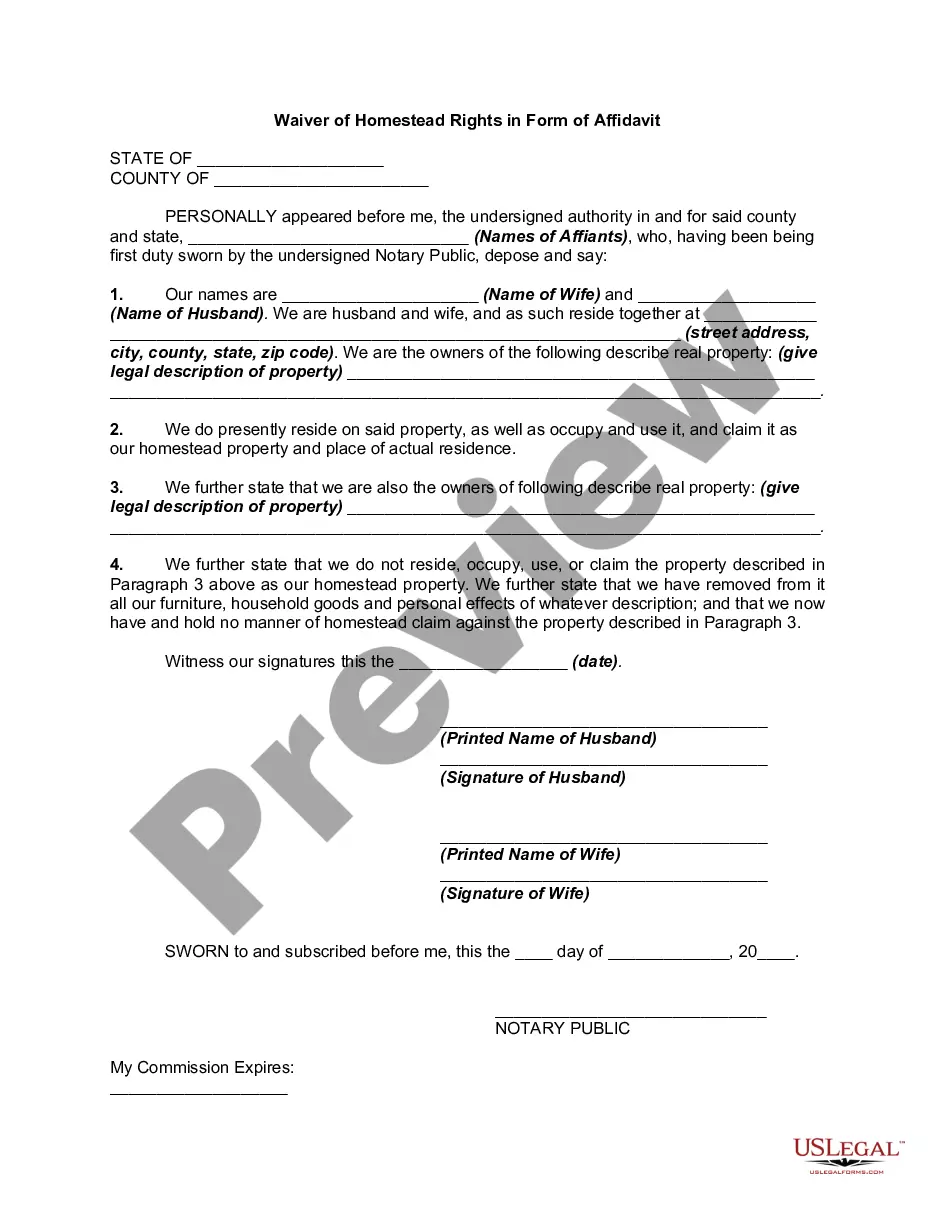
When to use this document
This form should be used when the declared owner of a homestead wishes to abandon their homestead protections and there is a need for someone authorized to act on their behalf. Situations may include financial difficulties that require vacating the property or changes in ownership when the declared owner can no longer maintain the homestead status.
Who can use this document
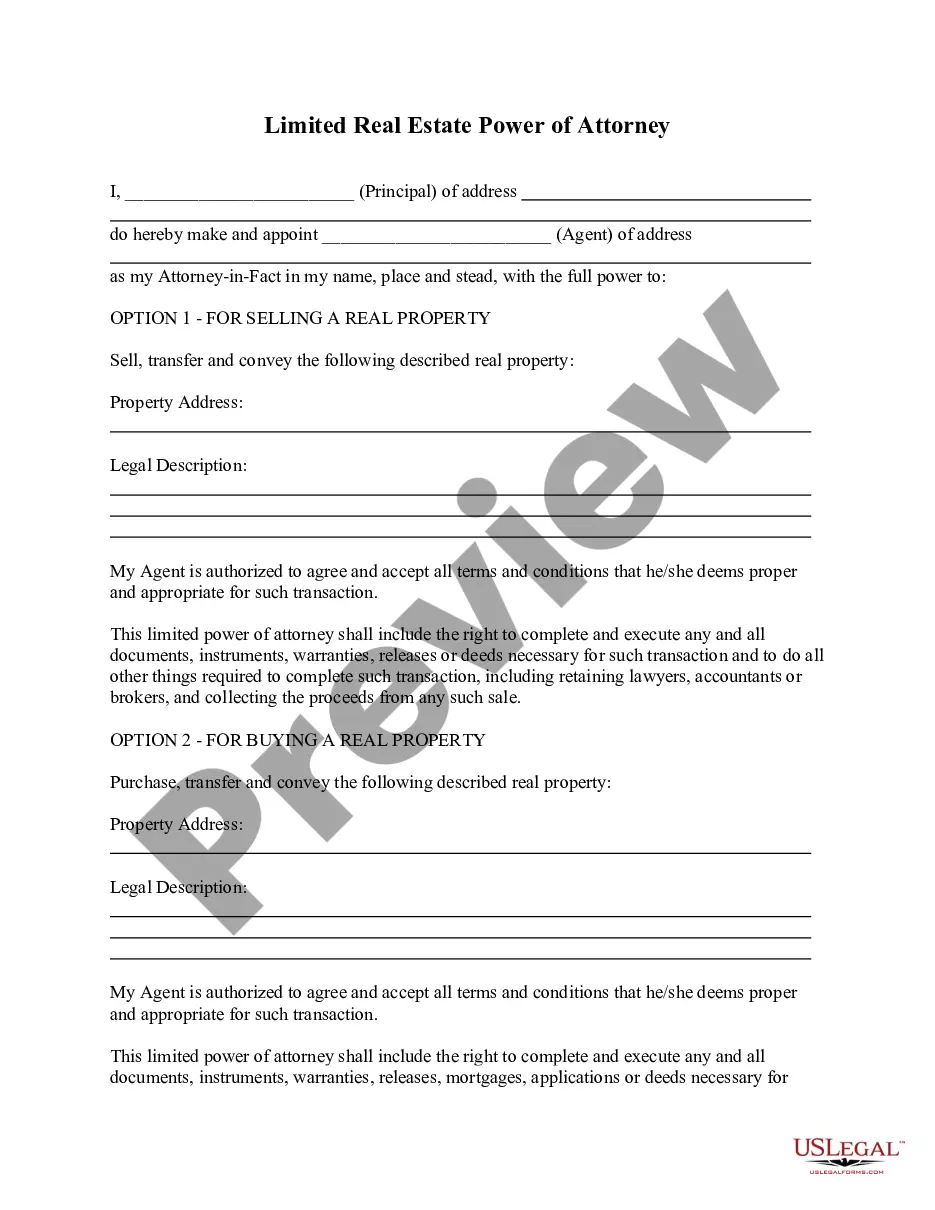
- Individuals with power of attorney for the declared homestead owner.
- Family members or representatives managing the legal affairs of the declared owner.
- Eliminated owners who wish to formally abandon their homestead status.
How to complete this form
- Enter the name of the person abandoning the homestead.
- Provide the name of the declared homestead owner.
- Fill in the date the homestead was declared and the recording date.
- Include the legal description of the property and necessary recording information.
- Document the source of your authority to act on behalf of the declared owner.
- Sign and date the form, ensuring the completed document is notarized if required.
Notarization requirements for this form
Yes, this form must be notarized to be legally valid. Notarization confirms the identity of the declaring party and their understanding of the document. US Legal Forms offers integrated online notarization to facilitate this process any time of the day.
Get your form ready online
Our built-in tools help you complete, sign, share, and store your documents in one place.
Make edits, fill in missing information, and update formatting in US Legal Forms—just like you would in MS Word.
Download a copy, print it, send it by email, or mail it via USPS—whatever works best for your next step.
Sign and collect signatures with our SignNow integration. Send to multiple recipients, set reminders, and more. Go Premium to unlock E-Sign.
If this form requires notarization, complete it online through a secure video call—no need to meet a notary in person or wait for an appointment.
We protect your documents and personal data by following strict security and privacy standards.

Make edits, fill in missing information, and update formatting in US Legal Forms—just like you would in MS Word.

Download a copy, print it, send it by email, or mail it via USPS—whatever works best for your next step.

Sign and collect signatures with our SignNow integration. Send to multiple recipients, set reminders, and more. Go Premium to unlock E-Sign.

If this form requires notarization, complete it online through a secure video call—no need to meet a notary in person or wait for an appointment.

We protect your documents and personal data by following strict security and privacy standards.
Common mistakes to avoid
- Failing to provide the necessary legal description of the property.
- Not including the specific recording information.
- Omitting the signature of the declaring party.
- Assuming the form does not need to be notarized.
Advantages of online completion
- Convenience of completing and downloading the form from anywhere.
- Editability allows customization to fit specific needs.
- Reliability with attorney-drafted templates ensuring compliance with legal standards.
Main things to remember
- This form is essential for formally abandoning a declared homestead when acting on behalf of the owner.
- Proper completion requires accurate personal and property information.
- Notarization is a necessary step to validate the document.
Looking for another form?
Form popularity
FAQ
Declaring a homestead on your owner occupied, primary residence in California will protect some of your equity, ownership amount, from creditors in or out of bankruptcy. California also offers an automatic homestead exemption, that does not require filing a declaration.
Fill in the parcel ID number or legal description. Fill in the type and date of the deed and the book, page number and date it was recorded. Check whether you filed for homestead exemption last year. Fill in your county and the tax year.
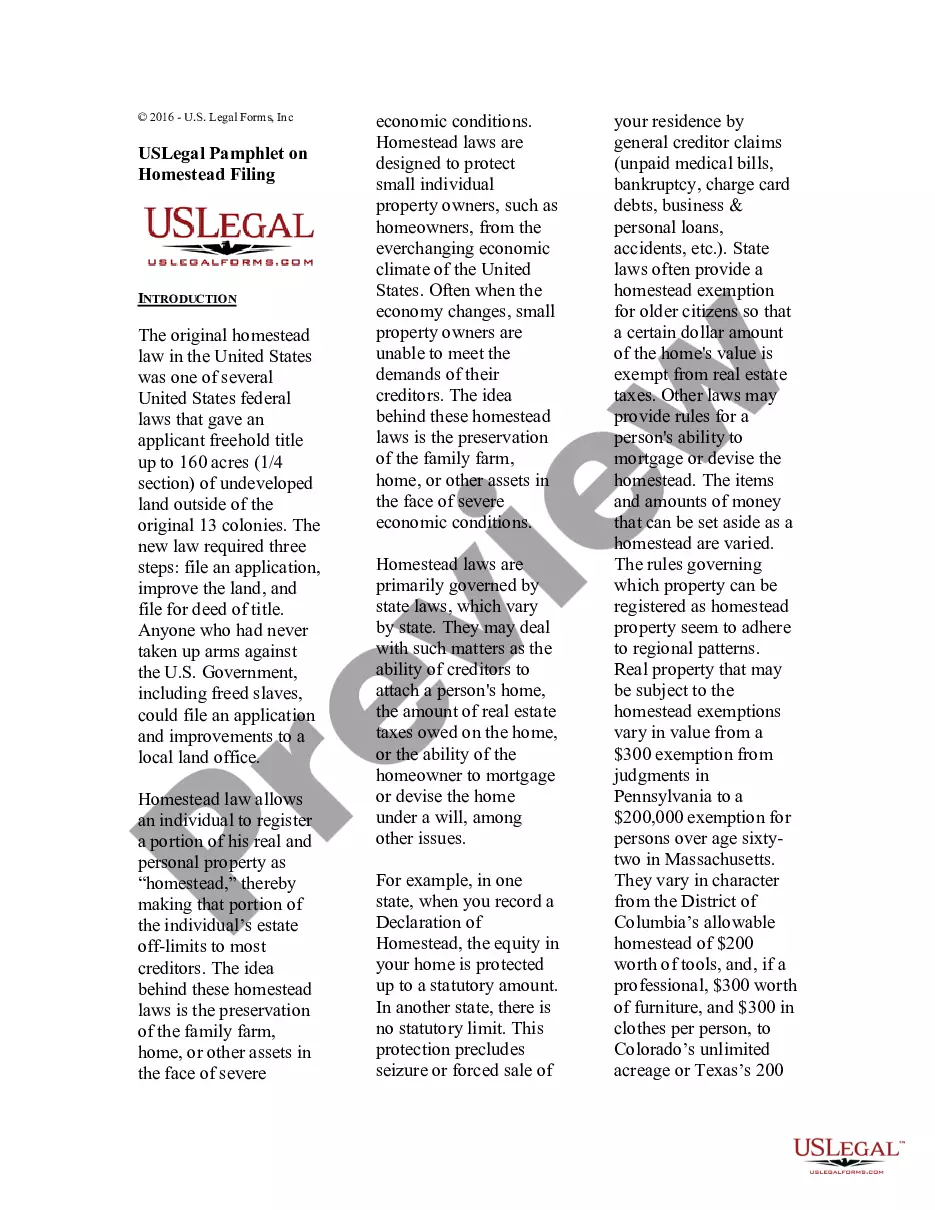
Preventing the forced sale of a home to meet the demands of creditors, usually except mortgages, mechanics liens, or sales to pay property taxes. Providing the surviving spouse with shelter. Providing an exemption from property taxes on a home.
Abandonment is the act of surrendering a claim to, or interest in, a particular asset.In real estate, abandonment is surrendering claim to a lease agreement by a tenant or assignee.
N order to invalidate a homestead in California: sell the property and purchase two rental units. Three people own a piece of property as tenants in common. What can be determined from this ownership?
Go to the Registry of Deeds in the county where your property is located. Homestead declarations for mobile or manufactured homes are filed with the Registry of Deeds in the county where the home is located, even if there is no deed on record for land. Ask the Clerk for a Declaration of Homestead form.
Go online and search for a Homeowner Declaration form for your state. Fill in the required information in the blanks on the Homestead Declaration form. Take the completed Homestead Declaration form to a licensed notary, such as at a bank, to have it signed and notarized.
To find abandonment of a homestead, it must be voluntary and without an intention to return. Involuntary or compulsory absences from the home have never per se constituted relinquishment of the homestead rights.
The homestead right might be terminated or extinguished either by abandonment, or by a release in writing properly signed and properly acknowledged, or by surrender of the possession to a grantee in a deed in pursuance of the deedii.