Disclaimer on Website of Express and Implied Warranties
Understanding this form
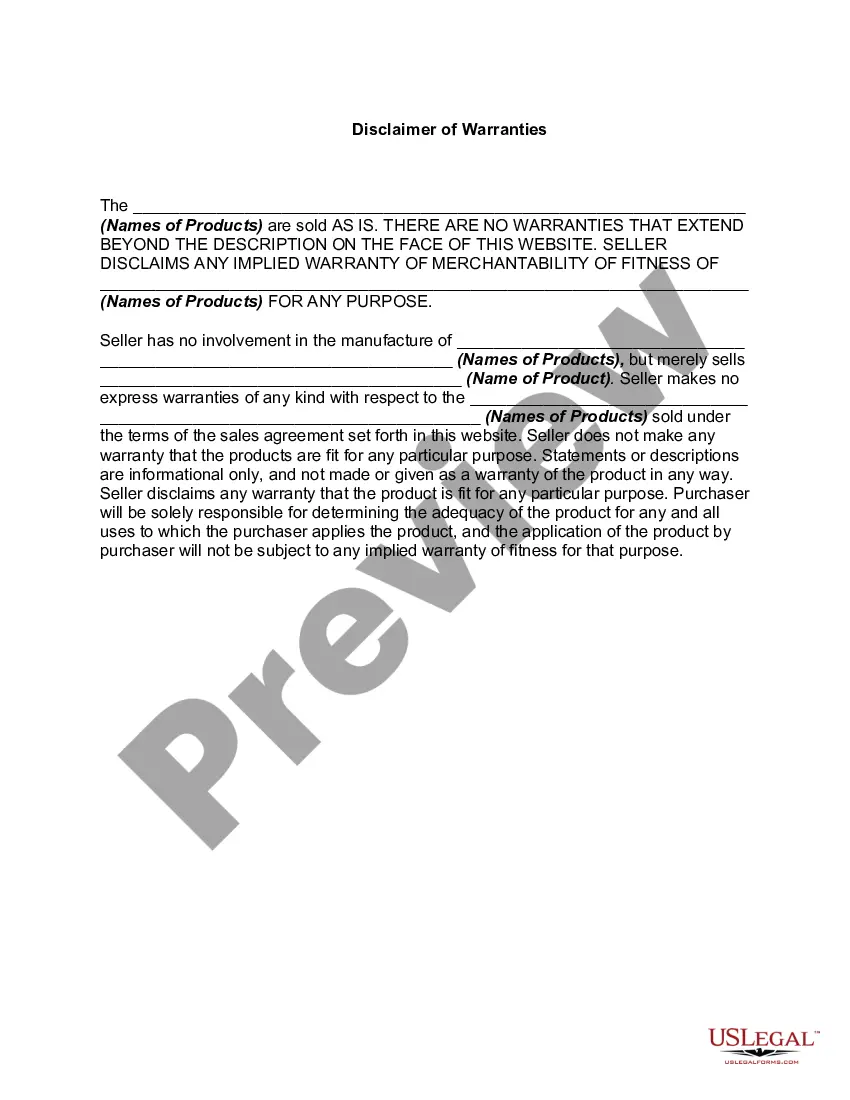
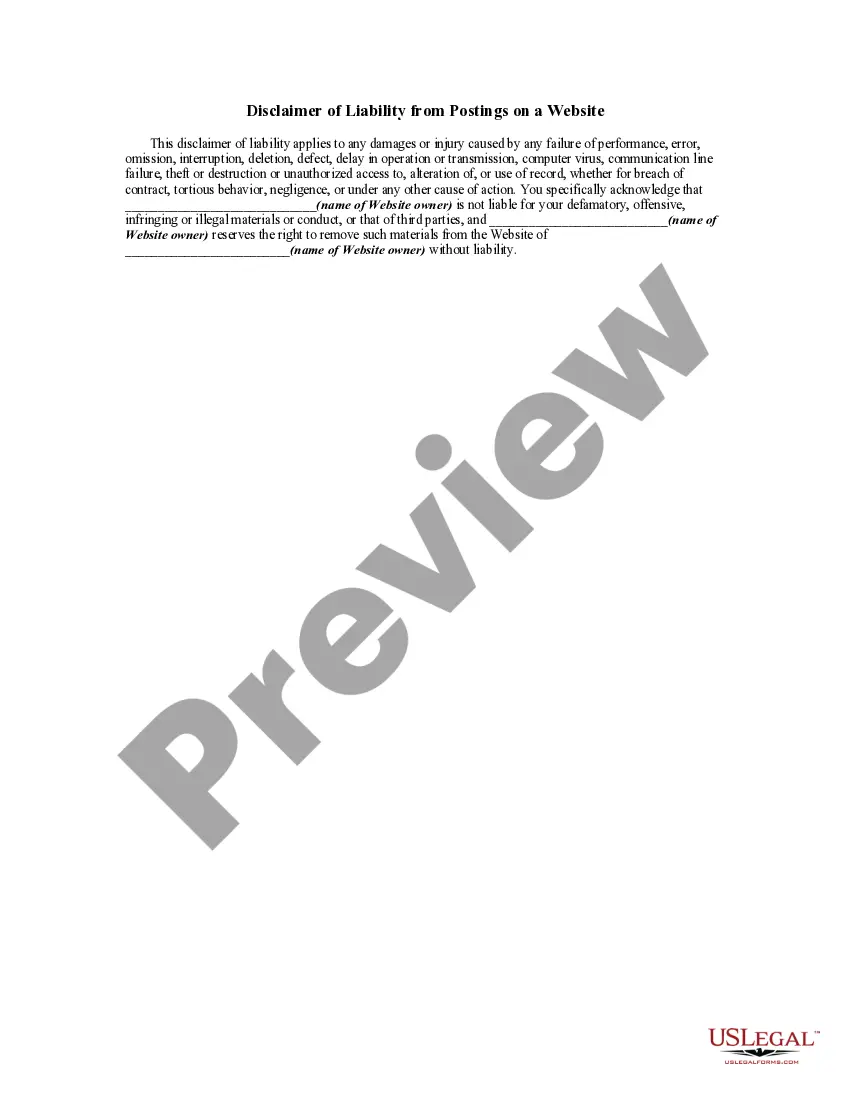
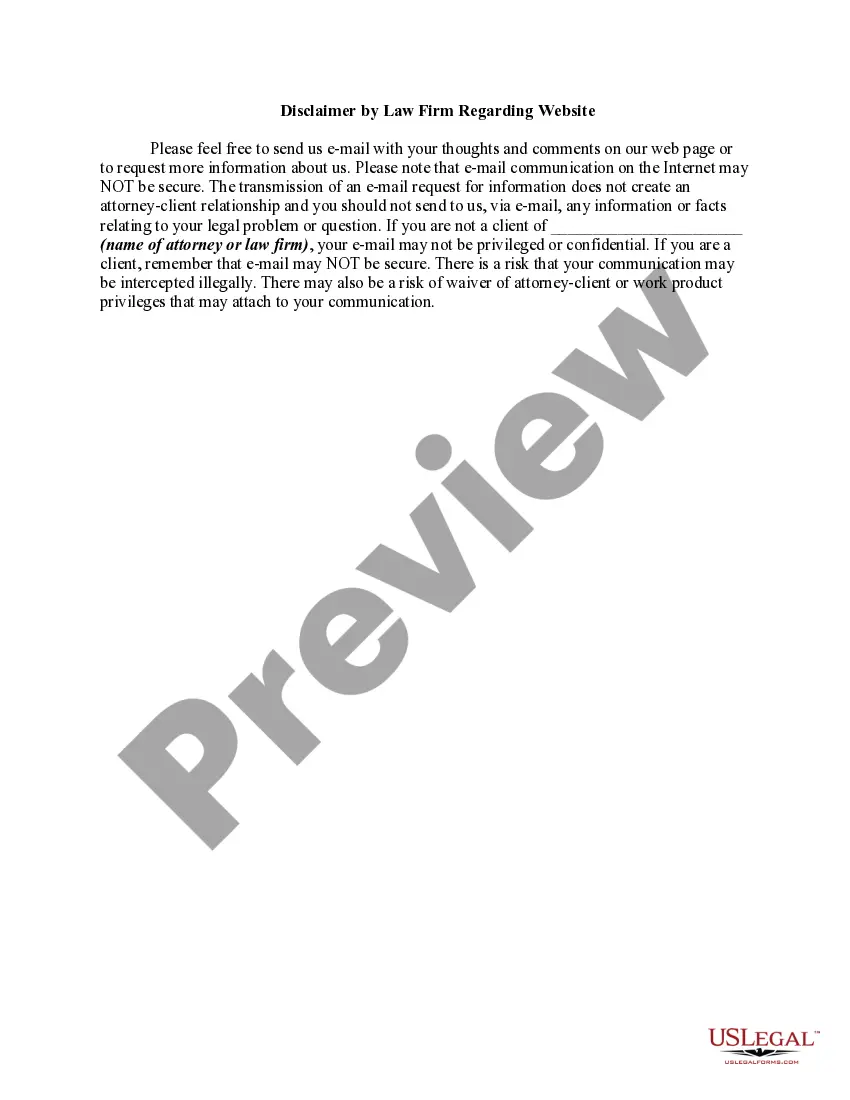
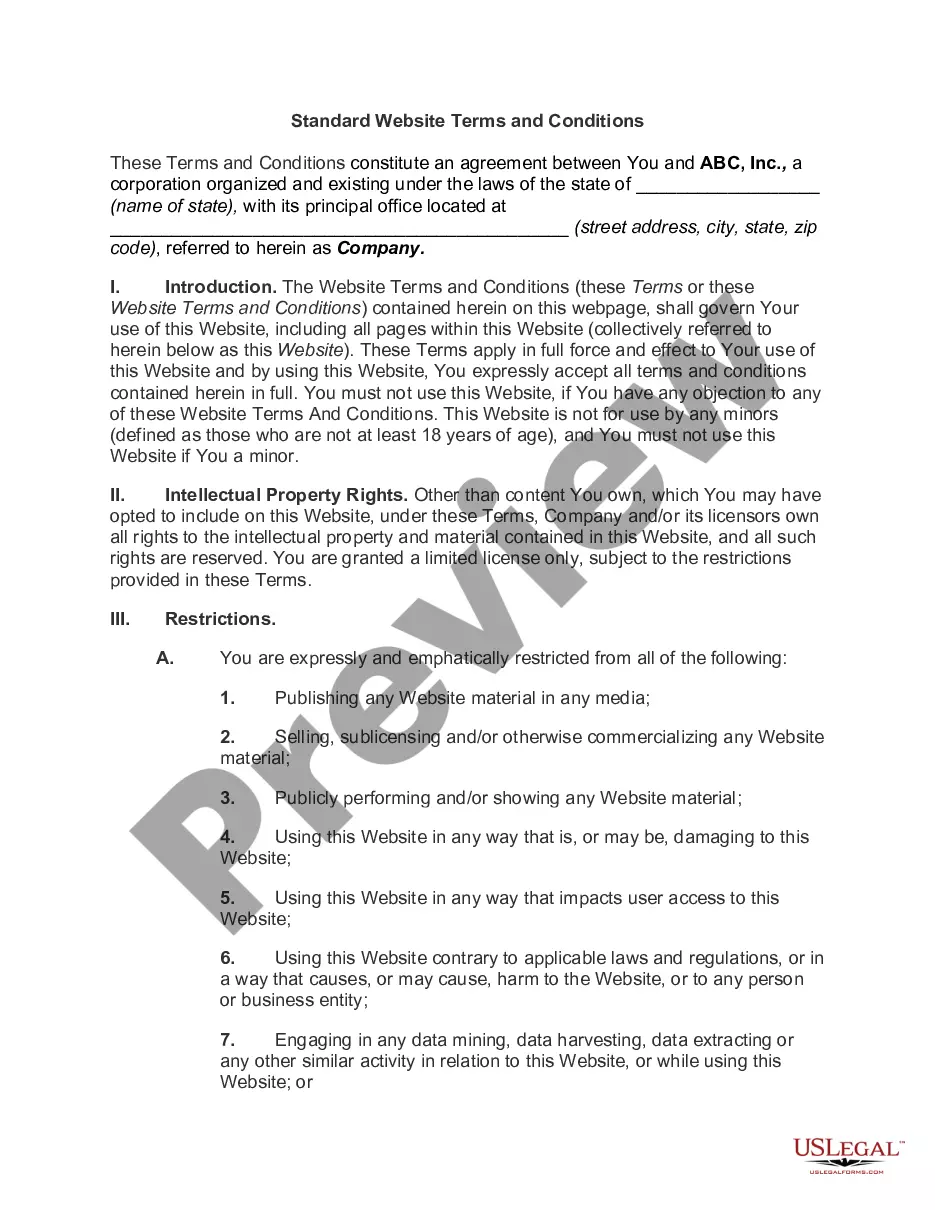
The Disclaimer on Website of Express and Implied Warranties is a legal document used by sellers to clarify the limitations of product warranties. This form informs customers that the products are sold "as is," without any guarantees of specific qualities or intended uses. By utilizing this disclaimer, sellers protect themselves from liability related to implied or express warranties, thereby defining their obligations clearly to buyers. It differs from other warranty forms by emphasizing the absence of any assurances on product performance or suitability.
What’s included in this form
- Identification of products covered by the disclaimer.
- Statement of "as is" sale condition, indicating no warranties extend beyond the description provided.
- Explicit denial of implied warranties of merchantability and fitness for a particular purpose.
- Clarification that the seller has no role in the product's manufacture.
- Details on the buyer's responsibility for assessing the product's adequacy for their needs.
When to use this document
This form is useful when selling goods, especially if the seller wants to limit their liability regarding any implicit or explicit warranties. It should be used in situations where the seller cannot guarantee product quality or fitness for a specific purpose, such as in clearance sales or when selling second-hand items. This disclaimer helps prevent disputes related to product performance after the sale has been completed.
Intended users of this form
- Sellers of products, whether individuals or businesses.
- E-commerce businesses offering goods online.
- Retailers looking to close sales with limited liability.
- Manufacturers who do not wish to assume warranty responsibilities.
- Individuals selling personal items or second-hand goods.
Instructions for completing this form
- Identify and list the names of the products being sold.
- Clearly state that the products are sold "as is" and list any limitations on warranties.
- Specify any disclaimers on implied warranties relevant to the products.
- Indicate that the seller bears no responsibility for manufacturing defects.
- Ensure the purchaser fully understands their responsibility for determining the productâs usefulness.
Does this document require notarization?
This form does not typically require notarization unless specified by local law. Make sure to check your stateâs regulations to ensure compliance with any necessary legal formalities.
Get your form ready online
Our built-in tools help you complete, sign, share, and store your documents in one place.
Make edits, fill in missing information, and update formatting in US Legal Forms—just like you would in MS Word.
Download a copy, print it, send it by email, or mail it via USPS—whatever works best for your next step.
Sign and collect signatures with our SignNow integration. Send to multiple recipients, set reminders, and more. Go Premium to unlock E-Sign.
If this form requires notarization, complete it online through a secure video call—no need to meet a notary in person or wait for an appointment.
We protect your documents and personal data by following strict security and privacy standards.

Make edits, fill in missing information, and update formatting in US Legal Forms—just like you would in MS Word.

Download a copy, print it, send it by email, or mail it via USPS—whatever works best for your next step.

Sign and collect signatures with our SignNow integration. Send to multiple recipients, set reminders, and more. Go Premium to unlock E-Sign.

If this form requires notarization, complete it online through a secure video call—no need to meet a notary in person or wait for an appointment.

We protect your documents and personal data by following strict security and privacy standards.
Mistakes to watch out for
- Failing to explicitly state the products covered by the disclaimer.
- Underestimating the importance of stating that the products are sold "as is."
- Neglecting to inform buyers of their responsibilities regarding the adequacy of the product.
- Not complying with state-specific disclaimers or warranty laws.
Why use this form online
- Convenient access to the form allows for easy use and customization.
- Downloadable templates ensure consistency and legal compliance.
- Using an online form saves time and reduces physical paperwork.
- Integrated guidance helps ensure accurate completion of the form.
Legal use & context
- This disclaimer serves to limit the legal liability of sellers from claims related to product defects.
- It clarifies the distinction between express and implied warranties, which can be critical in legal contexts.
- Using this form reinforces transparency with purchasers about their rights and limitations upon buying the products.
Key takeaways
- The form provides a clear framework for disclaiming product warranties.
- It is crucial for sellers to avoid liability regarding product guarantees.
- Using this form helps clarify buyer expectations, reducing potential disputes.
Looking for another form?
Form popularity
FAQ
A seller can easily disclaim express warranties by including statements in brochures, samples, and models stating that no warranty exists. In addition, salesmen should be cautious not to make verbal promises without a disclaimer.
For example, if a consumer buys a business jacket online, but when it arrives the item is the wrong size, wrong color, or is missing buttons, an express warranty might entitle the consumer to a refund or replacement.
Which is true regarding a buyer's right to waive warranties? A buyer may waive both implied and express warranties. How can a buyer waive warranty rights? to comply with the seller's request to inspect the goods.
A disclaim warranty is one in which the warranty document is letting the buyer know that the seller is not to be held to any promises regarding the product.
Finally, a seller may disclaim all implied warranties by stating that the good is being sold as is, with all faults, or by stating some other phrase that makes it plain to the buyer there are no implied warranties. The U.C.C. also requires all disclaimers of implied warranties to be in writing.
In California, e.g., (1) if either new or used goods are covered by an express warranty, the implied warranties may not be disclaimed; (2) the implied warranties may not be disclaimed in any sale of new goods not covered by express warranty unless there is compliance with an elaborate statutory formula which requires
However, when it comes to disclaiming implied warranties, state law (in most states) simplifies things by providing that a dealer can disclaim the implied warranties of merchantability and fitness for a particular purpose by using the words "as is," "with all faults," or other language that, in common understanding,
Under the Uniform Commercial Code, a warranty disclaimer is a statement by which a seller seeks to limit certain types of warranties (e.g., express warranties, implied warranty of merchantability or implied warranty of fitness for a particular purpose), or even disclaim all warranties in the case of goods sold "as is."
An express warranty can be disclaimed quite easily by statements in brochures, models, and samples stating that no warranty is created by those terms. Also, salesmen must be careful not to make any verbal promises without such a condition.