Secrecy, Nondisclosure and Confidentiality Agreement by Employee or Consultant to Owner
What this document covers
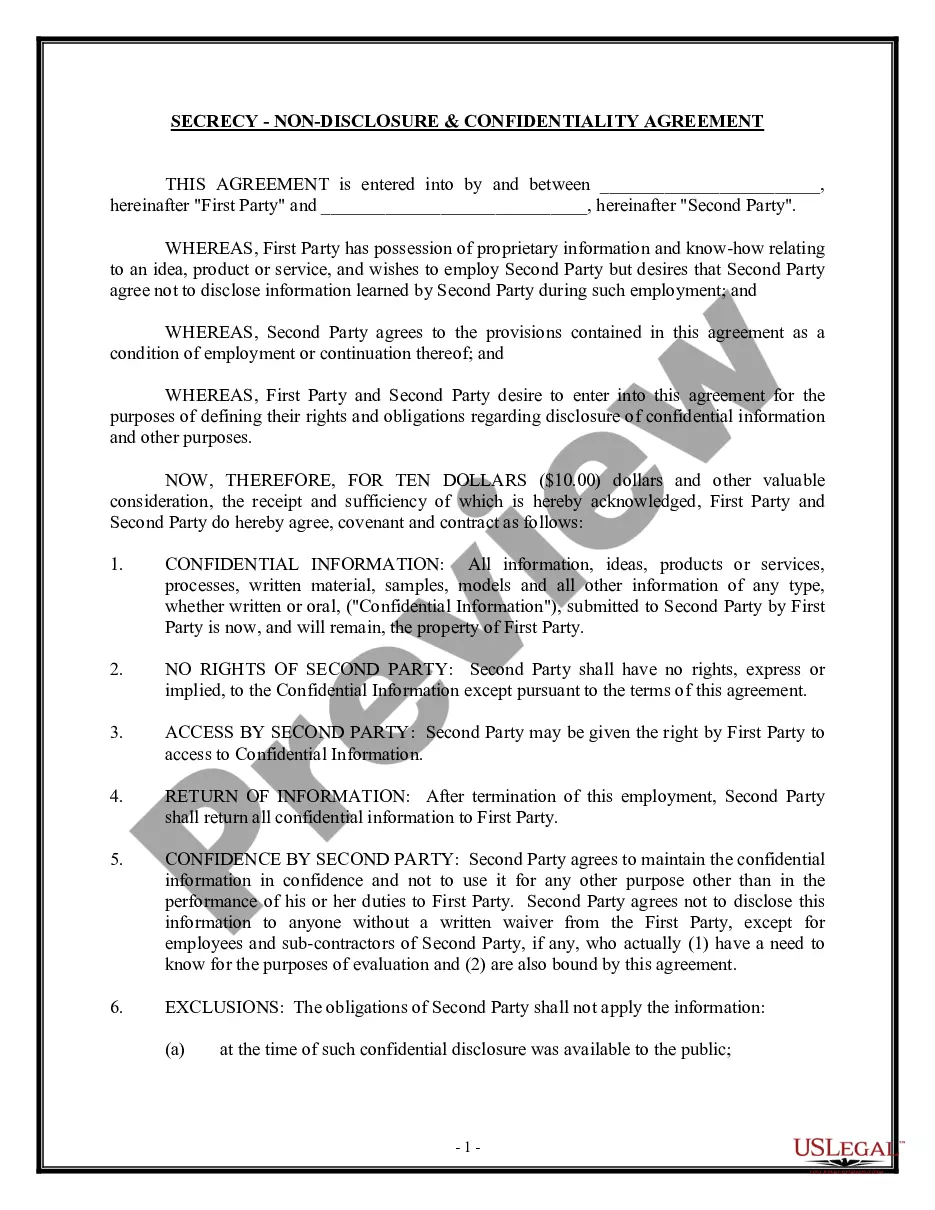
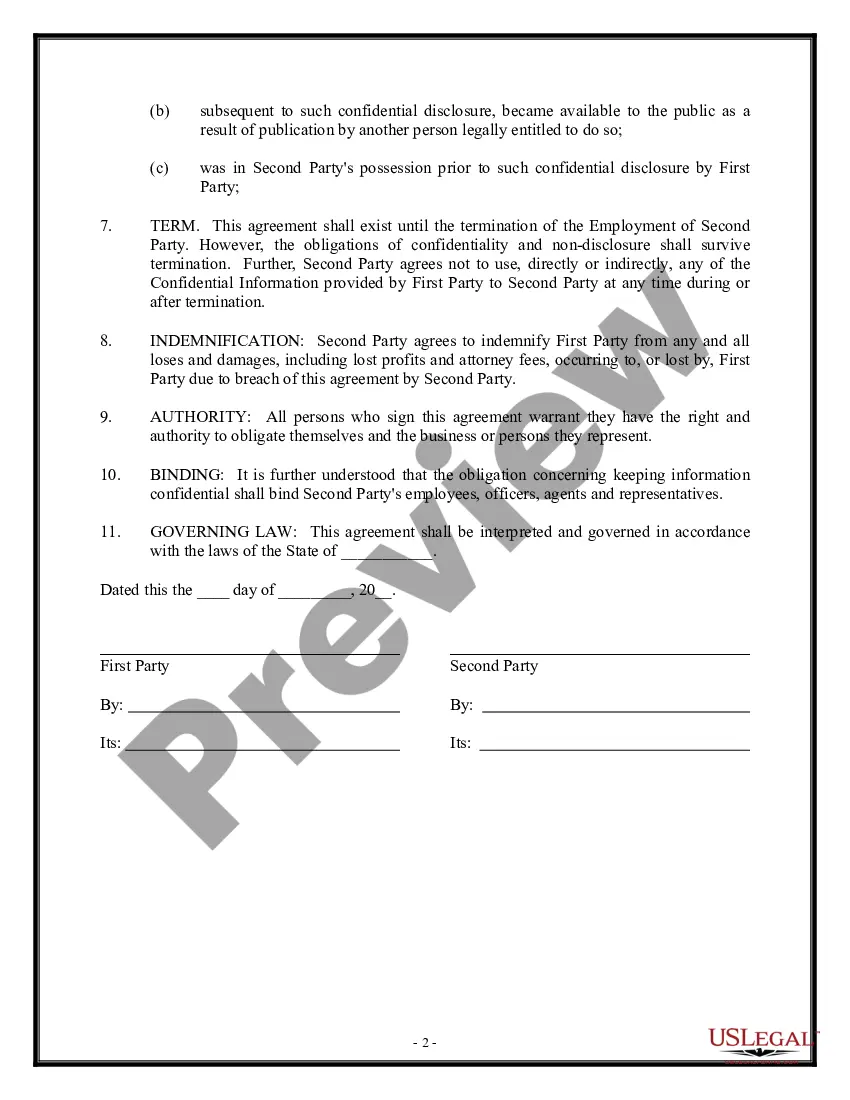
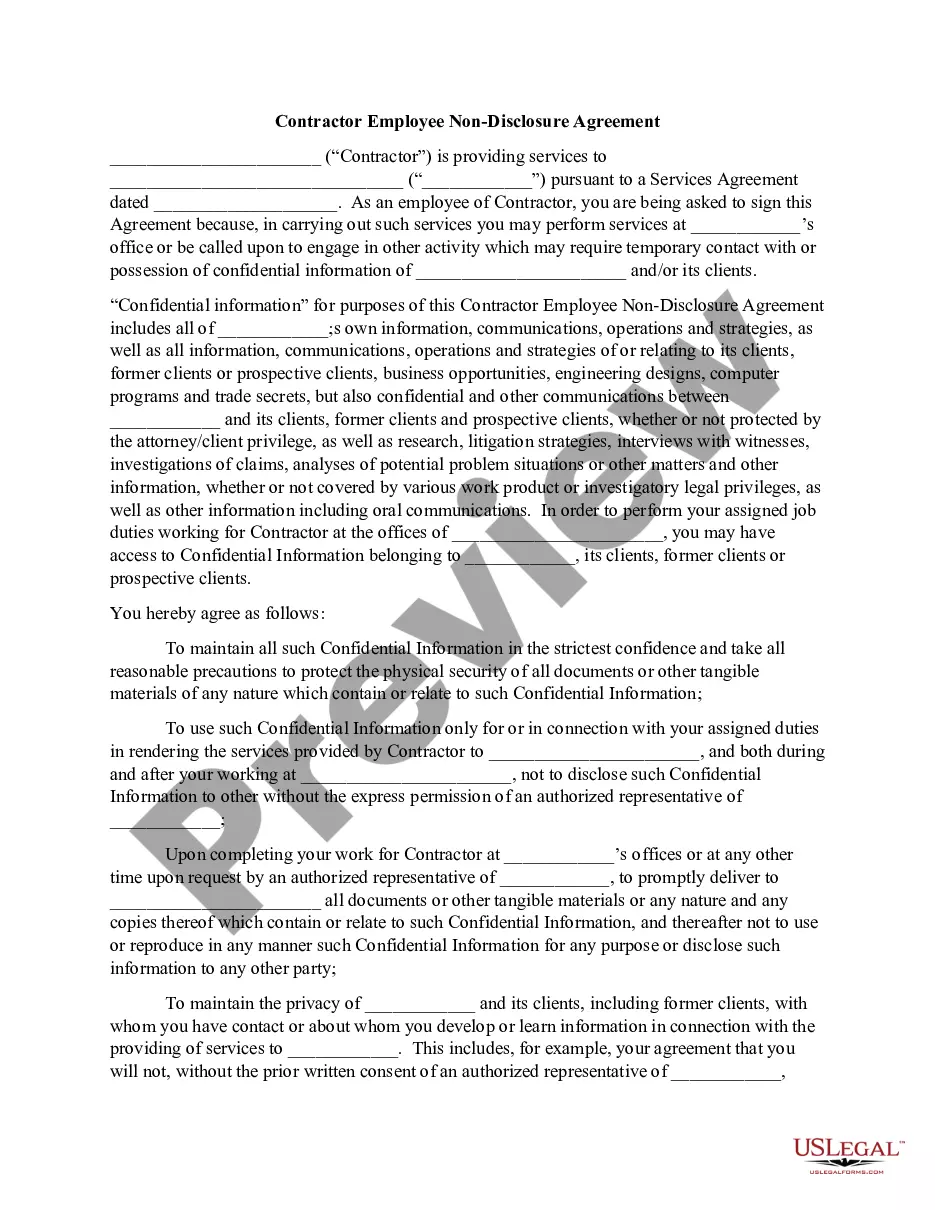
The Secrecy, Nondisclosure and Confidentiality Agreement by Employee or Consultant to Owner is a legal document that establishes the confidentiality obligations of an employee or consultant regarding proprietary information. Its primary purpose is to protect sensitive information shared by an employer or business owner with the employee or consultant, ensuring that this information is not disclosed to unauthorized parties. This form helps safeguard intellectual property and confidential business processes, which is essential for maintaining competitive advantage. Unlike general confidentiality agreements, this form specifically addresses the relationship between the first party (employer) and the second party (employee or consultant).
Key parts of this document
- Confidential Information: Defines what constitutes confidential information.
- No Rights of Second Party: Clarifies that the employee or consultant has no rights to the confidential information beyond what is agreed upon.
- Access by Second Party: Details circumstances under which the employee or consultant may access the confidential information.
- Return of Information: Specifies the obligation to return confidential information upon termination.
- Indemnification: Requires the employee or consultant to compensate the employer for losses caused by breaches of the agreement.
- Governing Law: Establishes the jurisdiction under which the agreement is interpreted.
Situations where this form applies
This agreement is necessary when a business owner or employer wishes to protect proprietary information while engaging with employees or consultants. Common scenarios include hiring new employees, onboarding contractors, or entering long-term consulting relationships where sensitive information will be shared. It ensures that any insights or knowledge gained by the employee or consultant during the course of their engagement remain confidential.
Intended users of this form
- Business owners who are hiring employees or consultants and need to disclose sensitive information.
- Employers wanting to protect intellectual property and proprietary processes.
- Consultants who are entering agreements that involve access to confidential information from a client.
- Employees who are required to handle sensitive information as part of their job duties.
How to prepare this document
- Identify the parties: Fill in the names of the first party (employer) and the second party (employee or consultant).
- Specify the confidential information: Clearly outline what is considered confidential information to avoid ambiguity.
- Define access parameters: Indicate how and when the second party will access the confidential information.
- Set a governing law: Choose the state law that will govern the agreement.
- Obtain signatures: Ensure both parties sign and date the agreement to make it legally binding.
Does this document require notarization?
In most cases, this form does not require notarization. However, some jurisdictions or signing circumstances might. US Legal Forms offers online notarization powered by Notarize, accessible 24/7 for a quick, remote process.
Get your form ready online
Our built-in tools help you complete, sign, share, and store your documents in one place.
Make edits, fill in missing information, and update formatting in US Legal Forms—just like you would in MS Word.
Download a copy, print it, send it by email, or mail it via USPS—whatever works best for your next step.
Sign and collect signatures with our SignNow integration. Send to multiple recipients, set reminders, and more. Go Premium to unlock E-Sign.
If this form requires notarization, complete it online through a secure video call—no need to meet a notary in person or wait for an appointment.
We protect your documents and personal data by following strict security and privacy standards.

Make edits, fill in missing information, and update formatting in US Legal Forms—just like you would in MS Word.

Download a copy, print it, send it by email, or mail it via USPS—whatever works best for your next step.

Sign and collect signatures with our SignNow integration. Send to multiple recipients, set reminders, and more. Go Premium to unlock E-Sign.

If this form requires notarization, complete it online through a secure video call—no need to meet a notary in person or wait for an appointment.

We protect your documents and personal data by following strict security and privacy standards.
Avoid these common issues
- Failing to clearly define what constitutes confidential information.
- Not including an obligation for the return of information after termination.
- Neglecting to specify who is bound by the agreement (e.g., subcontractors, employees).
- Leaving out governing law, which can complicate legal issues later.
Benefits of completing this form online
- Convenience: Downloadable forms allow immediate access and use.
- Editability: Easily fill out and customize the form to fit specific needs.
- Reliability: Forms are drafted by licensed attorneys, ensuring legal compliance.
Legal use & context
- This agreement is legally binding once signed by both parties, provided it meets local laws.
- It protects the business's interests by preventing unauthorized disclosures of proprietary information.
- Violation of this agreement could result in legal consequences, including damage claims.
Quick recap
- This form protects confidential information shared during employment or consulting.
- Both parties must understand their rights and obligations under the agreement.
- Ensure terms comply with local laws to maintain enforceability.
Looking for another form?
Form popularity
FAQ
1. Confidentiality Agreement is used when a higher degree of secrecy is required. Non-disclosure implies you must not disclose personal or private information. But keeping confidential implies you be more proactive in making sure information is kept secret.
If an NDA lists extreme punishments for breaking the confidentiality agreement, you shouldn't sign it. A common consequence for breach of contract under an NDA is termination of employment. Be aware of what is considered a breach of contract.
To prevent employees from revealing sensitive information that could jeopardize your business, you might have them sign an employee confidentiality agreement. Businesses use employee confidentiality agreements to protect their innovative ideas, effective processes, unique products, or customer information.
Your employer can't force you to sign the performance document, but there may be consequences for refusing to do so. For one, your employer could fire you for refusing to sign.However, putting your signature on the document doesn't have to mean that you agree with what it says.
An employee can be required to sign an NDA or NDA-like agreement with an employer, protecting trade secrets. In fact, some employment agreements include a clause restricting employees' use and dissemination of company-owned confidential information.
Yes, and no! When drafting the employment agreement, it is wise to include a clause requiring the employee to execute such further documents and agreements as the employer deems reasonably necessary - and then, when they sign those documents, remember to give some fresh consideration with the agreement.
While an employer has the right to demand its employees sign a NDA when those employees have access to valuable company data (e.g. product formulas, private customer lists, financial reports, etc.), the employer should not ask an employee to sign a confidentiality agreement if the purpose is to protect information that