Irrevocable Trust Agreement for Benefit of Trustor's Children Discretionary Distributions of Income and Principal
What this document covers
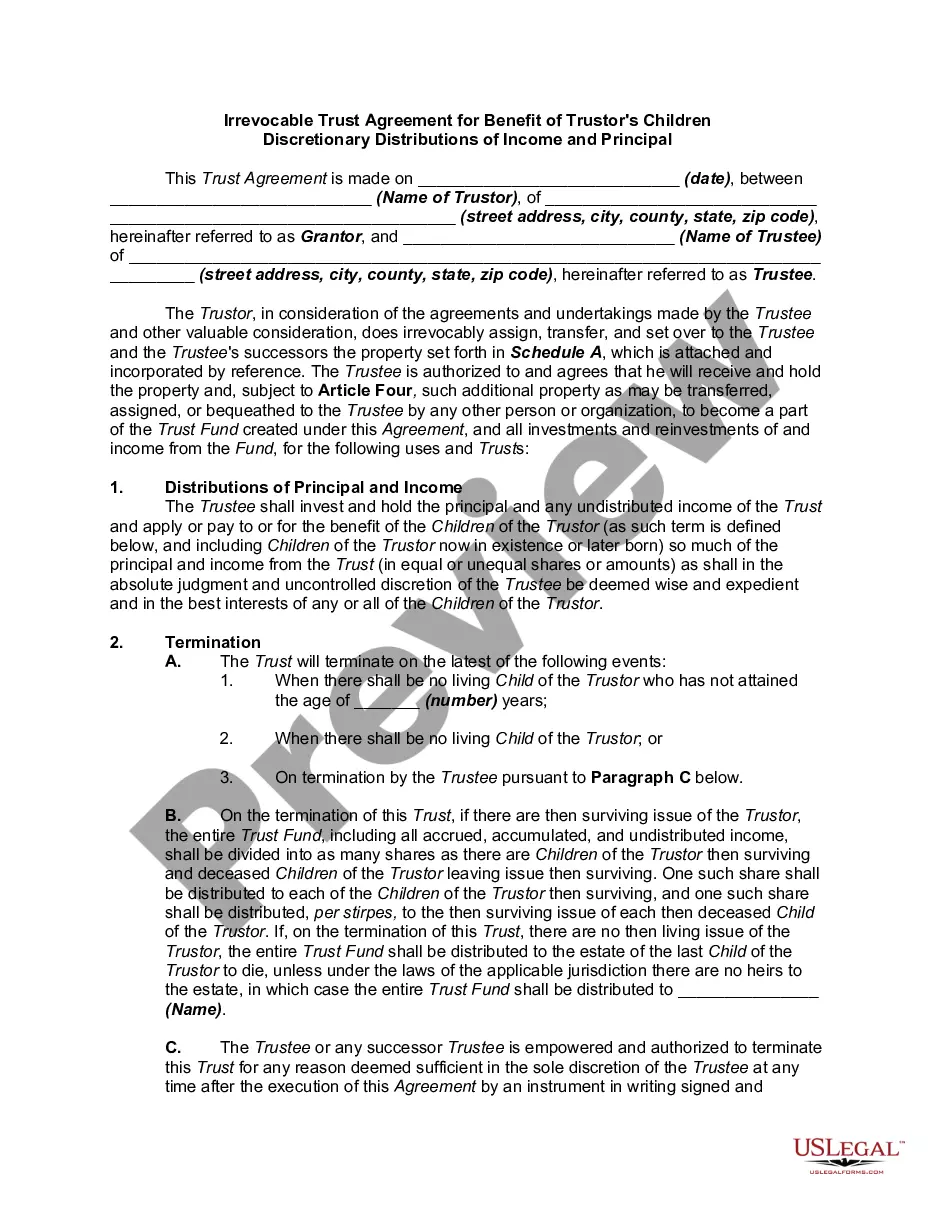
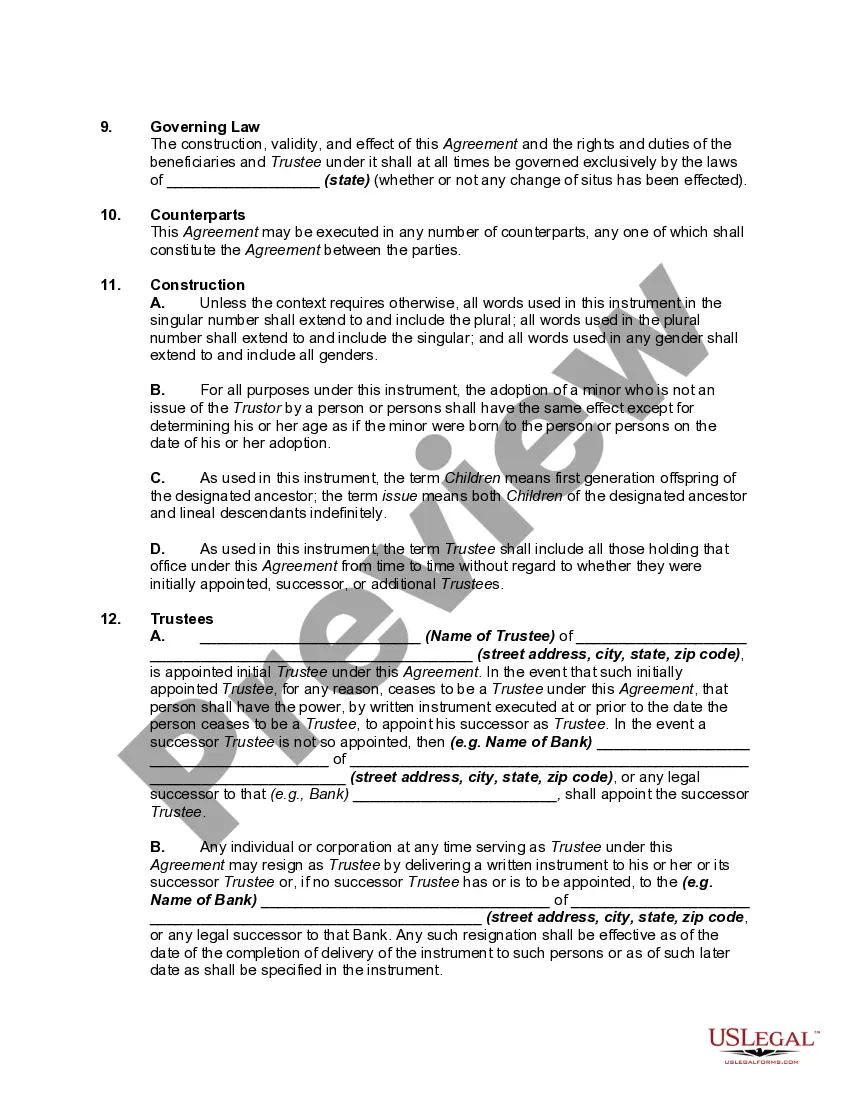
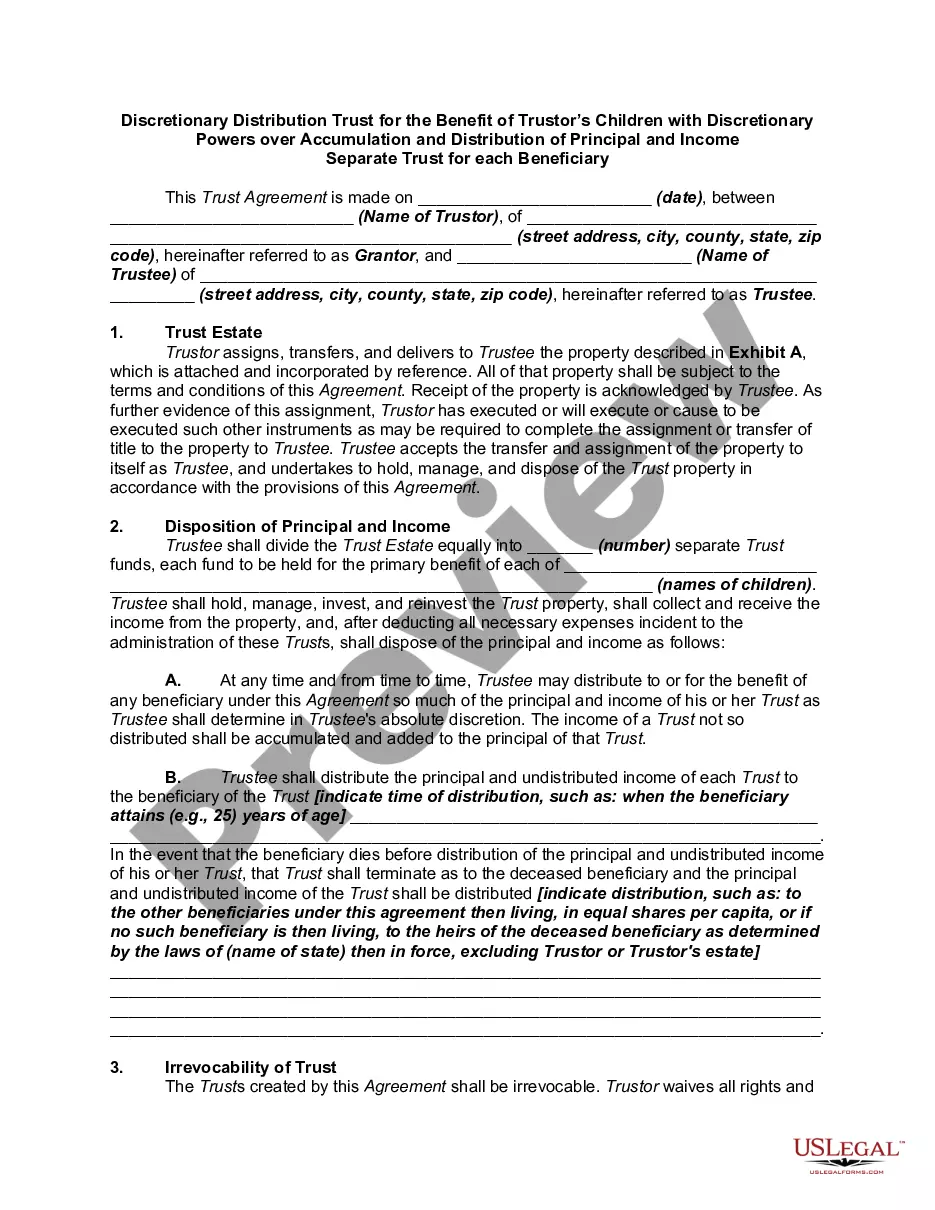
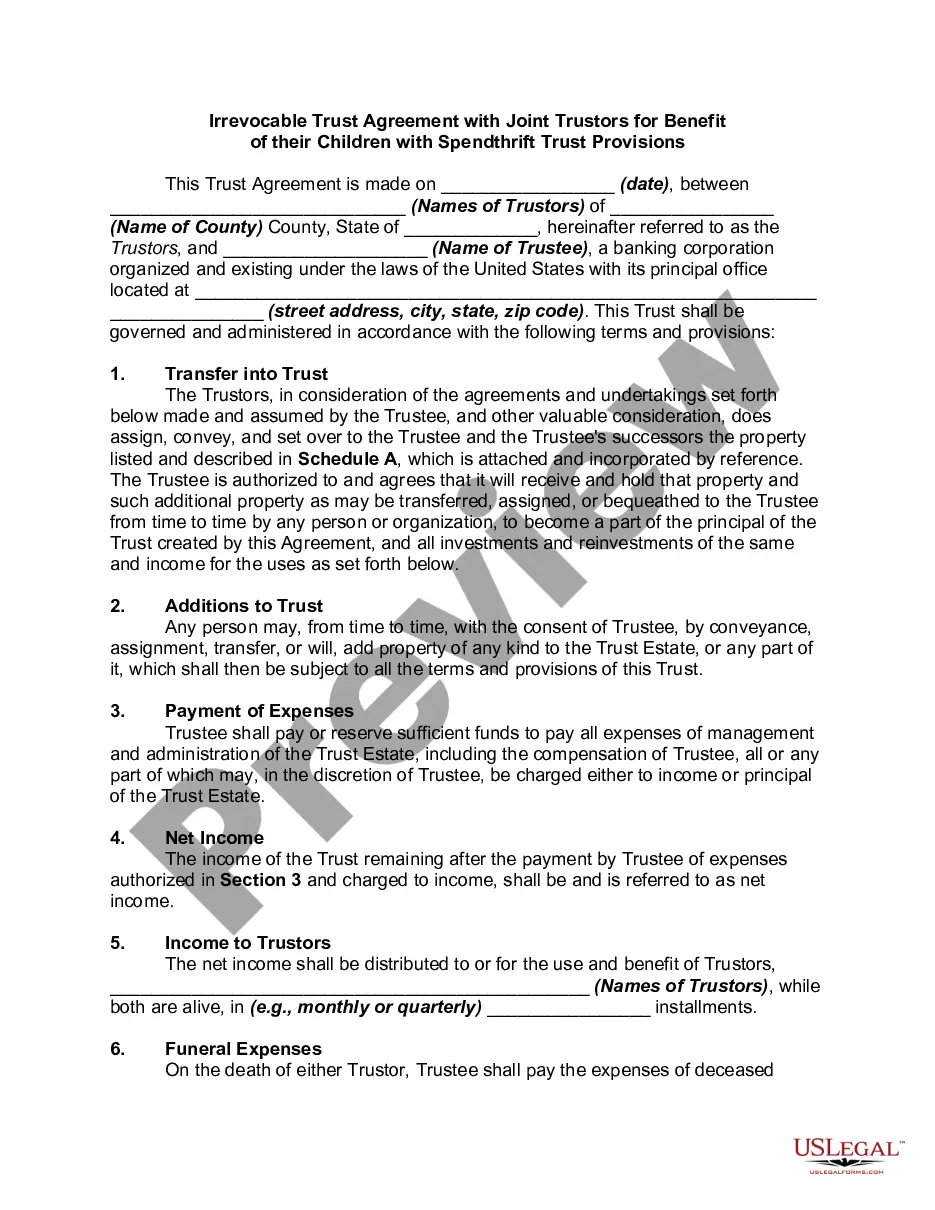
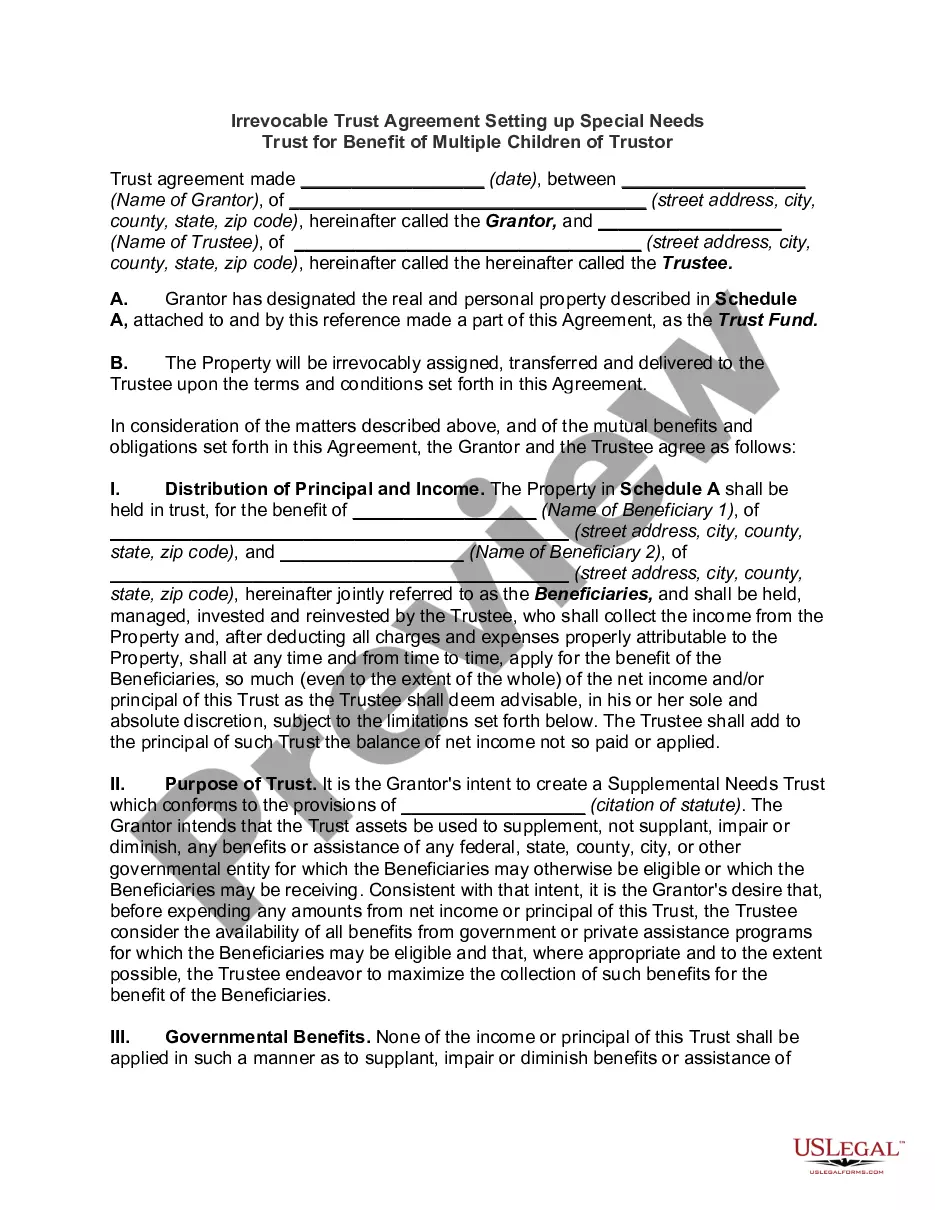
An irrevocable trust agreement for the benefit of the trustor's children creates a legal entity that holds property and assets for specific beneficiaries, typically the trustor's children. This type of trust is distinct from revocable trusts, as it cannot be altered or revoked once established. It allows the trustee the discretion to distribute both income and principal to beneficiaries based on the terms laid out in the trust document. This ensures that the trustor's assets are managed and protected for the benefit of their children.
Key parts of this document
- Date of agreement establishment.
- Identification of the trustor (grantor) and trustee.
- Details of property being transferred to the trust, including Schedule A.
- Criteria for distributing income and principal among beneficiaries.
- Termination conditions for the trust.
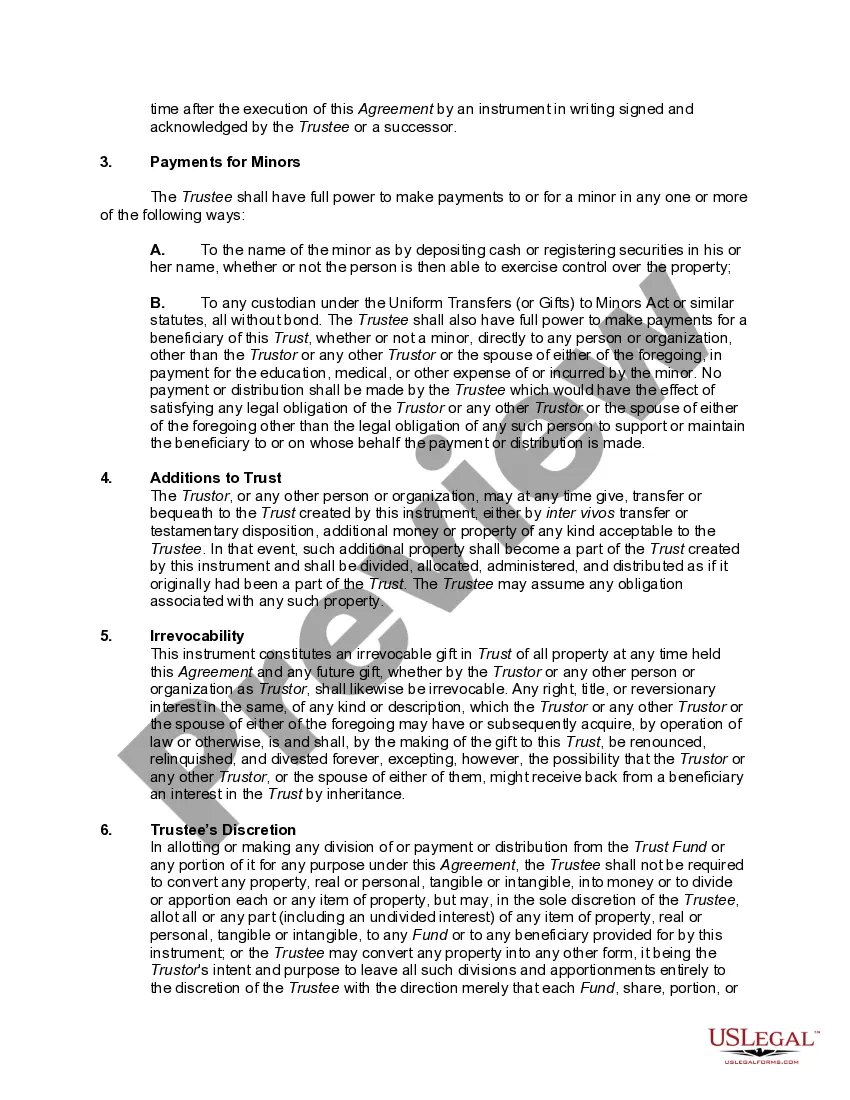
- Provisions for paying expenses related to minor beneficiaries.
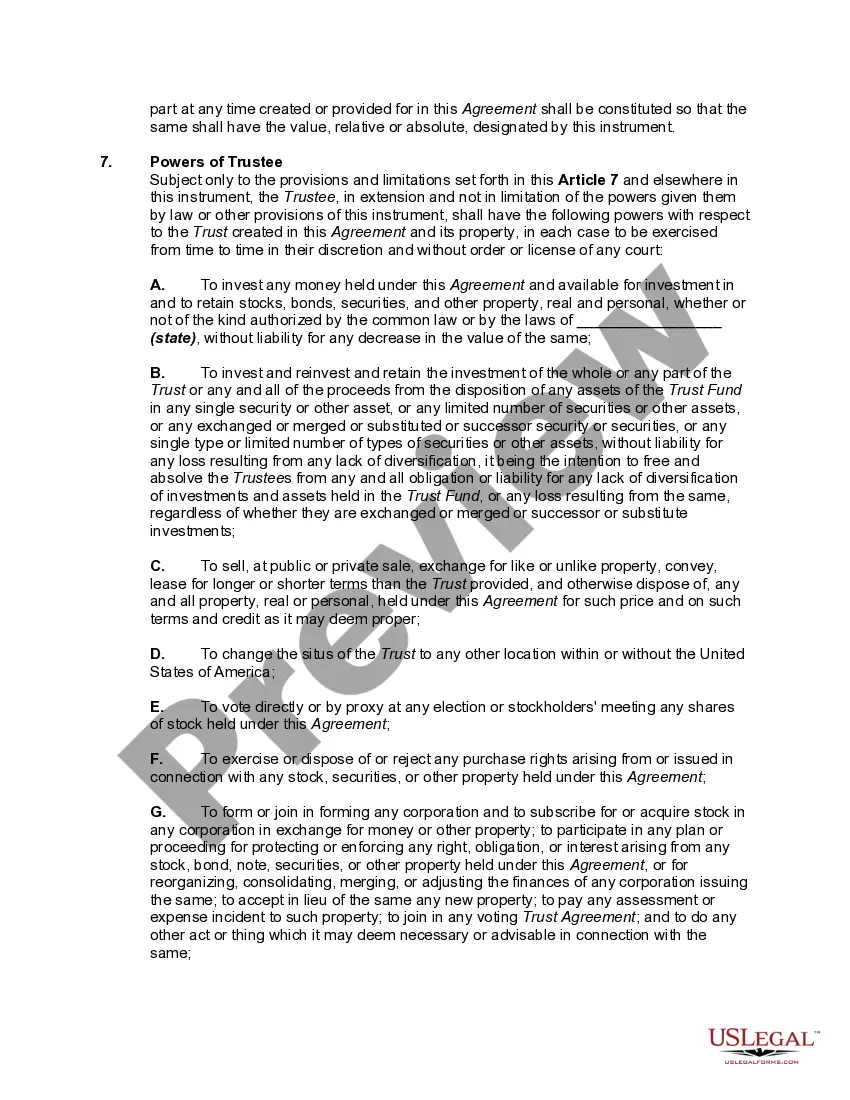
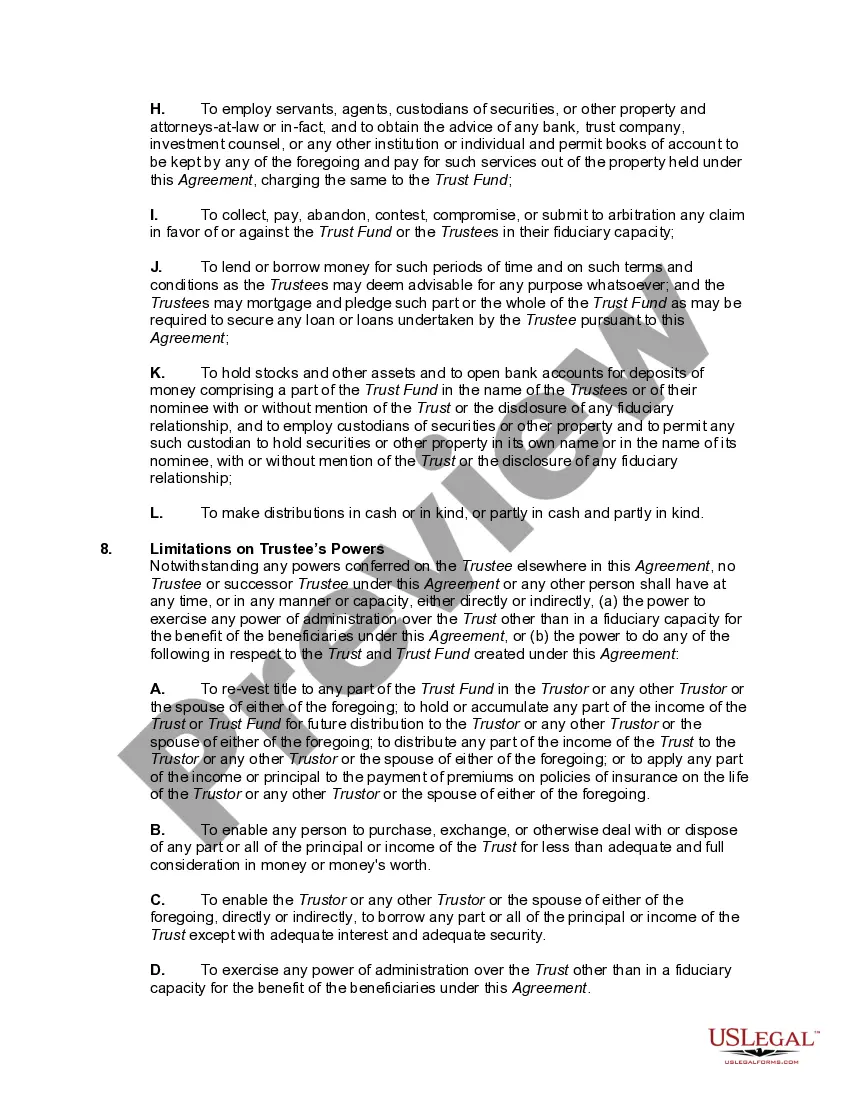
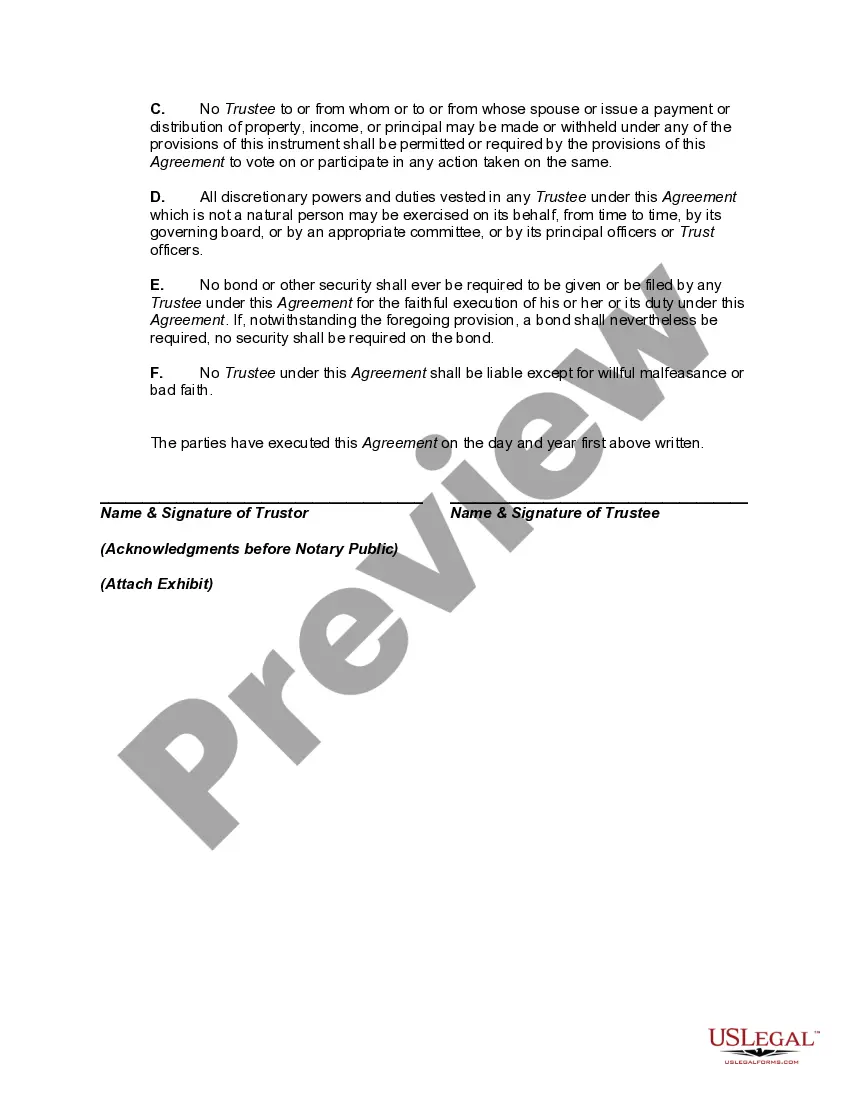
- Trustee's powers and limitations.


When to use this form
This form is essential when a trustor wishes to create a trust for their children that cannot be changed after it is established. It's particularly useful in estate planning scenarios where the trustor wants to ensure that their children are supported in the future, with distributions controlled by a trustee's discretion. This arrangement is beneficial for protecting assets from creditors and ensuring that beneficiaries receive financial support based on their needs.
Who should use this form
- Parents looking to secure their children's financial future through a trust.
- Individuals seeking to protect assets from taxation or creditors.
- Trustors who want to ensure controlled and conditional distributions to their beneficiaries.
- Those needing a legally binding document that clearly outlines their intentions for family inheritance.
Completing this form step by step
- Identify and enter the names of the trustor and trustee.
- Specify the date of the agreement.
- Provide the details of the property being assigned to the trust in Schedule A.
- Set forth the distribution terms for both income and principal.
- Specify conditions under which the trust will terminate.
- Sign the agreement and ensure it is acknowledged before a notary public.
Does this document require notarization?
Yes, this form must be notarized to be legally valid. This ensures the authenticity of the signatures and helps to prevent any future disputes regarding the trust's legitimacy. US Legal Forms offers integrated online notarization, which is available 24/7 and conducted through secure video calls, making the process convenient and accessible.
Get your form ready online
Our built-in tools help you complete, sign, share, and store your documents in one place.
Make edits, fill in missing information, and update formatting in US Legal Forms—just like you would in MS Word.
Download a copy, print it, send it by email, or mail it via USPS—whatever works best for your next step.
Sign and collect signatures with our SignNow integration. Send to multiple recipients, set reminders, and more. Go Premium to unlock E-Sign.
If this form requires notarization, complete it online through a secure video call—no need to meet a notary in person or wait for an appointment.
We protect your documents and personal data by following strict security and privacy standards.

Make edits, fill in missing information, and update formatting in US Legal Forms—just like you would in MS Word.

Download a copy, print it, send it by email, or mail it via USPS—whatever works best for your next step.

Sign and collect signatures with our SignNow integration. Send to multiple recipients, set reminders, and more. Go Premium to unlock E-Sign.

If this form requires notarization, complete it online through a secure video call—no need to meet a notary in person or wait for an appointment.

We protect your documents and personal data by following strict security and privacy standards.
Avoid these common issues
- Failing to detail the property included in Schedule A.
- Not specifying termination conditions for the trust.
- Overlooking the need for a notarized signature.
- Neglecting to fully understand the trustee's powers and limitations.
Advantages of online completion
- Convenient access to legal forms anytime and anywhere.
- Easy to customize for specific personal circumstances.
- Reliable templates drafted by licensed attorneys.
- Time-saving option that avoids the need for in-person visits to legal offices.
Summary of main points
- An irrevocable trust provides long-term asset management and protection for beneficiaries.
- It allows the trustee to have discretion over how funds are distributed to the children.
- Proper completion and adherence to local laws are crucial for the trust's validity.
Looking for another form?









Form popularity
FAQ
The grantor (as an individual or couple) transfers their assets to an irrevocable trust. However, unlike other irrevocable trusts, the grantor can be the income beneficiary.The grantor can receive income from the trust to the maximum amount allowed by Medicaid.
Distribute trust assets outright The grantor can opt to have the beneficiaries receive trust property directly without any restrictions. The trustee can write the beneficiary a check, give them cash, and transfer real estate by drawing up a new deed or selling the house and giving them the proceeds.
Family Trust income They do not have to make trust distributions in any particular proportion or in the same proportions as they did in previous years. A trust does not have to pay income tax on income that is distributed to the beneficiaries, but does have to pay tax on undistributed income.
When trust beneficiaries receive distributions from the trust's principal balance, they do not have to pay taxes on the distribution.The trust must pay taxes on any interest income it holds and does not distribute past year-end. Interest income the trust distributes is taxable to the beneficiary who receives it.
Any income that trust inheritance assets earn is reported on the grantor's personal return and he pays taxes on it.If you inherit from a simple trust, you must report and pay taxes on the money. By definition, anything you receive from a simple trust is income earned by it during that tax year.
As noted above, an irrevocable trust must pay income tax on its earnings.Typically, the beneficiary isn't required to pay income taxes on distributions that come from principal because tax law presumes that the grantor already paid income taxes on it when he placed it in the trust and tries to avoid double taxation.
When trust beneficiaries receive distributions from the trust's principal balance, they do not have to pay taxes on the distribution.If the income or deduction is part of a change in the principal or part of the estate's distributable income, income tax is paid by the trust and not passed on to the beneficiary.
The trust can pay for any amount of medical costs, as long as the trust pays the expenses directly to the medical provider or institution. Just remember that the terms of the trust are irrevocable regardless of how much you transfer into the trust's name.
Discretionary beneficiaries are individuals or entities that a grantor names in a trust, life insurance policy, or retirement plan who will only receive their distributions at a time that has been deemed as appropriate, such as if they pass certain milestones in age or education.