Counter Offer to Purchase 3 - Residential
What this document covers
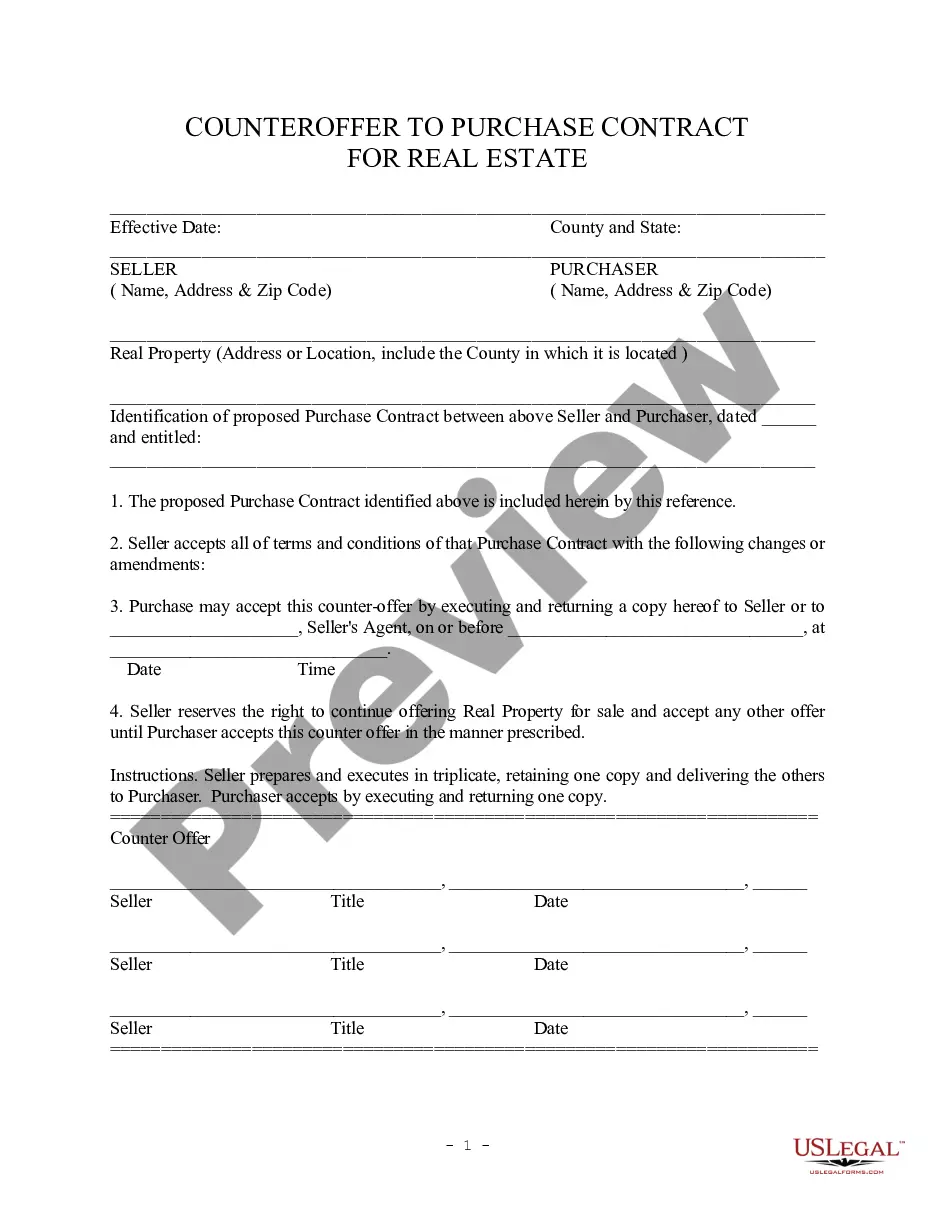
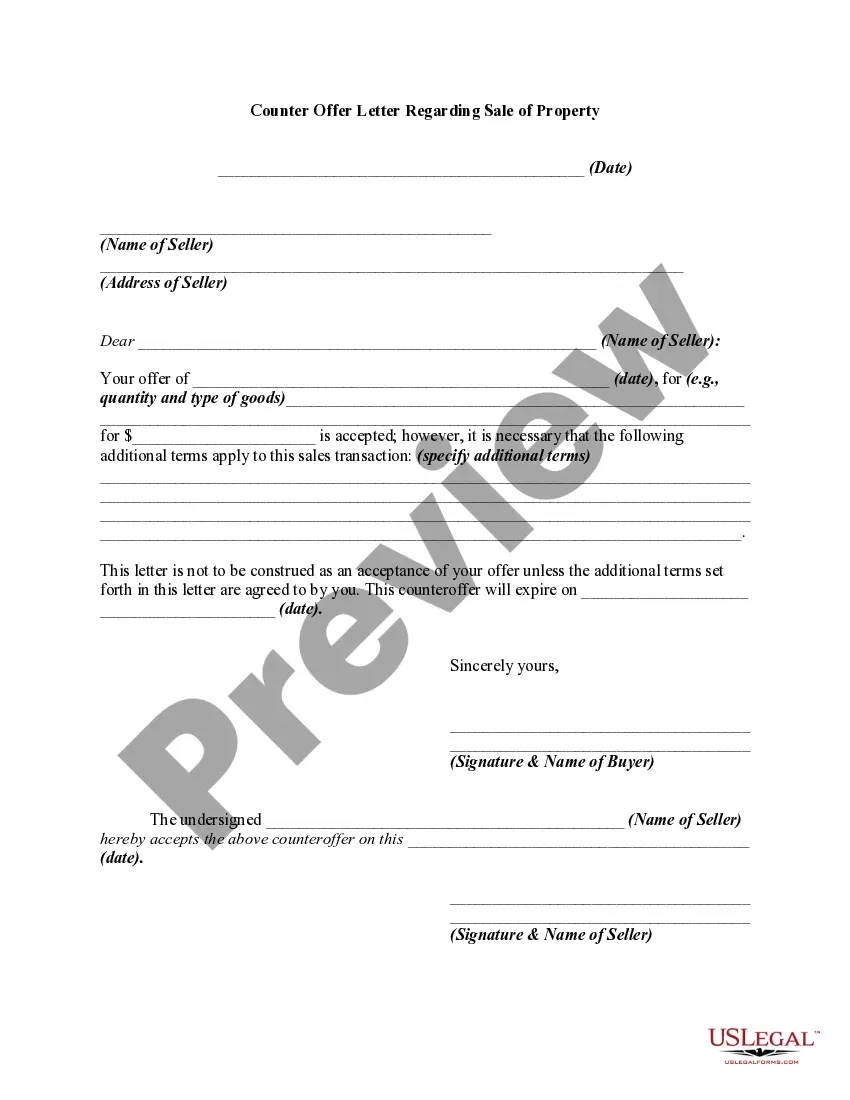
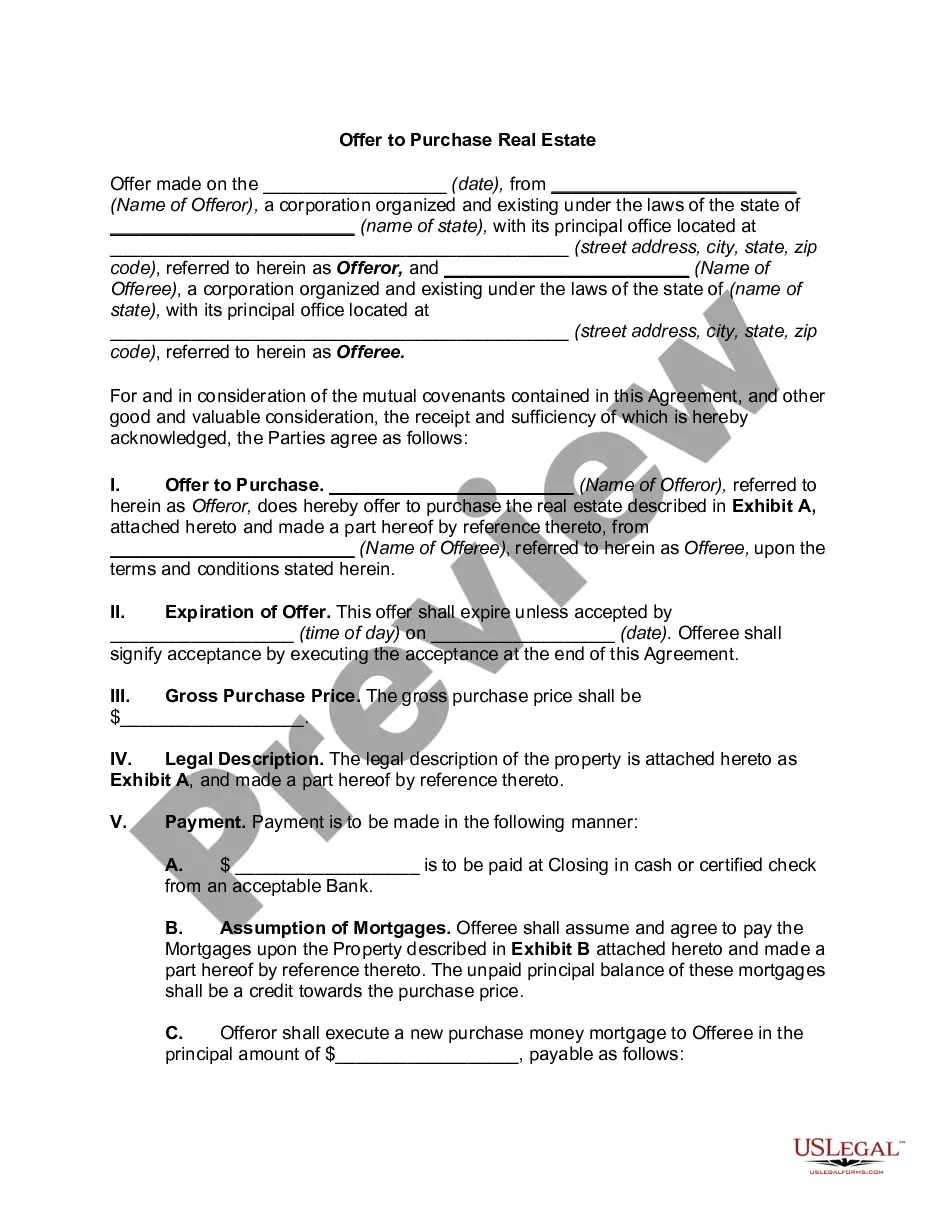
The Counter Offer to Purchase 3 - Residential is a legal document used in real estate transactions. This form allows a seller to respond to an initial offer made by a purchaser, enabling negotiations to achieve a more favorable purchase price or terms. Unlike an acceptance, it specifies changes to the original offer, providing a crucial opportunity for both parties to come to a mutually beneficial agreement.
Form components explained
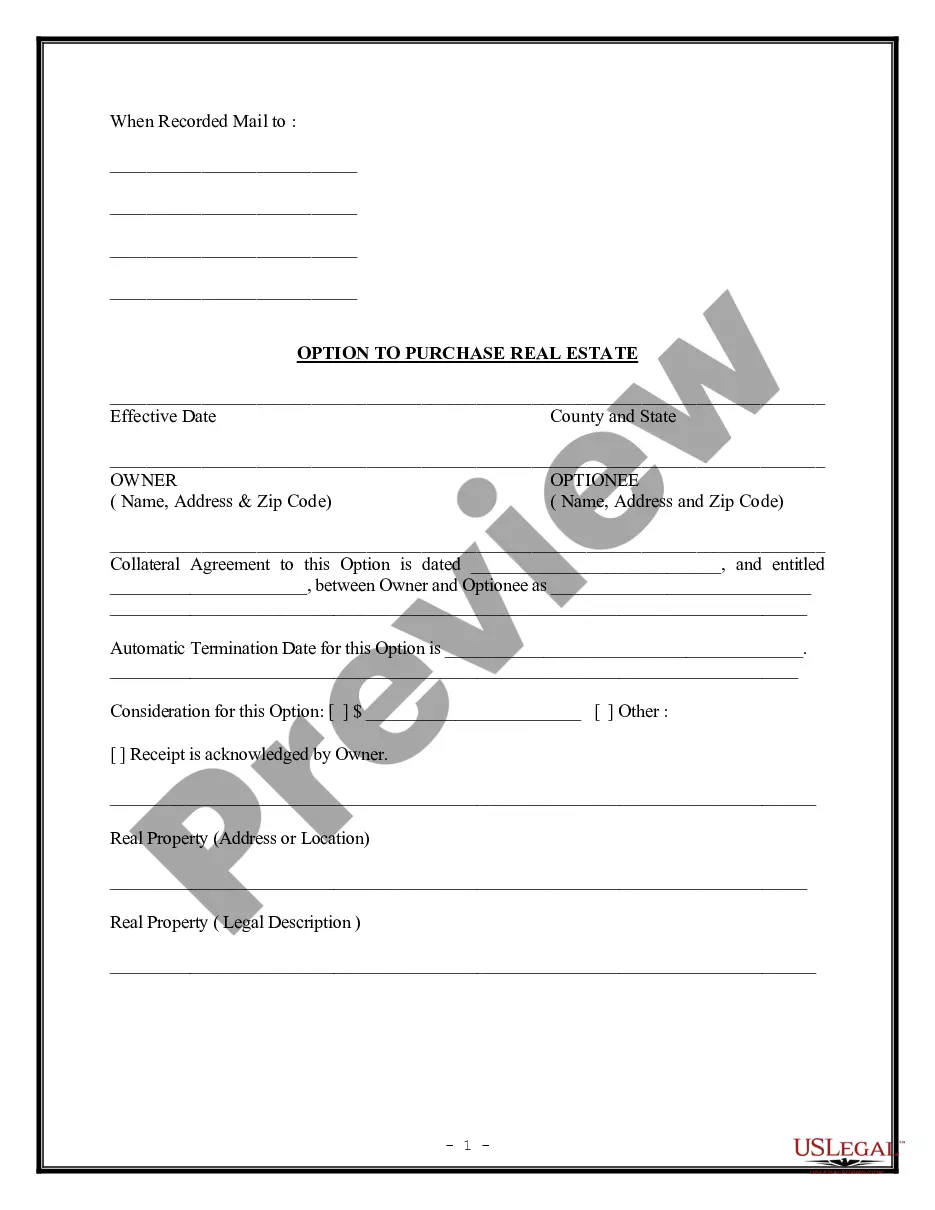
- Effective date and relevant county and state information.
- Identification details of the seller and purchaser, including contact information.
- Address and location of the real property involved in the transaction.
- Reference to the proposed purchase contract, outlining amendments or changes.
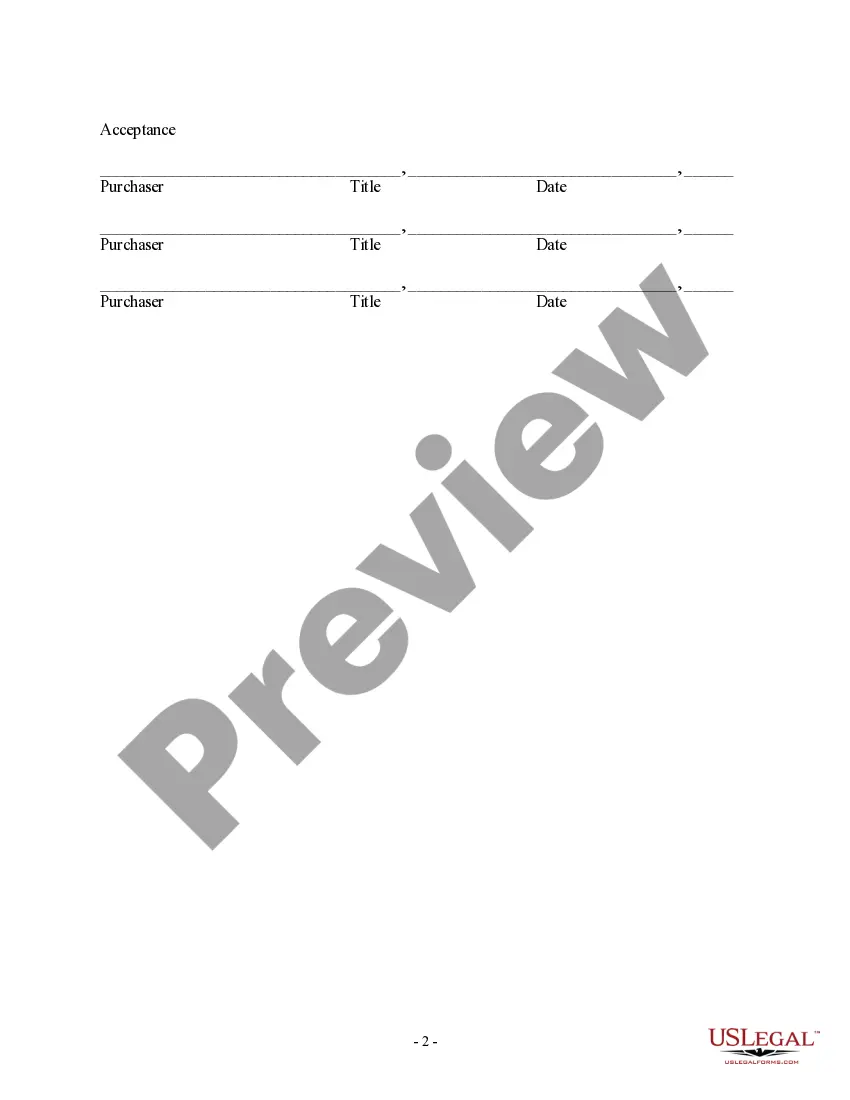
- Acceptance terms for the counteroffer, including deadlines and instructions for execution.
Common use cases
Use the Counter Offer to Purchase when you, as a seller, receive an offer on your property, but wish to negotiate certain aspects of the deal. This form is ideal when the initial offer does not meet your expectations, particularly regarding the purchase price or other key terms. It allows you to propose revised conditions before finalizing the sale.
Intended users of this form
- Home sellers who have received an offer on their property.
- Real estate agents representing sellers in negotiations.
- Individuals looking to negotiate terms of a residential property sale.
Completing this form step by step
- Identify the parties involved: Clearly state the names and addresses of both the seller and purchaser.
- Specify the property: Provide the address and county where the real property is located.
- Reference the existing contract: Fill in details regarding the proposed purchase contract that you are responding to.
- List amendments: Clearly outline any changes or counterproposals you wish to make regarding the terms of the initial offer.
- Set the acceptance conditions: Specify a deadline for the purchaser to accept the counteroffer and include where it should be delivered.
Does this document require notarization?
To make this form legally binding, it must be notarized. Our online notarization service, powered by Notarize, lets you verify and sign documents remotely through an encrypted video session.
Get your form ready online
Our built-in tools help you complete, sign, share, and store your documents in one place.
Make edits, fill in missing information, and update formatting in US Legal Forms—just like you would in MS Word.
Download a copy, print it, send it by email, or mail it via USPS—whatever works best for your next step.
Sign and collect signatures with our SignNow integration. Send to multiple recipients, set reminders, and more. Go Premium to unlock E-Sign.
If this form requires notarization, complete it online through a secure video call—no need to meet a notary in person or wait for an appointment.
We protect your documents and personal data by following strict security and privacy standards.

Make edits, fill in missing information, and update formatting in US Legal Forms—just like you would in MS Word.

Download a copy, print it, send it by email, or mail it via USPS—whatever works best for your next step.

Sign and collect signatures with our SignNow integration. Send to multiple recipients, set reminders, and more. Go Premium to unlock E-Sign.

If this form requires notarization, complete it online through a secure video call—no need to meet a notary in person or wait for an appointment.

We protect your documents and personal data by following strict security and privacy standards.
Typical mistakes to avoid
- Failing to specify clear terms and conditions in the counteroffer.
- Leaving out necessary details about the property or parties involved.
- Not adhering to the deadline for acceptance.
- Assuming verbal agreements are valid without being documented.
Why use this form online
- Convenience of instantly downloading a legally vetted form from anywhere.
- Editable templates allow for customization to meet your specific needs.
- Reliable formatting ensures all necessary legal components are included.
- Time-saving; you can focus on negotiations rather than drafting documents from scratch.
Looking for another form?
Form popularity
FAQ
Example of Counteroffer For example, a seller wants to sell a vehicle for $20,000. A buyer arrives and offers $15,000 for the vehicle. The offerer provides a counteroffer, asking for $16,000 with the objective of obtaining a higher price.
Step 1: Study The Buyer's Original Offer. It is obvious that the buyer always quotes the price very low from the original tag in the initial purchase offer. Step 2: Address Your Concerns. Step 3: Connect With the Buyer Personally. Step 4: Let Them Know How Serious You Are. Step 5: Keep It Short. Step 6: Stick To The Format.
You accept the offer with no changes or conditions. You present a counter offer. You reject the offer and move forward.
Rule #1: Try to avoid going back and forth more than three times. Rule #2: Stay focused on completing the sale. Rule #3: Get everything in writing. Rule #4: When you give a concession, ask for something in return, even if it's something small.
Level up your negotiations by getting preapproved for a mortgage. Go in strong, but not at 100% Don't get tunnel vision on a baseline counter number. Respond to counter offers in a timely manner, but know that sellers may try to rush you.
Negotiate With the Market in Mind. Get The Information You Need. Make Your Agent Work for You. Establish Your Baseline. Negotiate for Value; Not Price.
State clear reasons backed with research. Communicate other job offers. Emphasize your sought-after skills. Formulate your wants as requests rather than demands. Use polite, neutral terms. Edit and proof.
A counteroffer means the original offer was rejected and replaced with another one. The counteroffer gives the original offerer three options: accept the counteroffer, reject it, or make another offer.