Contract of Employment with Golf Course Superintendent
About this form
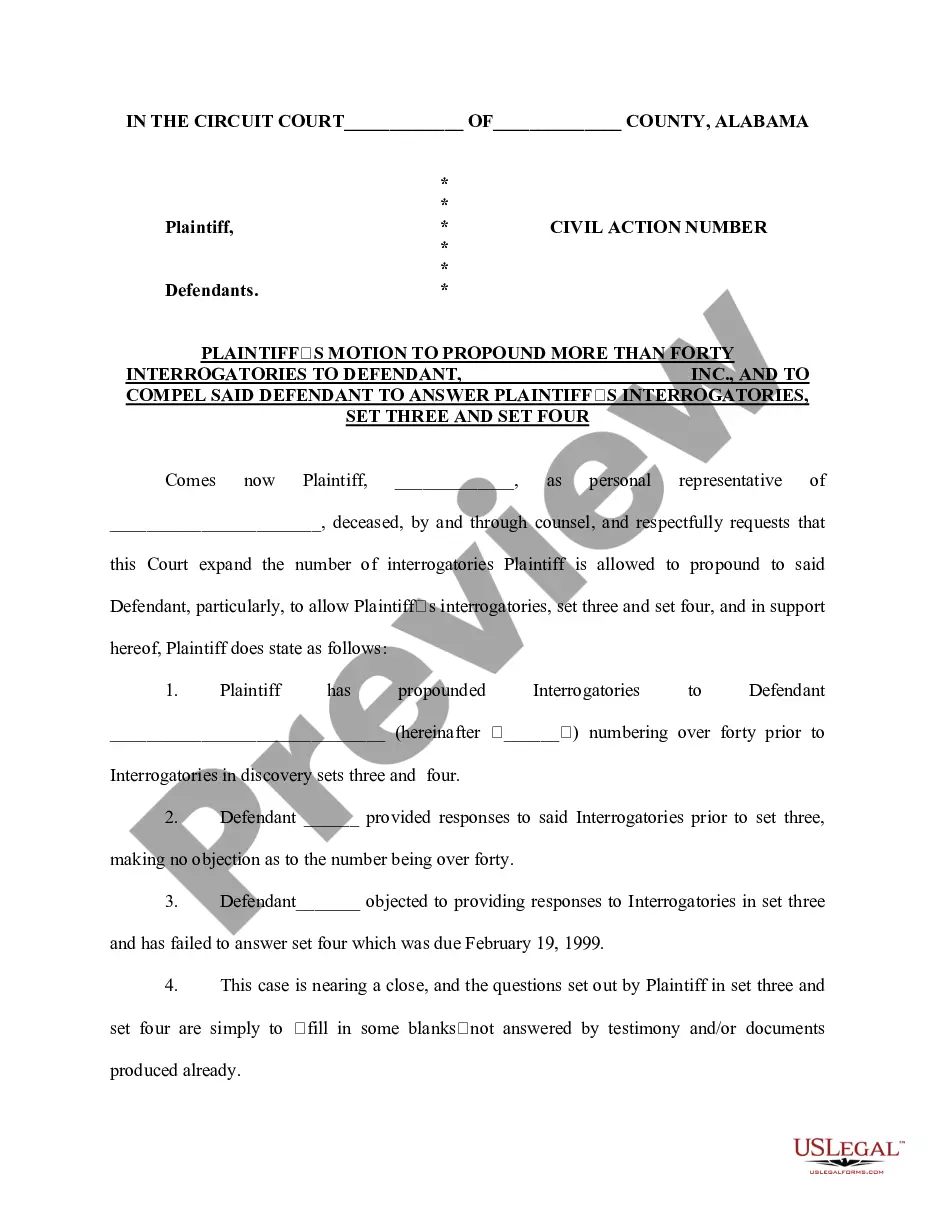
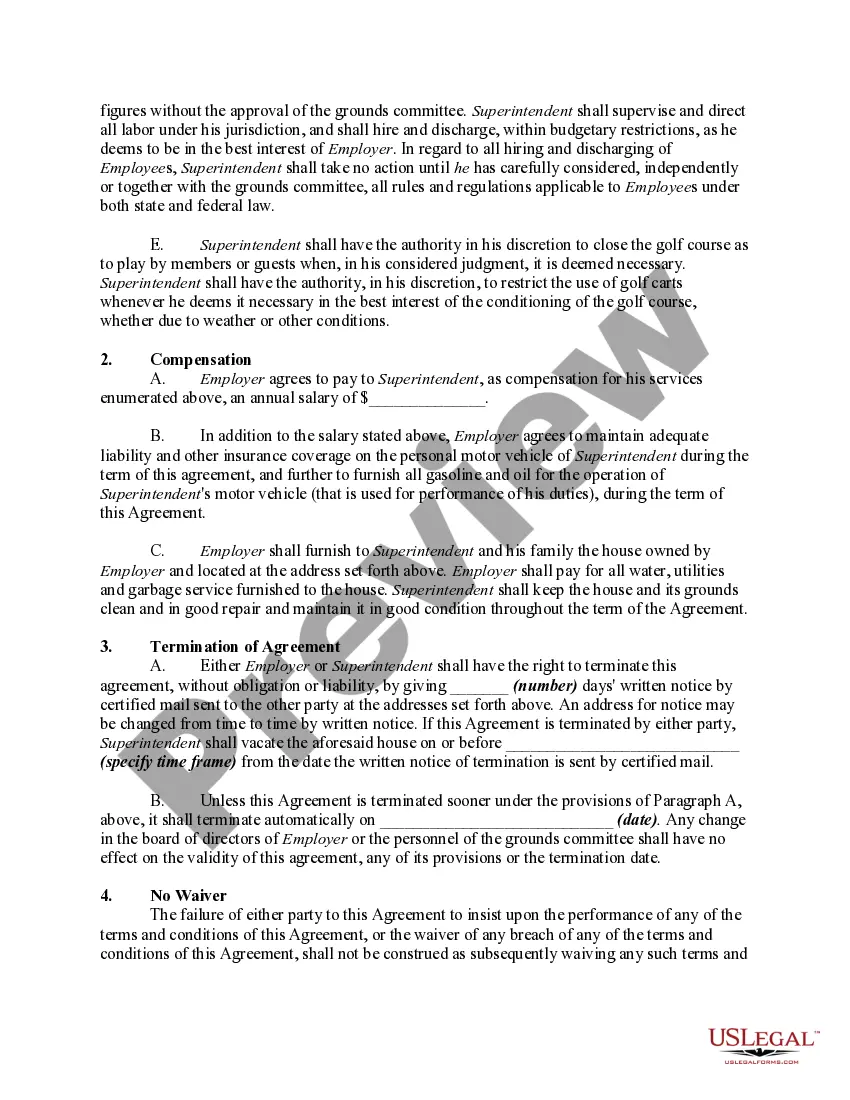
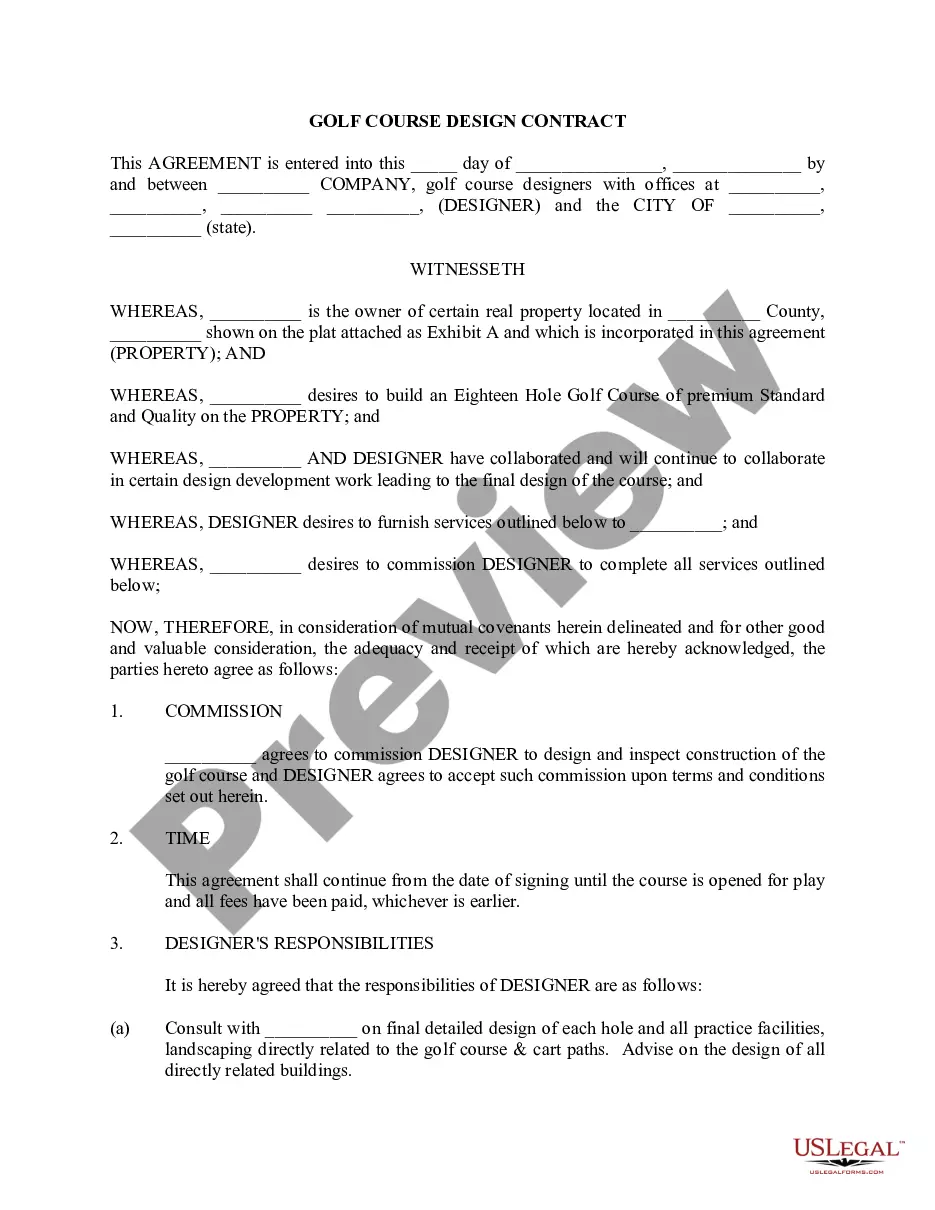
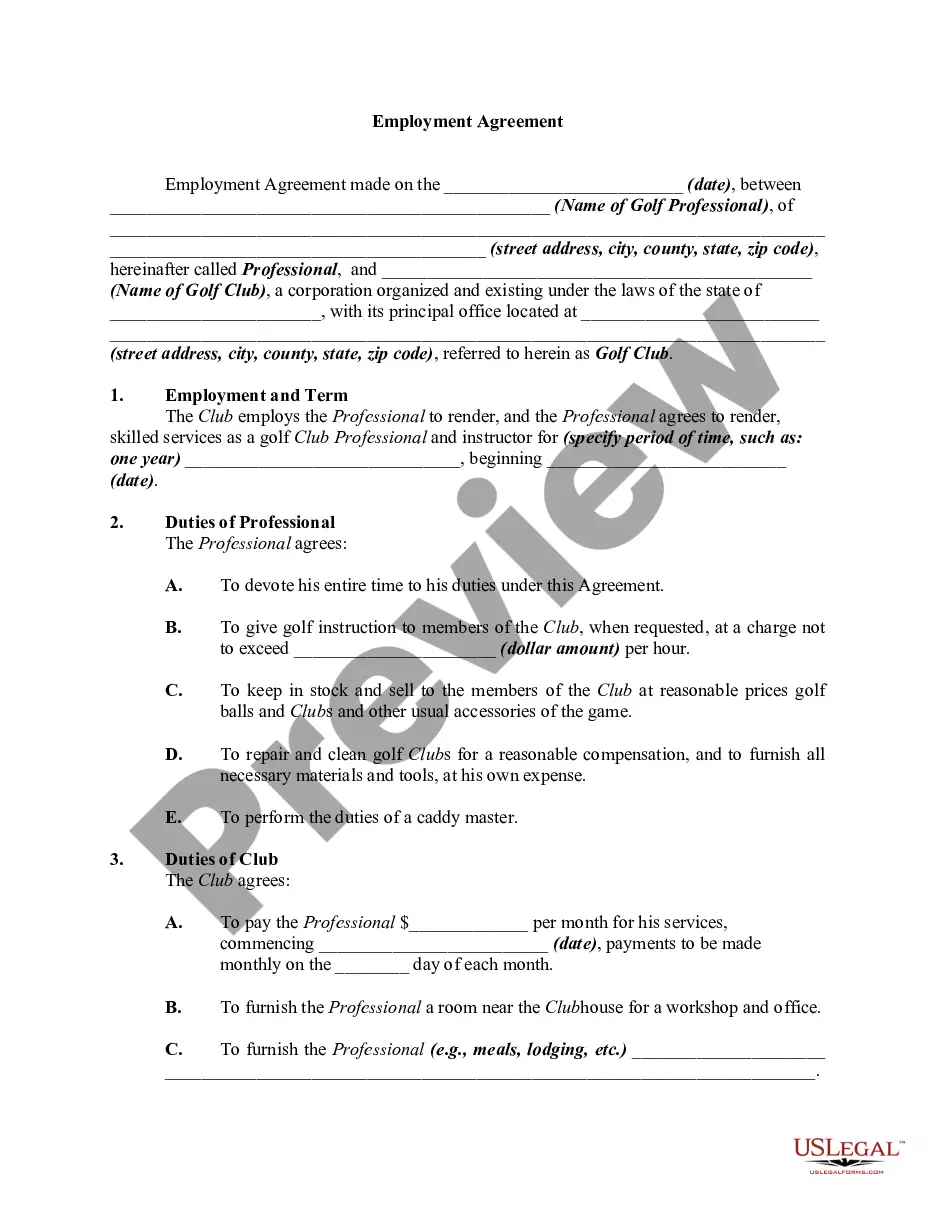
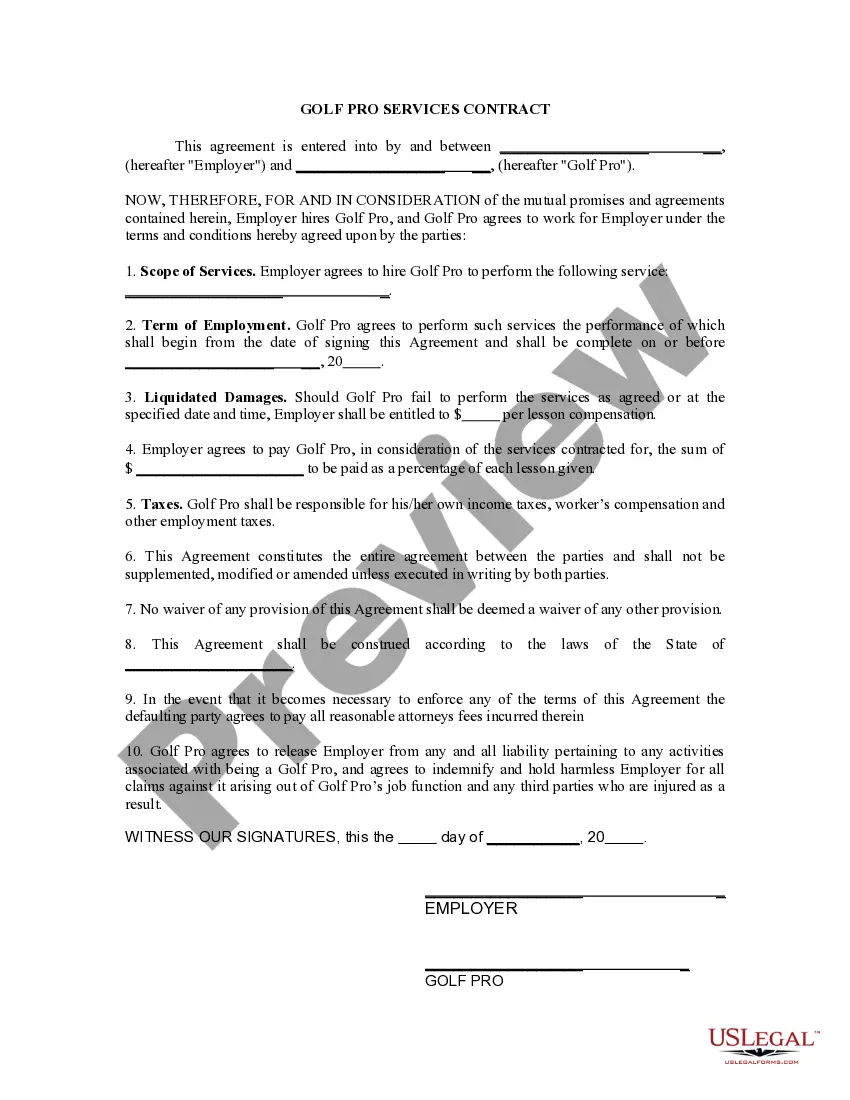
The Contract of Employment with Golf Course Superintendent is a legal agreement detailing the employment relationship between a golf course and its superintendent. This contract outlines the superintendent's duties, compensation, and termination provisions, making it distinct from standard employment contracts by specifically addressing the needs of golf course maintenance and management. It serves to establish clear expectations and responsibilities for maintaining the golf course and its surroundings effectively.
What’s included in this form
- Definition of duties, including maintenance responsibilities and equipment management.
- Details on compensation, including salary and provided housing.
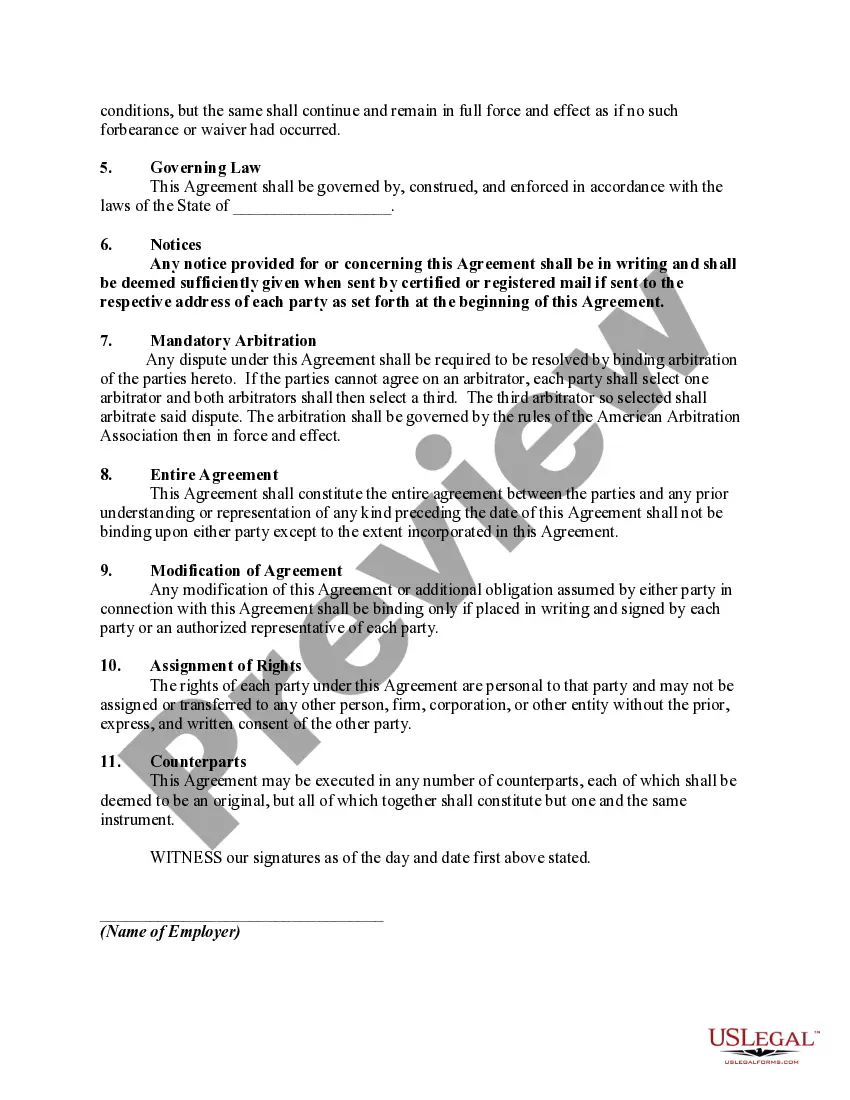
- Termination clauses specifying notice requirements and conditions for ending the agreement.
- Provisions for dispute resolution through mandatory arbitration.
- Governing law to specify applicable jurisdiction.

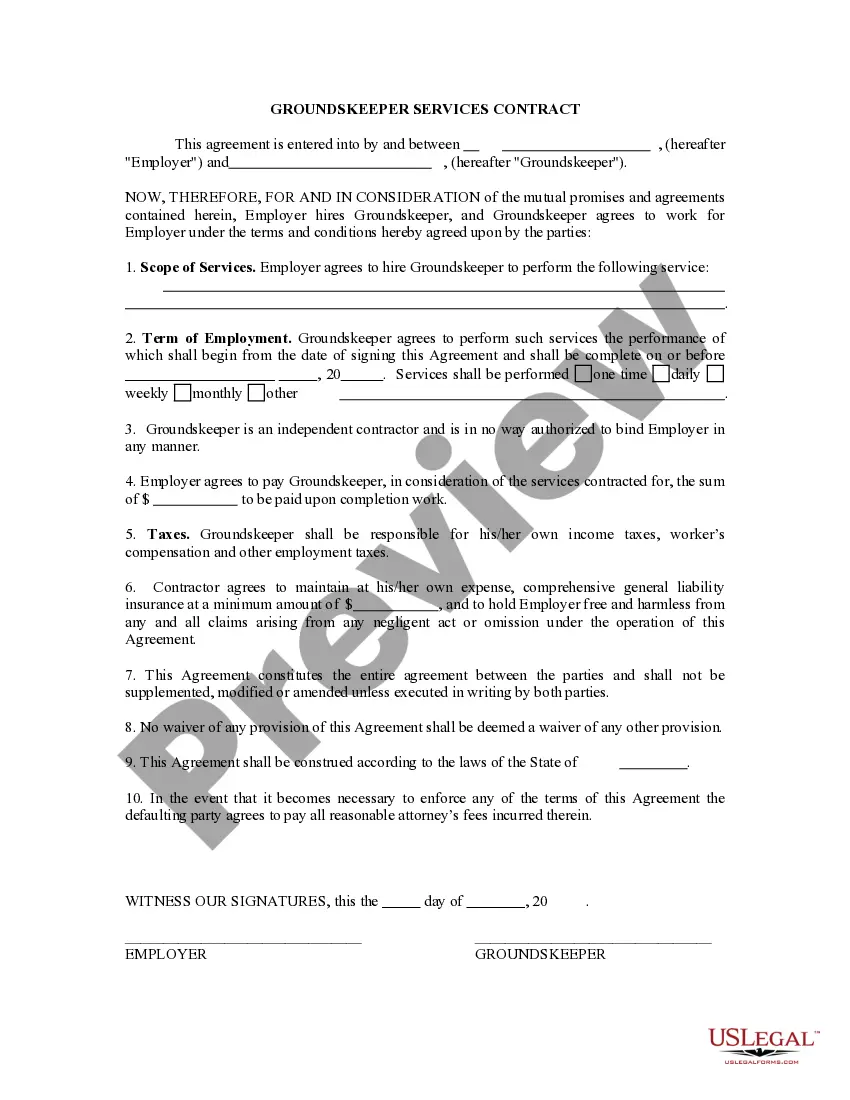
When this form is needed
This form should be utilized when a golf course employer seeks to formalize the hiring of a superintendent. It is particularly useful when new managerial roles are created or when existing roles need to be redefined. Additionally, this contract is important when ensuring compliance with employment laws that pertain to the operations of a golf course.
Who needs this form
- Golf course owners or management teams hiring a new superintendent.
- Superintendents looking to understand their roles and responsibilities in a formal context.
- Legal professionals drafting or reviewing employment contracts for golf course personnel.
Instructions for completing this form
- Identify the parties involved by entering their names and addresses at the beginning of the contract.
- Specify the date when the agreement becomes effective.
- Clearly define the superintendent's duties and responsibilities in the appropriate section.
- Fill in compensation details, including salary and any additional benefits like housing.
- Include termination notice requirements and specify the governing law state.
Notarization requirements for this form
This form does not typically require notarization unless specified by local law. Make sure to check state-specific regulations for any additional requirements that may apply.
Get your form ready online
Our built-in tools help you complete, sign, share, and store your documents in one place.
Make edits, fill in missing information, and update formatting in US Legal Forms—just like you would in MS Word.
Download a copy, print it, send it by email, or mail it via USPS—whatever works best for your next step.
Sign and collect signatures with our SignNow integration. Send to multiple recipients, set reminders, and more. Go Premium to unlock E-Sign.
If this form requires notarization, complete it online through a secure video call—no need to meet a notary in person or wait for an appointment.
We protect your documents and personal data by following strict security and privacy standards.

Make edits, fill in missing information, and update formatting in US Legal Forms—just like you would in MS Word.

Download a copy, print it, send it by email, or mail it via USPS—whatever works best for your next step.

Sign and collect signatures with our SignNow integration. Send to multiple recipients, set reminders, and more. Go Premium to unlock E-Sign.

If this form requires notarization, complete it online through a secure video call—no need to meet a notary in person or wait for an appointment.

We protect your documents and personal data by following strict security and privacy standards.
Typical mistakes to avoid
- Failing to specify all duties of the superintendent, leading to misunderstandings.
- Omitting compensation details that can cause disputes later.
- Not addressing termination procedures clearly, resulting in potential legal complications.
Why use this form online
- Convenient access from anywhere, allowing users to complete their contracts at their own pace.
- Editability enables users to customize the form according to their specific needs without extra legal costs.
- Reliable templates drafted by licensed attorneys ensure compliance with current legal standards.
Legal use & context
- This contract outlines clear expectations and responsibilities, reducing the likelihood of misunderstandings.
- Establishes a legal framework to protect the rights of both the Superintendent and the Employer.
- Incorporates provisions for dispute resolution through arbitration, offering a structured approach to resolving issues.
Summary of main points
- The contract clearly defines the employment relationship between the Golf Course Superintendent and the Employer.
- It includes essential details such as job duties, compensation, and termination procedures.
- Using a legally sound form helps both parties avoid potential pitfalls and disputes.
Looking for another form?




Form popularity
FAQ
There's something in the contract that allows the change (usually called a 'flexibility clause') the employee agrees to the change. the employee's representatives agree to the change (for example, a trade union)
A contract gives both you and your employer certain rights and obligations. The most common example is that you have a right to be paid for the work you do. Your employer has a right to give reasonable instructions to you and for you to work at your job. These rights and obligations are called 'contractual terms'.
Names and addresses. It's important that it is very clear who the parties are that the agreement is between. Job title. You don't want to include too much information about the actual role itself. Salary. Location. Hours of work. Benefits. Disciplinary and grievance procedures.
Sick pay and procedures. other paid leave (for example, maternity leave and paternity leave) notice periods.
There's something in the contract that allows the change (usually called a 'flexibility clause') the employee agrees to the change. the employee's representatives agree to the change (for example, a trade union)
Names of the Parties. The employer's organisation details and the employee's full name and address. Start Date. Job Title and Description. Place of Work. Hours of Work. Probationary Period. Salary. Assessments.
A written employment contract is a document that you and your employee sign setting forth the terms of your relationship. You don't have to enter into a written contract with every employee you hire. In fact, written employment contracts are generally the exception, rather than the rule.
Write the Title. When you proceed to type out your employment agreement, you should title your draft. State the Parties. Every employment agreement needs to clearly identify and state the parties. List Terms and Conditions. Outline Position Duties. Be Clear on Compensation. Add Other Clauses. Use These Contract Terms.
You might not have anything in writing, but a contract still exists.This is because your agreement to work for your employer and your employer's agreement to pay you for your work forms a contract. Your employer must give you a written statement the day you start work.