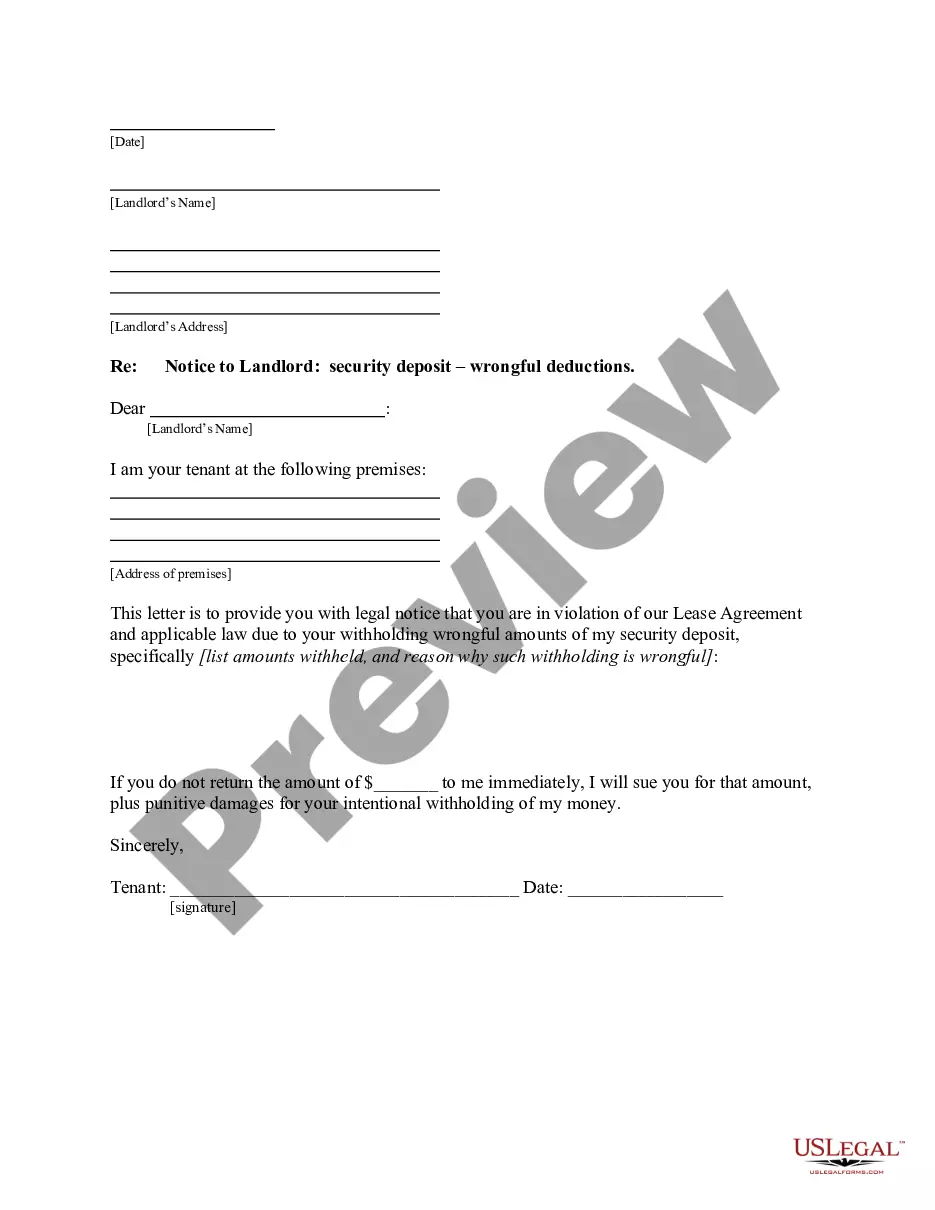
Agreement Between Publisher and Author
What is this form?
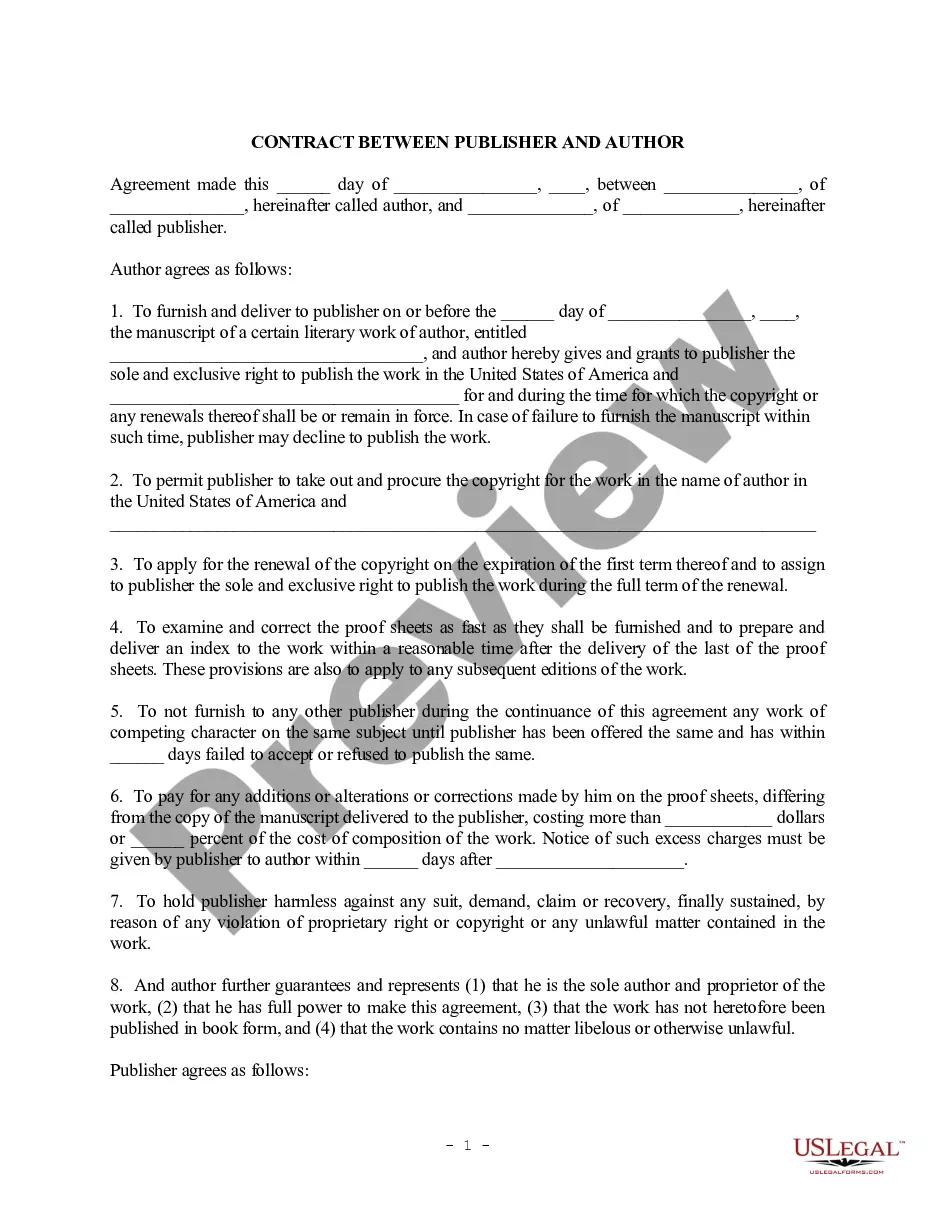
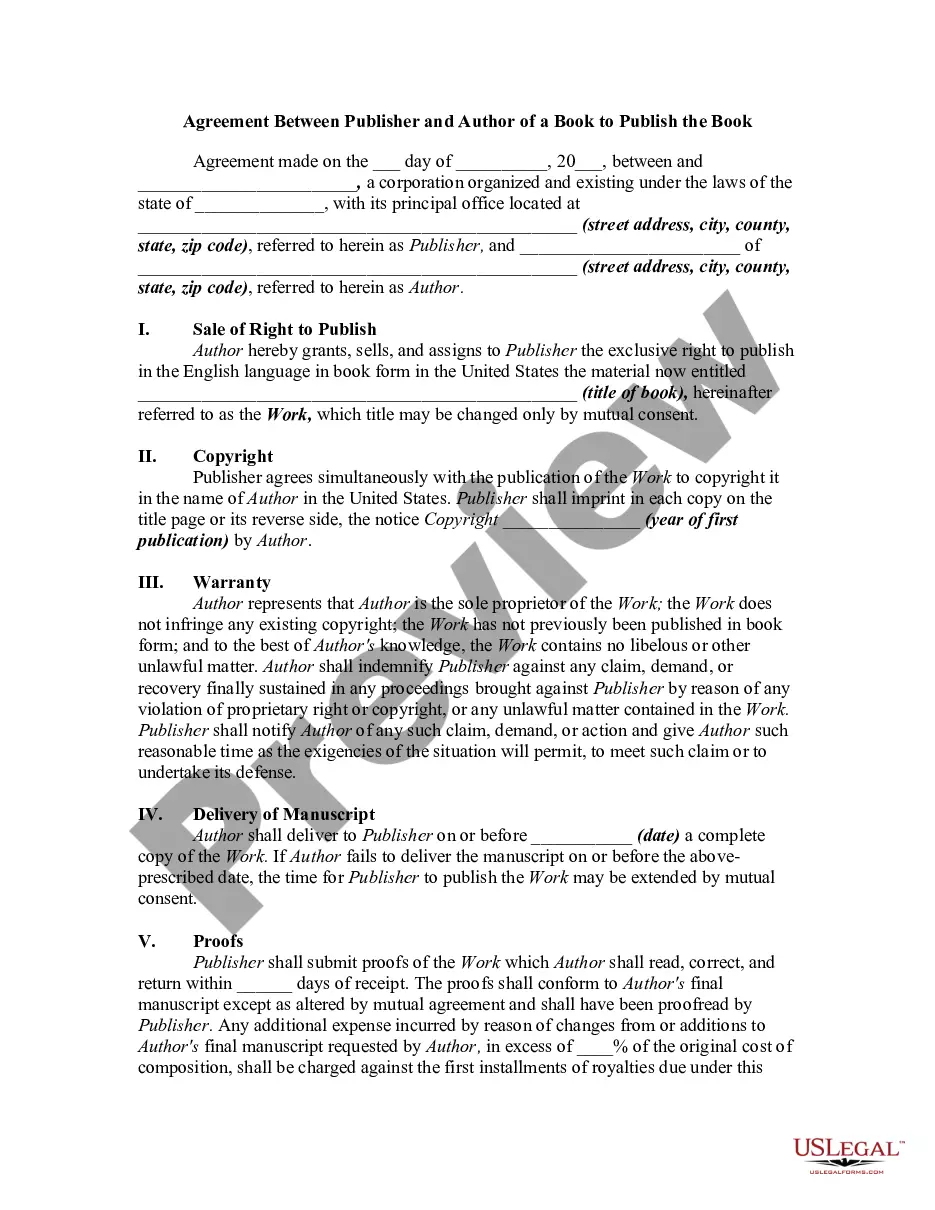
The Agreement Between Publisher and Author is a legal document that outlines the terms and conditions between a publisher and an author regarding the publication of a literary work. This agreement serves to establish the rights and responsibilities of both parties, including issues related to copyright, payment, and publication timelines. It is essential for authors and publishers to use this form to avoid misunderstandings and ensure a clear understanding of their professional relationship. Unlike general contracts, this agreement specifically addresses the unique aspects of publishing and authorship.
What’s included in this form
- Identification of the parties involved: author and publisher details.
- Delivery timeline for the manuscript and publication rights.
- Copyright assignment and renewal obligations.
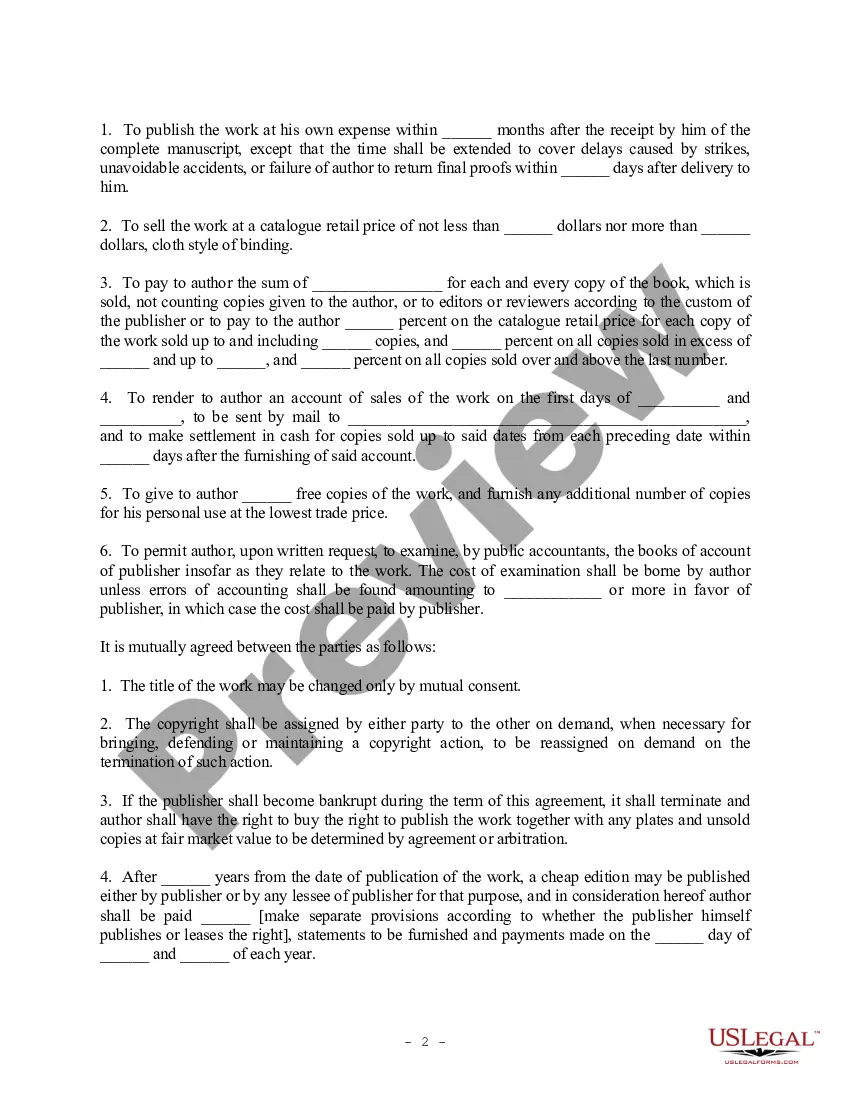
- Payment terms for sold copies and royalties.
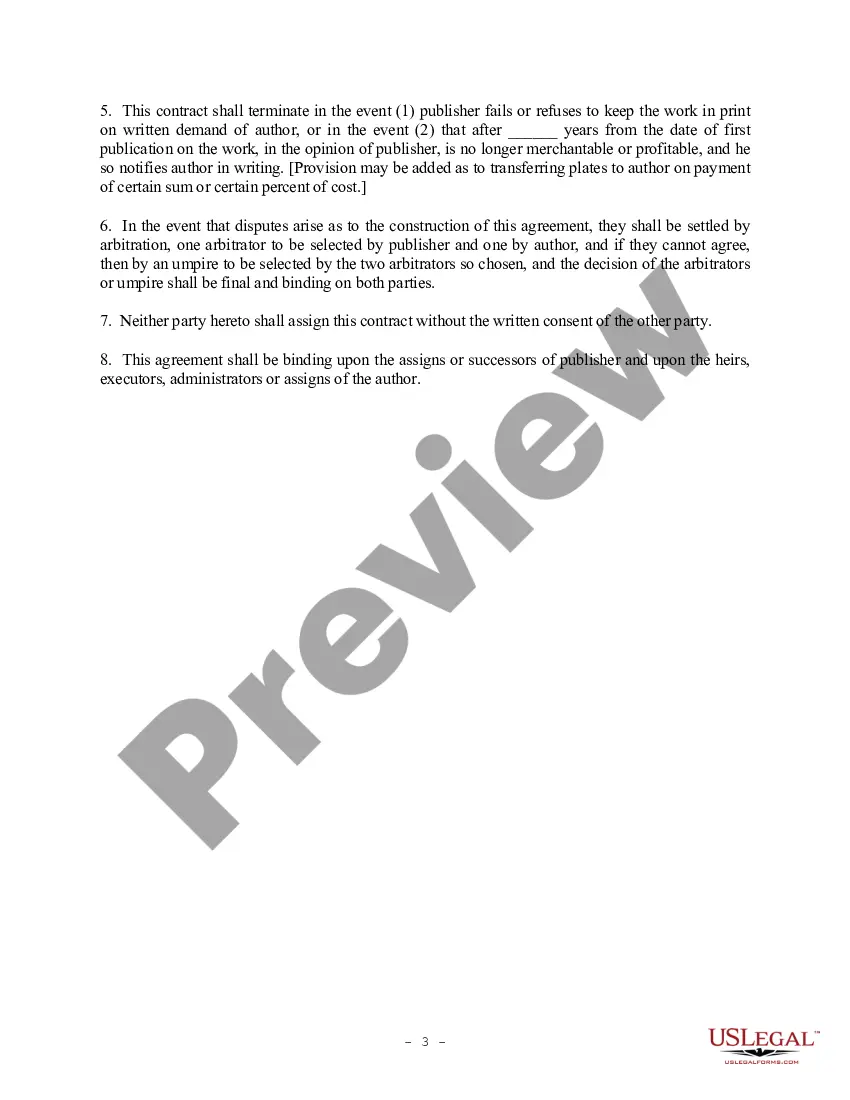
- Provisions for handling disputes and termination of the contract.
- Conditions regarding exclusivity and competition in publishing.

When to use this document
This form should be used when an author is ready to enter a formal agreement with a publisher for the publication of their literary work. It is applicable in scenarios such as when a manuscript is completed and an author seeks to publish their book through a publisher, or when discussions around publishing rights and royalties need to be formalized. Using this agreement also helps in clarifying expectations and protecting the intellectual property rights of the author.
Who should use this form
This agreement is intended for:
- Authors looking to publish a literary work with a publisher.
- Publishers seeking to formalize the terms of publication with an author.
- Literary agents representing authors in the publishing process.
- Individuals or businesses involved in the publication of books or literary works.
Steps to complete this form
- Identify the author and publisher by filling in their names and addresses.
- Specify the title of the literary work and the date the manuscript is due.
- Outline payment terms, including the royalty percentages and prices.
- Detail the delivery timelines and conditions for the manuscript.
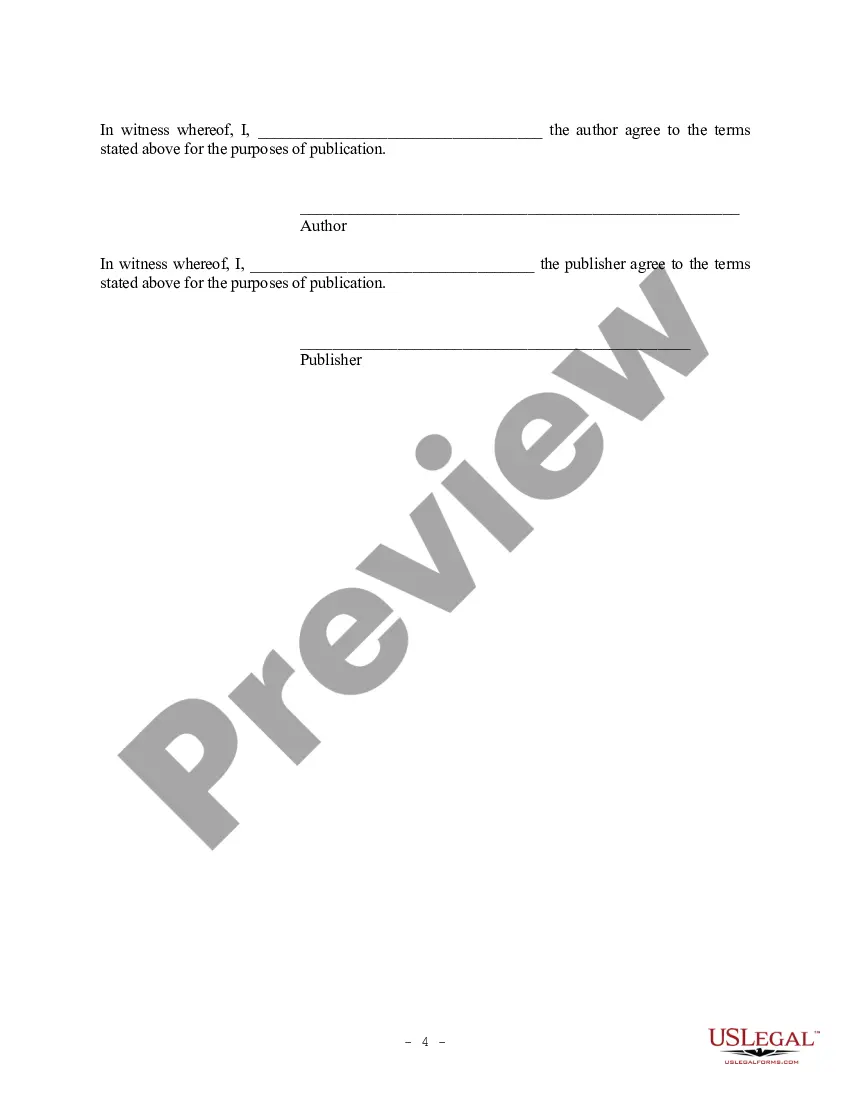
- Have both parties sign and date the agreement to indicate mutual consent.
Does this form need to be notarized?
This form does not typically require notarization to be legally valid. However, some jurisdictions or document types may still require it. US Legal Forms provides secure online notarization powered by Notarize, available 24/7 for added convenience.
Get your form ready online
Our built-in tools help you complete, sign, share, and store your documents in one place.
Make edits, fill in missing information, and update formatting in US Legal Forms—just like you would in MS Word.
Download a copy, print it, send it by email, or mail it via USPS—whatever works best for your next step.
Sign and collect signatures with our SignNow integration. Send to multiple recipients, set reminders, and more. Go Premium to unlock E-Sign.
If this form requires notarization, complete it online through a secure video call—no need to meet a notary in person or wait for an appointment.
We protect your documents and personal data by following strict security and privacy standards.

Make edits, fill in missing information, and update formatting in US Legal Forms—just like you would in MS Word.

Download a copy, print it, send it by email, or mail it via USPS—whatever works best for your next step.

Sign and collect signatures with our SignNow integration. Send to multiple recipients, set reminders, and more. Go Premium to unlock E-Sign.

If this form requires notarization, complete it online through a secure video call—no need to meet a notary in person or wait for an appointment.

We protect your documents and personal data by following strict security and privacy standards.
Mistakes to watch out for
- Failing to clearly define the terms of payment and royalties.
- Not specifying the timeline for manuscript delivery or publication.
- Leaving out essential clauses regarding copyright ownership.
- Not having both parties sign and date the agreement, making it unenforceable.
Advantages of online completion
- Convenient access to legally drafted templates, saving time and effort.
- Editable fields allow customization to fit specific publishing agreements.
- Reliable legal language reduces the risk of misunderstandings.
- Quick download and printing options facilitate immediate use.
Legal use & context
- This agreement is legally binding once signed by both parties.
- It should be stored in a safe location to reference in case of disagreements.
- Understand that any failure to adhere to the terms may result in legal action or dissolution of the agreement.
Main things to remember
- The Agreement Between Publisher and Author formalizes the relationship between an author and a publisher.
- Completing this form protects the rights and responsibilities of both parties involved.
- Clear terms regarding compensation and copyright are crucial for a successful publishing agreement.
Looking for another form?

Form popularity
FAQ
What Is the Writing Process? The 6 Stages of the Writing Process. Prewriting. Planning. Drafting. Revising. Editing. Publishing.
Stages of publishing The publishing process includes creation, acquisition, copy editing, production, printing (and its electronic equivalents), marketing, and distribution. Although listed as distinct stages, parts of these occur concurrently.
From editors, assistants, marketing teams and publicity teams - all will listen to them pitch your book and together discuss and decide whether they agree that it has enough merit to take it forward. Most published books are deemed successful dependent on by how well they sell within the first eight weeks of release.
Should I copyright my book before I submit it to editors and agents? There is no need to copyright your book (with the U.S. Copyright Office) before submitting it.The publisher merely handles the paperwork on behalf of the author, and the copyright is the author's property.
Technically, the answer is yes. However, while it may be legal, technically, I would see this as unethical. If the book is published with the same title and credits the same author, then there is really no foul because the author is still getting credit.
Usually, the author of the creative work is the owner of the copyright. But in the publishing industry, the owner of the copyright may be the publishing company due to an agreement between the author and the publisher. Some of the big names in book publishing are Random House, DoubleDay, and Penguin.
Author assigns copyright to the publisher Assignment of copyright is generally permanent unless the agreement indicates otherwise. If the author assigns copyright to the publisher; the publisher can also, at their discretion, enter into agreements with other parties to use the work.
Typically it is the author but may even be the publisher. If the copyright holder is deceased, it may be his/her heirs or estate. There are several resources online to search for copyright holders: The U.S. Copyright Office (both free and fee-based)
Generally, copyright in an article is owned by the author or the author's institution prior to publication. In the subscription journal publishing model the author assigns copyright to the publisher at the time of publication when they sign the publisher's agreement.