Contract for Sale of Goods on Consignment
What this document covers
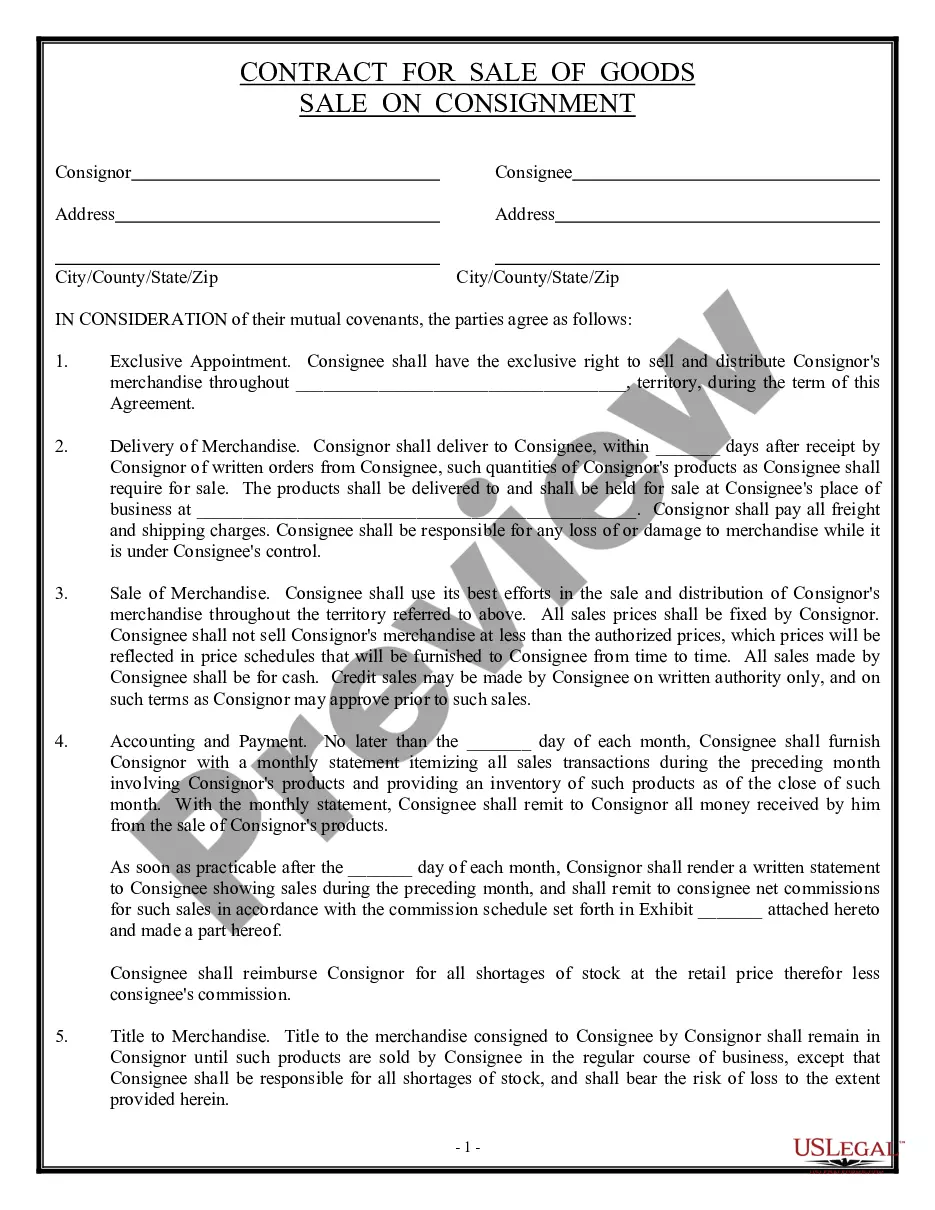
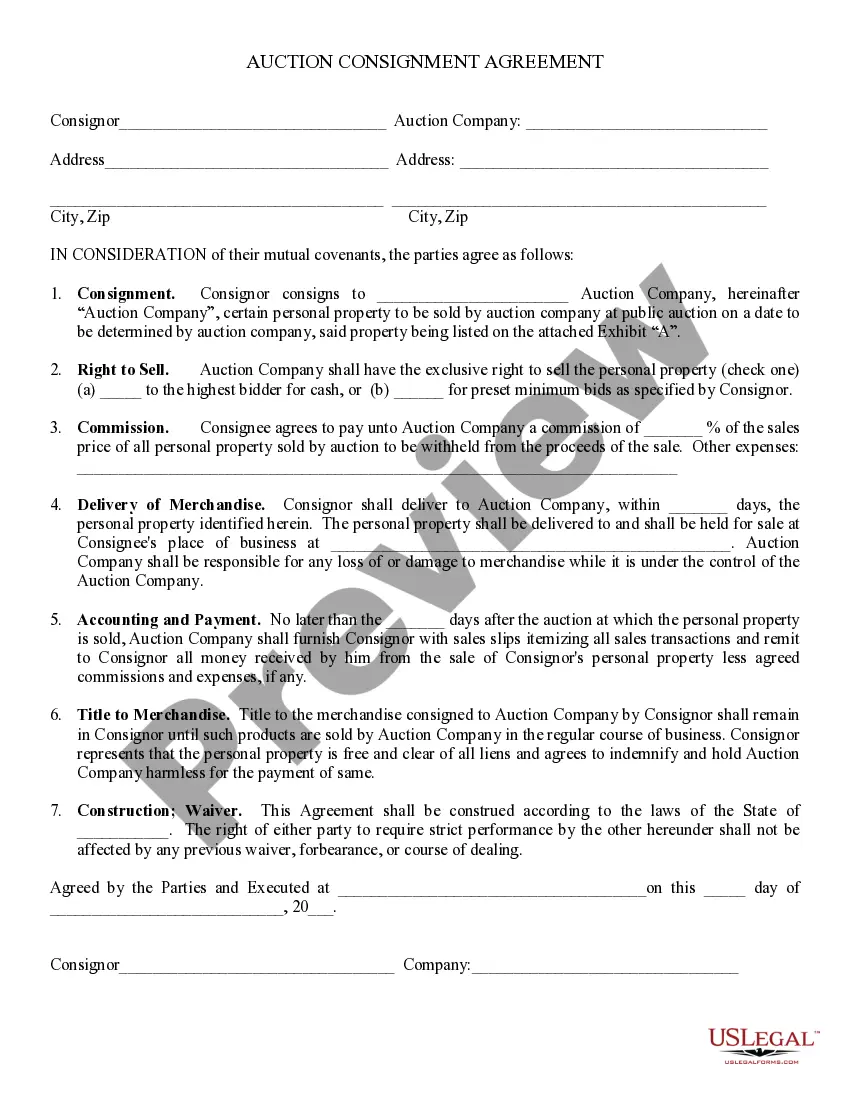
The Contract for Sale of Goods on Consignment is a legal document that establishes an agreement between a consignor and a consignee for the sale and distribution of goods. In this arrangement, the consignee is granted the exclusive right to sell the consignor's merchandise within a specified territory. This form outlines the responsibilities of both parties, including payment terms and inventory management. It is essential for businesses that want to manage sales through consignment while clearly delineating the rights and obligations of each party involved.
Main sections of this form
- Exclusive appointment granting the consignee the right to sell the consignor's goods.
- Delivery terms detailing how and when merchandise is provided to the consignee.
- Sales management provisions specifying sales prices and payment methods.
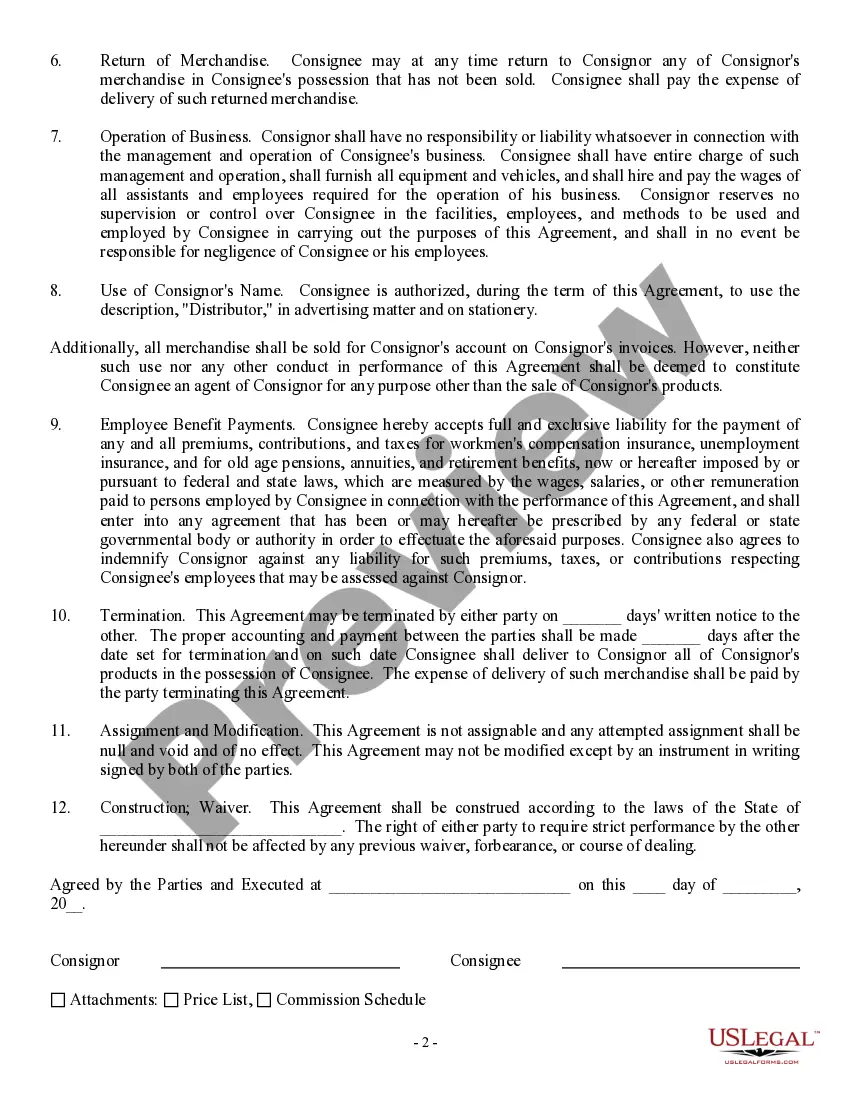
- Accounting and payment obligations, including regular reporting on sales and inventory.
- Title retention clauses explaining ownership of goods until sold.
- Termination criteria outlining conditions under which the agreement can be ended.

When to use this form
This form is used when a business wishes to sell products through a consignor-consignee relationship. It is ideal for manufacturers, wholesalers, or individuals who want to place their products in retail environments without selling them directly. Use this form when you want to establish clear terms regarding sales rights, inventory accountability, and payment structures between the parties involved.
Intended users of this form
This form is suitable for:
- Manufacturers looking to distribute products without direct sales involvement.
- Wholesalers who want to partner with retailers for selling stock.
- Retailers interested in selling goods on consignment to reduce upfront inventory costs.
- Any individual or business engaging in consignment sales to protect their legal rights.
Steps to complete this form
- Identify the parties involved by filling in the names and addresses of the consignor and consignee.
- Specify the exclusive territory where the consignee is authorized to sell the merchandise.
- Enter the delivery timeline for the goods and the consignee's place of business.
- Detail the terms for payment, including frequency of sales reports and commission arrangements.
- Fill in any details regarding the return of unsold merchandise and termination conditions.
Notarization requirements for this form
In most cases, this form does not require notarization. However, some jurisdictions or signing circumstances might. US Legal Forms offers online notarization powered by Notarize, accessible 24/7 for a quick, remote process.
Get your form ready online
Our built-in tools help you complete, sign, share, and store your documents in one place.
Make edits, fill in missing information, and update formatting in US Legal Forms—just like you would in MS Word.
Download a copy, print it, send it by email, or mail it via USPS—whatever works best for your next step.
Sign and collect signatures with our SignNow integration. Send to multiple recipients, set reminders, and more. Go Premium to unlock E-Sign.
If this form requires notarization, complete it online through a secure video call—no need to meet a notary in person or wait for an appointment.
We protect your documents and personal data by following strict security and privacy standards.

Make edits, fill in missing information, and update formatting in US Legal Forms—just like you would in MS Word.

Download a copy, print it, send it by email, or mail it via USPS—whatever works best for your next step.

Sign and collect signatures with our SignNow integration. Send to multiple recipients, set reminders, and more. Go Premium to unlock E-Sign.

If this form requires notarization, complete it online through a secure video call—no need to meet a notary in person or wait for an appointment.

We protect your documents and personal data by following strict security and privacy standards.
Avoid these common issues
- Failing to specify the territory for exclusive sales, which can lead to disputes.
- Neglecting to outline the payment schedule for sales can result in misunderstandings.
- Not addressing inventory accountability, which may lead to unclear responsibilities for stock shortages.
- Overlooking termination terms, potentially leaving both parties unclear on how to end the agreement properly.
Benefits of completing this form online
- Convenient access to download the form anytime from anywhere.
- Editability allows you to customize the document to fit specific needs quickly.
- Reliable templates drafted by licensed attorneys ensure legal compliance.
- No need for traveling to a legal office, saving time and costs.
Legal use & context
- The contract outlines the responsibilities and rights of both the consignor and consignee.
- It establishes a clear framework for handling unsold goods and damages.
- Enforceability may vary, so it's important to ensure compliance with state-specific laws.
Looking for another form?
Form popularity
FAQ
Consignment sales are a great way to save money on your kid's clothes, toys, equipment, etc. Will a little work, you can make some or all of your money back. It is a great way to get children's clothes for cheap!
The parties to a consignment are consignor and consignee whereas the parties to the sale are buyer and seller.In consignment, only the possession of goods transfers not the ownership. On the other hand, in the sale, both the ownership and possession are transferred to the buyer.
Benefits of Consignment for a Small Business The principle benefit of consignment is that it enables small businesses to sell their goods without the expense of having their own storefront.Consignment gives small businesses the opportunity to sell their goods without having to pay rent on premises and staff.
Consignment is an arrangement in which goods are left in the possession of an authorized third party to sell. Typically, the consignor receives a percentage of the revenue from the sale (sometimes a very large percentage) in the form of commission.
Consignment is when a shop sells goods for an owner. The owner keeps ownership of his item until it sells, if it sells. As the owner, you'd pay a small fee to the shop as compensation for them selling your item.Generally, when they sell your bicycle, they take their 50% or $10.
The average percentage for consignment will vary based on what kind of item you're selling. Typical rates can range anywhere from 25% to 60%, depending on the item. The more valuable the item, the higher the consignment percentage you're likely to get. If you're an artist, you can also sell your art on consignment.
Start early. Waiting until the last minute is definitely a recipe for disaster! Price competitively. Only include in-style items that are in good condition. Participate in 2 sales that use the same online tagging system.
In sale, the seller sends the goods to the buyer only after getting an order from the latter. In consignment, the risk involved in the goods sent remains with the consignor till the consignee sells the goods. In case of sale, the risk of the goods sold is immediately transferred to the buyer.