Security Agreement involving Sale of Collateral by Debtor
About this form
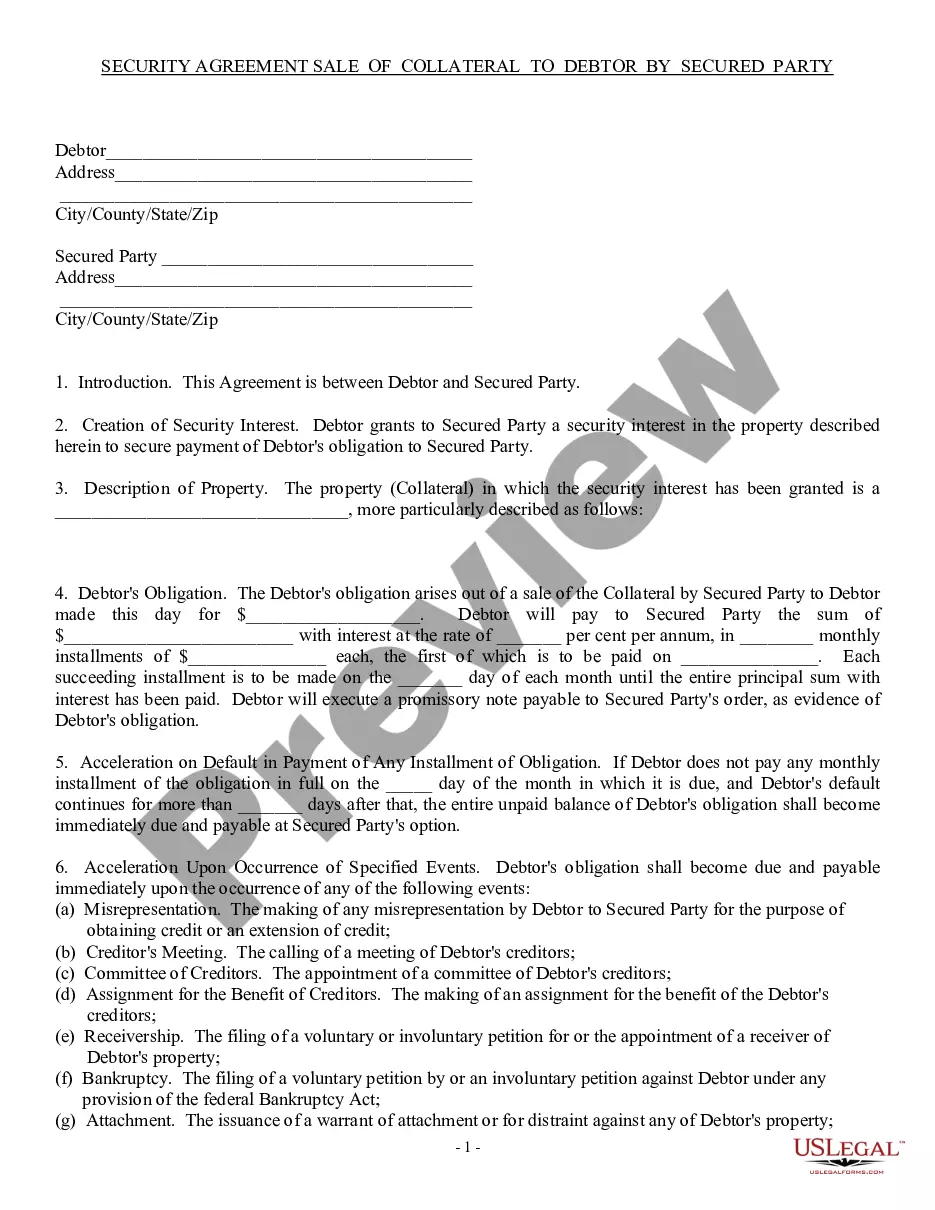
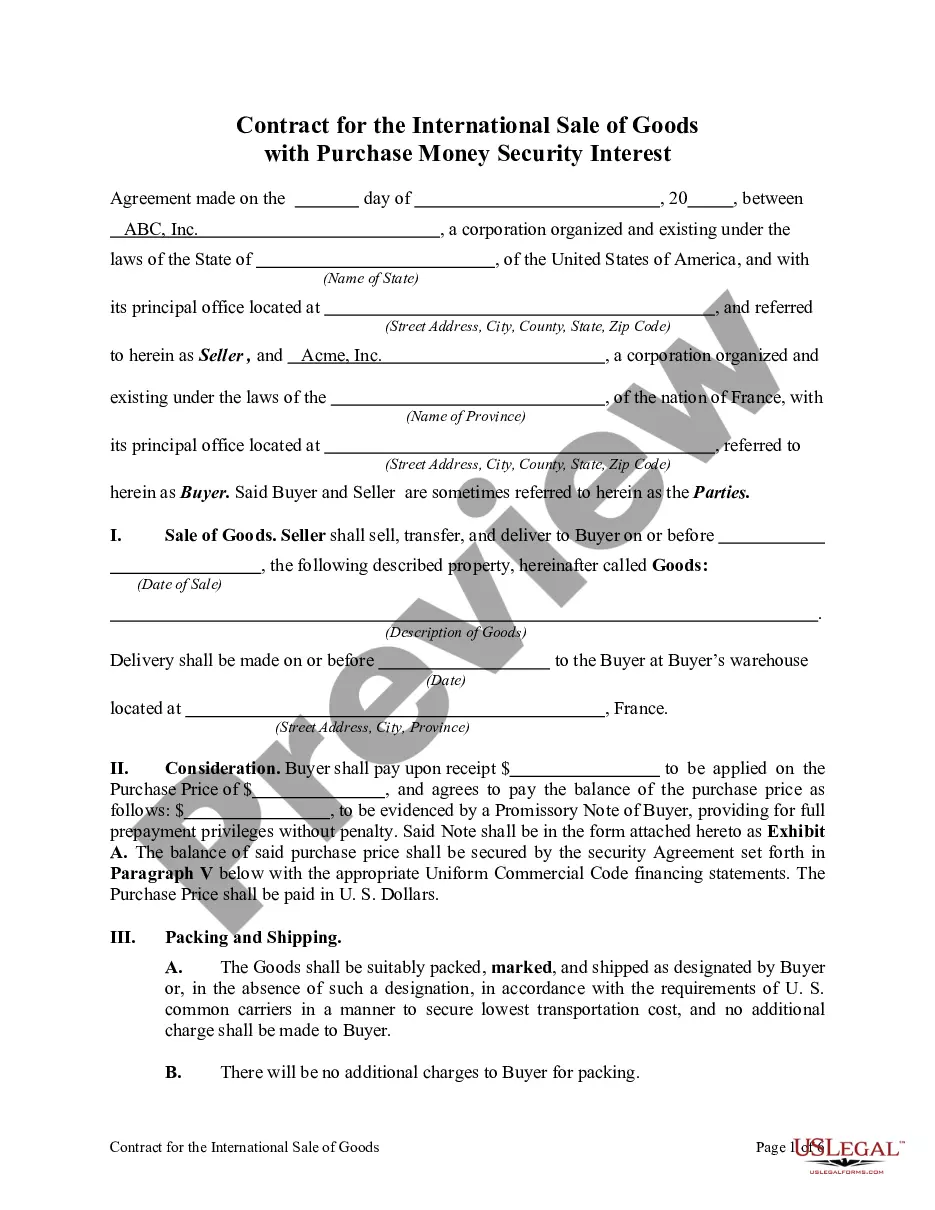
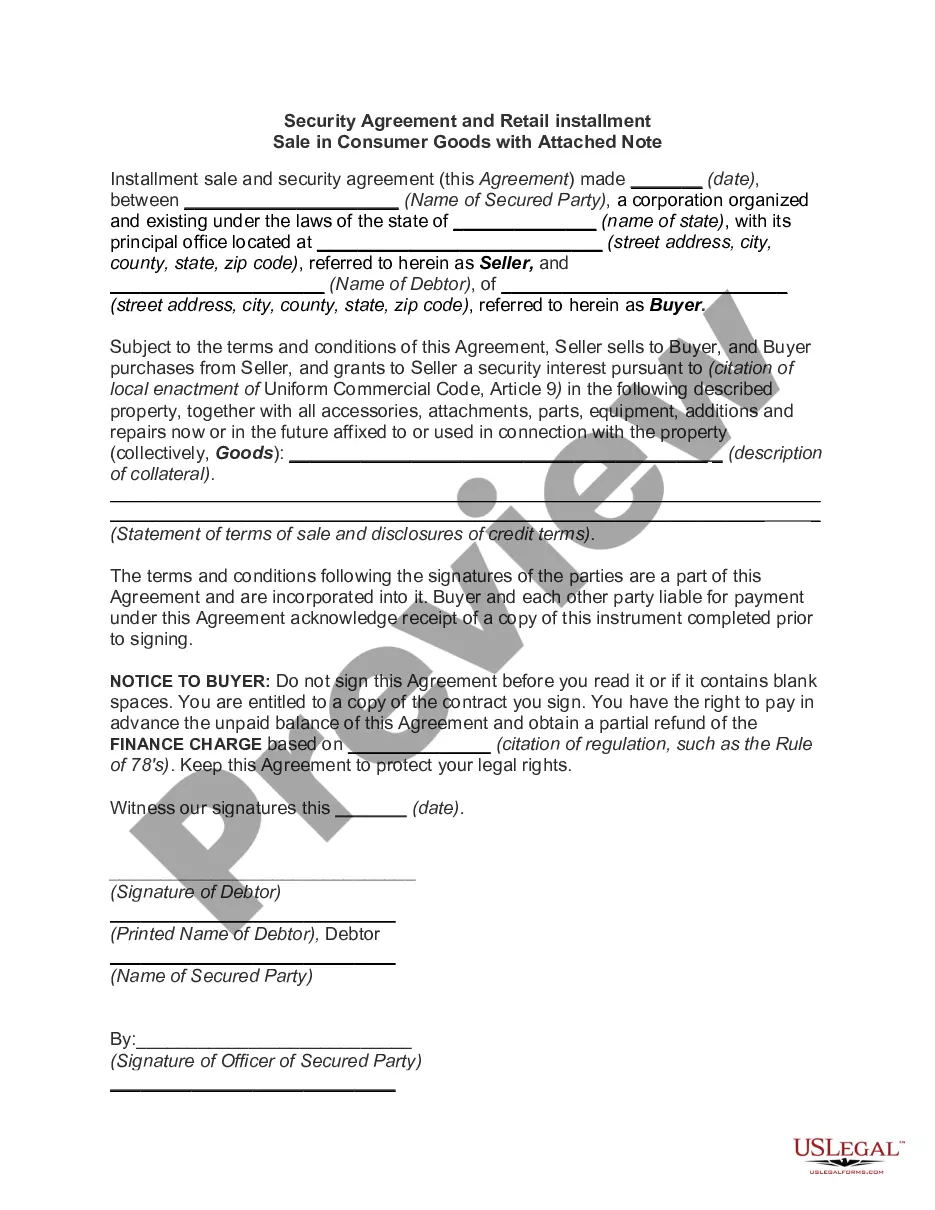
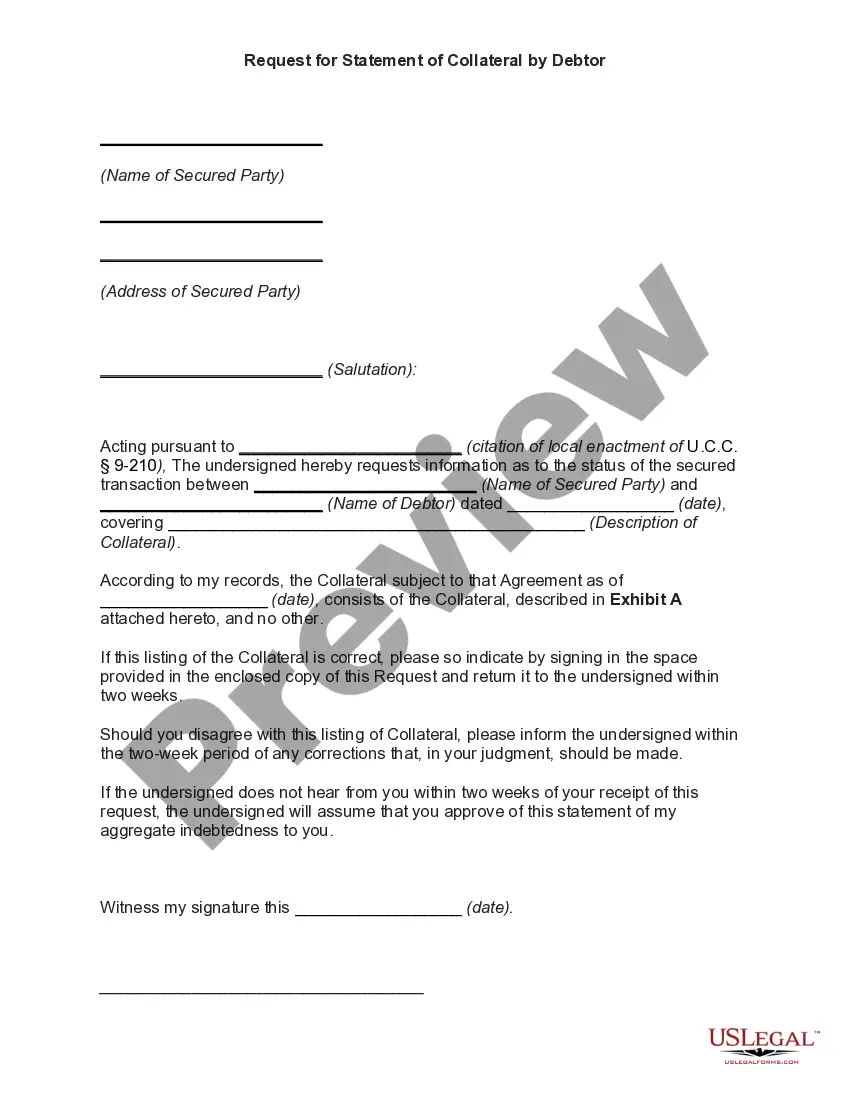
The Security Agreement involving Sale of Collateral by Debtor is a legal document that establishes a secured party's interest in specific property to secure a debtor's obligations. This type of agreement is crucial for ensuring that creditors can claim the collateral if the debtor fails to meet their repayment obligations. Unlike unsecured loans, this agreement provides the secured party with legal rights to the collateral, enhancing their protection in the event of default.
Main sections of this form
- Introduction: Identifies the parties involved in the agreement.
- Creation of Security Interest: Establishes the debtor's security interest in the collateral.
- Description of Property: Details the specific property or collateral secured under the agreement.
- Debtor's Obligation: Outlines the terms of repayment, including amounts and due dates.
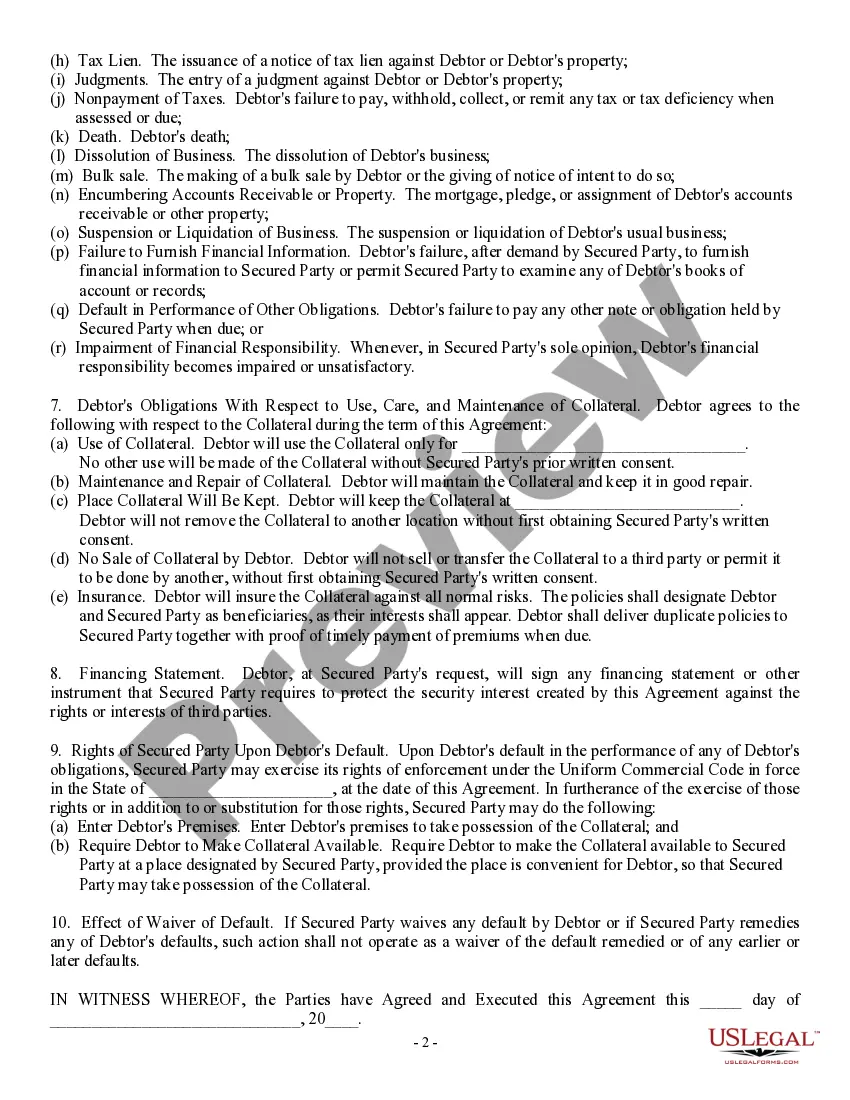
- Acceleration on Default: Specifies conditions under which the secured party can immediately demand payment if the debtor defaults.
- Debtor's Obligations: Lists requirements for maintaining and using the collateral.


When to use this document
This form is typically used when a debtor is acquiring property through financing and needs to secure the loan with collateral. It is particularly relevant in situations where the debtor and secured party need to formalize a creditor-debtor relationship and protect the secured party's interests over the collateral. This could include loans for machinery, vehicles, or real property, where the lender wishes to ensure legal remedies if payments are not made as agreed.
Intended users of this form
- Debtors seeking a loan or credit that requires the use of their property as collateral.
- Secured parties, such as lenders or financial institutions, wishing to protect their interests by securing their loans with collateral.
- Small business owners looking to finance equipment or inventory.
Steps to complete this form
- Identify the parties: Fill in the names and addresses of the debtor and secured party.
- Specify the property: Provide a detailed description of the collateral being secured.
- Enter the obligations: Clearly state the amounts to be paid, interest rate, and payment schedule.
- Outline default conditions: Specify the events that would trigger default and subsequent actions.
- Sign and date the agreement: Ensure both parties sign and date the document to validate the agreement.
Does this document require notarization?
This form does not typically require notarization unless specified by local law. It's advisable to check your state's regulations regarding the notarization of such agreements.
Get your form ready online
Our built-in tools help you complete, sign, share, and store your documents in one place.
Make edits, fill in missing information, and update formatting in US Legal Forms—just like you would in MS Word.
Download a copy, print it, send it by email, or mail it via USPS—whatever works best for your next step.
Sign and collect signatures with our SignNow integration. Send to multiple recipients, set reminders, and more. Go Premium to unlock E-Sign.
If this form requires notarization, complete it online through a secure video call—no need to meet a notary in person or wait for an appointment.
We protect your documents and personal data by following strict security and privacy standards.

Make edits, fill in missing information, and update formatting in US Legal Forms—just like you would in MS Word.

Download a copy, print it, send it by email, or mail it via USPS—whatever works best for your next step.

Sign and collect signatures with our SignNow integration. Send to multiple recipients, set reminders, and more. Go Premium to unlock E-Sign.

If this form requires notarization, complete it online through a secure video call—no need to meet a notary in person or wait for an appointment.

We protect your documents and personal data by following strict security and privacy standards.
Common mistakes to avoid
- Failing to provide a detailed description of the collateral.
- Not specifying the correct payment terms and conditions.
- Neglecting to sign and date the form by both parties.
- Overlooking local regulations that may require specific provisions.
Benefits of completing this form online
- Convenience: Download the form immediately and complete it at your own pace.
- Editability: Customize the form to meet your specific needs easily.
- Reliability: Access templates reviewed by licensed attorneys to ensure legal compliance.
Legal use & context
- This form creates a legally binding agreement between the debtor and secured party.
- Properly executed, it complies with the Uniform Commercial Code applicable in many jurisdictions.
- Failure to adhere to the terms may result in financial and legal repercussions for the debtor.
Key takeaways
- The Security Agreement provides legal protection to secured parties when debtors sell collateral.
- It specifies the conditions under which the debtor's obligations can be accelerated.
- Both parties must complete and sign the form to ensure its validity.
Looking for another form?
Form popularity
FAQ
In general, the promissory note is your written promise to repay the loan and a security agreement is used when collateral is given for the loan.
By Practical Law Finance. This is a standard form of pledge agreement to be used in connection with a syndicated loan agreement. It is intended to create a security interest over equity interests and promissory notes owned by the grantors. The grantors are usually the borrower, its parent and its subsidiaries.
A security agreement is a document that provides a lender a security interest in a specified asset or property that is pledged as collateral. Security agreements often contain covenants that outline provisions for the advancement of funds, a repayment schedule, or insurance requirements.
A pledged asset is a valuable possession that is transferred to a lender to secure a debt or loan. A pledged asset is collateral held by a lender in return for lending funds.Pledged assets can include cash, stocks, bonds, and other equity or securities.
Under the UCC, a pledge agreement is a security agreement. The nature of the pledged assets means that a pledge agreement may contain different representations and warranties and covenants than a security agreement over business assets (for example, voting rights).
Security agreements and financing statements are often confused with one another. The primary difference is that the financing statement largely serves as notice that a creditor possesses security interest in the debtor's assets or property. The financing statement is not a contract.
A security agreement refers to a document that provides a lender a security interest in a specified asset or property that is pledged as collateral.In the event that the borrower defaults, the pledged collateral can be seized by the lender and sold.
The term purchase money security interest (PMSI) refers to a legal claim that allows a lender to either repossess property financed with its loan or to demand repayment in cash if the borrower defaults. It gives the lender priority over claims made by other creditors.