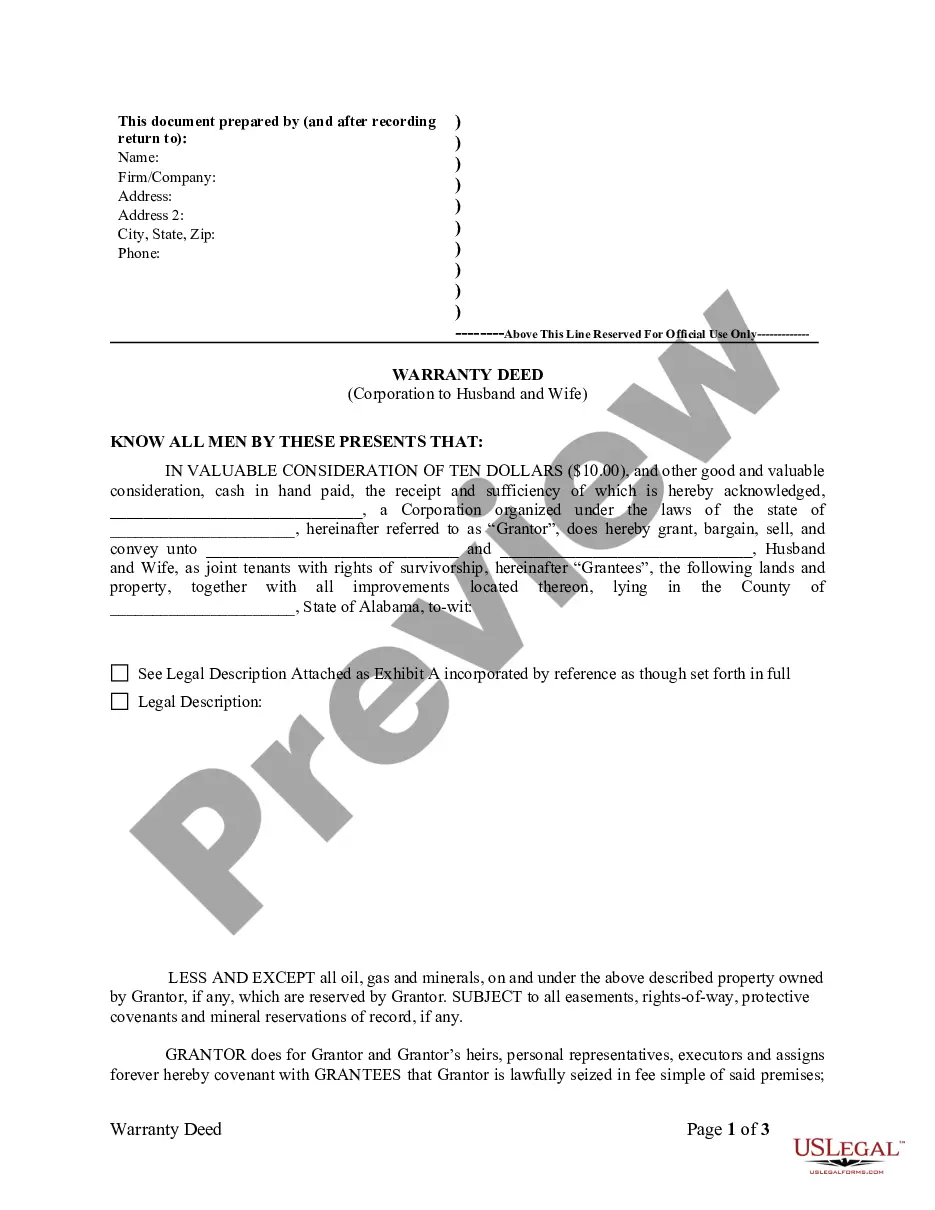
Irrevocable Trust as Designated Beneficiary of an Individual Retirement Account
What is this form?
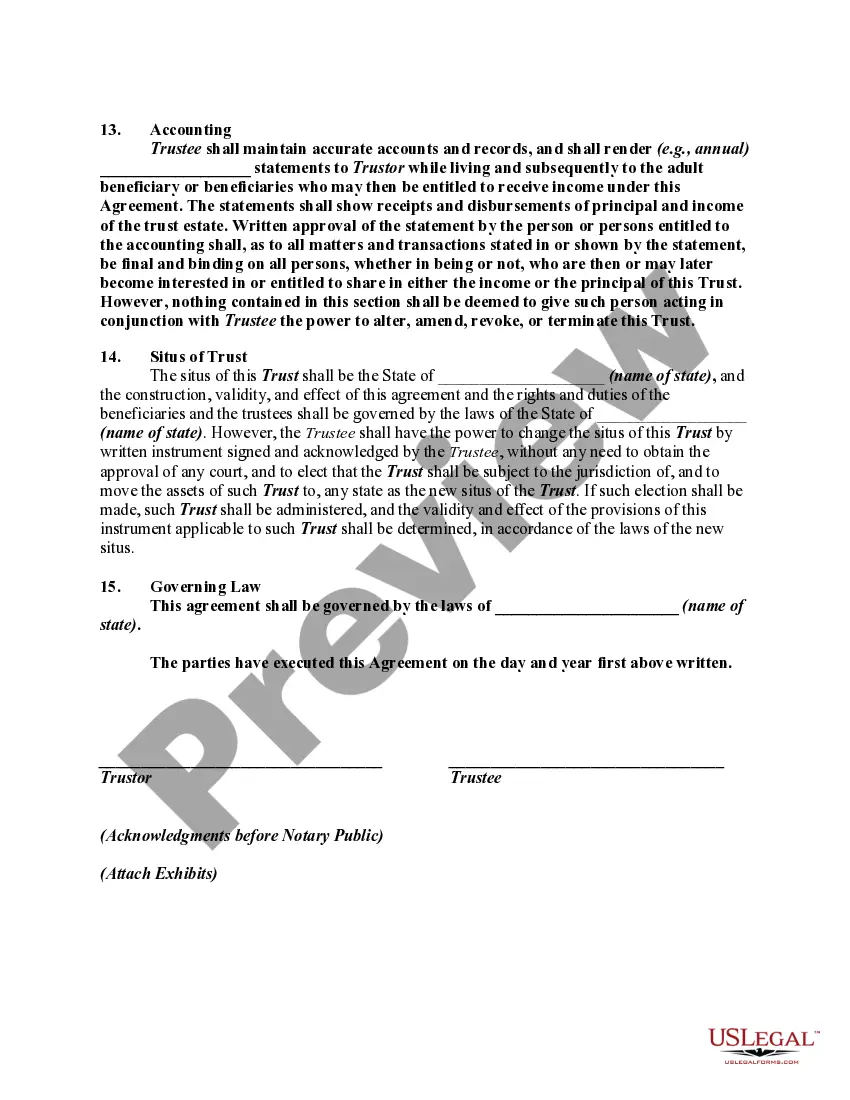
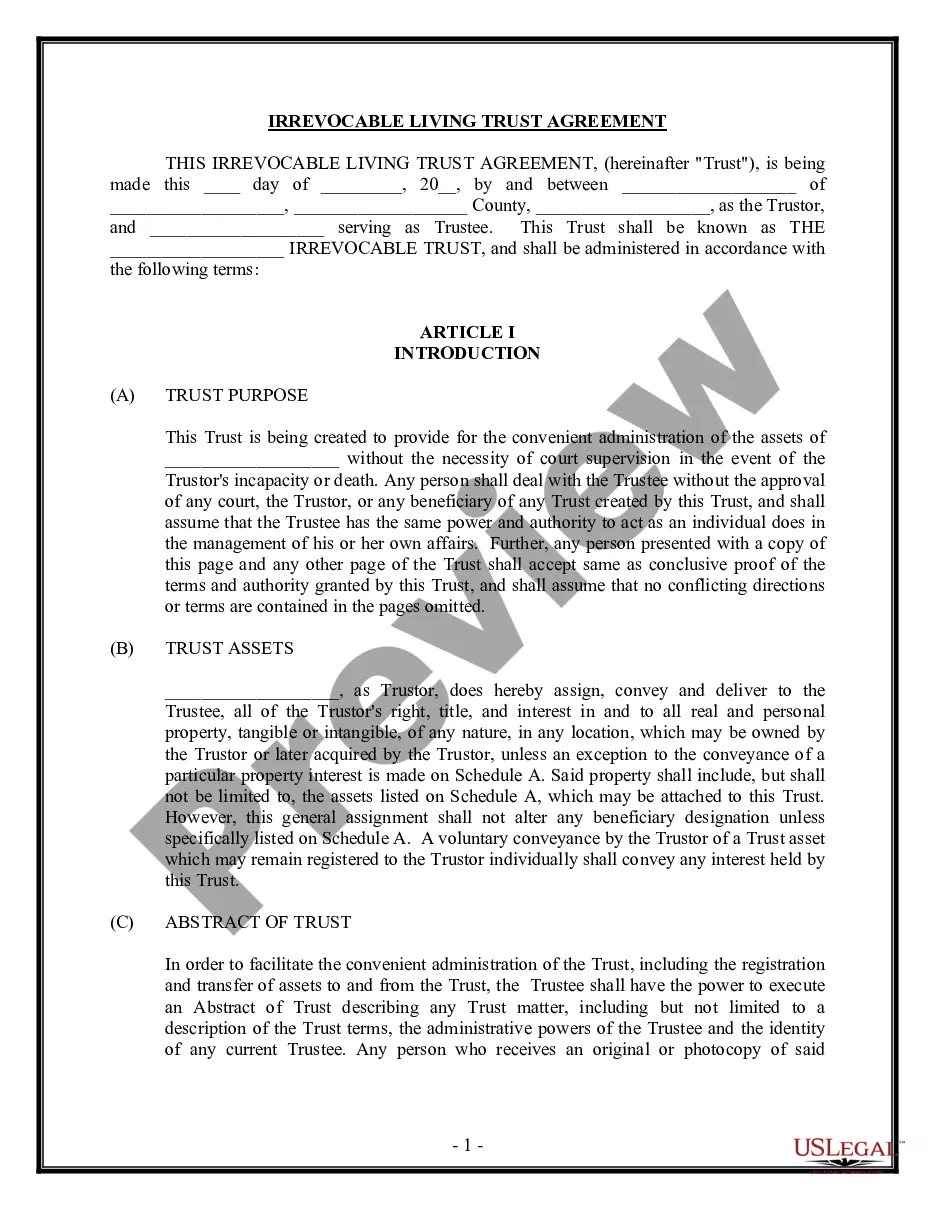
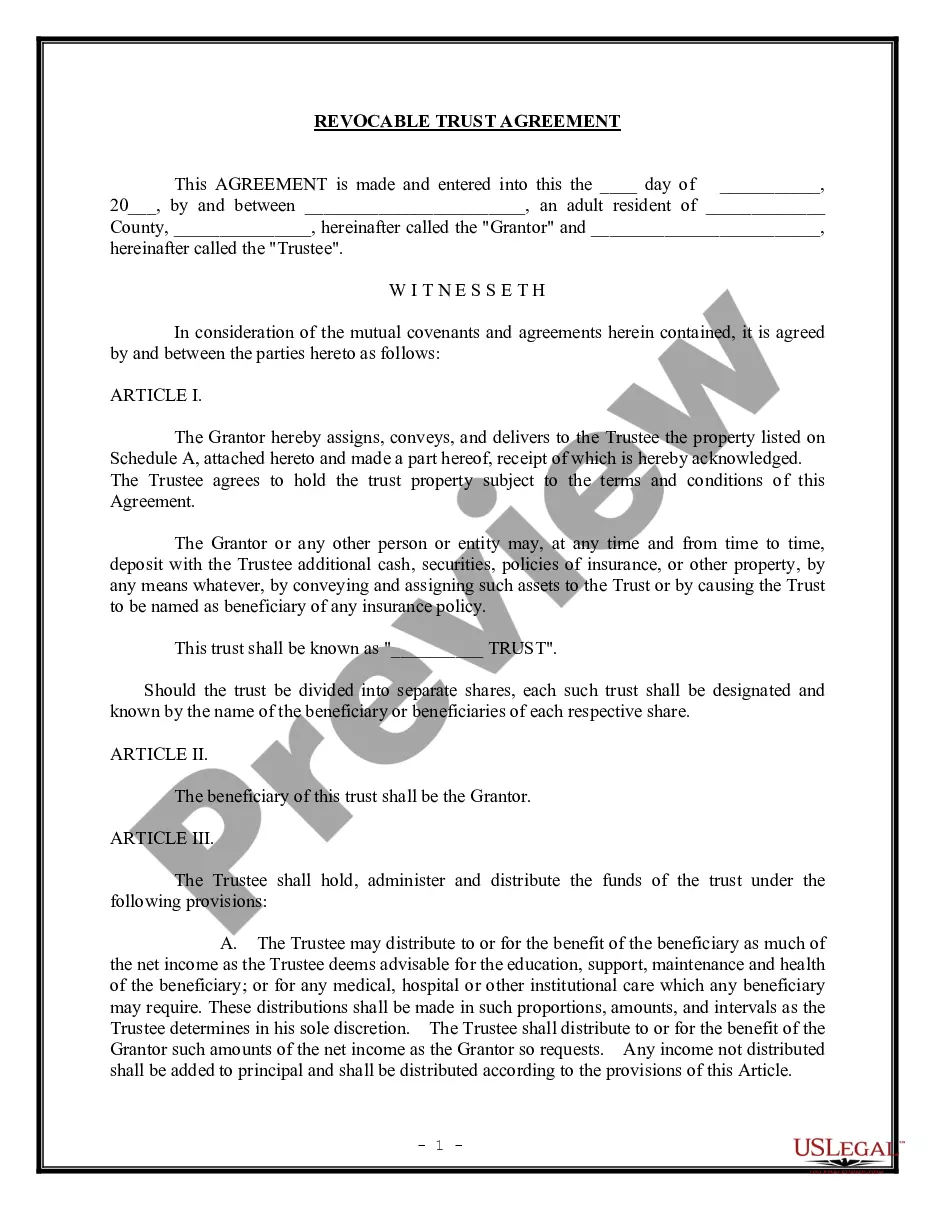
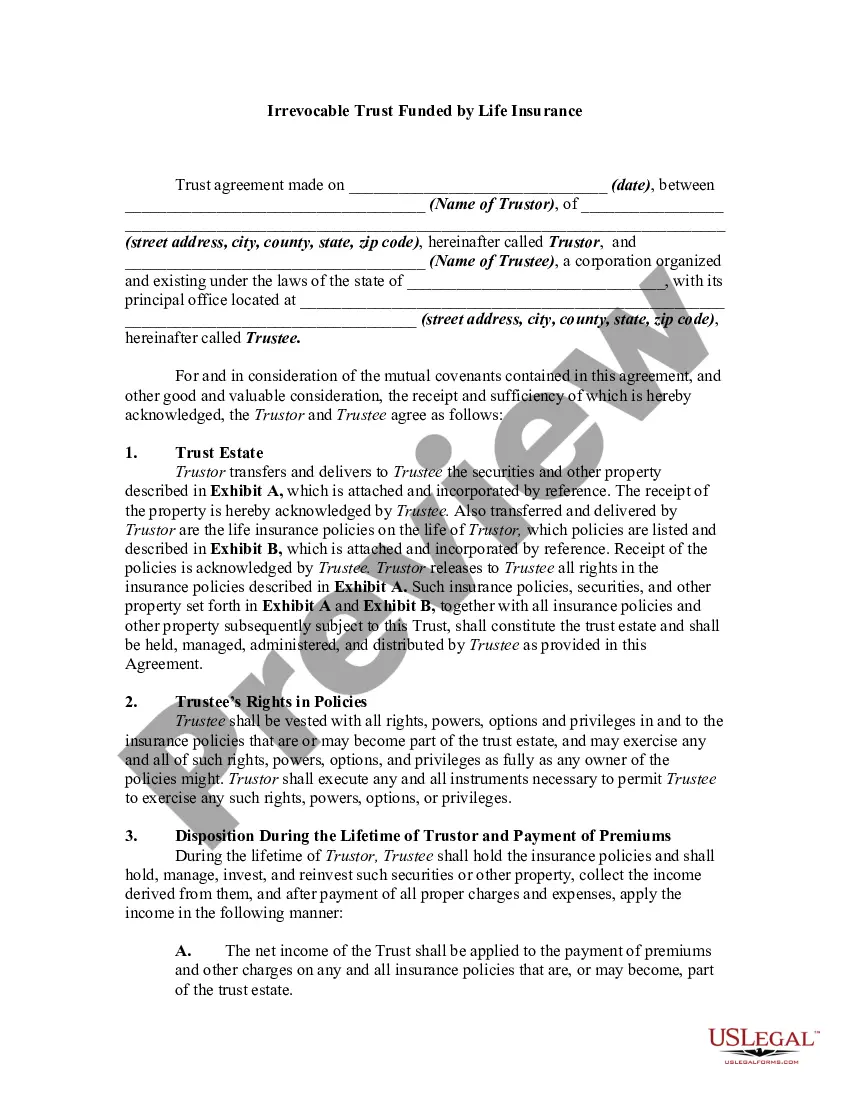
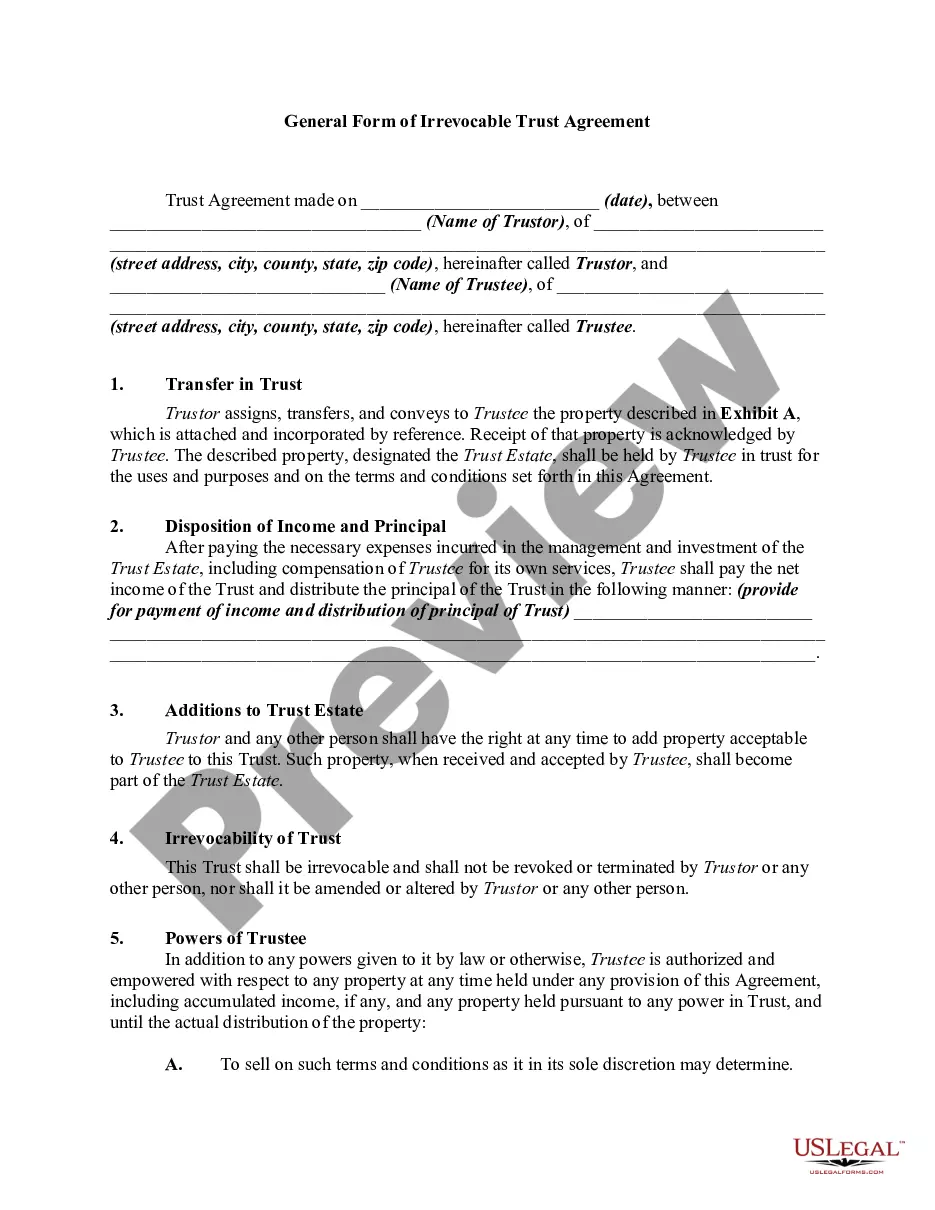
The Irrevocable Trust as Designated Beneficiary of an Individual Retirement Account is a legal document that establishes a trust to manage the assets of an Individual Retirement Account (IRA). This form allows the trust to be designated as the beneficiary of an IRA, enabling significant tax benefits and long-term deferral strategies. Unlike other beneficiary designations, this trust utilizes the "look through" rule, allowing the IRA assets to be distributed based on the life expectancy of the trust beneficiaries, rather than being subject to a shorter payout period after the account holder's death.
Key components of this form
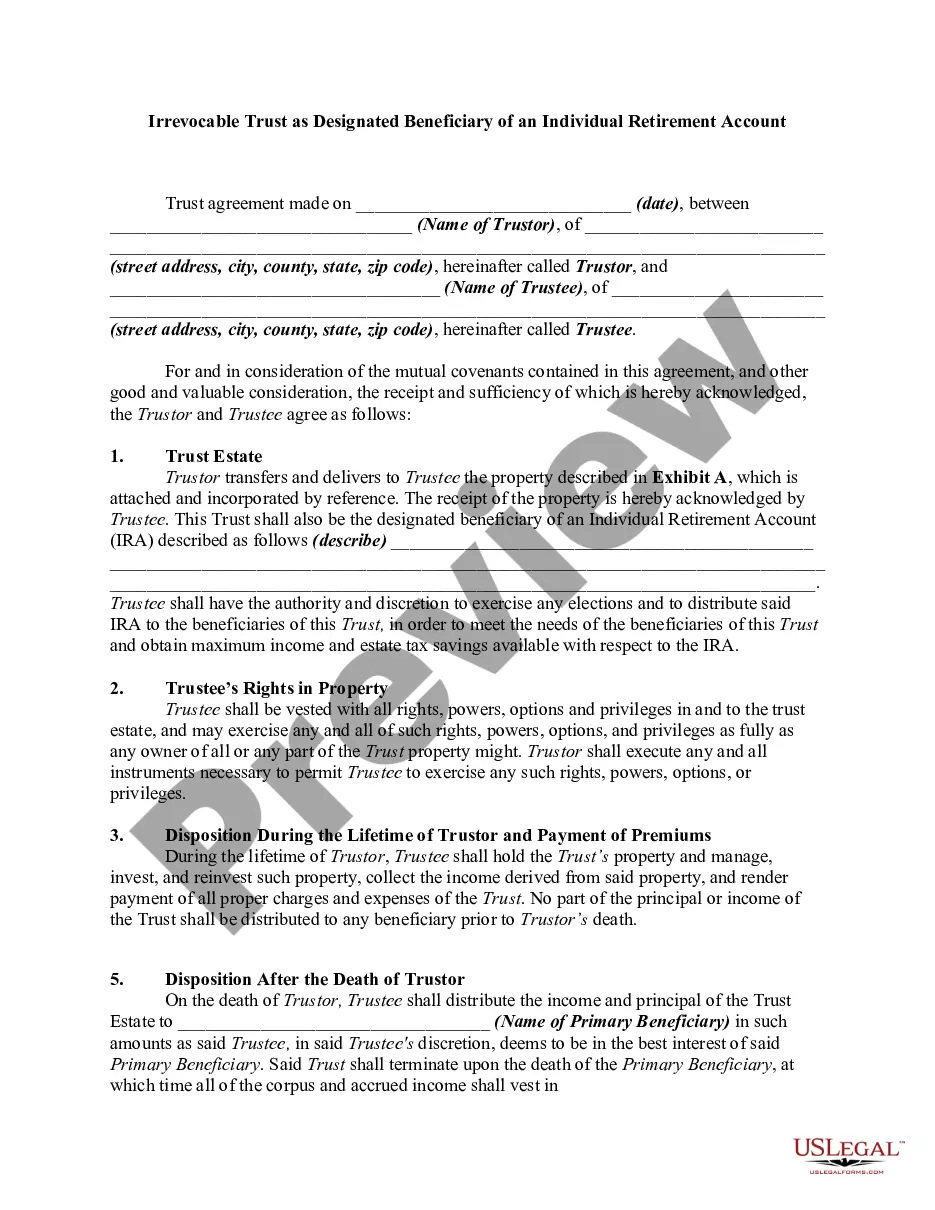
- Trust agreement details including names and addresses of the Trustor and Trustee.
- Assignment of property to the trust and designation of the IRA.
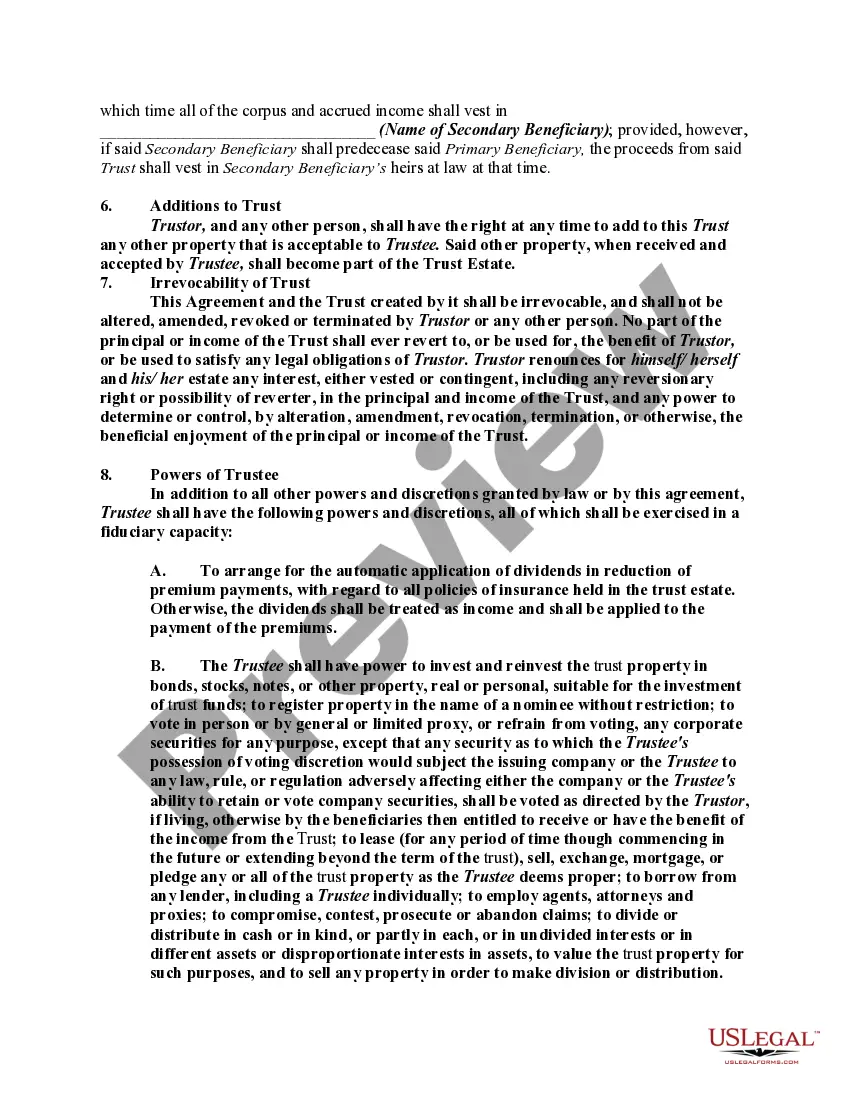
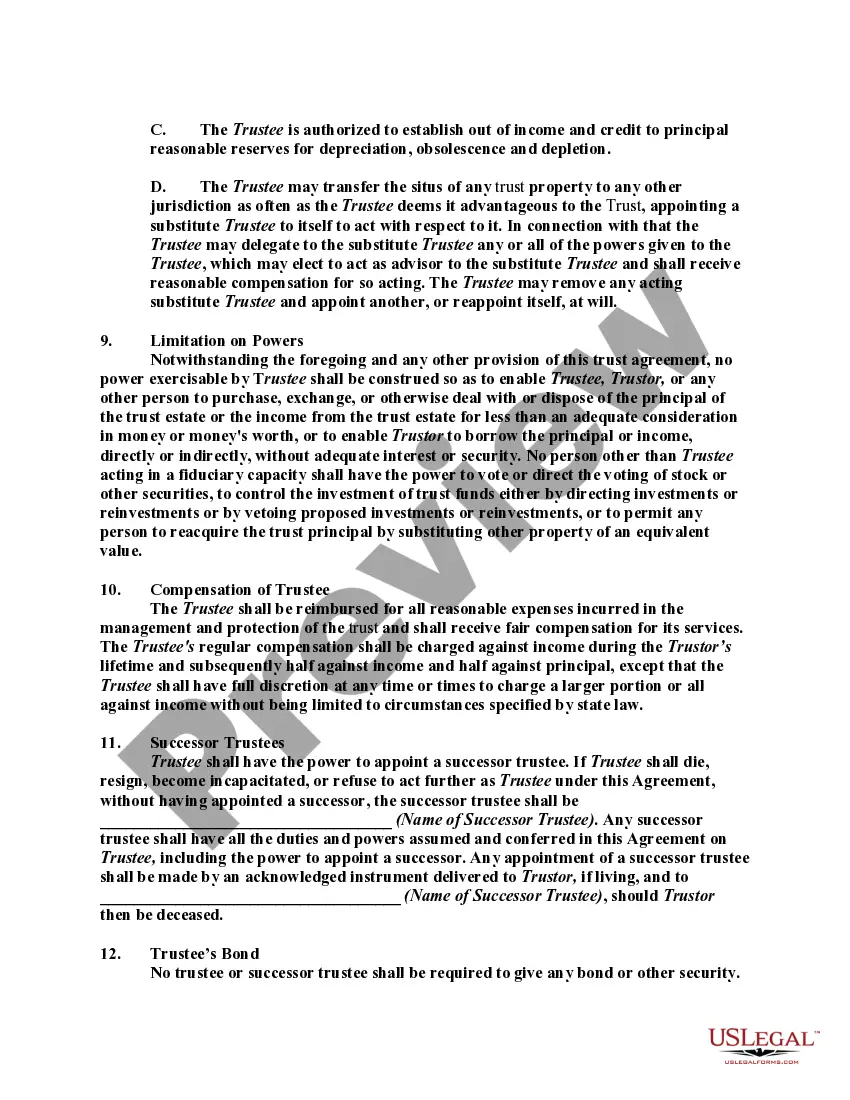
- Rights and powers of the Trustee regarding trust property management.
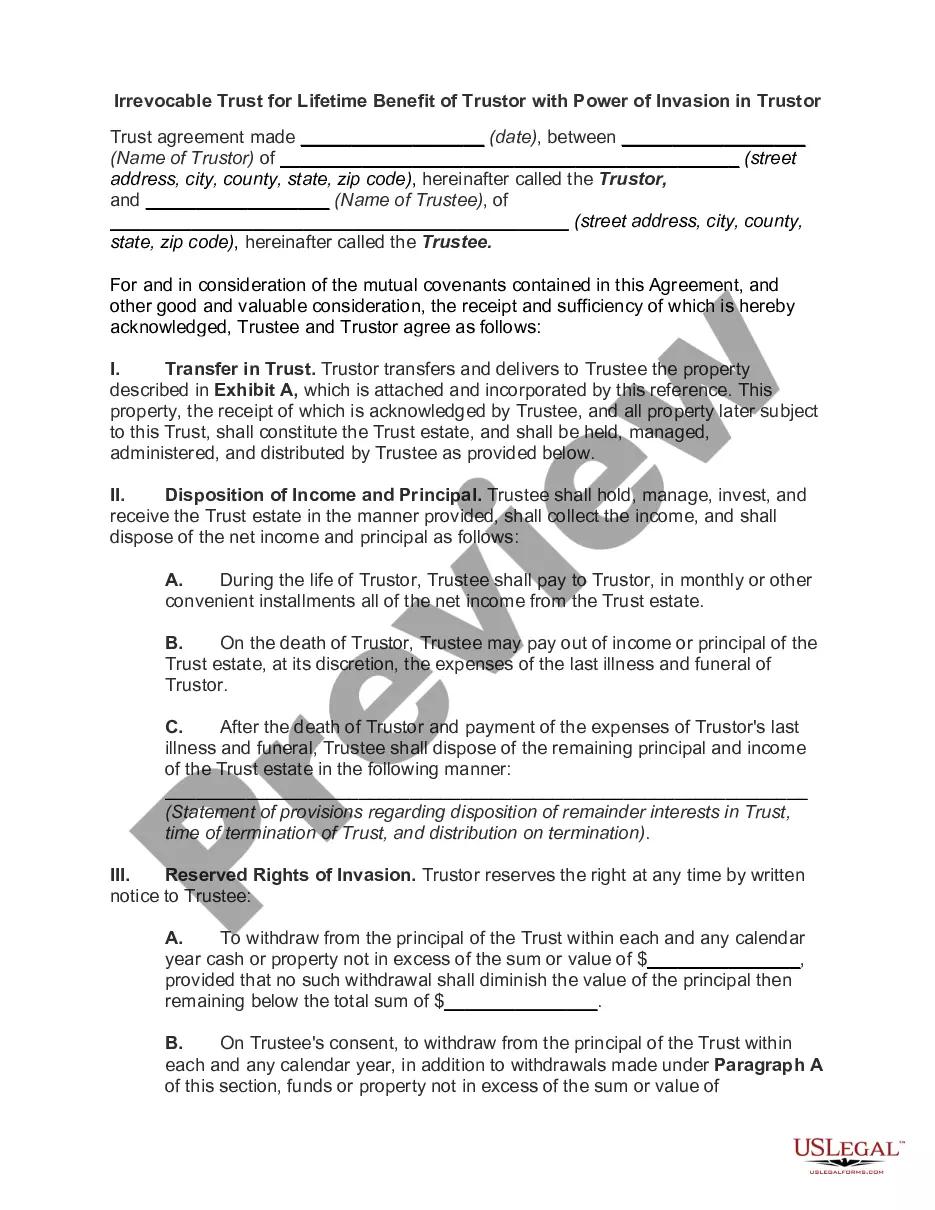
- Distribution terms for income and principal to beneficiaries.
- Irrevocability clause affirming the trust's permanent nature.
- Accounting provisions for financial transparency.

When to use this document
This form is ideal when an IRA holder intends to create a trust that will serve as the designated beneficiary of their IRA. It is particularly useful for individuals seeking to provide for their beneficiaries while maximizing tax advantages and managing the distribution of assets over time. Situations may include estate planning for families, minimizing tax burdens, or ensuring that estate assets are distributed according to specific wishes.
Intended users of this form
- Individuals planning their estate and seeking to maximize the benefits of their IRA.
- Persons who want to establish a trust for the benefit of their heirs.
- Trustors wanting to create an irrevocable trust to manage IRA assets.
- Individuals interested in providing long-term financial security for their loved ones.
Steps to complete this form
- Identify and enter the date and names of the Trustor and Trustee.
- Describe the property being transferred to the trust, including the IRA details.
- Specify any primary and secondary beneficiaries within the distribution clauses.
- Include provisions regarding the powers of the Trustee and any limitations.
- Sign and date the form in the presence of a notary to ensure legal validity.
Notarization requirements for this form
This form must be notarized to be legally valid. US Legal Forms provides secure online notarization powered by Notarize, allowing you to complete the process through a verified video call.
Get your form ready online
Our built-in tools help you complete, sign, share, and store your documents in one place.
Make edits, fill in missing information, and update formatting in US Legal Forms—just like you would in MS Word.
Download a copy, print it, send it by email, or mail it via USPS—whatever works best for your next step.
Sign and collect signatures with our SignNow integration. Send to multiple recipients, set reminders, and more. Go Premium to unlock E-Sign.
If this form requires notarization, complete it online through a secure video call—no need to meet a notary in person or wait for an appointment.
We protect your documents and personal data by following strict security and privacy standards.

Make edits, fill in missing information, and update formatting in US Legal Forms—just like you would in MS Word.

Download a copy, print it, send it by email, or mail it via USPS—whatever works best for your next step.

Sign and collect signatures with our SignNow integration. Send to multiple recipients, set reminders, and more. Go Premium to unlock E-Sign.

If this form requires notarization, complete it online through a secure video call—no need to meet a notary in person or wait for an appointment.

We protect your documents and personal data by following strict security and privacy standards.
Avoid these common issues
- Failing to clearly define the assets being transferred to the trust.
- Not updating the IRA beneficiary designation after creating the trust.
- Neglecting to consult a legal professional regarding state-specific laws.
- Omitting necessary signatures or notary verification.
Why complete this form online
- Convenient access to legally vetted templates at any time.
- Editable fields allow for customization to suit individual needs.
- Secure storage of completed forms ensures privacy and accessibility.
- Guidance provided through the form to clarify complex legal language.
Looking for another form?




Form popularity
FAQ
Trust deeds often include as a beneficiary, any trust of which one or more of the beneficiaries of the trust is a beneficiary. This is not possible, as a trust is not a person.A trust cannot come into being without a valid beneficiary.
It must be a valid trust under state law. The trust must be irrevocable (or will become so upon your death) The trust's beneficiaries must be individuals.
Most trusts are named after the Trust Creators and also include the date the trust was created. Examples are John and Jane Smith Revocable Trust dated 1/1/20; or Smith Family Trust dated 1/1/20; or John W. Smith and Jane A. Smith Revocable Family Trust dated 1/1/20.
However, a trust also can be named as an IRA beneficiary, and in many instances, a trust is a better option than naming an individual.
The primary disadvantage of naming a trust as beneficiary is that the retirement plan's assets will be subjected to required minimum distribution payouts, which are calculated based on the life expectancy of the oldest beneficiary.
You cannot put your individual retirement account (IRA) in a trust while you are living. You can, however, name a trust as the beneficiary of your IRA and dictate how the assets are to be handled after your death.
The IRA with its remaining assets does not pass under the terms of your will or trust, but instead passes to whomever you have named in the IRA beneficiary designation.However, a trust also can be named as an IRA beneficiary, and in many instances, a trust is a better option than naming an individual.
To leave property to your living trust, name your trust as beneficiary for that property, using the trustee's name and the name of the trust. For example: John Doe as trustee of the John Doe Living Trust, dated January 1, 20xx.
In short, YES, you can designate a trust as the future beneficiary of your 401(k) retirement account. Leaving your inheritance in a trust allows you to control where and how your assets are divided up after your death.