Complaint for Refusal to Pay Debt - Breach of Oral or Implied Contracts
Overview of this form
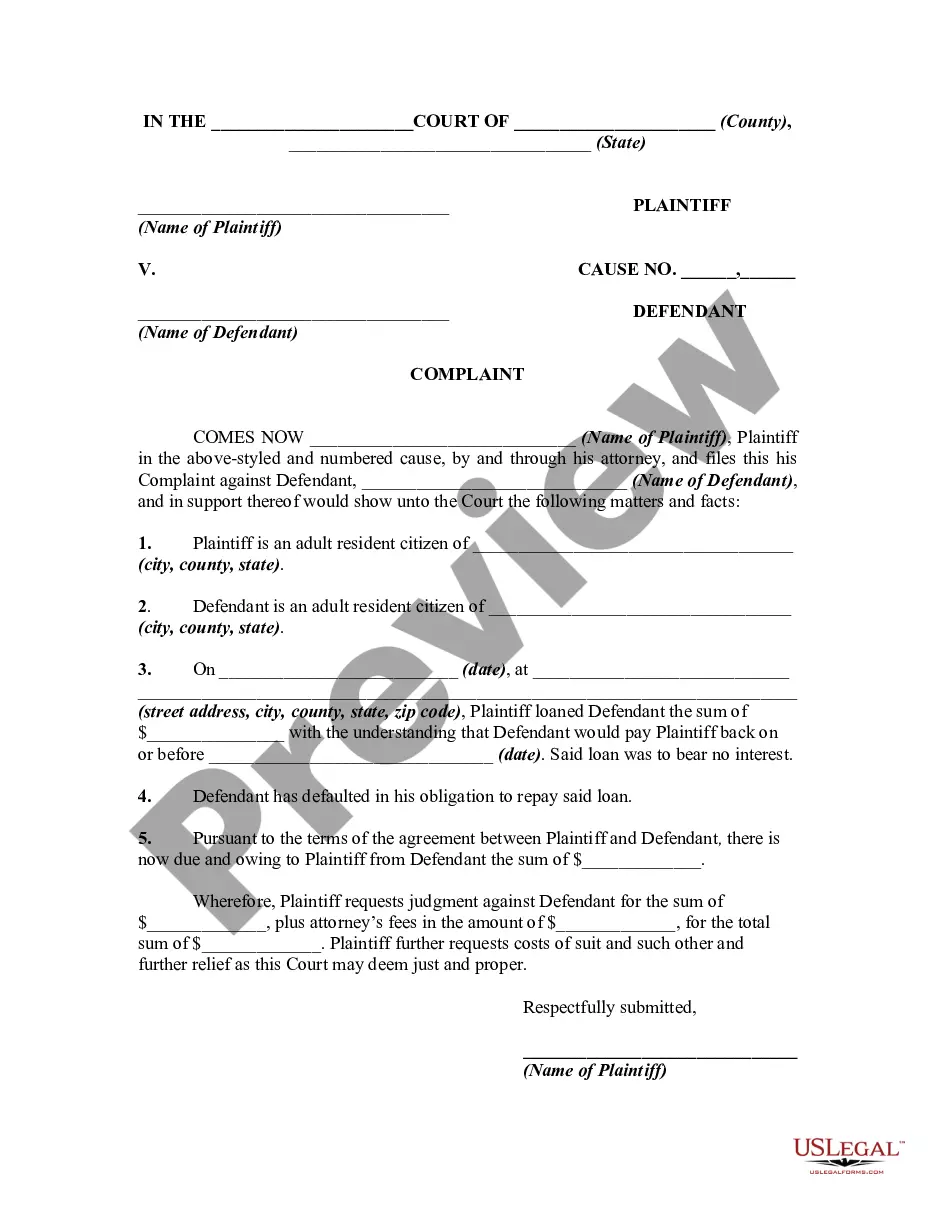
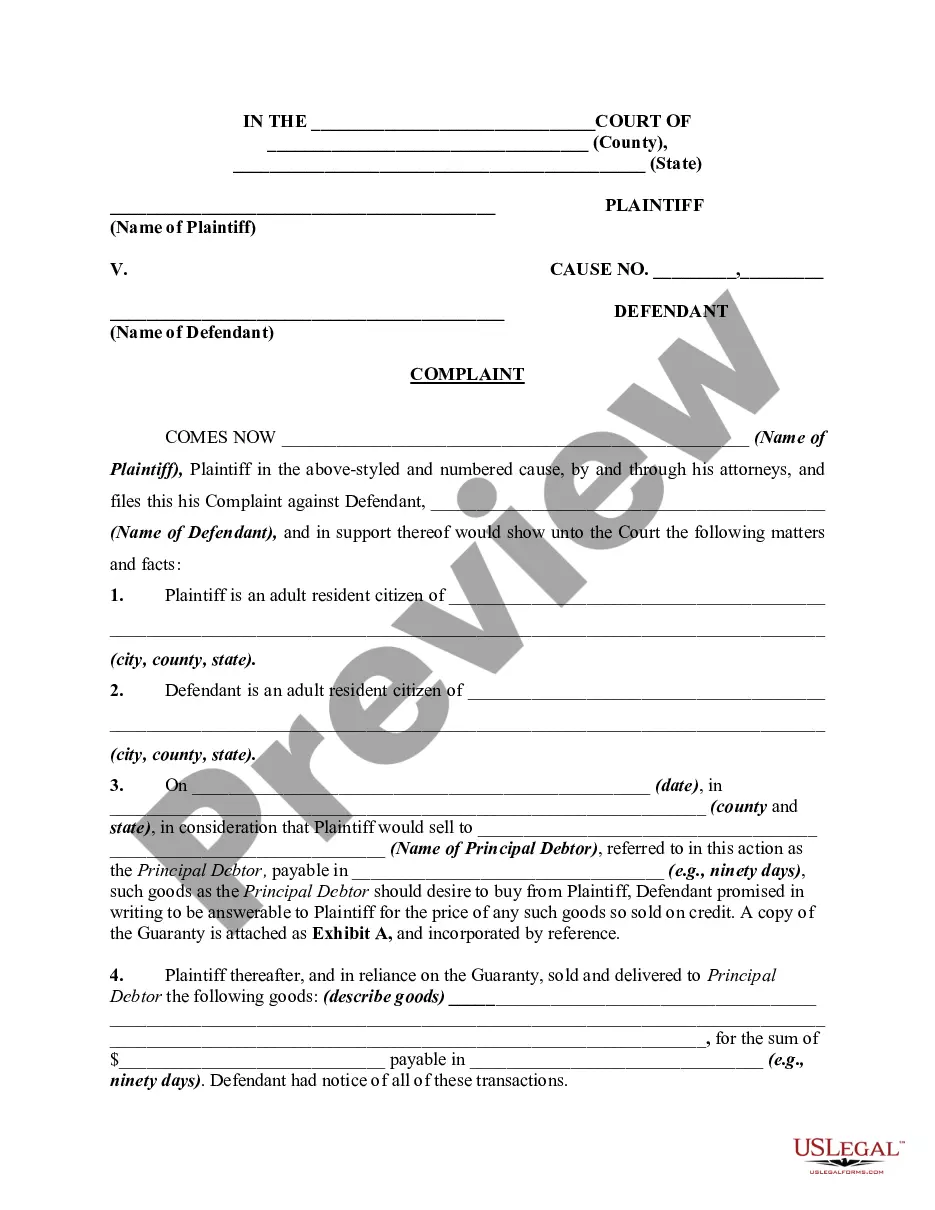
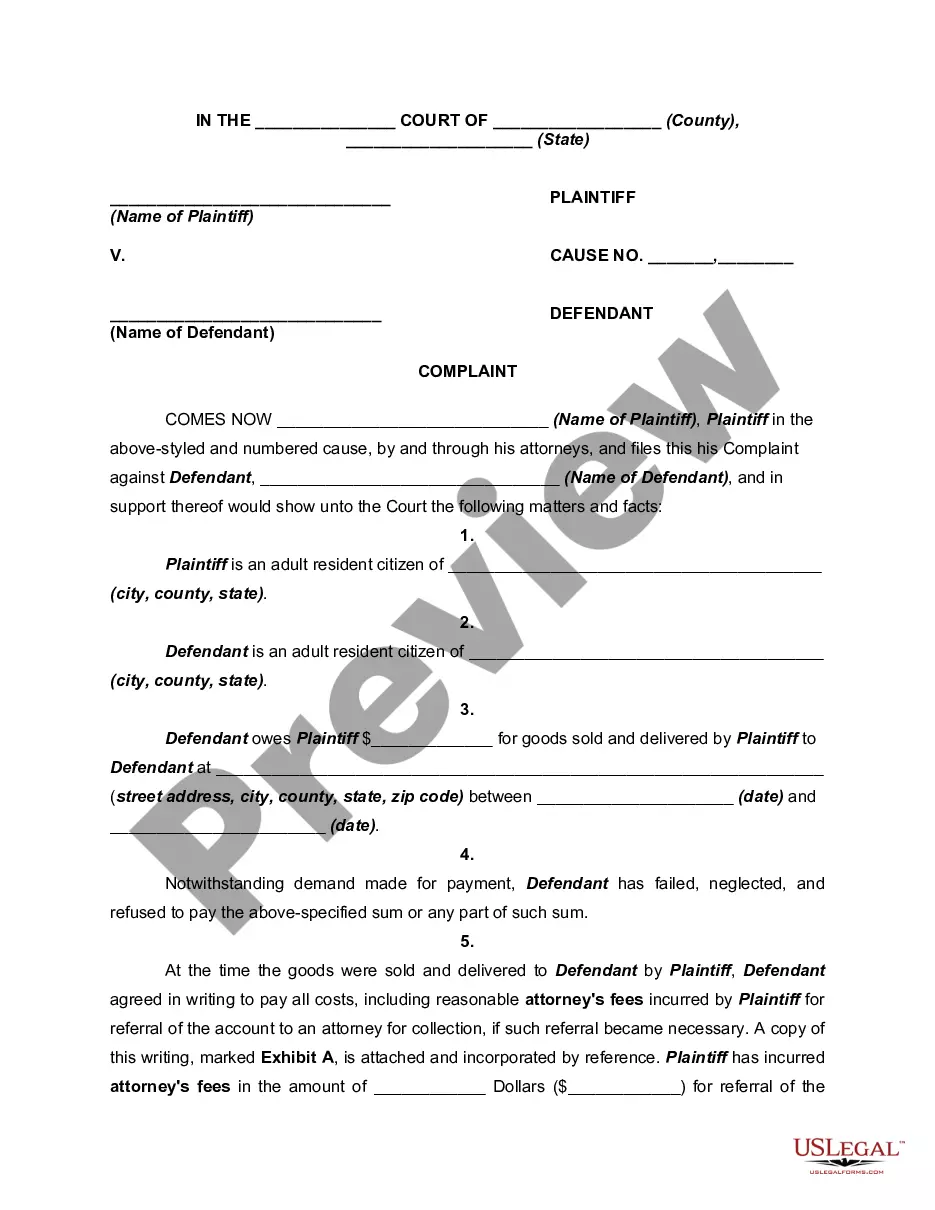
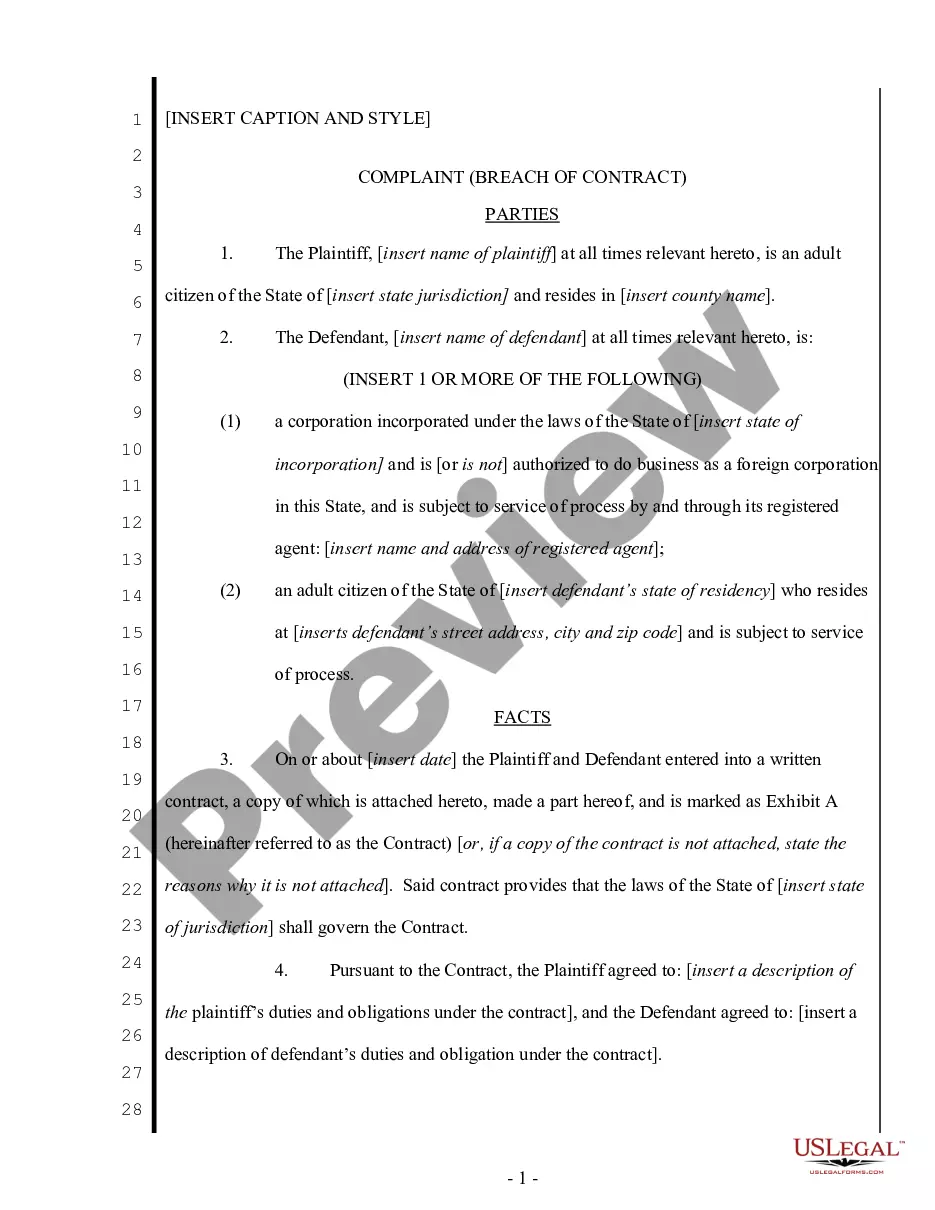
The Complaint for Refusal to Pay Debt - Breach of Oral or Implied Contracts is a legal document used to initiate a lawsuit when a party fails to repay a debt as agreed, typically in an informal or implied agreement. This form adopts the "notice pleadings" format, suitable for most jurisdictions, and emphasizes the necessity for the plaintiff to demonstrate the existence of a debt and the defendant's failure to repay it. Unlike other legal complaints, this form focuses specifically on oral or implied contracts rather than written agreements.
Key components of this form
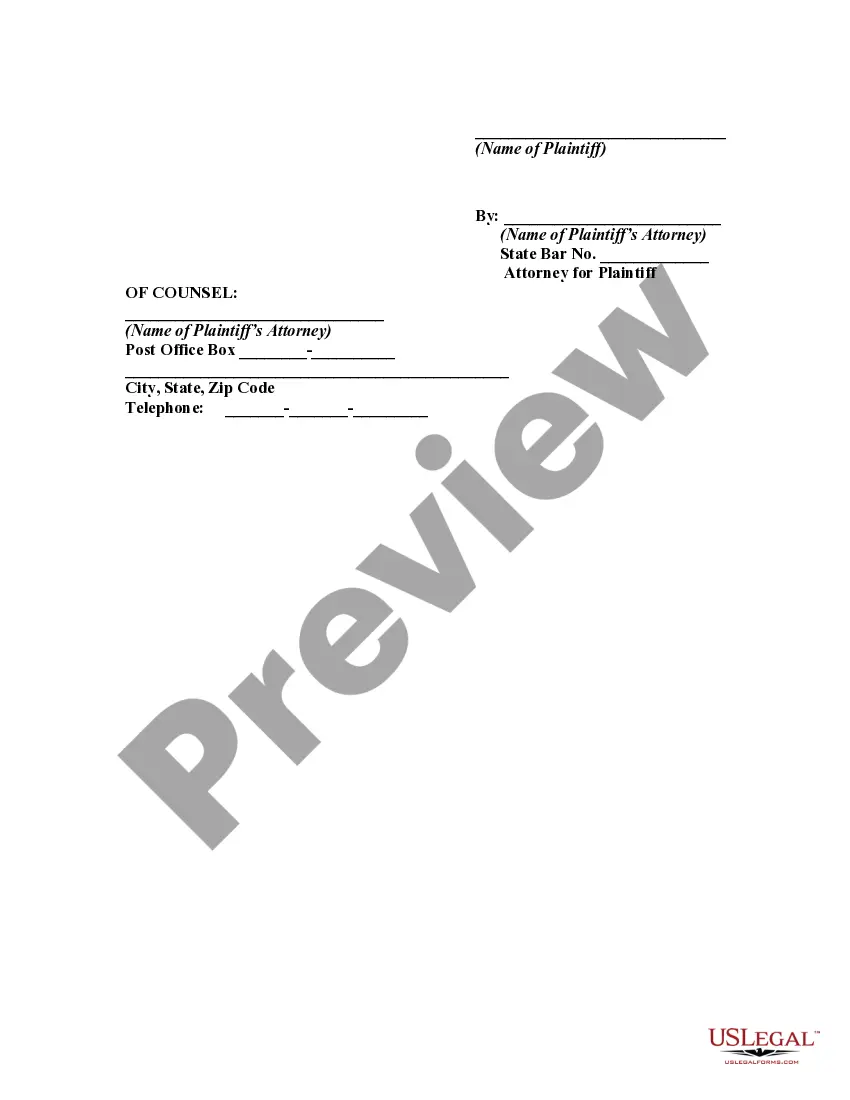
- Name and contact information of the plaintiff and defendant.
- Date and location of the transaction where the loan was made.
- Details of the debt, including the amount borrowed and repayment terms.
- Statement of default by the defendant.
- Request for judgment, including the total sum owed and any applicable attorney's fees.

Common use cases
This form is appropriate to use when you have lent money to someone under an agreement that they would repay you but they have failed to do so. If you have made an oral agreement or if the terms of the agreement are implied rather than written, and the debtor is in default, you can utilize this form to legally pursue the repayment of the money owed.
Who this form is for
- Individuals who have lent money to someone without a formal written agreement.
- Persons seeking to recover debts from informal agreements.
- Creditors looking to legally enforce a repayment of a loan.
Instructions for completing this form
- Identify the parties by entering the names and addresses of both the plaintiff and defendant.
- Specify the date and location of the transaction where the loan was made.
- Clearly state the amount that was loaned and include the deadline for repayment.
- Indicate that the defendant has defaulted on their repayment obligation.
- Request a judgment, including the total amount owed and any attorney fees.
Notarization guidance
This form does not typically require notarization unless specified by local law. However, it is advisable to check local regulations to confirm any requirements regarding notarization for legal documents in your jurisdiction.
Get your form ready online
Our built-in tools help you complete, sign, share, and store your documents in one place.
Make edits, fill in missing information, and update formatting in US Legal Forms—just like you would in MS Word.
Download a copy, print it, send it by email, or mail it via USPS—whatever works best for your next step.
Sign and collect signatures with our SignNow integration. Send to multiple recipients, set reminders, and more. Go Premium to unlock E-Sign.
If this form requires notarization, complete it online through a secure video call—no need to meet a notary in person or wait for an appointment.
We protect your documents and personal data by following strict security and privacy standards.

Make edits, fill in missing information, and update formatting in US Legal Forms—just like you would in MS Word.

Download a copy, print it, send it by email, or mail it via USPS—whatever works best for your next step.

Sign and collect signatures with our SignNow integration. Send to multiple recipients, set reminders, and more. Go Premium to unlock E-Sign.

If this form requires notarization, complete it online through a secure video call—no need to meet a notary in person or wait for an appointment.

We protect your documents and personal data by following strict security and privacy standards.
Common mistakes to avoid
- Failing to accurately list the full names and addresses of both parties.
- Not including the specific details of the agreement, such as payment terms.
- Omitting documentation of the default, such as payment history.
- Asking for an amount that is not fully justified by the initial agreement.
Benefits of completing this form online
- Convenience of downloading and completing the form at your own pace.
- Editable format allows you to tailor the document to fit your specific situation.
- Access to forms drafted by licensed attorneys ensures legal reliability.
Quick recap
- The Complaint for Refusal to Pay Debt is used to address non-payment of debts based on oral or implied contracts.
- It is crucial to accurately fill out all necessary components to support your case in court.
- Always consult local laws to ensure the complaint complies with jurisdictional requirements.
- Using this online form can save time and streamline the process of seeking a legal remedy for unpaid debts.
Looking for another form?

Form popularity
FAQ
In most states, this ranges from $1.500 to $15,000. It's a fairly simple process, with the judgment taking place right away and limited right of appeal.
After you successfully sue for breach of contract, you are entitled to a remedy, which may include: Damages: payment by the breaching party to the non-breaching party. Specific performance: compels the breaching party to do what was agreed to under the contract.
If a person does not fulfill their part of the verbal contract, there may be grounds to suebut it will depend on the overall nature of the agreement and stipulations involved. If you believe another party violated your valid verbal contract, do not hesitate to get legal help you can trust.
With an oral contract, you can sue for breach of contract just as you would with a written contract.Writing out a contract is a good idea, mainly because you will have proof that the contract exists. You could also record the contract on video, as this may be considered just as good as writing in court cases.
Consider the Statute of Limitations. Breach of Contract Must Be Material & Cause Damage. Mediation & Arbitration. Determine the Appropriate Court to File Your Lawsuit. Determine How You Will Serve the Defendant. Prepare Your Complaint and Documentation. Hiring an Attorney.
Evidence to the court of the plaintiff's performance of services called for in the contract. Proof of any money exchange showing a deal was made. Proof of a loan and payments. A check written as a down payment or deposit. Witnesses present at the time the agreement was made.
Verbal agreements between two parties are just as enforceable as a written agreement. Like written contracts, they just need to meet the requirements of a valid contract to be enforced in court. If the agreement meets those requirements, both verbal and written agreements are enforceable.
Hire the right attorney. Not all attorneys are alike. Compile all of your documents and evidence. Be prepared when you visit your attorney. Ask your attorney to analyze your case. Explore settlement. Ask your attorney to keep you informed.
An oral contract is a type of business contract that is outlined and agreed to via spoken communication, but not written down. Although it can be difficult to prove the terms of an oral contract in the event of a breach, this type of contract is legally binding.