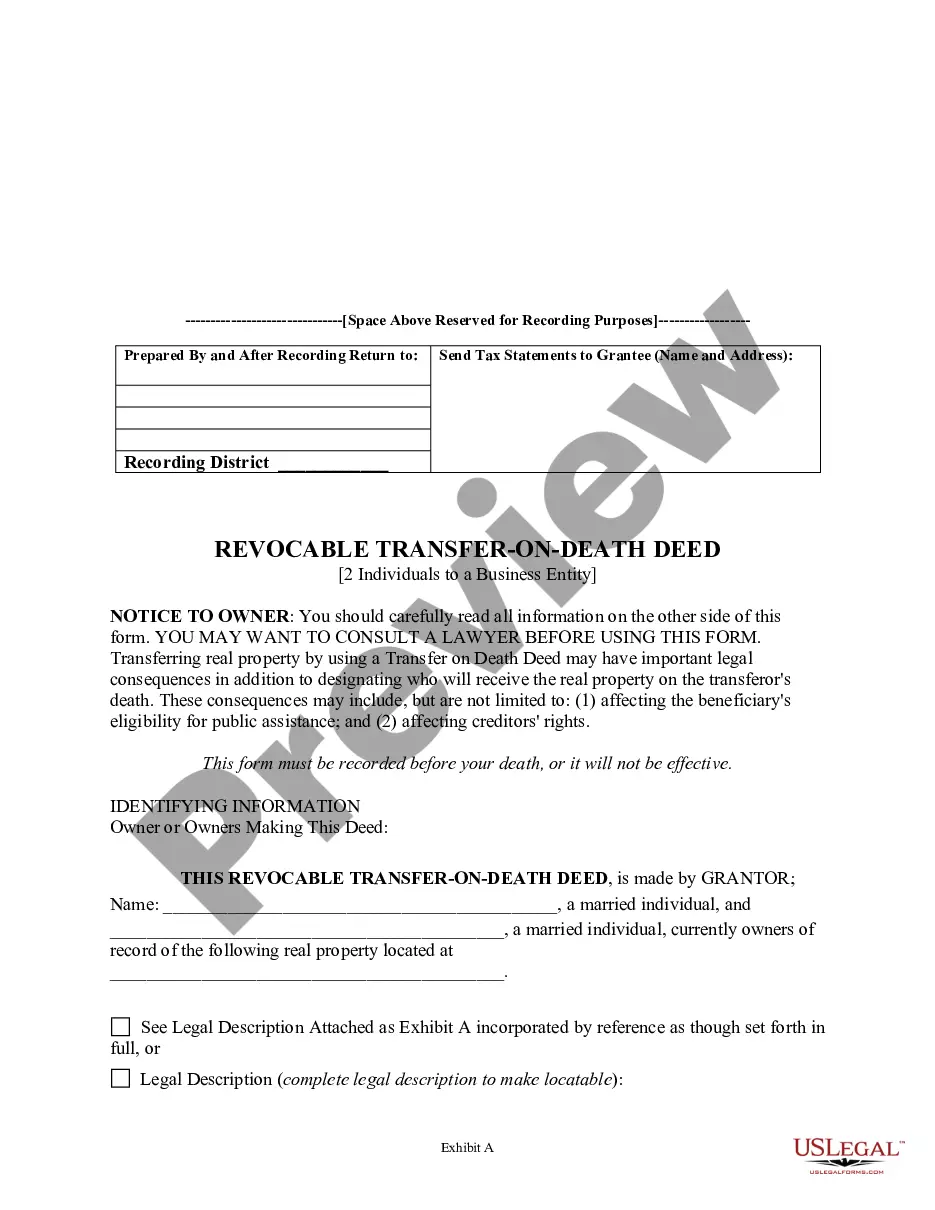
Agreement to Waiver Of Claims and Liability Release for Junior Player Development Program
Understanding this form
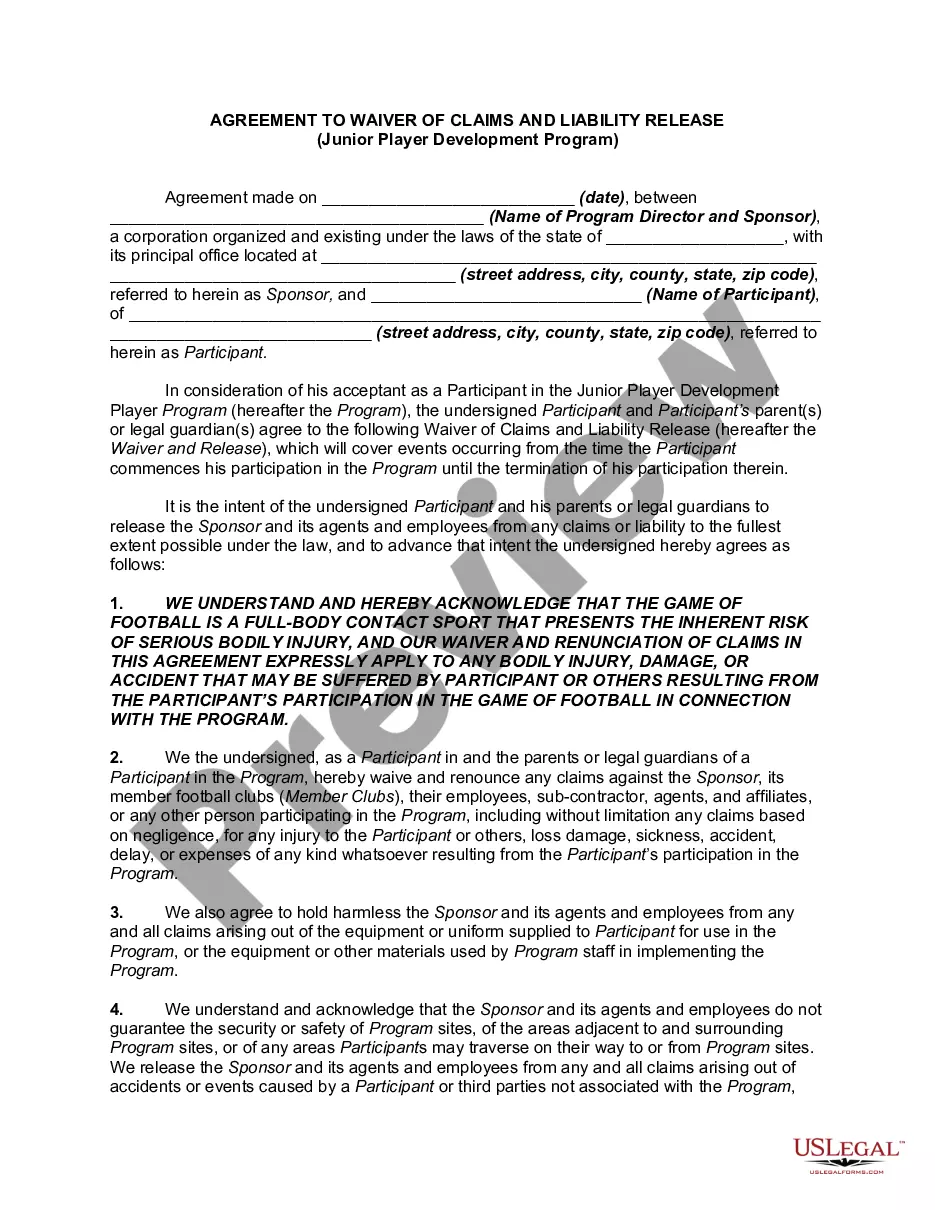
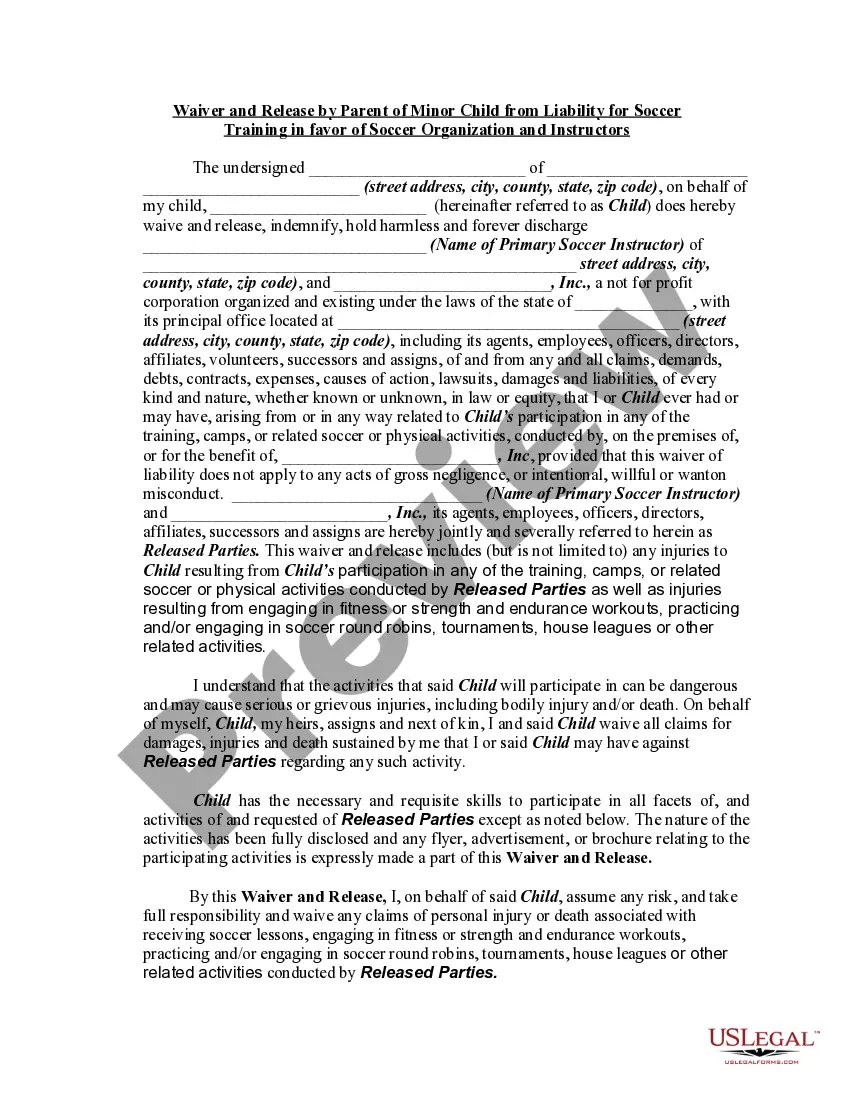
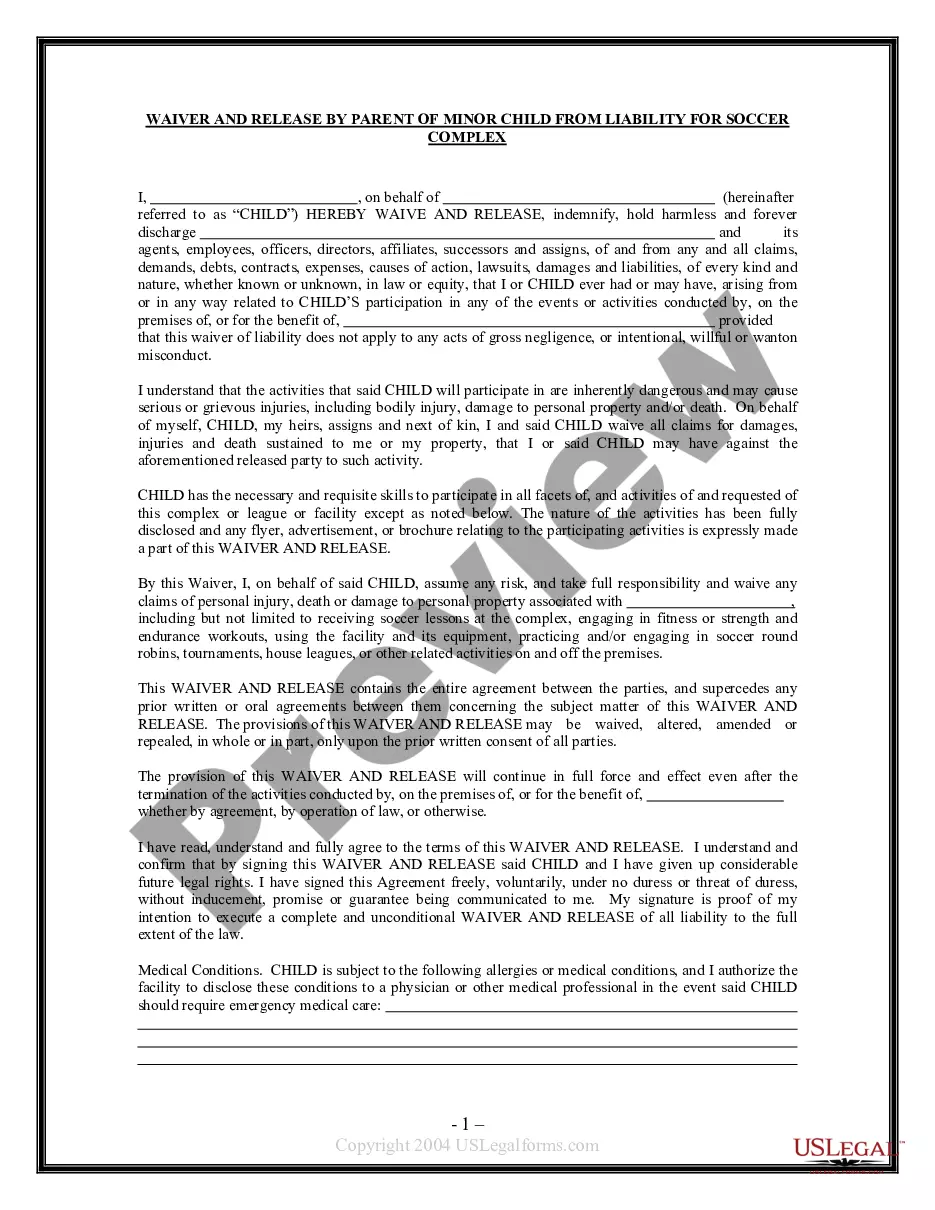
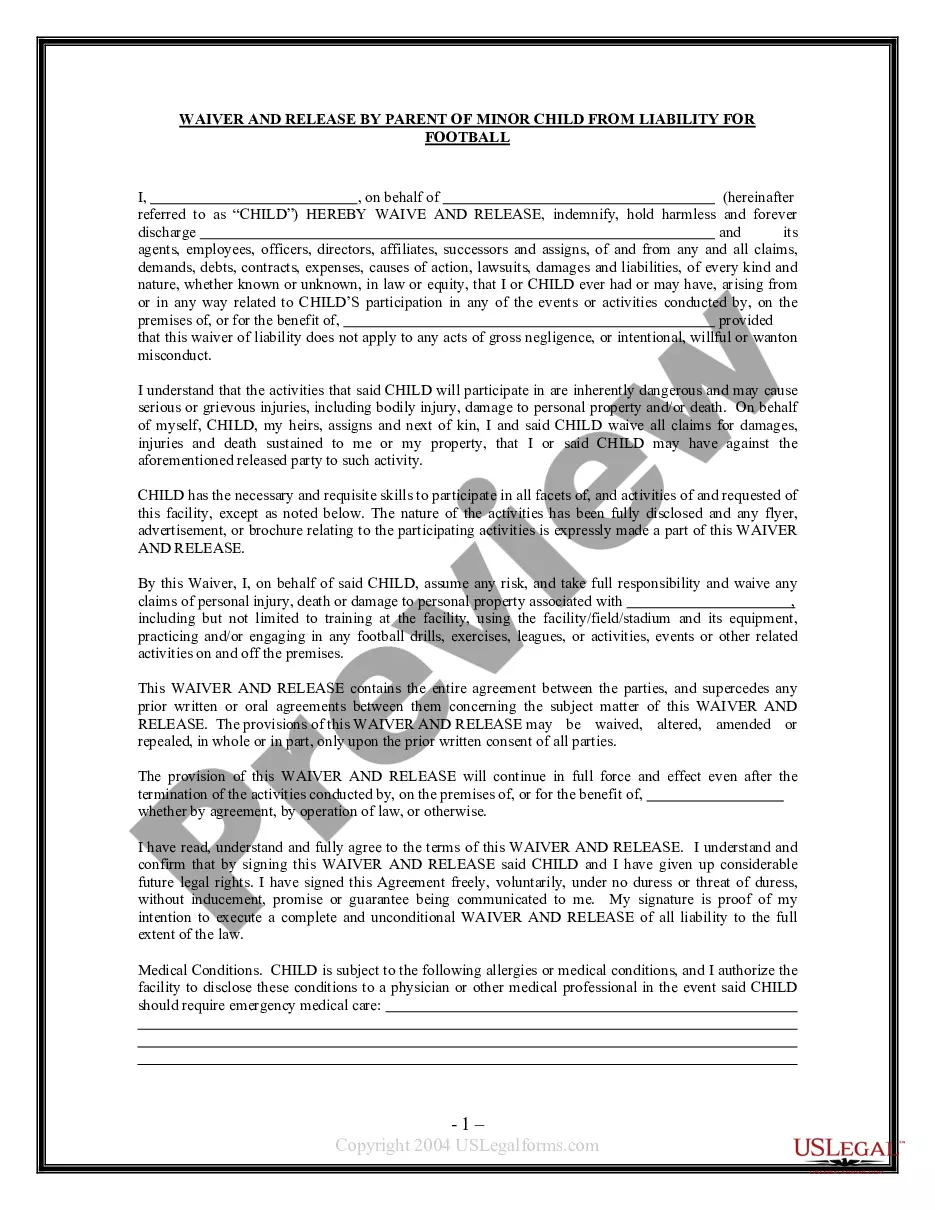
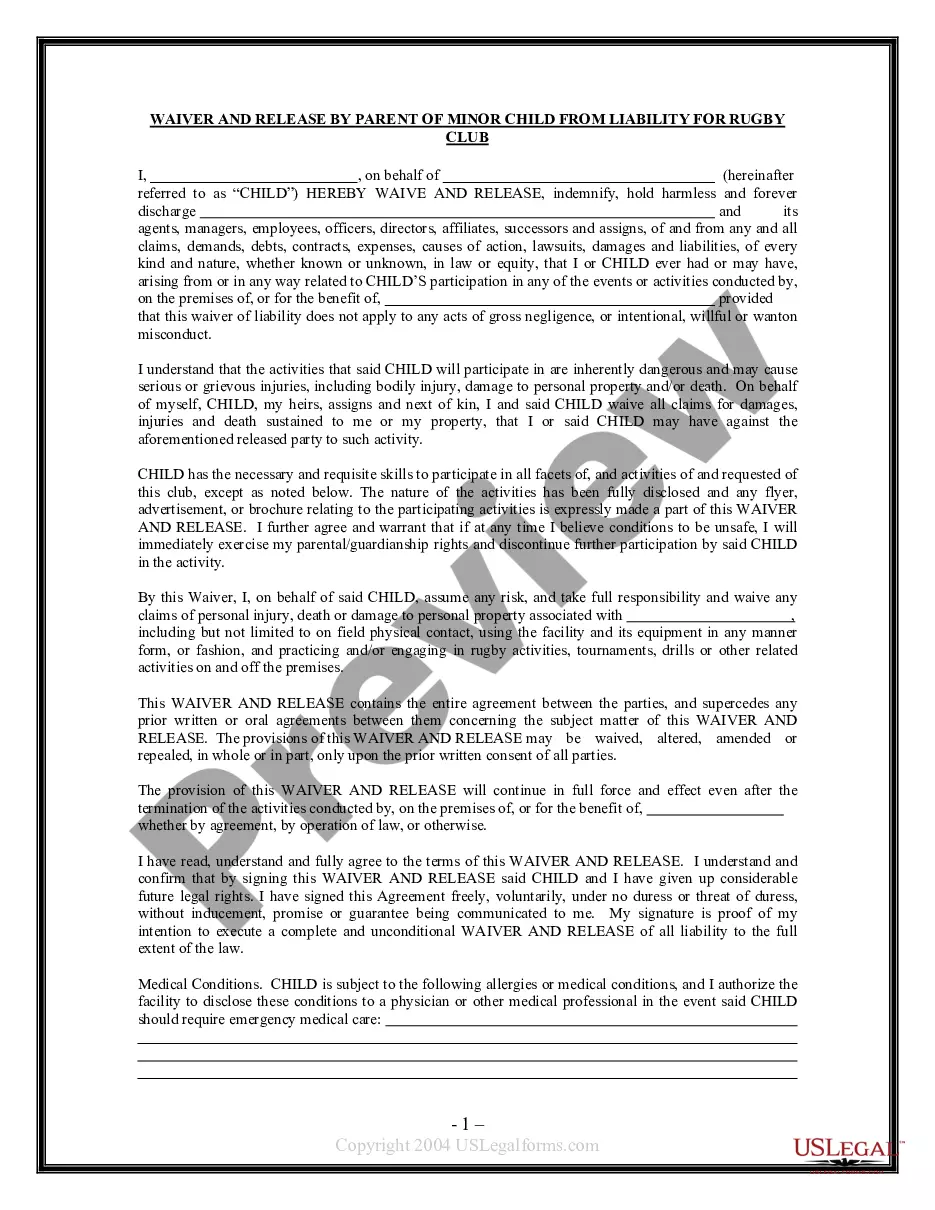
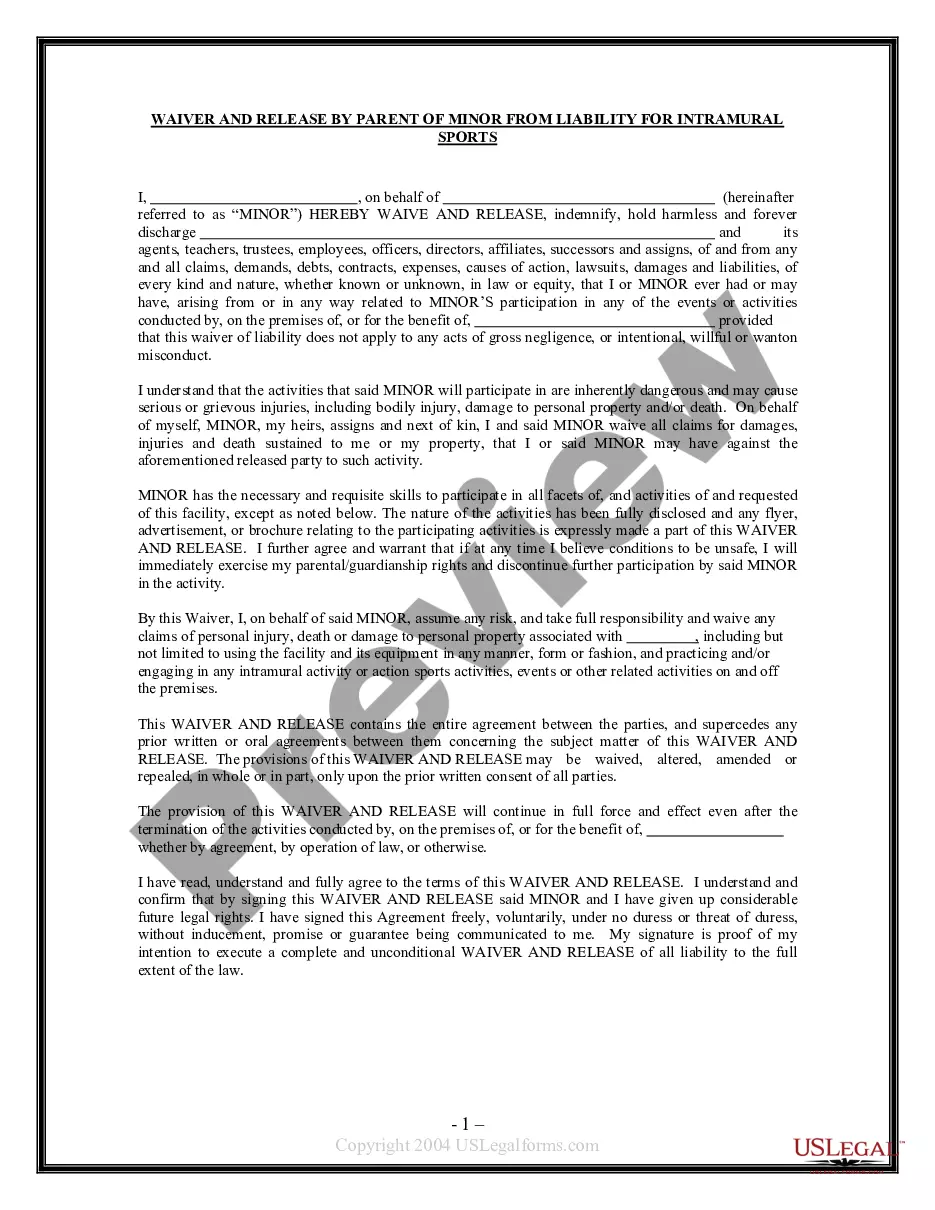
The Agreement to Waiver of Claims and Liability Release for Junior Player Development Program is a legal document designed to protect program sponsors and participants from potential legal claims arising from participation in a contact sport, specifically football. This form serves as both a waiver and release, which means it allows participants and their guardians to acknowledge the risks involved in the sport and to relinquish their right to sue for injuries that may occur. This form is crucial for ensuring that all parties understand the inherent risks associated with the Junior Player Development Program and that they agree to abide by the terms set forth.
Key parts of this document
- Date of the agreement.
- Names and details of the program director and sponsor.
- Participant's information including name and contact details.
- Acknowledgement of the risks associated with playing football.
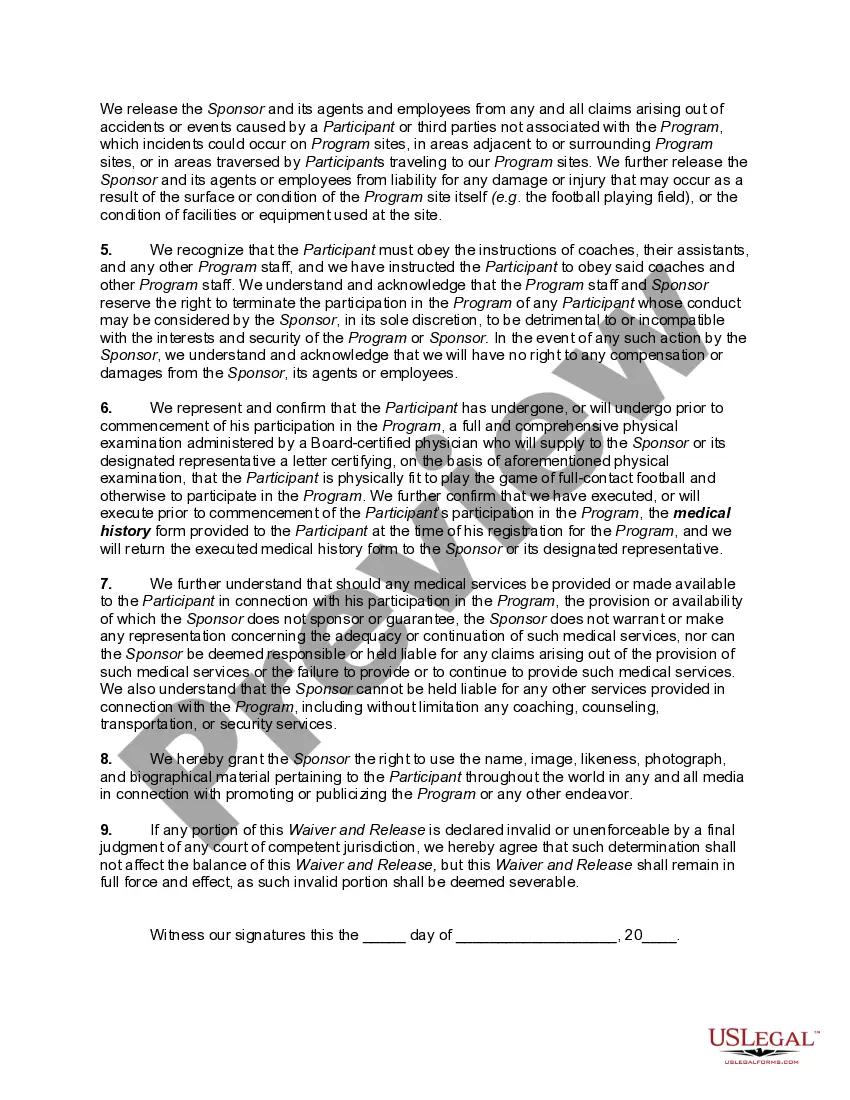
- Waiver of claims against the sponsor and its affiliates.
- Provisions for holding the sponsor harmless for any related injuries or events.
- Confirmation of participantâs physical fitness and medical history certification.
- Agreement for the use of participantâs image for promotional purposes.
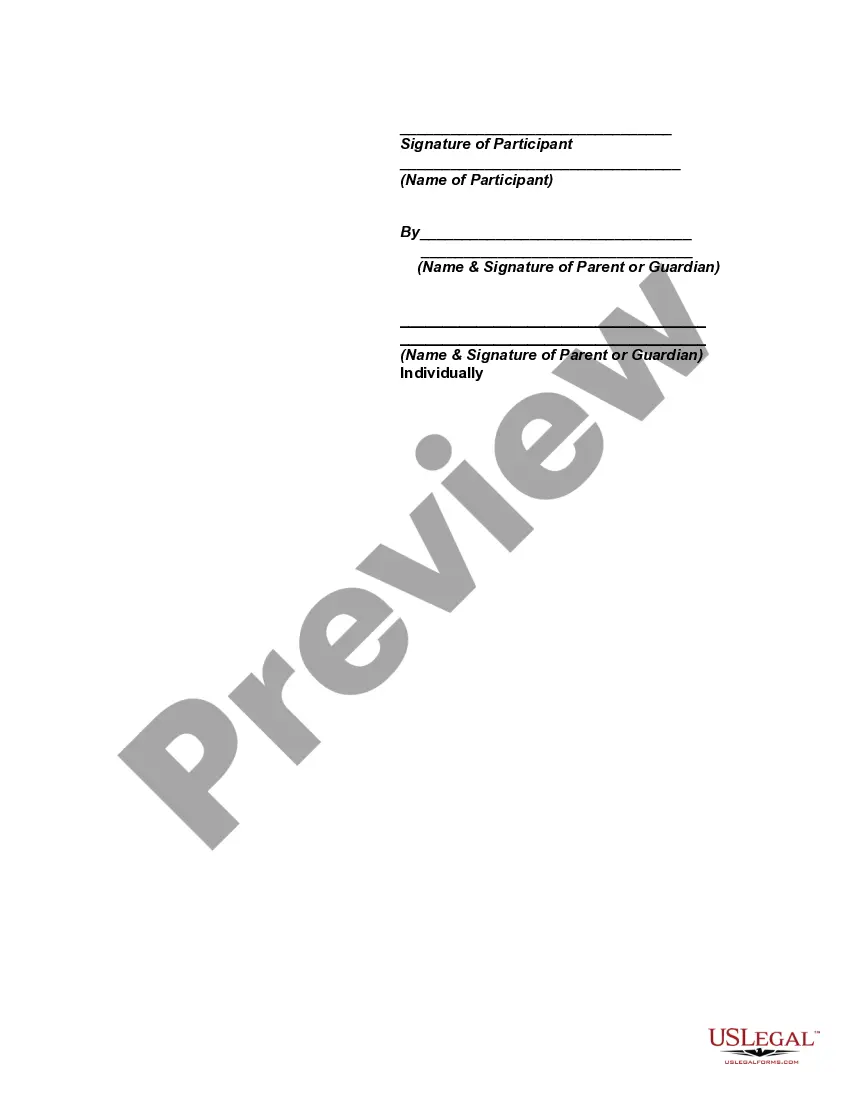
- Signatures of the participant and their parent or guardian.
When to use this form
This form should be used when a minor is enrolling in a junior player development football program. It is necessary to ensure that both the participant and their guardians acknowledge the risks involved in contact sports and agree to release the program sponsors from liability for any injuries or claims that may arise during participation. This is especially important for programs that involve physical activities, where injuries are a possibility.
Who needs this form
- Participants in the Junior Player Development Program who are minors.
- Parents or legal guardians of the minor participants.
- Program sponsors and directors seeking legal protection from liability.
How to prepare this document
- Fill in the agreement date at the top of the form.
- Enter the name and details of the program director and sponsor.
- Provide the participant's name and contact information.
- Review the waiver clauses and ensure understanding of the risks involved.
- Obtain signatures from the participant and their parent or guardian.
- Ensure all sections are completed before submitting the form to the program sponsor.
Is notarization required?
This form does not typically require notarization unless specified by local law. Participants and their guardians should review local regulations to ensure compliance with any notarization requirements.
Get your form ready online
Our built-in tools help you complete, sign, share, and store your documents in one place.
Make edits, fill in missing information, and update formatting in US Legal Forms—just like you would in MS Word.
Download a copy, print it, send it by email, or mail it via USPS—whatever works best for your next step.
Sign and collect signatures with our SignNow integration. Send to multiple recipients, set reminders, and more. Go Premium to unlock E-Sign.
If this form requires notarization, complete it online through a secure video call—no need to meet a notary in person or wait for an appointment.
We protect your documents and personal data by following strict security and privacy standards.

Make edits, fill in missing information, and update formatting in US Legal Forms—just like you would in MS Word.

Download a copy, print it, send it by email, or mail it via USPS—whatever works best for your next step.

Sign and collect signatures with our SignNow integration. Send to multiple recipients, set reminders, and more. Go Premium to unlock E-Sign.

If this form requires notarization, complete it online through a secure video call—no need to meet a notary in person or wait for an appointment.

We protect your documents and personal data by following strict security and privacy standards.
Avoid these common issues
- Failing to include the correct date of the agreement.
- Not obtaining signatures from both the participant and their parent or guardian.
- Leaving out critical participant information.
- Overlooking the acknowledgment of risks involved.
Benefits of using this form online
- Immediate access to a legally vetted document tailored for football programs.
- Editable fields allow for customization according to specific program details.
- Convenient download and storage options for easy access.
- Reduces the potential for legal disputes by ensuring clarity of terms.
Legal use & context
- This waiver is designed to limit legal liability, but its enforceability can vary based on jurisdiction.
- Courts may not uphold waivers signed on behalf of minors, so itâs crucial to follow local laws.
- The waiver cannot absolve sponsors of liability due to gross negligence, misconduct, or illegal actions.
Summary of main points
- The waiver is essential for protecting program organizers from potential lawsuits.
- Signatures from guardians are required to make the waiver effective.
- Users should confirm compliance with specific state laws regarding waivers for minors.
Looking for another form?



Form popularity
FAQ
A waiver is a legally binding provision where either party in a contract agrees to voluntarily forfeit a claim without the other party being liable.
Waivers should only be signed before participating in an activity, not after you are hurt. If you are injured and given papers to sign, immediately call a personal injury attorney. You can find a personal injury lawyer by contacting your state or local bar association.
Get help. Writing a waiver should not be complicated. Use the correct structure. Proper formatting. Include a subject line. Include a caution! Talk about the activity risks. Do not forget an assumption of risk. Hold harmless.
A release and waiver agreement is an enforceable promise not to pursue legal action in exchange for compensation. The releasee gives money or some other form of compensation to the releasor, who then agrees not to press charges, sue, or take any other legal action against the releasee.
200bStart the letter off with a clear explanation regarding your request. For instance, explain that you're requesting certain fees or charges to be waived or to be released from a previous engagement. Communicate any supporting or relative dates, names of parties, monetary figures, or venues as facts.
The General Release is a broad release from all possible civil claims resulting from a dispute. Since the Releasing Party is giving up all known and unknown claims against the other party, care should be taken to ensure that the Releasor is fully aware of their rights.
In California, a liability waiver must be clear, unambiguous, and explicit. In other words, waivers cannot be printed in faded ink, in small font, on the back of a paper, or in an otherwise ambiguous form. If the waiver that you sign is not represented clearly, it may not hold up in the event of a lawsuit.
The main difference between releases and waivers is the transferring of ownership. When rights are released, they are transferred to another party. When rights are waived, they are gone altogether. If intellectual property rights are waived, the IP can be used by any other party that has access to it.