Affidavit in Support of Establishing Paternity
About this form
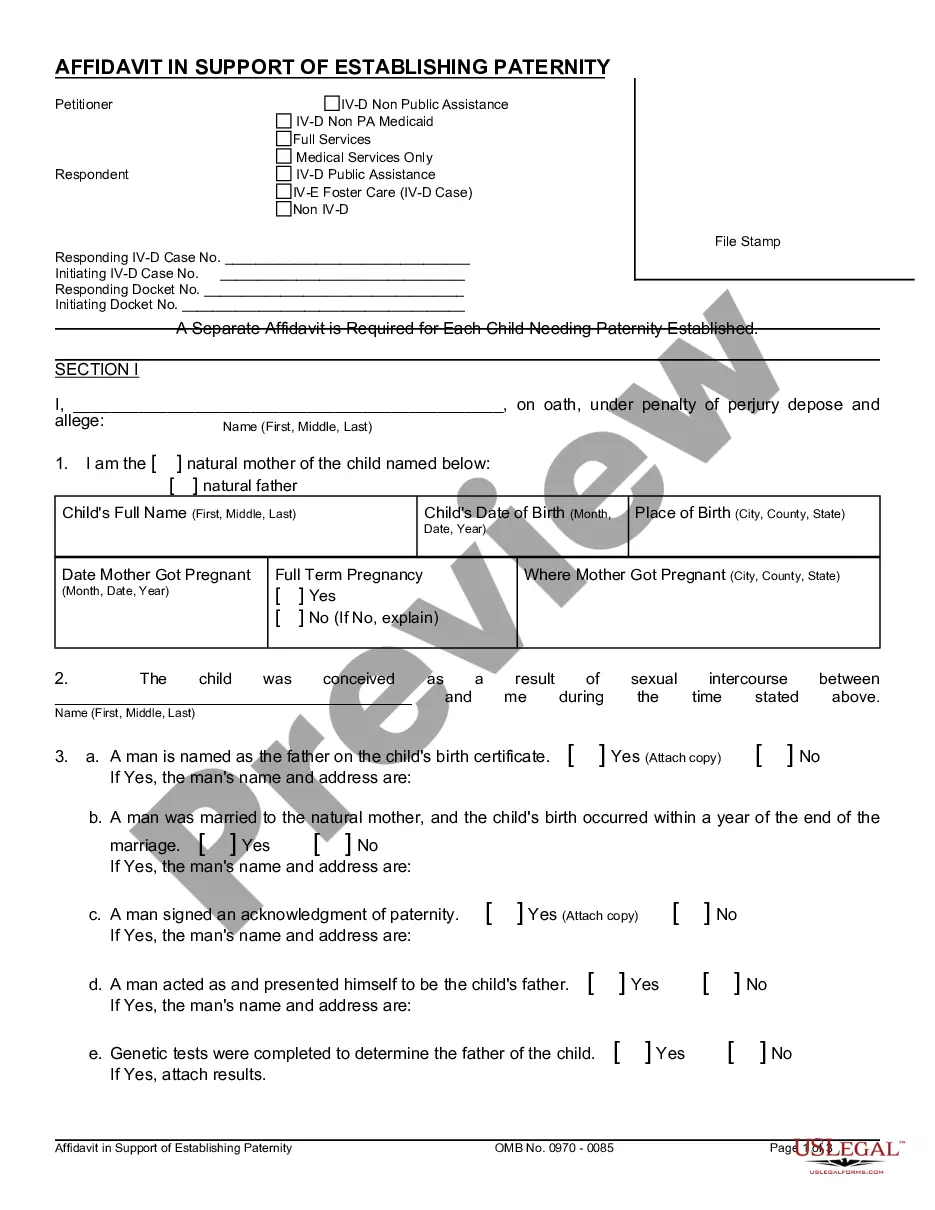
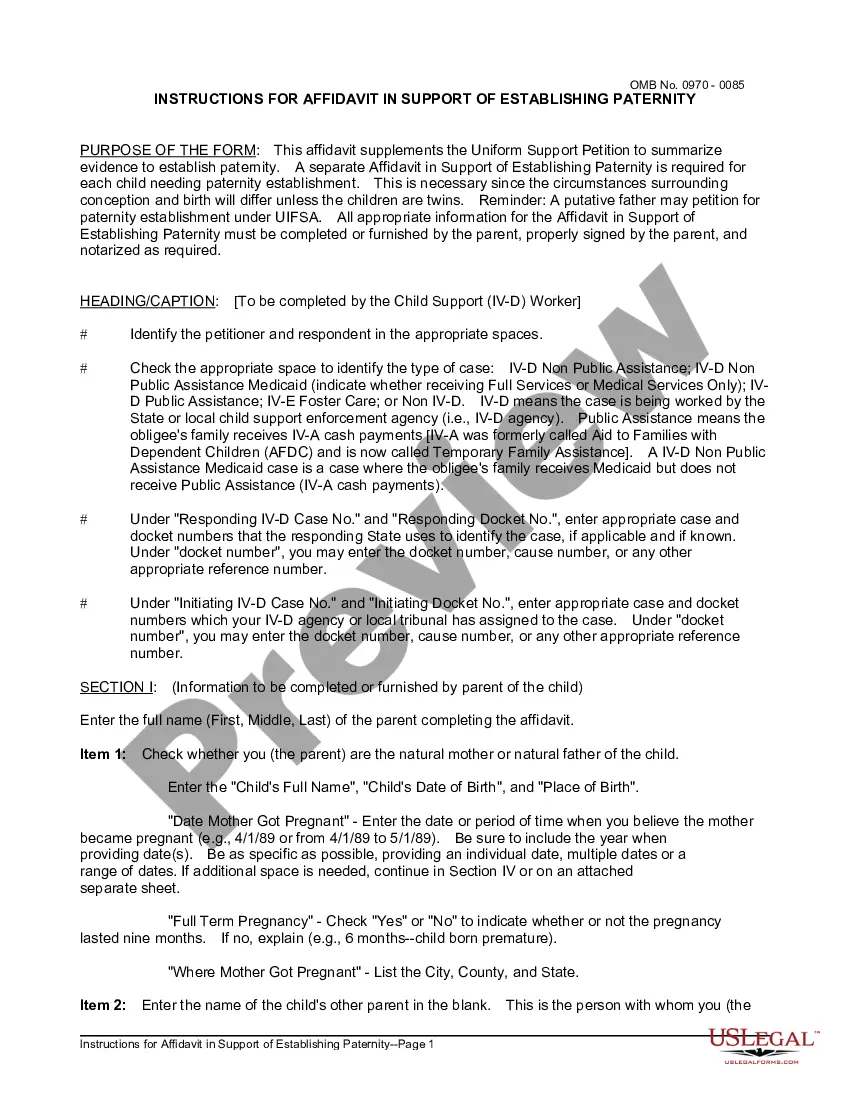
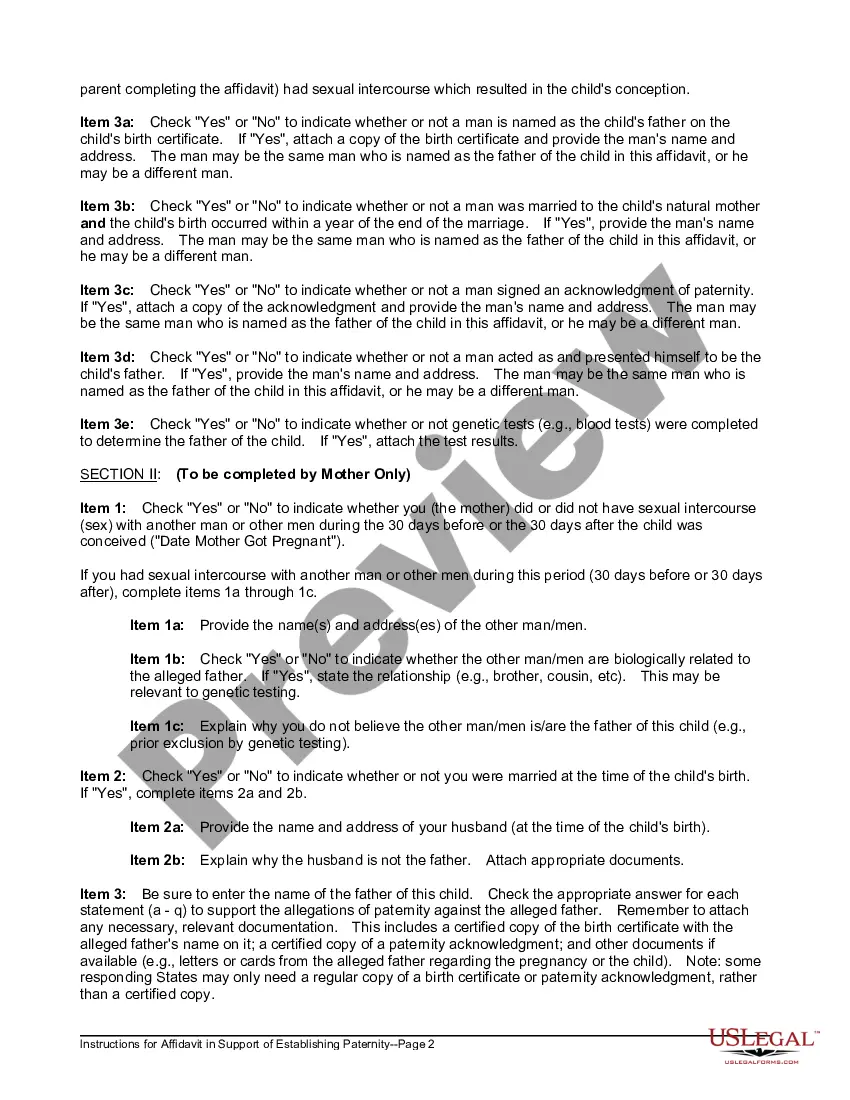
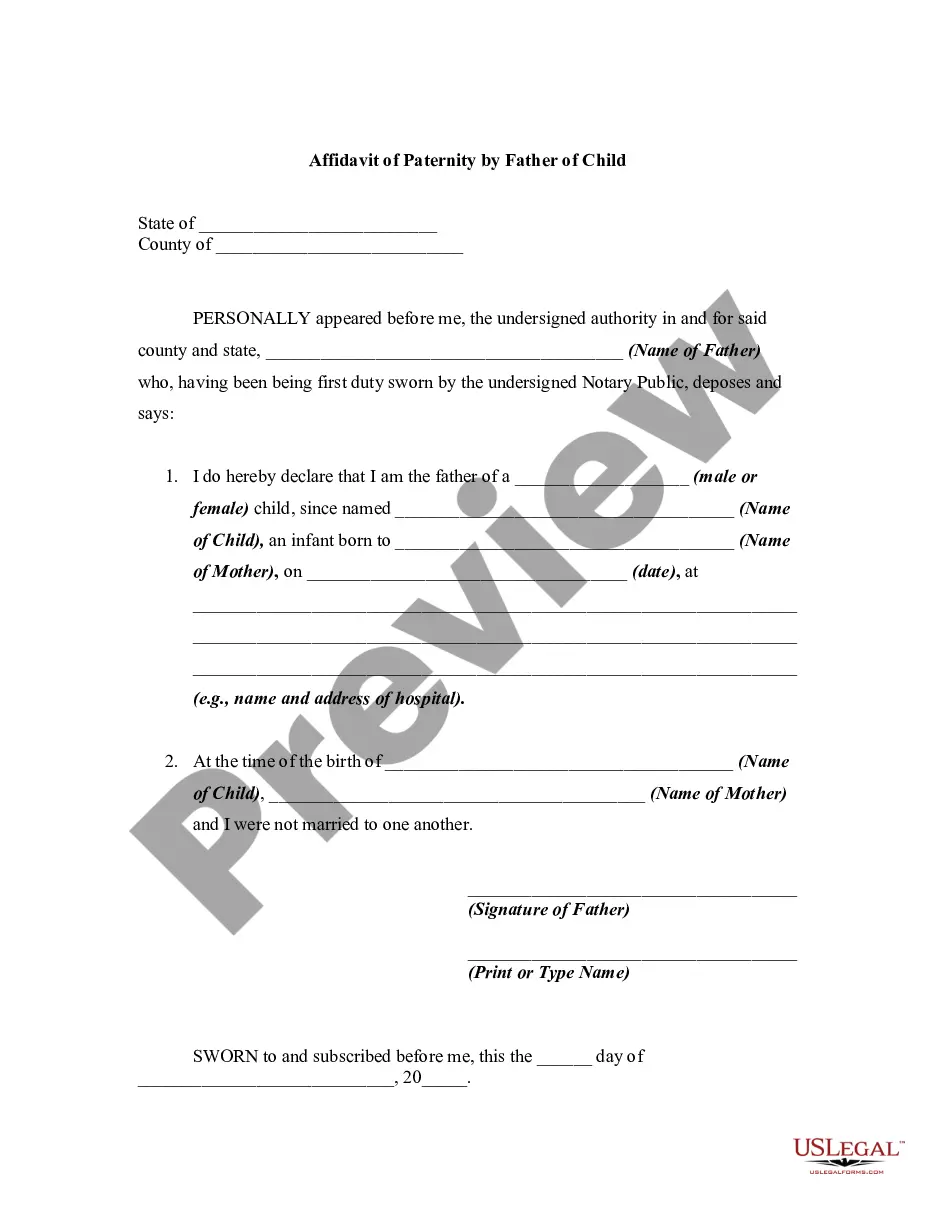
The Affidavit in Support of Establishing Paternity is a legal document used to formally acknowledge a fatherâs relationship to a child. This affidavit is essential in providing proof of paternity when establishing parental rights and responsibilities. It typically requires both the natural mother and the alleged father to answer a series of questions regarding their relationship, the child's details, and circumstances surrounding the child's conception.
What’s included in this form
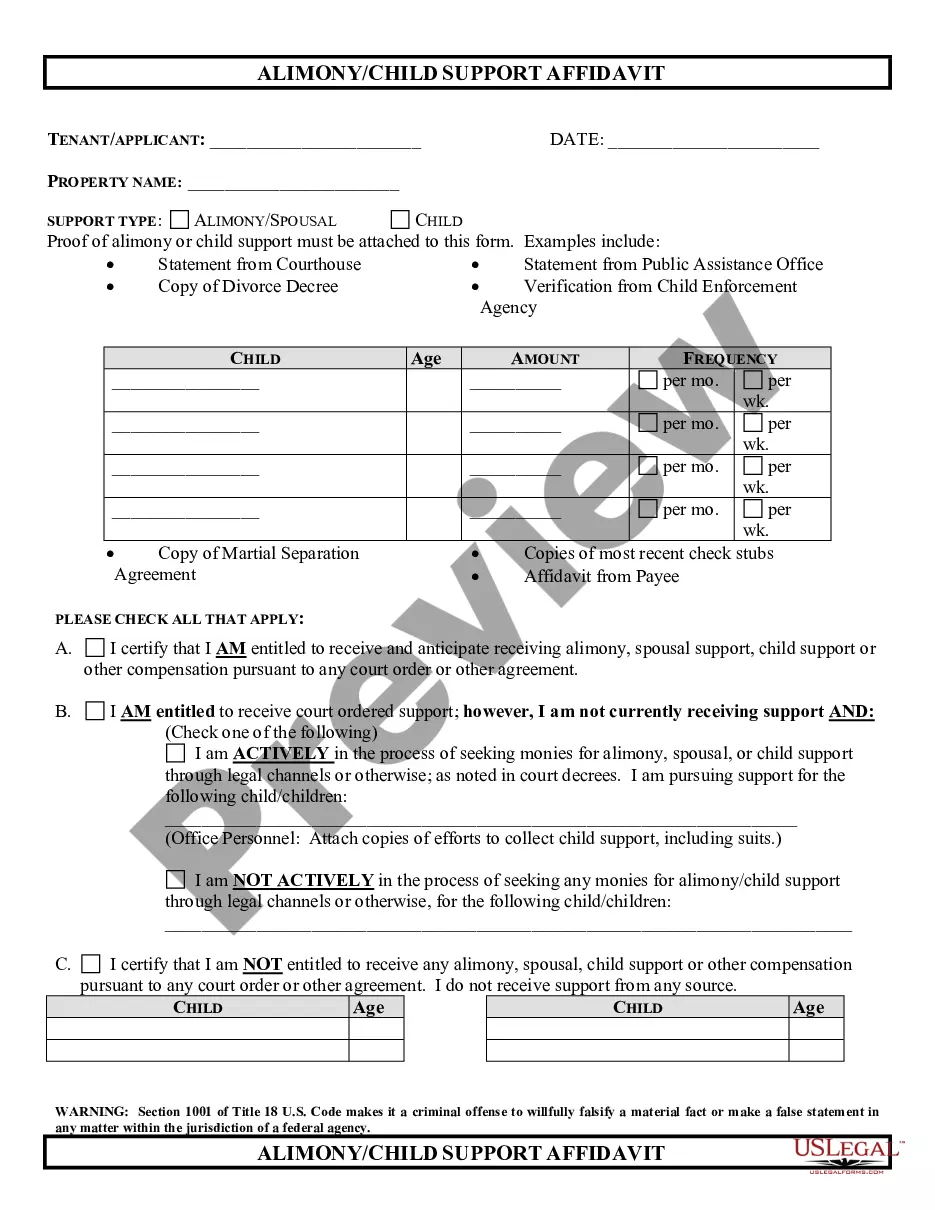
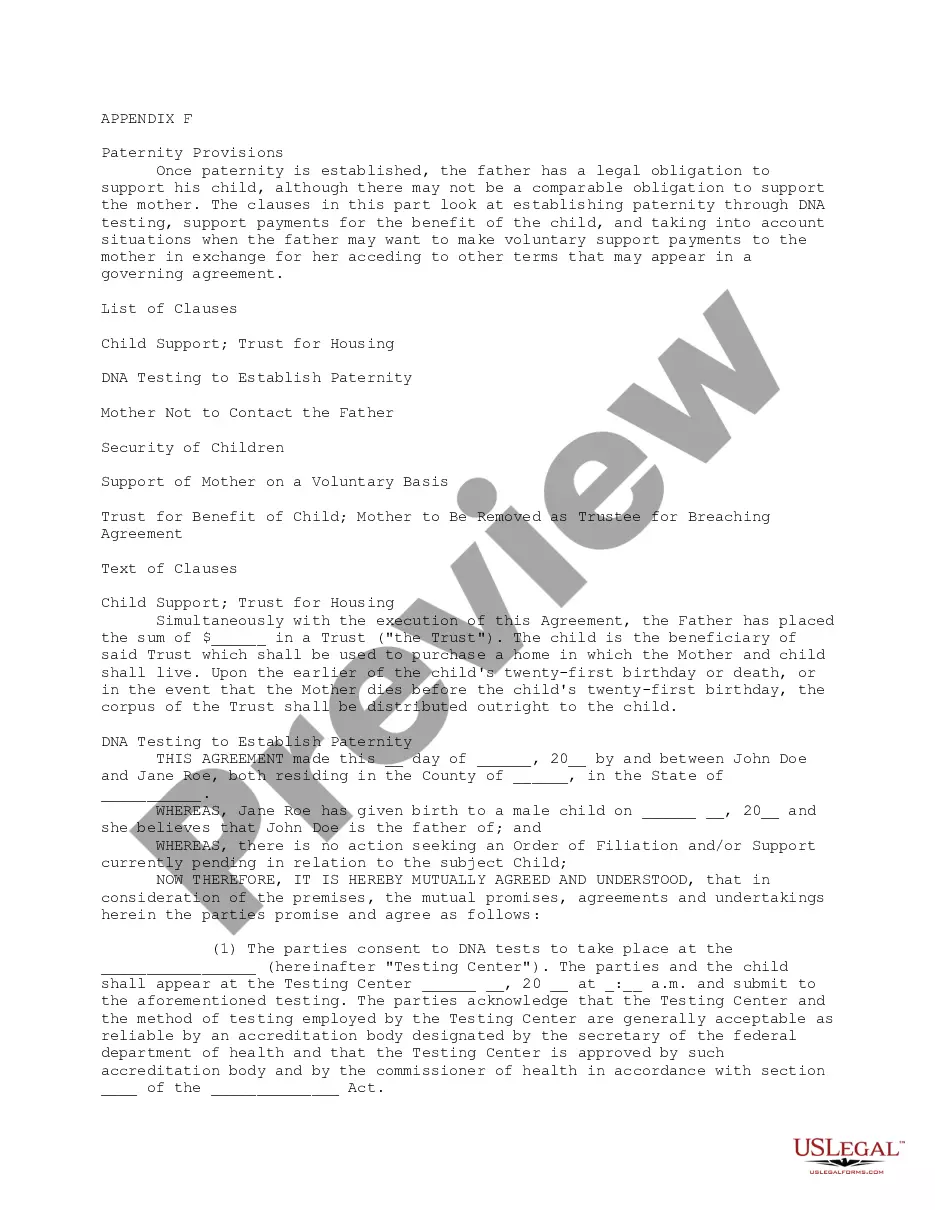
- Petitioner and Respondent Details: Information on the parties involved in the affidavit.
- Child's Information: Key details including the child's full name, date, and place of birth.
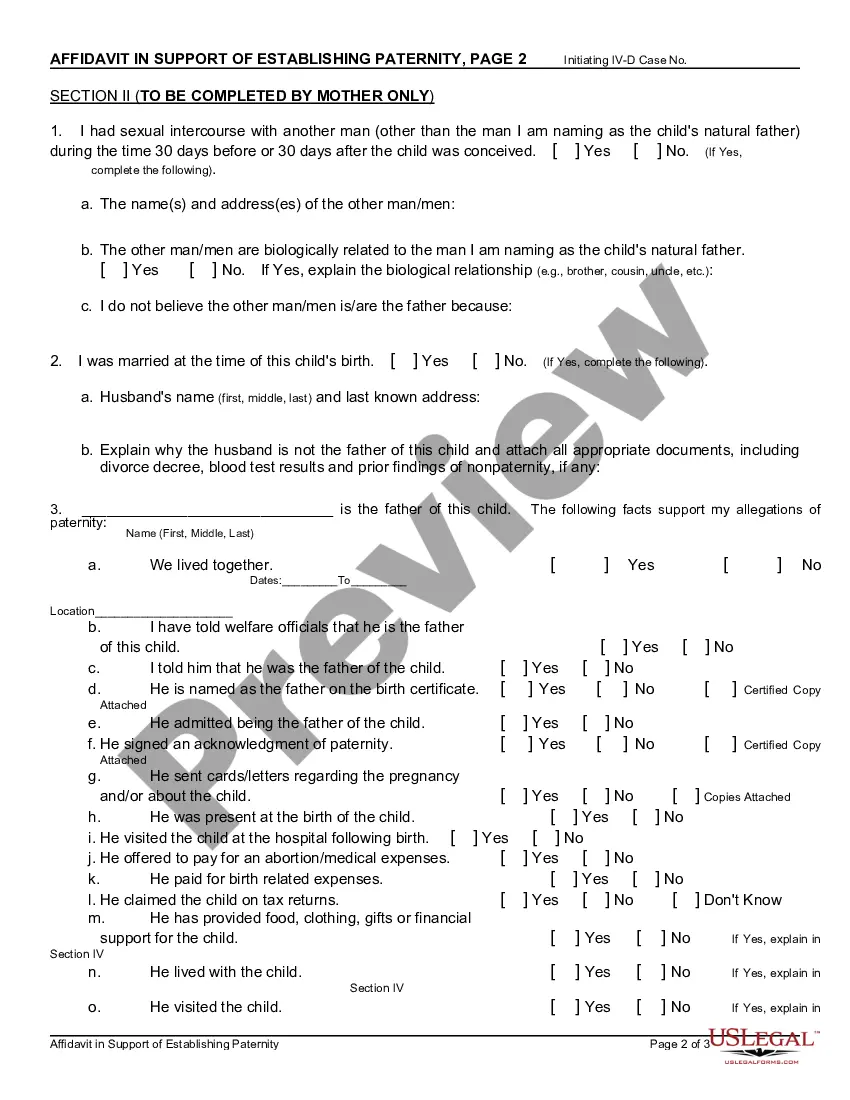
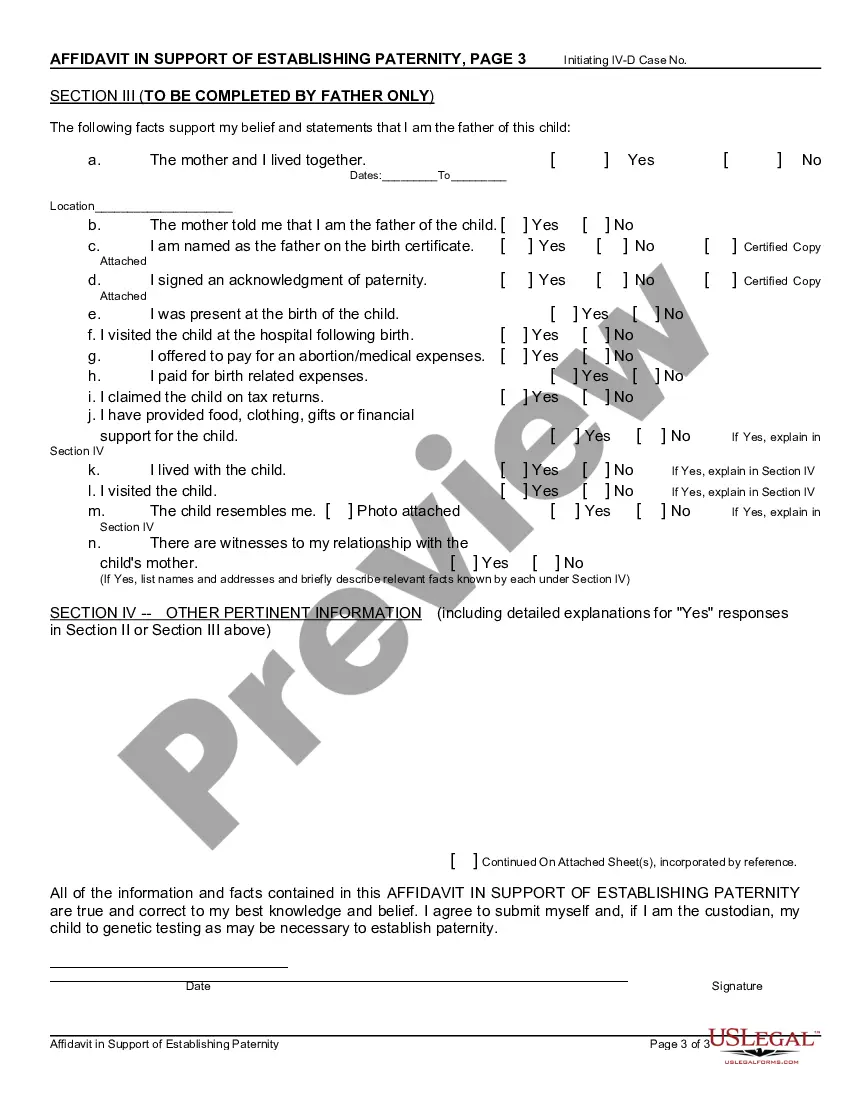
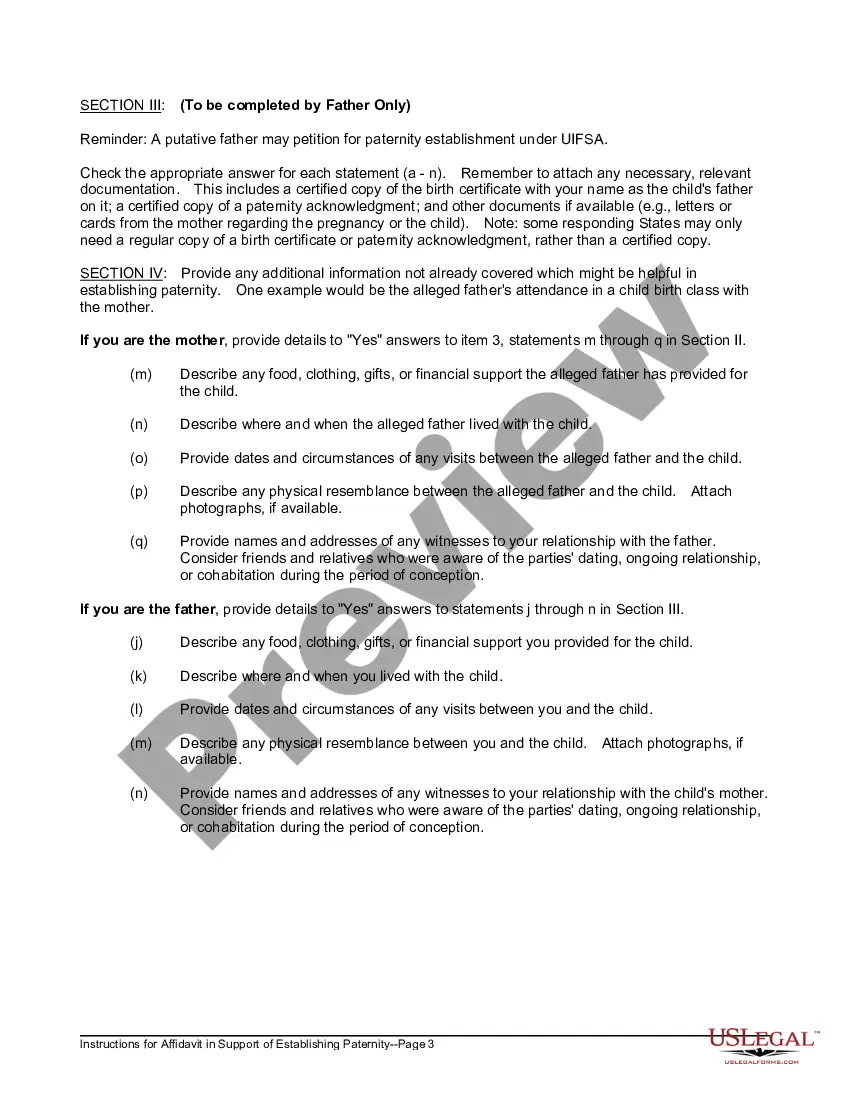
- Paternity Claims: Sections that require both parents to affirm details supporting their claims of paternity.
- Evidence of Relationship: Questions covering interactions between the alleged father and child, maternal claims of paternity, and any existing legal acknowledgment of paternity.
- Notarization Requirement: Space for the notary public to validate the affidavit.



Common use cases
You should use this affidavit when you need to establish the legal paternity of a child, which is often required for child support, custody, or visitation purposes. It is particularly useful in cases where the child's parents are not married or when there is a dispute regarding the father's identity.
Who can use this document
This form is intended for the following parties:
- Natural mothers seeking to establish the paternity of their child.
- Alleged fathers wishing to assert their parental rights.
- Individuals involved in child support or custody disputes.
How to prepare this document
Follow these steps to complete the Affidavit in Support of Establishing Paternity:
- Identify the petitioner and respondent by providing their names and relevant information.
- Fill out the child's full name, date of birth, and place of birth accurately.
- Answer all questions truthfully regarding the relationship between the parents and any evidence supporting the claim of paternity.
- Ensure that both parents sign the affidavit in the presence of a notary public.
- Attach any necessary documents that substantiate your claims, such as a birth certificate or prior acknowledgment of paternity.
Notarization guidance
Yes, this form must be notarized to be legally valid. Notarization ensures that the document is signed under oath and confirms the identities of the parties involved. US Legal Forms provides integrated online notarization services available 24/7, ensuring a secure and convenient process without the need to travel.
Get your form ready online
Our built-in tools help you complete, sign, share, and store your documents in one place.
Make edits, fill in missing information, and update formatting in US Legal Forms—just like you would in MS Word.
Download a copy, print it, send it by email, or mail it via USPS—whatever works best for your next step.
Sign and collect signatures with our SignNow integration. Send to multiple recipients, set reminders, and more. Go Premium to unlock E-Sign.
If this form requires notarization, complete it online through a secure video call—no need to meet a notary in person or wait for an appointment.
We protect your documents and personal data by following strict security and privacy standards.

Make edits, fill in missing information, and update formatting in US Legal Forms—just like you would in MS Word.

Download a copy, print it, send it by email, or mail it via USPS—whatever works best for your next step.

Sign and collect signatures with our SignNow integration. Send to multiple recipients, set reminders, and more. Go Premium to unlock E-Sign.

If this form requires notarization, complete it online through a secure video call—no need to meet a notary in person or wait for an appointment.

We protect your documents and personal data by following strict security and privacy standards.
Common mistakes to avoid
- Leaving sections unanswered, which can delay processing.
- Failing to provide supporting documentation for paternity claims.
- Not obtaining notarization, which may invalidate the affidavit.
- Providing incorrect or outdated information about the child or parents.
Benefits of completing this form online
- Convenience of completing the form online and downloading it immediately.
- Editability allows users to review and correct information as needed before final submission.
- Reliable legal templates crafted by licensed attorneys ensure compliance with local laws.
- Access to customer support can help clarify questions during the completion process.
Legal use & context
- This affidavit provides a legal basis for asserting paternity in court.
- It can be used to establish child support obligations and custody rights.
- Failure to complete the affidavit correctly may lead to delays in legal proceedings or challenges in establishing parentage.
Summary of main points
- The Affidavit in Support of Establishing Paternity is crucial for confirming a child's paternity legally.
- Both the mother and alleged father play an essential role in providing information required by this form.
- Notarization is necessary to finalize the affidavit, ensuring its acceptance in legal contexts.
- Use this form to address parental rights, custody issues, and child support claims effectively.
Looking for another form?
Form popularity
FAQ
If you get married after the child is born, it can establish paternity retroactively. This is not an automatic process, and it is in you and your child's best interest to work with a family lawyer to establish paternity in this way. Both parents can sign an Affidavit of Paternity, which establishes paternity.
Birth certificate. If a birth certificate declares the father and he signs it, this is a legally binding qualification of paternity. DNA test. Court order.
An Affidavit of Admission of Paternity is a document wherein the person signing the affidavit acknowledges that he is the father of an illegitimate child. An illegitimate child is a child whose parents are not legally married to each other.
Get on the birth certificate. Once your child is born, the easiest way to establish paternity is by getting your name on the birth certificate. Get an order through an administrative agency. Get a court order.