Personnel Manual, Policies or Employment Handbook
About this form
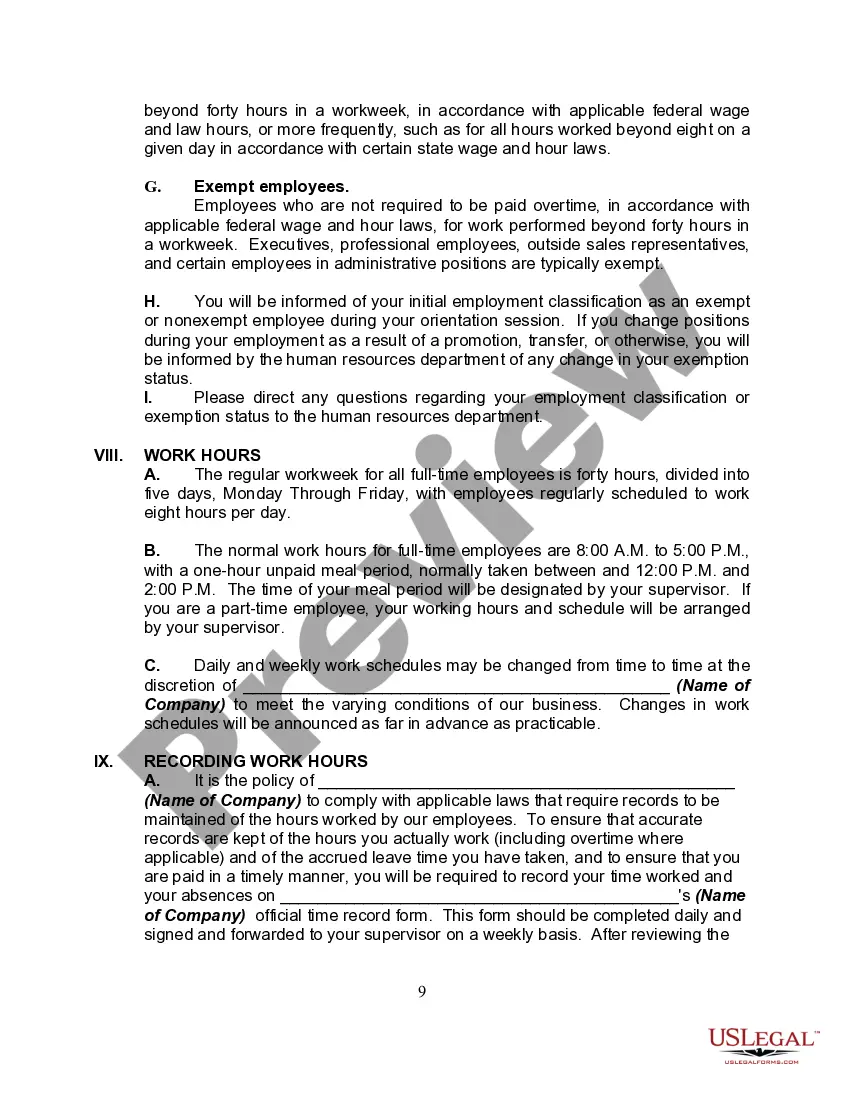
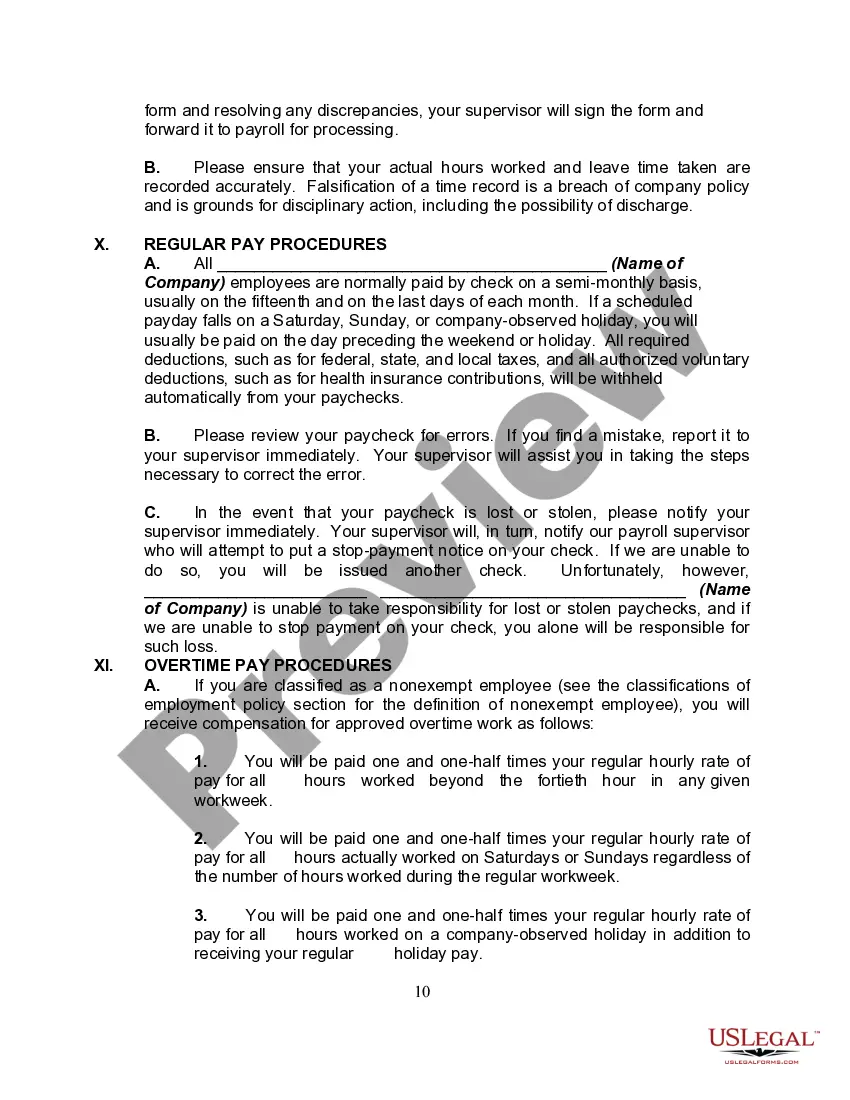
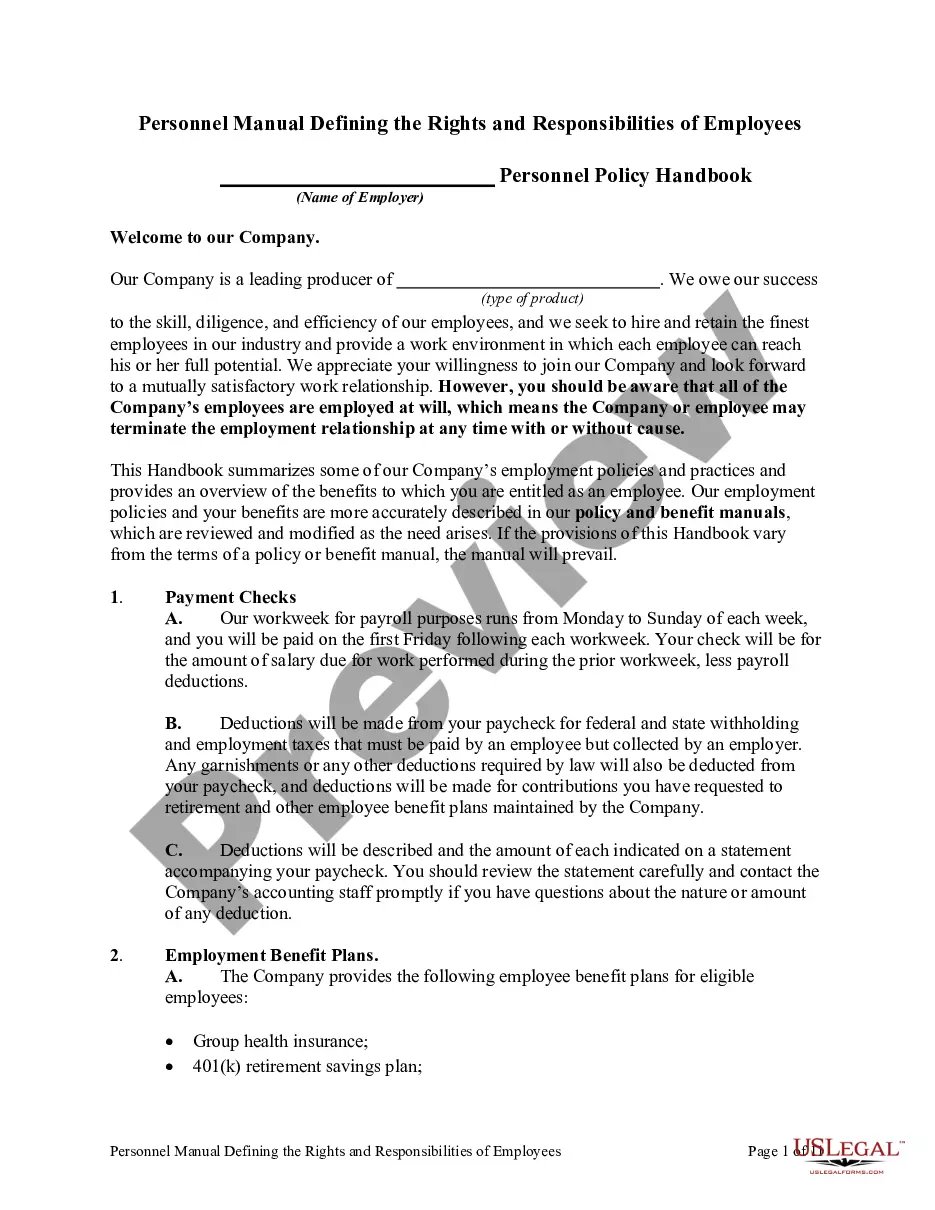
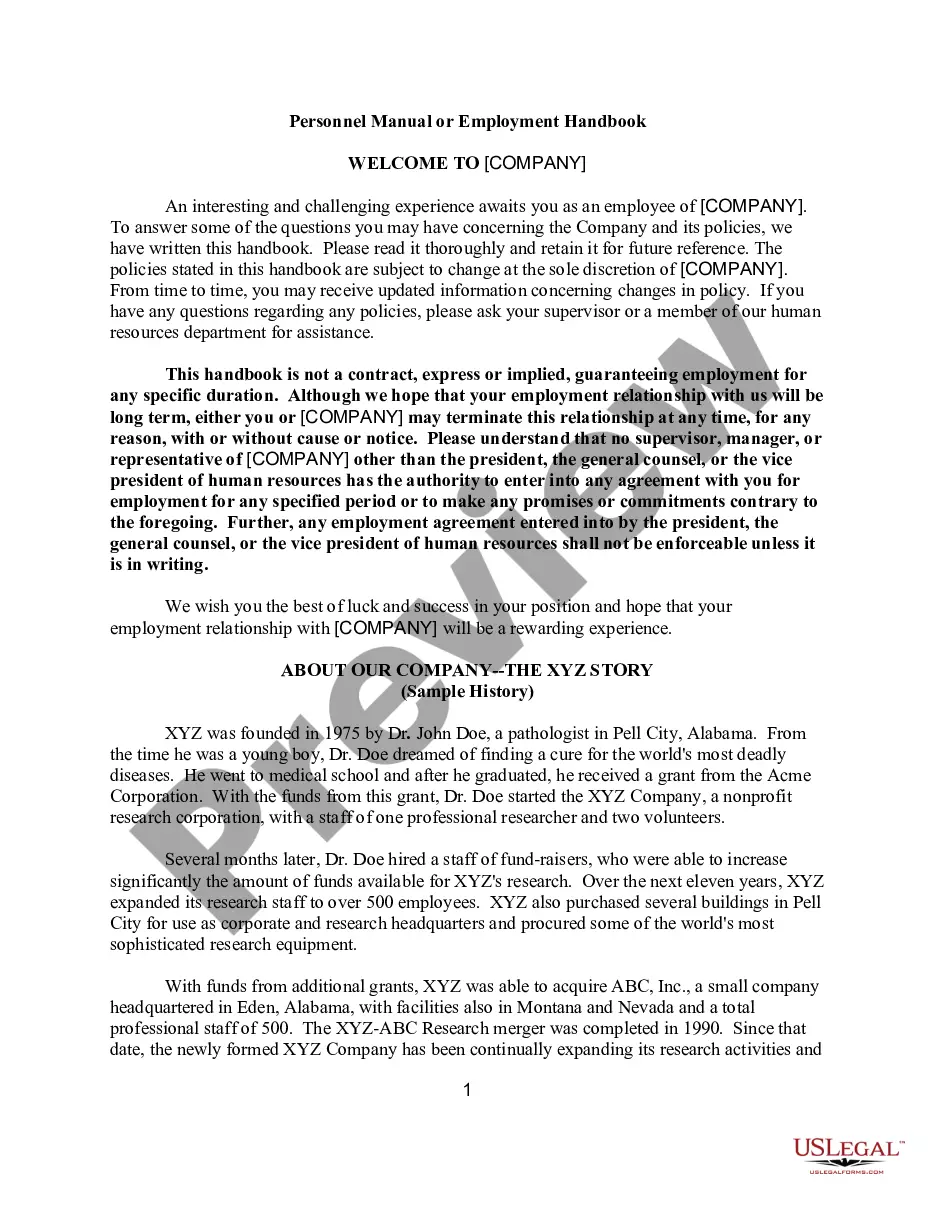
The Personnel Manual, Policies, or Employment Handbook is a comprehensive guide that outlines an employer's work rules and policies for its employees. This handbook serves distinct purposes, including communicating the company's culture, expectations, and available resources for employees, differentiating it from simpler work policy documents or one-page guidelines.
Key parts of this document
- Company introduction and welcome message.
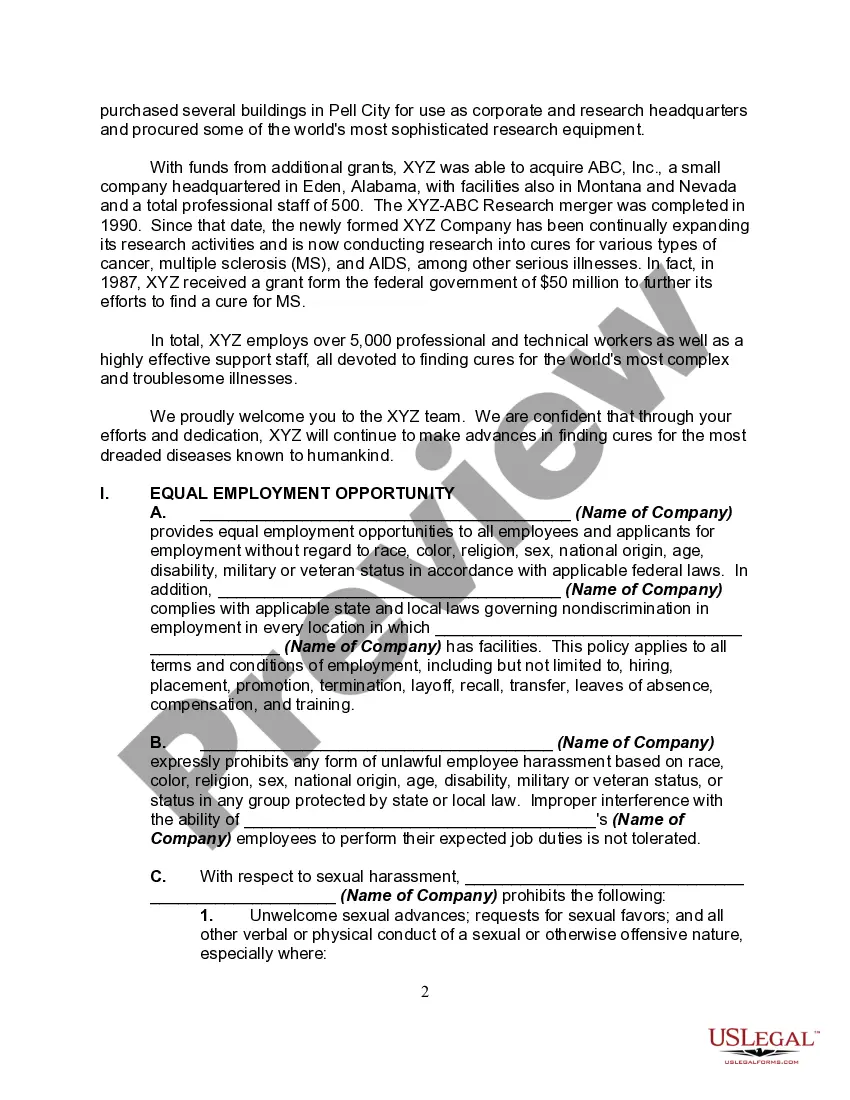
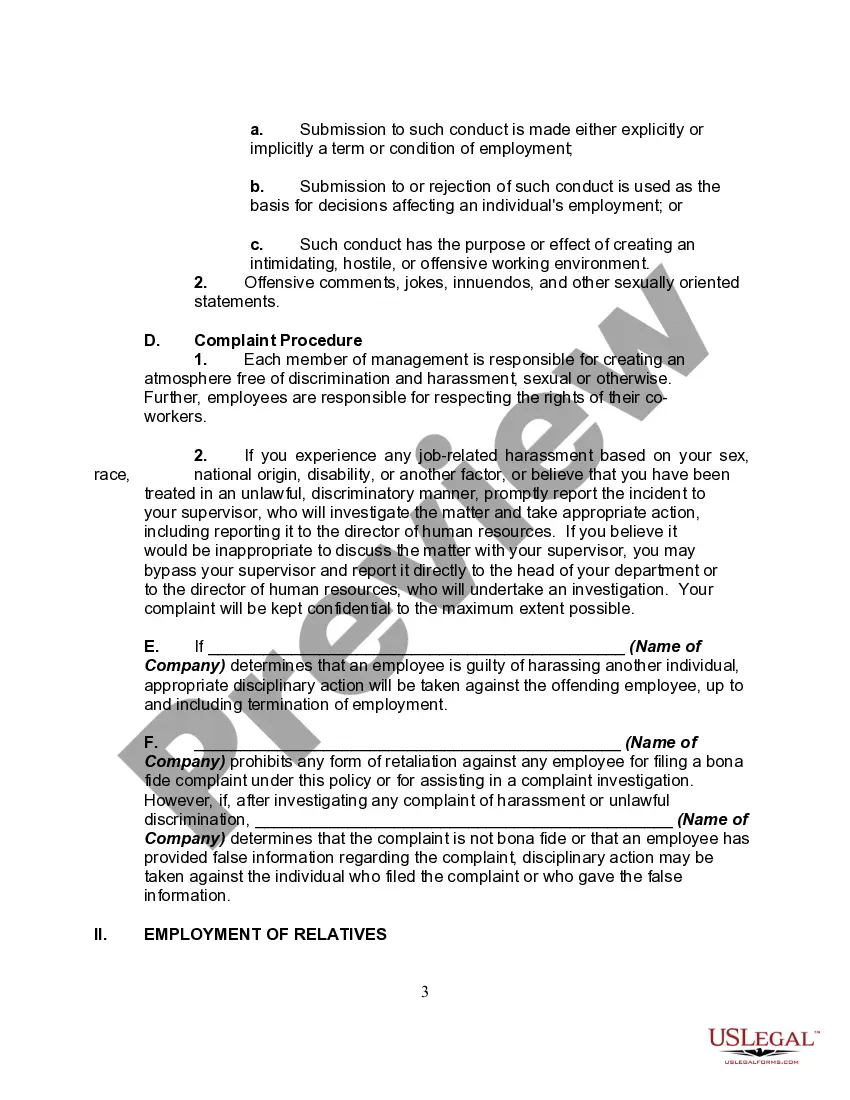
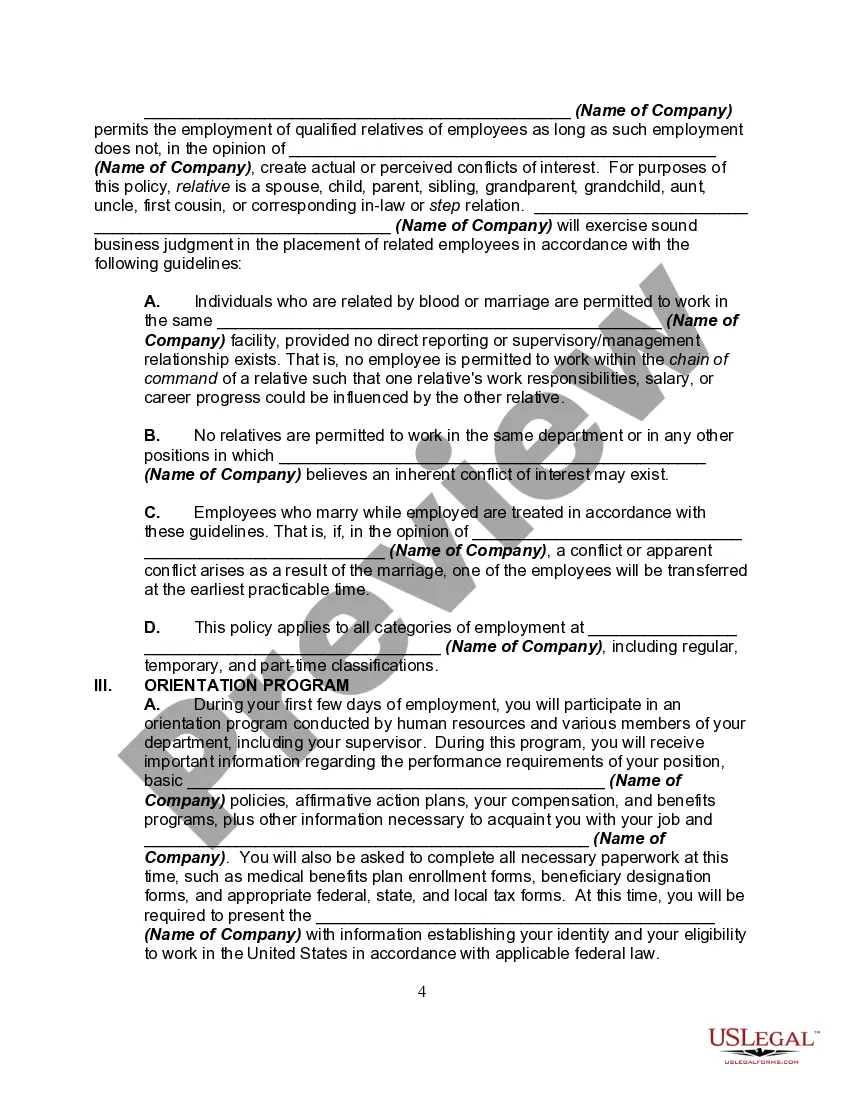
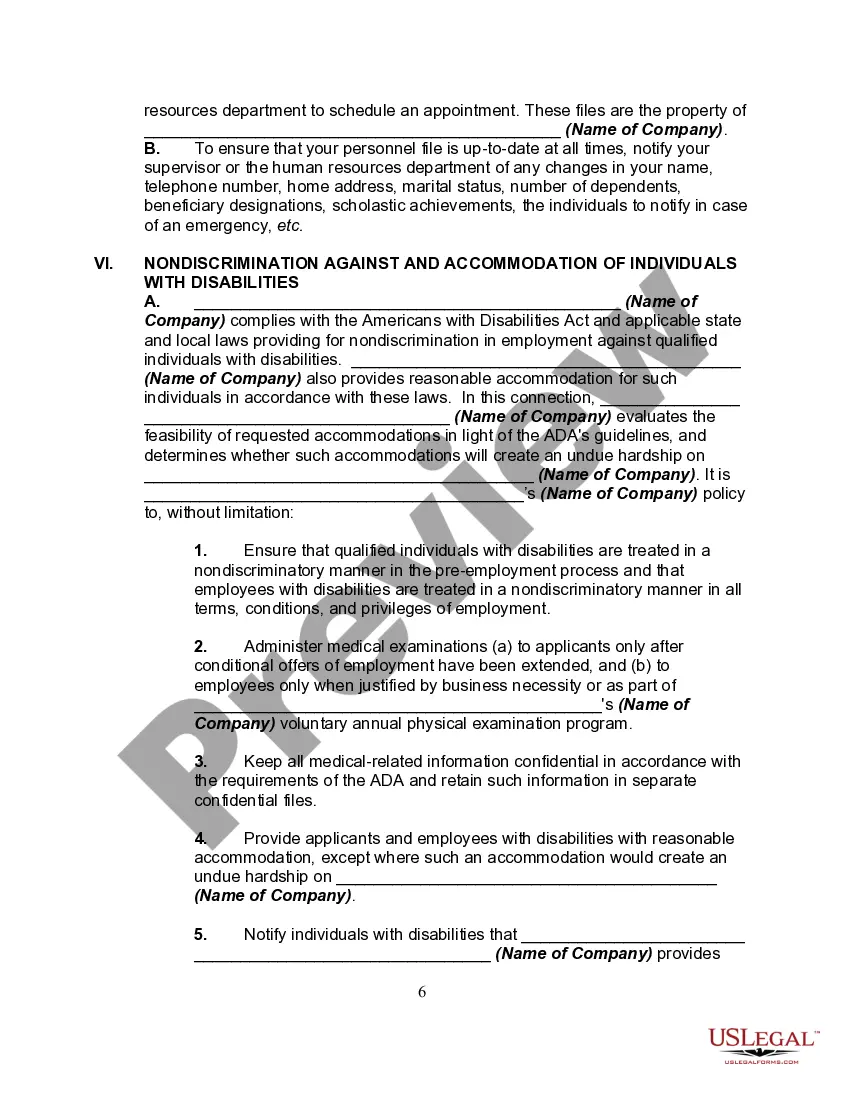
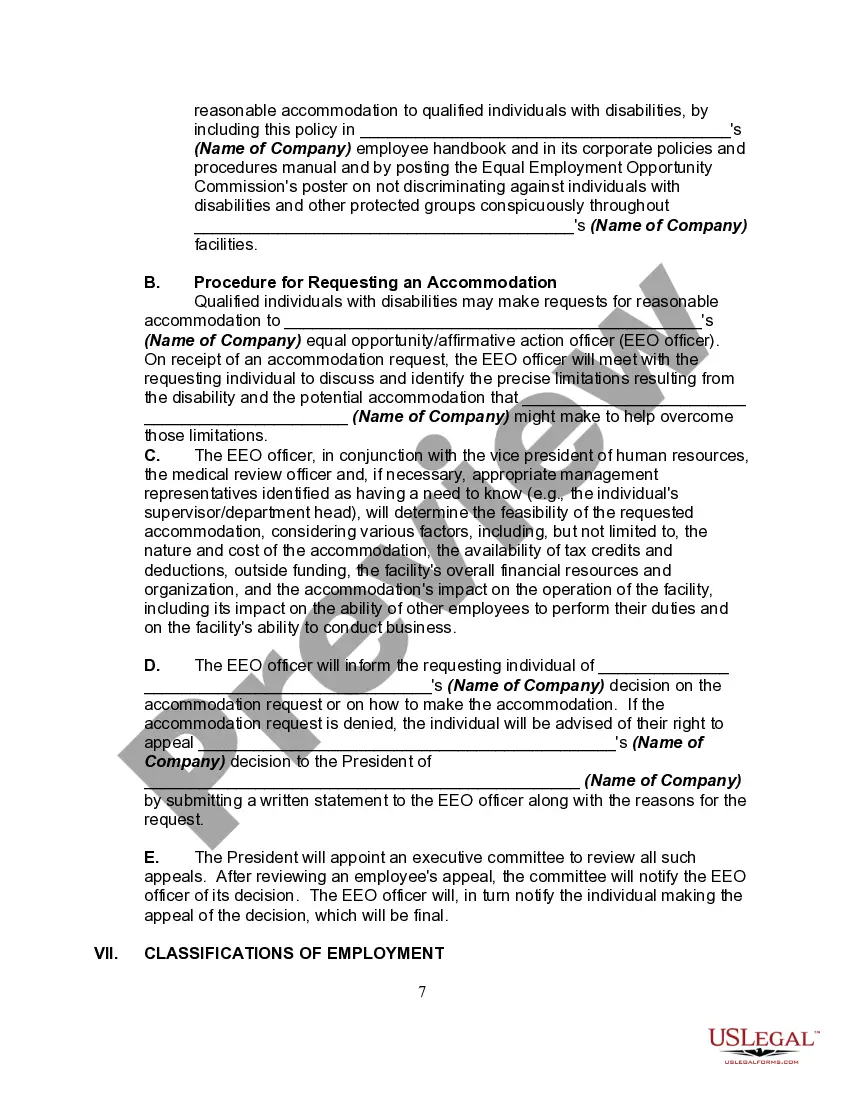
- Equal Employment Opportunity policies.
- Procedure for complaints and harassment.
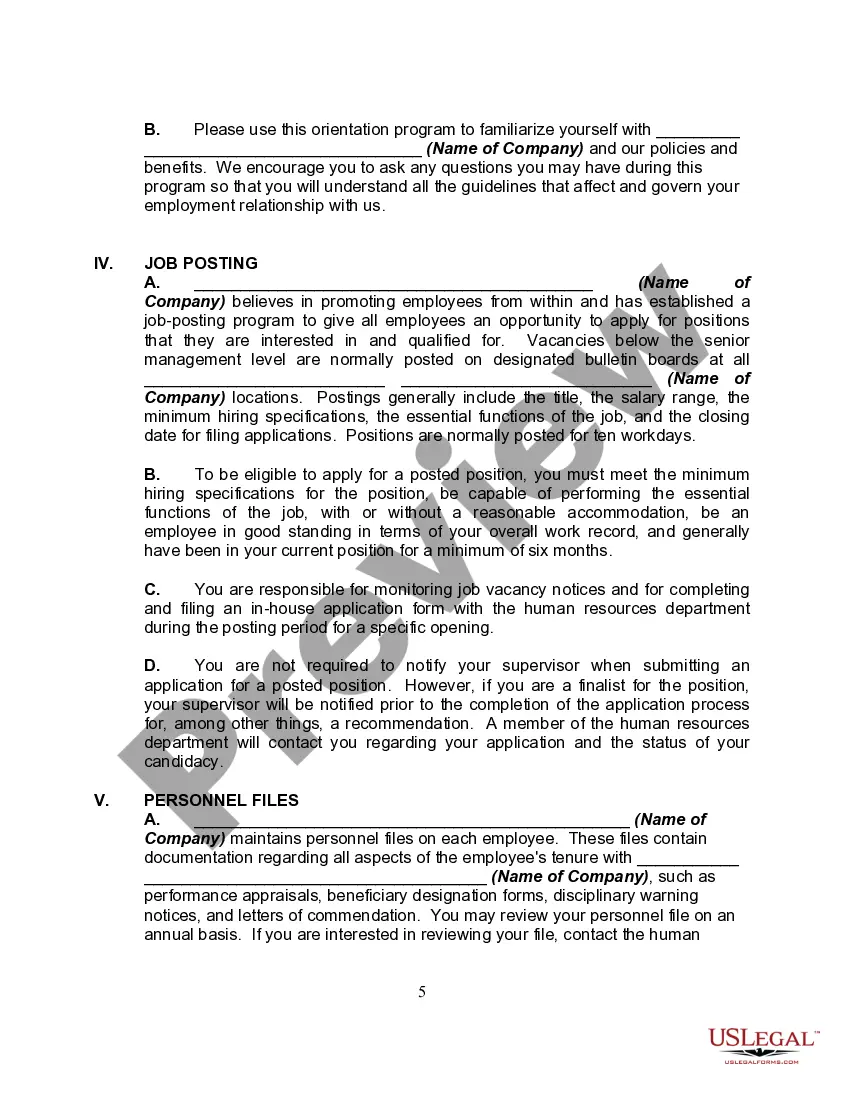
- Job posting policies.
- Leave of absence information.
- Disciplinary procedures and performance evaluations.



When this form is needed
This form is essential when establishing a structured set of policies for a workplace, particularly as a reference for managers and employees when addressing workplace issues, employment rights, and benefits. It is particularly useful for companies with ten or more employees, helping to clarify policies surrounding diversity, workplace conduct, time off, and other employment matters.
Intended users of this form
- Employers in need of a structured employee handbook.
- Human resource managers looking to formalize company policies.
- Business owners seeking to communicate expectations and company culture to staff.
- Organizations that employ ten or more individuals.
How to prepare this document
- Begin with the company name and introductory message.
- Clearly state your equal employment opportunity policies.
- Outline the procedures for reporting complaints and handling harassment claims.
- Detail job posting and promotion processes, including eligibility criteria.
- Include a section on leave of absence policies with specific guidelines.
- Regularly review and update your policies to ensure they reflect current practices and legal requirements.
Does this form need to be notarized?
This form does not typically require notarization unless specified by local law. However, it is advisable to keep the document securely maintained as a reference for both management and employees.
Get your form ready online
Our built-in tools help you complete, sign, share, and store your documents in one place.
Make edits, fill in missing information, and update formatting in US Legal Forms—just like you would in MS Word.
Download a copy, print it, send it by email, or mail it via USPS—whatever works best for your next step.
Sign and collect signatures with our SignNow integration. Send to multiple recipients, set reminders, and more. Go Premium to unlock E-Sign.
If this form requires notarization, complete it online through a secure video call—no need to meet a notary in person or wait for an appointment.
We protect your documents and personal data by following strict security and privacy standards.

Make edits, fill in missing information, and update formatting in US Legal Forms—just like you would in MS Word.

Download a copy, print it, send it by email, or mail it via USPS—whatever works best for your next step.

Sign and collect signatures with our SignNow integration. Send to multiple recipients, set reminders, and more. Go Premium to unlock E-Sign.

If this form requires notarization, complete it online through a secure video call—no need to meet a notary in person or wait for an appointment.

We protect your documents and personal data by following strict security and privacy standards.
Mistakes to watch out for
- Failing to keep the handbook updated with current laws and regulations.
- Using ambiguous language that can lead to misinterpretations.
- Not properly communicating the handbook content to all employees.
- Ignores feedback or suggestions from employees regarding policy clarity.
Why use this form online
- Easy access for employees, allowing them to refer to policies anytime.
- Ability to update the document quickly as laws and company policies change.
- Convenience of downloading and sharing within the organization.
- Cost-effective alternative to printing and distributing physical handbooks.
Legal use & context
- The handbook functions as a reference for employee rights and organizational policies, promoting a legally sound workplace environment.
- Provides documentation that the employer communicates policies effectively, which can be useful in legal disputes.
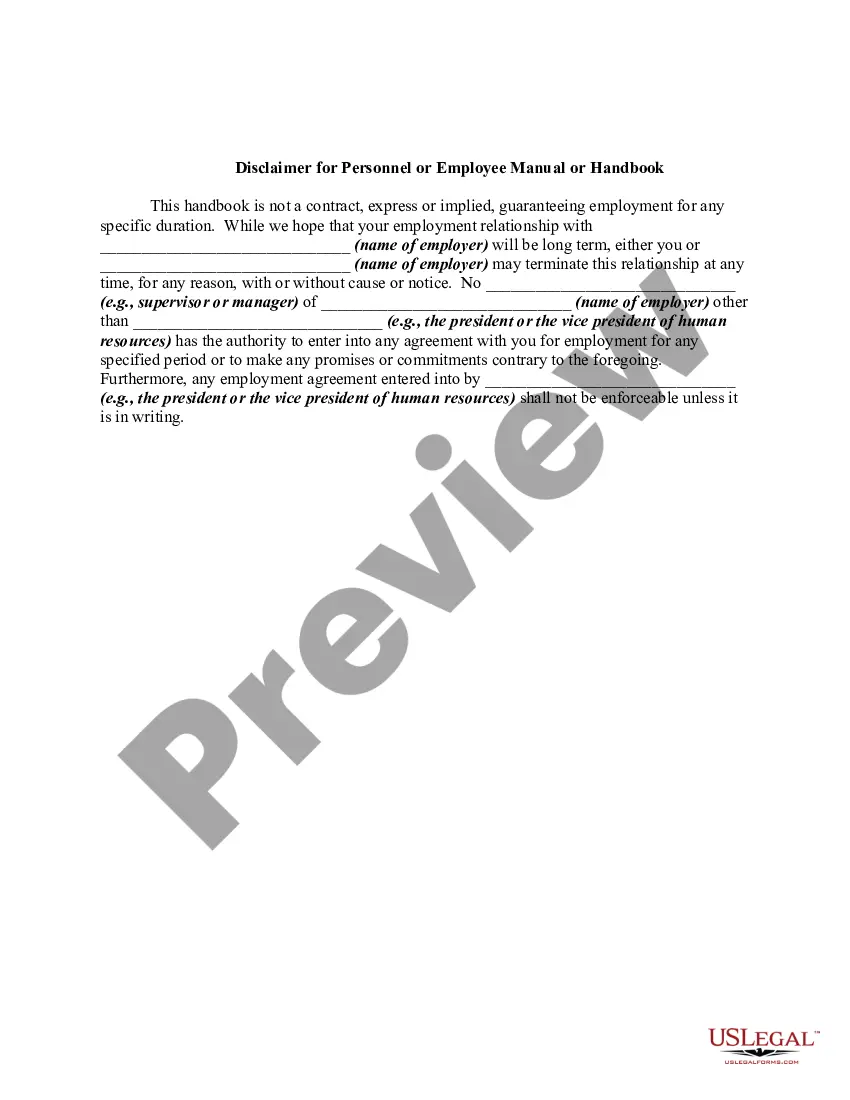
- While it establishes guidelines, it does not represent a contract of employment unless explicitly stated otherwise.
Summary of main points
- The Personnel Manual is essential for clarifying workplace policies and expectations.
- Having a well-defined handbook helps protect your organization from legal issues.
- Regularly review and update your handbook to stay compliant with changing laws.
Looking for another form?








Form popularity
FAQ
Start with an outline. Decide what you want to include in an employee handbook and create an outline of the relevant sections. Share the outline with other team members to get feedback. Fill in the blanks. Remember that done is better than perfect. Promote the product.
At-will employer/disclaimer. injury reporting. equal employment opportunity. harassment/discrimination. hours of work/meal breaks. FMLA. Internet/e-mail. reasonable accommodation.
Your company's history, mission, vision and goals. Your company's core values and culture. Human resources and legal information related to employment. Your company's policies. Employee benefits and perks.
Step 1: Determine the Purpose and Intention of the Policy. Step 2: Assemble All Prior Writings and Practices on the Same or Similar Topics. Step 3: Obtain Information and Input from Relevant Stakeholders. Step 4: Conduct Research to Determine Status of the Law and Identify Trends.
Employee handbooks can go by different names, such as an employee field guide or staff manual. Whatever you call them, employee handbooks are documents that all employees at a company should receive, often on their first day. They are designed to cover everything a new hire needs to know to get started at their job.
Welcome letter from CEO or founder. Company's mission statement. Ideal company culture. Annual office closures. Behavioral expectations including attendance and dress code if relevant.
What is the difference between employee handbooks and policies and procedures manuals? An employee handbook is written with employees as the intended audience.A policies and procedures manual is a reference tool for managers and supervisors.
Choose a suitable title for the policy. Understand the motive behind writing a policy. Use very simple and clear language. Your policy and procedure should reflect the company's image. The HR policies needs to have a very clear outline. Make the HR policies kind of user friendly.
General employment policies and practices. Anti-Discrimination policy. Anti-harassment policy. Discipline policy. Health and safety policy. Compensation policy. Employee benefits policy. Work conditions and hours.