Personal Day Provision for Personnel or Employee Manual or Handbook
About this form
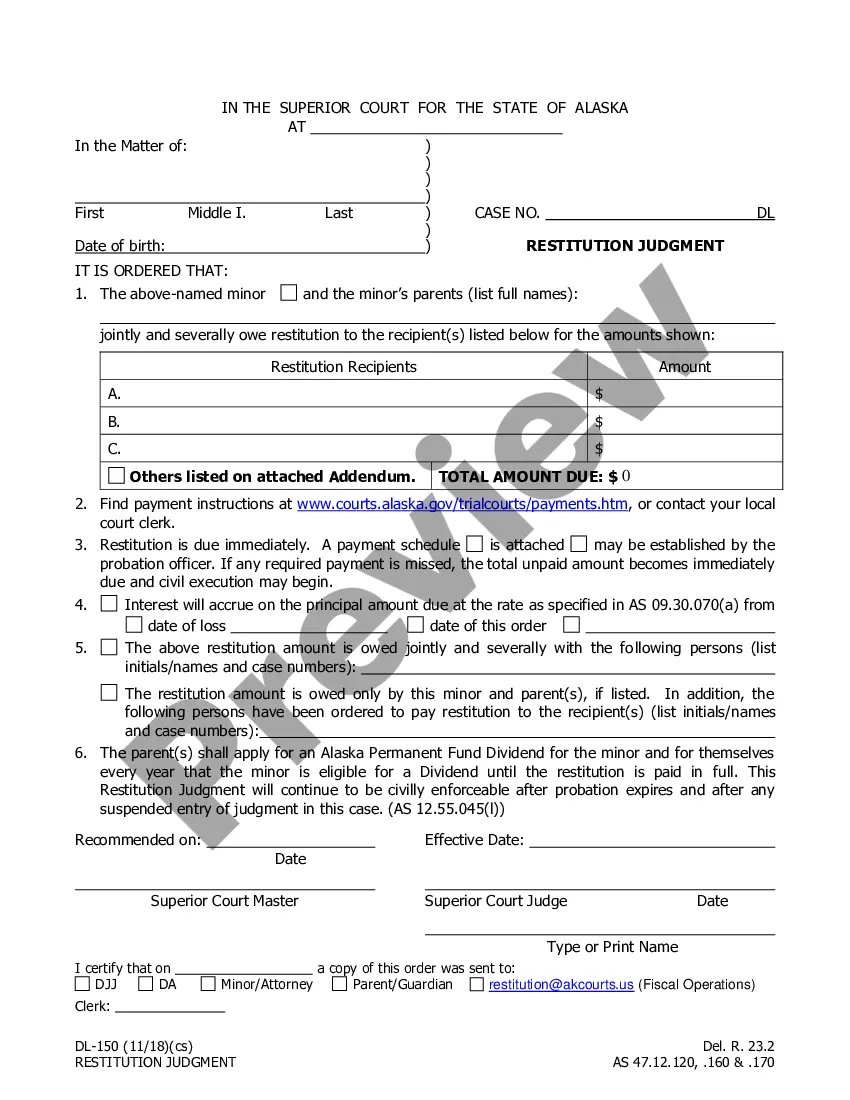
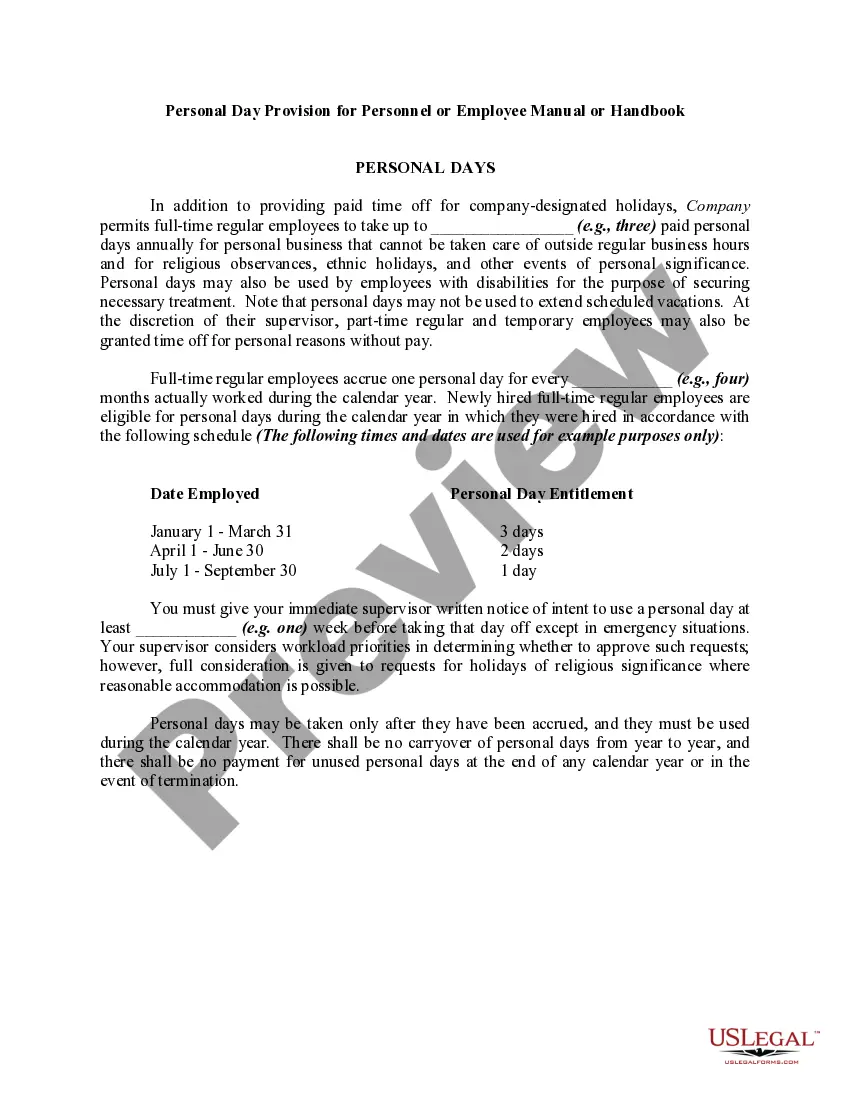
The Personal Day Provision for Personnel or Employee Manual or Handbook is a template that outlines how employees can take paid personal days off for various reasons, such as religious observance or personal business. This form is distinct from sick leave and vacation days, providing clarity on its specific use and policies within an organization.
Form components explained
- Definition of personal days and their allowable uses.
- Eligibility criteria for full-time and part-time employees.
- Accrual rates for personal days based on months worked.
- Notification requirements for taking personal days.
- Limits on carryover and payment for unused personal days.


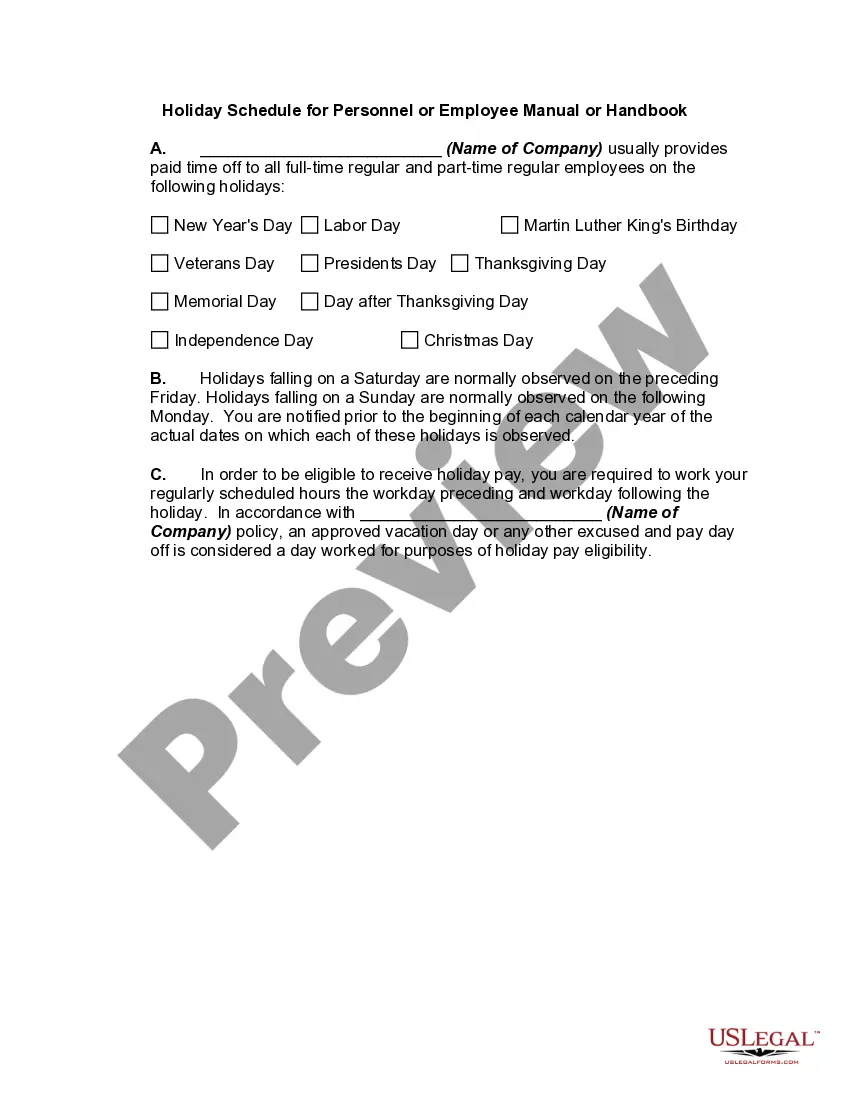
When to use this document
This form is essential for organizations that wish to establish a policy regarding personal days for their employees. Employers may use it to define the number of personal days available, reasons for which these days can be taken, and the process for requesting these days off. It's particularly relevant for companies looking to support employee wellness and observance of personal significance without disrupting business operations.
Who needs this form
- Employers who want to formalize personal day policies in their employee manual.
- HR professionals responsible for drafting employee handbooks.
- Business owners aiming to comply with workplace regulations regarding time off.
Instructions for completing this form
- Specify the maximum number of personal days available to employees each year.
- Define the accrual period for personal days (e.g., every four months worked).
- Outline the procedure for requesting personal days, including notification time required.
- Clarify any situations where personal days can be used, such as for religious observance.
- Indicate the policy for unused personal days at the end of the calendar year.
Does this document require notarization?
Notarization is not commonly needed for this form. However, certain documents or local rules may make it necessary. Our notarization service, powered by Notarize, allows you to finalize it securely online anytime, day or night.
Get your form ready online
Our built-in tools help you complete, sign, share, and store your documents in one place.
Make edits, fill in missing information, and update formatting in US Legal Forms—just like you would in MS Word.
Download a copy, print it, send it by email, or mail it via USPS—whatever works best for your next step.
Sign and collect signatures with our SignNow integration. Send to multiple recipients, set reminders, and more. Go Premium to unlock E-Sign.
If this form requires notarization, complete it online through a secure video call—no need to meet a notary in person or wait for an appointment.
We protect your documents and personal data by following strict security and privacy standards.

Make edits, fill in missing information, and update formatting in US Legal Forms—just like you would in MS Word.

Download a copy, print it, send it by email, or mail it via USPS—whatever works best for your next step.

Sign and collect signatures with our SignNow integration. Send to multiple recipients, set reminders, and more. Go Premium to unlock E-Sign.

If this form requires notarization, complete it online through a secure video call—no need to meet a notary in person or wait for an appointment.

We protect your documents and personal data by following strict security and privacy standards.
Common mistakes to avoid
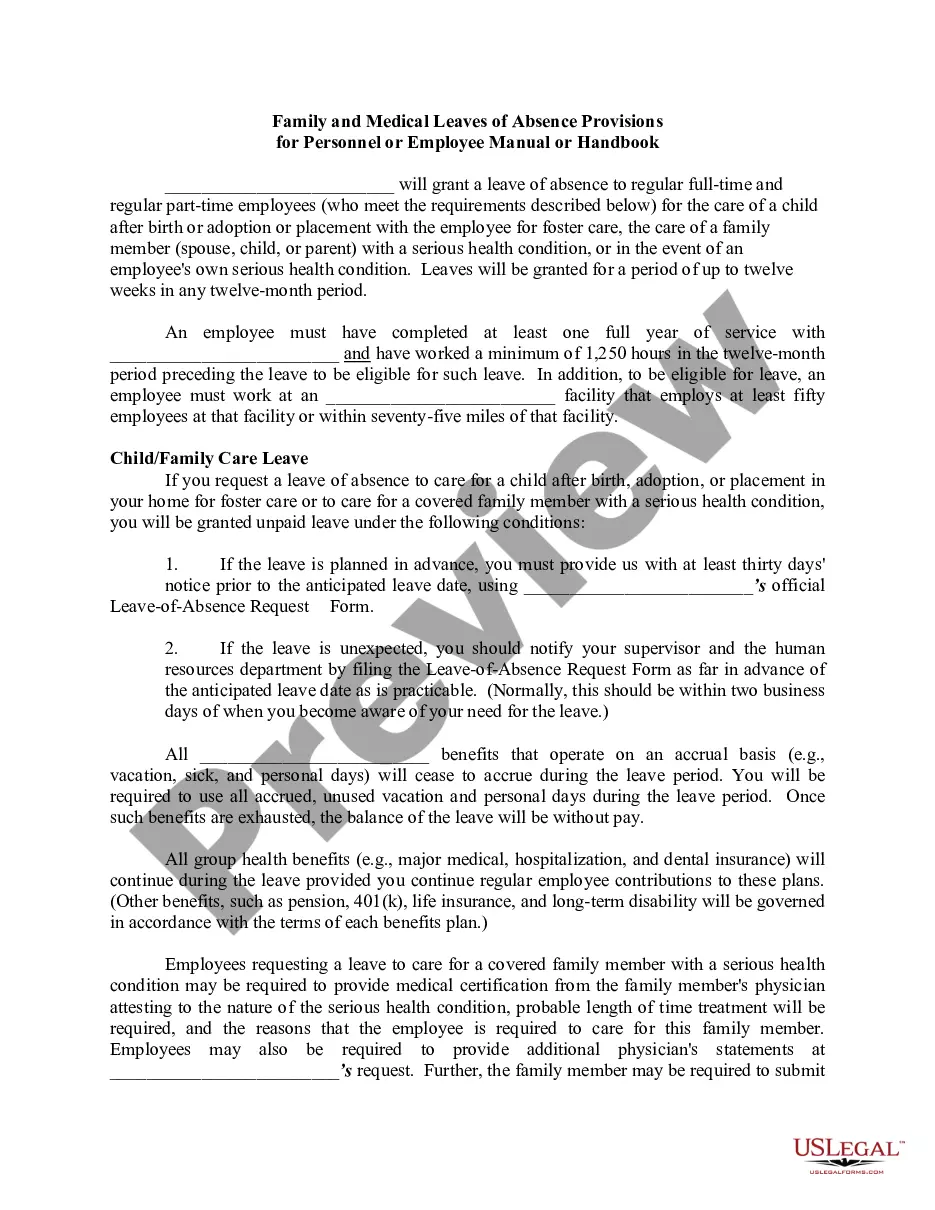
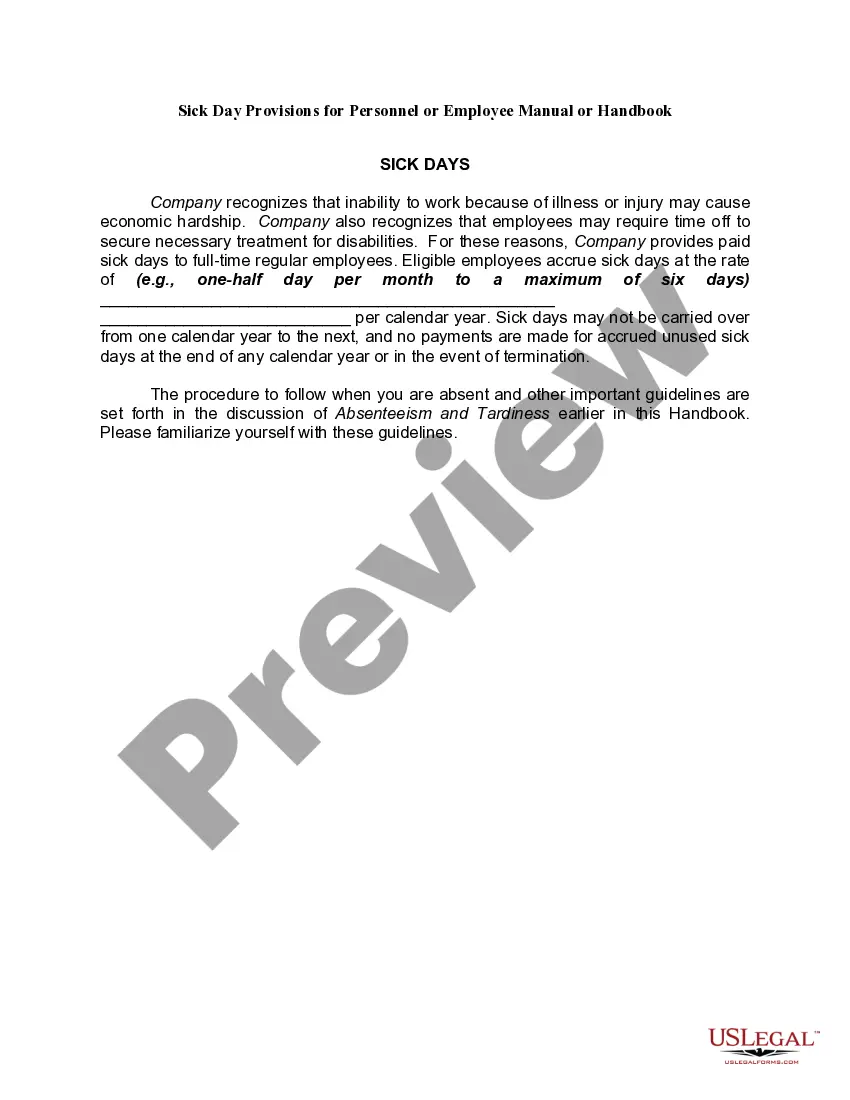
- Failing to define the distinction between personal days and vacation or sick days.
- Not specifying the accrual method or entitlement timeline accurately.
- Overlooking the need for compliance with state-specific labor laws.
Benefits of completing this form online
- Convenient access for quick downloads and printing.
- Easy adaptability to fit specific organizational needs.
- Reliability of templates prepared by licensed attorneys.
Legal use & context
- This form serves as a guideline for creating personal day policies that comply with employment laws.
- Clear policies help mitigate misunderstandings and promote fair treatment of employees.
- Employers should regularly review and update their personal day provisions in accordance with legal changes.
Summary of main points
- The Personal Day Provision outlines employee rights to paid personal time off.
- Proper implementation requires adapting the form to adhere to state laws.
- Establishing clear policies benefits both employees and employers.
Looking for another form?

Form popularity
FAQ
Employee handbooks can go by different names, such as an employee field guide or staff manual. Whatever you call them, employee handbooks are documents that all employees at a company should receive, often on their first day. They are designed to cover everything a new hire needs to know to get started at their job.
Your company's history, mission, vision and goals. Your company's core values and culture. Human resources and legal information related to employment. Your company's policies. Employee benefits and perks.
At-will employer/disclaimer. injury reporting. equal employment opportunity. harassment/discrimination. hours of work/meal breaks. FMLA. Internet/e-mail. reasonable accommodation.
Your employment with employer name is at will. This means your employment is for an indefinite period of time and it is subject to termination by you or employer name, with or without cause, with or without notice, and at any time.
Company History. While not required, a brief section discussing the company's history and its mission can help set the tone for an employee handbook. Paid Time-Off Policy. Employee Behavior. Pay and Promotions. Benefits.
Welcome letter from CEO or founder. Company's mission statement. Ideal company culture. Annual office closures. Behavioral expectations including attendance and dress code if relevant.
Start with an outline. Decide what you want to include in an employee handbook and create an outline of the relevant sections. Share the outline with other team members to get feedback. Fill in the blanks. Remember that done is better than perfect. Promote the product.
Use the handbook as a communication tool. Employees can be full of legal agreements and notices, which important as they are, can be daunting. Safety and security. Get a legal review. Outline your expectations/Code of conduct. Hours, benefits, and compensation. Don't be redundant. Make it readable. Leave room for change.
You could pay between $1,500-$5,000 for a personalized employee handbook developed by an HR firm. The price depends on factors such as number of employees, number of locations, industry, and state-specific employment laws that may/not need to be included.