Complaint for Breach of Warranty of Fitness for a Particular Purpose in Sale of Product
What this document covers
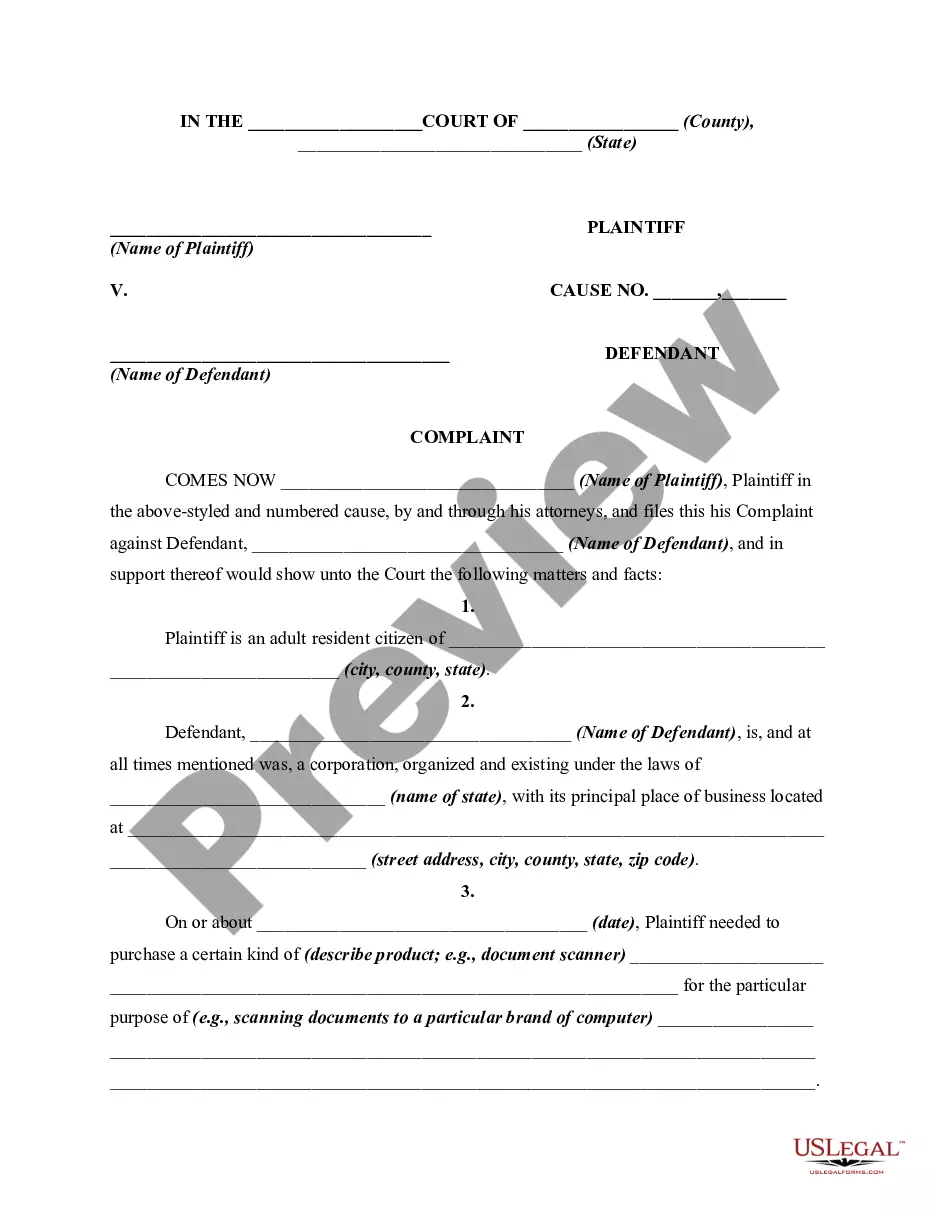
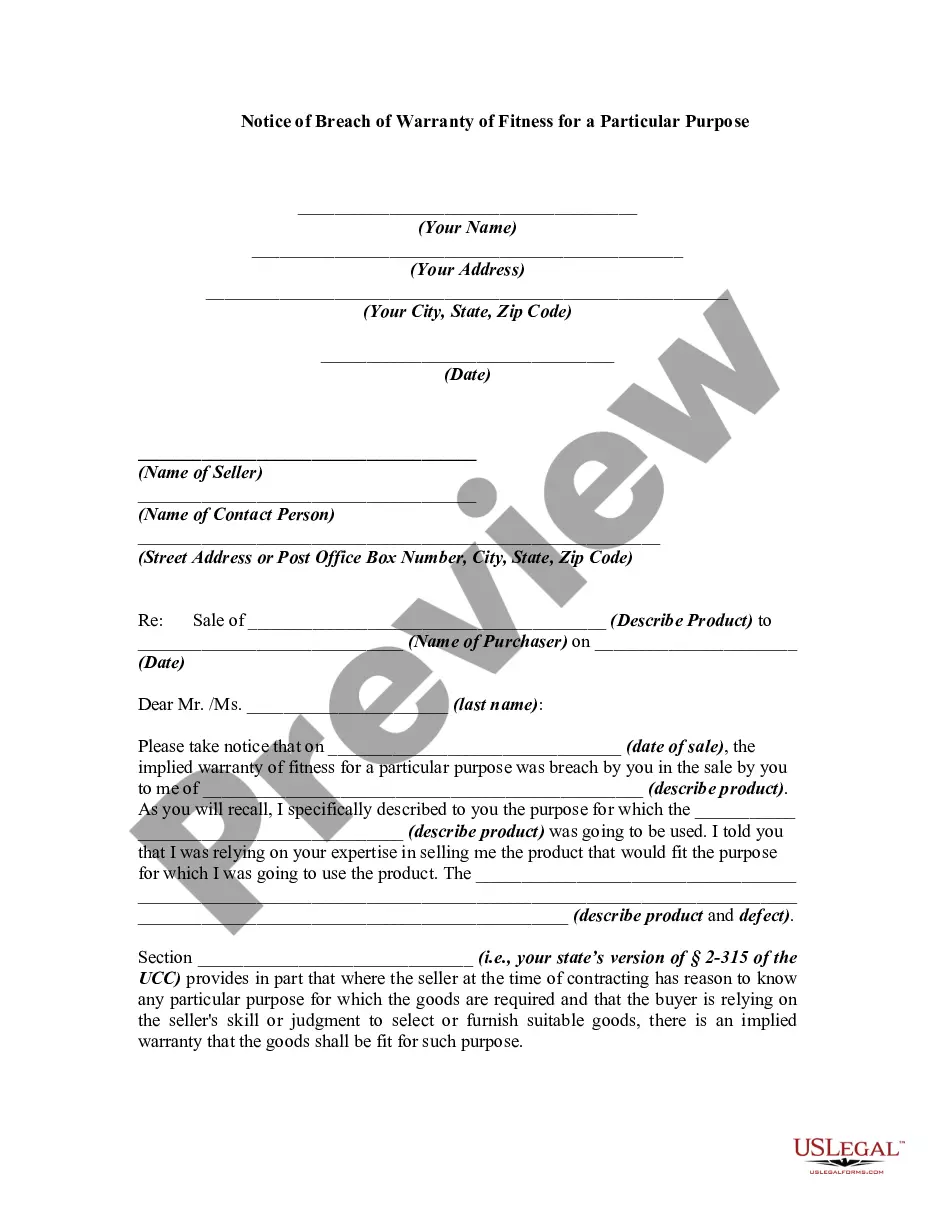
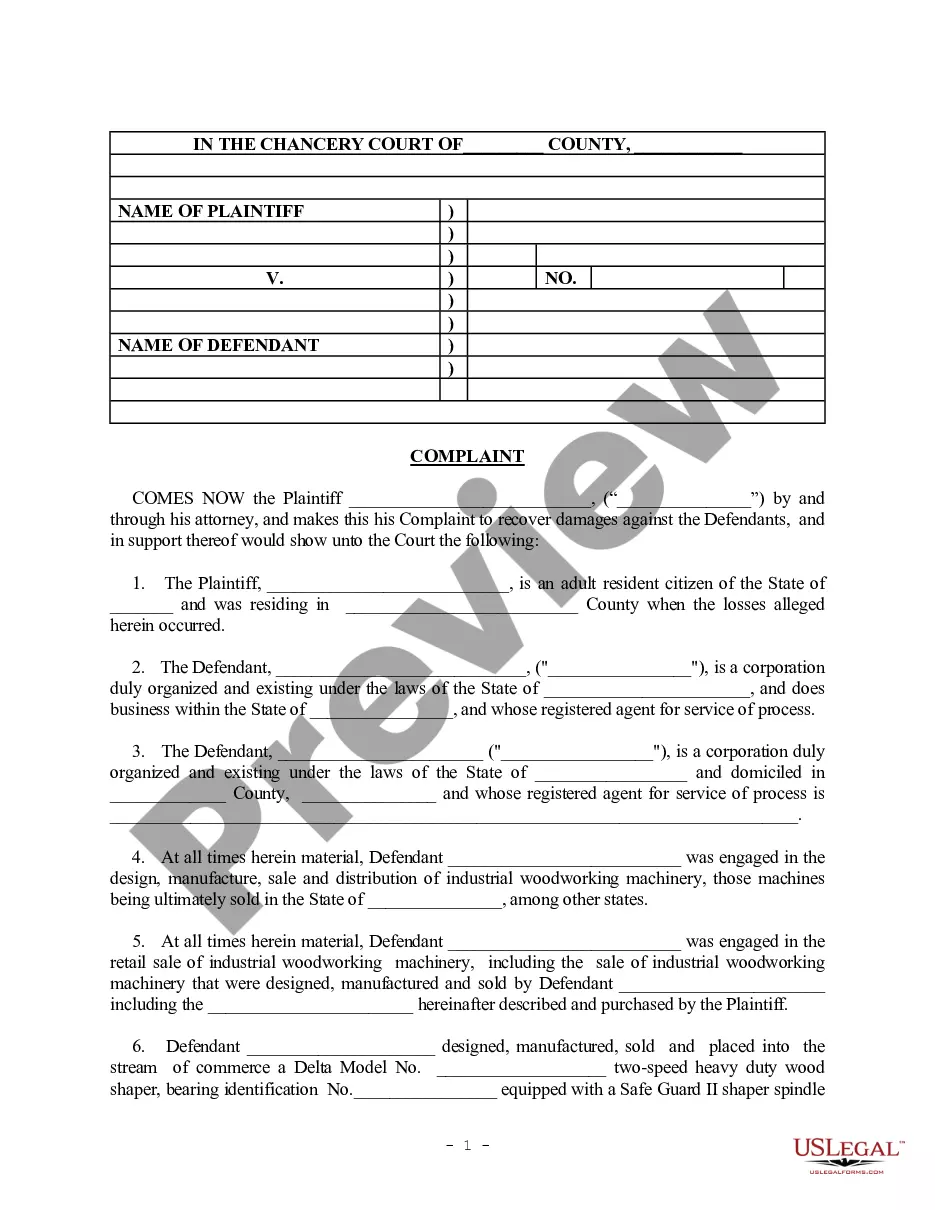
The Complaint for Breach of Warranty of Fitness for a Particular Purpose in Sale of Product is a legal document used when a buyer believes that a product purchased from a seller does not meet the specific purpose for which it was intended. This form specifically addresses a breach of the implied warranty under the Uniform Commercial Code (UCC), which states that the seller must provide goods that are fit for a particular purpose known to them at the time of sale. This form is distinct from other complaints as it focuses on warranties specific to the functionality of a product, rather than general claims of contractual breaches.
Key parts of this document
- Plaintiff and Defendant identification section
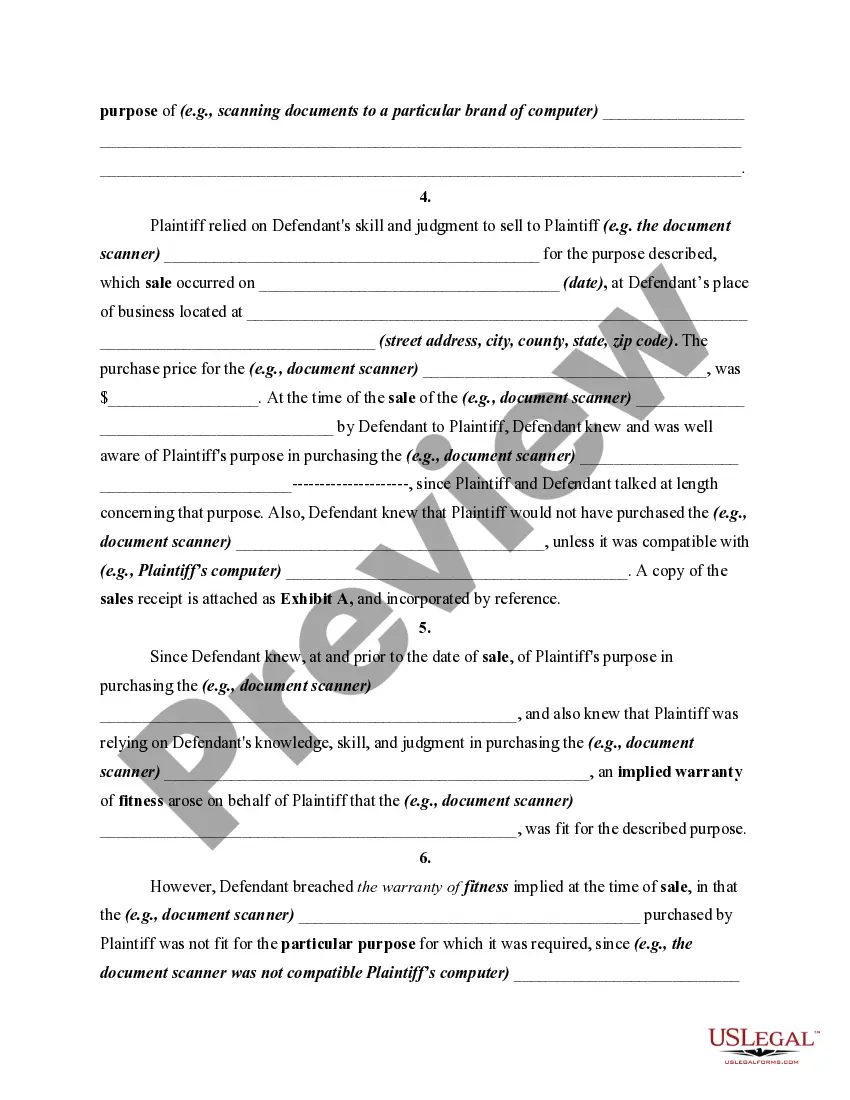
- Factual background regarding the sale and the product in question
- Details on the specific purpose for which the product was purchased
- Assertion of reliance on the seller's skill and judgment
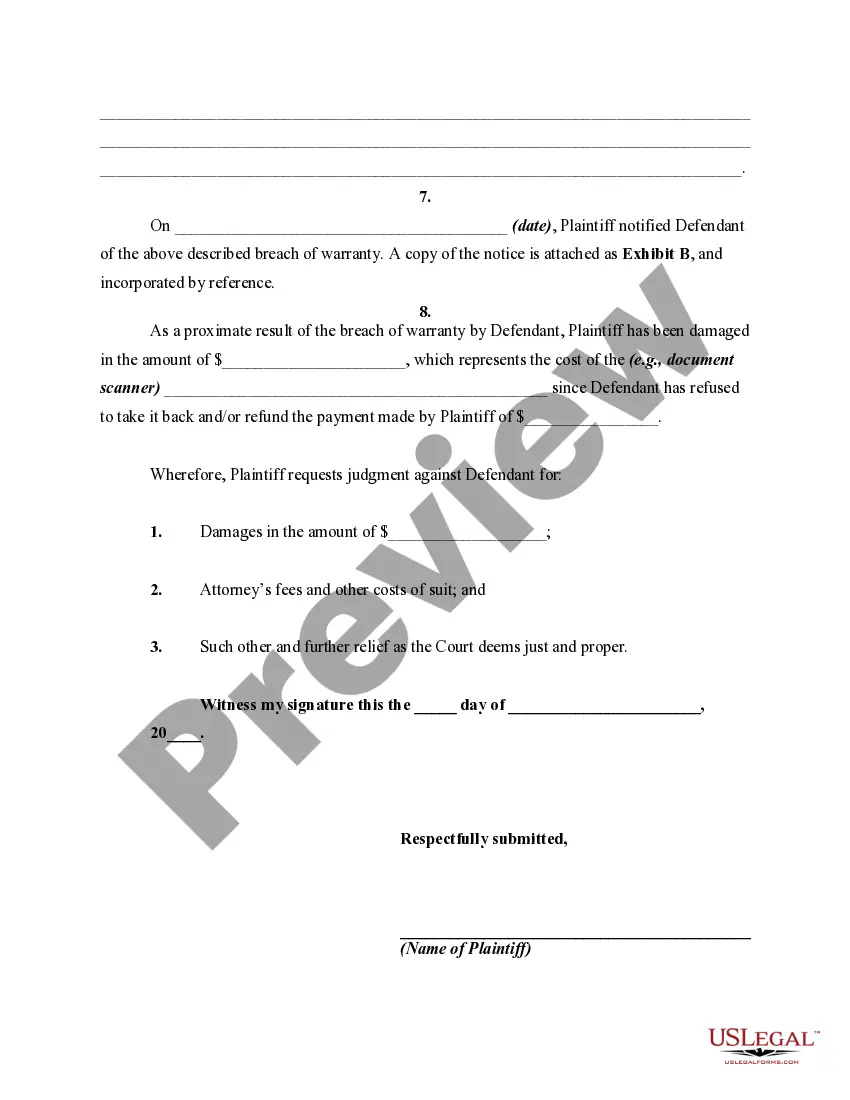
- Notification of breach of warranty
- Request for damages and other relief from the court
When this form is needed
This form should be used when a buyer has purchased a product based on the seller's advice and later finds out that the product does not serve the intended purpose. For example, if an individual buys a specialized tool or equipment that is not compatible with their existing systems, and the seller was aware of this intended use but did not provide a suitable product, this form allows the buyer to seek legal redress.
Who can use this document
This form is intended for:
- Consumers who have purchased goods based on specific needs communicated to the seller.
- Small business owners seeking a remedy for purchased goods that do not meet their operational requirements.
- Individuals seeking to assert their rights under warranties implied by the UCC.
How to complete this form
- Identify the plaintiff and defendant with full legal names.
- Provide the details of the purchase, including product description and the specific purpose for which it was intended.
- Include the sale date and location, as well as the purchase price.
- Document the breach of warranty by specifying how the product failed to meet the intended purpose.
- Attach relevant evidence, such as the sales receipt and any correspondence regarding the breach.
Notarization guidance
This form does not typically require notarization to be legally valid. However, some jurisdictions or document types may still require it. US Legal Forms provides secure online notarization powered by Notarize, available 24/7 for added convenience.
Get your form ready online
Our built-in tools help you complete, sign, share, and store your documents in one place.
Make edits, fill in missing information, and update formatting in US Legal Forms—just like you would in MS Word.
Download a copy, print it, send it by email, or mail it via USPS—whatever works best for your next step.
Sign and collect signatures with our SignNow integration. Send to multiple recipients, set reminders, and more. Go Premium to unlock E-Sign.
If this form requires notarization, complete it online through a secure video call—no need to meet a notary in person or wait for an appointment.
We protect your documents and personal data by following strict security and privacy standards.

Make edits, fill in missing information, and update formatting in US Legal Forms—just like you would in MS Word.

Download a copy, print it, send it by email, or mail it via USPS—whatever works best for your next step.

Sign and collect signatures with our SignNow integration. Send to multiple recipients, set reminders, and more. Go Premium to unlock E-Sign.

If this form requires notarization, complete it online through a secure video call—no need to meet a notary in person or wait for an appointment.

We protect your documents and personal data by following strict security and privacy standards.
Mistakes to watch out for
- Failing to specify the exact purpose for which the product was intended.
- Not providing sufficient details about the reliance on the seller's skill and judgment.
- Neglecting to attach evidence supporting the claim of breach.
- Missing deadlines for notifying the seller of the breach.
Why complete this form online
- Instant access to the form can help expedite the legal process.
- The ability to fill in and edit the form as needed ensures accuracy.
- Availability of templates drafted by licensed attorneys enhances reliability.
Looking for another form?
Form popularity
FAQ
However, when it comes to disclaiming implied warranties, state law (in most states) simplifies things by providing that a dealer can disclaim the implied warranties of merchantability and fitness for a particular purpose by using the words "as is," "with all faults," or other language that, in common understanding,
A breach of warranty does not entitle the buyer to reject the goods and his only remedy would be those provided in s. 59 namely, to set up against the seller the breach of warranty in diminution or extinction of the price or to sue the seller for damages for breach of warranty.
(2) Where a contract of sale is not severable and the buyer has accepted the goods or part thereof, the breach of any condition to be fulfilled by the seller can only be treated as a breach of warranty and not as a ground for rejecting the goods and treating the contract as repudiated, unless there is a term of the
An implied warranty of fitness for a particular purpose. Correct. The salesperson's statement is an implied warranty of fitness for a particular purpose, in which the seller knows the buyer's particular purpose and the buyer is relying on the seller's skill and judgment.
The consumers can contact the seller if the product is in warranty period and there is no negligence on the part of consumer. If the seller agrees to replace or fix the product then it is the easiest way in which the problem could be solved. Filing case under Consumer Protection Act, 2019 is another way.
The effect of a breach of a warranty is that the aggrieved party cannot repudiate the whole contract however, can claim for the damages. Unlike in the case of breach of condition, in the breach of warranty, the buyer cannot treat the goods as repudiated.
If a warranty is breached, the aggrieved party is not normally entitled to terminate the contract (unless it can be shown that the breach goes to the 'heart of the contract'), but may be entitled to claim damages for breach of contract (see below).
The two key types of implied warranties are merchantability and fitness. Merchantability says that a product will meet reasonable expectations of the buyer, while fitness means the product meets the buyer's intended use.
A warranty is breached when a statement or set of facts is untrue. Under such circumstances the only remedy available to the innocent party is monetary damages. Claiming damages is the most common remedy for breach of contract.