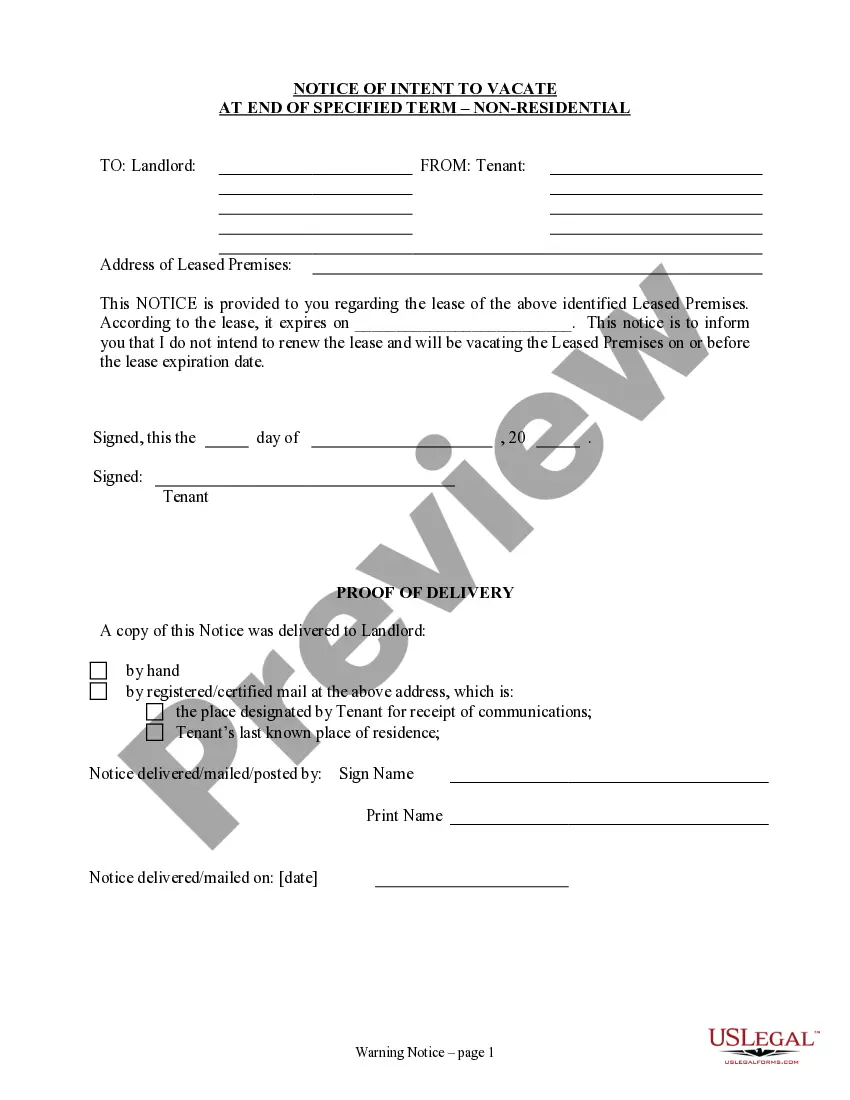
Letter from Consumer to Credit Reporting Agency Disputing Information in File
About this form
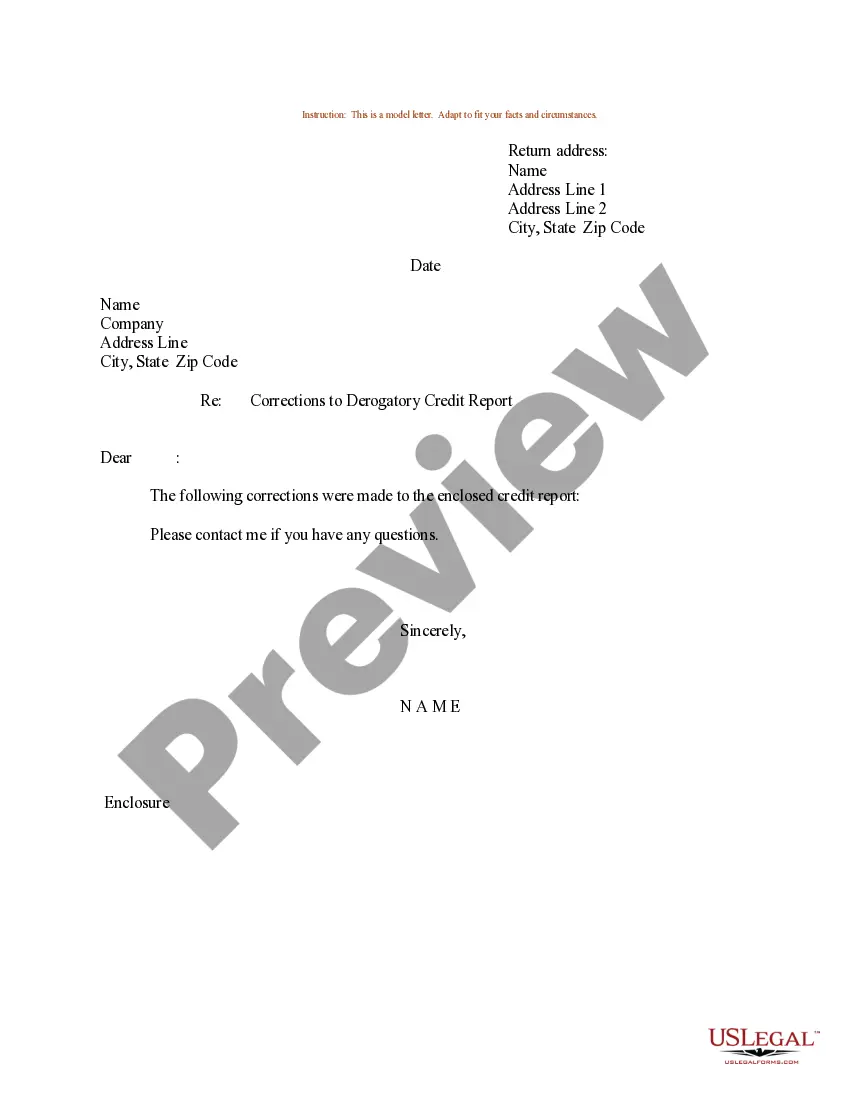
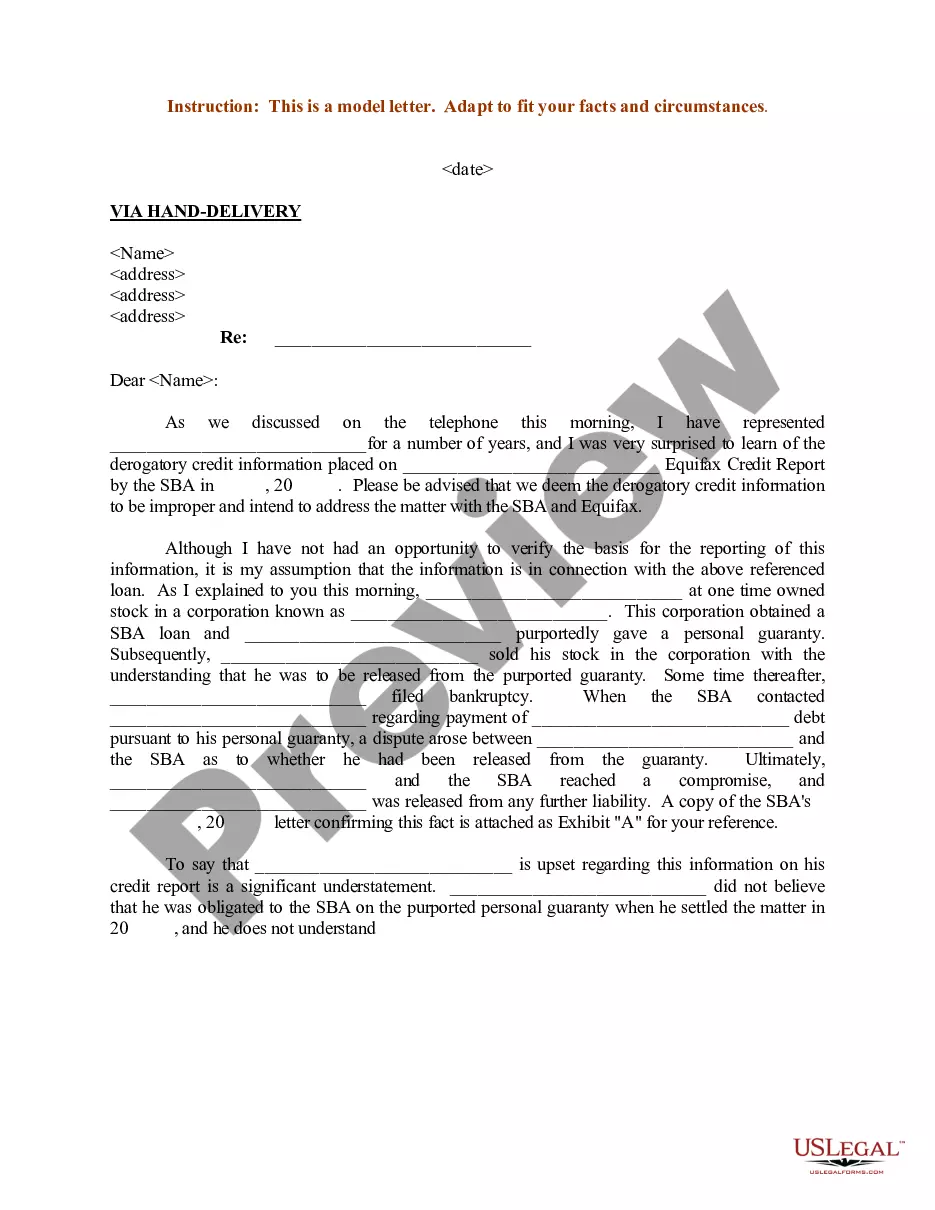
The Letter from Consumer to Credit Reporting Agency Disputing Information in File is a document that allows consumers to formally challenge inaccurate or incomplete information reported by credit bureaus. This form is essential for ensuring that your credit report contains only accurate information, thereby protecting your credit score and financial wellbeing. It differs from other consumer complaint letters by specifically focusing on disputing errors in credit reporting agencies' records.
What’s included in this form
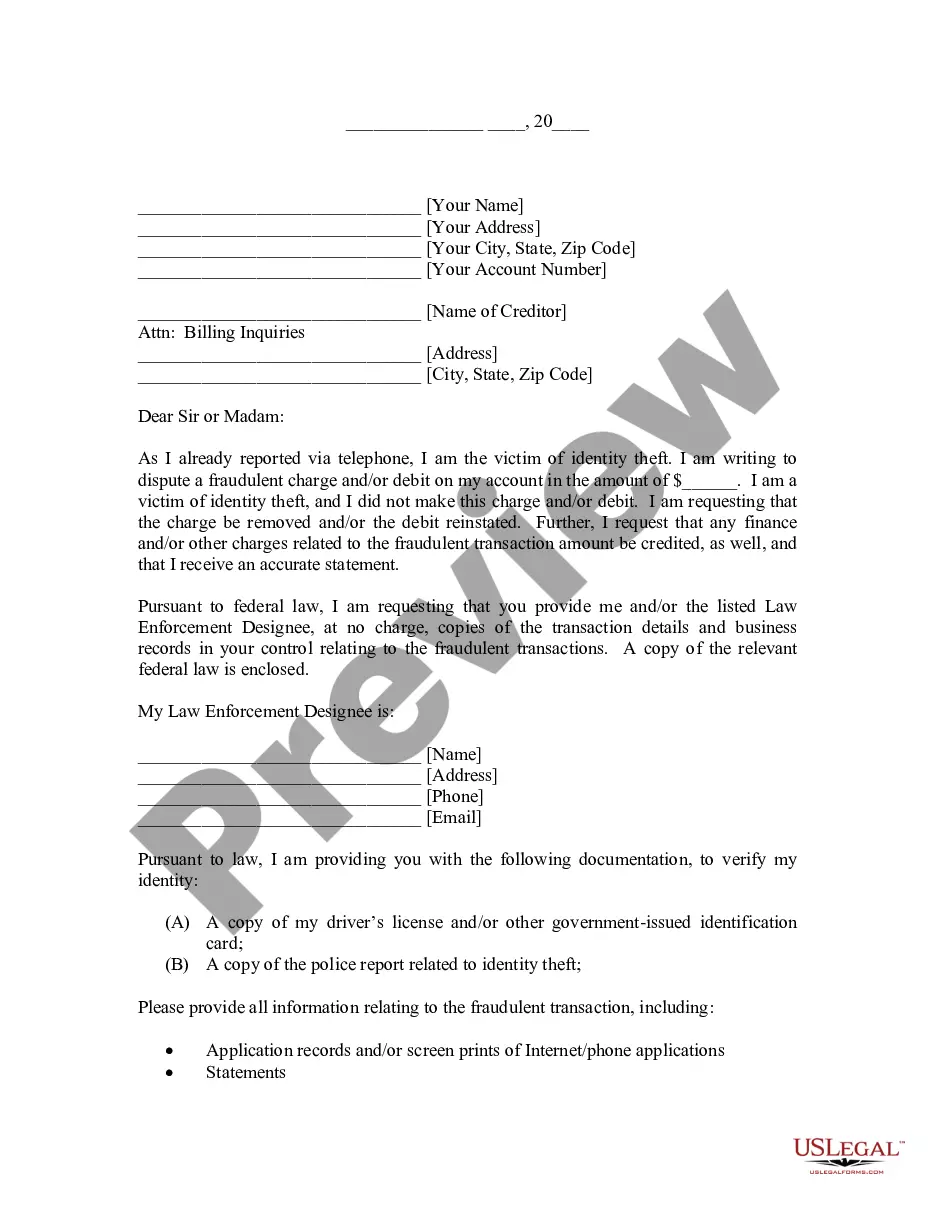
- Consumer's name and address for identification.
- Credit reporting agency's name and address to whom the dispute is addressed.
- Detailed description of the disputed items with identification by source.
- Statement outlining why the information is inaccurate or incomplete.
- Request for the deletion of the disputed item.
- Documentation supporting the consumer's position.
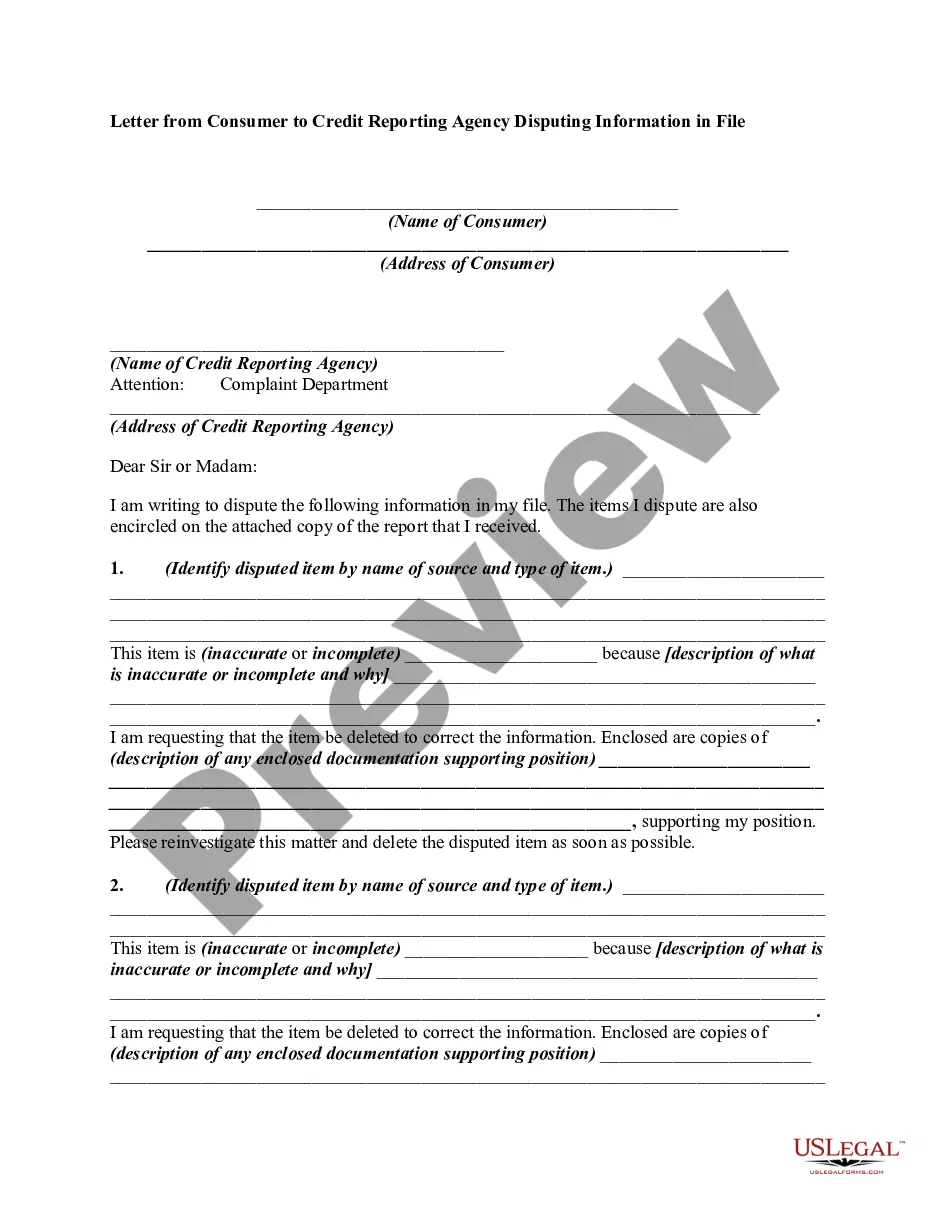

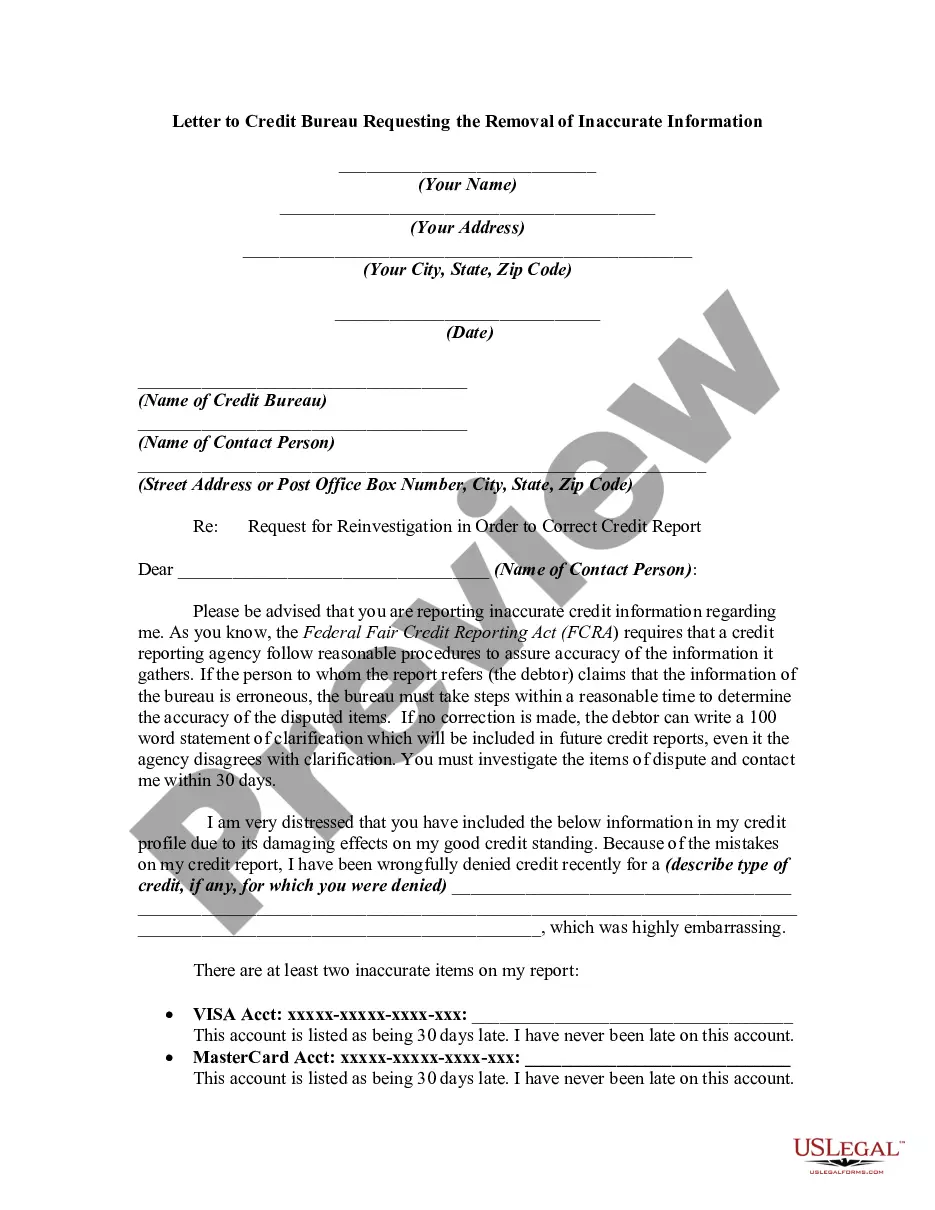
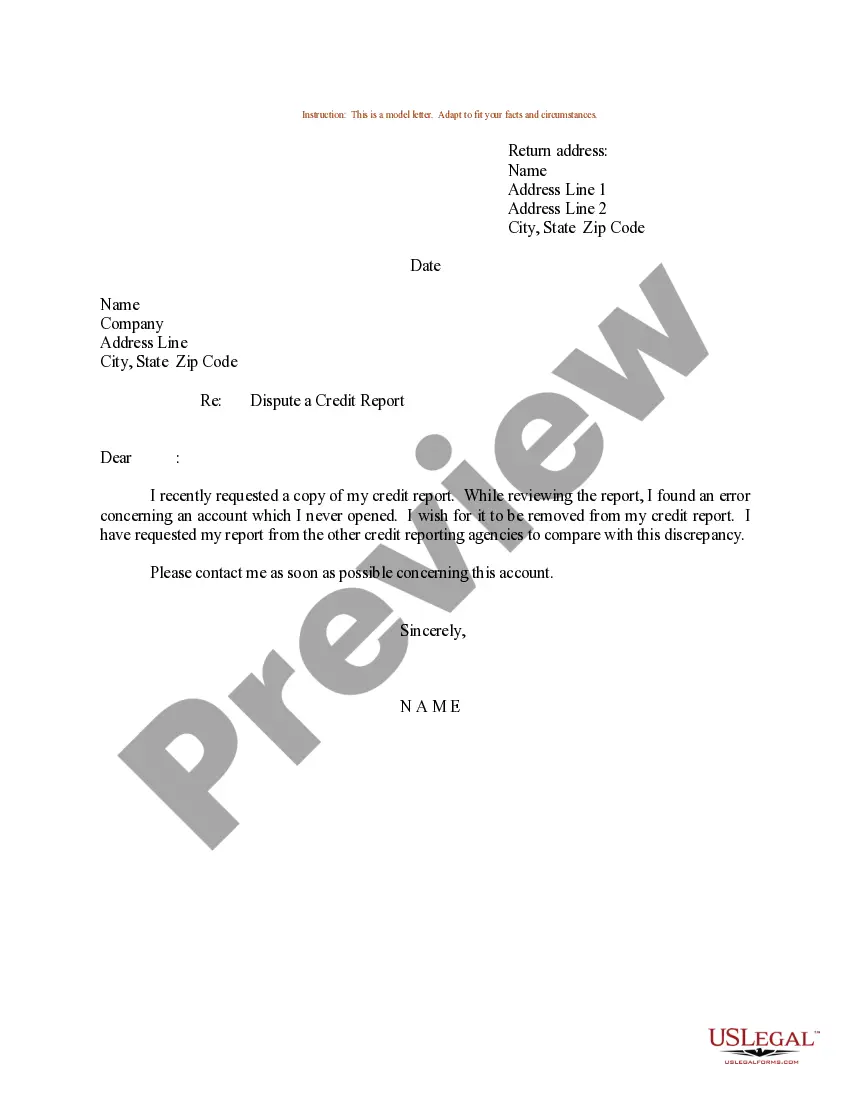
Common use cases
This form should be used when you find discrepancies in your credit report that could adversely affect your credit score, such as incorrect account details, late payments that were made on time, or accounts that do not belong to you. Utilizing this form allows you to take action to correct those inaccuracies efficiently.
Who can use this document
- Individuals who have reviewed their credit reports and found errors.
- Consumers seeking to protect their credit scores and financial trustworthiness.
- Anyone who has received information from a credit bureau that they believe is incorrect.
How to complete this form
- Enter your full name and address at the top of the letter.
- Provide the name and address of the credit reporting agency.
- Clearly identify each disputed item by name and source, and specify why it is inaccurate or incomplete.
- Request the deletion of the disputed item and include relevant documentation.
- Sign the letter and date it to finalize your dispute.
Notarization requirements for this form
In most cases, this form does not require notarization. However, some jurisdictions or signing circumstances might. US Legal Forms offers online notarization powered by Notarize, accessible 24/7 for a quick, remote process.
Get your form ready online
Our built-in tools help you complete, sign, share, and store your documents in one place.
Make edits, fill in missing information, and update formatting in US Legal Forms—just like you would in MS Word.
Download a copy, print it, send it by email, or mail it via USPS—whatever works best for your next step.
Sign and collect signatures with our SignNow integration. Send to multiple recipients, set reminders, and more. Go Premium to unlock E-Sign.
If this form requires notarization, complete it online through a secure video call—no need to meet a notary in person or wait for an appointment.
We protect your documents and personal data by following strict security and privacy standards.

Make edits, fill in missing information, and update formatting in US Legal Forms—just like you would in MS Word.

Download a copy, print it, send it by email, or mail it via USPS—whatever works best for your next step.

Sign and collect signatures with our SignNow integration. Send to multiple recipients, set reminders, and more. Go Premium to unlock E-Sign.

If this form requires notarization, complete it online through a secure video call—no need to meet a notary in person or wait for an appointment.

We protect your documents and personal data by following strict security and privacy standards.
Mistakes to watch out for
- Failing to include all relevant disputed items in the letter.
- Not providing adequate documentation to support your claims.
- Using vague language when describing inaccuracies.
Why use this form online
- Immediate access to a well-structured template, reducing the time spent on drafting.
- Ability to easily edit and personalize the letter as needed.
- Reliability from using a form created by legal professionals.
Summary of main points
- This letter formally disputes inaccuracies in your credit report.
- It is essential to provide detailed explanations and supporting documents.
- Sending the letter via certified mail can provide proof of your dispute submission.
Looking for another form?
Form popularity
FAQ
The name 623 dispute method refers to section 623 of the Fair Credit Reporting Act (FCRA). The method allows you to dispute a debt directly with the creditor in question as long as you have already filed your complaint with the credit bureau and completed their process.
Dispute the error with the credit bureau. Report the collections account and ask to have it removed from your credit report. 2feff Provide copies of any evidence you have proving the debt doesn't belong to you. Even if the debt belongs to you, that doesn't mean the collector is legally able to collect from you.
Your full name. Your date of birth. Your Social Security number. Your current address and any other addresses at which you have lived during the past two years. A copy of a government-issued identification card such as a driver's license or state ID.
The debt dispute letter should include your personal identifying information; verification of the amount of debt owed; the name of the creditor for the debt; and a request that the debt not be reported to credit reporting agencies until the matter is resolved or have it removed from the report, if it already has been
The date. Your name. Your address. Your creditor's name. Your creditor's address. Your account number. The negative mark you'd like removed. Which credit bureaus the mark needs to be removed from.
Credit report with the account in question circled and/or highlighted. Birth certificate. Social Security card. Passport (if you have one) the page showing your photo and the number.
Know Your Rights! RIGHT TO DISPUTE THE DEBT: Within 30 DAYS of receiving notice of the debt from the debt collector, you can send a letter to the debt collector disputing the debt and requesting the name and contact information of the original creditor.
Your full name and address. The collections agency's name and address. A request for the amount of the debt claimed to be owed. A request for the name of the original creditor. A request for the judgment information (if applicable) A request for proof of the company's license.
A 609 letter is a method of requesting the removal of negative information (even if it's accurate) from your credit report, thanks to the legal specifications of section 609 of the Fair Credit Reporting Act.