Release and Waiver of Liability Given in Favor of Nonprofit Organization Regarding Allowing Minor to Ride Horses on Ranch Operated by Organization - including Assumption of all Risks of Personal Bodily Injury - Horseback Riding
Understanding this form
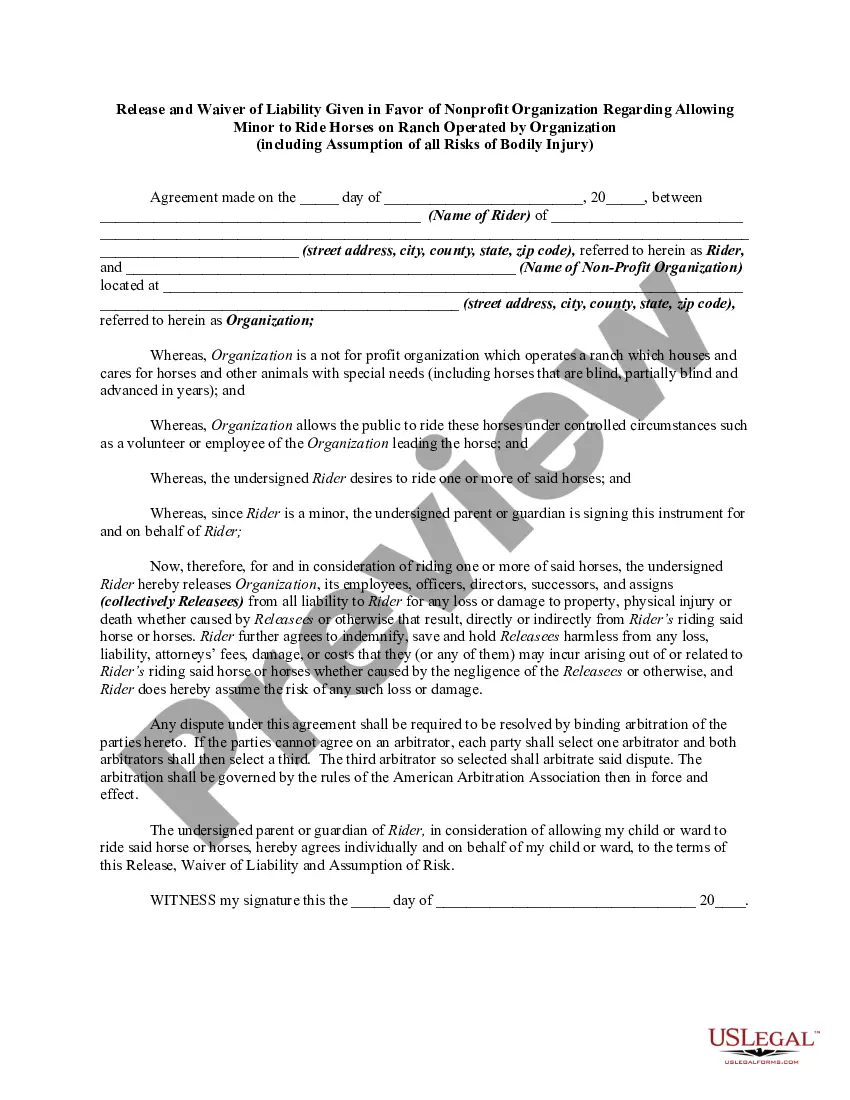
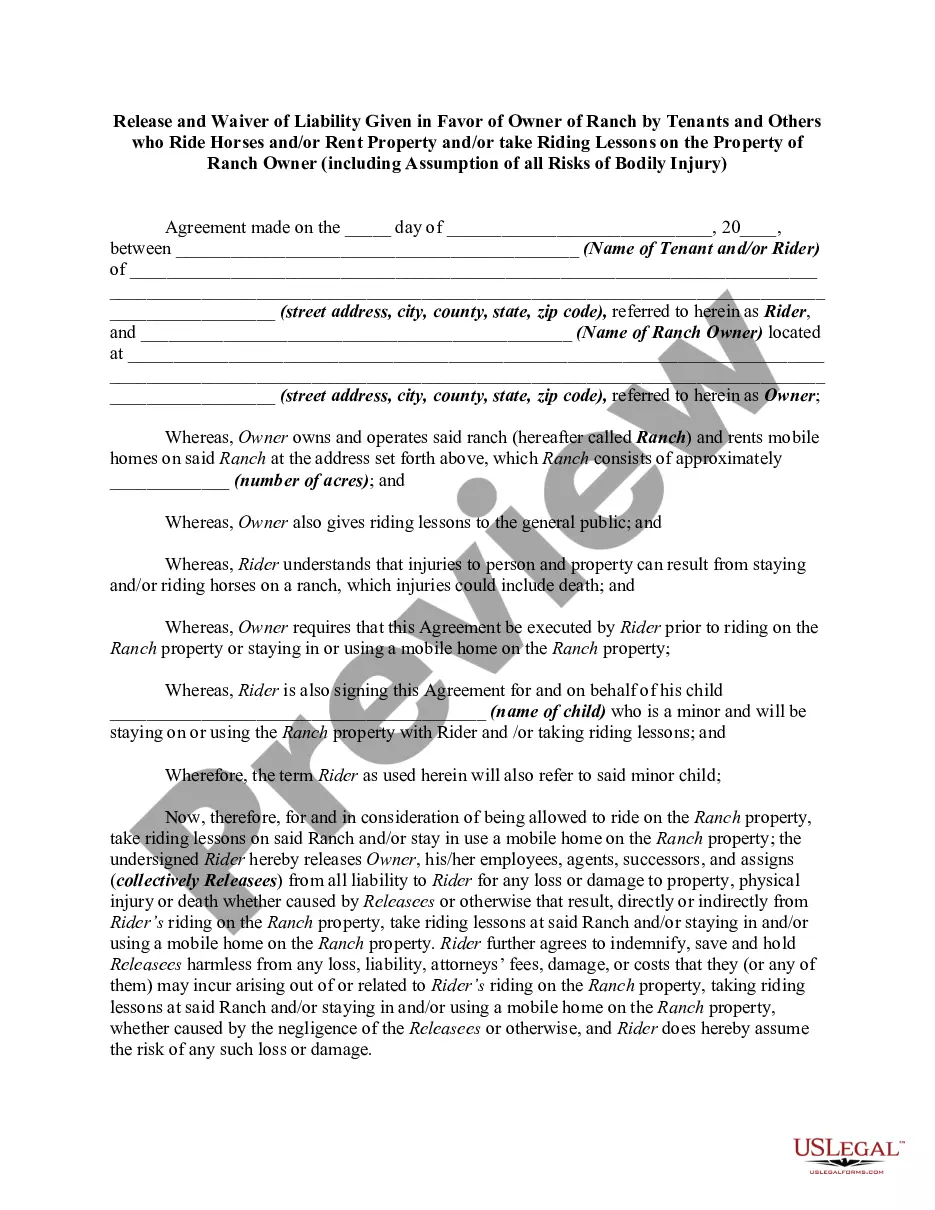
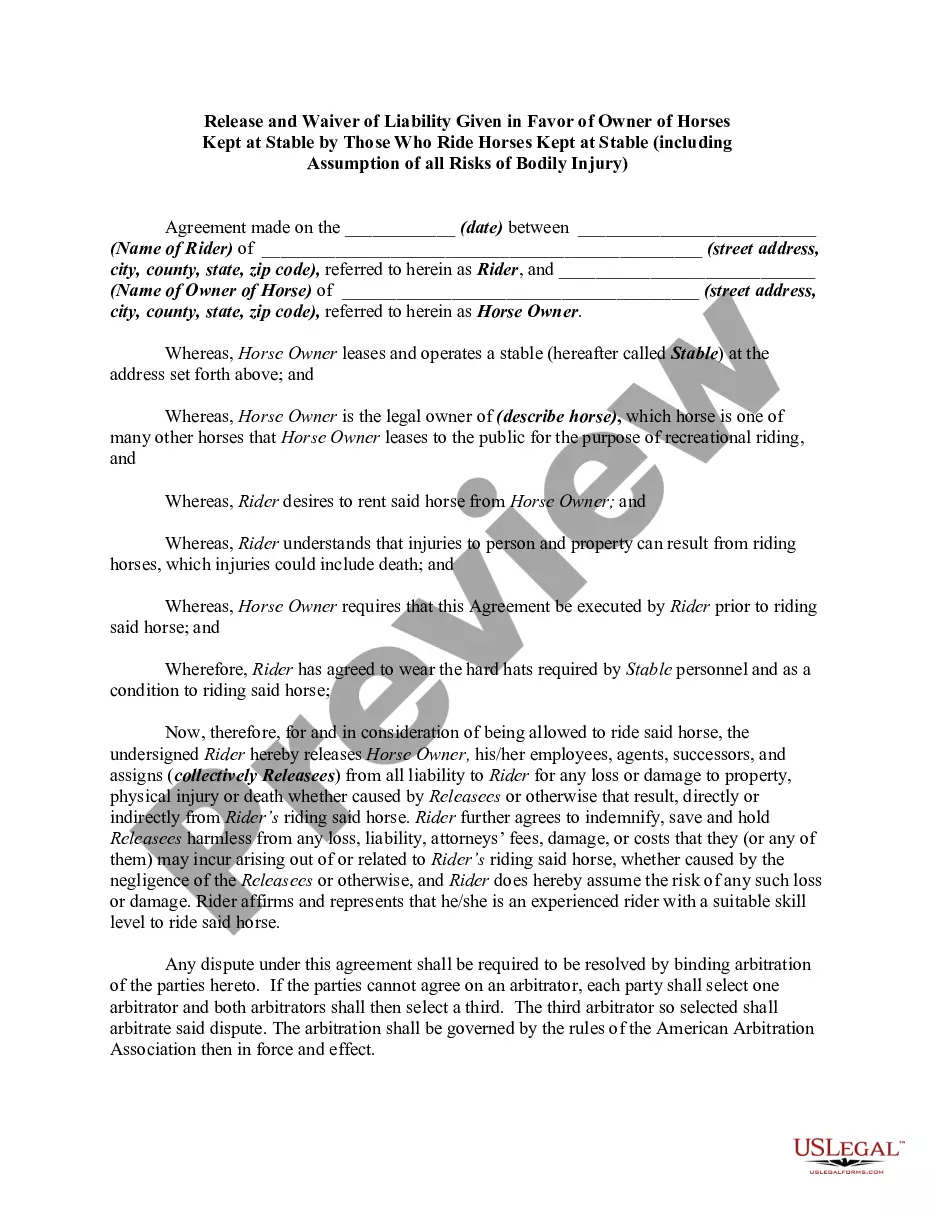
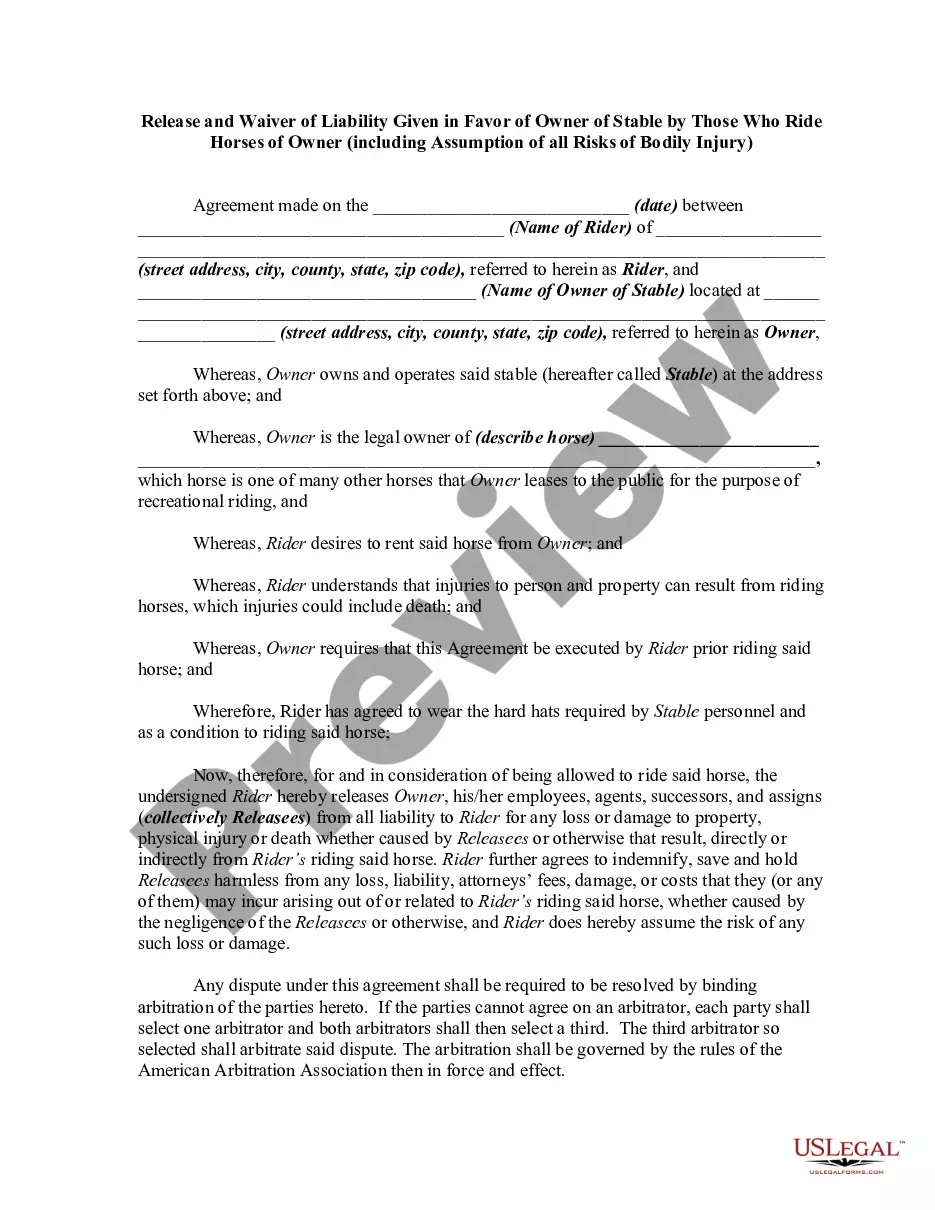
The Release and Waiver of Liability is a legal document that allows a minor to ride horses at a nonprofit ranch while acknowledging the inherent risks involved in horseback riding. This waiver serves to protect the nonprofit organization from liability for any injuries or damages that may occur during the activity. Unlike other contracts, this release is specifically designed for situations where minors are involved and includes an assumption of risk clause.
Form components explained
- Parties Involved: Identifies the rider (minor) and the nonprofit organization.
- Assumption of Risk: The rider acknowledges the risks of horseback riding.
- Release of Liability: The rider releases the organization from liability for any injuries or damages incurred.
- Indemnification Agreement: The rider agrees to hold the organization harmless from any claims arising from the riding activity.
- Arbitration Clause: Details the process for resolving disputes through arbitration.
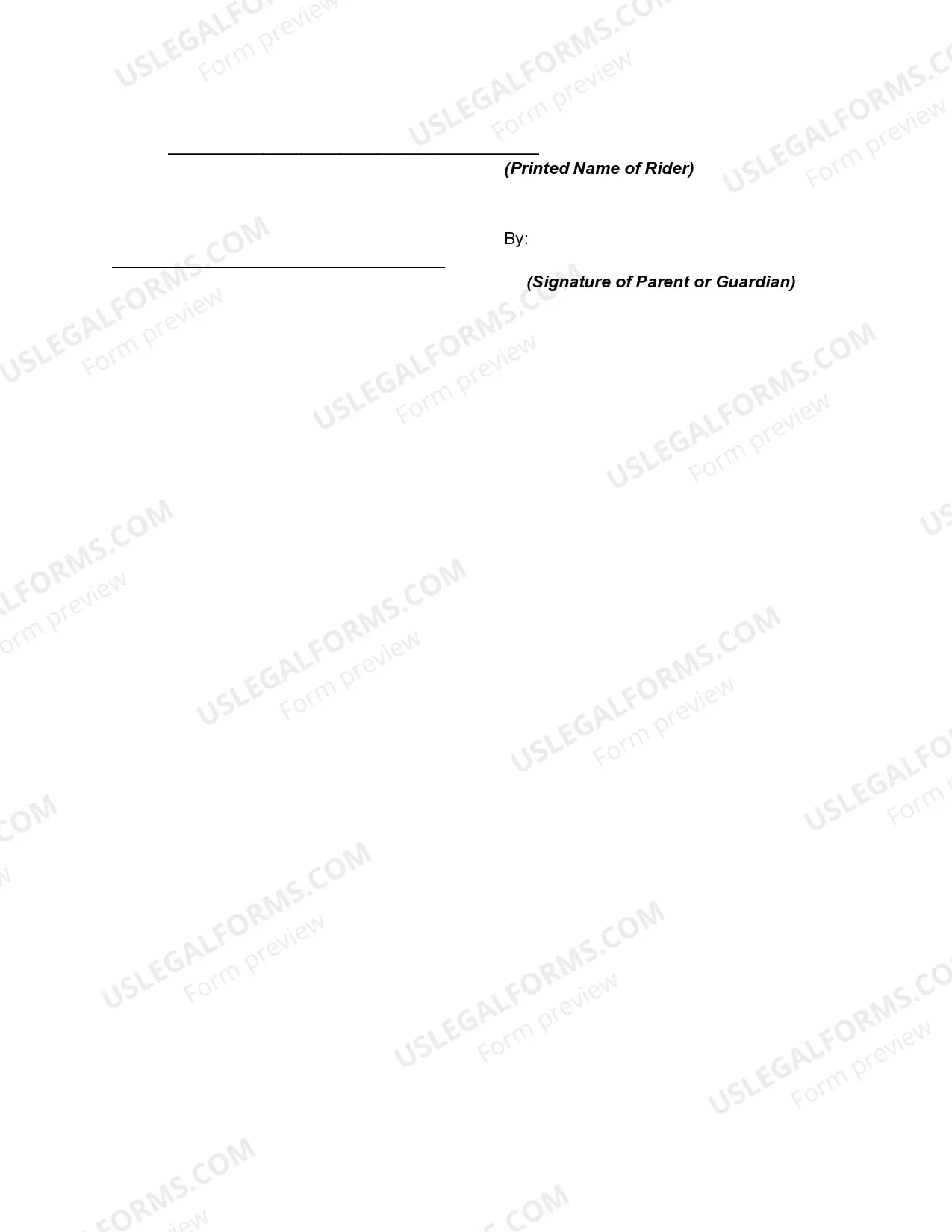
- Signature of Guardian: Requires a parent or guardian's signature due to the rider being a minor.

When to use this form
This form is needed when a nonprofit organization allows a minor to participate in horseback riding activities on its ranch. It protects the organization from claims of liability while ensuring that the parent or guardian understands the associated risks. Use this form whenever minors are involved in activities that have inherent dangers, especially those like horseback riding where injuries may occur.
Who needs this form
This release form is suitable for:
- Parents or guardians of minors who wish to allow their children to ride horses.
- Nonprofit organizations that operate ranches or provide horseback riding services for minors.
- Volunteers or staff at nonprofit organizations responsible for overseeing the safety of riding activities.
Instructions for completing this form
To complete this form, follow these steps:
- Identify the parties by entering the name of the minor (rider) and the nonprofit organization.
- Fill out the rider's address and the organization's address in the appropriate fields.
- Read and understand the assumption of risk and release of liability clauses.
- Ensure a parent or guardian signs the form to validate the release on behalf of the minor.
- Date the agreement correctly and ensure all necessary signatures are obtained.
Is notarization required?
This form does not typically require notarization unless specified by local law. It is advisable to check local regulations to ensure compliance. By using US Legal Forms, you can easily create and finalize your waiver online, allowing for secure delivery and completion.
Get your form ready online
Our built-in tools help you complete, sign, share, and store your documents in one place.
Make edits, fill in missing information, and update formatting in US Legal Forms—just like you would in MS Word.
Download a copy, print it, send it by email, or mail it via USPS—whatever works best for your next step.
Sign and collect signatures with our SignNow integration. Send to multiple recipients, set reminders, and more. Go Premium to unlock E-Sign.
If this form requires notarization, complete it online through a secure video call—no need to meet a notary in person or wait for an appointment.
We protect your documents and personal data by following strict security and privacy standards.

Make edits, fill in missing information, and update formatting in US Legal Forms—just like you would in MS Word.

Download a copy, print it, send it by email, or mail it via USPS—whatever works best for your next step.

Sign and collect signatures with our SignNow integration. Send to multiple recipients, set reminders, and more. Go Premium to unlock E-Sign.

If this form requires notarization, complete it online through a secure video call—no need to meet a notary in person or wait for an appointment.

We protect your documents and personal data by following strict security and privacy standards.
Mistakes to watch out for
- Failing to have a parent or guardian sign the form if the rider is a minor.
- Leaving blank fields, such as names or addresses, which may render the form incomplete.
- Signing the waiver without fully understanding its implications regarding liability.
- Not dating the form, which is crucial for establishing the timeline of the agreement.
Advantages of online completion
- Conveniently downloadable and editable before printing and signing.
- Provides legal protection for nonprofit organizations against claims related to horseback riding activities.
- Facilitates a clear understanding of the risks involved for both parents and the organization.
Legal use & context
- Courts may enforce this release unless specific statutes or precedents render it invalid.
- Releases for minors are subject to local jurisdictional rules, which may vary significantly.
- Releases cannot waive liability for gross negligence or willful misconduct.
Key takeaways
- This form protects nonprofit organizations from liability when allowing minors to ride horses.
- It is crucial for parents or guardians to understand the risks before signing.
- Completing the form accurately ensures legal protection for both the rider and the organization.
Looking for another form?

Form popularity
FAQ
A release form or a waiver is simply a legal document containing an agreement between two parties.A waiver is an essential document that informs participants of the risks involved in certain activities and also protects you from liability.
Liability waivers can, but generally do not need to be, notarized to be valid. The waiver will need to be signed by the volunteer. If the volunteer is a minor, you will need to obtain the signature of the minor's parent or legal guardian, but again...
A waiver is not complete until it includes the signatures of both the event host and business owner and that of the participant. The date should also be included alongside the signatures. You may also include a signature line for a witness if necessary.
Waivers should only be signed before participating in an activity, not after you are hurt. If you are injured and given papers to sign, immediately call a personal injury attorney. You can find a personal injury lawyer by contacting your state or local bar association.
In California, a liability waiver must be clear, unambiguous, and explicit. In other words, waivers cannot be printed in faded ink, in small font, on the back of a paper, or in an otherwise ambiguous form. If the waiver that you sign is not represented clearly, it may not hold up in the event of a lawsuit.
Get help. Writing a waiver should not be complicated. Use the correct structure. Proper formatting. Include a subject line. Include a caution! Talk about the activity risks. Do not forget an assumption of risk. Hold harmless.
In California, a liability waiver must be clear, unambiguous, and explicit. In other words, waivers cannot be printed in faded ink, in small font, on the back of a paper, or in an otherwise ambiguous form. If the waiver that you sign is not represented clearly, it may not hold up in the event of a lawsuit.
The Waiver must be clearly worded and unambiguous in its intent to relieve any and all legal liability, even liability for negligence. The Waiver should be prominent and not hidden in the fine print of a long contract. The Waiver must be signed by the person who it is being used against.