Requests for Production of Documents to Carrier
What is this form?
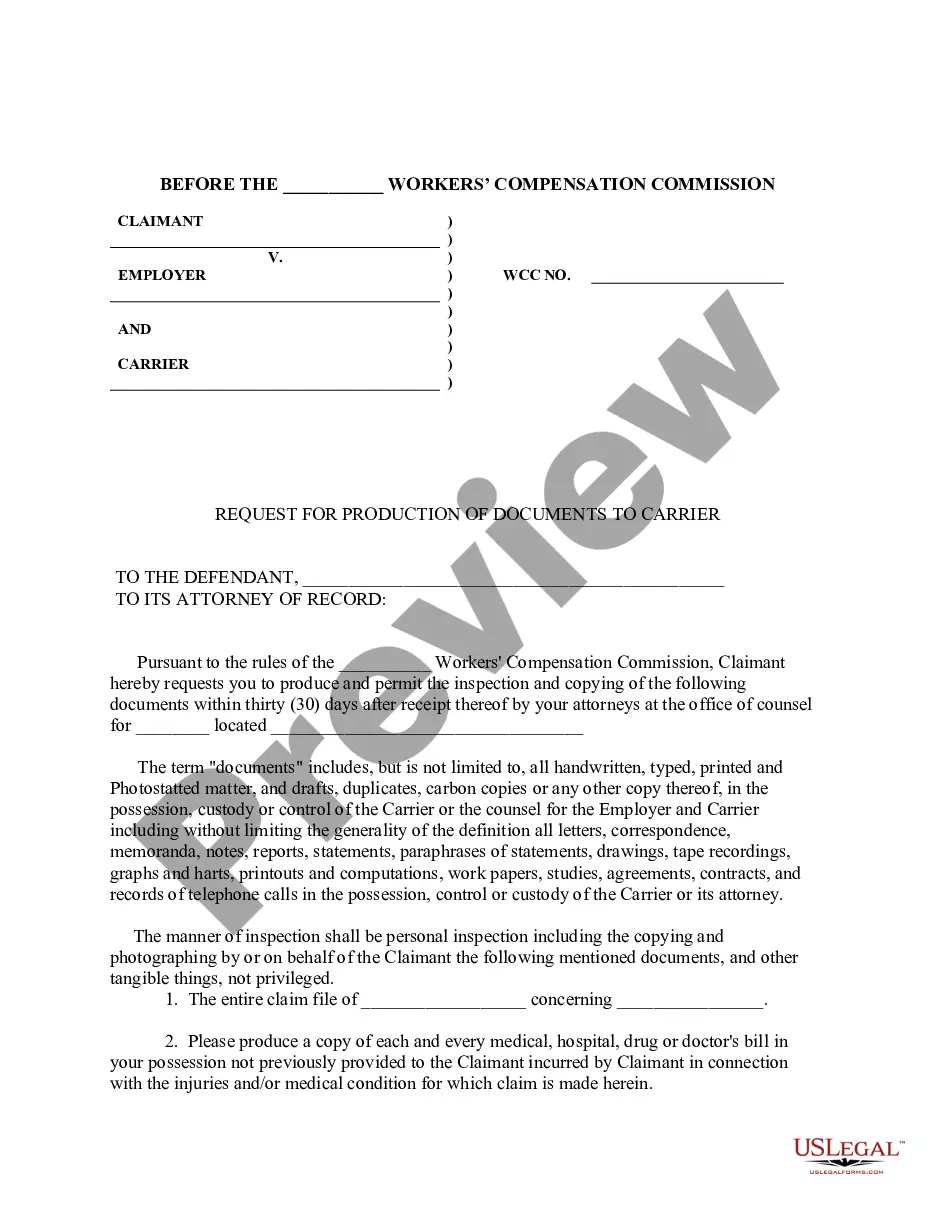
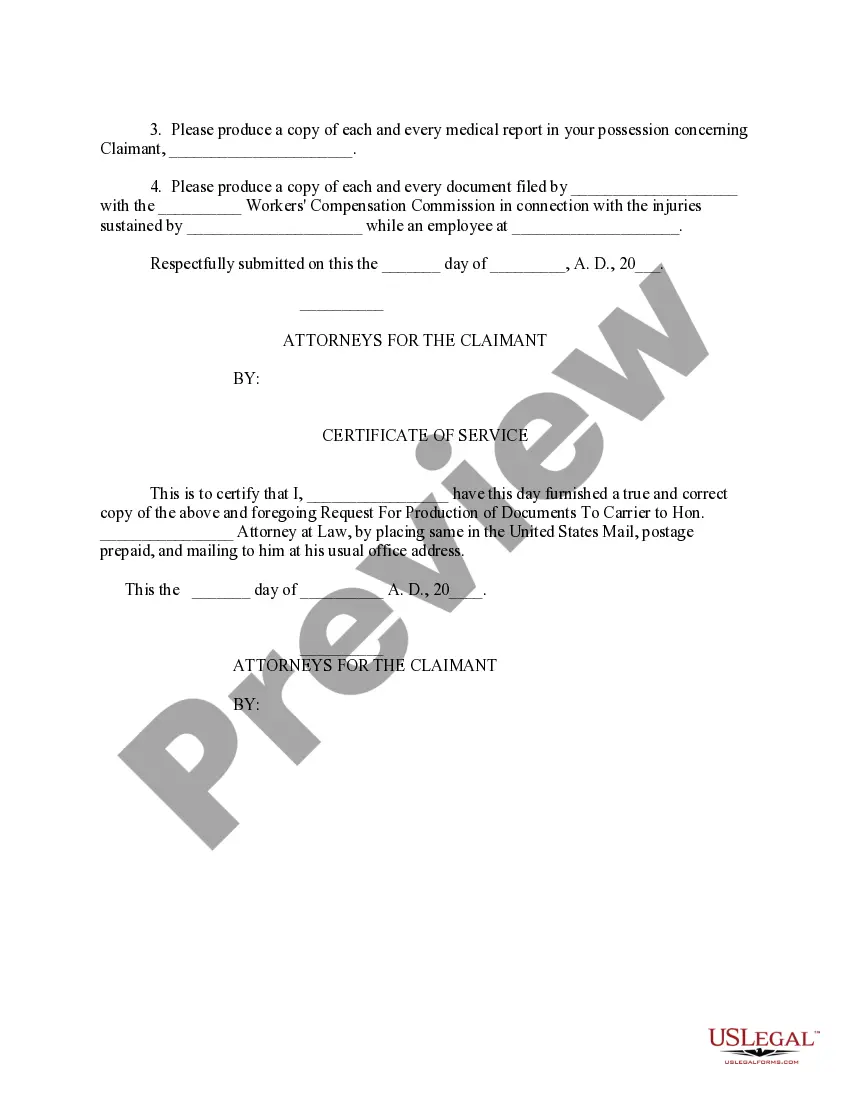
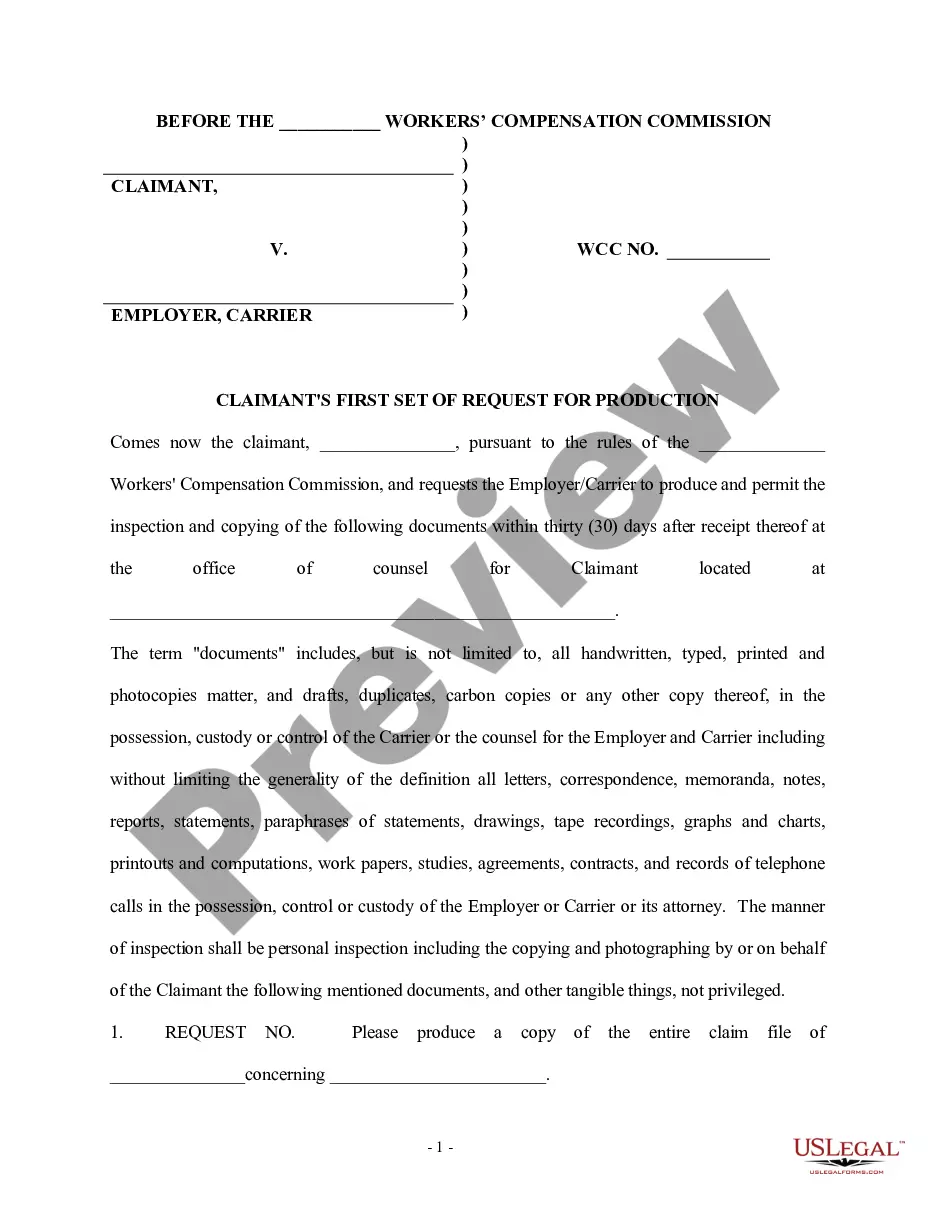
The Request for Production of Documents to Carrier is a legal document used in workers' compensation cases. This form allows a Claimant to request specific documents from the insurance carrier to support their claim. It is essential for gathering vital evidence such as medical records and bills that help establish the validity and extent of the Claimant's injuries or medical conditions. This form differs from other legal requests by its specific focus on documents from insurance carriers in workers' compensation contexts.
Key components of this form
- Identification of the Defendant and their attorney of record.
- Specification of the documents being requested, including claim files and medical records.
- Instructions for document inspection and copying.
- Certification of service confirming the submission of the request to the appropriate parties.
When this form is needed
This form should be used when the Claimant in a workers' compensation case needs to obtain documents from the insurance carrier. Typical scenarios include when the Claimant is preparing for a hearing, needs to clarify details of their claim, or seeks additional evidence regarding medical treatment related to their injuries.
Intended users of this form
- Claimants involved in workers' compensation cases seeking to gather evidence.
- Attorneys representing Claimants in workers' compensation claims.
- Individuals who require information from insurance carriers to validate their claims.
Instructions for completing this form
- Identify the Defendant and their attorney, including their office address.
- Clearly state the specific documents you are requesting.
- Specify the time frame within which the documents must be produced, typically thirty days.
- Include your signature and the date at the end of the request.
- Certify the service of the request to the Defendant's attorney by including relevant mailing details.
Is notarization required?
In most cases, this form does not require notarization. However, some jurisdictions or signing circumstances might. US Legal Forms offers online notarization powered by Notarize, accessible 24/7 for a quick, remote process.
Get your form ready online
Our built-in tools help you complete, sign, share, and store your documents in one place.
Make edits, fill in missing information, and update formatting in US Legal Forms—just like you would in MS Word.
Download a copy, print it, send it by email, or mail it via USPS—whatever works best for your next step.
Sign and collect signatures with our SignNow integration. Send to multiple recipients, set reminders, and more. Go Premium to unlock E-Sign.
If this form requires notarization, complete it online through a secure video call—no need to meet a notary in person or wait for an appointment.
We protect your documents and personal data by following strict security and privacy standards.

Make edits, fill in missing information, and update formatting in US Legal Forms—just like you would in MS Word.

Download a copy, print it, send it by email, or mail it via USPS—whatever works best for your next step.

Sign and collect signatures with our SignNow integration. Send to multiple recipients, set reminders, and more. Go Premium to unlock E-Sign.

If this form requires notarization, complete it online through a secure video call—no need to meet a notary in person or wait for an appointment.

We protect your documents and personal data by following strict security and privacy standards.
Common mistakes to avoid
- Failing to specify all requested documents clearly.
- Not including the correct names and addresses for all parties involved.
- Missing the deadline for document production.
- Neglecting to sign or date the request.
Why use this form online
- Convenient access to legal documents that can be downloaded and completed at your convenience.
- Edit and save changes easily without needing to start over each time.
- Reliable templates drafted by licensed attorneys, ensuring accuracy and compliance.
Key takeaways
- The Request for Production of Documents to Carrier is essential for Claimants pursuing workers' compensation claims.
- It allows Claimants to gather necessary documentation from insurance carriers to support their case.
- Completing this form accurately is crucial for a timely response from the Defendant.
Looking for another form?

Form popularity
FAQ
Interrogatories, which are written questions about things that are relevant or important to the case. (NRCP 33; JCRCP 33) Requests for production of documents or things, which are written requests that demand the other side provide particular documents or items.
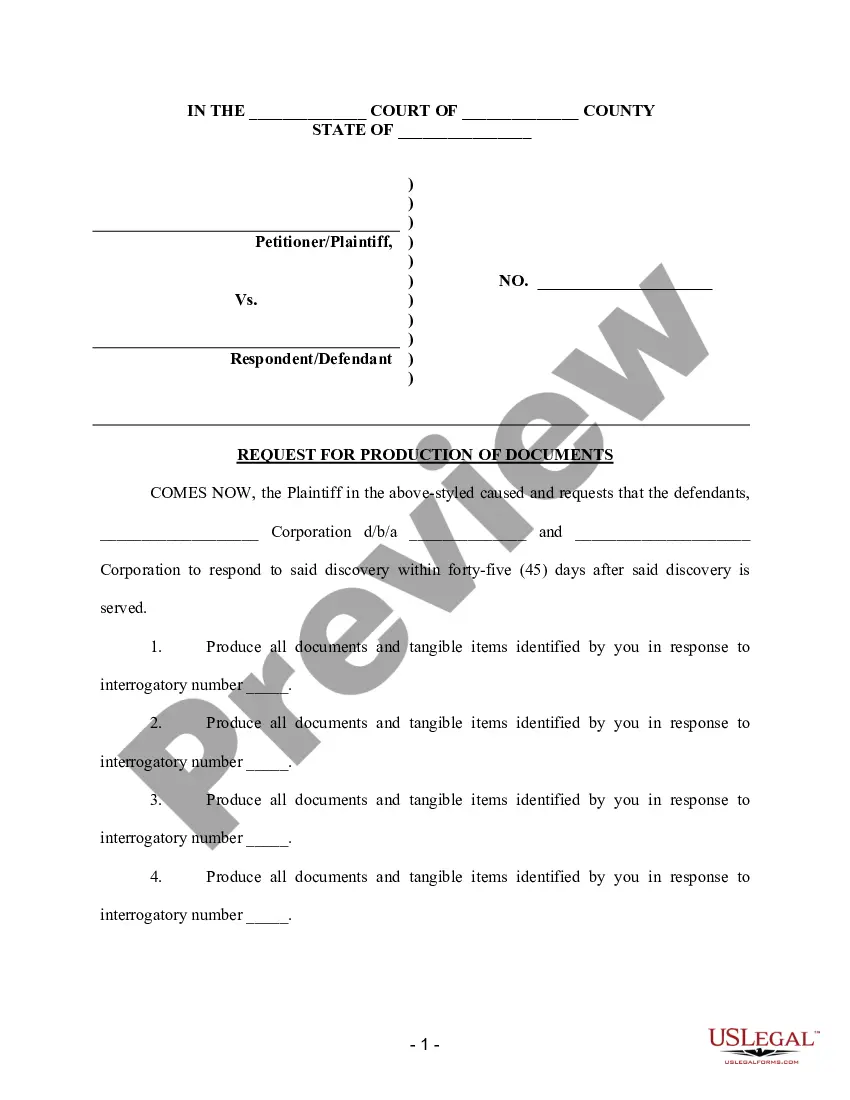
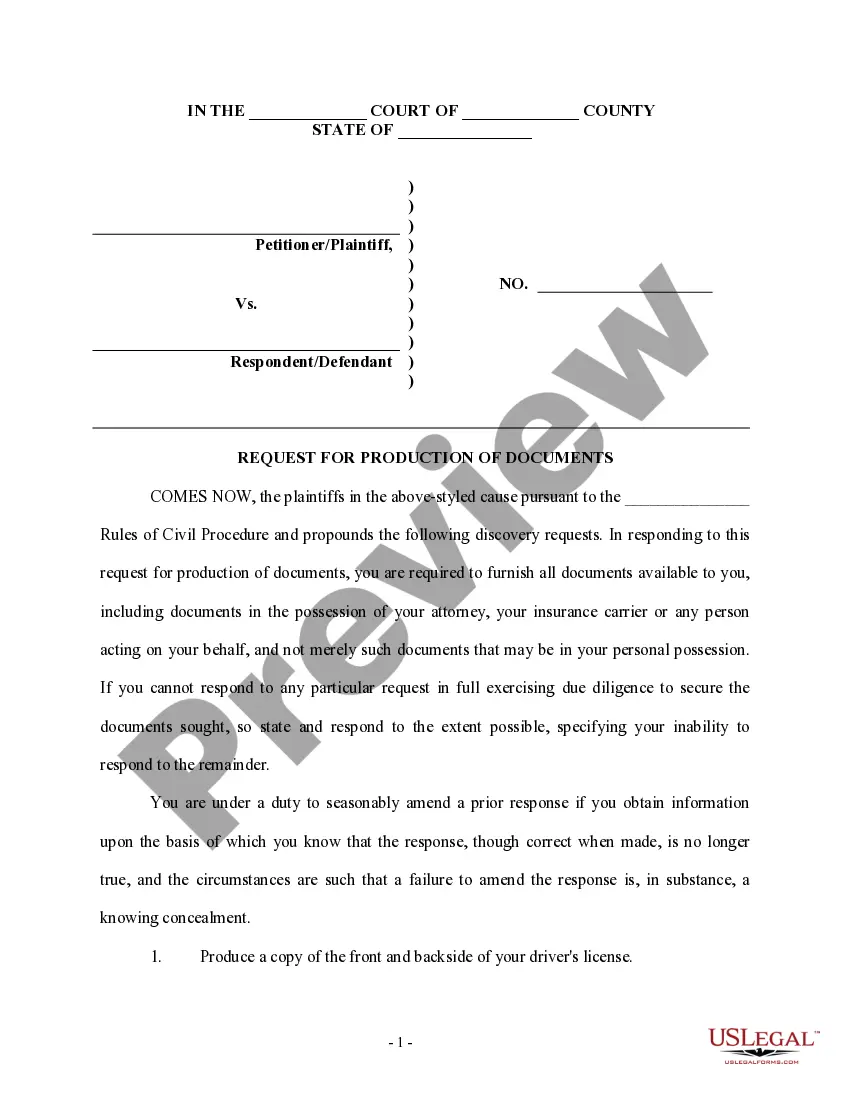
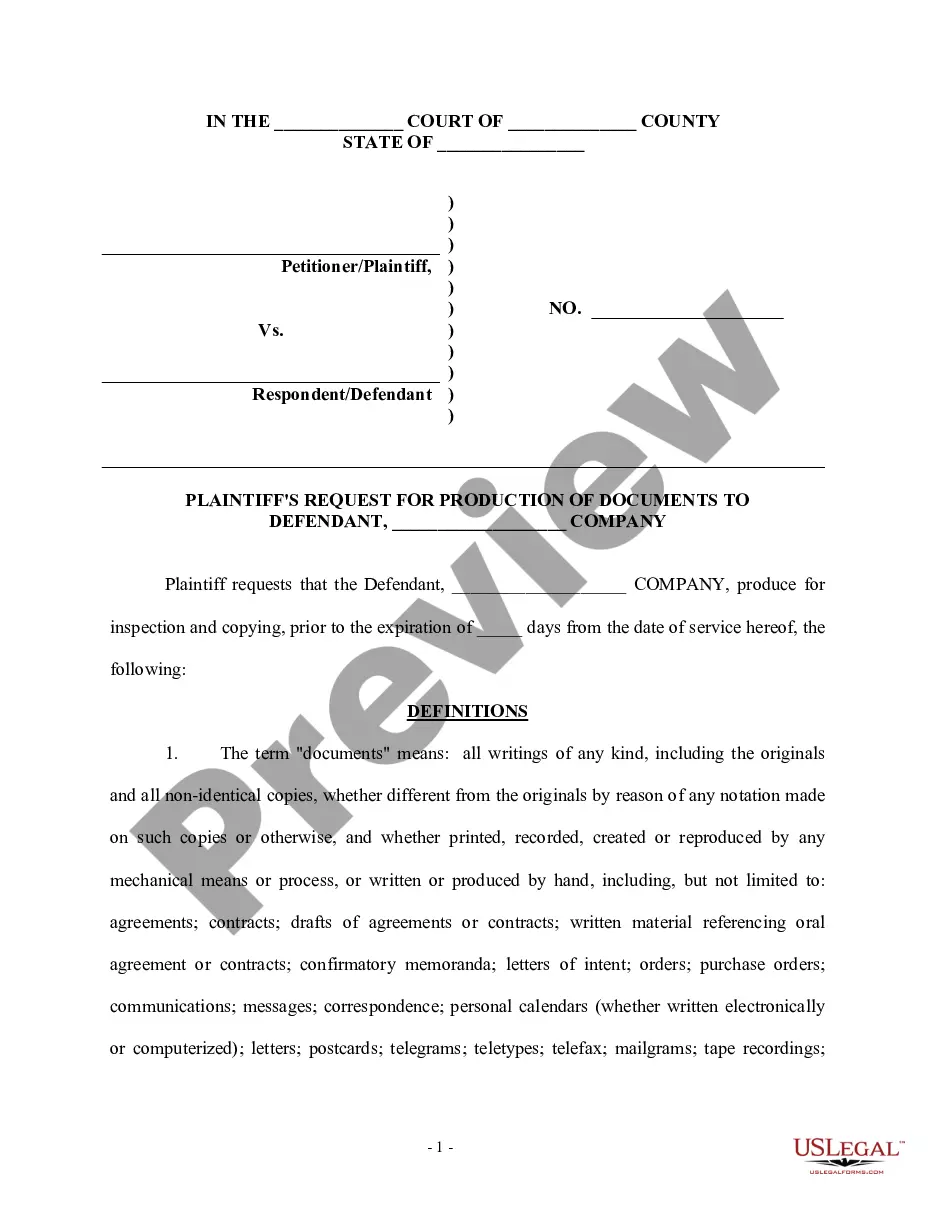
Requests for production may be used to inspect and copy documents or tangible items held by another party. Although these requests are most commonly used to obtain copies of documents, they can also be used to test, measure, photograph, etc., any type of physical evidence in the other party's possession or control.
In a civil action, a request for admission is a discovery device that allows one party to request that another party admit or deny the truth of a statement under oath. If admitted, the statement is considered to be true for all purposes of the current trial.
If a request asks for a document, make a copy of the document; in your response, describe the document and say that a copy is attached; and attach a copy of the document to the responses you send back to the other side.
In law, interrogatories (also known as requests for further information) are a formal set of written questions propounded by one litigant and required to be answered by an adversary in order to clarify matters of fact and help to determine in advance what facts will be presented at any trial in the case.
A request for production is a discovery device used to gain access to documents, electronic data, and physical items held by an opposing party in a legal matter. The aim is to gain insight into any relevant evidence that the opposing party holds.
Requests for the Production of Documents are a discovery device used by a party to enable the individual to learn the facts that are the basis for, or support, a pleading with which he or she has been served by the opposing party.These documents might also be evidence in a hearing or a trial.
Interrogatories ask questions; the responding party provides written answers. A request for production of documents requests the production of documents (or other tangible things); the responding party provides documents.