Agreement to Lease Condominium Unit - Condo Rental - in a Mixed Use Development Building with an Option to Purchase Unit - Lease or Rent to Own
About this form
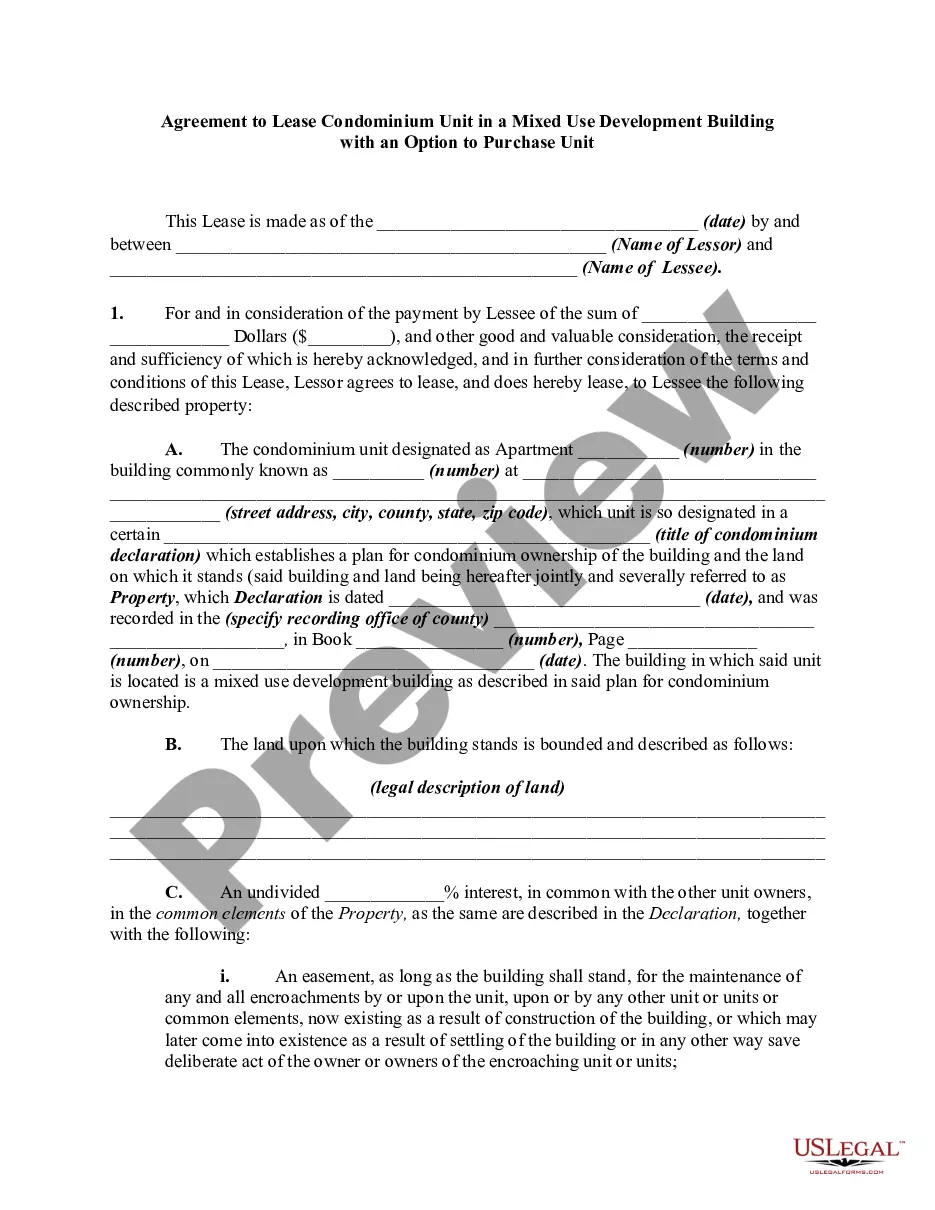
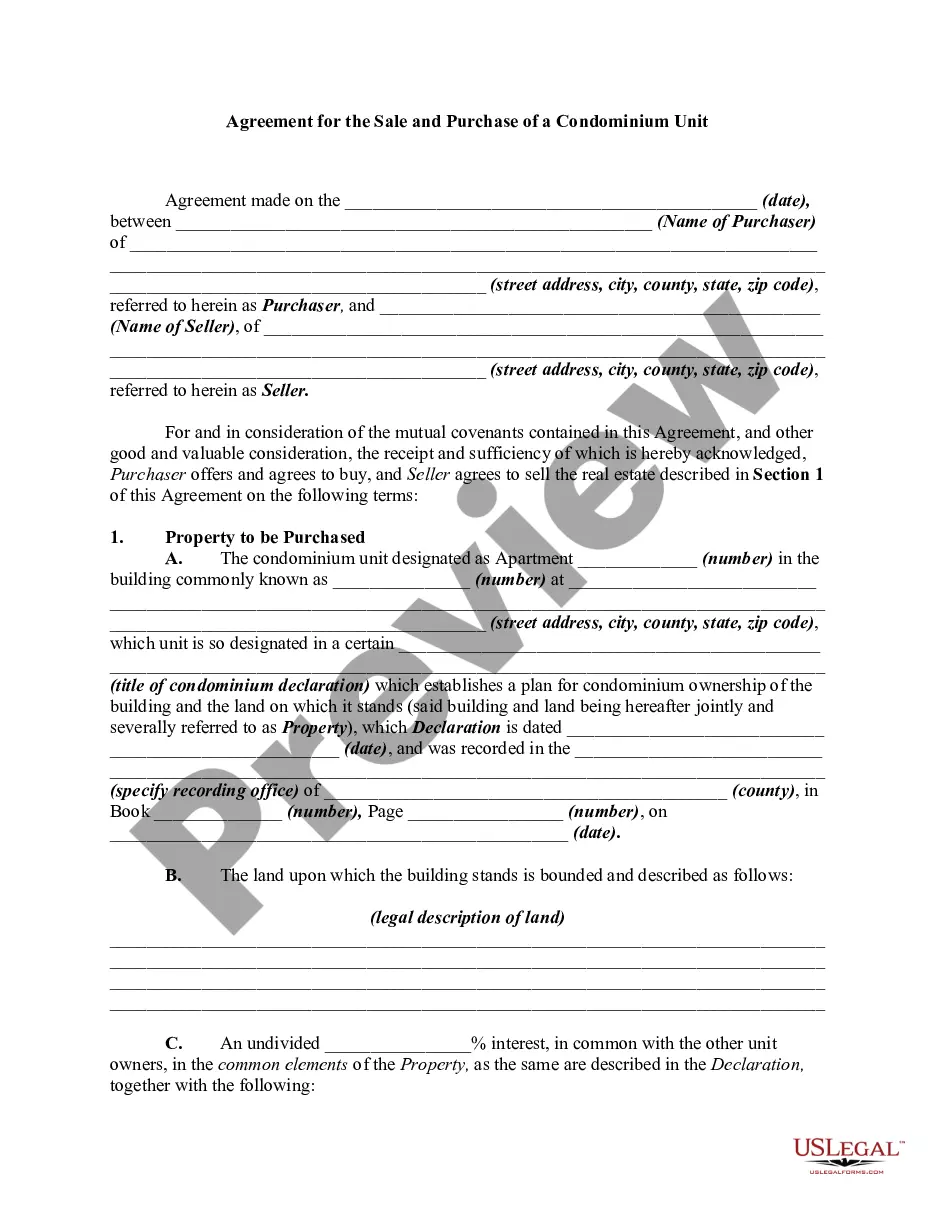
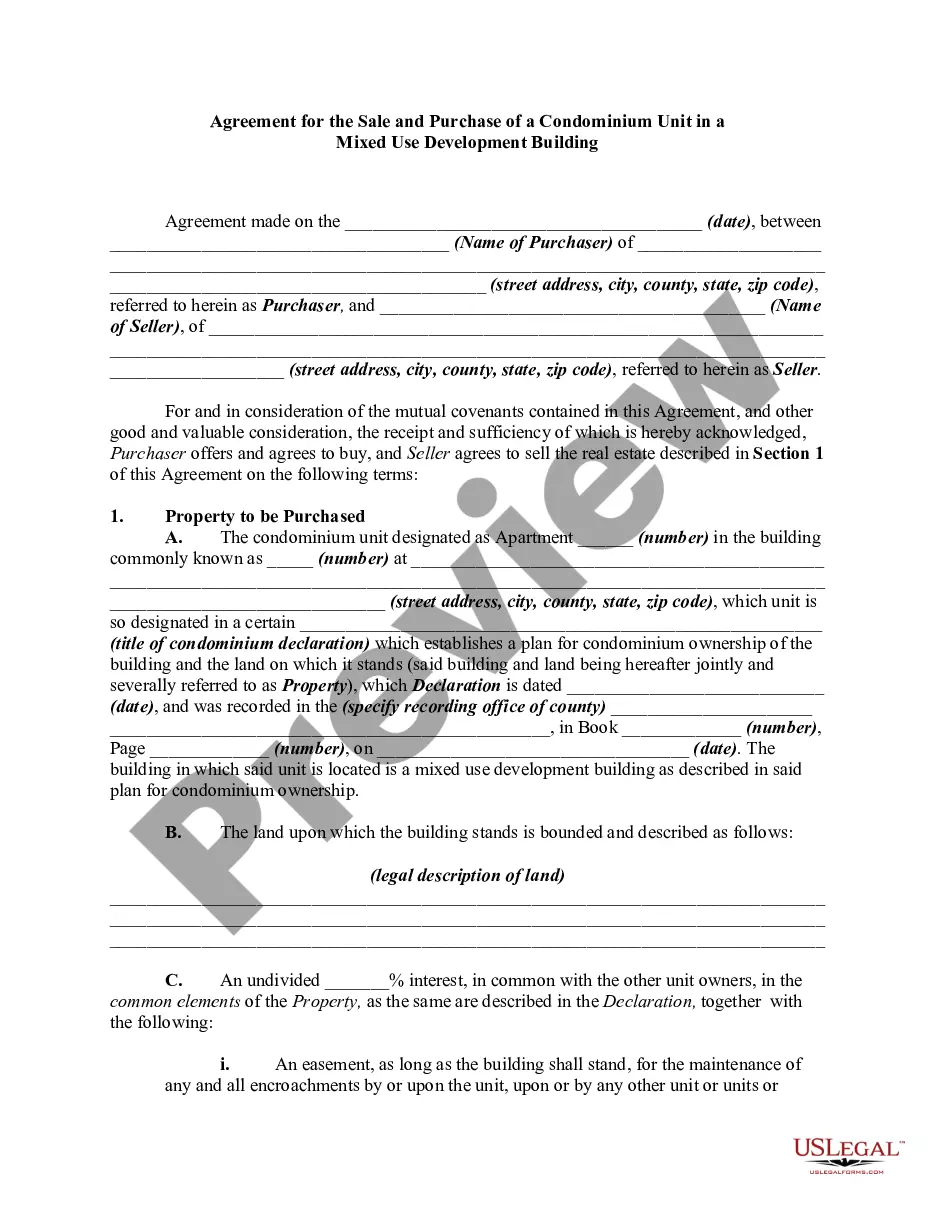
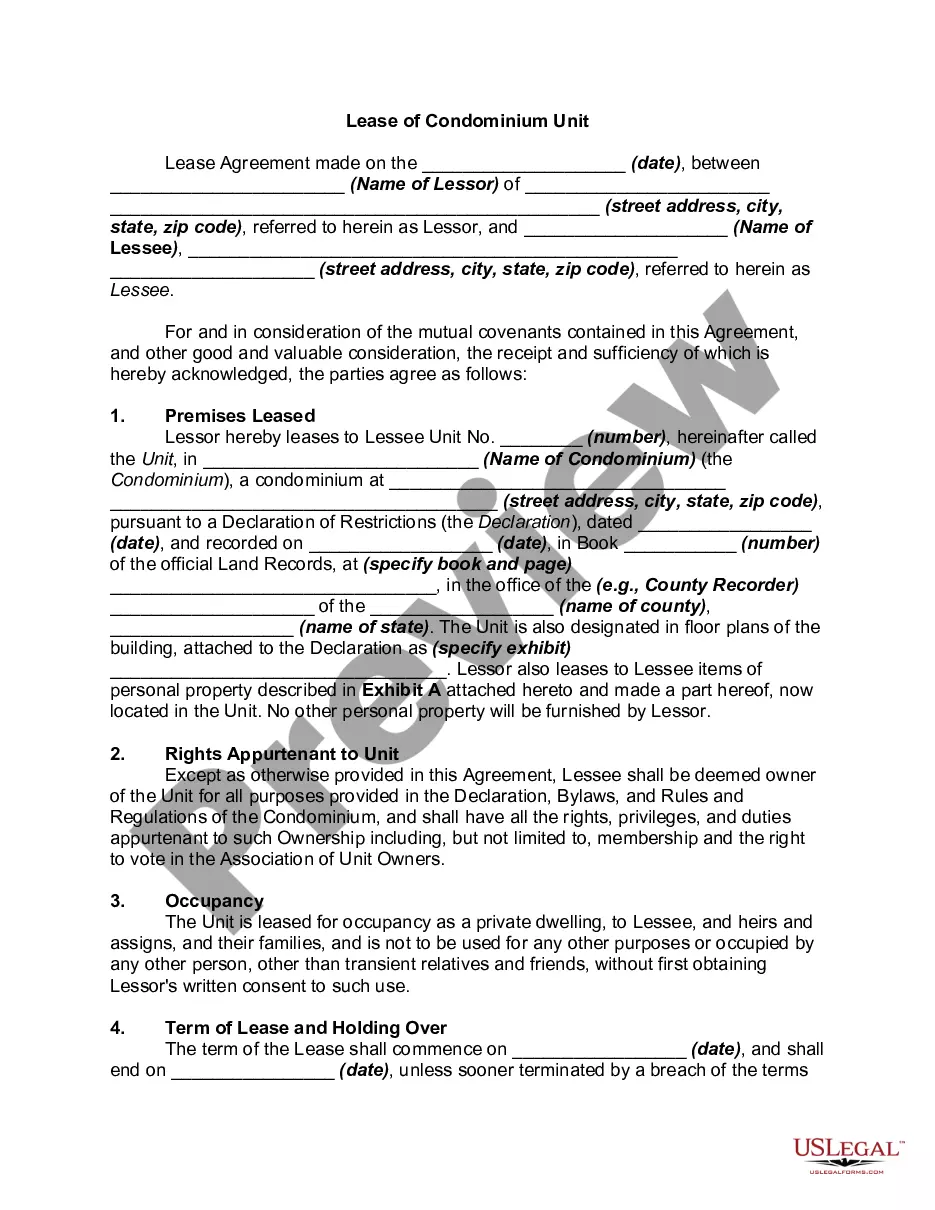
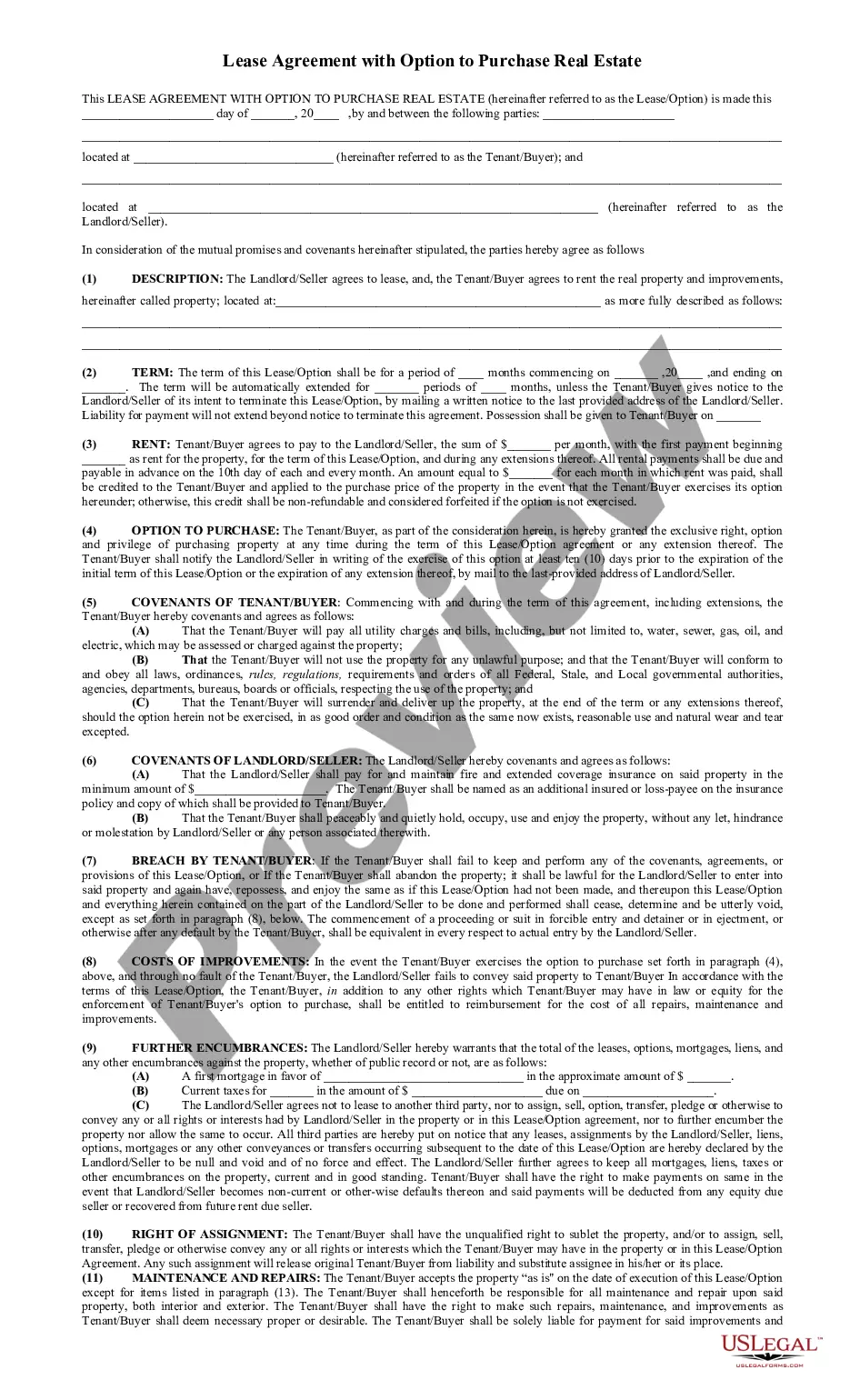
The Agreement to Lease Condominium Unit is a legal document that formalizes the rental of a condominium unit, often in a mixed-use development, with the option for the tenant to purchase the property in the future. This form is distinct from standard rental agreements by incorporating the option to buy the unit upon lease expiration, making it suitable for tenants who wish to explore ownership while living in the property. It sets the framework for both leasing and potential purchasing, addressing specific rights and responsibilities for both parties involved.
What’s included in this form
- Identification of parties involved: the lessor (owner) and lessee (tenant).
- Description of the leased property, including the condominium unit and its legal details.
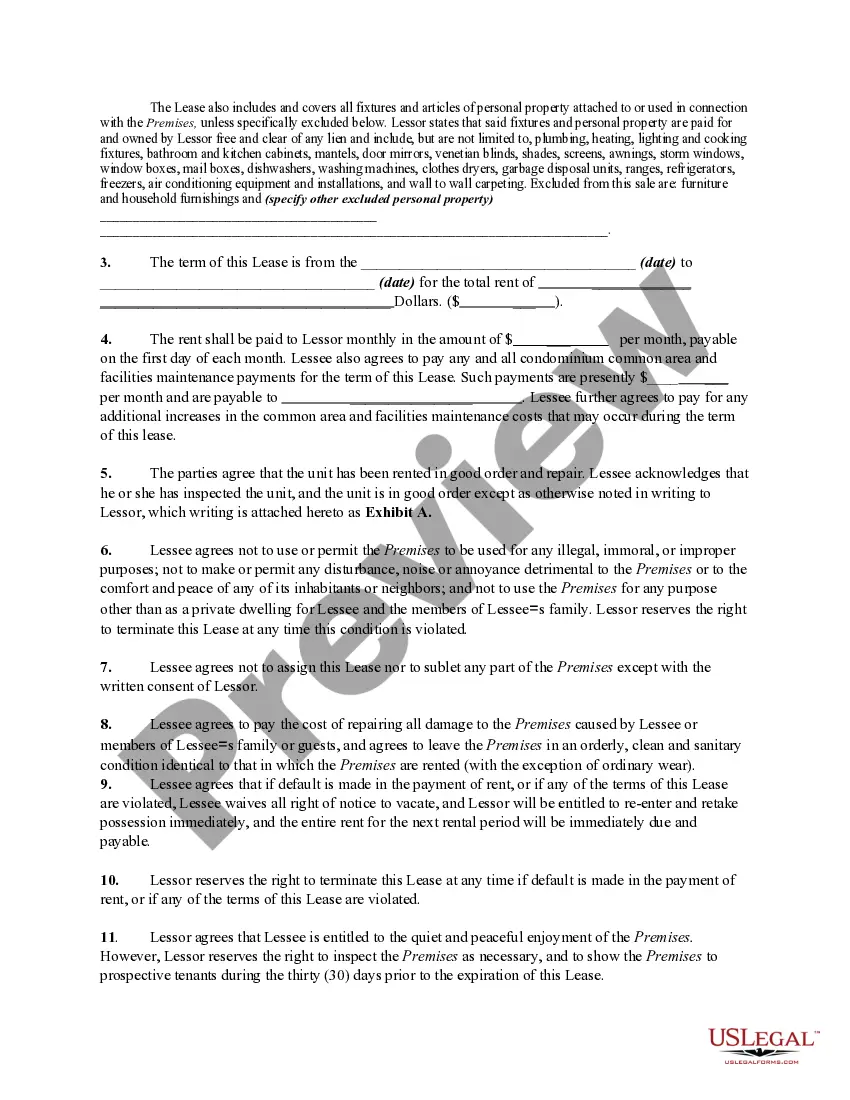
- Terms of the lease, including rental amounts and duration.
- Conditions for the lessee's use of the premises, and obligations for payment of associated fees.
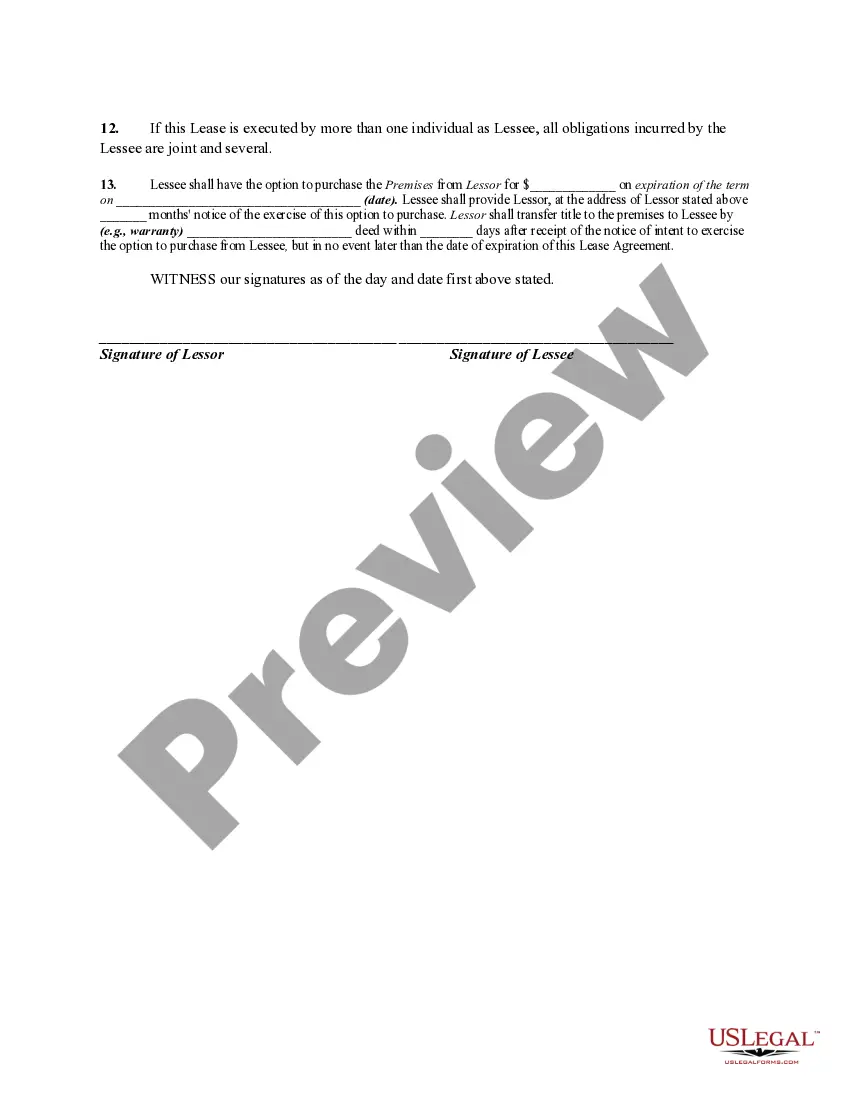
- Right of the lessee to purchase the unit upon expiration of the lease, including purchase price and notification requirements.
- Maintenance and repair responsibilities for the lessee.

When to use this form
This Agreement to Lease Condominium Unit should be used when renting a condominium, especially in a mixed-use development where diverse businesses and residences coexist. It is ideal for individuals or families who are interested in living in a condominium unit while also having the potential to purchase the unit at a later date, allowing them to test the property before committing to full ownership. Common scenarios include relocating for work, searching for a long-term residence, or families looking to settle into a community with future homeownership plans.
Who this form is for
This form is intended for:
- Property owners (lessors) looking to lease their condominium units with an option to sell.
- Tenants (lessees) who are interested in renting a condominium with future ownership options.
- Real estate agents and property managers facilitating rentals in mixed-use developments.
Steps to complete this form
- Identify and enter the names of the lessor and lessee at the beginning of the document.
- Provide detailed information about the condominium unit, including its address and unit number.
- Fill in the lease term dates, rental amount, and payment schedule.
- Specify any personal property included in the lease and list exclusions if necessary.
- Finalize the agreement by having both parties sign and date the document.
Does this document require notarization?
This form needs to be notarized to ensure legal validity. US Legal Forms provides secure online notarization powered by Notarize, allowing you to complete the process through a verified video call, available anytime.
Get your form ready online
Our built-in tools help you complete, sign, share, and store your documents in one place.
Make edits, fill in missing information, and update formatting in US Legal Forms—just like you would in MS Word.
Download a copy, print it, send it by email, or mail it via USPS—whatever works best for your next step.
Sign and collect signatures with our SignNow integration. Send to multiple recipients, set reminders, and more. Go Premium to unlock E-Sign.
If this form requires notarization, complete it online through a secure video call—no need to meet a notary in person or wait for an appointment.
We protect your documents and personal data by following strict security and privacy standards.

Make edits, fill in missing information, and update formatting in US Legal Forms—just like you would in MS Word.

Download a copy, print it, send it by email, or mail it via USPS—whatever works best for your next step.

Sign and collect signatures with our SignNow integration. Send to multiple recipients, set reminders, and more. Go Premium to unlock E-Sign.

If this form requires notarization, complete it online through a secure video call—no need to meet a notary in person or wait for an appointment.

We protect your documents and personal data by following strict security and privacy standards.
Common mistakes to avoid
- Failing to accurately describe the property and its legal details.
- Not specifying the lease term, leading to ambiguity.
- Neglecting to include the payment schedule or potential increases in rental fees.
- Overlooking required signatures or dates, which can invalidate the agreement.
Why use this form online
- Convenience of downloading and customizing the document to fit your needs.
- Access to professionally drafted language to ensure legal compliance.
- Editable templates that allow for easy adjustments based on personal circumstances or local laws.
- Quick and easy storage and retrieval for future legal reference.
Legal use & context
- This agreement is legally binding, provided it is completed with accurate information and signed by both parties.
- Compliance with local condominium laws and regulations is essential for enforcement.
- The option to purchase must be clearly articulated to avoid disputes later.
What to keep in mind
- The Agreement to Lease Condominium Unit combines rental and potential purchase options for tenants.
- It clearly outlines the rights and obligations of both lessor and lessee, including rent, maintenance, and use of property.
- Always adapt the form for state-specific legal requirements to ensure compliance.
Looking for another form?

Form popularity
FAQ
Names of all tenants. Limits on occupancy. Term of the tenancy. Rent. Deposits and fees. Repairs and maintenance. Entry to rental property. Restrictions on tenant illegal activity.
Divide the annual interest by 12 to determine how much interest is paid on the rent-to-own each month. If you pay $45,950 in interest a year, your monthly interest is $3,825 a month.
As long as the contract spells out specific details and both parties have signed that they agree to the contract's terms, a handwritten contract is legally binding and enforceable in court.
The Lease or Rental Agreement. The Option to Purchase. Payment of Rent and Setting Aside Monthly Rent Payments Varies. Tenant Makes Necessary Repairs to the Rental Property. Tenant Must Fulfill Lease Obligations. The Tenant Should Inspect the House and Order an Appraisal.
Setting the Stage. To make this work, your landlord needs to see the benefits of holding off on an immediate sale, and instead wait for you to buy the house. Include an Option Fee. Offer a Monthly Incentive. Write a New Lease. Delegate Maintenance Tasks. Address Potential Issues. Finding Another Property.
Details to include: Tenant/Buyer: The name and address of the party who is leasing the property and obtaining the option to purchase. Property: The address and legal description of the property. Rent Payments: The amount of the monthly rent payments and any late fees.
The letter should be clear in its terms and conditions. The factors like rent amount, a period of rent and other details should be its special highlight. The letter should contain the interests of both parties. The letter should be inclusive of all the rights of both parties.
Document everything in writing. Keep a written record of everything that is agreed on, and be careful to use the right terms in the agreement. Consult an attorney. Use separate agreements. Keep the term short. Take a security deposit. Pay like an owner. Factor in repair costs. Don't give large rent credits.
If you're thinking of renting out your property, or you're a tenant, and the current owner doesn't already have an agreement drawn up, it's possible to create your own rental contract.