Affidavit of Sale By Foreclosure
Overview of this form
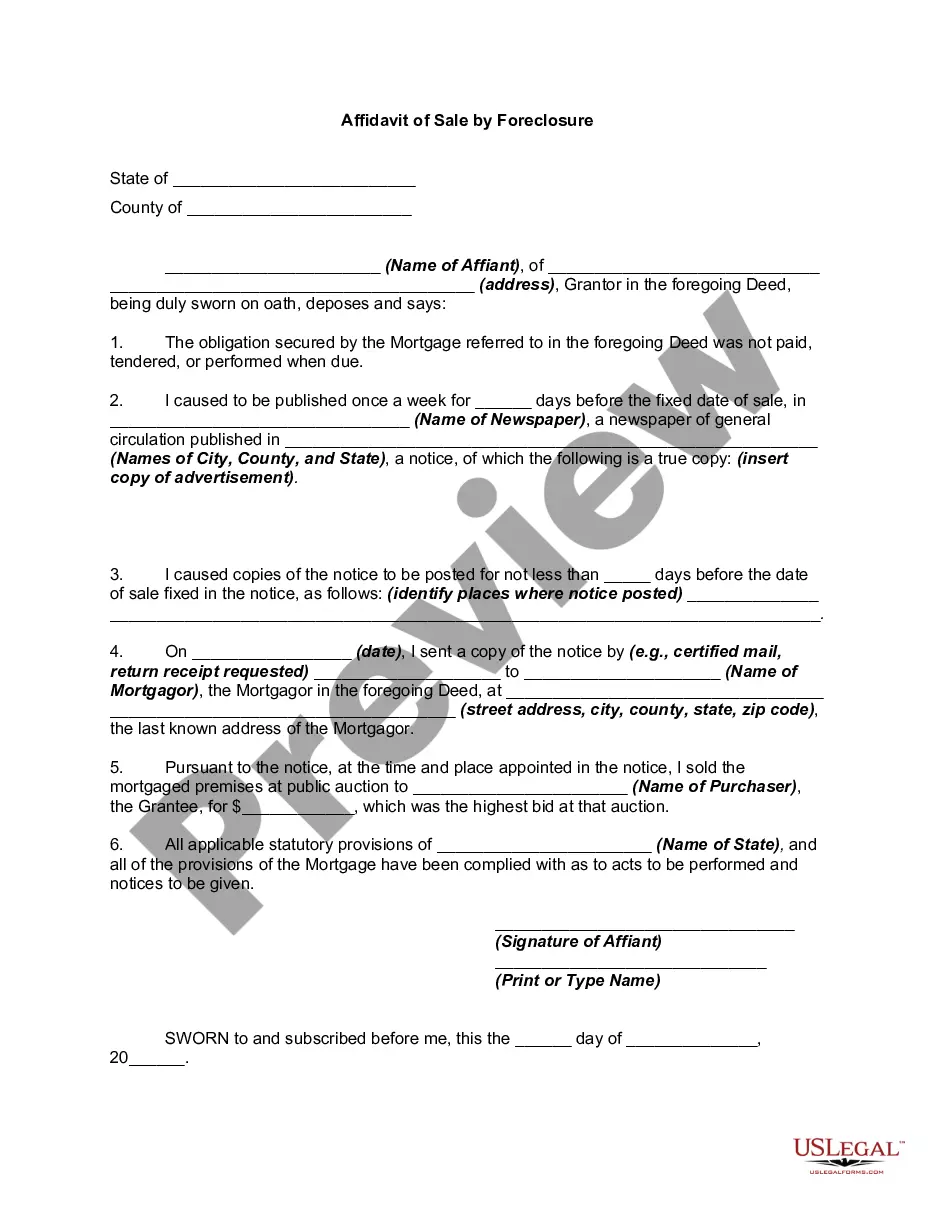
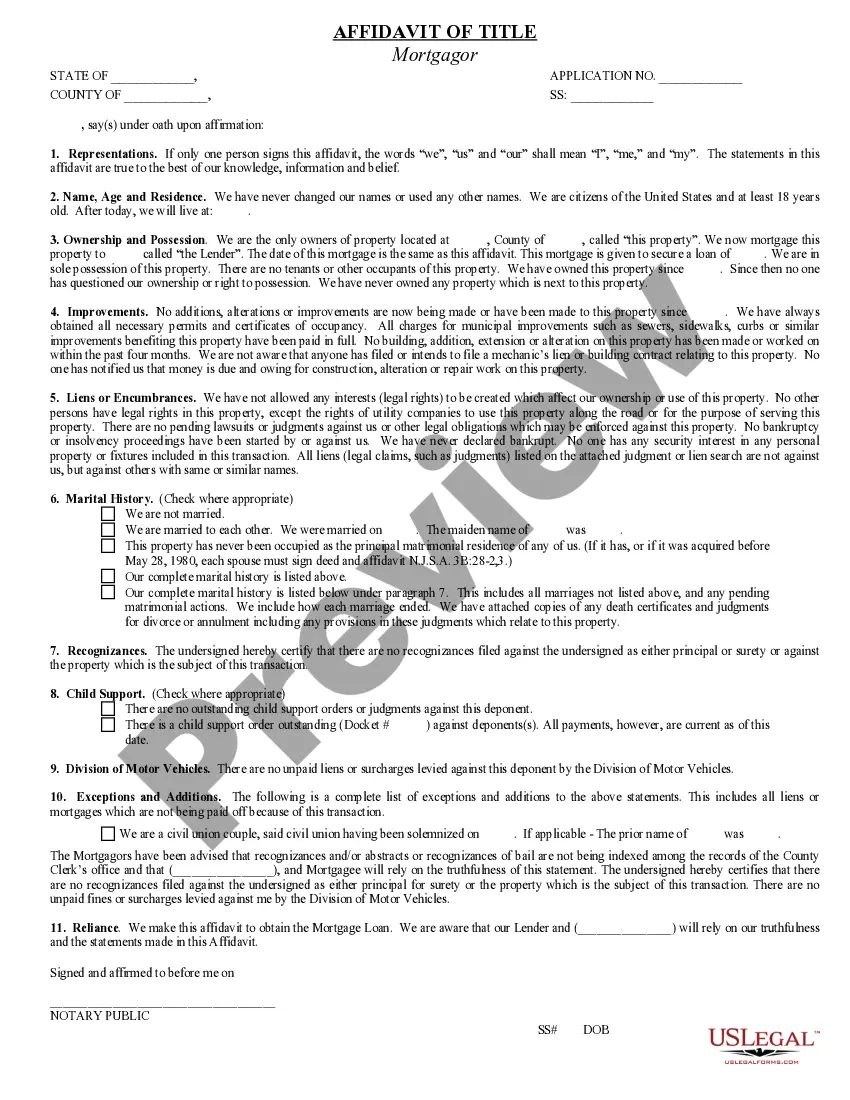
The Affidavit of Sale By Foreclosure is a legal document used to affirm that the necessary procedures related to a foreclosure sale were followed. It serves as a sworn statement by the affiant, usually the foreclosing party, declaring compliance with relevant legal requirements, making it a crucial document in the foreclosure process. This affidavit confirms that all notices were published, posted, and sent to the mortgagor, ensuring the sale was executed legitimately and in accordance with state laws.
Key components of this form
- Name and address of the affiant (person making the statement)
- Details of the mortgage obligation, including payment status
- Publication details of the foreclosure notice, including dates and newspaper name
- Locations where notices were posted
- Confirmation of notice sent to the mortgagor, including their address
- Details of the public auction, including the purchaser's name and sale price
- Statement of compliance with state law and mortgage provisions


Common use cases
This form should be used after a foreclosure sale has been completed. If you are the creditor or foreclosing party, you will need to complete this affidavit to document your adherence to statutory requirements for notifying the mortgagor of the sale and to certify that all legal obligations have been fulfilled prior to the sale.
Who should use this form
The following parties are typically appropriate users of this form:
- Mortgage holders and creditors who have initiated the foreclosure process
- Real estate professionals involved in the foreclosure
- Attorneys representing clients in foreclosure proceedings
- Any individual responsible for ensuring compliance with foreclosure notification laws
How to prepare this document
- Identify the parties involved by entering the name and address of the affiant.
- Specify details concerning the mortgage, including its unpaid status.
- Document the publication details by noting the newspaper name and dates of publication.
- List the locations where the foreclosure notices were posted.
- Provide the mortgagor's last known address and confirm the method of notice delivery.
- Record the sale details, including the name of the purchaser and the sale amount.
- Sign the affidavit in the presence of a notary public.
Does this form need to be notarized?
This form must be notarized to be legally valid. US Legal Forms provides secure online notarization powered by Notarize, allowing you to complete the process through a verified video call.
Get your form ready online
Our built-in tools help you complete, sign, share, and store your documents in one place.
Make edits, fill in missing information, and update formatting in US Legal Forms—just like you would in MS Word.
Download a copy, print it, send it by email, or mail it via USPS—whatever works best for your next step.
Sign and collect signatures with our SignNow integration. Send to multiple recipients, set reminders, and more. Go Premium to unlock E-Sign.
If this form requires notarization, complete it online through a secure video call—no need to meet a notary in person or wait for an appointment.
We protect your documents and personal data by following strict security and privacy standards.

Make edits, fill in missing information, and update formatting in US Legal Forms—just like you would in MS Word.

Download a copy, print it, send it by email, or mail it via USPS—whatever works best for your next step.

Sign and collect signatures with our SignNow integration. Send to multiple recipients, set reminders, and more. Go Premium to unlock E-Sign.

If this form requires notarization, complete it online through a secure video call—no need to meet a notary in person or wait for an appointment.

We protect your documents and personal data by following strict security and privacy standards.
Common mistakes to avoid
- Failing to notarize the affidavit, which may invalidate it.
- Skipping the requirement to publish the notice in a local newspaper.
- Not providing complete and accurate information regarding the mortgagor's address.
- Omitting necessary signatures or improperly completing the form in rush.
Why use this form online
- Convenient access to legal documents from anywhere at any time.
- Editable templates allow customization for specific state requirements.
- Reliable and accurate forms drafted by licensed attorneys.
- Easy download options for your records and filing needs.
Looking for another form?

Form popularity
FAQ
An Affidavit of Sale by Foreclosure is a sworn statement by the affiant confirming that the foreclosure sale followed required procedures. It records the mortgage details, publication and posting of notices, notice to the mortgagor, and the auction results, including the purchaser and sale price, along with a statement of compliance with state law and mortgage provisions.
Yes. You can prepare and file the Affidavit of Sale by Foreclosure without an attorney, but its legal implications are significant. If you handle it yourself, ensure the affiant’s name and address are correct and that the mortgage details, publication details, notice locations, mortgagor notice, auction information, and the compliance statement are accurately completed.
Signing this affidavit can expose the affiant to liability if any statements prove false or inaccuracies occur. It requires accurate publication, posting, and notice details and a compliant statement. Misstatements can affect the validity of the sale and complicate proceedings; consult a licensed attorney if there is any doubt about the facts.
Mortgage holders and creditors pursuing foreclosure, real estate professionals involved in the process, attorneys representing clients, and anyone responsible for ensuring foreclosure notification compliance should prepare and use this affidavit. It serves to document that notices were properly published, posted, and sent, and that the sale details and compliance are recorded.
This form should be used after a foreclosure sale has been completed to document adherence to notice requirements and to certify that all legal obligations related to the sale have been fulfilled. It records details such as publication dates, posting locations, and the auction results to support the sale's legitimacy.
This form, Affidavit of Sale by Foreclosure, specifically documents foreclosure notice publication, posting locations, mortgagor notice, and the auction details (purchaser and sale price) along with a state-law compliance statement. Other foreclosure affidavits may not include every publication, posting, and sale-detail item or the same compliance language.