Notice of Hearing for Variance Before Board of Zoning Appeals - Notice to be Sent by Applicant to Interested Property Owners
What is this form?
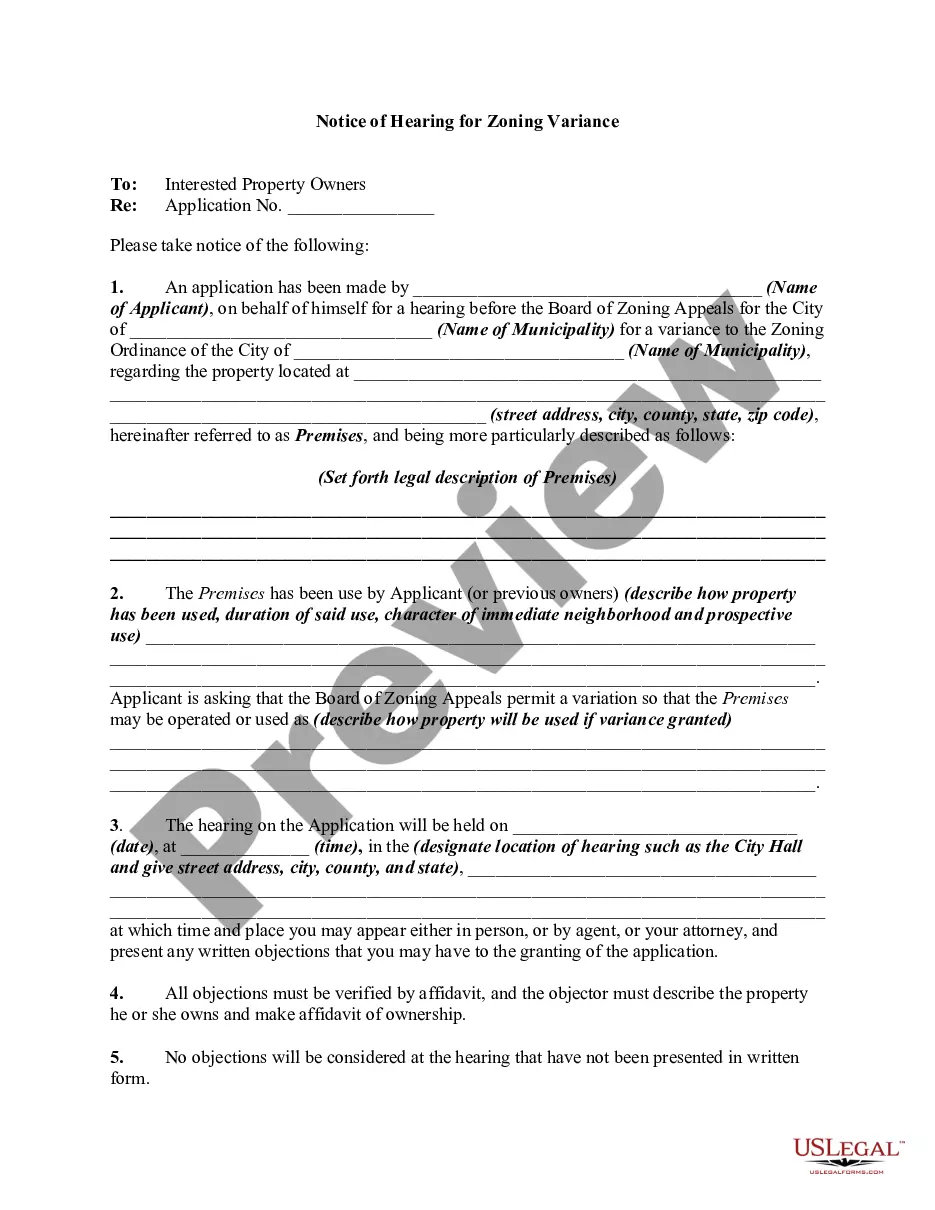
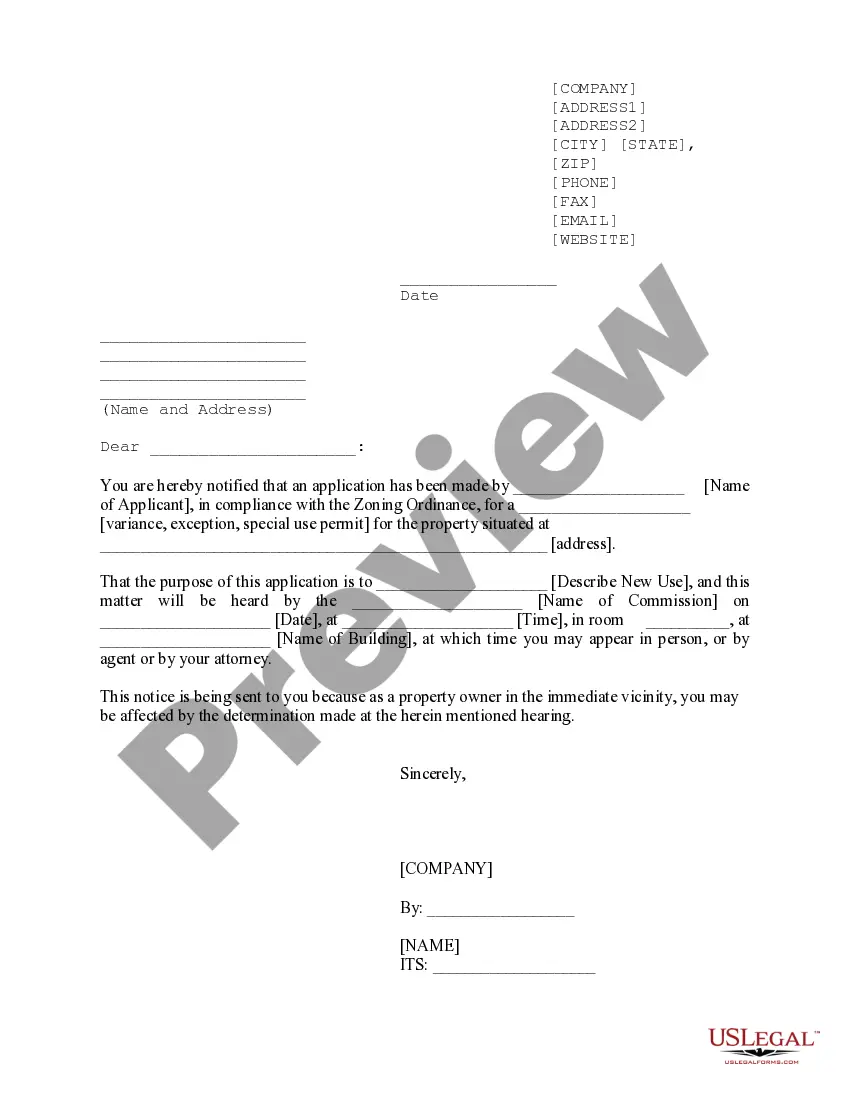
The Notice of Hearing for Variance Before Board of Zoning Appeals serves as a formal notification sent by the applicant to property owners regarding a request for a variance. A variance is an exception that allows property use that deviates from the existing zoning ordinance. This form is essential for informing interested parties about the hearing process where they can express their objections or support for the application. It differs from other zoning forms by specifically addressing the notification requirements to neighboring property owners before a hearing takes place.
What’s included in this form
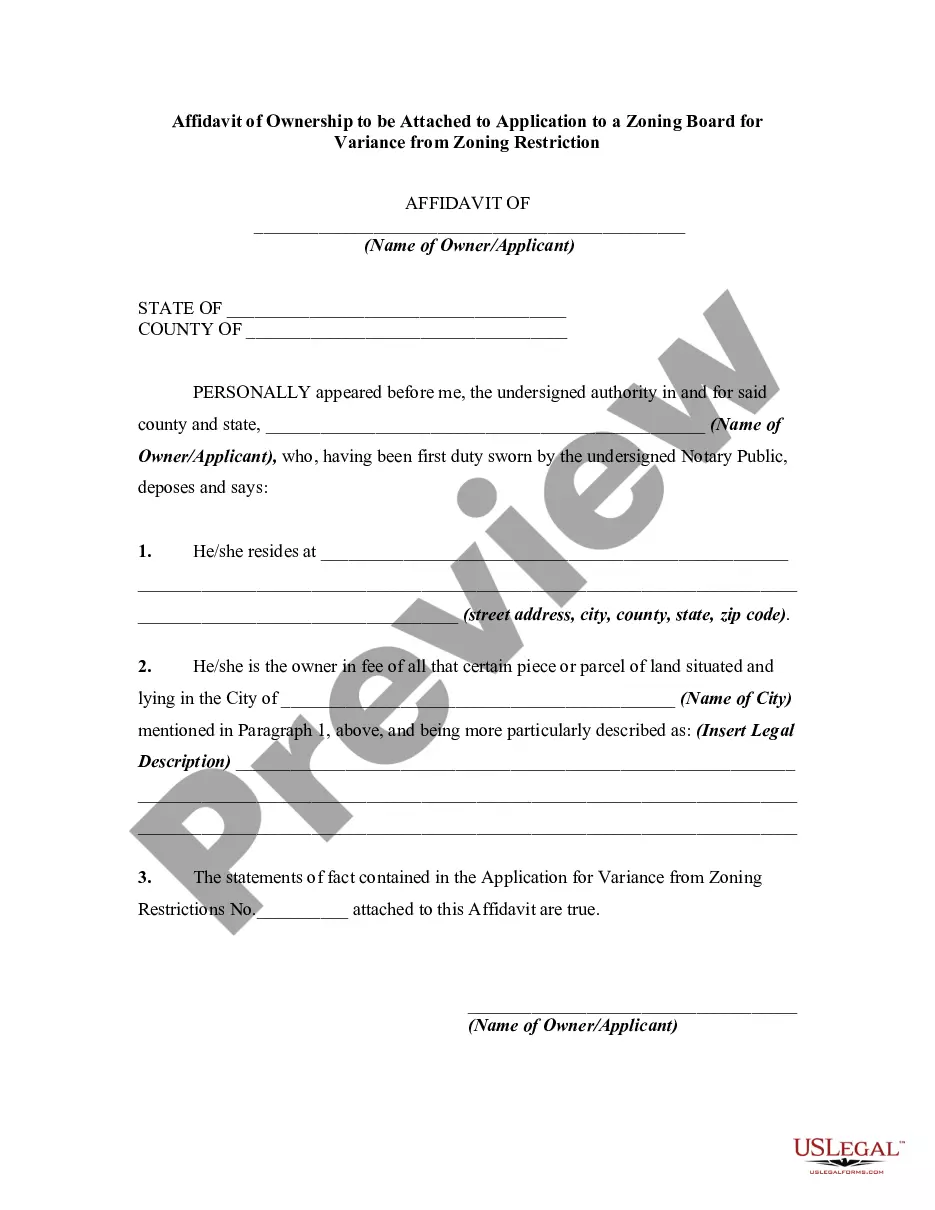
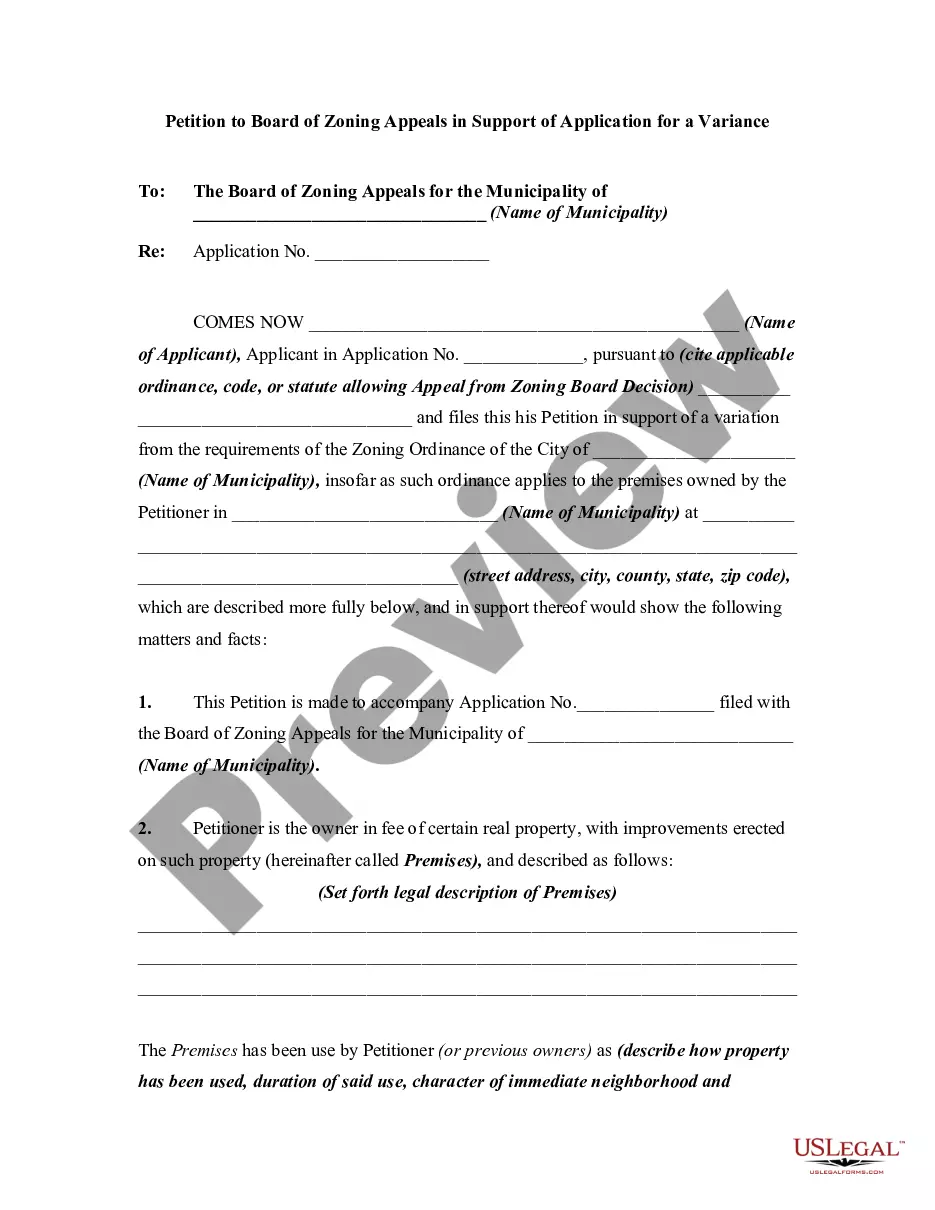
- Information about the applicant and the application number
- Description of the property for which the variance is requested
- Details of the existing and proposed property use
- Date, time, and location of the hearing
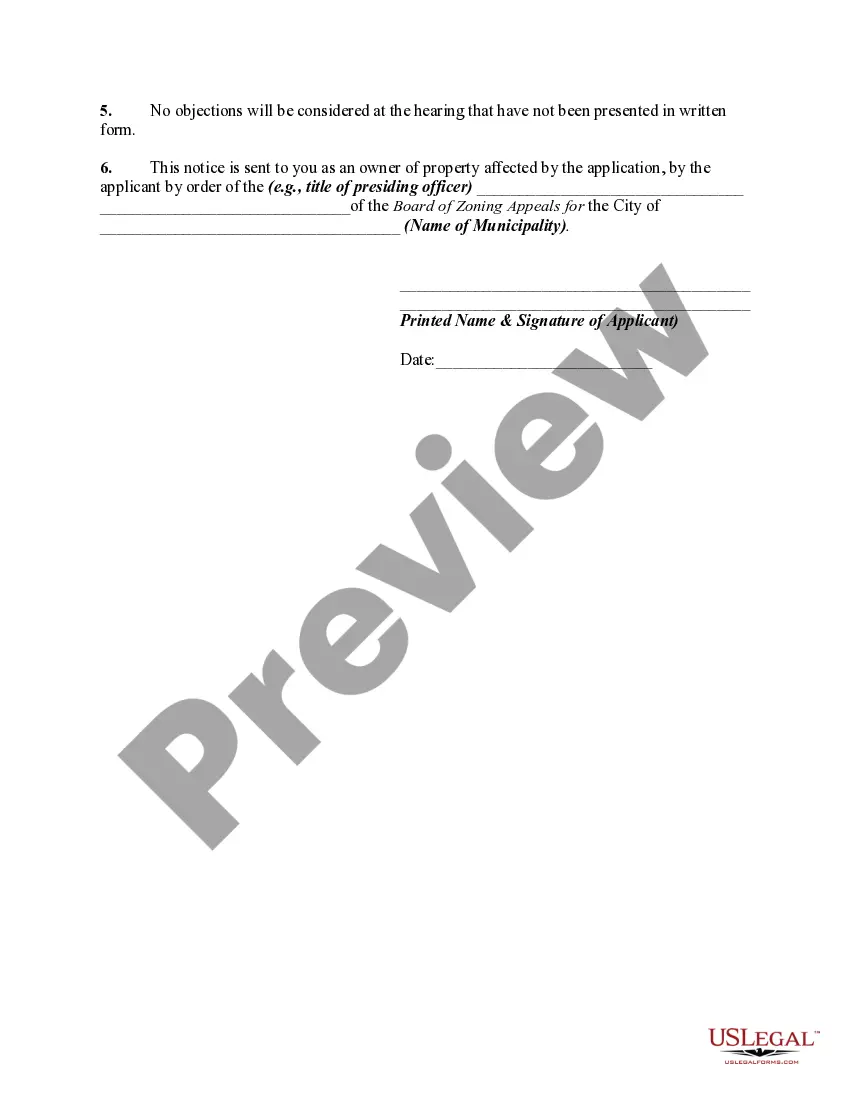
- Requirements for submitting written objections
Common use cases
This form should be used when an applicant seeks to request a variance from the zoning ordinance and must provide notice to affected property owners. It is typically employed in situations where the proposed use differs from existing zoning regulations, requiring a public hearing for input from the local community and stakeholders.
Who this form is for
- Property owners applying for a variance from a zoning ordinance
- Applicants seeking feedback from neighboring property owners
- Zoning board representatives involved in the variance hearing
How to prepare this document
- Identify yourself as the applicant and fill in your name and application number.
- Provide a legal description and the physical address of the property for which the variance is requested.
- Clearly explain the current use of the property and how it is intended to change if the variance is granted.
- Fill in the scheduled date, time, and location of the hearing.
- State the requirements for objections and ensure each objection is verified by affidavit.
Does this document require notarization?
This form does not typically require notarization to be legally valid. However, some jurisdictions or document types may still require it. US Legal Forms provides secure online notarization powered by Notarize, available 24/7 for added convenience.
Get your form ready online
Our built-in tools help you complete, sign, share, and store your documents in one place.
Make edits, fill in missing information, and update formatting in US Legal Forms—just like you would in MS Word.
Download a copy, print it, send it by email, or mail it via USPS—whatever works best for your next step.
Sign and collect signatures with our SignNow integration. Send to multiple recipients, set reminders, and more. Go Premium to unlock E-Sign.
If this form requires notarization, complete it online through a secure video call—no need to meet a notary in person or wait for an appointment.
We protect your documents and personal data by following strict security and privacy standards.

Make edits, fill in missing information, and update formatting in US Legal Forms—just like you would in MS Word.

Download a copy, print it, send it by email, or mail it via USPS—whatever works best for your next step.

Sign and collect signatures with our SignNow integration. Send to multiple recipients, set reminders, and more. Go Premium to unlock E-Sign.

If this form requires notarization, complete it online through a secure video call—no need to meet a notary in person or wait for an appointment.

We protect your documents and personal data by following strict security and privacy standards.
Common mistakes to avoid
- Failing to include all required information about the property and its current use.
- Not providing sufficient time for interested parties to prepare objections.
- Providing unclear descriptions or instructions for submitting objections.
Advantages of online completion
- Convenient access to the form at any time, allowing for easy completion from home.
- Editability enables quick updates to ensure all information is accurate and current.
- Reliability through professionally drafted templates that meet legal standards.
Legal use & context
- This notice is a legal requirement in most jurisdictions when applying for a variance.
- It establishes procedural fairness by informing property owners of potential changes affecting their properties.
- Failure to use this form appropriately may result in delays in the variance process or denial of the request.
Main things to remember
- The Notice of Hearing for Variance is crucial for transparency in local zoning changes.
- Proper notification to affected property owners ensures community involvement in zoning decisions.
- Complying with state-specific requirements is essential for the form's validity.
Looking for another form?
Form popularity
FAQ
It is a formal notice from the applicant to nearby property owners that a variance request will be heard before the Board of Zoning Appeals. The form triggers the hearing process and specifies who must be notified and how to submit objections. It lists the applicant, application number, property description, existing and proposed uses, and the hearing date, time, and location.
At the variance hearing, the Board of Zoning Appeals reviews the variance request and considers input from interested property owners who may submit written objections or speak at the hearing. The Notice of Hearing ensures attendees know the hearing date, time, and location and who must be notified.
This form supports the process by ensuring proper notice is sent to nearby property owners and that objections can be submitted, but it does not guarantee approval. The outcome depends on the board’s review of the variance request and local rules.
The form describes notification requirements and hearing details but does not set fees. Fees, if any, are determined by local governing authorities; check with the appropriate zoning office for current costs.
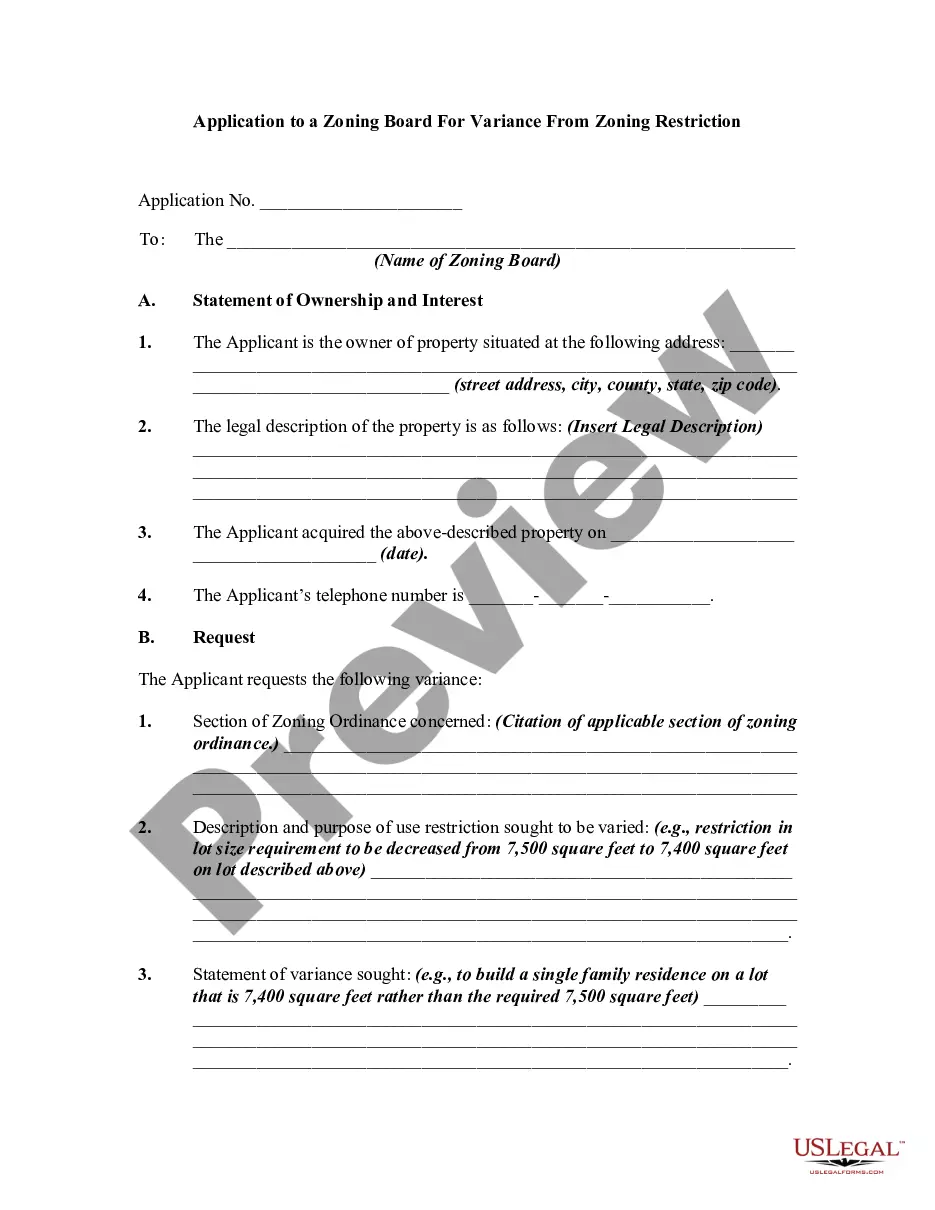
A variance is an exception allowing property use that deviates from the current zoning ordinance. This form is used when pursuing that exception and specifies the property description, existing and proposed uses, and the hearing information, enabling neighbors to participate at the hearing.
This Notice is specific to requesting a variance and is sent by the applicant to interested property owners before a variance hearing before the Board of Zoning Appeals. It emphasizes notifying neighbors, includes the applicant and application number, property description, and how to submit written objections.