Sample Letter for Notice of Promotion
What this document covers
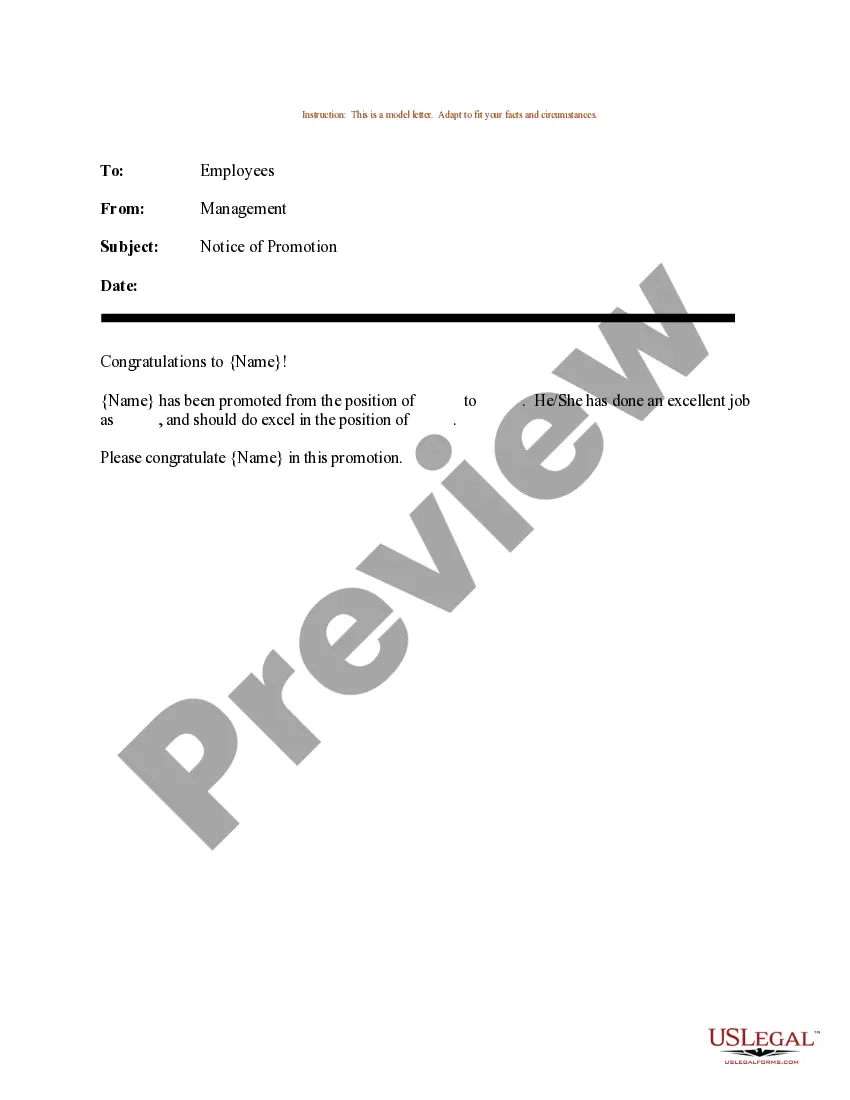
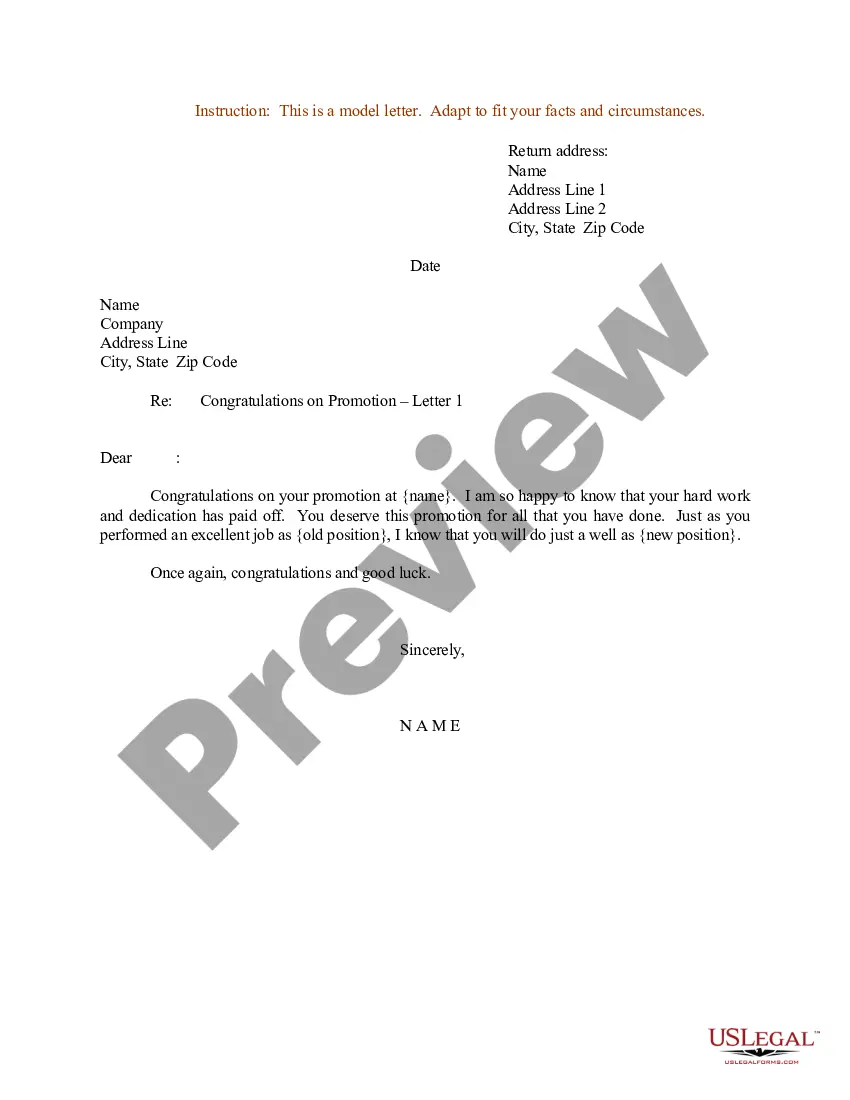
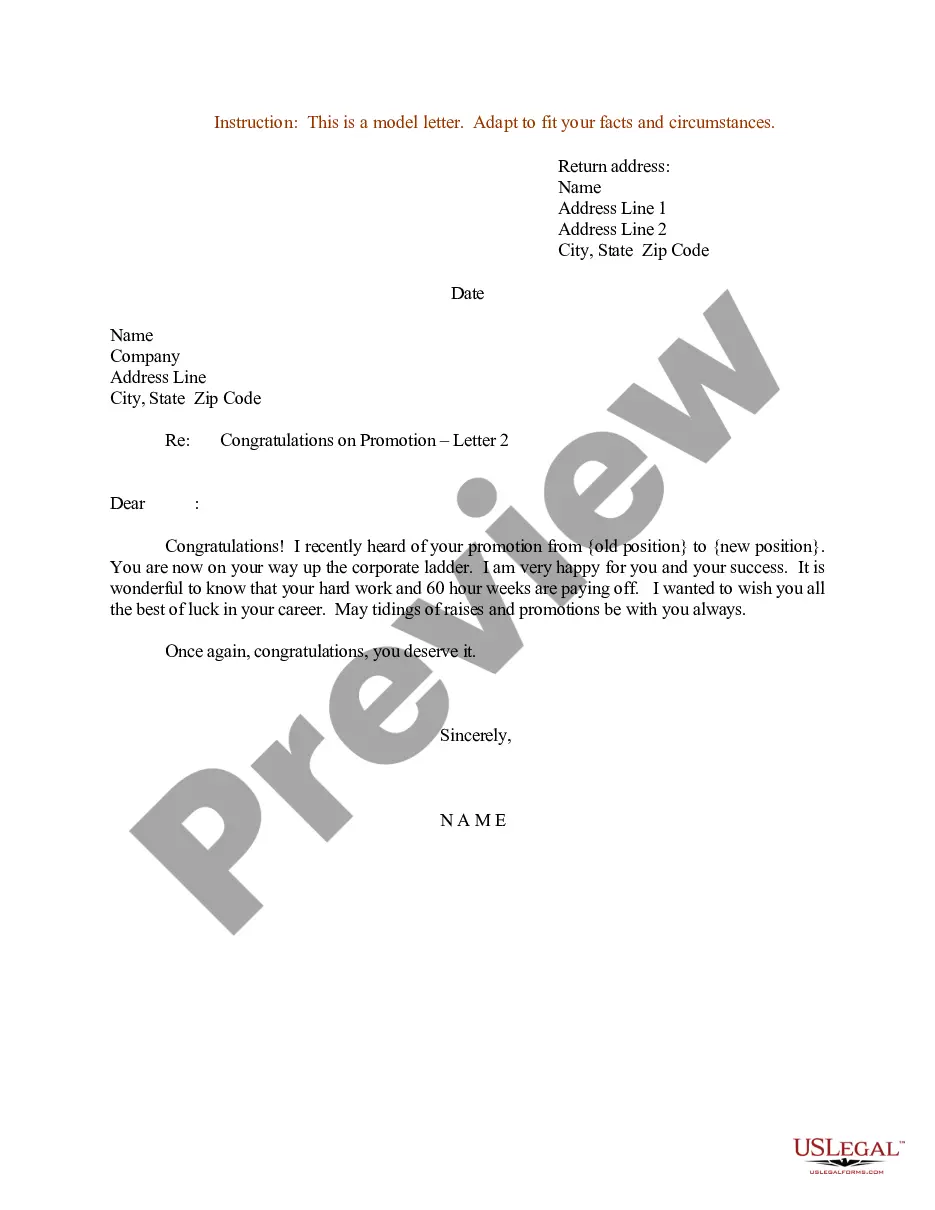
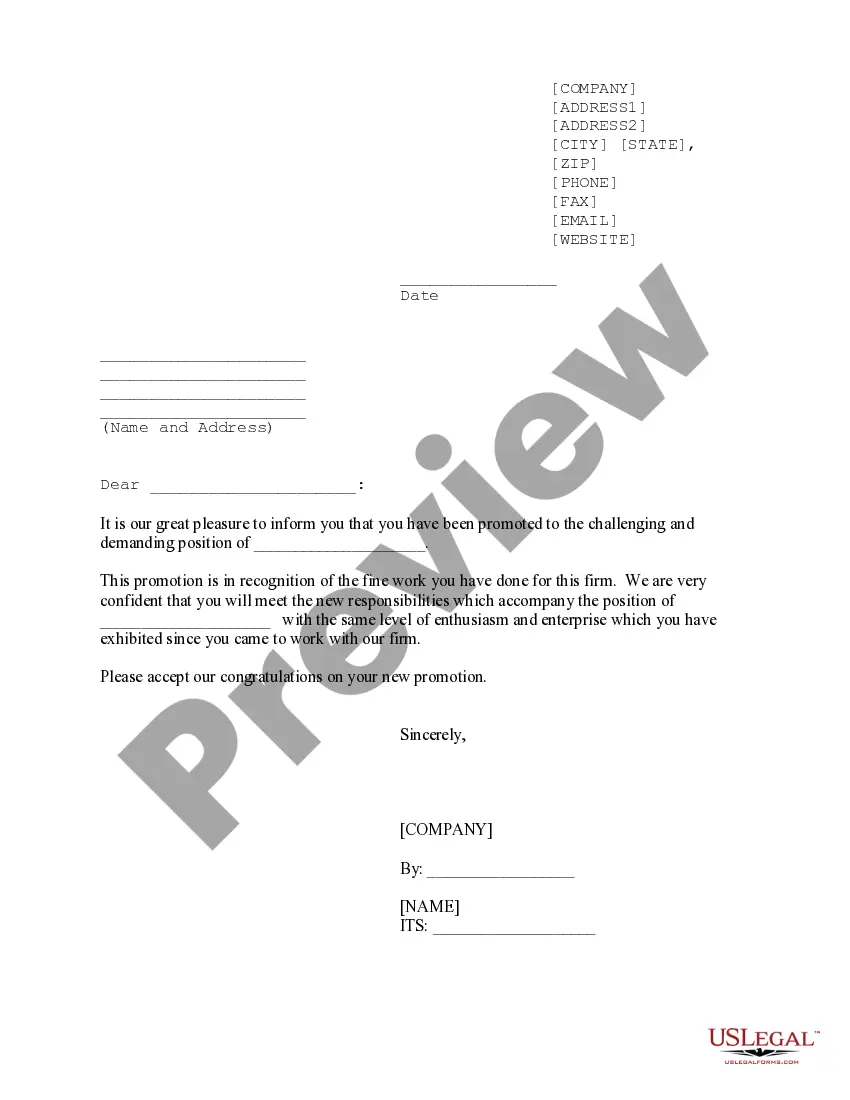
The Sample Letter for Notice of Promotion is a document used by employers to officially inform an employee of their promotion within the organization. This form outlines the new position, associated responsibilities, and any relevant changes in compensation or benefits. It is a formal way to communicate recognition and advancement, distinguishing it from other employment letters, such as offer letters or termination notices.
Key parts of this document
- Date of the letter
- Name and title of the recipient
- Details of the new position
- Changes to salary and benefits
- Effective date of the promotion
- Contact information for further questions
Common use cases
This form is ideal for situations where an employee has been selected for a promotion and requires formal notification. It can be used in various scenarios, such as when an employee has excelled in their current role, when new management opportunities arise, or when restructuring within the organization leads to promotions.
Who needs this form
The following individuals and organizations should consider using this form:
- Human resources professionals
- Management personnel responsible for employee communications
- Business owners looking to acknowledge employee growth
Steps to complete this form
- Enter the date at the top of the letter.
- Fill in the employee's name and current title.
- Specify the new position and outline any new responsibilities.
- Detail any changes in salary or benefits, including effective dates.
- Include your contact information for follow-up questions.
Does this document require notarization?
This form does not typically require notarization unless specified by local law.
Get your form ready online
Our built-in tools help you complete, sign, share, and store your documents in one place.
Make edits, fill in missing information, and update formatting in US Legal Forms—just like you would in MS Word.
Download a copy, print it, send it by email, or mail it via USPS—whatever works best for your next step.
Sign and collect signatures with our SignNow integration. Send to multiple recipients, set reminders, and more. Go Premium to unlock E-Sign.
If this form requires notarization, complete it online through a secure video call—no need to meet a notary in person or wait for an appointment.
We protect your documents and personal data by following strict security and privacy standards.

Make edits, fill in missing information, and update formatting in US Legal Forms—just like you would in MS Word.

Download a copy, print it, send it by email, or mail it via USPS—whatever works best for your next step.

Sign and collect signatures with our SignNow integration. Send to multiple recipients, set reminders, and more. Go Premium to unlock E-Sign.

If this form requires notarization, complete it online through a secure video call—no need to meet a notary in person or wait for an appointment.

We protect your documents and personal data by following strict security and privacy standards.
Avoid these common issues
- Failing to address the letter personally to the employee.
- Not detailing the new responsibilities associated with the promotion.
- Omitting the effective date of the promotion.
Benefits of using this form online
- Easy customization to reflect specific details for each employee.
- Immediate access to a professionally drafted legal document.
- Convenient download options for printing or sharing electronically.
Legal use & context
- This letter serves as an official record of the promotion.
- It provides clarity for future employment matters related to the position change.
- A well-drafted promotion letter can enhance employee morale and legal protections.
What to keep in mind
- The Sample Letter for Notice of Promotion formalizes employee advancement within a company.
- It includes vital information like new roles, responsibilities, and salary changes.
- This letter is useful for HR professionals and management to communicate promotions clearly and professionally.
Looking for another form?
Form popularity
FAQ
Dear Employee Name, Congratulations! Due to your continued efforts and recent successes, effective Date, you have been promoted to New Position in Position Department. The annual salary for the New Position will be salary here, which will be paid out on a weekly/bi-weekly basis.
Decide whether to make the announcement via email or office memo. Address your staff members. Introduce the promoted employee and note their previous position. Briefly describe the promoted employee's new role and responsibilities.
Be direct and concise in your announcement. Write a short, friendly announcement that's to the point when you're sharing positive news. Recognize what others have achieved in your announcement, and motivate your reader to reach similar goals.
Select your delivery method. Address the audience. Introduce the promoted employee. Explain the reason for the promotion. Detail the employee's new responsibilities. Congratulate the employee. End on a call to action.
Be straightforward and concise. Keep it short. Motivate others to achieve the same objectives. Use the letter for your advantage. Write to avoid questions later. Avoid nonsense.
Employee's Name: The Current and the New Job Title: Effective Date of the Promotion: New Job's Roles and Responsibilities: Talk about Job performance: Explain the new job role clearly: Keep it short and crisp:
Decide if an email is the most appropriate method. Address the recipients of the email. Introduce the employee being promoted. Describe the employee's achievements and new responsibilities. Close the email by encouraging employees to support the promoted colleague.
When writing a promotion announcement, be sure to include a short summary of the employee's old and new roles, and to mention any pertinent accomplishments during their tenure with the company. You are, in effect, telling the story of the employee's history with your organization in order to justify their promotion.