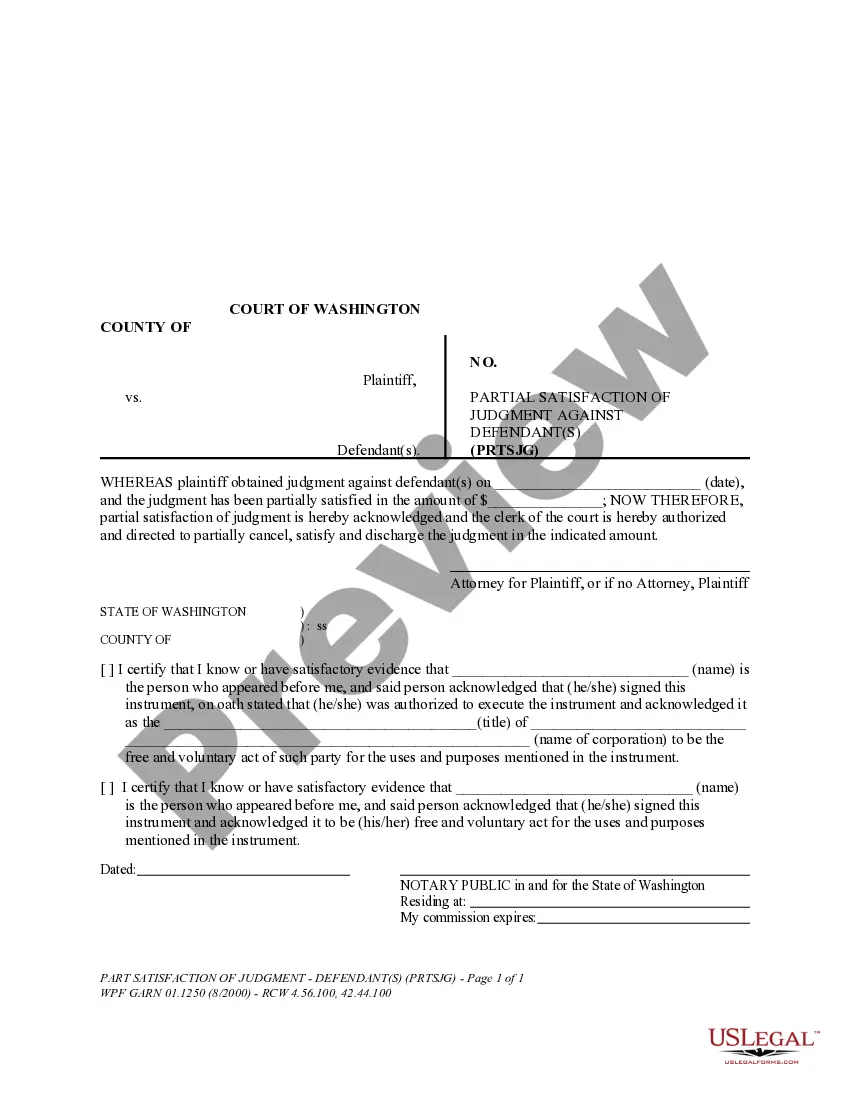
Complaint Against Guarantor of Open Account Credit Transactions - Breach of Oral or Implied Contracts
About this form
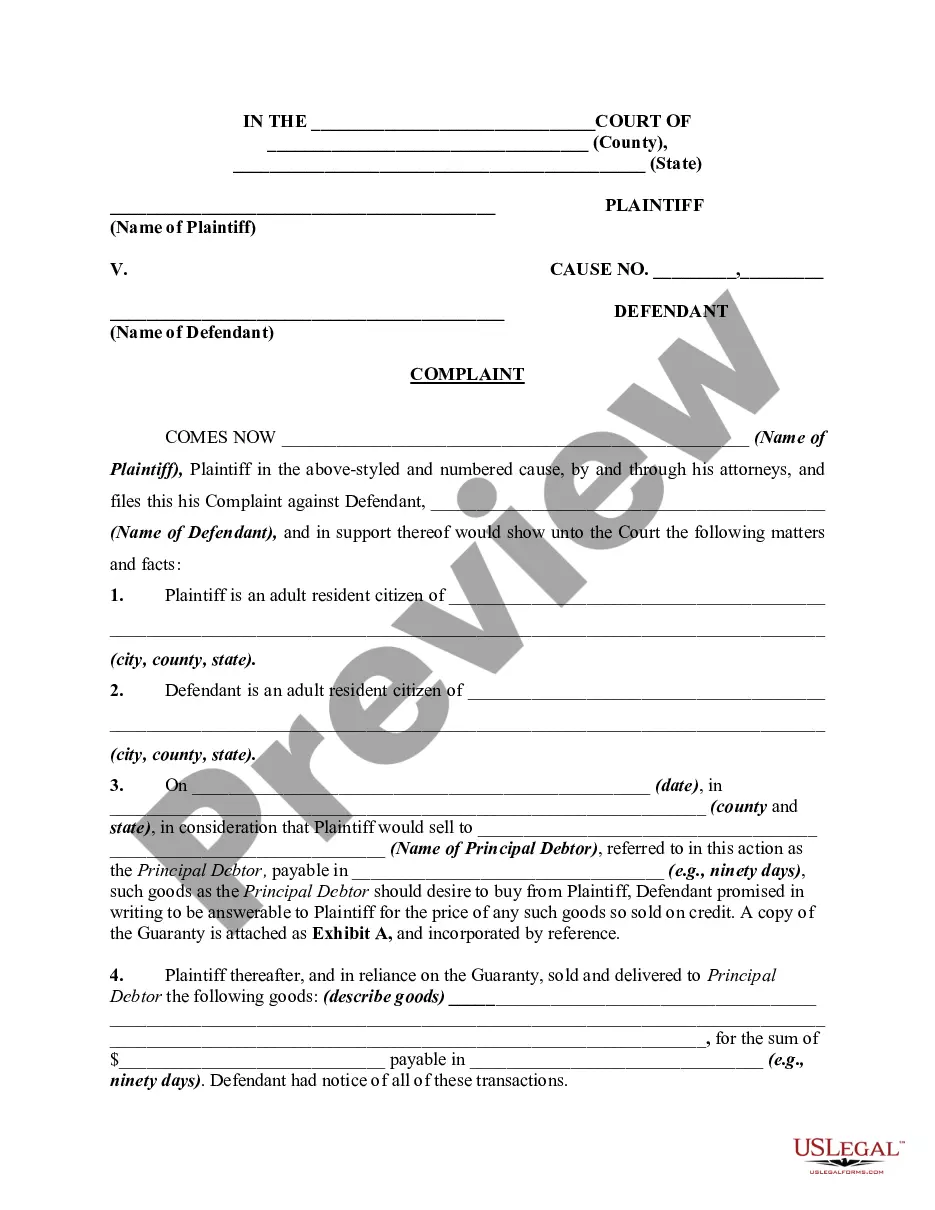
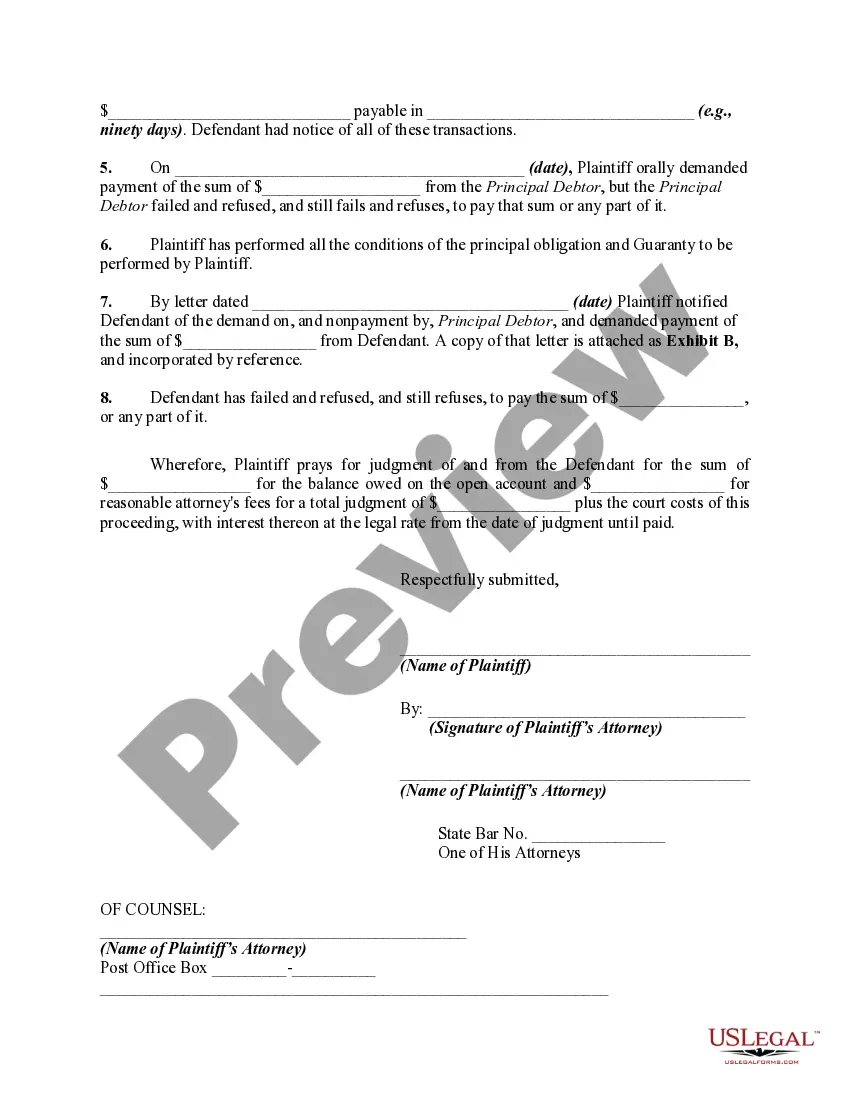
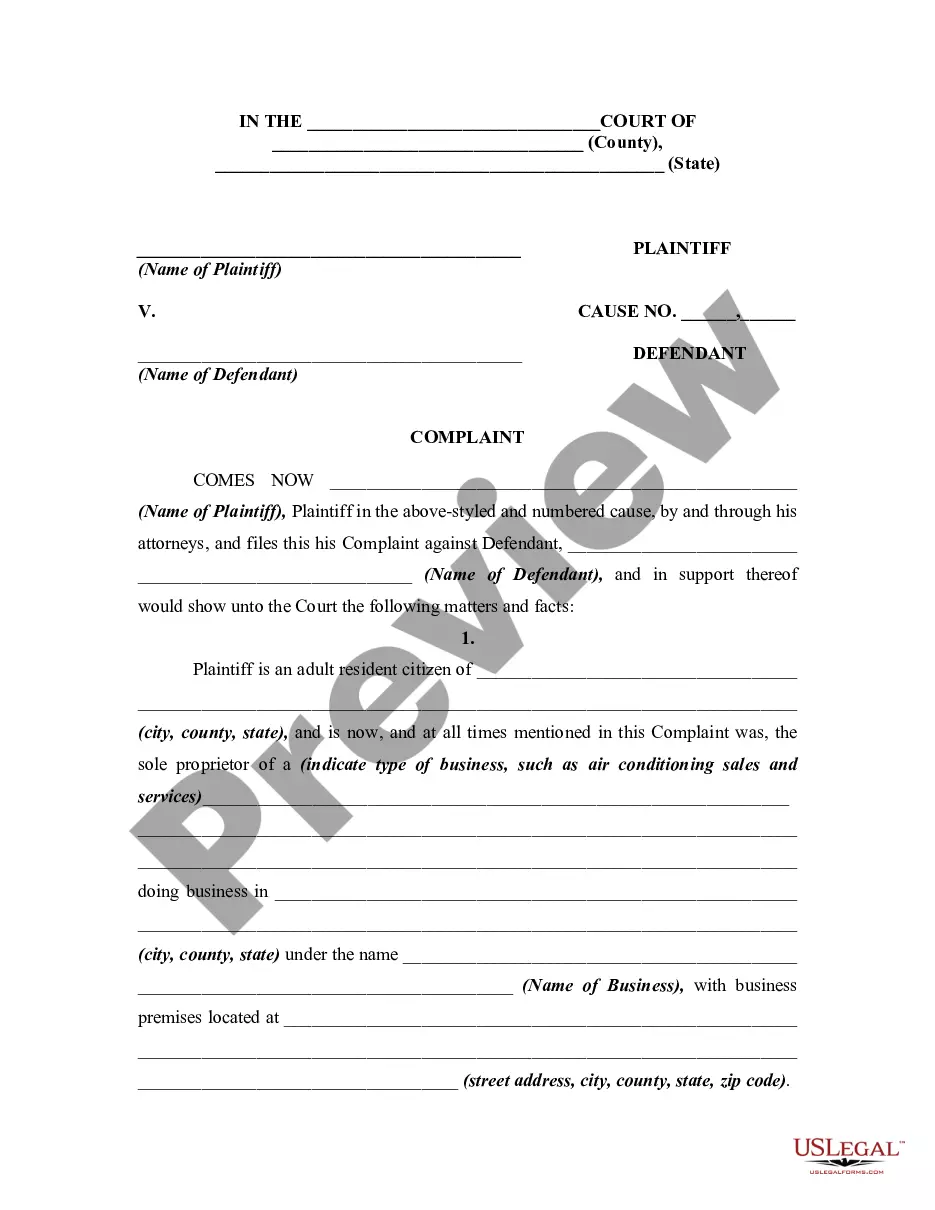
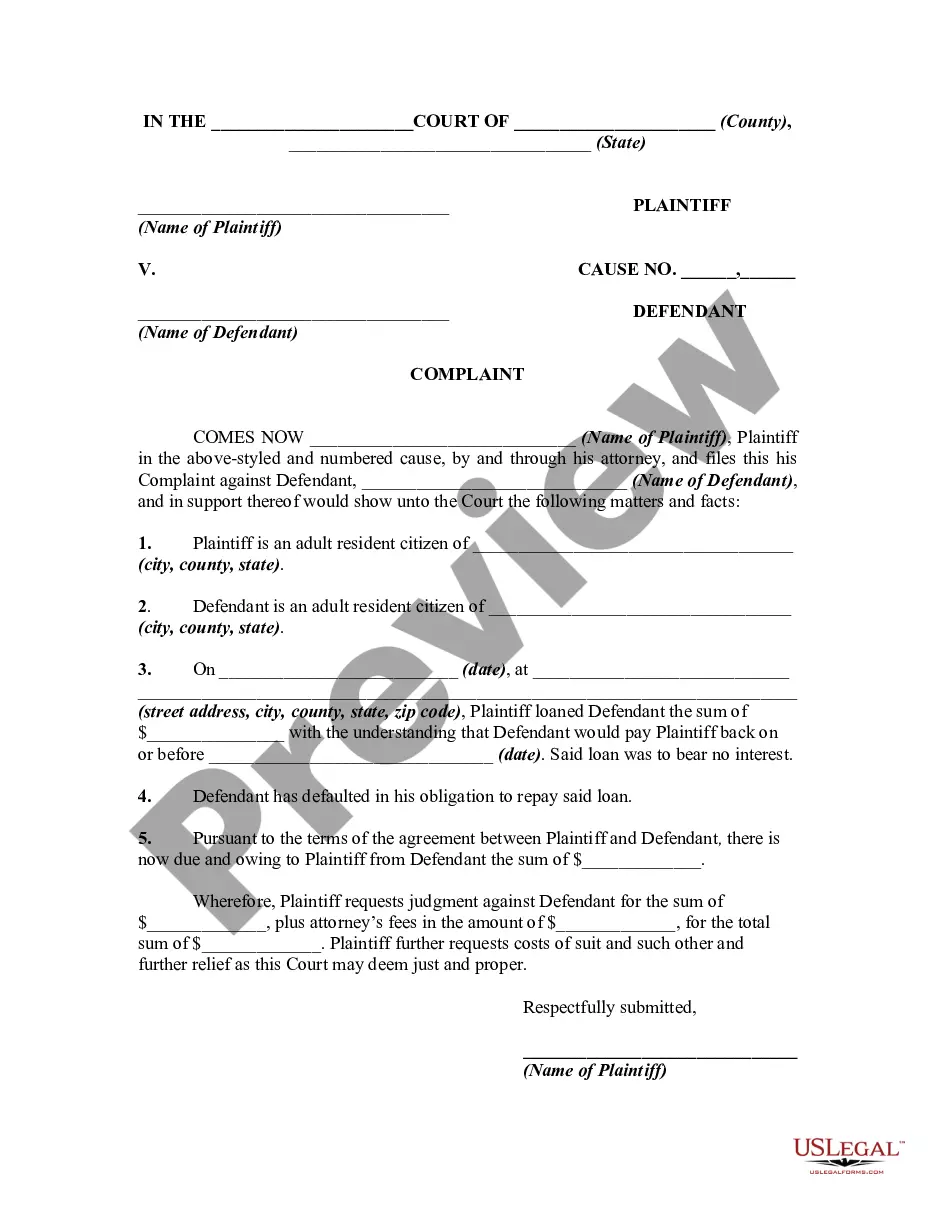
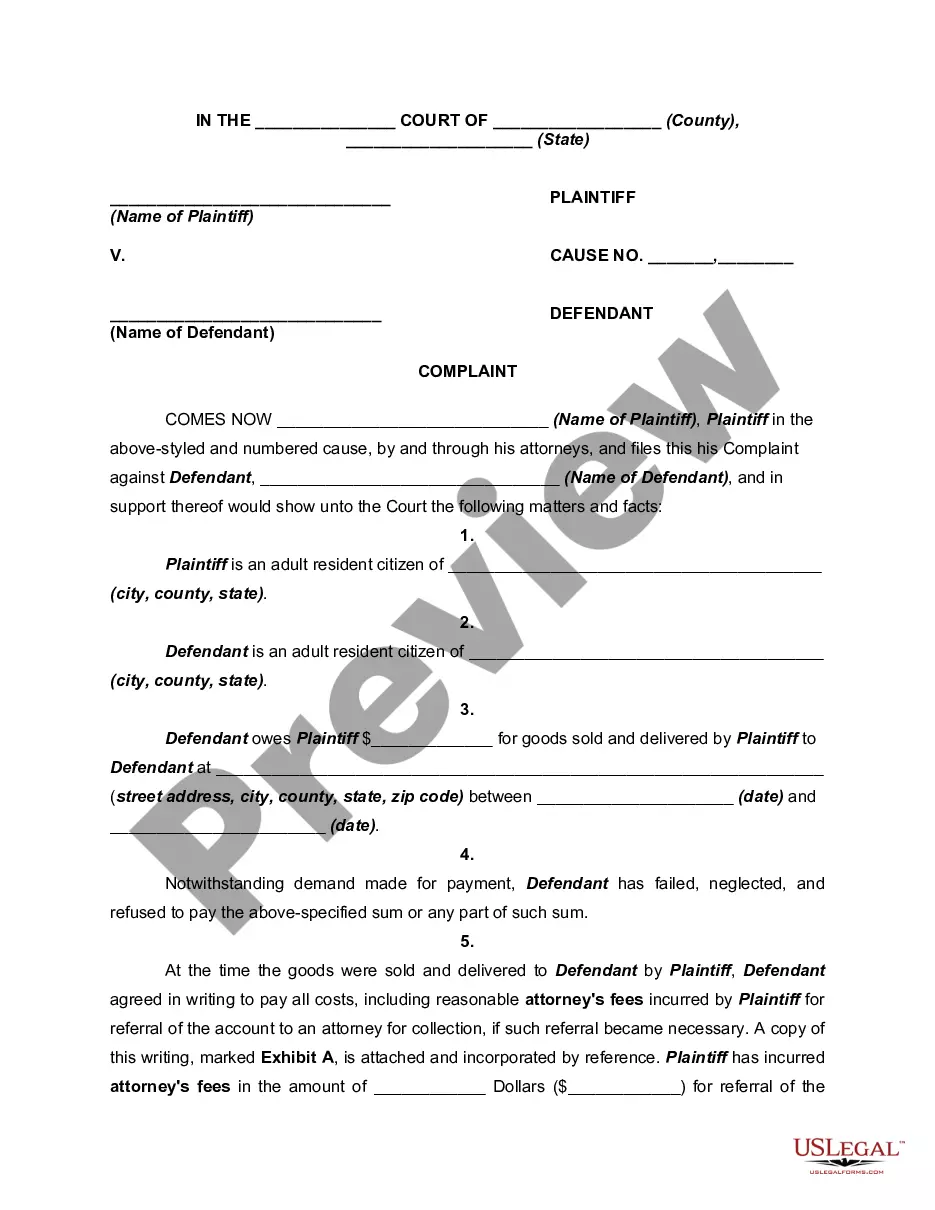
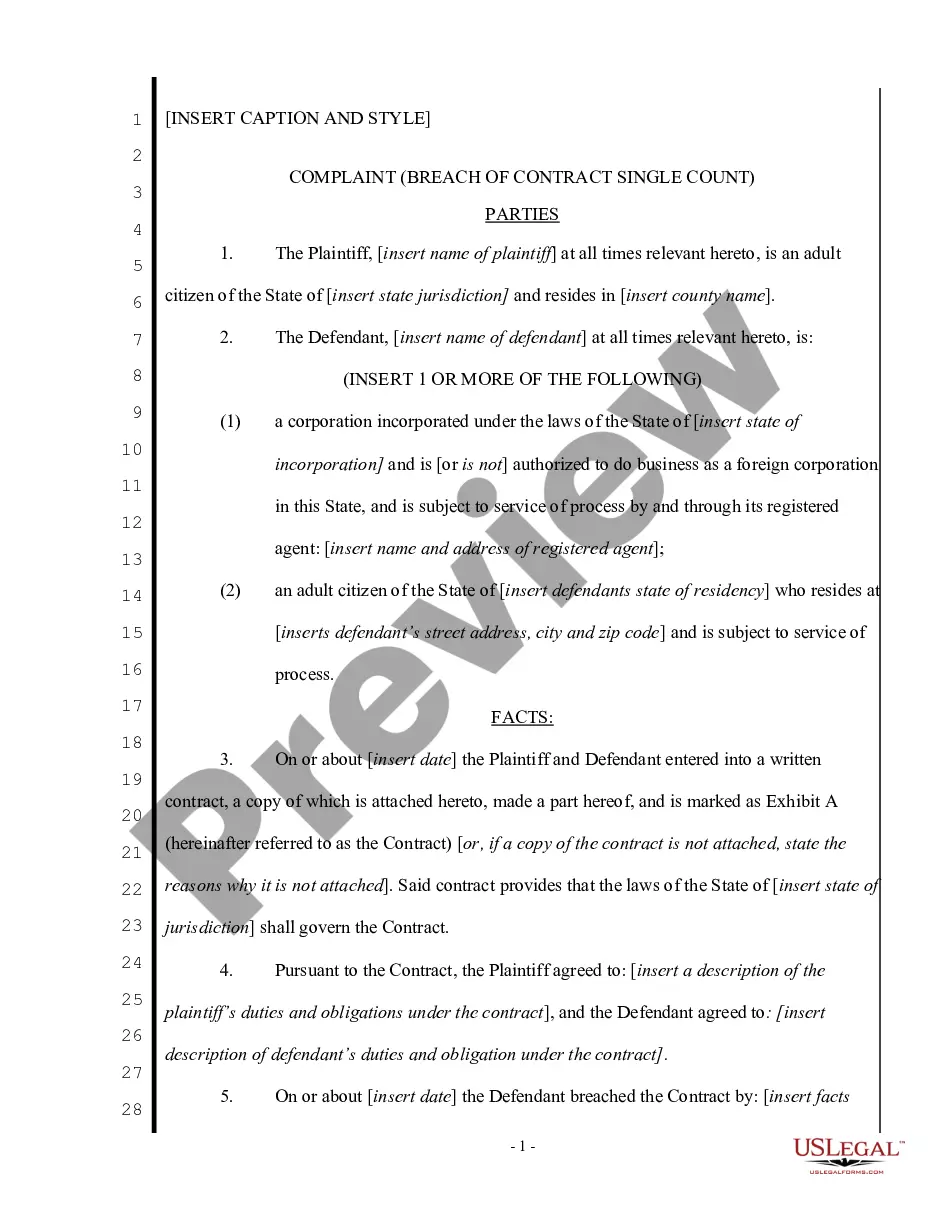
The Complaint Against Guarantor of Open Account Credit Transactions â Breach of Oral or Implied Contracts is a legal document used to file a complaint against a guarantor who has failed to fulfill their obligation on an open account. An open account involves continuous transactions where parties maintain a balance with the expectation of future dealings. This form enables the plaintiff to claim damages from the guarantor after the principal debtor defaults on payment. It is distinct from other credit-related forms as it specifically targets the guarantor's liability in connection with oral or implied contracts.
Main sections of this form
- Identification of the plaintiff and defendant.
- Details of the open account agreement and the guarantor's obligations.
- Specifics about the goods sold on credit and the corresponding transaction details.
- Documentation of the payment demand made to the principal debtor.
- Notification provided to the guarantor regarding the nonpayment.
- Request for judgment amount, including attorney fees and court costs.

When to use this document
This form is necessary when a plaintiff has entered into an open account arrangement and a guarantor has not paid for goods or services after the principal debtor has defaulted. Use this complaint when the creditor has made a formal demand for payment from the principal debtor, received no satisfaction, and wants to hold the guarantor accountable for the outstanding debt.
Who should use this form
- Creditors seeking to collect debts from a guarantor of an open account.
- Business owners who have sold goods or services on credit.
- Individuals acting as plaintiffs in a civil case against a guarantor.
- Attorneys preparing documentation on behalf of their clients in credit disputes.
Steps to complete this form
- Identify and fill in the names and contact information of the plaintiff and defendant.
- Provide details of the transaction including the goods sold and the payment terms.
- Document the date when payment was demanded from the principal debtor and record the refusal to pay.
- Attach copies of the guaranty agreement and notification letter as exhibits.
- State the total amount owed and any pertinent court costs or attorney fees.
Is notarization required?
This form does not typically require notarization unless specified by local law. It is advisable to verify any local requirements to ensure compliance.
Get your form ready online
Our built-in tools help you complete, sign, share, and store your documents in one place.
Make edits, fill in missing information, and update formatting in US Legal Forms—just like you would in MS Word.
Download a copy, print it, send it by email, or mail it via USPS—whatever works best for your next step.
Sign and collect signatures with our SignNow integration. Send to multiple recipients, set reminders, and more. Go Premium to unlock E-Sign.
If this form requires notarization, complete it online through a secure video call—no need to meet a notary in person or wait for an appointment.
We protect your documents and personal data by following strict security and privacy standards.

Make edits, fill in missing information, and update formatting in US Legal Forms—just like you would in MS Word.

Download a copy, print it, send it by email, or mail it via USPS—whatever works best for your next step.

Sign and collect signatures with our SignNow integration. Send to multiple recipients, set reminders, and more. Go Premium to unlock E-Sign.

If this form requires notarization, complete it online through a secure video call—no need to meet a notary in person or wait for an appointment.

We protect your documents and personal data by following strict security and privacy standards.
Common mistakes
- Failing to include all necessary parties in the complaint.
- Not specifying the amount owed accurately.
- Omitting required exhibits, such as the guaranty or notification letter.
- Using incorrect jurisdictional references or local law citations.
Why use this form online
- Convenience of downloading and accessing the form at any time.
- Editability to customize the template to fit specific case details.
- Reliability of forms drafted by licensed attorneys to meet legal standards.
Legal use & context
- This form serves as a formal complaint initiating legal proceedings against a guarantor.
- Invalid claims or incomplete documentation can lead to dismissal of the case.
- Properly executed agreements increase the likelihood of successful recovery in court.
Key takeaways
- The form initiates a lawsuit against a guarantor for debts owed on an open account.
- Careful completion and attachment of supporting documents are critical for legal validity.
- Consult local laws to ensure compliance and proper use in your jurisdiction.
Looking for another form?
Form popularity
FAQ
In short, debit and credit transactions are processed differently in the background. A debit transaction using your PIN (personal identification number), is an online transaction completed in real time. A credit transaction using your signature is completed offline.
Sold goods to a customer.
Credit transactions result in creation of asset (receivable) or liability (payable) in the books of accounts.For example, a manufacturer sells his goods to a wholesaler who does not pay for them immediately but is allowed a credit period of 30 days for making payment.
The merchant uses their credit card machine, software or gateway to transmit the cardholder's information and the details of the transaction to their acquiring bank, or the bank's processor.The card issuer sends a response code back through the appropriate network to the acquiring bank (or its processor).
Sold goods to a customer.
Credit is the trust that lets people give things (like goods, services or money) to other people in the hope they will repay later on. Example: Dale has a watch worth $50, and Jade wants it. But Jade can't pay straight away, so Dale lets Jade have the watch on $50 credit.
Credit, transaction between two parties in which one (the creditor or lender) supplies money, goods, services, or securities in return for a promised future payment by the other (the debtor or borrower). Such transactions normally include the payment of interest to the lender.
A transaction is a business event that has a monetary impact on an entity's financial statements, and is recorded as an entry in its accounting records. Examples of transactions are as follows: Paying a supplier for services rendered or goods delivered.Paying an employee for hours worked.