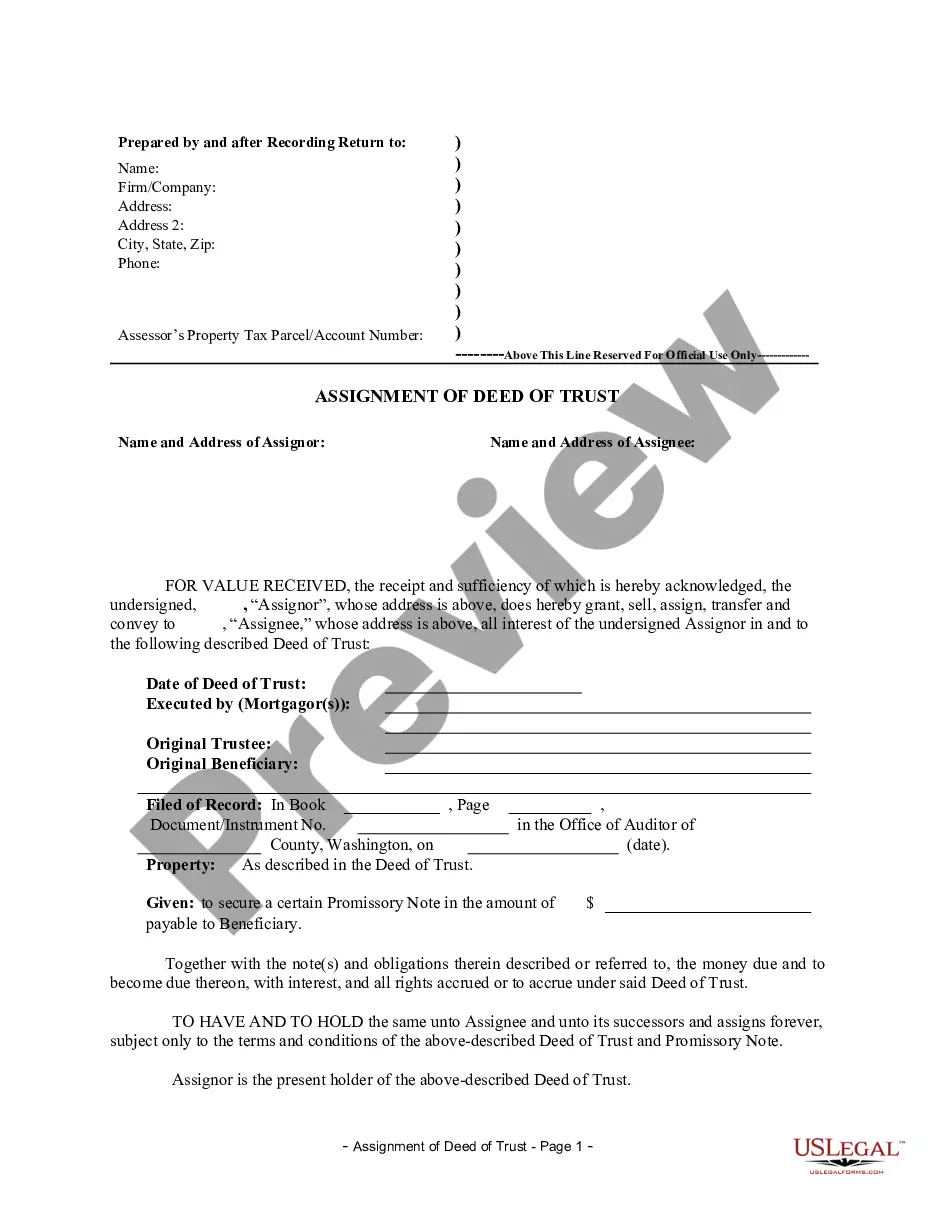
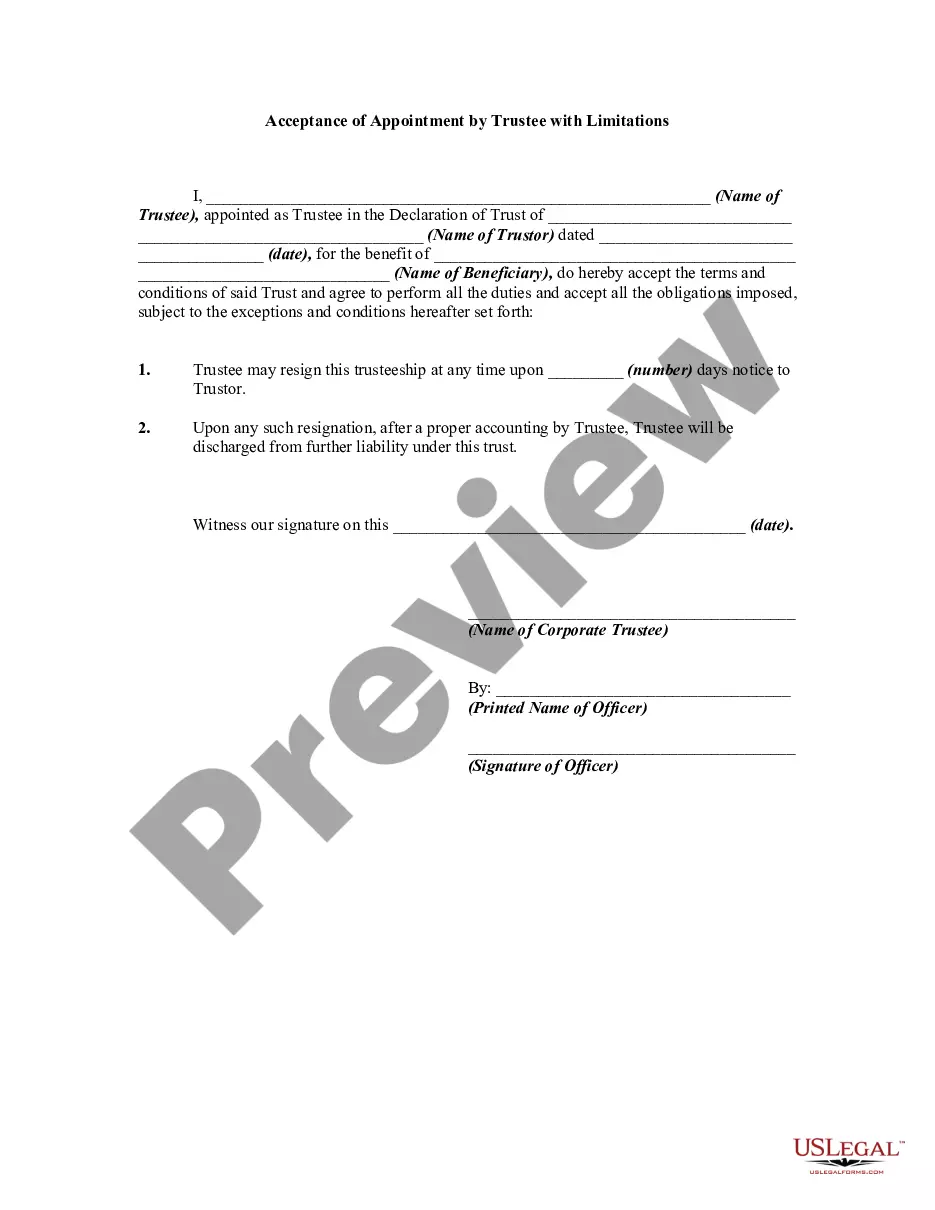
Acceptance of Appointment by Trustee with Limitations
Overview of this form
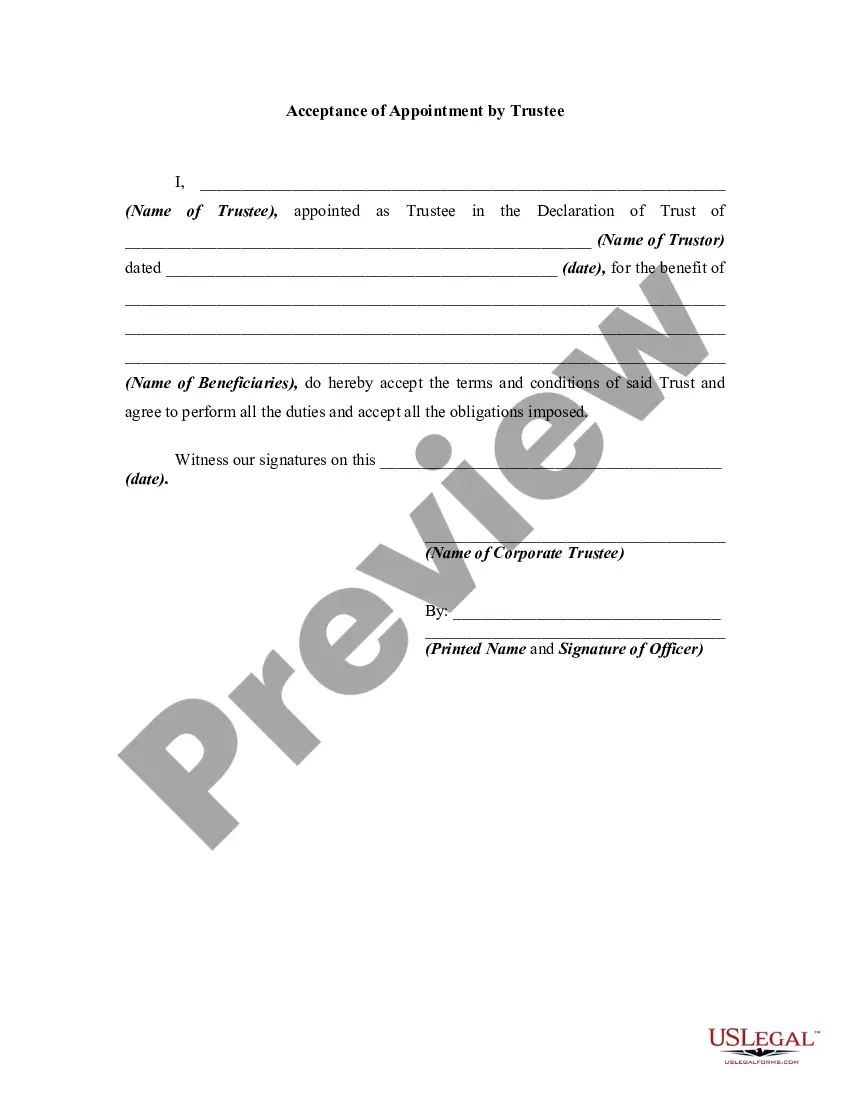
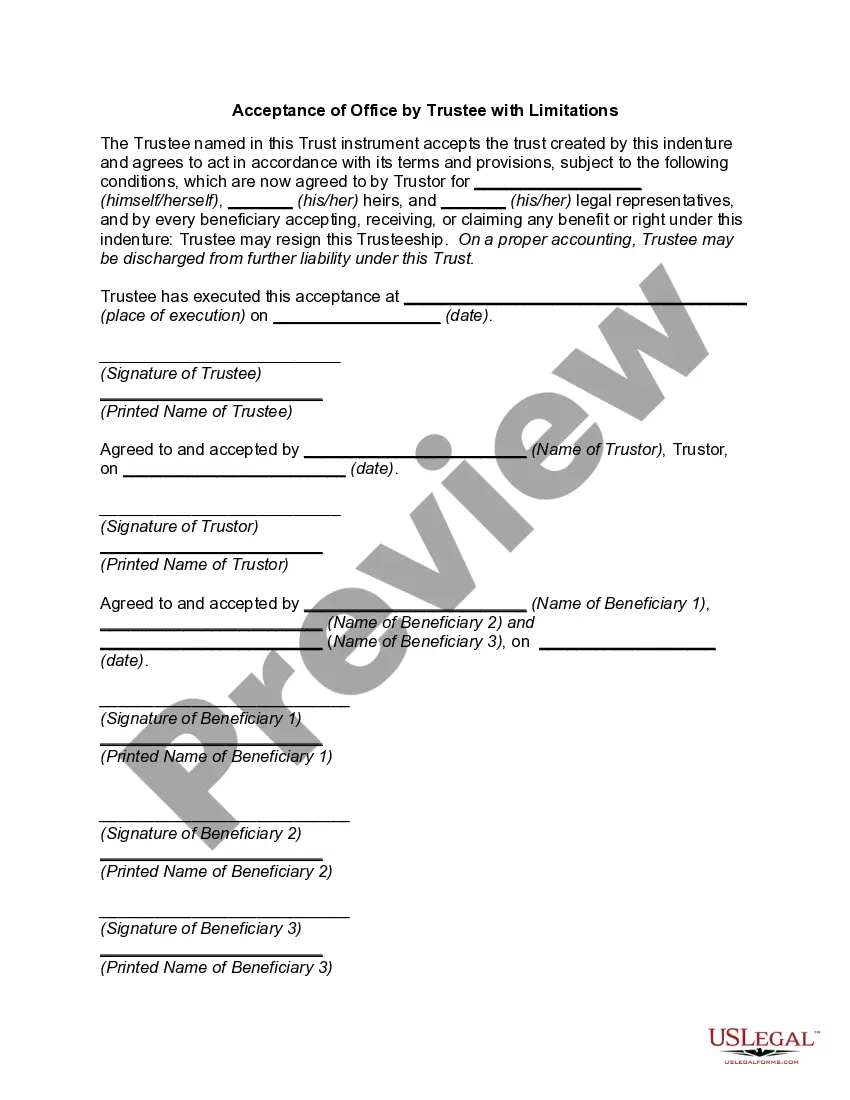
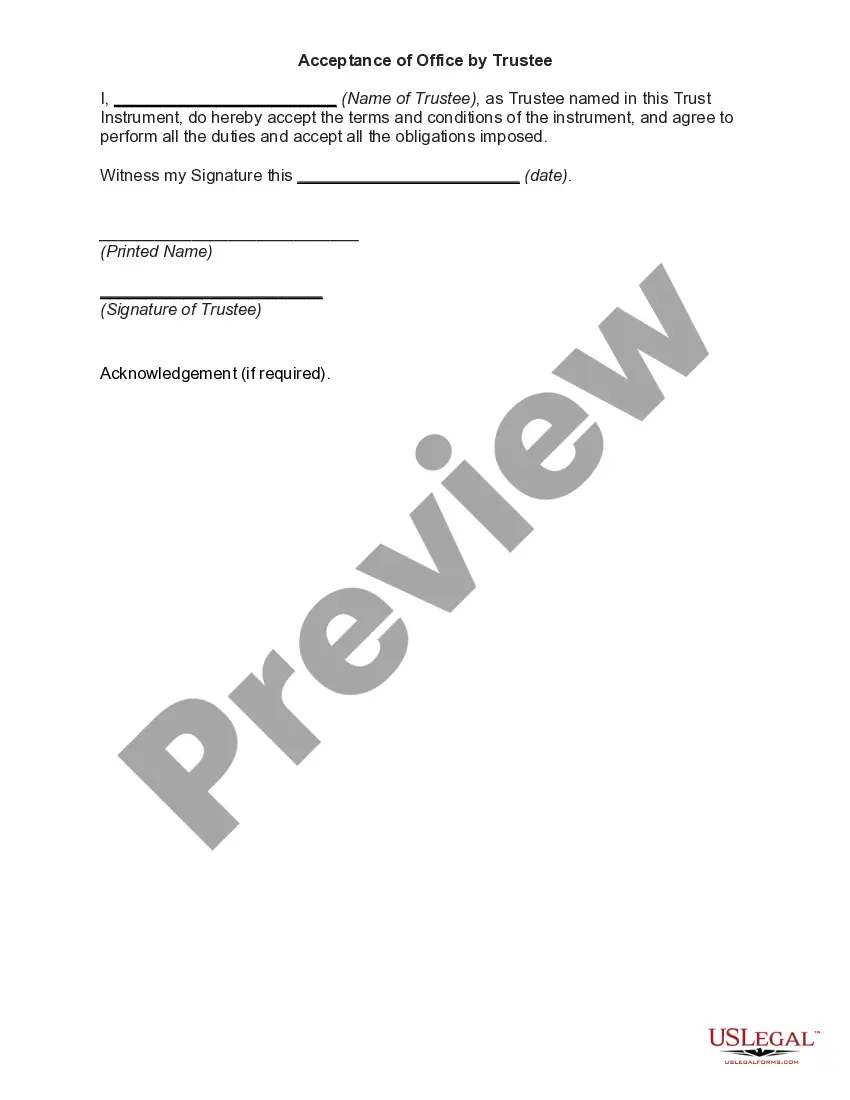
The Acceptance of Appointment by Trustee with Limitations is a legal document that confirms a person's acceptance of their appointment as trustee under a specific trust agreement. While acceptance is not required for the trust's validity, it is crucial for assigning the trustee's duties and responsibilities. This form differs from a standard trustee acceptance as it includes specific limitations and conditions that govern the trustee's role, ensuring clarity in their obligations.
Form components explained
- Name of the trustee accepting the role
- Details of the trust, including the trustor's name and the trust's date
- Agreement to perform duties with specified limitations
- Provisions for resignation and discharge of liability
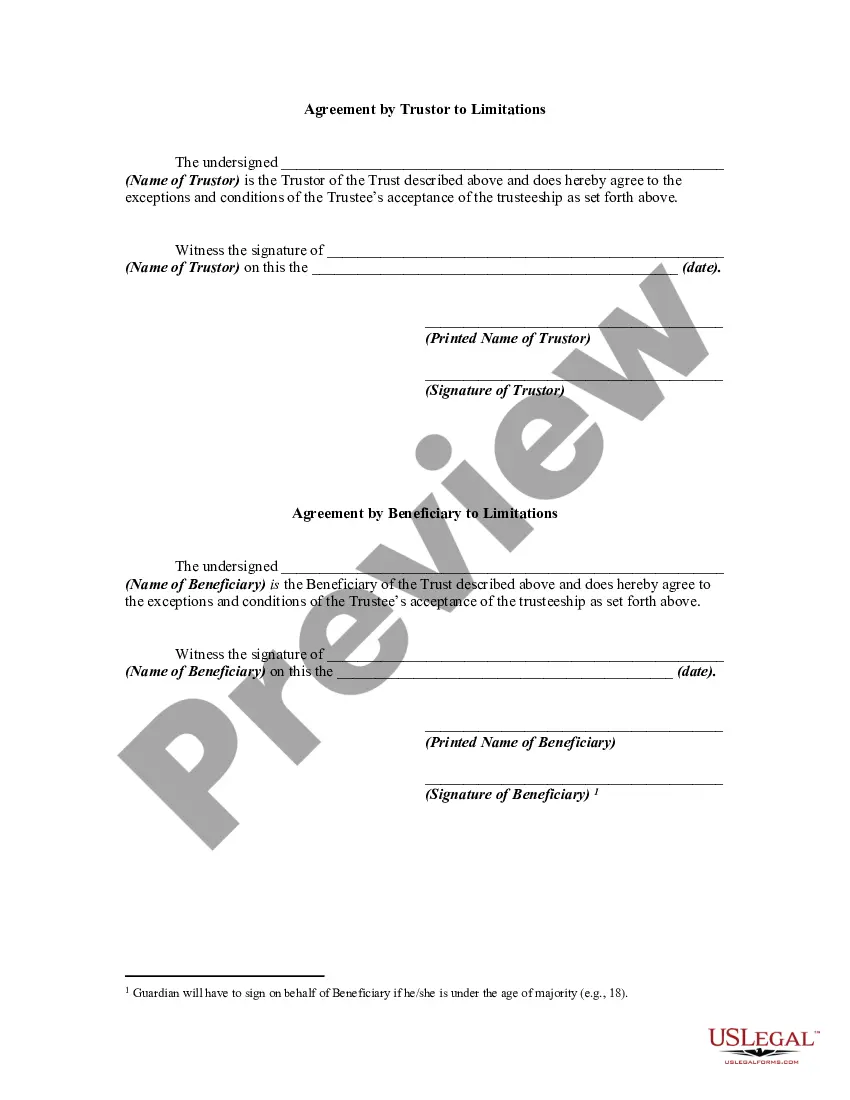
- Agreement from the trustor and beneficiary to the terms
Common use cases
You should use the Acceptance of Appointment by Trustee with Limitations when you have been appointed as a trustee and wish to formally accept the role while setting forth specific limitations. This is pertinent in situations where the trust agreement outlines particular conditions that must be acknowledged by the trustee, trustor, and beneficiary.
Who can use this document
- Individuals designated as trustees in a trust agreement
- Trustors who wish to clarify the scope of a trustee's responsibilities
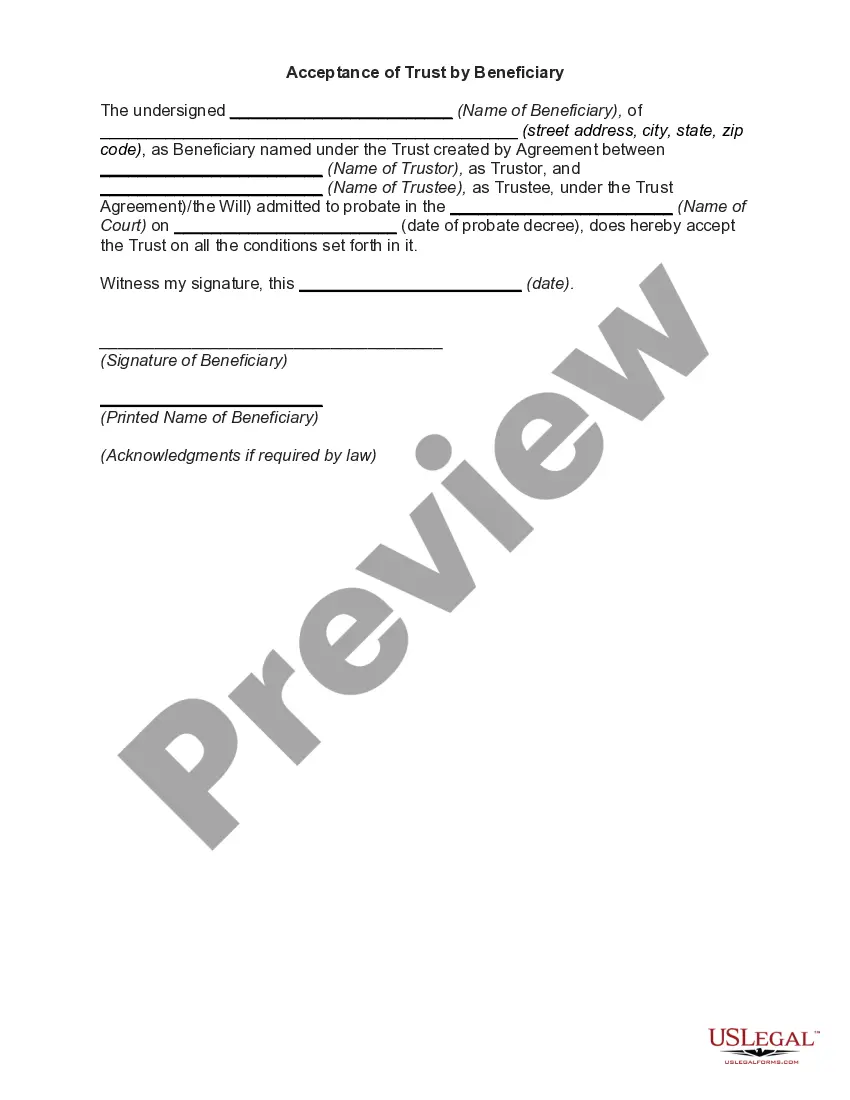
- Beneficiaries who want to acknowledge the terms of the trustee's acceptance
Instructions for completing this form
- Identify the parties involved: the trustee, trustor, and beneficiary
- Complete the date and title of the trust
- Fill in specific limitations related to the trustee's acceptance
- Ensure that all parties sign and date the form
- Consider obtaining any necessary witness or notarization signatures
Does this document require notarization?
This form usually doesn’t need to be notarized. However, local laws or specific transactions may require it. Our online notarization service, powered by Notarize, lets you complete it remotely through a secure video session, available 24/7.
Get your form ready online
Our built-in tools help you complete, sign, share, and store your documents in one place.
Make edits, fill in missing information, and update formatting in US Legal Forms—just like you would in MS Word.
Download a copy, print it, send it by email, or mail it via USPS—whatever works best for your next step.
Sign and collect signatures with our SignNow integration. Send to multiple recipients, set reminders, and more. Go Premium to unlock E-Sign.
If this form requires notarization, complete it online through a secure video call—no need to meet a notary in person or wait for an appointment.
We protect your documents and personal data by following strict security and privacy standards.

Make edits, fill in missing information, and update formatting in US Legal Forms—just like you would in MS Word.

Download a copy, print it, send it by email, or mail it via USPS—whatever works best for your next step.

Sign and collect signatures with our SignNow integration. Send to multiple recipients, set reminders, and more. Go Premium to unlock E-Sign.

If this form requires notarization, complete it online through a secure video call—no need to meet a notary in person or wait for an appointment.

We protect your documents and personal data by following strict security and privacy standards.
Common mistakes to avoid
- Failing to include specific limitations on the trustee's acceptance
- Not having all parties sign the document
- Using outdated or incorrect versions of the form
Benefits of using this form online
- Immediate access to the most current legal templates
- Edit and customize the form to meet your specific needs
- Downloadable for convenience and ease of use
Legal use & context
This form solidifies the trustee's acceptance while outlining limitations, ensuring all parties have a clear understanding of their roles and responsibilities. As with any legal document, the enforceability of this form may vary based on jurisdiction, highlighting the importance of adaptability to local laws.
What to keep in mind
- This form is essential for defining a trustee's acceptance of their role with specific limitations.
- Proper completion involves clear identification of parties, conditions, and witness signatures.
- Consult local laws to ensure the form meets jurisdictional requirements.
Looking for another form?


Form popularity
FAQ
Trustees must act unanimously unless the trust document provides otherwise. A beneficiary should not benefit from the trust at the expense of another beneficiary and therefore beneficiaries of the same class must be treated equally and beneficiaries of different classes must be treated fairly.
If you're asked to be a trustee If someone asks you to be a trustee, it usually means they trust you to do the right thing for them and the people who benefit from the trust.You must agree with all of the other trustees when making trust decisions.
A limited power of appointment allows the holder to direct distributions to certain people, or a certain class of people such as children and grandchildren under specified circumstances.
A person appointed as trustee does not have to accept the appointment. He or she can decline to serve, usually by written instrument. After appointment and acceptance, a trustee may resign, generally only by a written instrument. A trustee may also be removed according to the terms of the trust or by court action.
It depends on the terms of the trust. If the trust designates that the trustees are to act together, and not independently, then yes, a signature by both trustees are required in order to transfer property out of the trust.
Under California Probate Code section 15642, if hostility or lack of cooperation among family member co-trustees impairs trust administration to the detriment of the beneficiaries, the court can end the gridlock by removing all of the co-trustees and appointing a third party to serve as sole successor trustee.
A power of appointment or power of appointment trust is a legally binding provision contained in a trust which gives a surviving spouse or other beneficiary the authority to change the ultimate beneficiaries of a trust.
There is no specific language needed to create a general power of appointment. The trustee just has to make sure that the exercise of the power is unrestricted.An inter vivos power of appointment must be exercised during the donee's life. The testamentary power of appointment must be exercised by the donee's will.
Write a salutation followed by a colon, for example, "Dear Mr. Jones:"If you'd rather type the letter and print it out instead of writing it by hand, you can do that if you wish. Identify yourself as the trustor of the revocable trust in the body of the letter. State your purpose for requesting money from your trust.