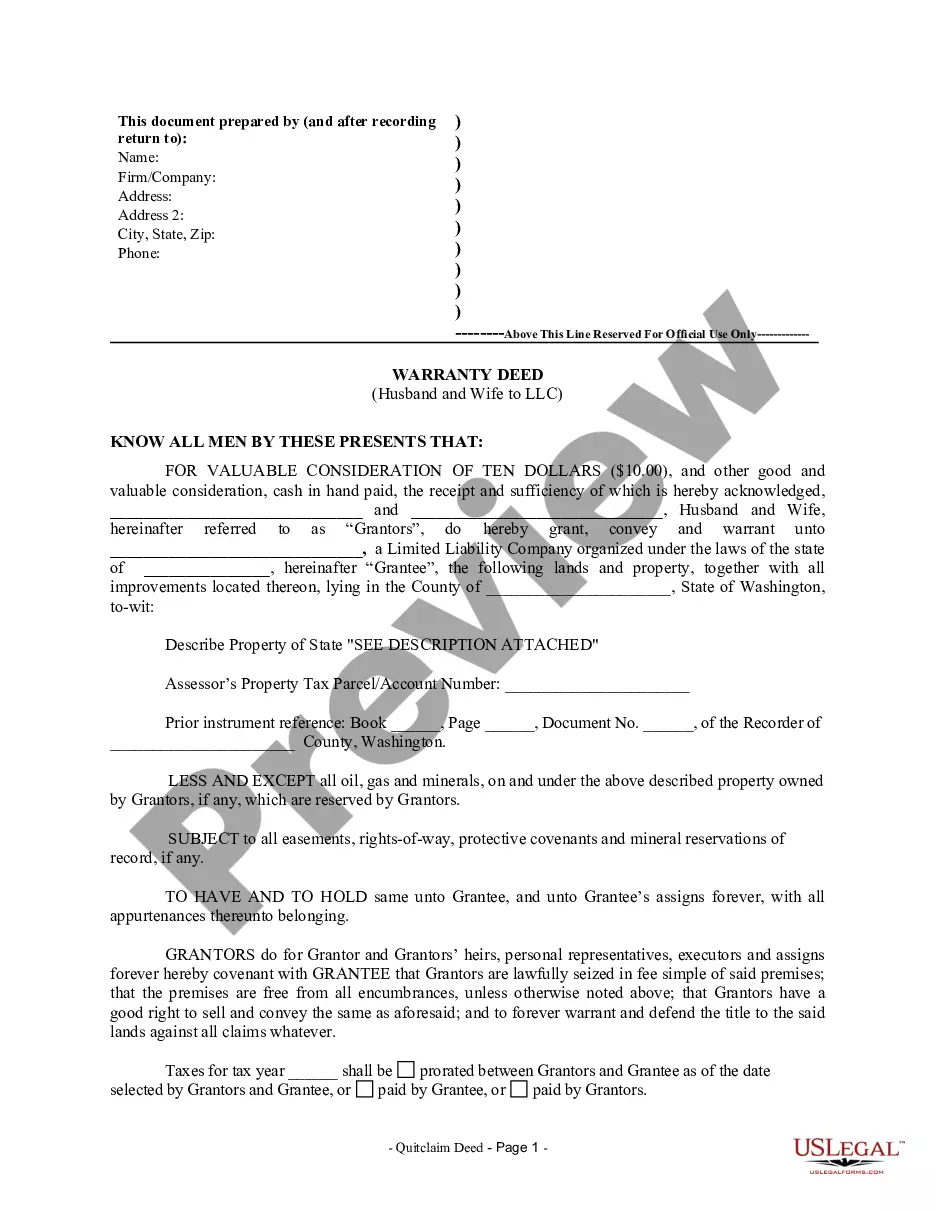
Amendment to Trust Agreement in Order to Add Property from Inter Vivos Trust and Consent of Trustee
What is this form?
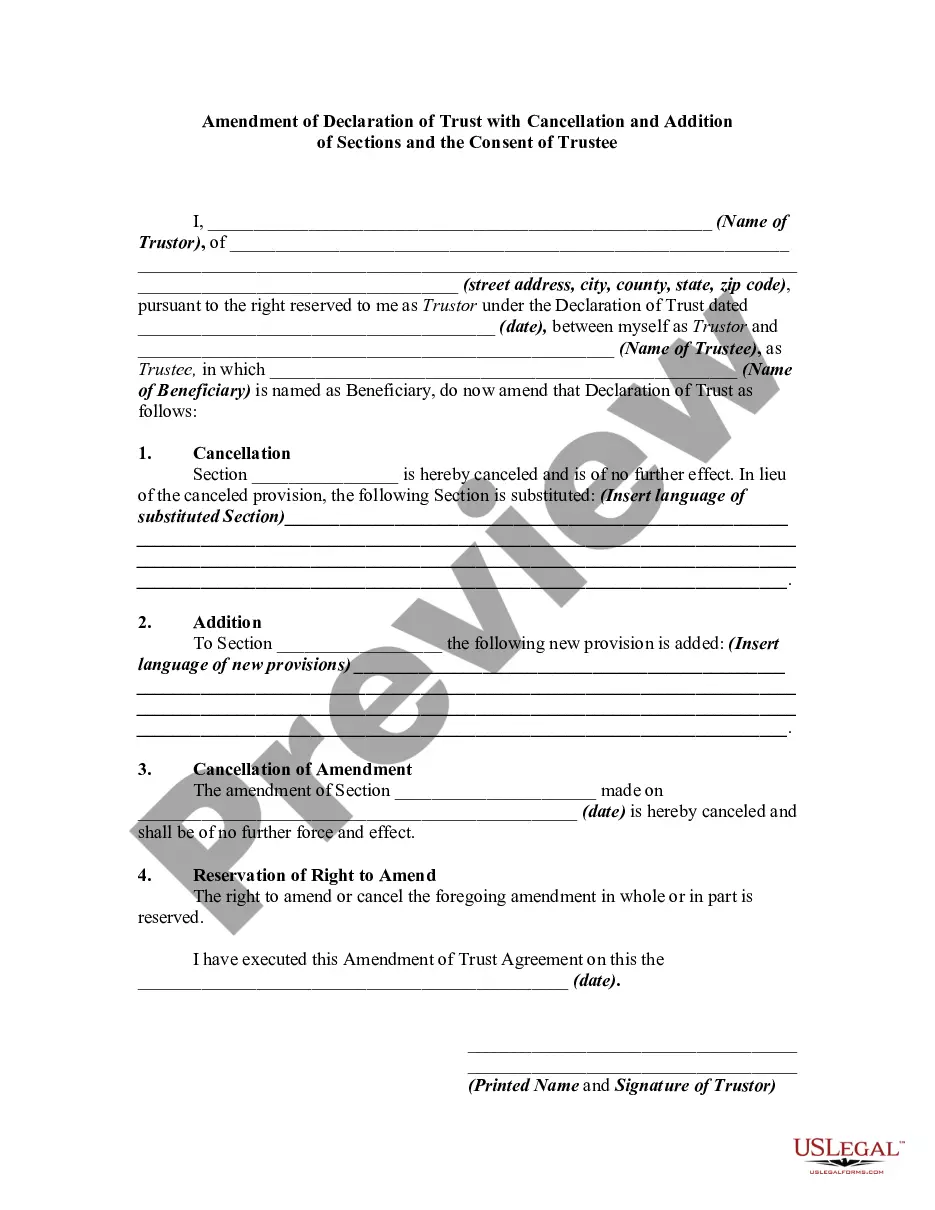
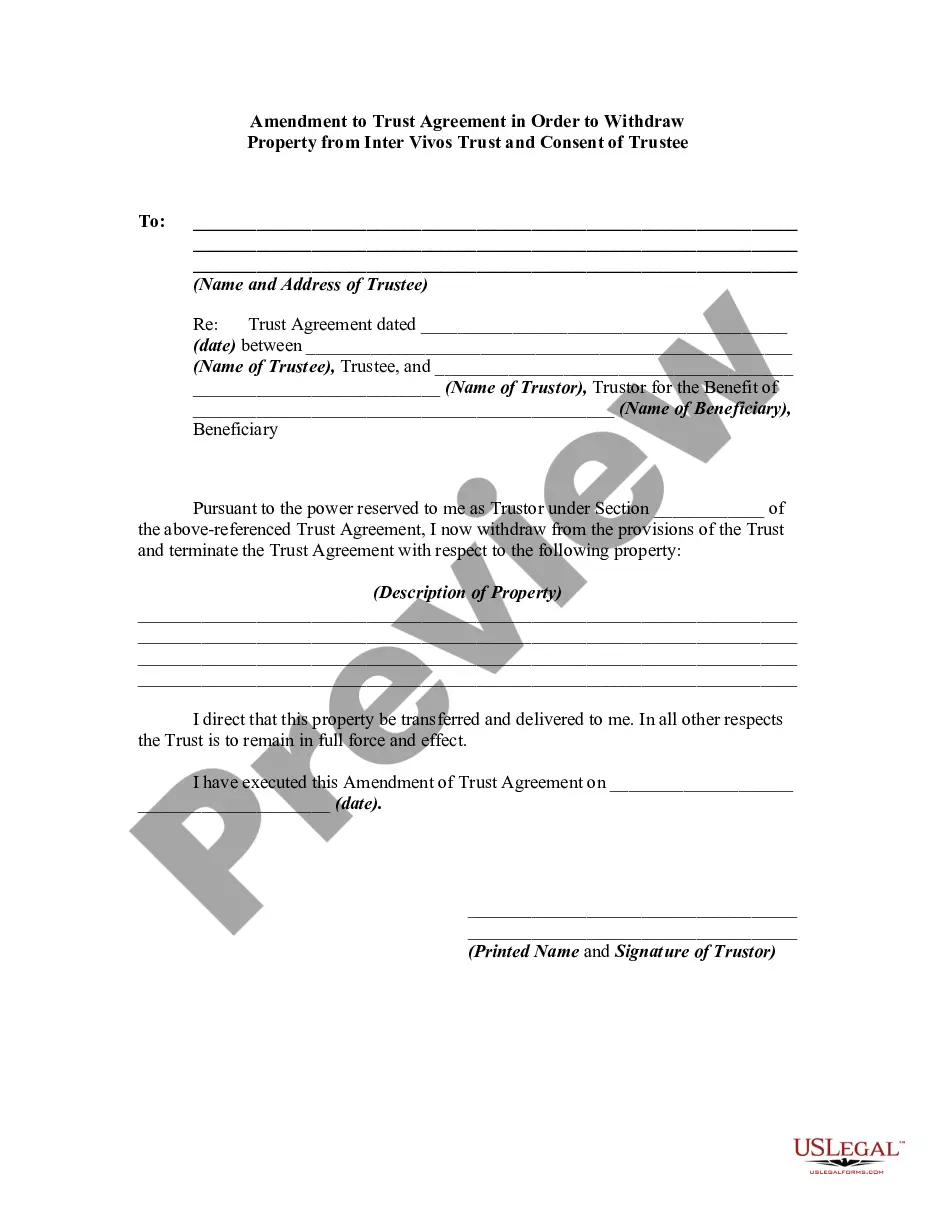
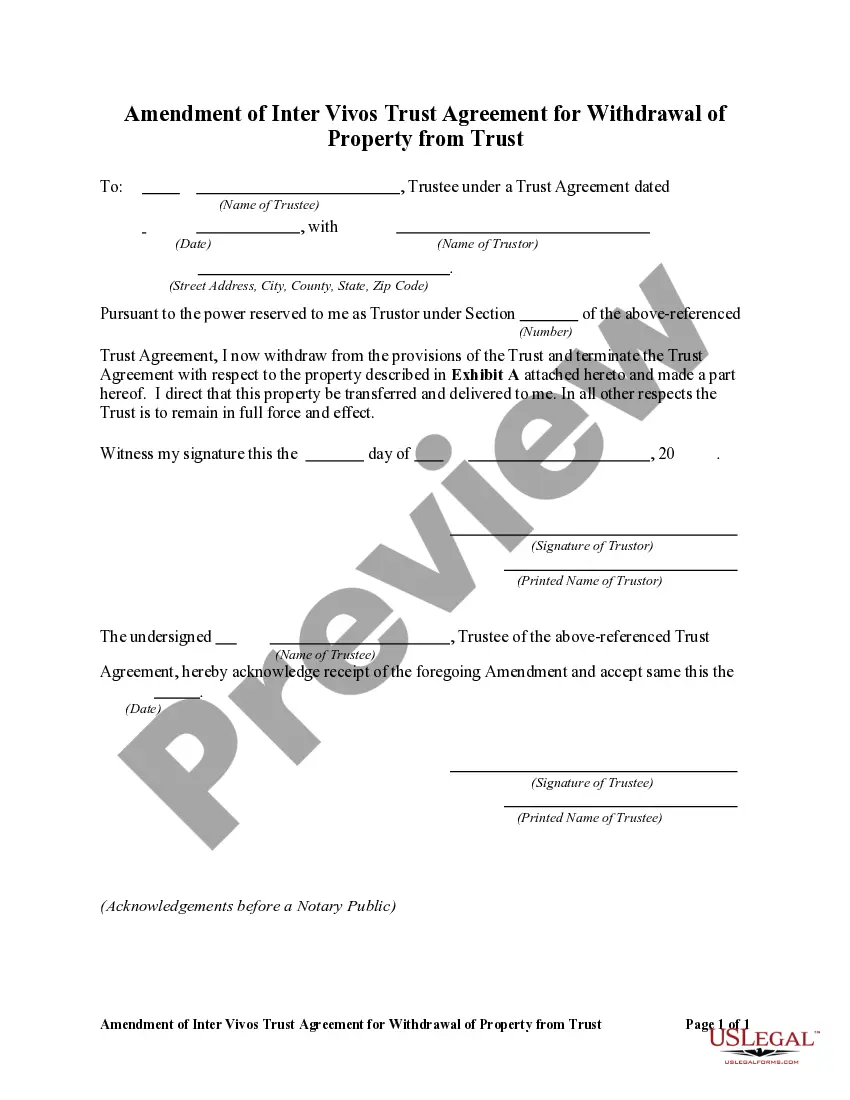
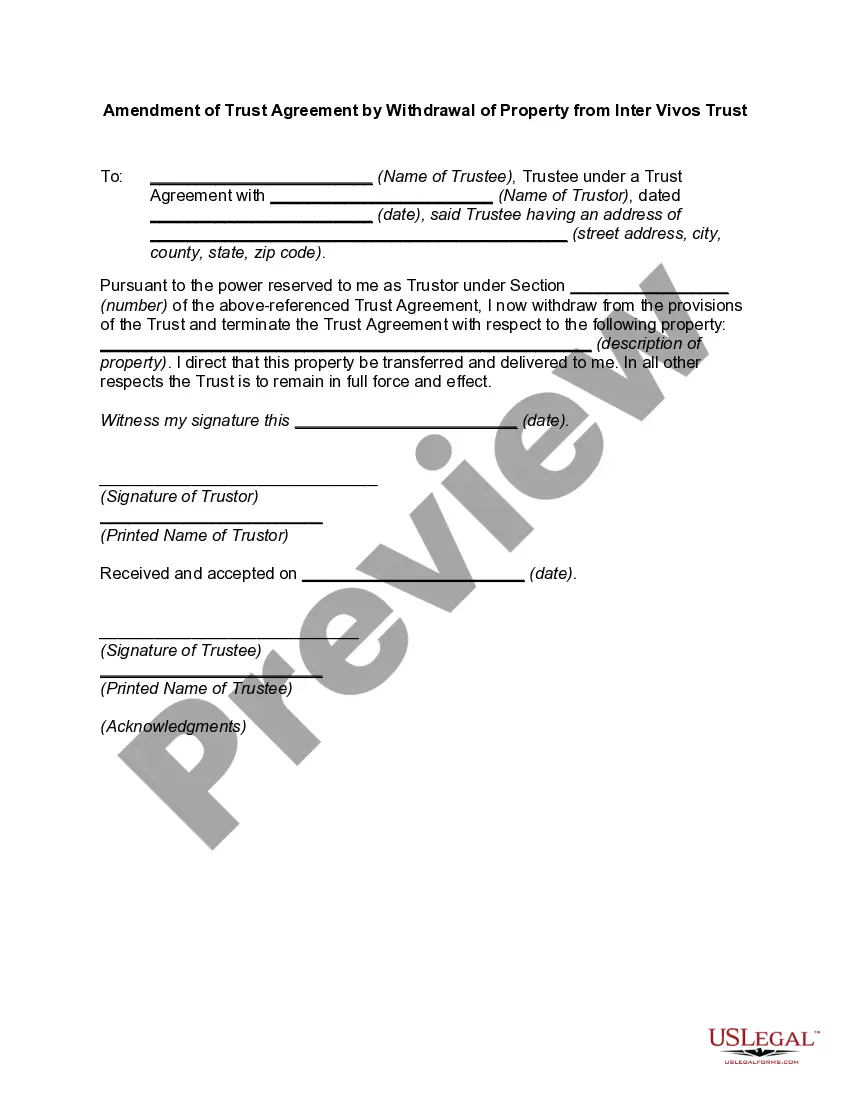
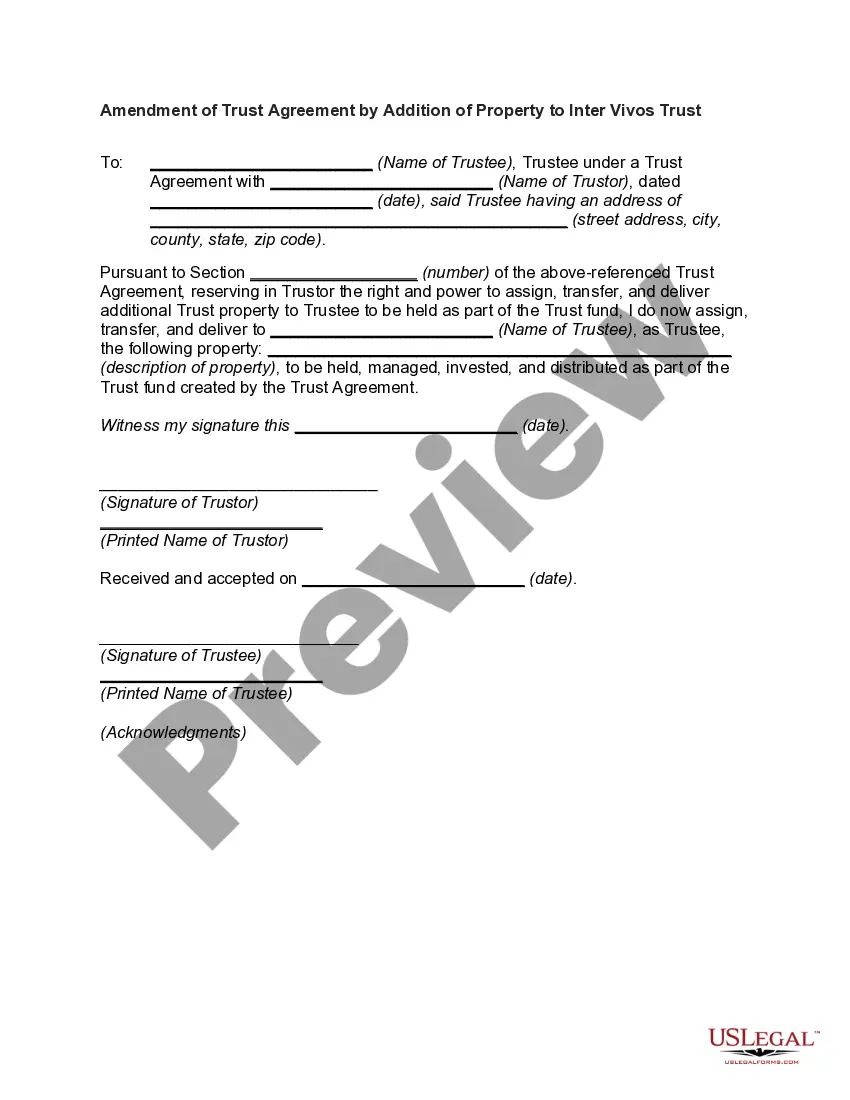
The Amendment to Trust Agreement in Order to Add Property from Inter Vivos Trust and Consent of Trustee is a legal document used to modify an existing trust agreement. Its primary purpose is to allow the trustor to add new property to the trust. This form ensures that the amendment is clearly documented and meets the requirements outlined in the original trust agreement. Unlike standard trust forms, this specific amendment explicitly addresses the addition of property, making it suitable for changing circumstances relating to the trust's assets.
Key parts of this document
- Name and address of the trustee.
- Date of the original trust agreement.
- Name of the trustor and beneficiary.
- Description of the property being added to the trust.
When this form is needed
This form should be used when a trustor wishes to formally incorporate additional property into an existing trust. Scenarios include acquiring new assets that the trustor wants to include for effective management or distribution by the trustee. It is particularly useful when the trust will benefit from additional property or when the initial trust instrument allows for amendments to be made.
Who should use this form
- Trustors who wish to add property to their existing trust.
- Trustees who need to accept new property into the trust fund.
- Beneficiaries who are involved in the management of the trust's assets.
How to prepare this document
- Identify the parties: Clearly state the names and addresses of the trustee and trustor.
- Specify the original trust agreement: Enter the date and details of the existing trust agreement.
- Describe the property: Provide a comprehensive description of the property to be added to the trust.
- Sign the document: Ensure both the trustor and trustee sign the amendment for it to be executed.
- Notarize if necessary: Incorporate notarization of signatures to enhance the document's validity if required.
Notarization guidance
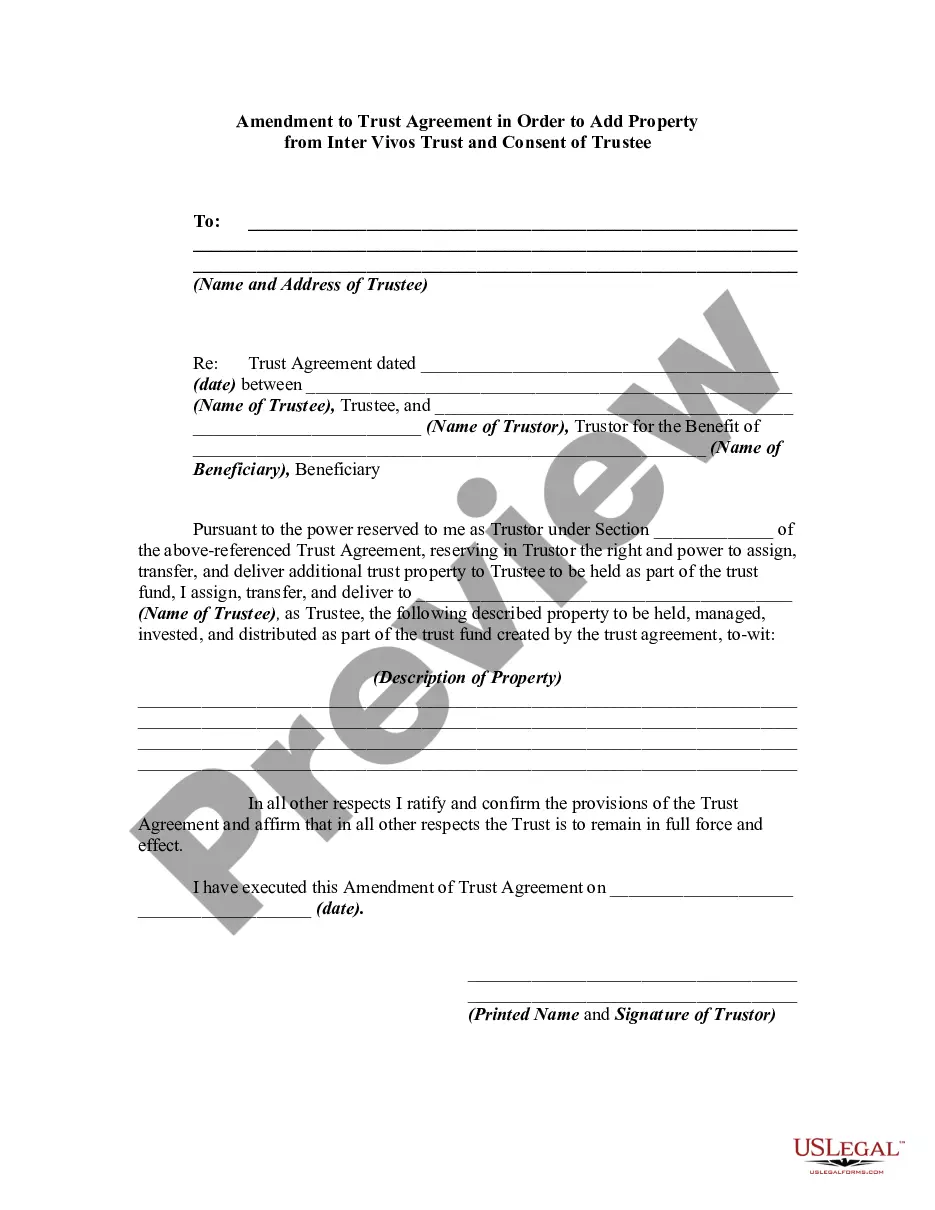
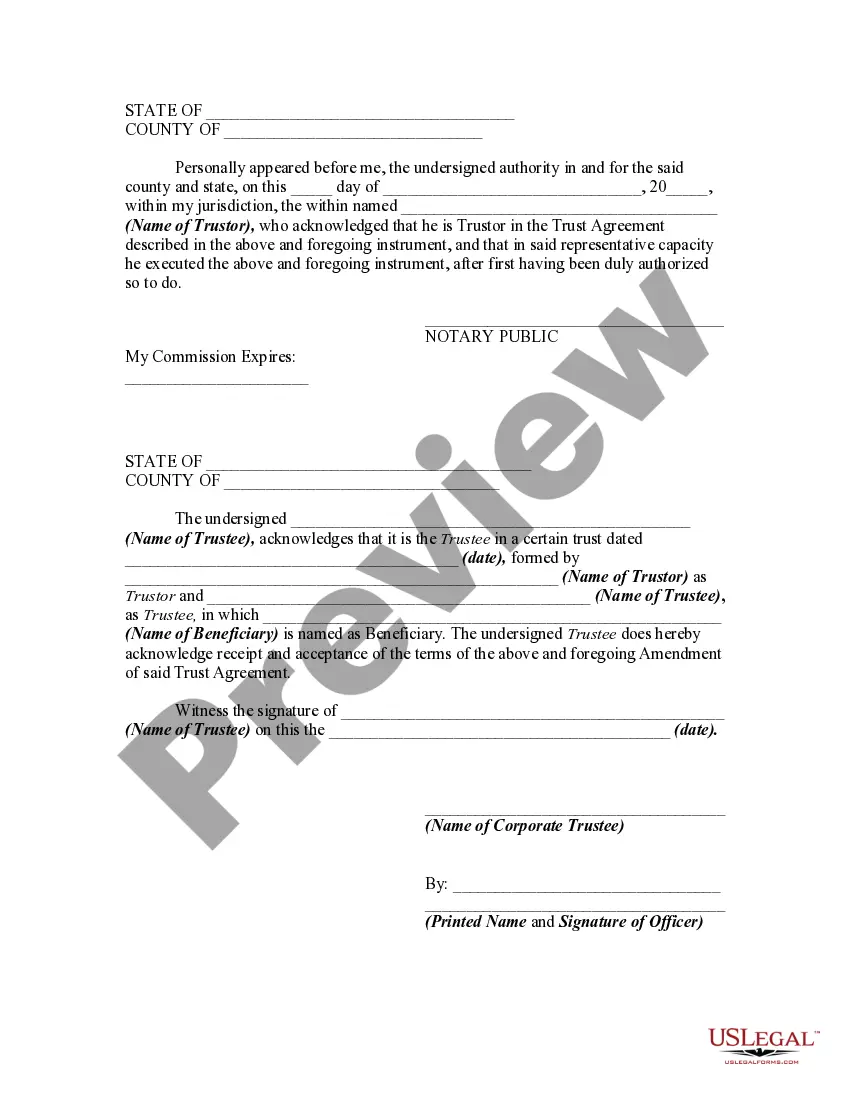
To make this form legally binding, it must be notarized. Our online notarization service, powered by Notarize, lets you verify and sign documents remotely through an encrypted video session.
Get your form ready online
Our built-in tools help you complete, sign, share, and store your documents in one place.
Make edits, fill in missing information, and update formatting in US Legal Forms—just like you would in MS Word.
Download a copy, print it, send it by email, or mail it via USPS—whatever works best for your next step.
Sign and collect signatures with our SignNow integration. Send to multiple recipients, set reminders, and more. Go Premium to unlock E-Sign.
If this form requires notarization, complete it online through a secure video call—no need to meet a notary in person or wait for an appointment.
We protect your documents and personal data by following strict security and privacy standards.

Make edits, fill in missing information, and update formatting in US Legal Forms—just like you would in MS Word.

Download a copy, print it, send it by email, or mail it via USPS—whatever works best for your next step.

Sign and collect signatures with our SignNow integration. Send to multiple recipients, set reminders, and more. Go Premium to unlock E-Sign.

If this form requires notarization, complete it online through a secure video call—no need to meet a notary in person or wait for an appointment.

We protect your documents and personal data by following strict security and privacy standards.
Typical mistakes to avoid
- Failing to include a detailed description of the property being added.
- Not obtaining required signatures from both the trustor and trustee.
- Ignoring local legal requirements for trust amendments.
Why complete this form online
- Convenience of downloading the form from anywhere, anytime.
- Editability allows customization to fit individual circumstances.
- Access to forms drafted by licensed attorneys, ensuring reliability.
- Easy storage of your legal documents in digital format.
Summary of main points
- The form is essential for adding property to an existing trust.
- Proper identification and description of assets are crucial for clarity.
- Both the trustor and trustee must sign the amendment for it to be enforceable.
Looking for another form?
Form popularity
FAQ
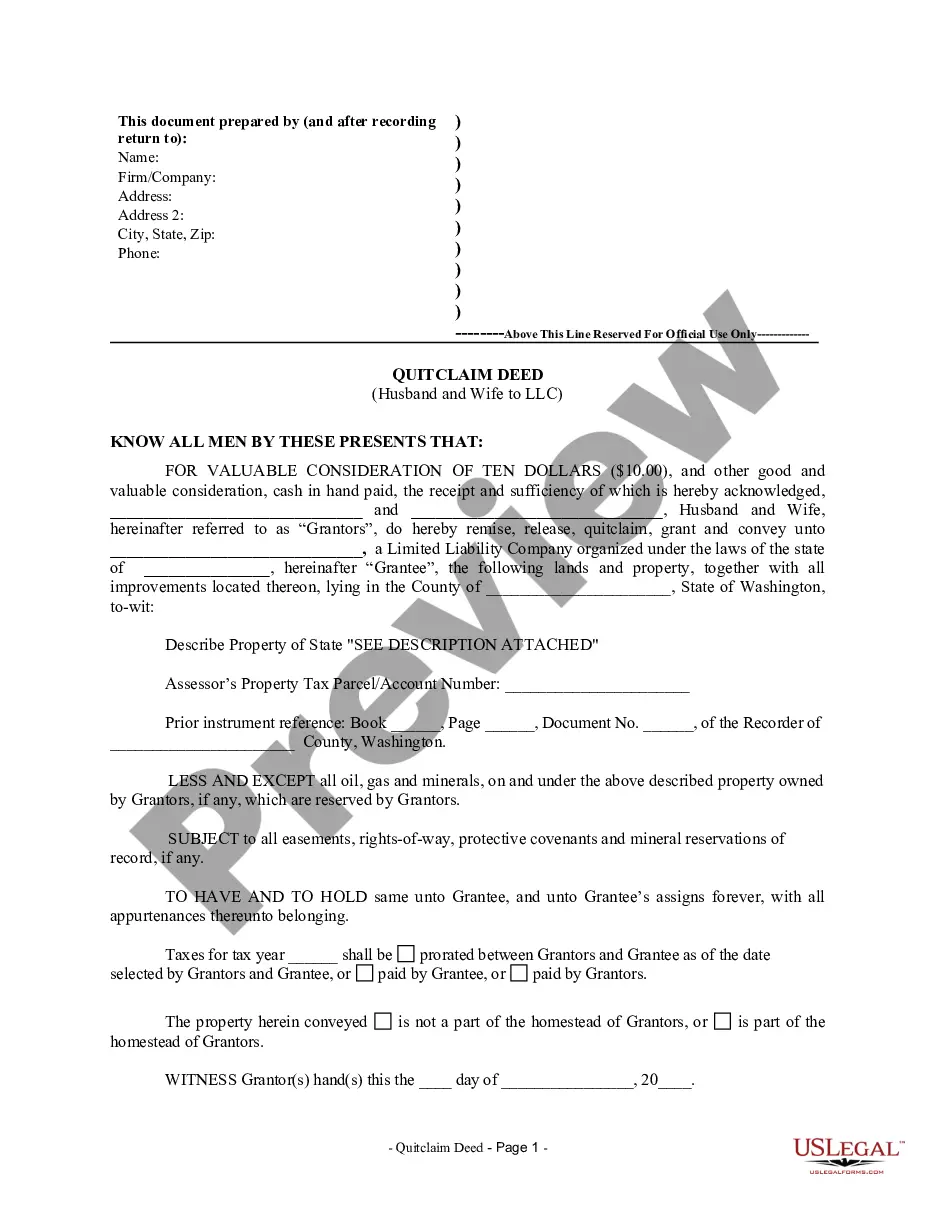
Transferring Real Property to a Trust You can transfer your home (or any real property) to the trust with a deed, a document that transfers ownership to the trust. A quitclaim deed is the most common and simplest method (and one you can do yourself).
Assets Held in the Trustee's Name Kahane Revocable Living Trust or the Nessler Family Trust. In particular, look for a list of assets at the end of the document. It will likely be labeled Schedule A or something similar, and should list the items the person who set up the trust intended to hold in the trust.
Find living trust forms online. Be as clear as possible. Include specific language. Have the amendment notarized. Keep your trust document and amendment together in a safe place. Alternatively, do what is called a restatement of the trust. Revoke your trust.
When you want to change your revocable trust through an amendment, you will need to make it official before it can be used. To make the document legally binding, you will need to have it notarized. The original trust document was notarized and any amendments to that document must also be notarized.
You can make changes to your trust in one of three ways.Sign a complete trust restatement that's valid under your applicable state law. Sign a complete revocation of the original trust agreement and any amendments, then transfer the assets held in the revoked trust back into your own name.
Of course you can, however, "Codicil" is an amendment to a will. Amending a trust called "Amendment" to the trust, even if it is just amending a trustee's name. It needs to be notarized and some specific language to be sufficient.
Locate the original trust. The grantor must locate the original trust documents and identify the specific provisions that require amendment. Prepare an amendment form. Get the amendment form notarized. Attach amendment form to original trust.
An amendment to a trust is not required to be notarized or witnessed unless the terms of the original trust require it.
Just about any writing will suffice to make a valid Trust amendment. Having the writing typed is not legally required. That's really the point of Trust amendments, to allow a Settlor to express his or her intent as easily as possible. As long as the Trust terms are followed, any writing will do.