Appointment of Successor Trustee By Original Trustor in a Trust Agreement
What this document covers
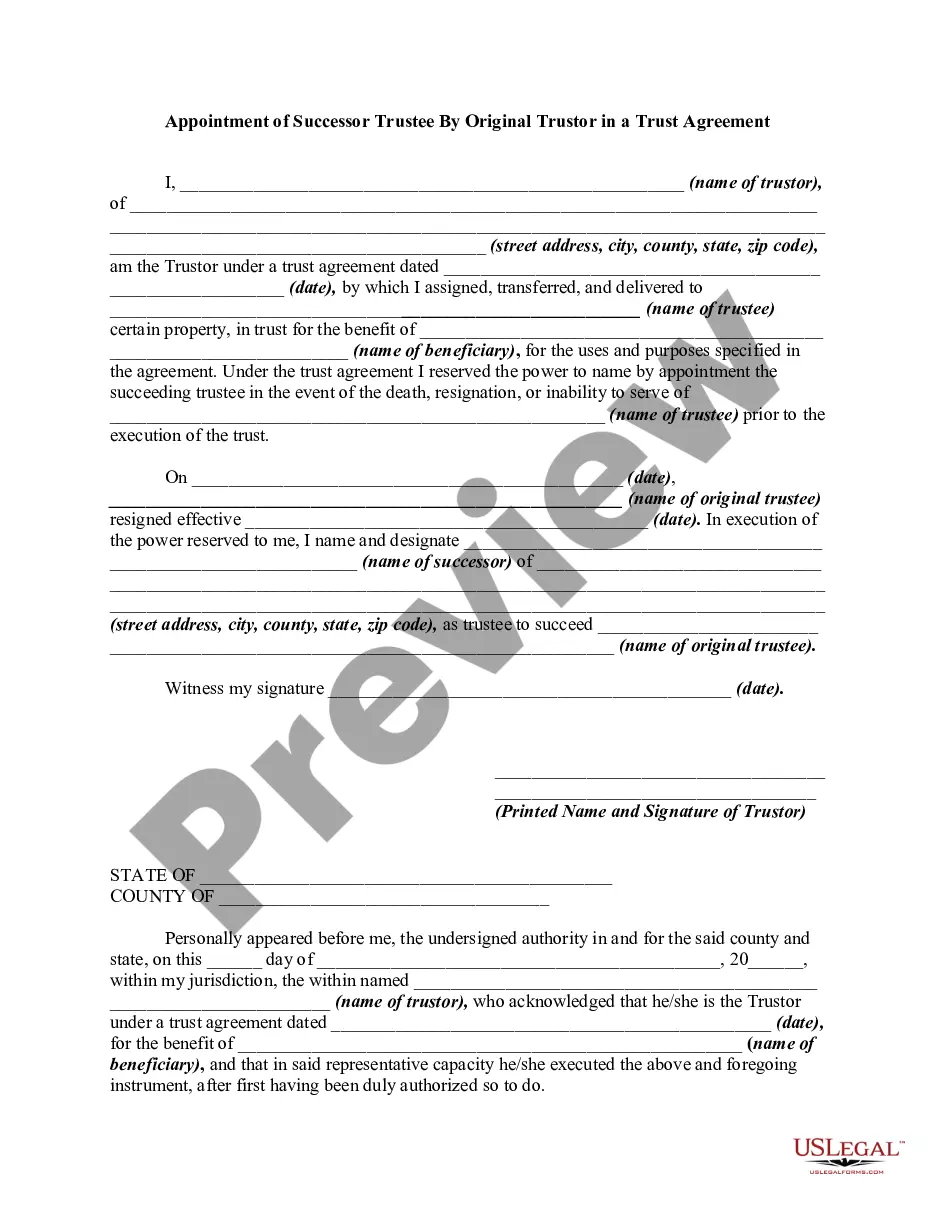
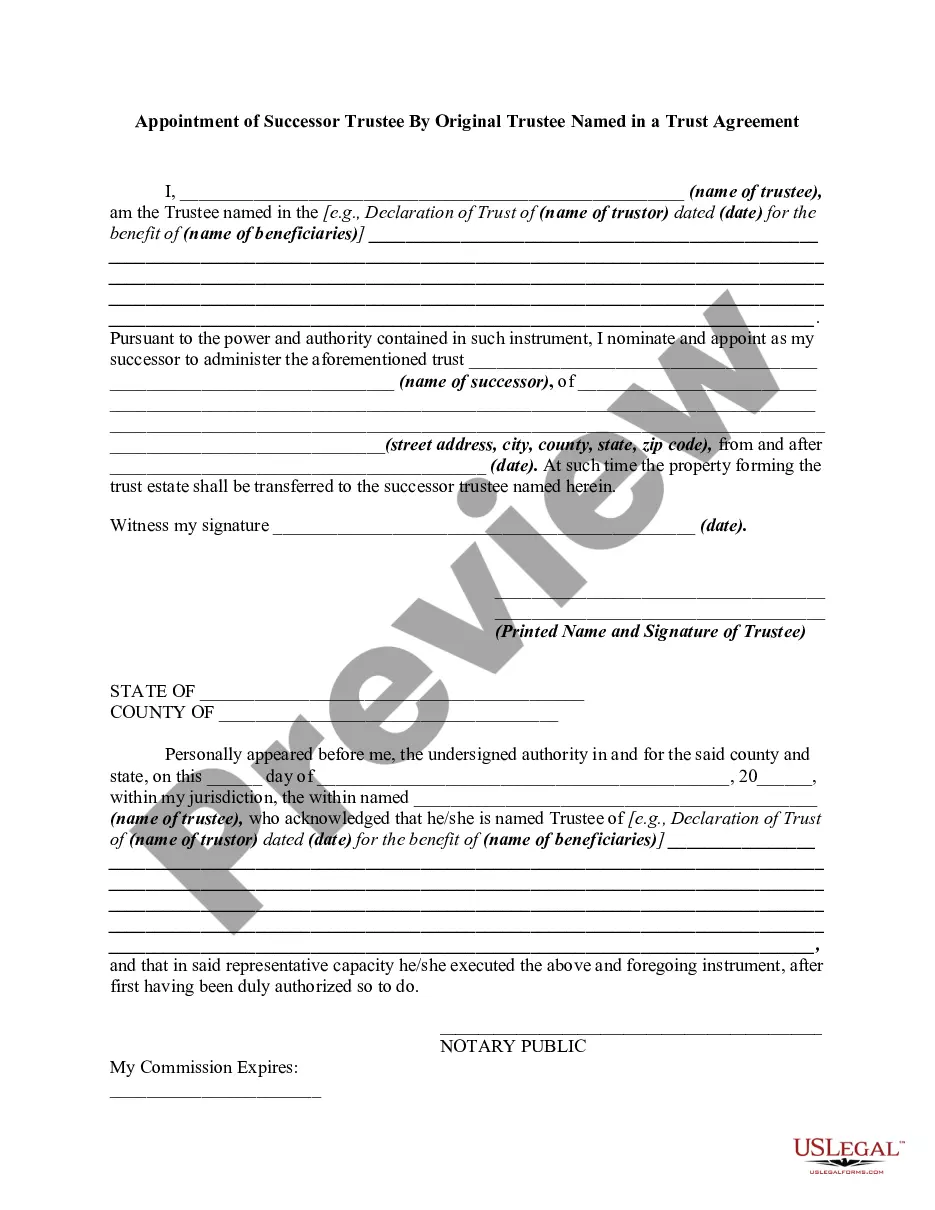
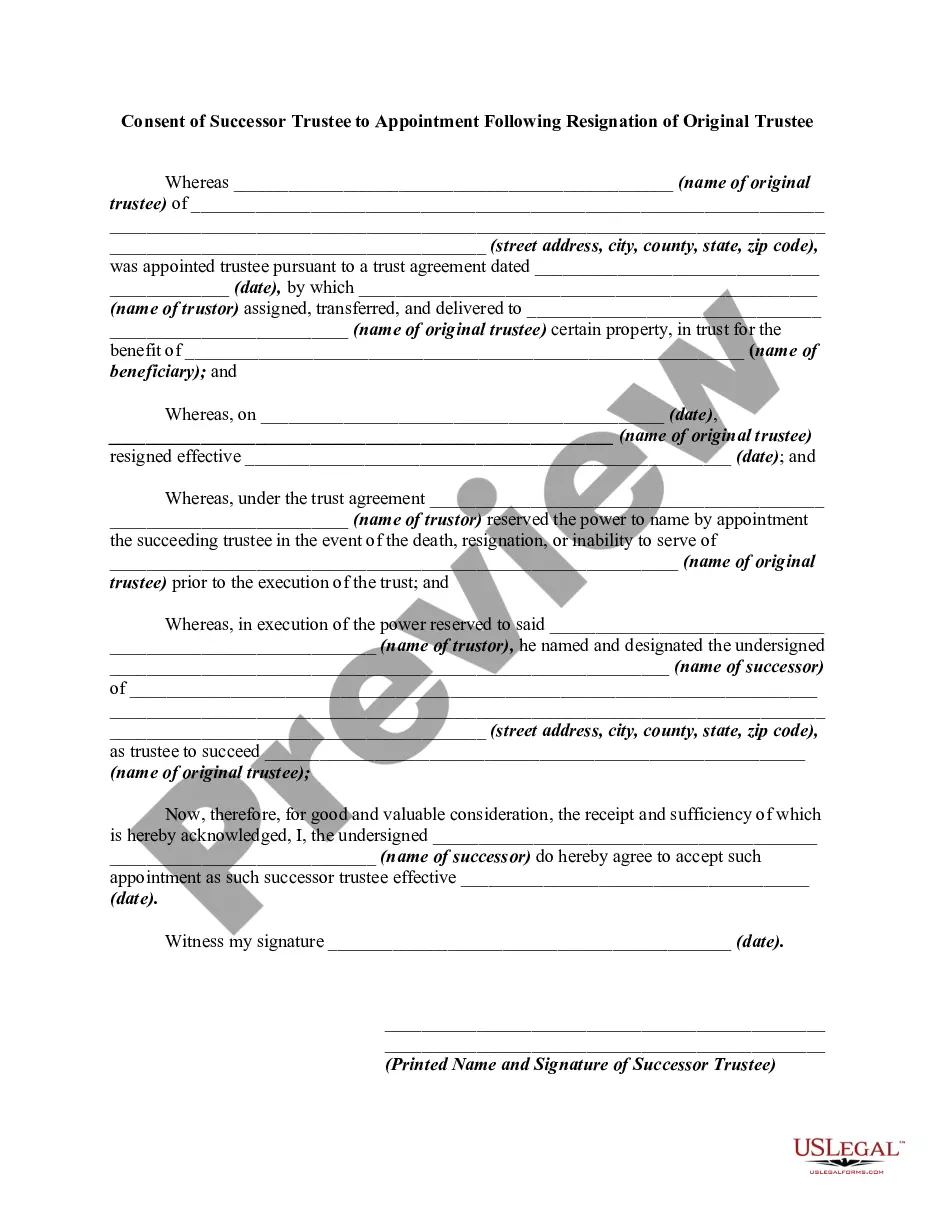
The Appointment of Successor Trustee By Original Trustor in a Trust Agreement is a legal document used to appoint a new trustee when the original trustee is unable to continue their duties. This form ensures that the trust remains managed according to the trustor's wishes after the resignation, death, or incapacity of the original trustee. It is essential to follow the specific terms outlined in the trust agreement regarding succession to maintain the integrity of the trust.
Form components explained
- Name and details of the trustor.
- Details of the original trust agreement.
- Name of the original trustee and reason for their resignation.
- Name and details of the new successor trustee.
- Signature and acknowledgment from the trustor.
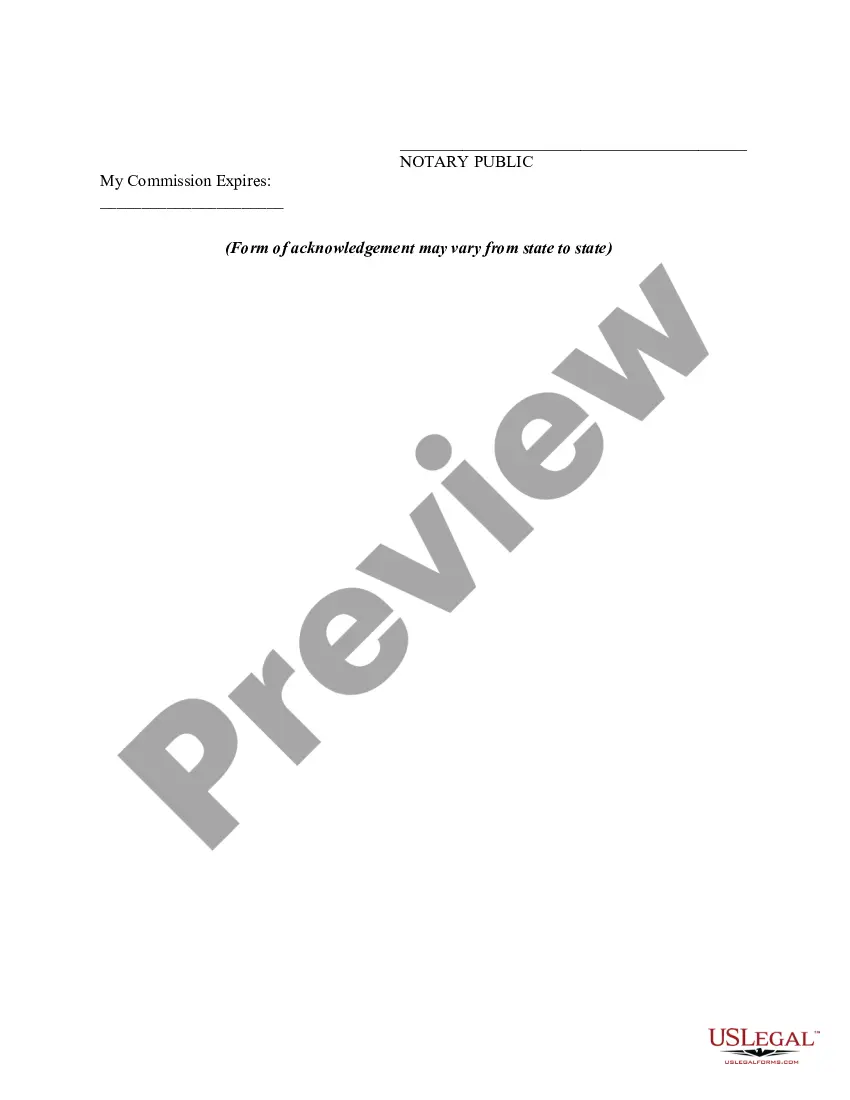
- Notary acknowledgment, if applicable.

When this form is needed
This form should be used when the original trustee has voluntarily resigned, passed away, or is otherwise unable to fulfill their duties. It is crucial for ensuring a smooth transition in the management of the trust and upholding the intentions of the trustor regarding the distribution and oversight of trust assets.
Who needs this form
- Individuals who have created a trust and need to appoint a successor trustee.
- Trustors who are managing the transition of their trust's administration.
- Beneficiaries wanting to ensure proper management of the trust in the event of a trustee change.
Instructions for completing this form
- Identify the trustor and provide their current address.
- Enter details of the original trust agreement, including the date.
- Specify the reason for appointing a successor trustee, such as resignation.
- Provide details of the new successor trustee, including their address.
- Have the trustor sign and date the document in the presence of a notary public if required.
Notarization guidance
This form must be notarized to be legally valid. The notary public will acknowledge the trustor's signature, confirming their identity and intent. US Legal Forms offers integrated online notarization services for convenience, allowing users to complete this process securely via video call without needing to travel.
Get your form ready online
Our built-in tools help you complete, sign, share, and store your documents in one place.
Make edits, fill in missing information, and update formatting in US Legal Forms—just like you would in MS Word.
Download a copy, print it, send it by email, or mail it via USPS—whatever works best for your next step.
Sign and collect signatures with our SignNow integration. Send to multiple recipients, set reminders, and more. Go Premium to unlock E-Sign.
If this form requires notarization, complete it online through a secure video call—no need to meet a notary in person or wait for an appointment.
We protect your documents and personal data by following strict security and privacy standards.

Make edits, fill in missing information, and update formatting in US Legal Forms—just like you would in MS Word.

Download a copy, print it, send it by email, or mail it via USPS—whatever works best for your next step.

Sign and collect signatures with our SignNow integration. Send to multiple recipients, set reminders, and more. Go Premium to unlock E-Sign.

If this form requires notarization, complete it online through a secure video call—no need to meet a notary in person or wait for an appointment.

We protect your documents and personal data by following strict security and privacy standards.
Avoid these common issues
- Failing to ensure that the trust agreement allows for the appointment of a successor trustee.
- Not including all necessary details about the original and successor trustees.
- Neglecting to have the document notarized, if required by state law.
Benefits of completing this form online
- Convenient access to legal forms anytime, from anywhere.
- Easy to download and customize for personal use.
- Peace of mind knowing the form is drafted to comply with legal standards.
Key takeaways
- The form is essential for appointing a successor trustee when the original trustee can no longer serve.
- Accurate completion and notarization are critical for the document's validity.
- This form is adaptable to specific state requirements, ensuring compliance with local laws.
Looking for another form?



Form popularity
FAQ
When the grantor dies, the trust becomes irrevocable and management or distribution of the assets passes to a successor trustee. Most trusts name the successor trustee when the trust is established; however, if you need to change or add a successor trustee, you can do so by amending the document.
In most living trusts created in the United States, the trustor, trustee and beneficiary are all the same person.
Successor trustees are appointed in the trust document itself. The trustor will specify who they want to take over management of the trust if and when they can't do it themselves.
Create an amendment to your trust. Type the amendment so that it specifically states the trustee that you wish to add. Indicate whether you wish to remove an existing trustee, in addition to naming a new one. Specify that the trustee you are adding is a co-trustee, rather than a successor trustee.
Successor trustees have to willingly accept their role usually by signing a consent to serve or affidavit of appointment. If an existing trustee wishes to change their successor trustee, they must make an actual amendment to the trust. Most courts won't accept informal, self-made changes.
Once you follow that directive, the Trustee must step down and a successor Trustee can be appointed.Once a Trustee resigns, then either the next person named would act, or maybe you can appoint someone new if the Trust terms allow you to do that. Either way, a new Trustee will be in office when a Trustee resigns.
In most living trusts created in the United States, the trustor, trustee and beneficiary are all the same person.
A Successor Trustee is the person responsible for administering the trust after its Grantor either passes away or becomes Incapacitated that is, unable to administer the trust for themselves.