Resignation by Trustee Named in a Trust Instrument
What this document covers
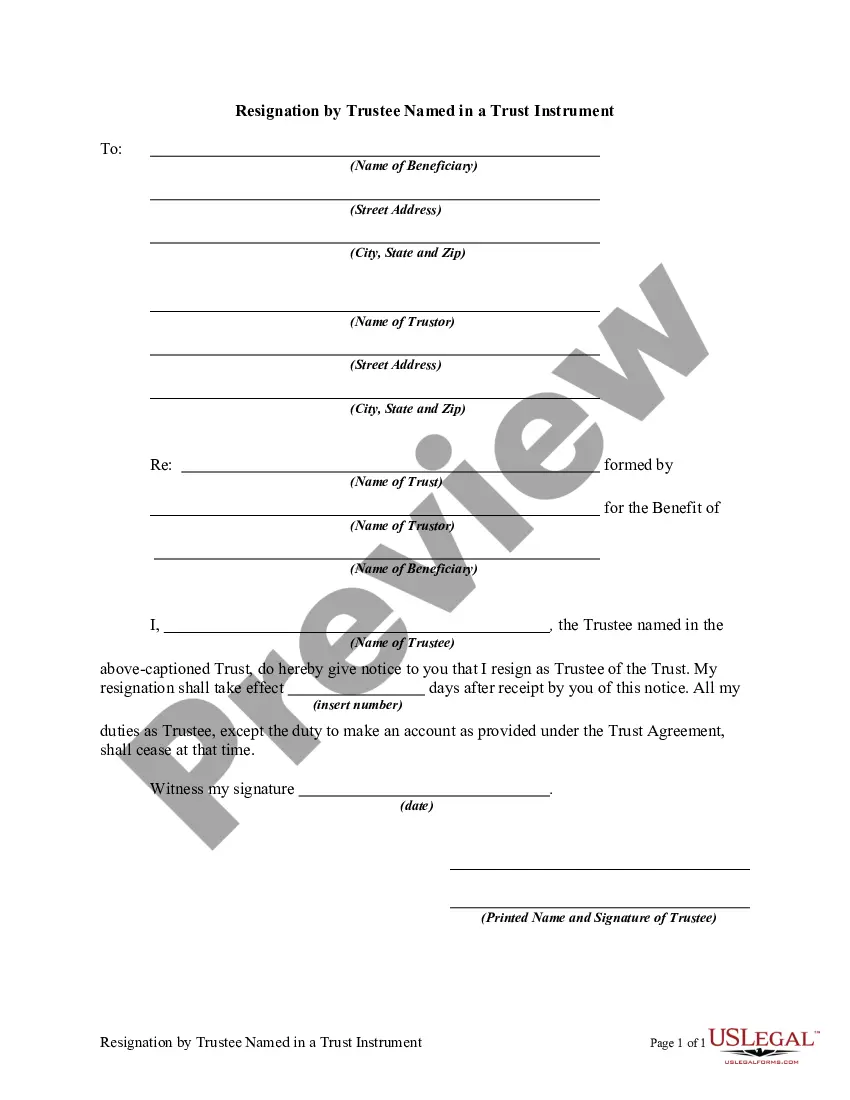
The Resignation by Trustee Named in a Trust Instrument is a legal document that allows a trustee to formally resign from their duties as outlined in a trust agreement. This form is essential for ensuring a smooth transition of responsibilities, often paving the way for the appointment of a successor trustee. It is different from other trust-related forms because it specifically addresses the resignation process of a trustee rather than the management or creation of trust assets.
What’s included in this form
- Identification of the resigning trustee and the trust instrument.
- Statement of resignation and the reasons for resigning (if applicable).
- Signature of the resigning trustee to validate the resignation.
- Date of resignation.
When to use this form
This form should be used when a trustee wishes to officially resign from their responsibilities before a new trustee is appointed. Common scenarios include when a trustee can no longer fulfill their duties due to personal reasons, a change in circumstances, or when a new trustee needs to be appointed to manage the trust.
Intended users of this form
This form is intended for:
- Current trustees of a trust who are looking to resign.
- Beneficiaries of a trust who need to understand the resignation process.
- Legal professionals assisting clients with trust administration.
Steps to complete this form
- Clearly identify the trustee who is resigning and the trust they are associated with.
- Include a formal statement of resignation, and if desired, state the reasons behind the decision.
- Sign and date the form to acknowledge the resignation.
- Provide copies to relevant parties, such as beneficiaries or the successor trustee.
Is notarization required?
This form does not typically require notarization unless specified by local law. Consult your local regulations to confirm if notarization is needed in your jurisdiction.
Get your form ready online
Our built-in tools help you complete, sign, share, and store your documents in one place.
Make edits, fill in missing information, and update formatting in US Legal Forms—just like you would in MS Word.
Download a copy, print it, send it by email, or mail it via USPS—whatever works best for your next step.
Sign and collect signatures with our SignNow integration. Send to multiple recipients, set reminders, and more. Go Premium to unlock E-Sign.
If this form requires notarization, complete it online through a secure video call—no need to meet a notary in person or wait for an appointment.
We protect your documents and personal data by following strict security and privacy standards.

Make edits, fill in missing information, and update formatting in US Legal Forms—just like you would in MS Word.

Download a copy, print it, send it by email, or mail it via USPS—whatever works best for your next step.

Sign and collect signatures with our SignNow integration. Send to multiple recipients, set reminders, and more. Go Premium to unlock E-Sign.

If this form requires notarization, complete it online through a secure video call—no need to meet a notary in person or wait for an appointment.

We protect your documents and personal data by following strict security and privacy standards.
Avoid these common issues
- Failing to sign and date the form, which renders it invalid.
- Not providing the specific name of the trust or incorrectly identifying the trust instrument.
- Omitting to notify interested parties, resulting in potential confusion about the trustee's status.
Benefits of completing this form online
- Convenient download for immediate use without needing to visit a lawyer's office.
- Editable template allows for personalization based on individual needs or state requirements.
- Assurance of having a document drafted based on legal standards, ensuring reliability.
What to keep in mind
- The form facilitates a smooth trustee resignation process.
- Key details include the identification of the resigning trustee and their signature.
- Check for local legal requirements to ensure compliance.
Looking for another form?


Form popularity
FAQ
1 attorney answer Follow the terms of the Trust. Typically, a letter of resignation will suffice but Trust terms control unless silent. No recording or notary is specifically required either, but a notarization of the resignation certainly wouldn't hurt at all...
Be professional. You should treat this resignation as you would a resignation from any other organization. Give an end date. As with any resignation letter, clearly, state the date you are resigning. Explain (briefly). Say thank you. Offer to help. Proofread and edit.
Obtain a Trustee Resignation Form from your attorney or the Court and complete and sign it in the presence of a notary public. 4. Make copies of your resignation. Give a copy to the new Trustee, mail a copy to all the trust beneficiaries and keep one in your personal file.
A trustee cannot resign without the permission of the court unless the trust instrument so provides or unless all of the beneficiaries who are legally capable to do so consent to the resignation.
Trustees Can Withdraw For Trust UseTrust law varies from state to state, but under no circumstances can a trustee withdraw funds from the trust for the personal use of the trustee.Common trust law dictates that the trustee (or trustees) are the only parties that can disburse funds from a trust account.
If a trustee resigns or dies, the Letters of Authority must be returned to the Master to have that person's name deleted. In case of a resignation, the letter of resignation and a resolution from the remaining trustees accepting his resignation, must be given to the Master.
Resignation is typically done by giving written notice to the beneficiaries and to the successor Trustee. The successor Trustee should receive the resignation so that he or she knows that it's their turn to manage the Trust estate.
Obtain a Trustee Resignation Form from your attorney or the Court and complete and sign it in the presence of a notary public. 4. Make copies of your resignation. Give a copy to the new Trustee, mail a copy to all the trust beneficiaries and keep one in your personal file.