Lease of Land for Pasturage and Grazing
Overview of this form
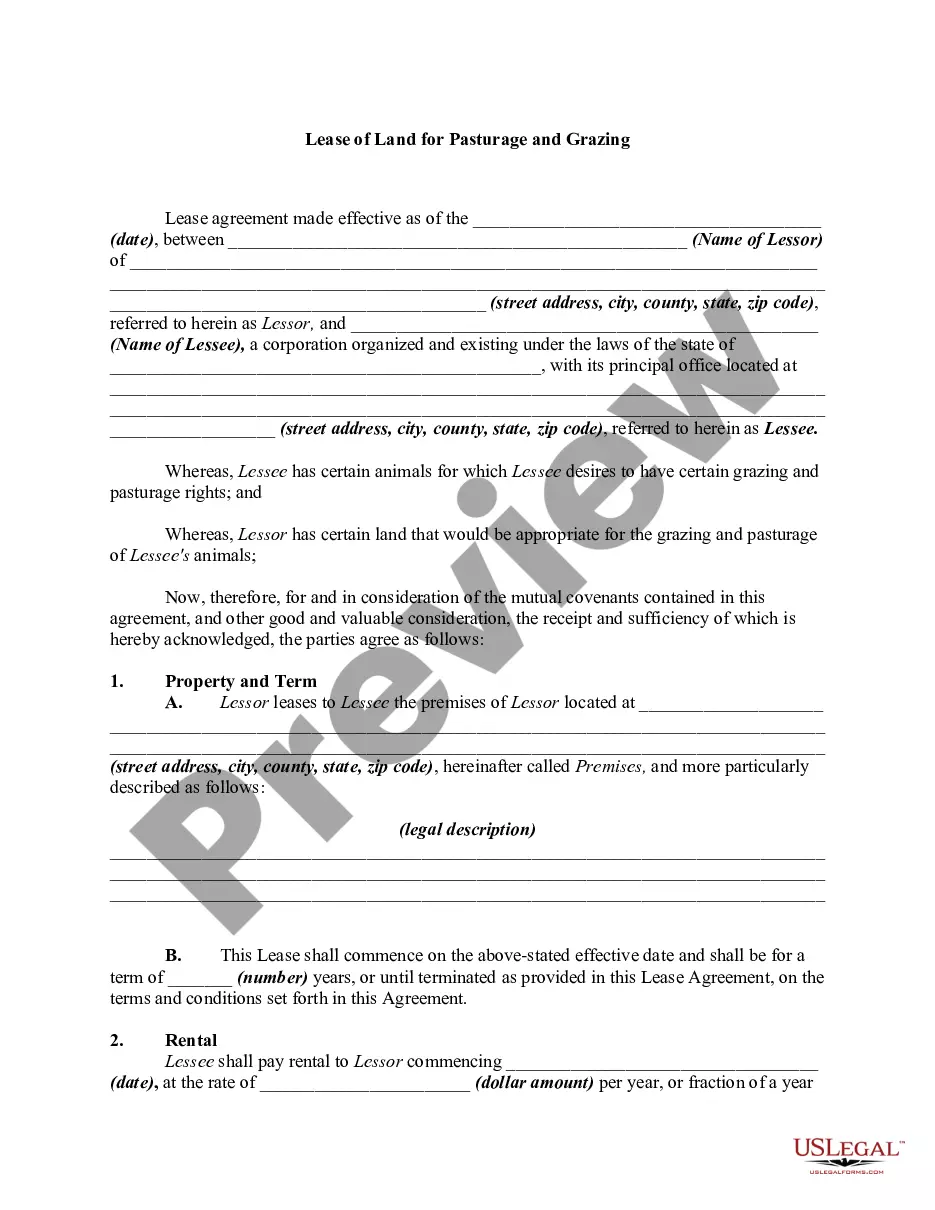
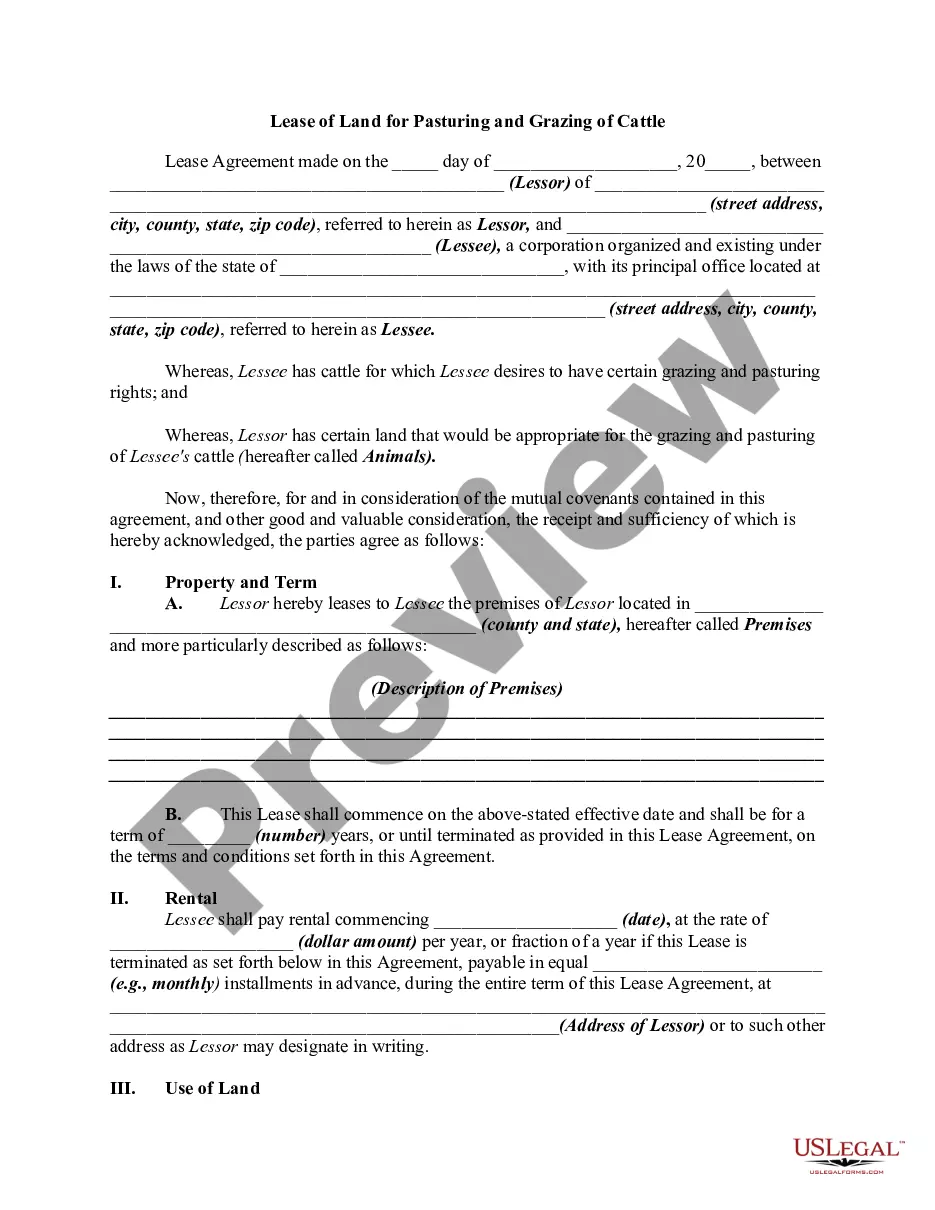
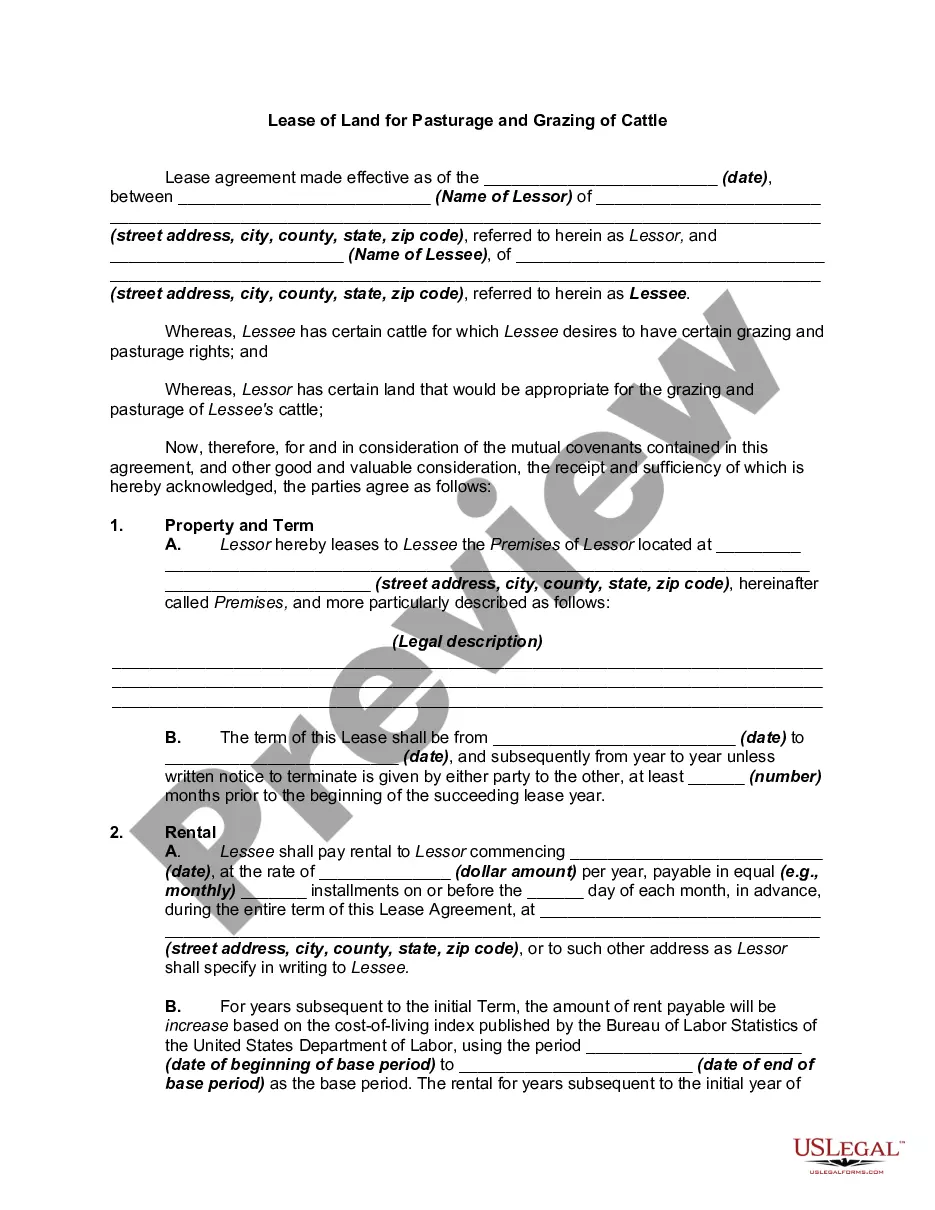
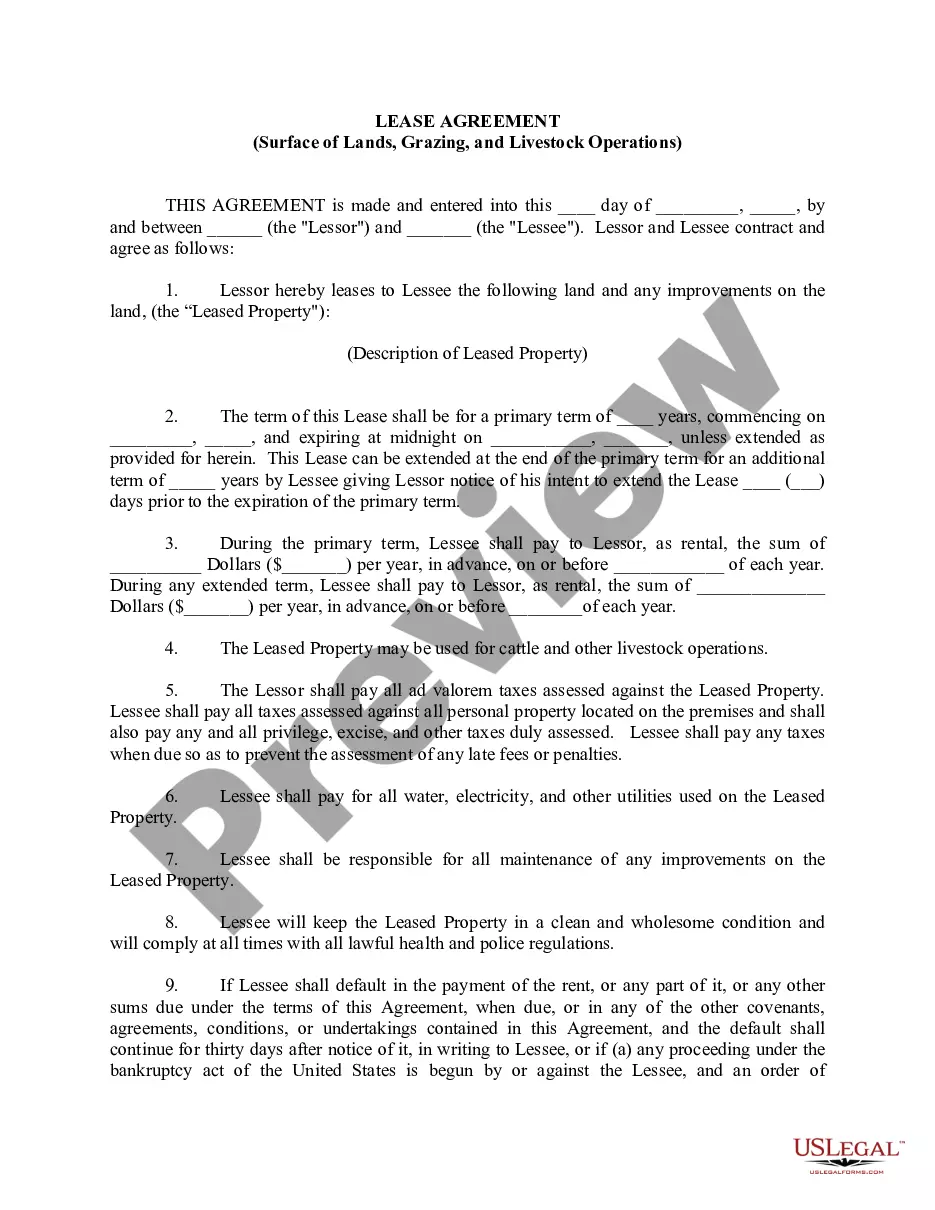
The Lease of Land for Pasturage and Grazing is a legal document that establishes an agreement between a landowner (Lessor) and a livestock owner (Lessee) for the use of land specifically for grazing and pasturage. Unlike an agistment contract where livestock is entrusted to someone else's care, this lease permits the Lessee to use the land for their grazing needs without transferring possession of the animals. This form ensures that both parties' rights and responsibilities are clearly outlined, providing a framework for the rental arrangement.
Key parts of this document
- Property and term: Details about the leased land and duration of the lease.
- Rental: Specifies the rental amount, payment schedule, and method of payment.
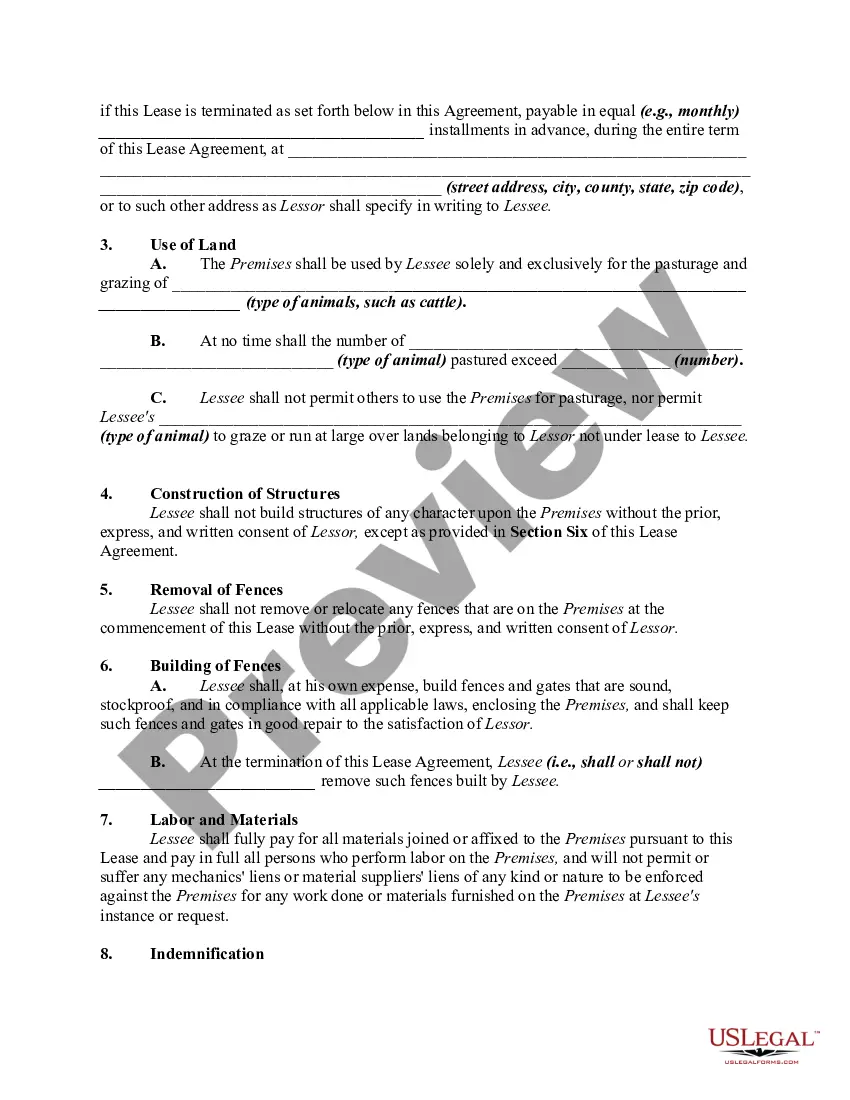
- Use of land: Restrictions on how the land can be used by the Lessee.
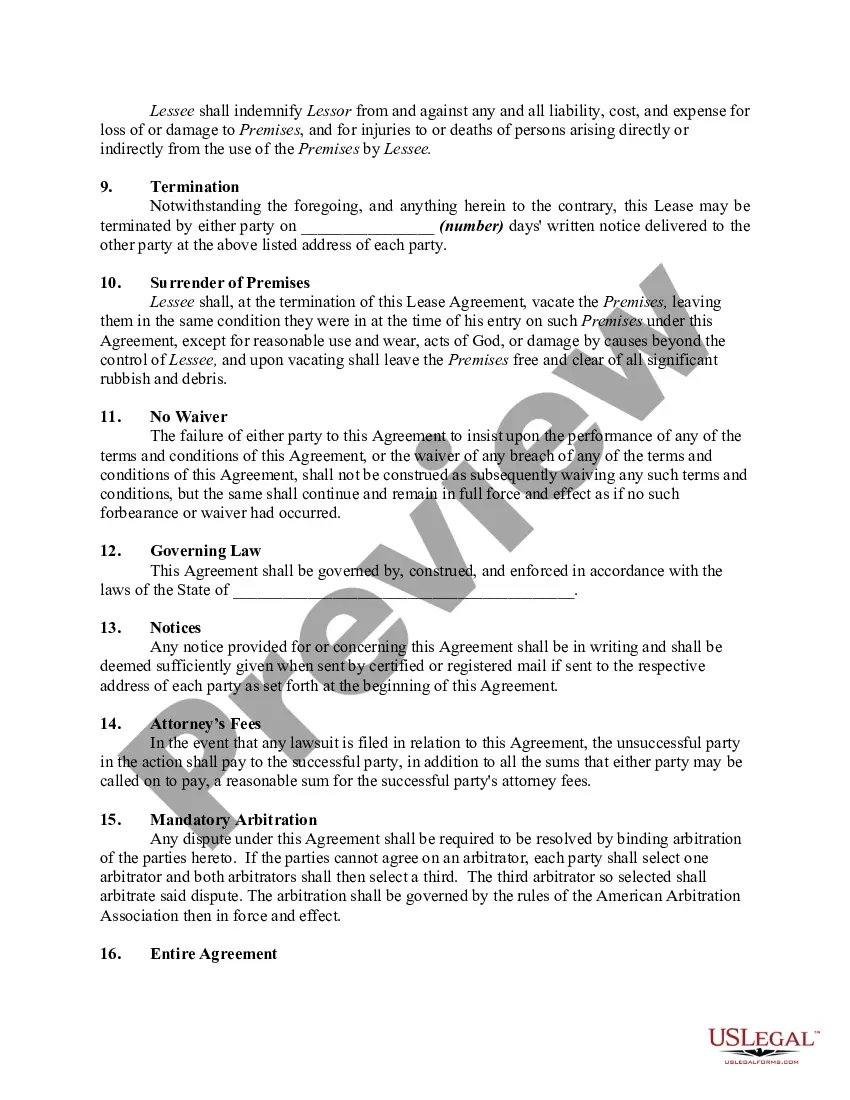
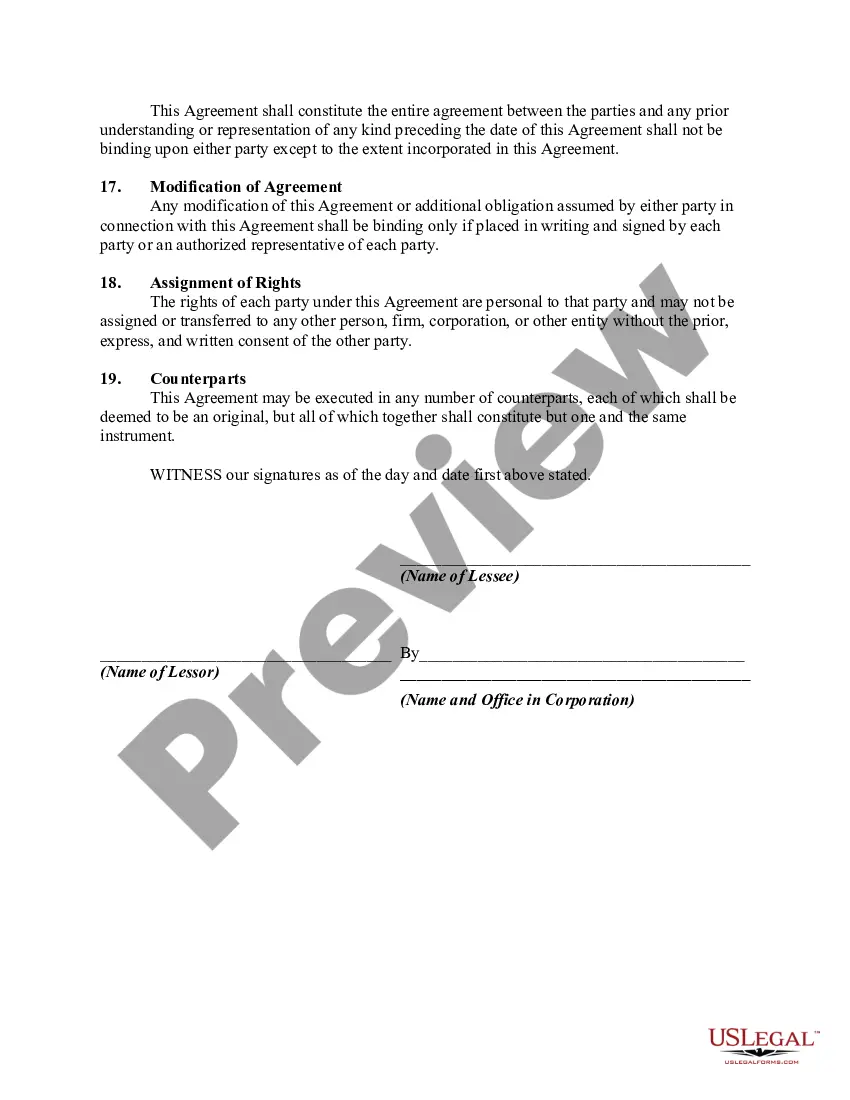
- Termination: Conditions under which the lease can be terminated by either party.
- Indemnification: Responsibilities for liability and damages related to land use.

Common use cases
This lease form is appropriate for situations where a livestock owner requires a specific parcel of land for grazing purposes. It is commonly used when a farmer or rancher seeks to rent land from another landowner to support their livestock operations. This form helps to formalize the agreement, ensuring the terms are clear and legally enforceable.
Who needs this form
- Landowners looking to lease their land for grazing purposes.
- Livestock owners needing a designated area for pasturage.
- Individuals or businesses engaged in agricultural or ranching activities.
- Those seeking to legally outline their rights and responsibilities in a grazing arrangement.
Instructions for completing this form
- Identify the parties: Enter the names and addresses of the Lessor and Lessee.
- Specify the property: Describe the land being leased, including its legal description.
- Enter the term: Indicate the start date of the lease and its duration in years.
- Outline rental terms: Specify the rental amount and payment frequency.
- Clarify land use: Detail the type of animals allowed and any restrictions on their number.
Does this document require notarization?
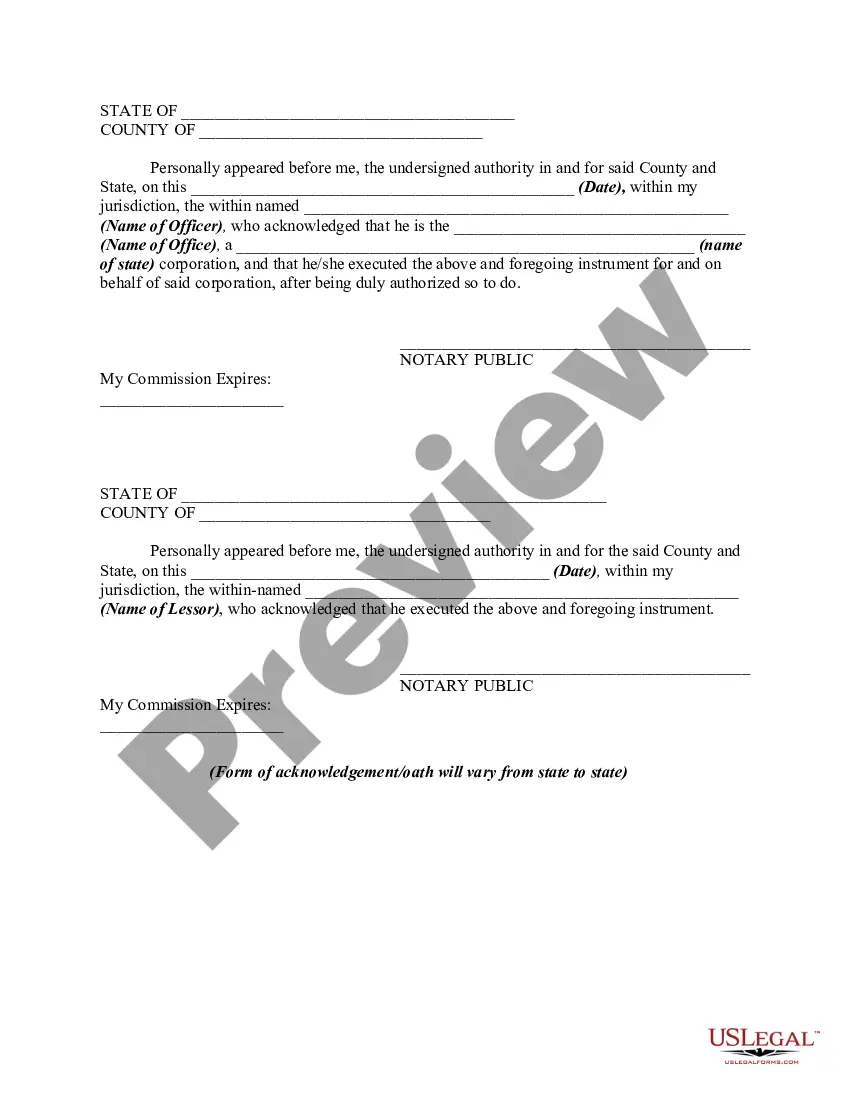
To make this form legally binding, it must be notarized. Our online notarization service, powered by Notarize, lets you verify and sign documents remotely through an encrypted video session.
Get your form ready online
Our built-in tools help you complete, sign, share, and store your documents in one place.
Make edits, fill in missing information, and update formatting in US Legal Forms—just like you would in MS Word.
Download a copy, print it, send it by email, or mail it via USPS—whatever works best for your next step.
Sign and collect signatures with our SignNow integration. Send to multiple recipients, set reminders, and more. Go Premium to unlock E-Sign.
If this form requires notarization, complete it online through a secure video call—no need to meet a notary in person or wait for an appointment.
We protect your documents and personal data by following strict security and privacy standards.

Make edits, fill in missing information, and update formatting in US Legal Forms—just like you would in MS Word.

Download a copy, print it, send it by email, or mail it via USPS—whatever works best for your next step.

Sign and collect signatures with our SignNow integration. Send to multiple recipients, set reminders, and more. Go Premium to unlock E-Sign.

If this form requires notarization, complete it online through a secure video call—no need to meet a notary in person or wait for an appointment.

We protect your documents and personal data by following strict security and privacy standards.
Common mistakes
- Failing to clearly define property boundaries and legal descriptions.
- Not specifying the rental payment method or schedule.
- Overlooking local regulations regarding grazing permissions.
- Neglecting to include termination clauses or conditions for ending the lease.
Advantages of online completion
- Convenience of downloading and filling out the form at your own pace.
- Editable fields allow for customization to suit specific agreements.
- Access to attorney-drafted templates ensures legal accuracy.
- Quick completion reduces the time needed to formalize grazing arrangements.
Legal use & context
- This lease agreement provides legal framework and enforceability in the rental of land for grazing.
- It serves to protect the rights of both the landowner and livestock owner under applicable state laws.
- Users should consult legal counsel to ensure compliance with local agricultural and property laws.
Main things to remember
- The Lease of Land for Pasturage and Grazing is essential for defining rights and responsibilities in leasing land for livestock.
- Clear and specific terms outlined in the lease can prevent future disputes.
- Users should ensure that the form reflects their specific needs and complies with local regulations.
Looking for another form?










Form popularity
FAQ
When renting land for grazing cows and calves, the most common option is a cash rent by the acre. Issues in the agreement would typically address such things as stocking rate, maintenance of fences and improvements, weed and brush management, lease terms, and the rate per acre.
The average rental for a sheep and beef farm ranged between $30-$35 per stock unit. But for land suitable for dairy support purposes, rental could be between $40-$50 per stock unit.
Rent Paid for Agricultural Land At $138 per acre, the average rate to rent cropland in the United States in 2018 was $2 higher than in 2017. For irrigated cropland, the average rate per acre was $215 (up slightly from $212 in 2017) and for non-irrigated cropland it was $125 (up from $123).
NSW DPI state that although there is no prescriptive method, but generally lease values are reasonably stable between 59% of land value. For example, if land is valued at $2,500/ha and the agreed rate is 6% of the land value, the rental payment would be $150/ha.
You may have heard a rule-of-thumb is that it takes 1.5 to 2 acres to feed a cow calf pair for 12 months. That means we should be able to have 10 to 13 cows. Let's see how this rule-of-thumb holds up. It looks like our rule-of-thumb held up pretty good, 11 cows on 20 acres, is 1.8 acres per cow.
When renting land for grazing cows and calves, the most common option is a cash rent by the acre. Issues in the agreement would typically address such things as stocking rate, maintenance of fences and improvements, weed and brush management, lease terms, and the rate per acre.
Leasing land to another person for grazing purposes can benefit both the landowner and lessee by allowing an additional source of income for the landowner and by permitting the lessee to run livestock on land without incurring the long-term debt associated with purchasing property.
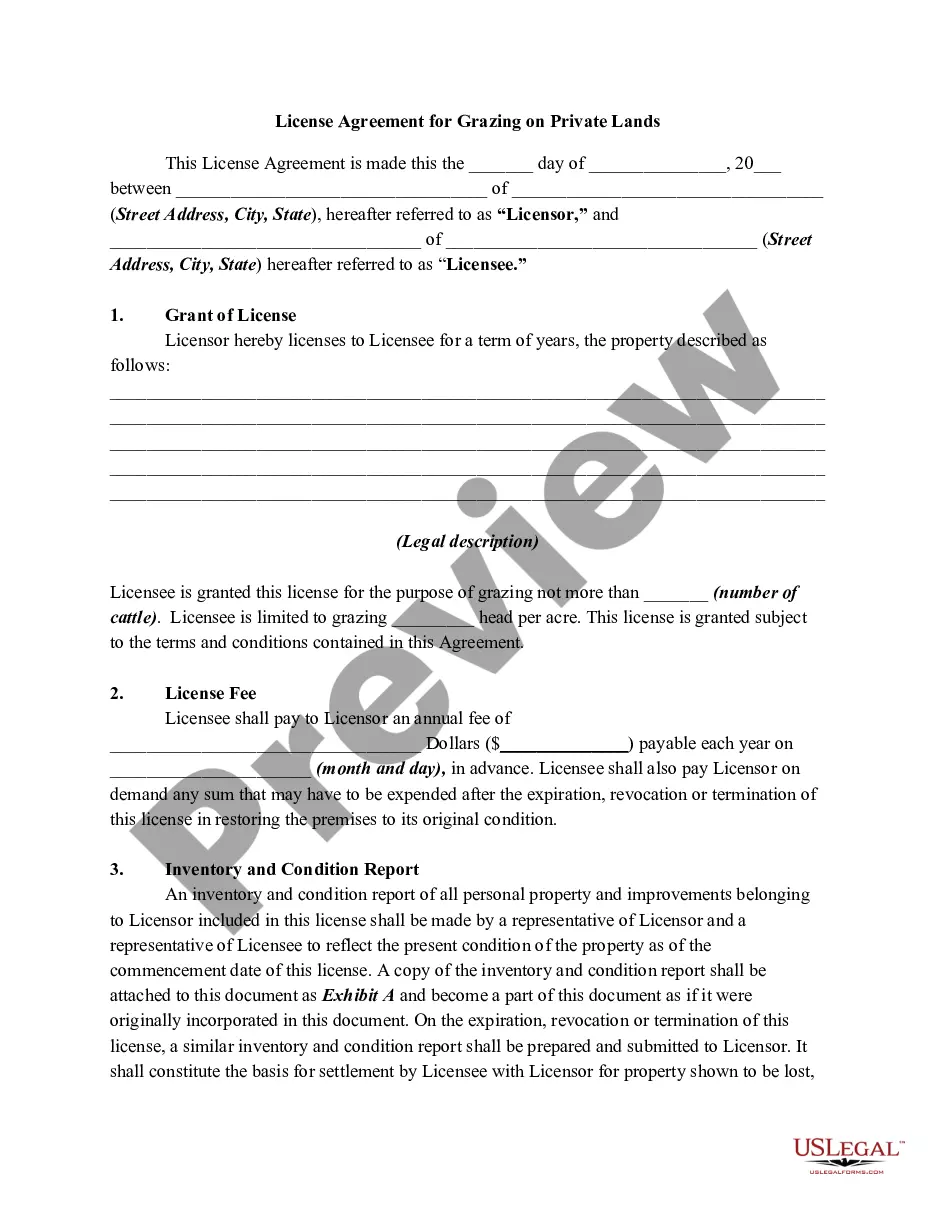
What is a grazing licence? Grazing licences are short-term agreements for a period of less than 365 days, with no right of renewal. The agreement is effectively a licence over the land and avoids creating a legal tenancy.