Agreement By Heirs to Substitute New Note for Note of Decedent
Overview of this form
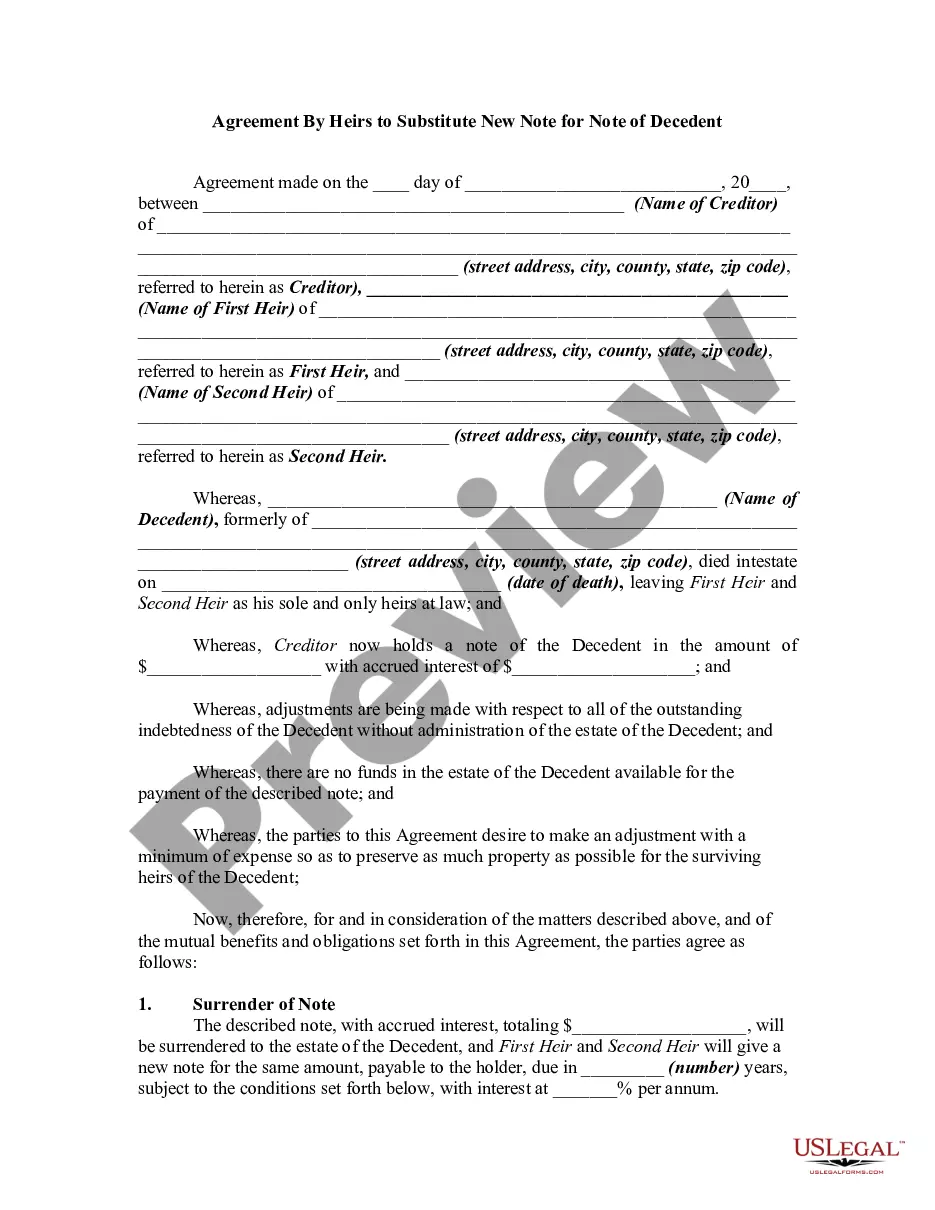
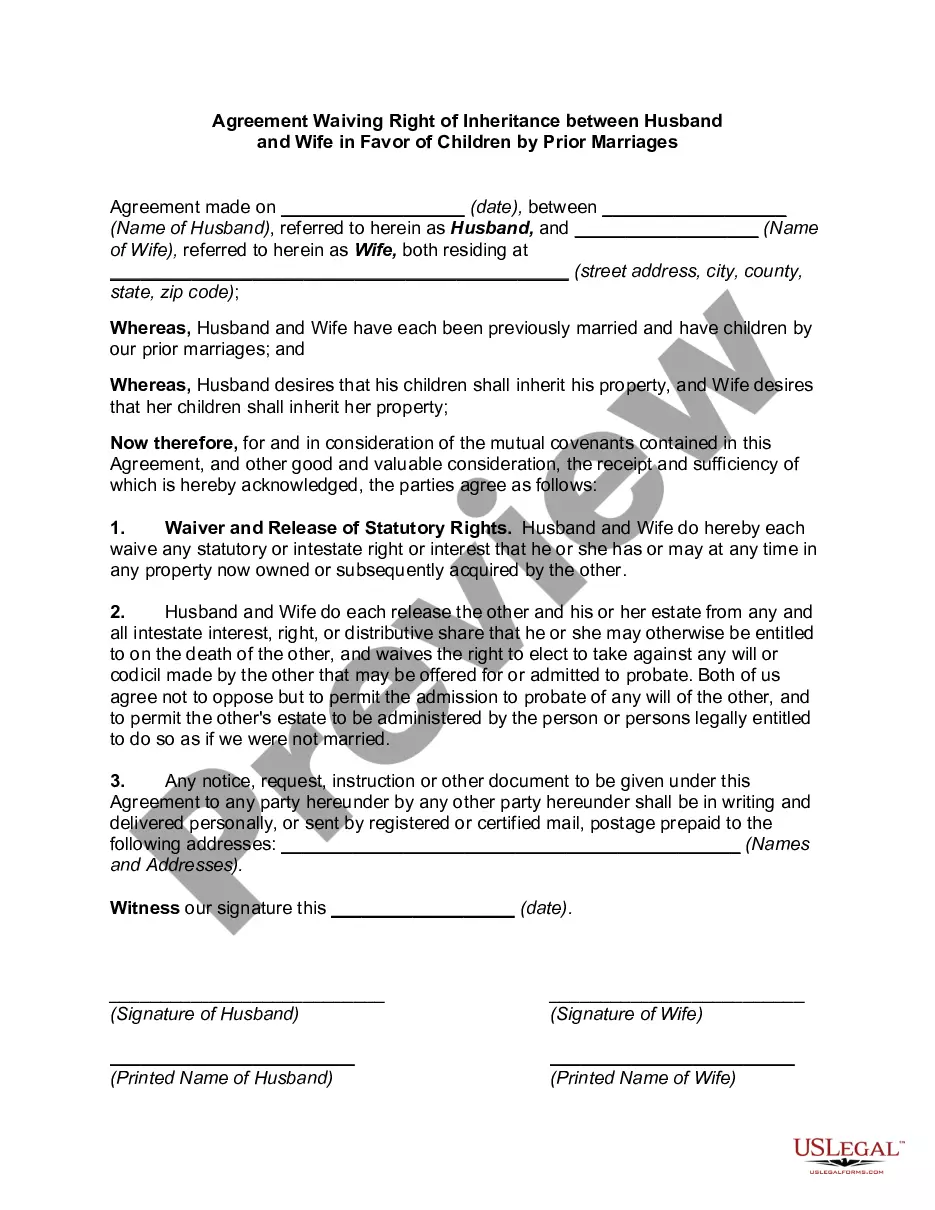
The Agreement By Heirs to Substitute New Note for Note of Decedent is a legal document that enables the heirs of a person who died intestate (without a will) to replace the decedent's existing note with a new note. This form is crucial in situations where the heirs wish to settle debts of the deceased while preserving their inheritance, effectively transferring the obligation to a new note without the need for estate administration.
Main sections of this form
- Identification of the parties involved: This includes the creditor and heirs of the decedent.
- Details about the decedent: This includes the name, date of death, and last known address.
- Terms of the new note: Specifying the amount, interest rate, and payment terms.
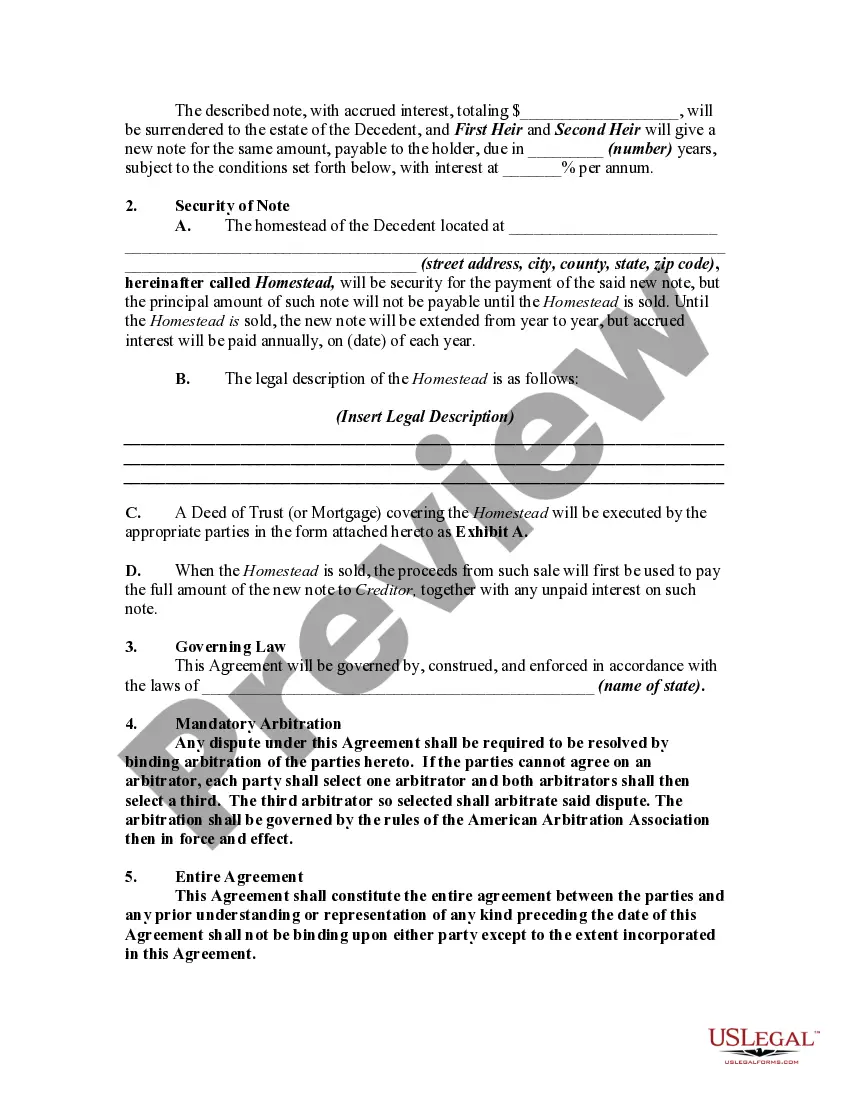
- Security provisions: Describes how the homestead will secure the new note.
- Governing law: Identifies which state's laws will apply to the agreement.
- Arbitration clause: Establishes how disputes related to the agreement will be resolved.

Situations where this form applies
This form is used when the decedent has died without a will, and the heirs want to settle the debts left behind without the formal administration of the estate. It is suitable in cases where a creditor holds a debt against the decedent's estate and the heirs wish to restructure this obligation to protect their inherited assets, particularly their property.
Who should use this form
- Heirs of a decedent who died intestate.
- Creditors holding a note against the estate of the decedent.
- Individuals involved in the informal settlement of debts without going through probate.
Instructions for completing this form
- Identify the parties, including the names and addresses of the creditor and heirs.
- Enter the name and details of the decedent, including the date of death.
- Specify the amount of the existing note and any accrued interest owed.
- Detail the terms of the new note, including payment schedules and security provided by the homestead.
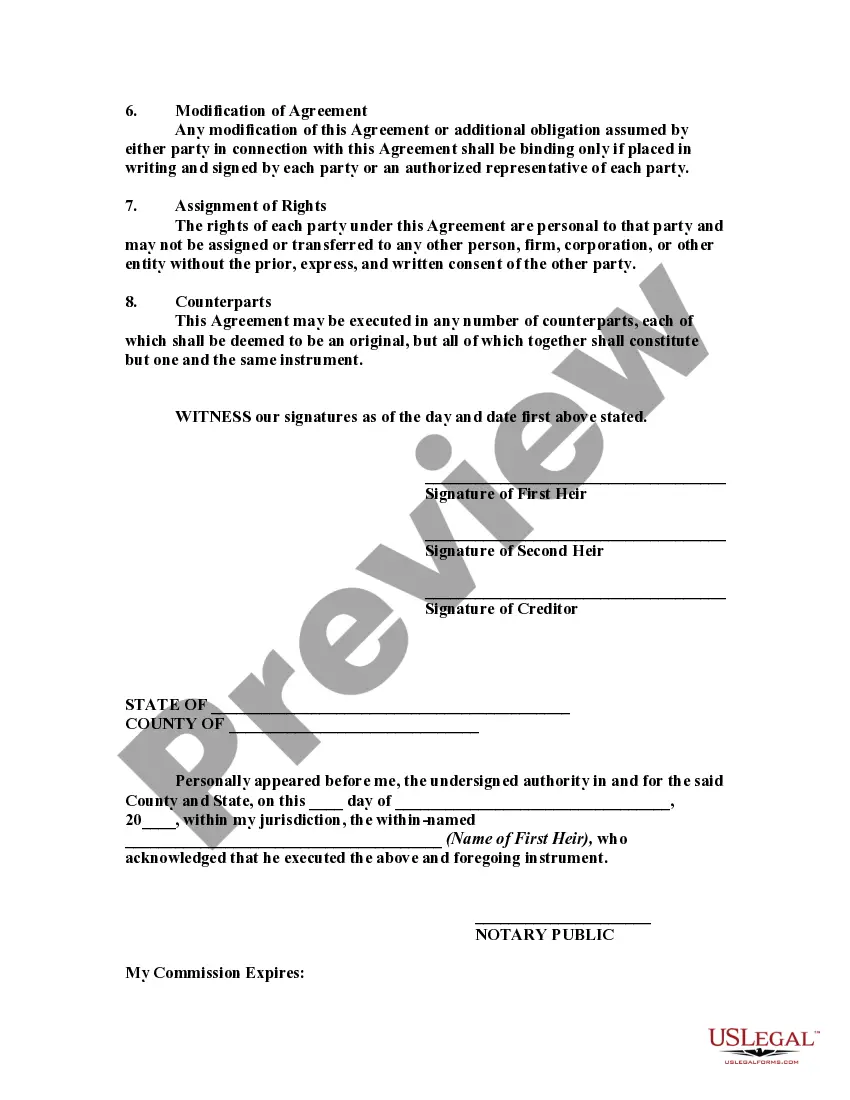
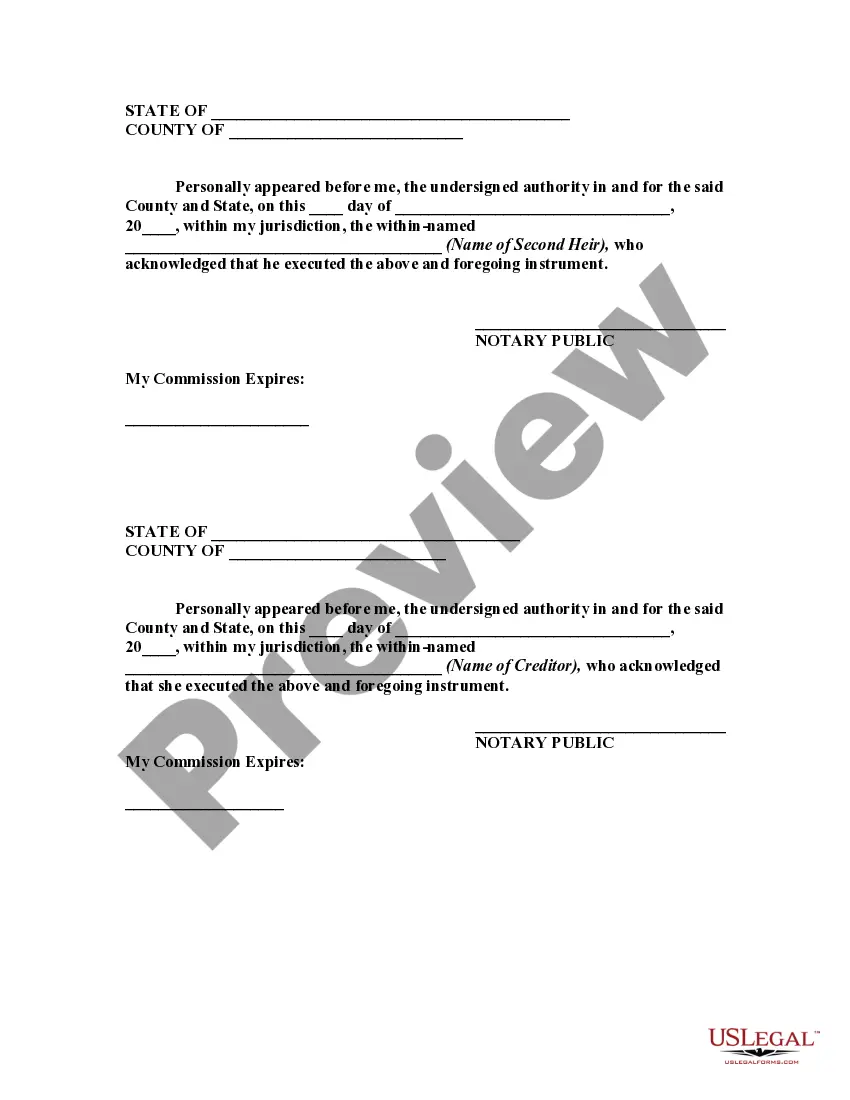
- Ensure all parties sign the agreement and have it notarized if required by local law.
Notarization requirements for this form
This document requires notarization to meet legal standards. US Legal Forms provides secure online notarization powered by Notarize, allowing you to complete the process through a verified video call, available 24/7.
Get your form ready online
Our built-in tools help you complete, sign, share, and store your documents in one place.
Make edits, fill in missing information, and update formatting in US Legal Forms—just like you would in MS Word.
Download a copy, print it, send it by email, or mail it via USPS—whatever works best for your next step.
Sign and collect signatures with our SignNow integration. Send to multiple recipients, set reminders, and more. Go Premium to unlock E-Sign.
If this form requires notarization, complete it online through a secure video call—no need to meet a notary in person or wait for an appointment.
We protect your documents and personal data by following strict security and privacy standards.

Make edits, fill in missing information, and update formatting in US Legal Forms—just like you would in MS Word.

Download a copy, print it, send it by email, or mail it via USPS—whatever works best for your next step.

Sign and collect signatures with our SignNow integration. Send to multiple recipients, set reminders, and more. Go Premium to unlock E-Sign.

If this form requires notarization, complete it online through a secure video call—no need to meet a notary in person or wait for an appointment.

We protect your documents and personal data by following strict security and privacy standards.
Common mistakes to avoid
- Failing to properly identify all heirs and creditors involved.
- Omitting critical details about the decedent's estate and debts.
- Not specifying the correct terms for the new note, such as interest rates and payment intervals.
- Forgetting to have the agreement signed and notarized when necessary.
Benefits of completing this form online
- Convenience of accessing and downloading the form from home.
- Editable templates allow customization to meet specific needs.
- Instant access to legal forms drafted by licensed attorneys, ensuring reliability.
What to keep in mind
- The form allows heirs to manage the decedent's debt with a new note.
- It is essential for heirs and creditors to agree on the terms of substituted notes.
- Proper completion, including notarization, is crucial for the form's validity.
Looking for another form?
Form popularity
FAQ
If one co-owner dies, their interest in the property automatically passes to the surviving co-owner(s), whether or not they have a will. As tenants in common, co-owners own specific shares of the property. Each owner can leave their share of the property to whoever they choose.
In many states, the required period is 120 hours, or five days. In some states, however, an heir need only outlive the deceased person by any period of time -- theoretically, one second would do.
If you'd like to avoid having your property going through the probate process, it's a good idea to look into a transfer on death deed. A transfer on death deed allows you to select a beneficiary who will receive your property, but only when you've passed away.
Generally the heirs don't decide if the house is sold unless somehow it is titled in all their names. If is a specific gift and the will requires it be transferred to all six, and one does not want to sell, that person can buy out the other 5. There of course is always a partition Acton.
The short answer is yes: if all beneficiaries are in agreement, it is possible to amend an Estate Plan (or the standard division of assets, if your loved one died intestate) within two years of death.
File a petition in probate court. The first step to transferring the property to the rightful new owners is to open up a case in probate court. Petition the court for sale and convey the property to the purchaser. Next, you must petition the court to sell the property.
When a joint owner dies, the process is relatively simple you just need to inform the Land Registry of the death. You should complete a 'Deceased joint proprietor' form on the government's website and then send the form to the Land Registry, with an official copy of the death certificate.
In most cases, the surviving owner or heir obtains the title to the home, the former owner's death certificate, a notarized affidavit of death, and a preliminary change of ownership report form. When all these are gathered, the transfer gets recorded, the fees are paid, and the county issues a new title deed.
Wills do not override beneficiary designations; rather, beneficiary designations ordinarily take precedence over wills.