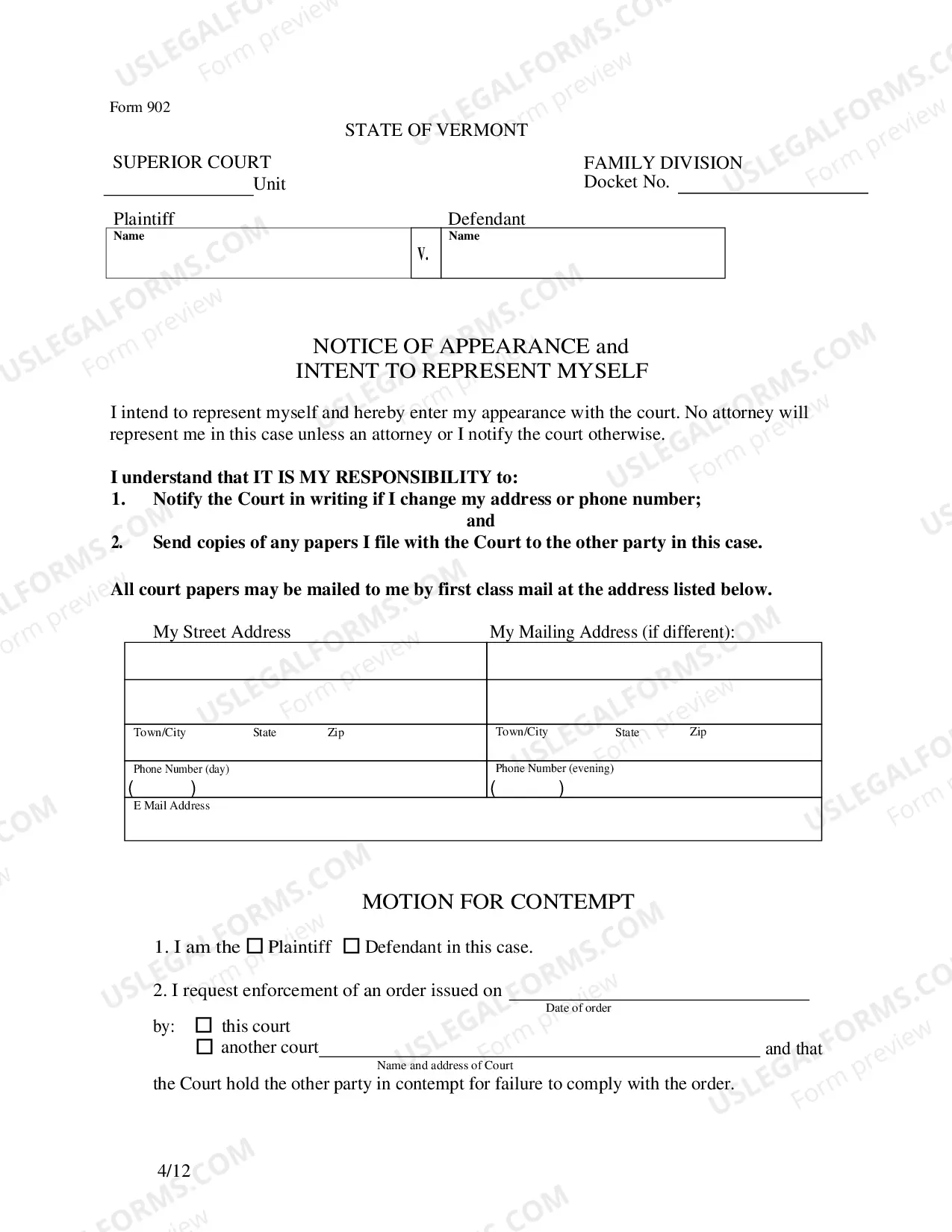
Proposed Sales Survey to Determine Effectiveness of Planned Advertising Campaign for New Product
Overview of this form
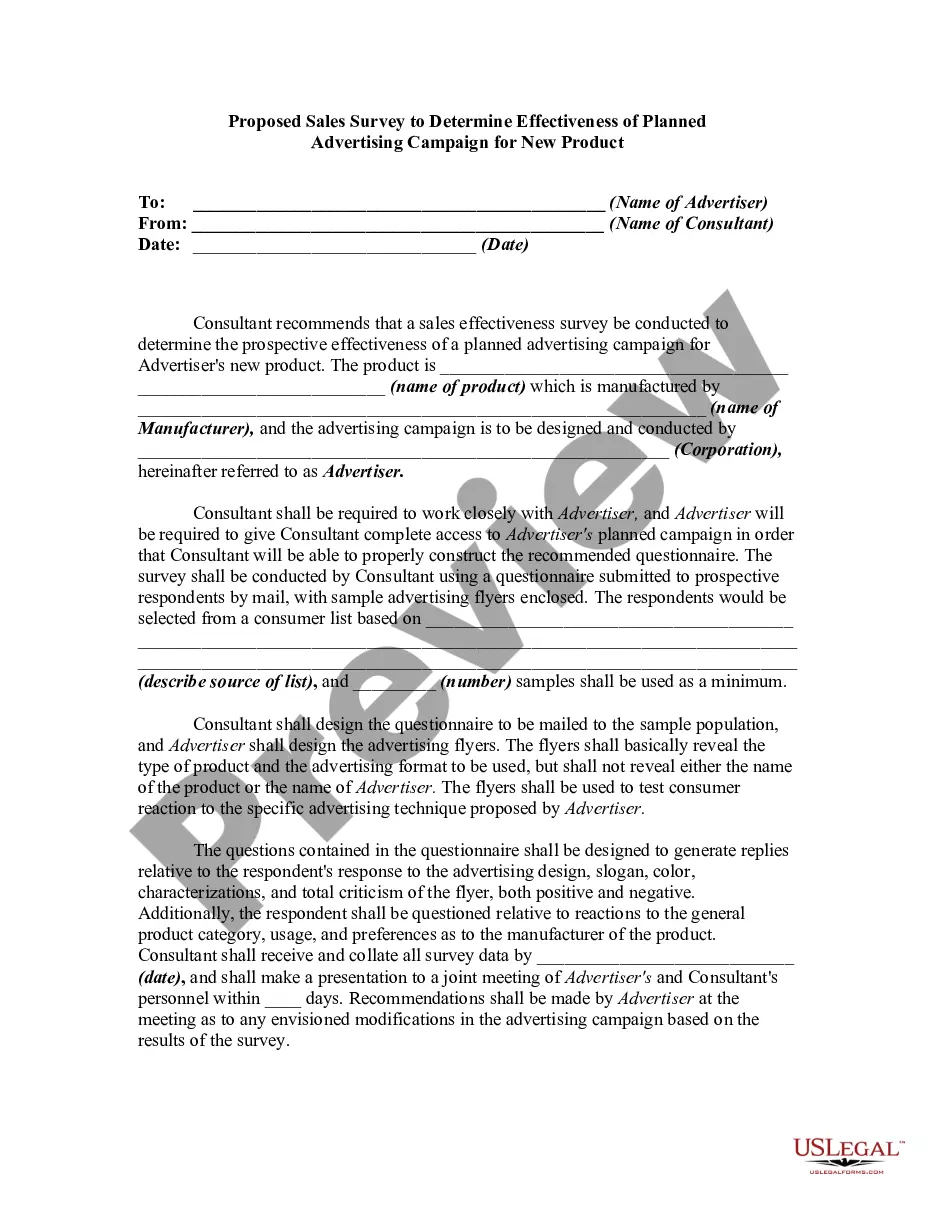
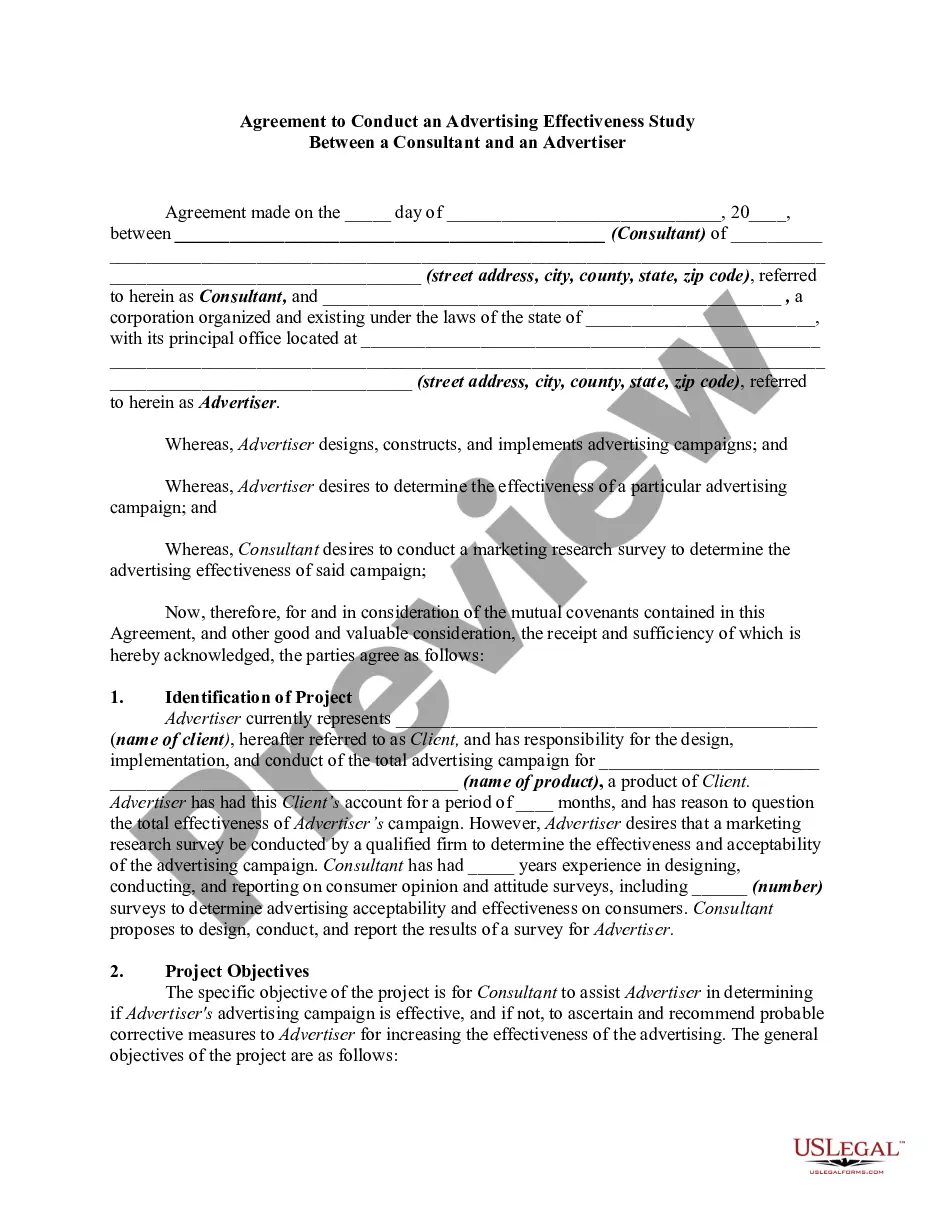
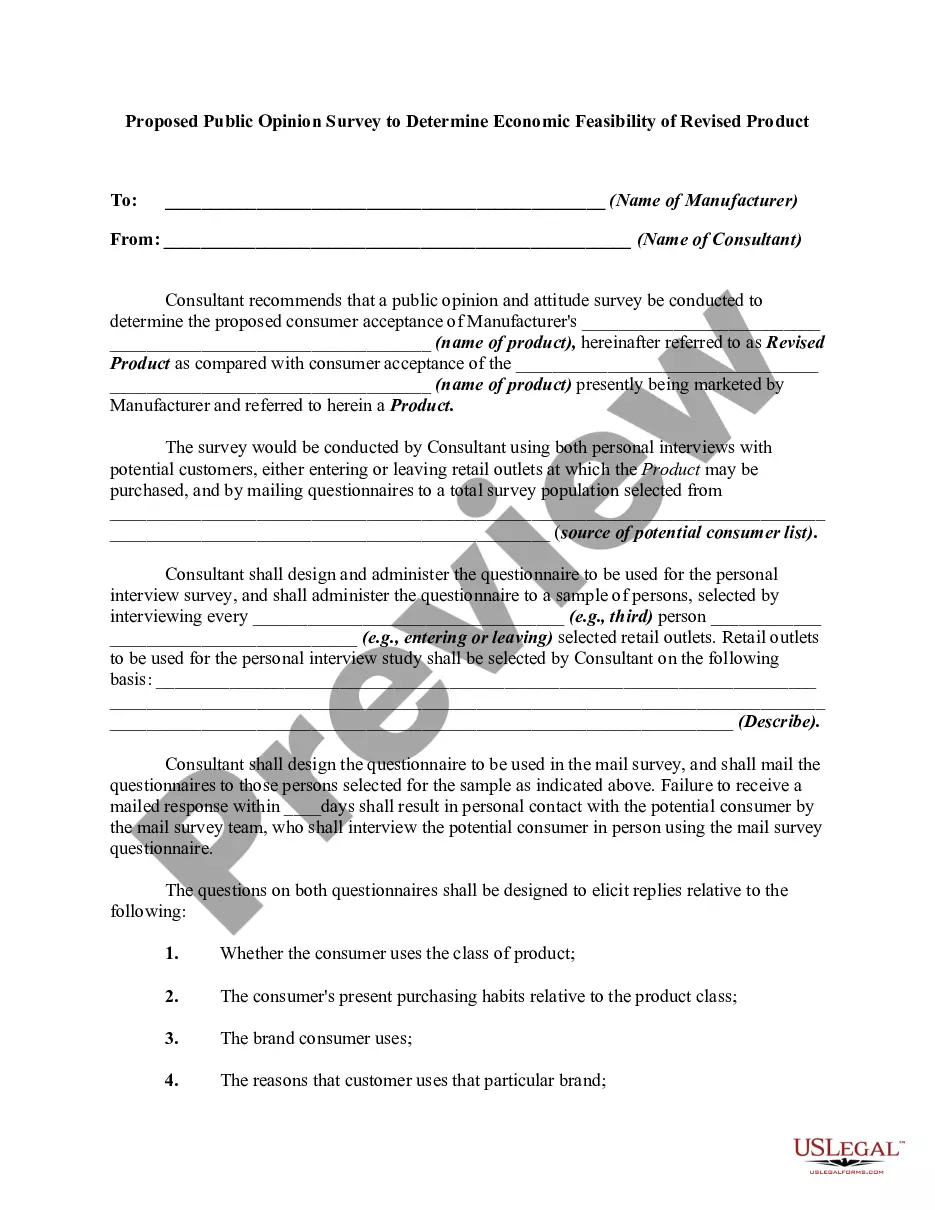
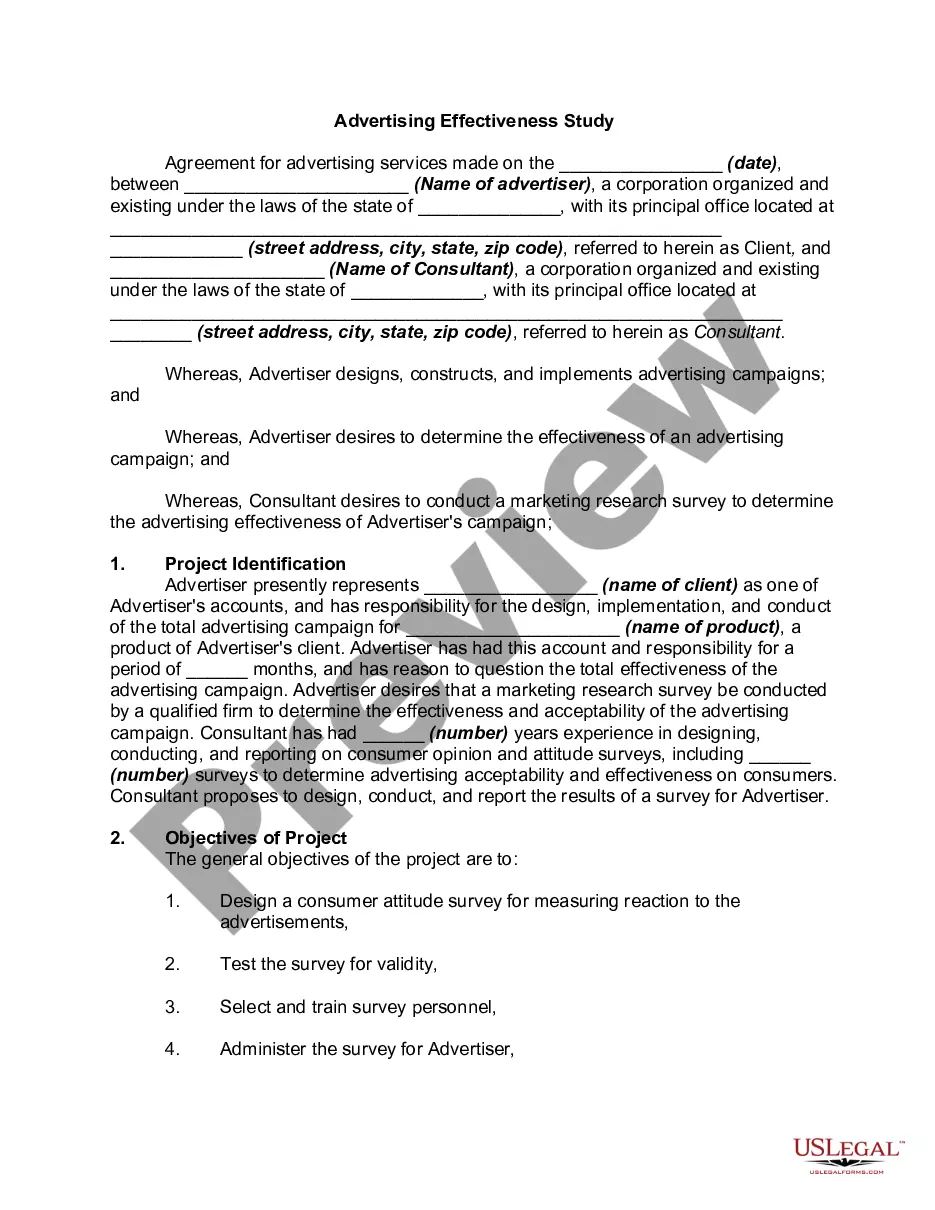
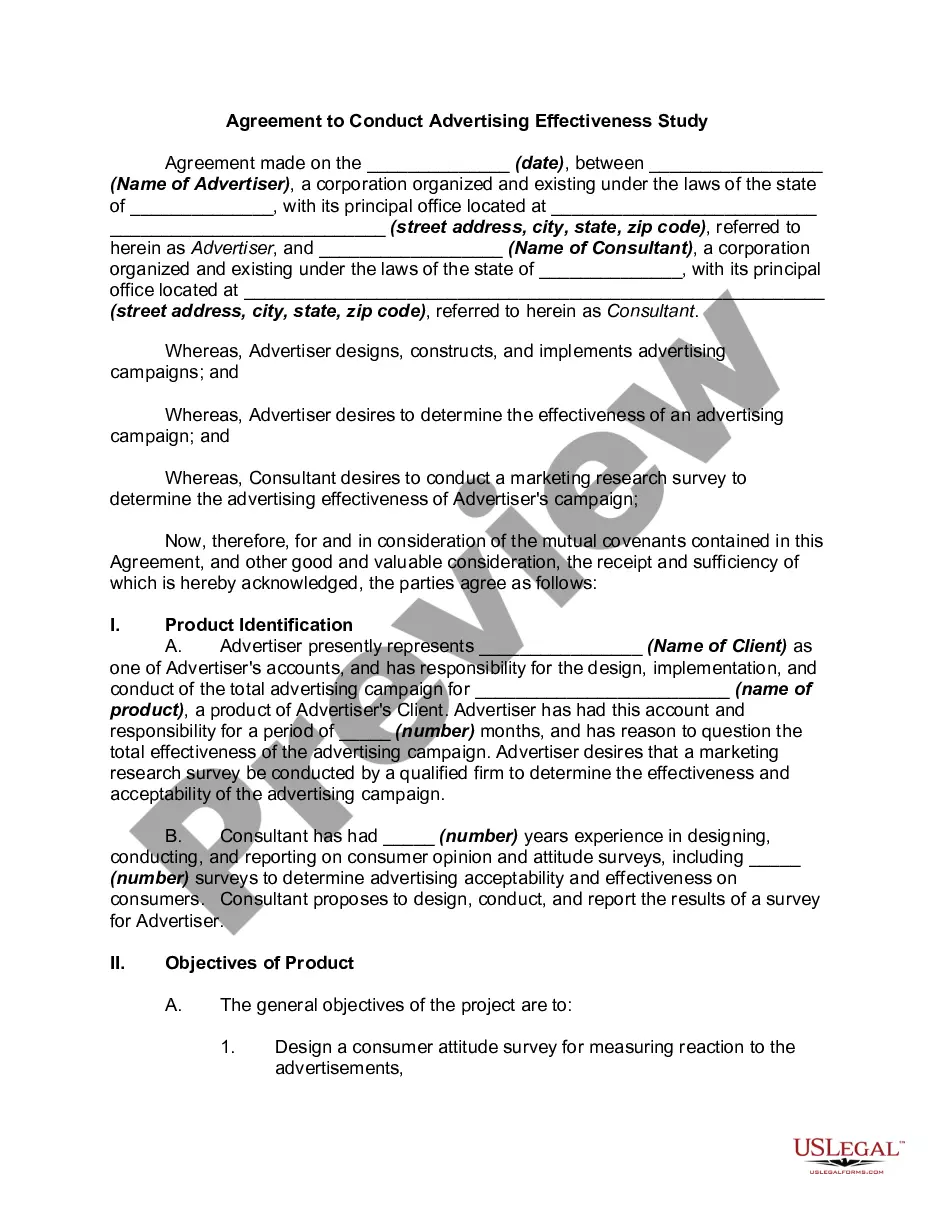
The Proposed Sales Survey to Determine Effectiveness of Planned Advertising Campaign for New Product is a marketing research proposal designed to evaluate the potential effectiveness of an advertising campaign for a new product. This form serves as a structured agreement between a consultant and an advertiser, focusing on gathering consumer feedback through surveys to refine marketing strategies. It differentiates itself from other marketing forms by specifically addressing the need for empirical feedback on planned advertising efforts before the campaign launch.
Form components explained
- Identification of the advertiser and consultant with space for names and date.
- A recommendation for conducting a sales effectiveness survey for the new product.
- Details on the product and advertising campaign involved in the survey.
- Design and distribution of the questionnaire to a selected consumer list.
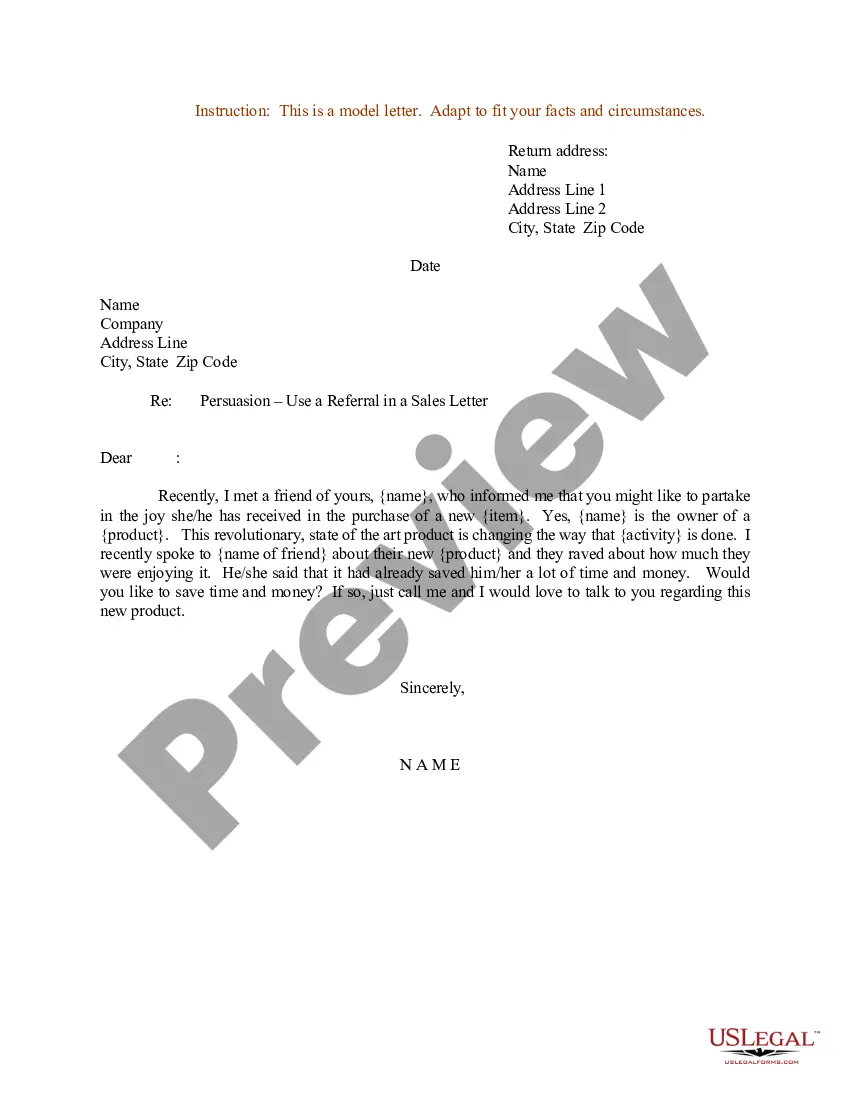
- Specifications for the advertising flyers used to gauge consumer reactions.
- Timeline for data collection and presentation of survey results.
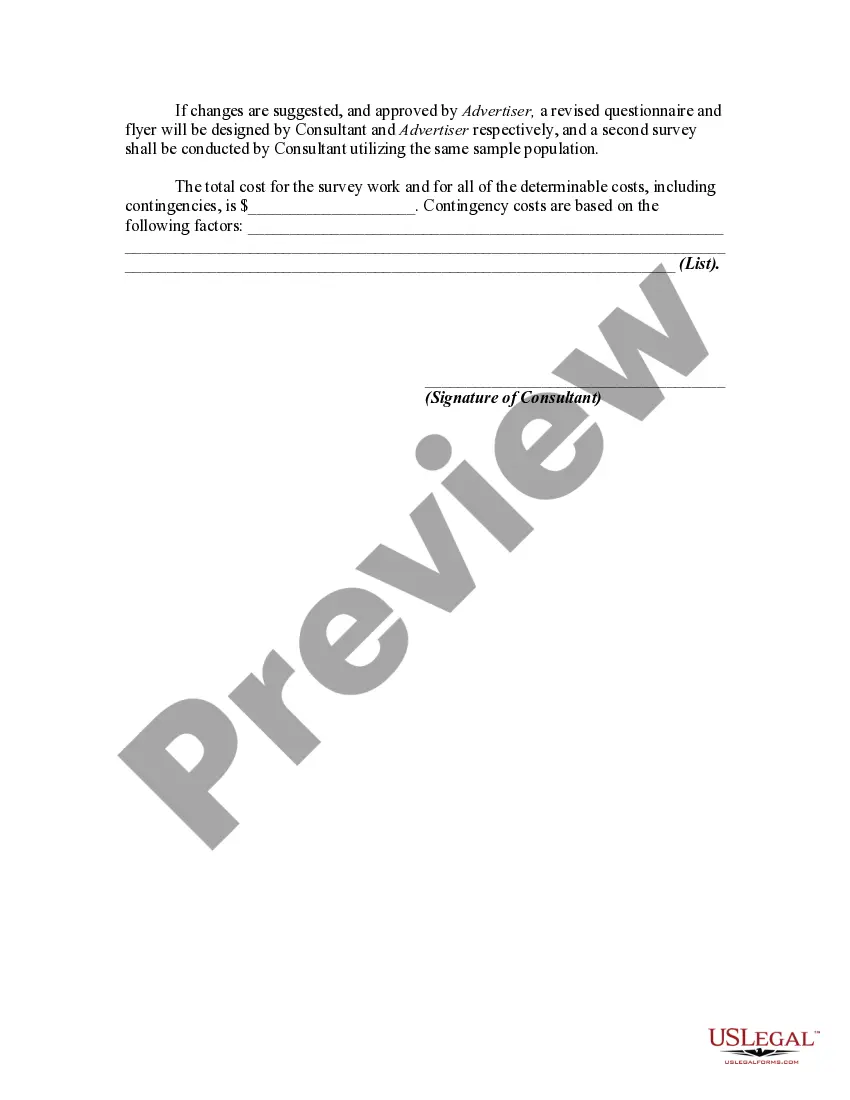
- Financial details regarding survey costs and contingencies.
When to use this document
This form should be used when a consultant is hired by an advertiser to conduct a sales survey aimed at understanding the anticipated effectiveness of a planned advertising campaign for a new product. It is particularly useful in scenarios where the advertiser seeks to gather consumer insights and feedback prior to launching their campaign, facilitating data-driven improvements and strategic adjustments.
Who should use this form
- Consultants specialized in marketing research.
- Advertisers planning a new product launch.
- Marketing teams seeking to evaluate consumer responses to advertising concepts.
- Businesses that need empirical data to inform marketing strategies.
How to complete this form
- Identify the parties involved by filling in the names of the advertiser and consultant along with the date.
- Provide detailed information about the new product, including its name and manufacturer.
- Outline the proposed advertising campaign and describe how consumer respondents will be selected.
- Design the survey questionnaire with specific questions related to consumer reactions to the advertising format.
- Set a deadline for survey data collection and presentation of results.
- Specify the total cost for the survey work, including any anticipated contingencies.
Is notarization required?
In most cases, this form does not require notarization. However, some jurisdictions or signing circumstances might. US Legal Forms offers online notarization powered by Notarize, accessible 24/7 for a quick, remote process.
Get your form ready online
Our built-in tools help you complete, sign, share, and store your documents in one place.
Make edits, fill in missing information, and update formatting in US Legal Forms—just like you would in MS Word.
Download a copy, print it, send it by email, or mail it via USPS—whatever works best for your next step.
Sign and collect signatures with our SignNow integration. Send to multiple recipients, set reminders, and more. Go Premium to unlock E-Sign.
If this form requires notarization, complete it online through a secure video call—no need to meet a notary in person or wait for an appointment.
We protect your documents and personal data by following strict security and privacy standards.

Make edits, fill in missing information, and update formatting in US Legal Forms—just like you would in MS Word.

Download a copy, print it, send it by email, or mail it via USPS—whatever works best for your next step.

Sign and collect signatures with our SignNow integration. Send to multiple recipients, set reminders, and more. Go Premium to unlock E-Sign.

If this form requires notarization, complete it online through a secure video call—no need to meet a notary in person or wait for an appointment.

We protect your documents and personal data by following strict security and privacy standards.
Typical mistakes to avoid
- Failure to clearly define the roles of the consultant and advertiser.
- Inadequate description of the product or advertising strategy.
- Not specifying the respondent selection process or sample size.
- Forgetting to set a realistic timeline for data collection and analysis.
- Neglecting to include all relevant costs and contingencies associated with the survey.
Why complete this form online
- Convenience of accessing and downloading the form from anywhere.
- Editability allows for customization according to specific advertising campaigns.
- Reliability, with templates drafted by licensed attorneys ensuring legal soundness.
- Time-saving by providing a structured format that simplifies the proposal process.
Legal use & context
- The agreement can serve as a legal document in disputes regarding survey results and obligations.
- Consultants and advertisers must adhere to applicable advertising laws and data collection standards.
- The survey data obtained can be used to inform marketing strategies and advertising adjustments.
Summary of main points
- The Proposed Sales Survey provides a structured way to evaluate new advertising strategies.
- It is crucial for advertisers to understand consumer feedback before launching campaigns.
- Clear documentation and collaboration between consultants and advertisers enhance the effectiveness of the survey.
Looking for another form?


Form popularity
FAQ
Monitor Web Traffic During Run. Create a Social Hashtag. Use a Unique Tracking Code or Promo Number. Set up a Unique Point of Contact. Implement QR Codes. Ask Customers.
Return on Investment (ROI) Return on Investment measures the sales revenue a campaign brings on every dollar spent. Cost per Win (Sale) Cost per Lead. Conversion Rate (or Goal Completion Rate) Incremental Sales. Purchase Funnel. Customer Lifetime Value.
Review the campaign's strategy and objectives. Overview of the campaign's creative approach. Break down results by channel. Provide key take-outs.
Various kinds of tests are used to measure the effectiveness of advertising. These are: exposure; attention, comprehension, attitude change, and behavior or action.
Starting With A Goal. Commit to a Time Frame. Determine Success Factors. Provide Specific Details. Create a Marketing Measurement Template. Website Traffic Metrics That Matter for Growth.
Campaign analysis reports are considered essential marketing analytics tools and are often used by marketing executives and campaign managers to compare lead metrics and cost across their campaigns.
Return on Investment (ROI) Cost per Win (Sale) Cost per Lead. Conversion Rate (or Goal Completion Rate) Incremental Sales. Purchase Funnel. Customer Lifetime Value.
Impressions. The total number of impressions equates to the total number of times your ad has been served. Click Through Rate. Click through rate, or CTR, is exactly as it sounds. Time-Based Ads. Viewers. Conversions/Return on Investment (ROI) Conclusion.
When and how to evaluate your campaign Keep it simple develop a small number of indicators to capture changes. Aim to gather a mix of evidence from internal and external sources. Be clear from the outset, clarify roles and responsibilities and make time for this in campaign planning.